7 Sweet Potato Companion Plants for a Better Harvest
Plan a better sweet potato bed with radishes, peas, lettuce, cabbage, chives, green manure, and spinach—plus timing and spacing that prevent crowding.
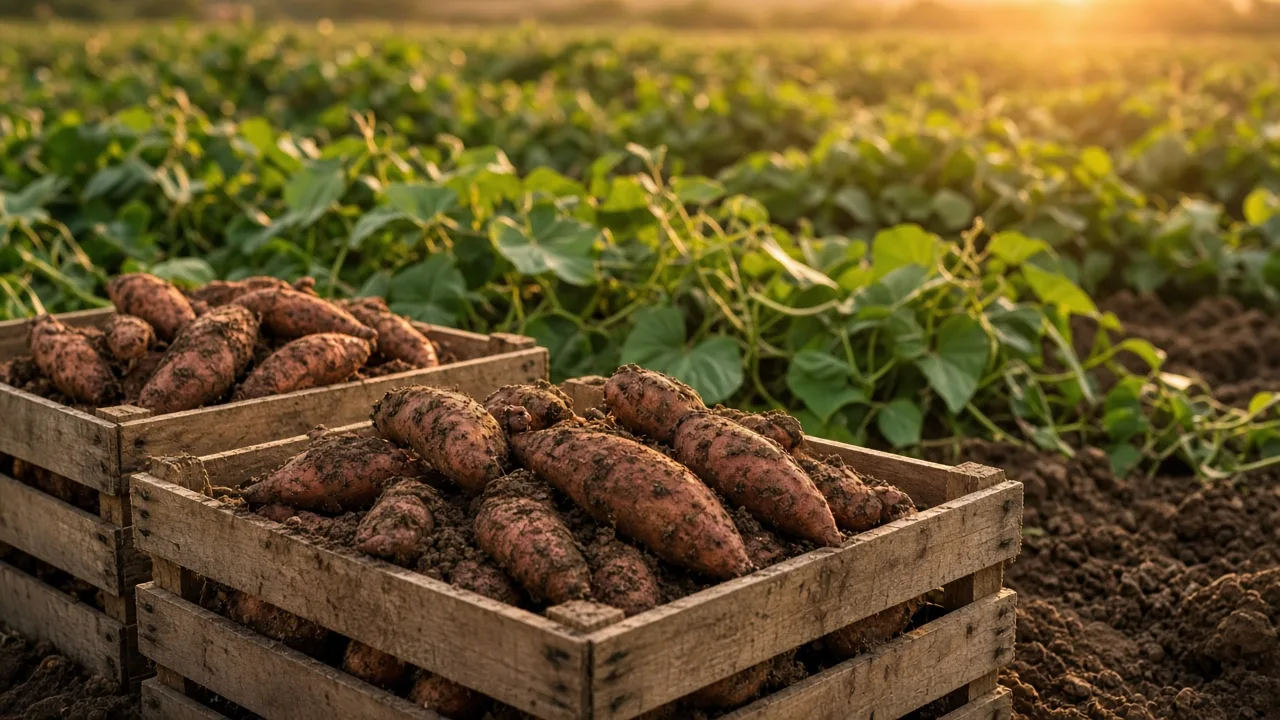
Sweet potato companion planting works best as seasonal choreography. The useful question is not simply “Which plants like sweet potatoes?” It is “Which crop can share this bed without competing for the same light, root space, water, or harvest window?”
Sweet potatoes are warm-season vines grown from slips, and their stems can cover a surprising amount of ground. Penn State Extension notes that vines can reach about 20 feet, while bush types are more compact. That makes a fast spring crop a sensible neighbor in May, but a low-growing crop planted for the whole summer a likely casualty by July. Penn State Extension also recommends loose, well-drained soil and warns that excessive nitrogen can produce abundant foliage at the expense of storage roots.
The seven plants below are therefore grouped by job: crops that finish before the vines take over, crops that can occupy an edge, and crops that belong after harvest. The list includes radishes, peas, lettuce, cabbage, chives, green manure, and spinach, but the timing and placement guidance matter more than the names.
Companion planting starts with timing, not a magic chart

Companion planting can mean interplanting two crops at once, using one crop before another, or arranging plants so their different heights and harvest dates share a bed. Those are useful design choices, but they are not proof that one plant will automatically repel pests or increase the other plant’s yield. Research on companion planting is mixed and depends heavily on the crop, cultivar, layout, pest, and local conditions.
Use each pairing here for a specific, observable benefit: an early harvest, a vertical use of space, a cool-season follow-up, a living cover, or a better rotation. If a companion is supposed to deter an insect, treat that as a low-risk experiment—not a substitute for scouting, row cover, sanitation, or crop rotation.
The main constraint is the vines
Sweet potatoes want heat, sun, and a long growing season. Once the slips establish, the vines run laterally and root at some stem nodes. They shade bare soil and can suppress weeds, but that same habit can bury lettuce, chives, or young spinach before those crops reach a useful harvest.
Before planting a companion, ask three questions:
- Will it be ready before the sweet potato canopy closes? Radishes and baby lettuce often can be.
- Can it grow above or outside the vine zone? A trellised pea crop or an edge-row chive planting has a better chance than another sprawling vine.
- Does it belong after harvest instead? Spinach and a cover crop may be more useful in the empty bed than squeezed beside mature vines.
That decision rule is more reliable than a long list of “good” and “bad” neighbors. The best companion is the one that fits your bed’s calendar.
Separate a companion from a crop-rotation crop
Sweet potatoes are not regular potatoes. Sweet potatoes belong to the morning-glory family, while regular potatoes are nightshades. That distinction matters when you read potato companion charts, but it does not mean sweet potatoes can be grown in the same bed forever without consequences.
Rotation is about the history of the soil, not only about botanical family names. Penn State Extension identifies scurf as a soil-borne disease and recommends a four-year rotation for reducing its carryover. A practical rotation also helps limit the buildup of pests and pathogens that follow roots or crop debris. In other words, a plant can be a reasonable neighbor this season and still be a poor crop to repeat in that exact bed next year.
1. Radishes: the cleanest early-season handoff
Radishes are one of the easiest crops to fit before sweet potato slips arrive. They germinate and size up in cool spring soil, and many small varieties can be harvested in roughly three to five weeks. Sow them along the future sweet potato bed edge, or use a narrow strip that will later become a path or open vine margin.
The timing is the whole point. Start radishes several weeks before your region’s last frost, then harvest them before the soil needs to be prepared for warm-season slips. Do not leave a mature radish row in the center of the bed just because the leaves still look healthy; the roots and foliage occupy space that the sweet potato crown and storage roots will need.
Radishes are also useful as a quick soil check. If the bed stays wet, crusts over, or produces misshapen roots, fix drainage and compaction before planting sweet potatoes. The crop does not need to “improve” the soil through a mysterious companion effect to be useful—it gives you an early harvest and feedback about the bed.
2. Peas: a cool-season legume before slips
Peas are a good bridge between a cool spring and a hot sweet potato summer. Snap, snow, or shelling peas can be sown early, supported on a short trellis, and harvested before the soil becomes warm enough for sweet potato slips. Their upright habit also keeps the bed’s center more open than a second ground-running vine.
Legumes form relationships with nitrogen-fixing bacteria, but that does not mean every pea plant immediately “feeds” a neighboring sweet potato. Most of the nitrogen remains in the pea biomass and roots until those materials decompose, and a heavily fertilized bed may not need extra nitrogen at all. Pull or cut the pea plants when they finish, leave healthy residue as a thin mulch if it will not interfere with planting, and avoid adding large amounts of high-nitrogen fertilizer.
The easiest plan is to grow peas on the cooler, trellised side of the bed and plant sweet potato slips after the pea harvest. Keep the trellis from shading the slips, and do not let pea vines collapse across the warm-season root zone. Gardening Know How also recommends legumes as rotation options, but its practical lesson is more useful than a blanket promise: choose plants that share the growing conditions without competing for the same ground space. Gardening Know How
3. Lettuce: harvest young at the bed edge
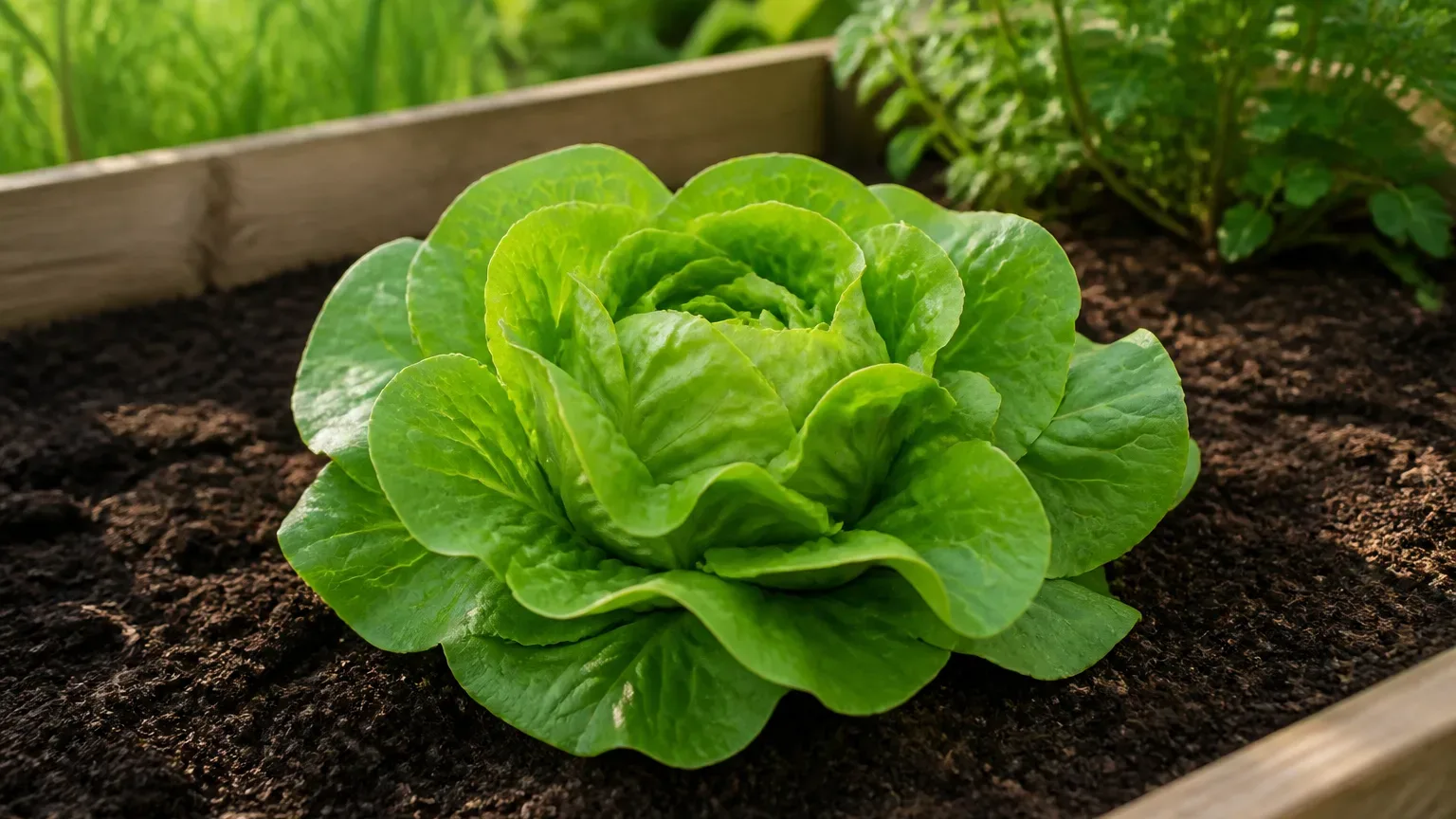
Lettuce works beside sweet potatoes only when you treat it as a short-term crop. Seed or transplant loose-leaf lettuce along the outside edge of the bed, where it can receive spring light and remain accessible. Harvest baby leaves repeatedly, or remove the whole head before the sweet potato vines reach it.
Lettuce is a poor choice for the middle of a compact bed if you expect it to stay productive all summer. Heat can make it bolt, while the sweet potato canopy can make it damp, shaded, and difficult to harvest. The crop may look compatible on planting day and still become a maintenance problem once the vines run.
Use lettuce where it creates a clean handoff: spring greens first, sweet potato foliage later. If the sweet potato slips are already spreading, skip the lettuce and protect the root zone instead. A companion that must be rescued from the main crop every week is not saving space.
4. Cabbage: a seasonal neighbor with a firm deadline
Cabbage can share a garden with sweet potatoes because it is a cool-season crop that may be harvested around the time warm-season slips are planted. Start cabbage early enough for the heads to size before hot weather, then clear the row rather than trying to force both crops to mature in the same footprint.
The best layout is a separate row or bed edge with enough room to remove cabbage cleanly. Cabbage needs steady moisture while sweet potatoes prefer warm, well-drained soil; sharing one irrigation zone can create a compromise that suits neither plant. Keep the cabbage crop watered at its root zone, and do not mound or disturb the future sweet potato row when harvesting.
If cabbage remains small when it is time to plant slips, make a decision based on the bed’s value. Harvest young heads or move the cabbage if possible. Do not squeeze sweet potatoes into a crowded bed and assume the vines will “find their way.” They will find every open space, including the space needed for air movement and root development.
5. Chives: a compact perennial border
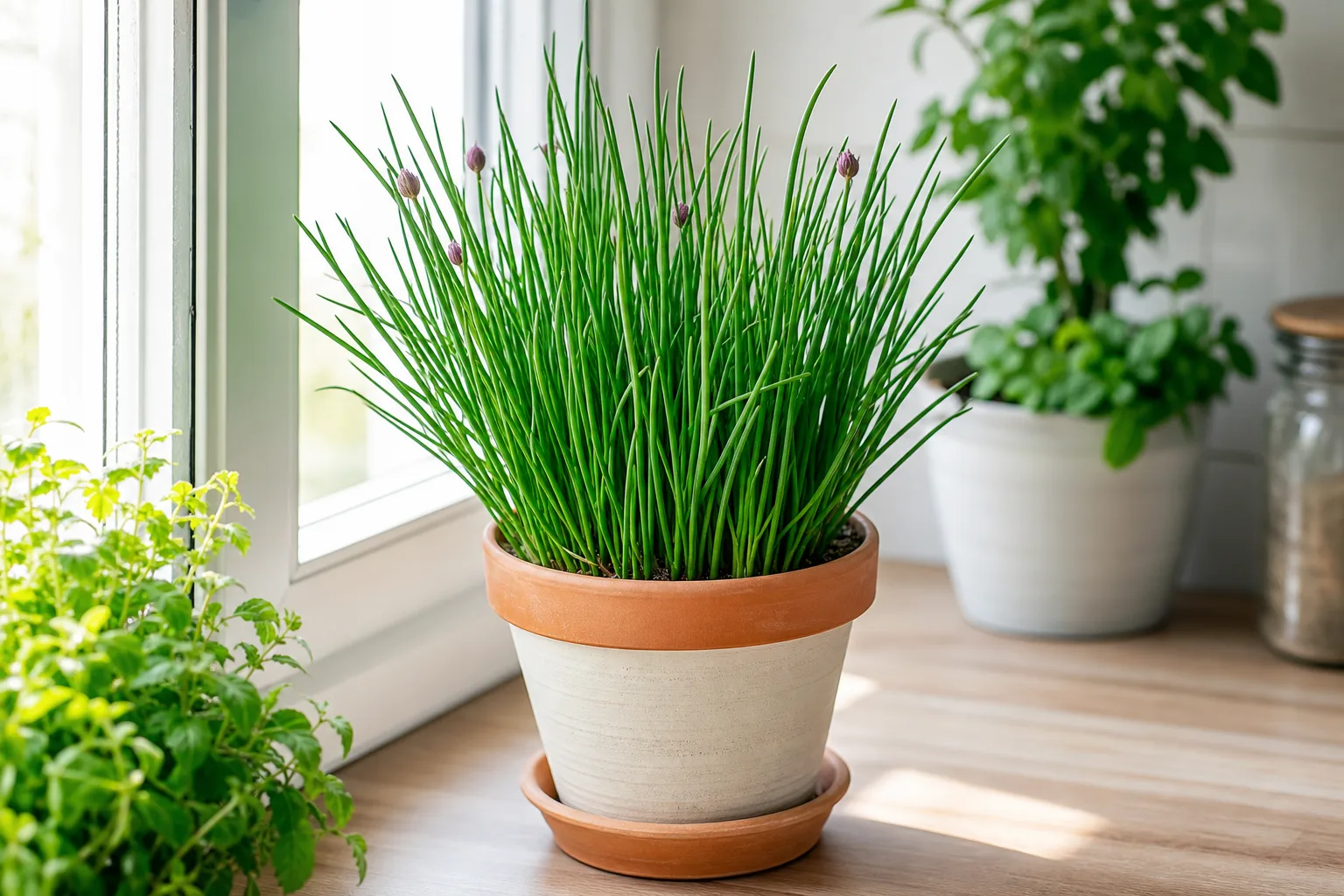
Chives are useful at the edge of a sweet potato bed because they are compact, edible, and already established when many warm-season crops are still being planned. Their upright leaves occupy much less ground than another vine, and the clumps can remain in place while sweet potato stems run nearby.
Keep chives at the margin rather than in the center of the root zone. A mature clump can expand, and digging sweet potatoes through perennial crowns is frustrating. The border placement also makes it easier to harvest the chives and keep irrigation directed toward the crop that needs it most.
Strong-smelling herbs and alliums are often described as pest repellents. That may be a reasonable garden observation in some beds, but it is not dependable enough to replace inspection. Epic Gardening’s companion-planting guide includes chives and spring onions among compact border options, while also noting that different plants can have conflicting space and fertility needs. Epic Gardening
Think of chives as a low-conflict border and culinary crop first. Any pest-deterrent effect is a bonus you can observe, not a promise you should build the whole garden around.
6. Green manure: the best choice for the next crop
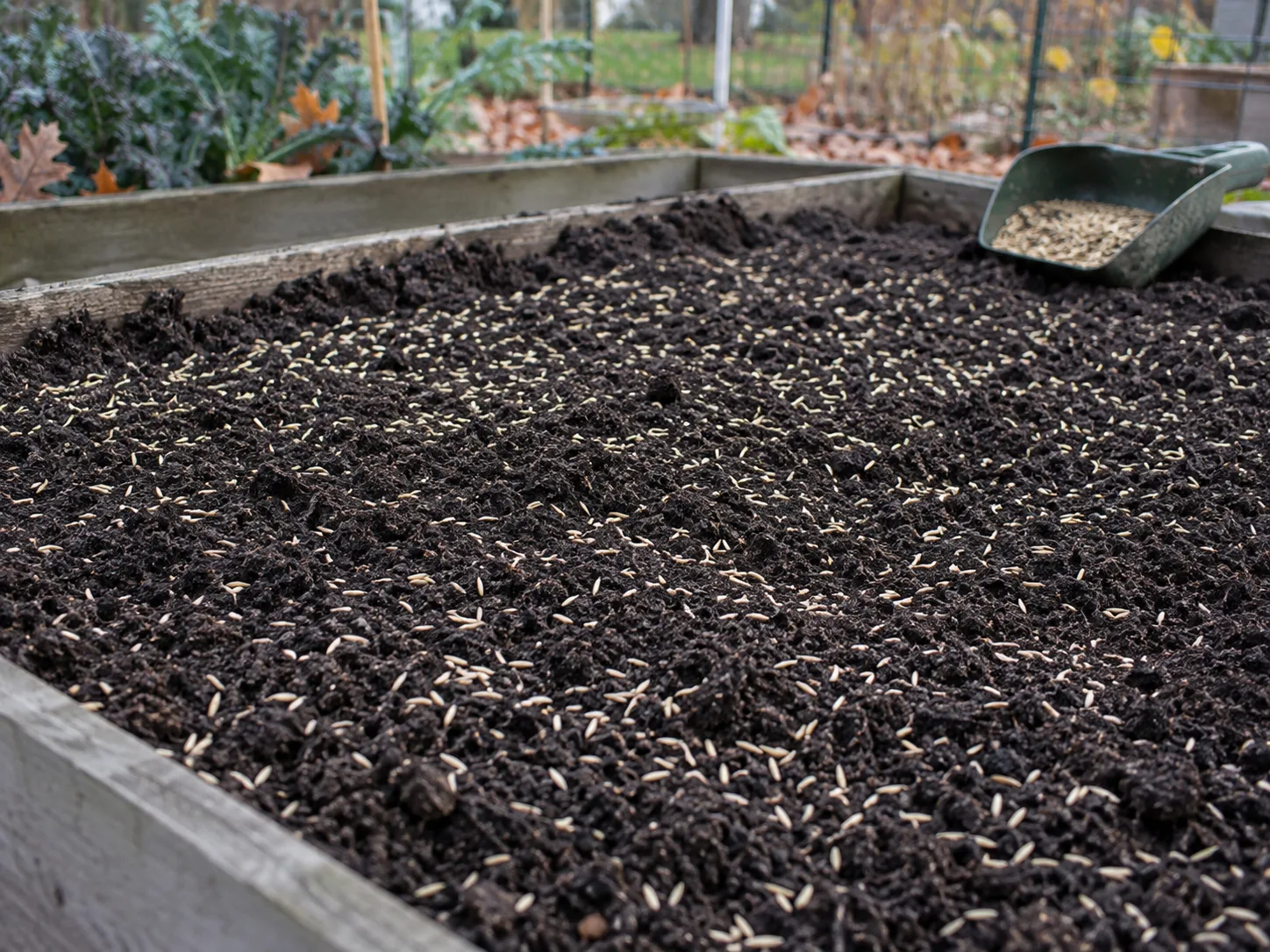
Green manure is not meant to be harvested for dinner. It is a cover crop grown for soil protection, weed suppression, biomass, or nutrient cycling, then cut and incorporated or managed before the next food crop. After sweet potatoes, a cover crop can keep an open bed from eroding and give the soil a useful winter job.
Cereal rye is one practical choice for a fall-sown bed, while rapeseed and other cover crops may fit particular climates and management systems. SARE reported that a Missouri organic sweet potato project using cereal rye or rapeseed before transplanting saw reduced weeds, healthier plants, and 1.5- to 2.4-times the marketable root yield compared with plots without cover crops. That is valuable evidence, but it came from a farm research project with a specific management system—not a guarantee for every backyard bed. SARE
For a home garden, the important timing rule is to terminate the cover crop early enough that it does not compete with the next crop or leave tough residue in the seedbed. A cover crop that is too mature, poorly incorporated, or allowed to reseed can create a new weed and planting problem. If you do not have the tools or time to manage it, use a finished compost mulch or a simple winter cover rather than planting a crop you cannot terminate well.
Do not confuse the reported effect of cover crops with the claim that sweet potato leaves should be left on the soil to suppress every future seed. A Frontiers in Plant Science study found allelopathic activity from sweet potato extracts against four invasive weeds in controlled laboratory tests, but that does not establish a safe field rate or prove that fresh sweet potato residue will suppress lettuce, spinach, or other garden crops. The peer-reviewed study is a reason to be careful with residue claims, not a reason to skip cleanup.
7. Spinach: a useful fall follow-up
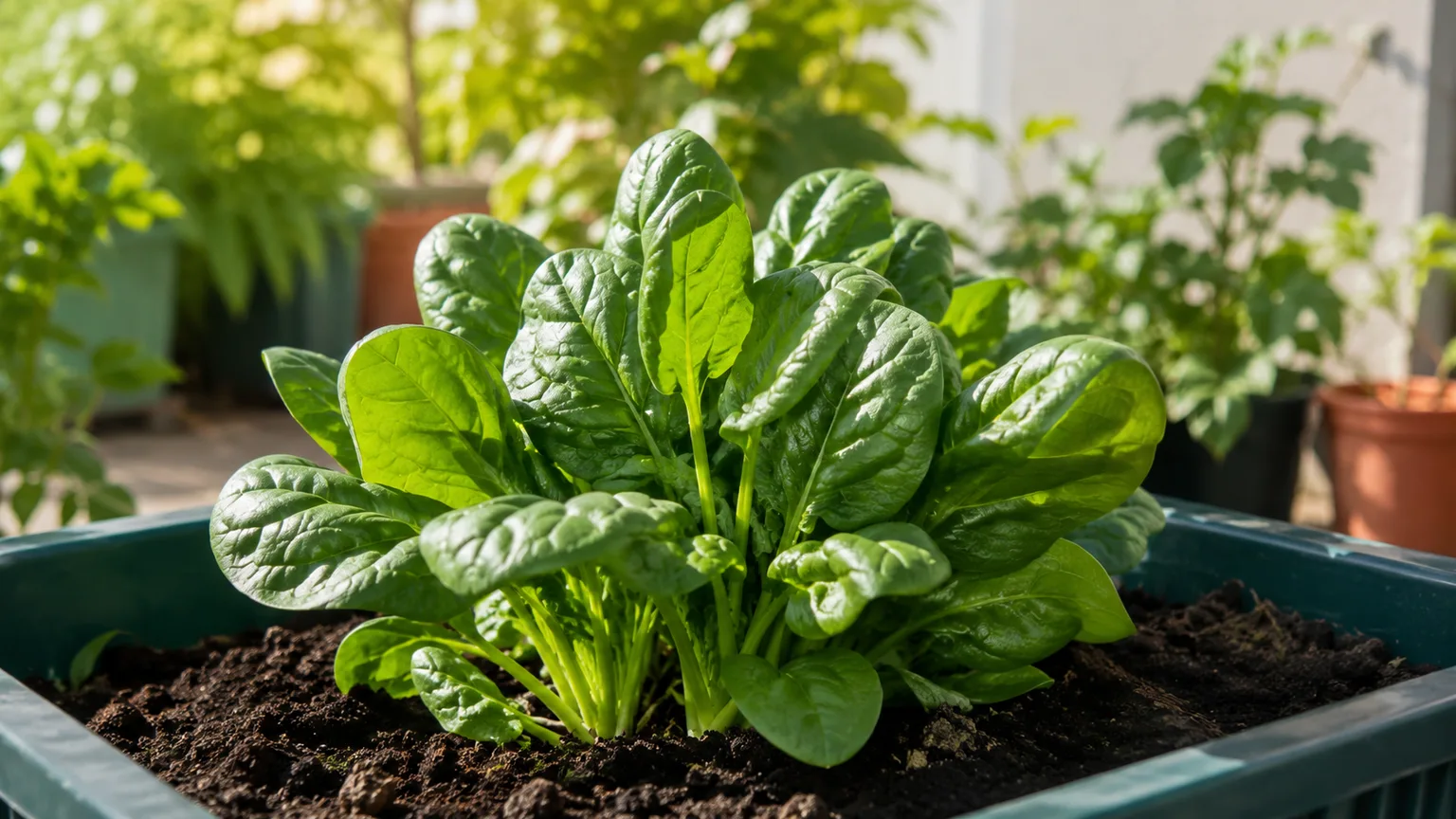
Spinach gives the harvested sweet potato bed a second season. In regions with a long autumn, sow spinach as soon as the roots are out and the soil surface has been cleared. In colder climates, use the crop as a late-fall or overwintering planting if your variety and protection allow, or sow it for an early spring harvest in the following cycle.
Clear sweet potato vines and stray roots before seeding. Penn State Extension notes that leftover roots and crop debris can contribute to disease and pest problems, and the practical value of sanitation is especially high for a crop that is dug from the soil. Work carefully so the new spinach row is not packed into a wet, compacted bed.
Spinach prefers cooler weather than sweet potatoes, so it is not a strong same-time companion for midsummer. It is a succession crop: one harvest follows another after the heat-loving crop leaves. That distinction lets you use the bed more fully without pretending that two incompatible seasons can share the same space at once.
Map the bed before you plant
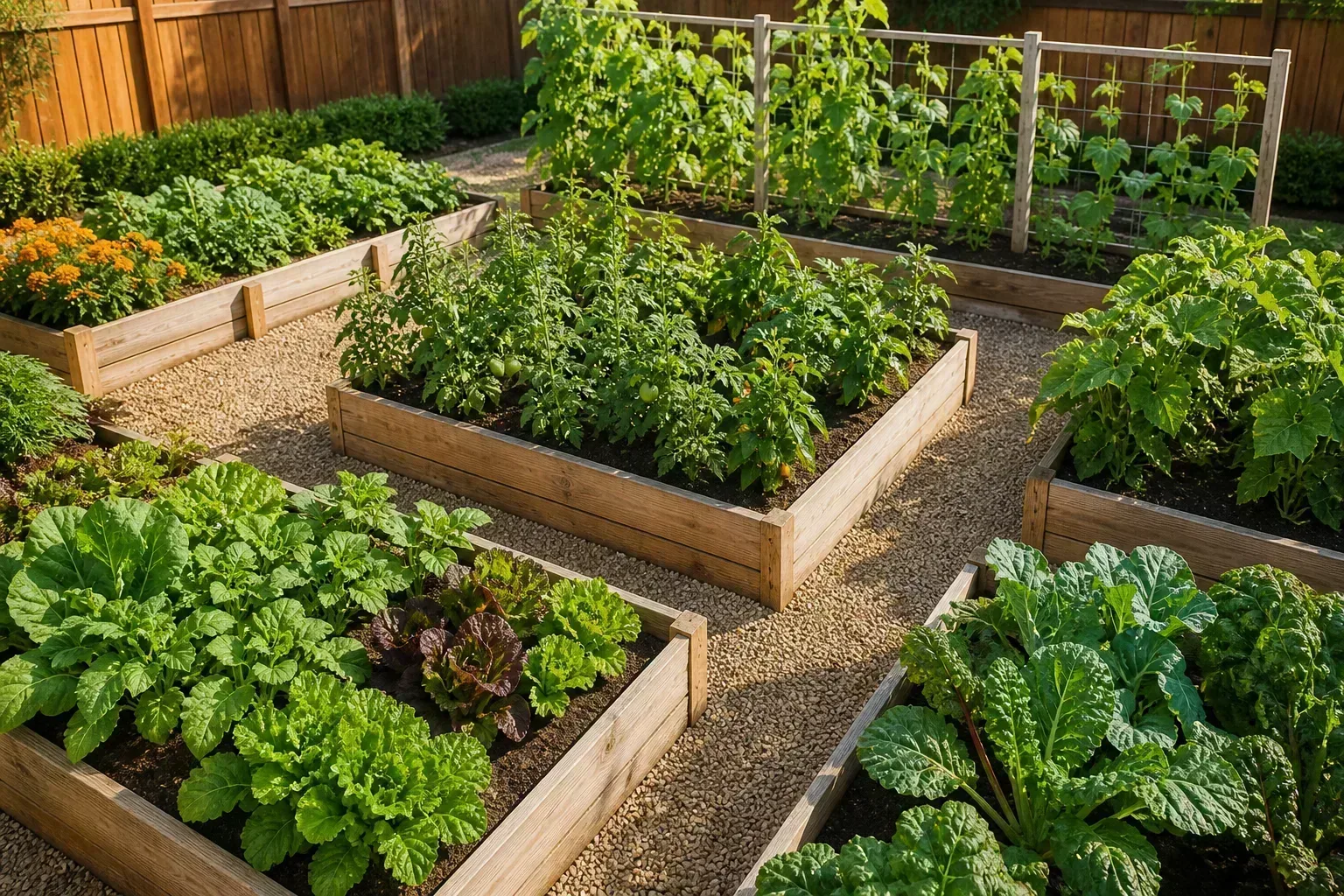
The easiest sweet potato companion plan is a map with three zones: an early-crop strip, a permanent or tall edge, and the main warm-season root area. Draw the bed at full size, mark where the slips will go, and draw the mature vine direction—not just the small plants you will receive in spring.
Put fast crops on the sunny edge
Use radishes, lettuce, or young cabbage where you can harvest them from the path. Keep the edge open enough to reach the slips for watering and early weeding. When the vines begin to cross that boundary, the early crop should already be harvested or deliberately cleared.
Chives can occupy a fixed border, but do not let the clumps become a digging hazard. In a container, give the sweet potato its own large pot if root production is the priority; a tiny shared pot may grow attractive foliage but will not provide enough loose soil for storage roots.
Keep tall crops and sweet potato vines in separate lanes
Peas can use a trellis during the cool season. Tall summer crops may also occupy a north-side lane in a large garden, but calculate their shade at midday and their root competition before planting. Gardeners’ World notes that sweet potatoes are vigorous trailing plants and can be trained up support to save space, but their warmth requirements and container spacing still matter. Gardeners’ World
Do not place a trellis where it blocks the main sweet potato bed from afternoon sun. A short-lived pea trellis that is removed after harvest is easier to manage than a permanent structure shading the crop through its root-filling period.
What not to plant beside sweet potatoes
Avoid another aggressive ground-running vine in the same small bed. Squash and melons can occupy the same sunlight and soil volume while creating a tangle that makes watering, scouting, and harvesting difficult. The problem is not that the plants are enemies; it is that both crops need the ground.
Be cautious with regular potatoes and tomatoes as immediate neighbors when your garden has a history of shared soil-borne problems. Sweet potatoes are botanically different from regular potatoes, but crop rotation should still account for the actual disease and pest history of your site. GrowVeg describes sweet potatoes as often grouped with potatoes for rotation planning because some pests and diseases can overlap even though the plants are not in the same family. GrowVeg
Avoid rich, heavily fertilized beds designed around leafy companions. Penn State’s guidance is direct: too much nitrogen can produce many leaves and few storage roots. If a pea or cover-crop rotation leaves the soil fertile, do not automatically add more nitrogen before planting slips. Test or observe the soil, use mature compost sparingly, and prioritize drainage.
A simple spring-to-fall planting sequence
For a moderate four-season garden, the following sequence is easier to manage than planting all seven crops at once:
- Early spring: sow radishes and peas according to local frost timing. Start cabbage or lettuce in the space that can be cleared first.
- Late spring: harvest radishes and early greens. Remove finished peas or leave only a managed trellis edge. Wait until soil is warm and frost danger has passed before planting slips.
- At slip planting: put chives on the perimeter, clear any crop that blocks the row, and keep the main sweet potato root zone open. Water new slips consistently while they establish.
- Summer: let the sweet potato vines cover the ground. Scout leaves, keep paths accessible, and avoid repeatedly lifting or dragging vines if storage-root development is the goal.
- Before frost: harvest before a killing frost and handle roots gently. Remove volunteer roots and excess plant debris rather than leaving a pest nursery in the bed.
- After harvest: choose spinach for an edible cool-season follow-up, or sow a cover crop such as cereal rye when you can manage its termination before the next planting window.
In a warm climate, the dates may shift and spinach may be a winter crop. In a short-season climate, the companion plan may shrink to one early radish strip and one post-harvest cover. A smaller plan that protects the sweet potato harvest is better than a full list that turns the bed into an inaccessible knot.
Mistakes that cost sweet potato harvests
The first mistake is planting slips into cold or waterlogged soil because the calendar says it is time. Penn State Extension recommends waiting for warm soil and using loose, well-drained ground; sweet potatoes are especially sensitive to cool conditions early on. If your spring is slow, keep the companion crop productive and delay the slips rather than forcing them into a wet bed.
The second is treating a companion list as a pest-control program. Scented herbs, flowers, and legumes can add diversity and habitat, but no plant should replace regular scouting. If you see aphids, caterpillars, weevils, chewing damage, or wilt, identify the problem and choose an appropriate low-impact response. A row cover, fence, hand removal, sanitation, or crop rotation may do more than adding another aromatic plant.
The third is leaving too little room for harvest. Sweet potato roots can spread away from the crown, and digging through a dense companion bed increases the chance of cuts and bruises. Give the vines a defined lane and keep one side reachable from a path.
The fourth is planting sweet potatoes in the same ground every year. Rotate the crop when possible, remove volunteer roots, and choose a non-host or cover crop for the interval. If your garden is too small for a long rotation, use a fresh container or a new section of bed and improve drainage rather than pretending that a border herb resets the soil.
Conclusion
The best sweet potato companion plants are the ones that respect the crop’s calendar and its sprawling growth. Radishes, peas, lettuce, and cabbage are most useful as cool-season crops that finish before the vines close in. Chives can live at the border, while green manure and spinach belong primarily in the post-harvest plan.
Start with one clear objective: an early harvest, a useful border, or a protected next crop. Keep the root zone loose and reachable, avoid excess nitrogen and crowded vines, rotate the bed, and treat pest-repellent claims as experiments rather than guarantees. That approach gives you more food from the same garden without asking sweet potatoes and their companions to occupy the same space at the same time.