The 9 Best Trees for Landscaping Around Pools
Compare nine poolside trees by mature size, roots, climate, shade, and litter so you can choose a tree that fits your site and pool-cleaning tolerance.
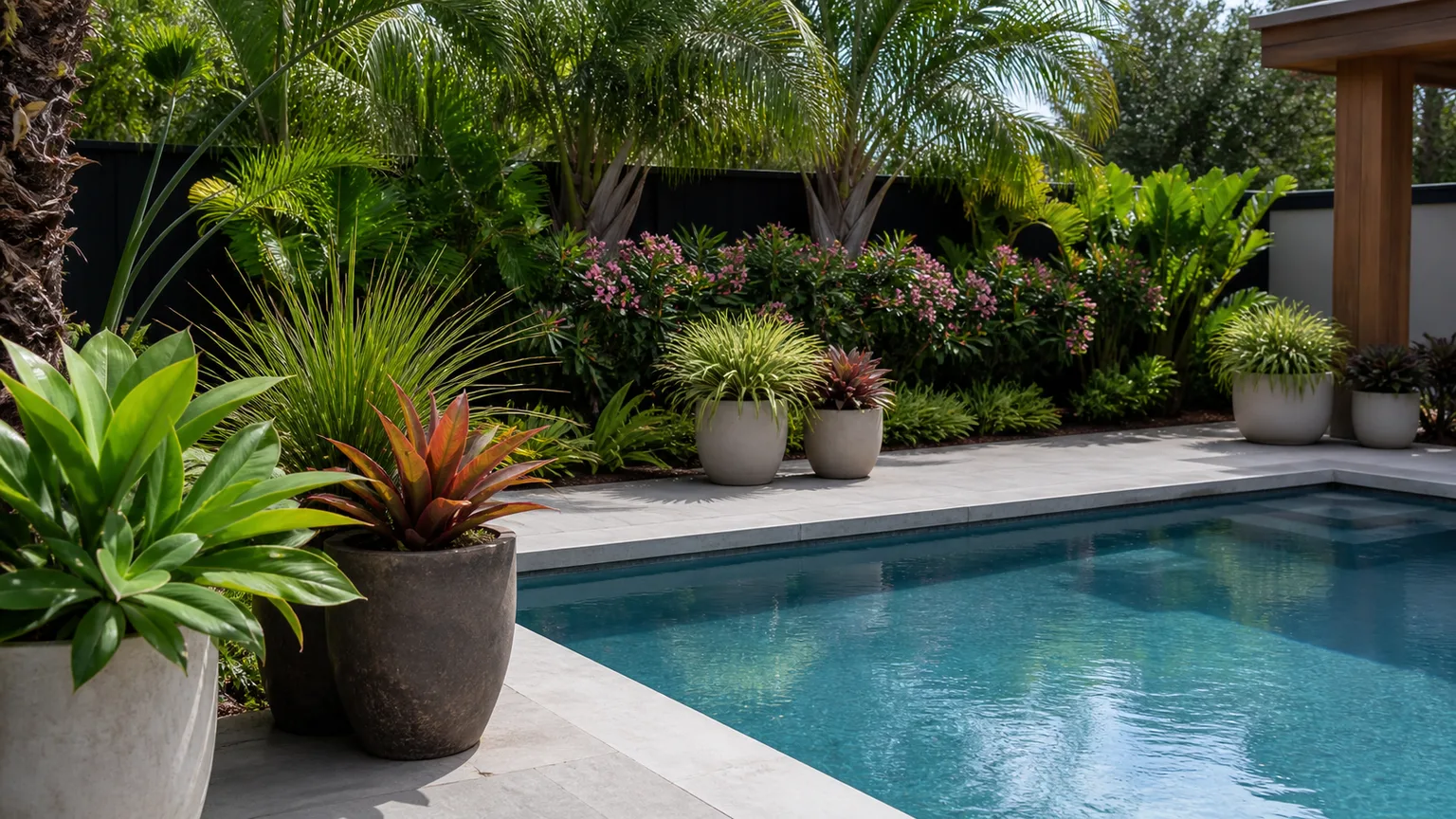
A good poolside tree can soften a hard deck, shade a seating area, frame a view, or make an exposed yard feel private. The wrong one can fill the skimmer basket with leaves, drop fruit on the coping, outgrow its bed, or struggle because the site is hotter, wetter, and more compacted than the tree can tolerate. The best choice is therefore the tree that fits your climate and available root space while putting its canopy and seasonal litter where you can live with them.
There is no tree that is automatically “safe for pools” just because its species is on a list. Roots respond to soil, oxygen, water, and obstacles; the canopy changes as the tree matures; and a pool with narrow beds or buried plumbing presents a different site from a large naturalistic yard.
University extension guidance recommends choosing woody plants by mature size, form, water needs, climate, and nearby hardscape, while Purdue notes that even many large trees develop shallow roots. Those facts make mature dimensions and placement more useful than a promise that a particular tree has “noninvasive roots.” NC State Extension’s woody-ornamental guidance Purdue Extension’s overview of surface roots
Quick answer: choose by climate, canopy, and cleanup
For a temperate yard with a smaller footprint, consider a compact Japanese maple or a verified dwarf Hinoki cypress. In a warm, dry landscape, fruitless olive, Palo Verde, desert ironwood, or desert willow may fit better. Crape myrtle and palms suit particular warm-climate designs, while a container-grown citrus tree is a flexible accent where you can move the pot and accept occasional fruit or flower drop.
Treat every pick below as a starting point, not a universal prescription. Confirm the cultivar’s mature height and width from a regional nursery or extension source, then check whether the actual location gives it enough soil volume, sun, drainage, wind protection, and clearance from the deck. A small tree can still be a poor choice if its litter lands directly in the water; a larger tree may work at the far edge of the yard if its mature canopy stays clear of swimmers, sightlines, and pool equipment.
Decide whether you need filtered shade over a chair, privacy, or a focal point; those jobs may belong in different locations. A privacy screen should not block a useful view, and a desert accent should not be planted in a lush, frequently irrigated bed.
What a poolside tree needs to handle
A poolside bed can be hotter, windier, and more compacted than the surrounding garden, with splash and extra irrigation. Choose a tree that can handle those conditions and has enough unpaved soil for roots; a narrow strip beside a fence may call for a compact cultivar or movable container.
The canopy is a maintenance decision. Broad evergreen foliage may shed gradually through the year; deciduous trees make a more concentrated seasonal drop; flowering trees add petals and seed capsules; fruit trees add food that can drop, bruise, or attract insects.
Better Homes & Gardens recommends placing poolside trees far enough away that leaves, cones, and seeds do not fall directly into the water, and using a mulch bed around trees to reduce grass clipping mess. Better Homes & Gardens’ pool-landscaping ideas
Roots deserve the same clear-eyed treatment. Most tree roots are not deep taproots that politely stay under the pool; they spread where conditions support growth, often nearer the surface. Roots can lift shallow paving as they thicken, and restricted or compacted soil can alter their growth.
That does not mean every tree will break a sound pool shell, but roots may exploit existing cracks, leaking plumbing joints, or other places where water and oxygen are available. Pool construction, nearby lines, soil, and tree size all matter.
Forest Research explains that rooting patterns change with site conditions and that barriers can redirect roots without guaranteeing they will remain permanently contained. Forest Research’s guide to tree roots and hardscape
1. Japanese maple for filtered shade in temperate yards
A Japanese maple (Acer palmatum) is a strong choice when you want a small ornamental tree with a defined focal point rather than a towering screen. Its layered branching and fine foliage can soften a stone or concrete pool surround, and many cultivars stay modest enough for smaller residential yards. Check the mature dimensions of the named cultivar: “Japanese maple” covers a wide range of habits, and a laceleaf form may spread much farther than a narrow upright selection.
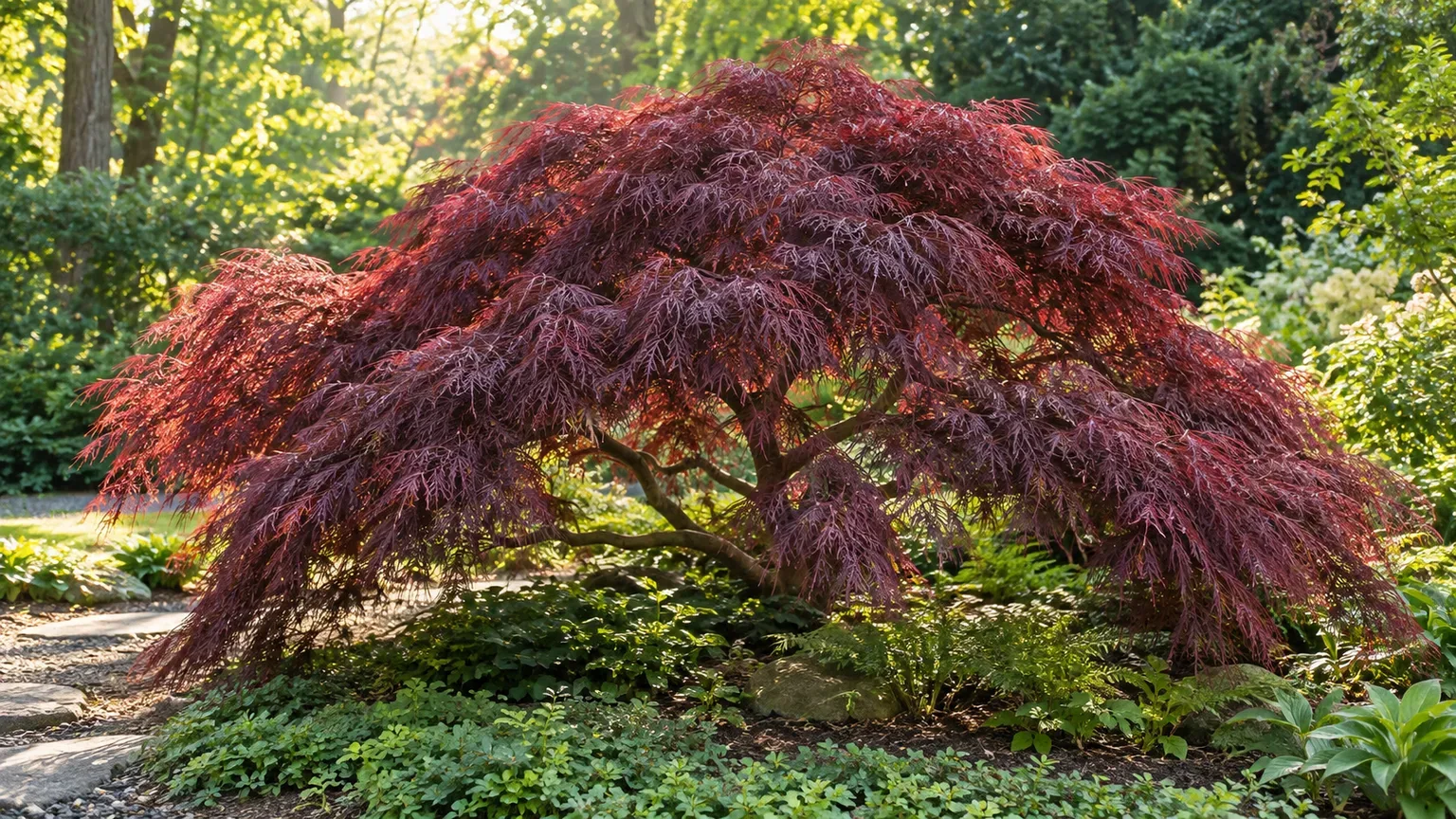
Use it to shade a bench, outdoor shower, or lounge area from the side, not to roof the pool with foliage. The leaves are seasonal and will fall, so place the canopy where autumn cleanup is manageable and skimmer load is not concentrated.
A sheltered spot with some afternoon protection is usually preferable to a hot, exposed corner beside a reflective wall or pale deck. Water the root zone during dry weather, but do not keep poorly drained soil saturated.
This tree is most convincing in a temperate landscape with dependable moisture and protection from harsh wind. If you live where summers are intensely hot and dry, choose a heat-tolerant cultivar recommended locally, provide afternoon shade, or select another candidate rather than expecting the delicate foliage to thrive in reflected pool-deck heat.
BBC Gardeners’ World lists small trees, including Japanese maples, among options for providing patio shade; the same scale can work around a pool when the crown is positioned deliberately. BBC Gardeners’ World’s patio-planting guide
2. Dwarf Hinoki cypress for evergreen structure
Hinoki cypress (Chamaecyparis obtusa) offers year-round color and a calm, sculptural silhouette. The important word is dwarf: the species can become a large tree, while landscape cultivars range from low mounds to taller narrow forms. Buy by cultivar name and mature measurements, not by the small pot size or nursery label that says only “Hinoki cypress.” A compact specimen can anchor a poolside rock garden or a mixed bed without requiring a continuous hedge.
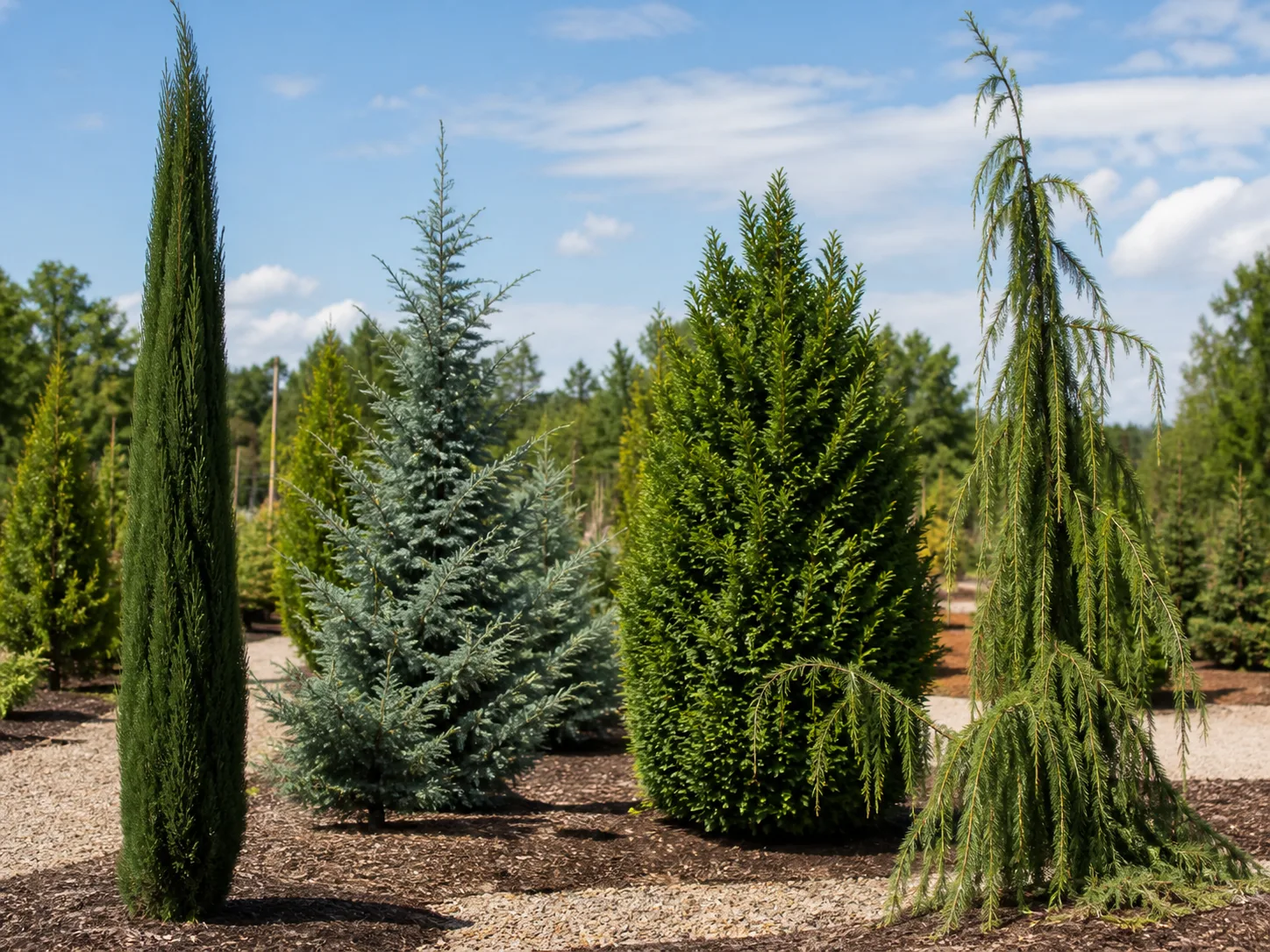
Evergreen foliage avoids a single heavy fall leaf drop, but it does not mean no cleanup. Conifers shed older foliage and may drop cones, and an overgrown plant can become brown inside or crowd the deck.
Keep the branch spread outside the walk and equipment area, and avoid positioning any dense plant where it hides pool equipment leaks, a gate, or a needed view. A small cultivar is useful when you want a distinct accent; a row of narrow plants can add privacy only if the bed is wide enough for their eventual roots and crowns.
Match Hinoki cypress to a well-drained site and a climate that suits it; hot, alkaline, or constantly wet conditions can be a mismatch. Verify the exact cultivar’s mature width with the nursery. If it will outgrow its bed, repeated pruning will not make it a good poolside choice.
3. Fruitless olive for a dry, Mediterranean-style pool
An olive tree (Olea europaea) can suit a sunny, dry-climate pool yard where silver-green foliage and an airy canopy fit the architecture. Select a cultivar sold as fruitless or low-fruiting and verify that claim with the nursery.
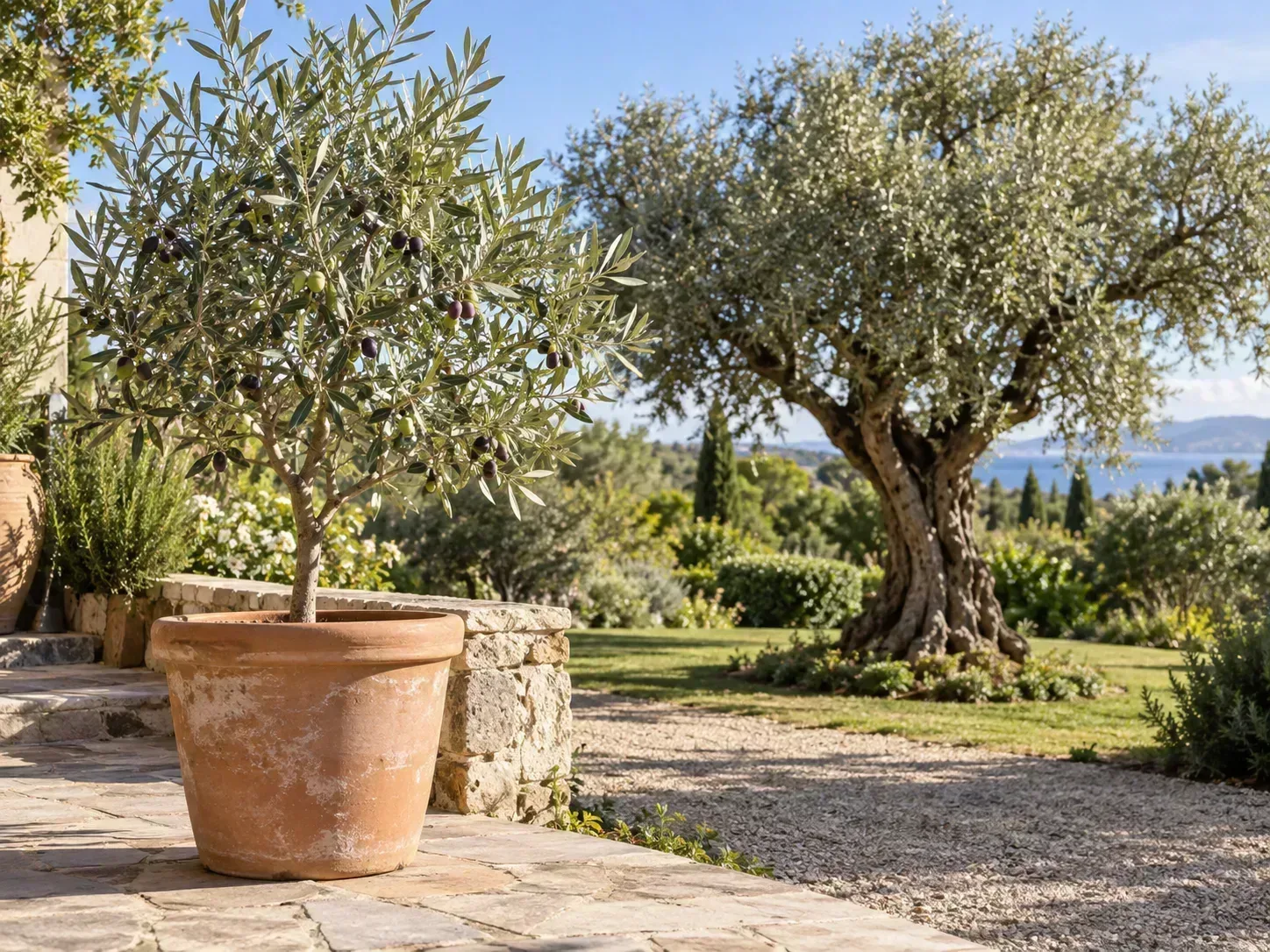
“Fruitless” does not necessarily mean absolutely no flowers, pollen, or fallen material; occasional fruit or spent blossoms can still be part of the maintenance picture. If pollen sensitivity is an issue in your household or neighborhood, ask about locally available lower-pollen choices before planting.
Olives work best where the soil drains well and the climate is warm enough for the selected variety. Once established, many are adapted to dry conditions, but a newly planted tree still needs regular establishment watering.
Do not pair it with a lawn or bed that is irrigated heavily every day; a wet root zone can be a worse mismatch than a hot pool deck. Keep the trunk away from coping and hardscape, and plan for a natural canopy instead of severe annual cutting.
The benefit is reduced fruit mess, not a debris-free yard: a suitable fruitless cultivar still drops flowers and foliage. Check local restrictions and pollen concerns, and avoid planting olive where soil stays damp.
4. Crape myrtle for summer color in warm climates
Crape myrtle (Lagerstroemia) is worth considering in hot-summer regions where you want a flowering tree and a defined period of color. Cultivars range from compact shrubs to small trees, so it is possible to find one with a mature crown that fits a pool border.
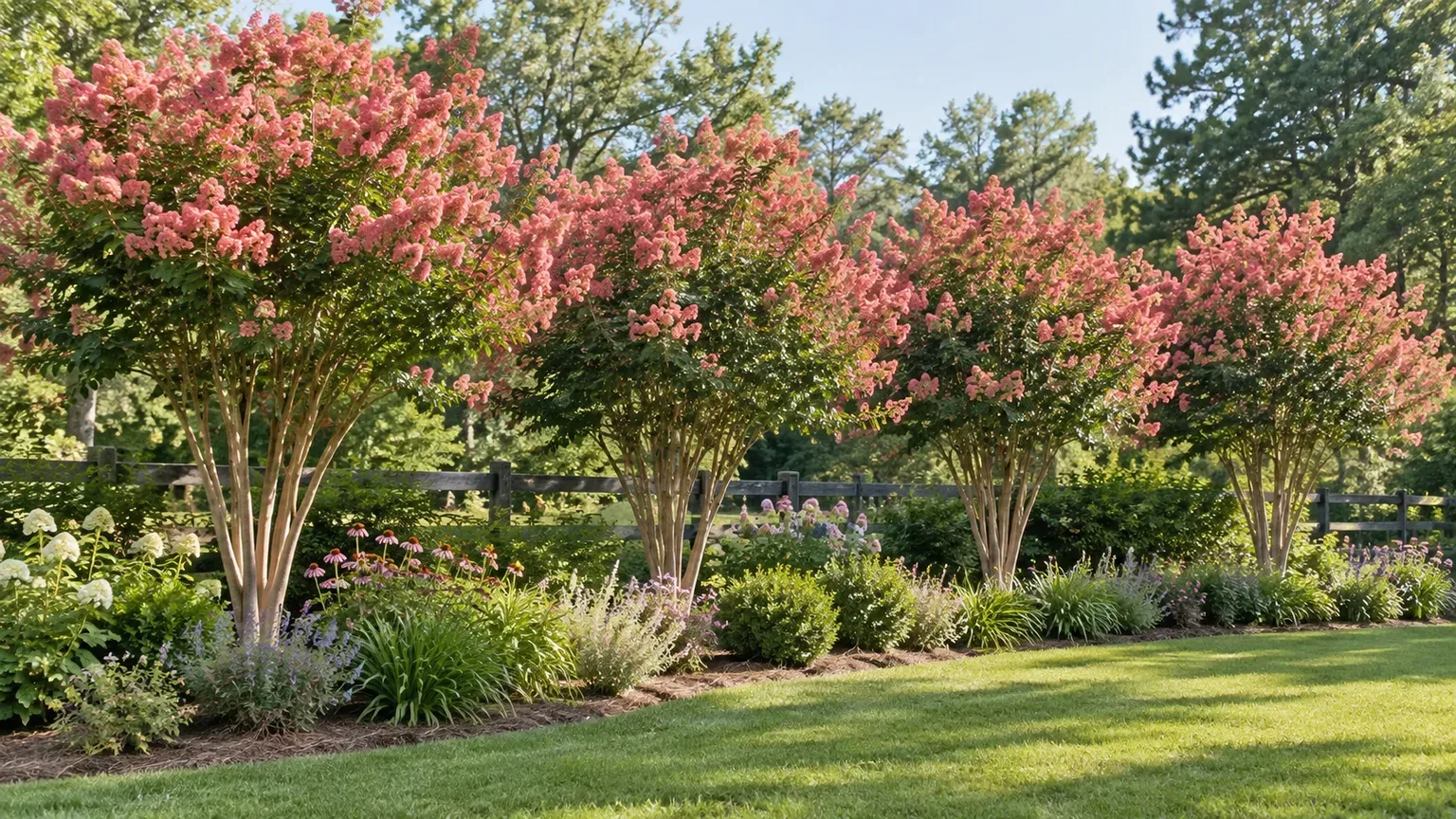
Buy the intended size, not a larger cultivar with the plan to keep it permanently cut back. A well-chosen tree can create a graceful focal point at a far corner of the yard or frame a seating space.
The trade-off is seasonal debris. Blossoms fade and fall, seed capsules remain, and the tree drops leaves in cooler weather.
Those details are easy to accept in a bed away from the water but frustrating when the branches hang over the pool. Place it where the flower show is visible from the deck while the crown sits outside the direct fall line into the pool and filter.
Give crape myrtle full sun and choose a cultivar that fits local winter temperatures and the available bed. Selective structural pruning is better than topping a too-large tree; if reflected heat and confined roots leave it chronically stressed, move the planting plan instead of cutting it back every year.
5. A climate-matched palm for a tropical look
Palms create a strong poolside silhouette, but “palm” is a plant family, not a single maintenance profile. Choose a species proven for your winter temperatures and yard conditions.
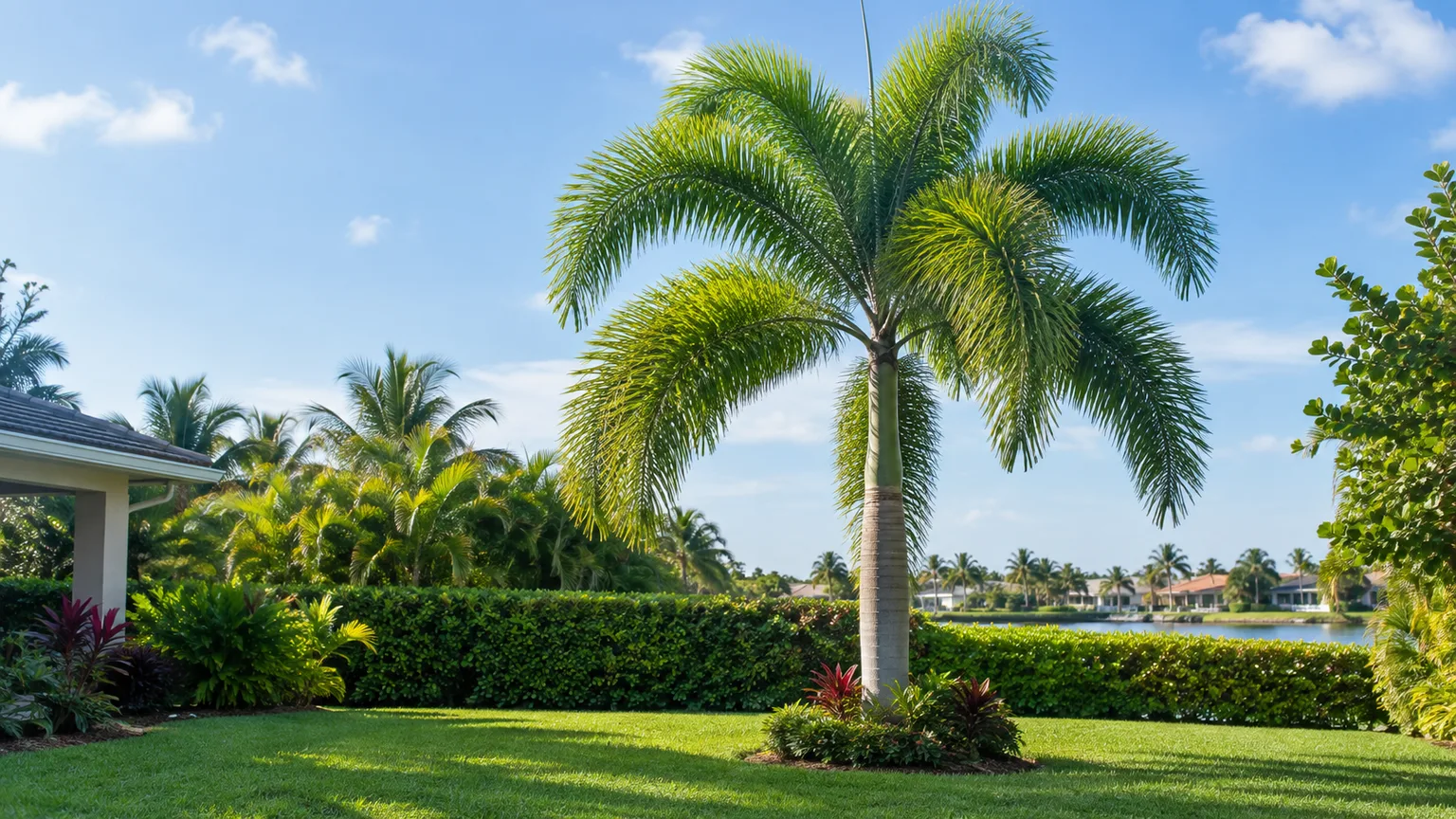
A cold-hardy windmill palm may suit a mild temperate garden, while a foxtail or other tropical palm is more appropriate in frost-free climates. In a tight landscape, a compact clumping palm may be easier to place than a tall species that eventually towers over the pool.
The canopy usually sits high, which can preserve ground-level views and leave more open space beneath it. That does not automatically make a palm a low-litter tree. Fronds eventually die and must be removed safely, and some species shed fruits or seed clusters.
Keep large, heavy fronds out of a high-traffic lounging area, and never choose a species with hazardous spines beside a narrow path where swimmers walk barefoot. Ask a local palm grower about mature height, spread, fruiting, and pruning needs.
Palms are often recommended for tropical pool designs because of their upright form, but avoid planting them on the assumption that all palm roots grow straight down or cannot affect hardscape. Give the root zone room, and keep plumbing access and pool equipment clear. For a tropical feel in a cold climate, a large container palm may work seasonally if you have a realistic indoor overwintering location; it will not provide the same mature shade as an in-ground tree.
6. Container citrus for a movable edible accent
A dwarf lemon, kumquat, or other compact citrus tree can bring flowers, fragrance, and edible fruit to a sunny pool patio. Its strongest advantage is that a container limits the tree’s footprint and lets you move it away from the splash zone, deck edge, or pool when it is fruiting heavily. Choose a pot large enough to support the tree, with unobstructed drainage, and place it on a stable surface where runoff will not create a slippery path.
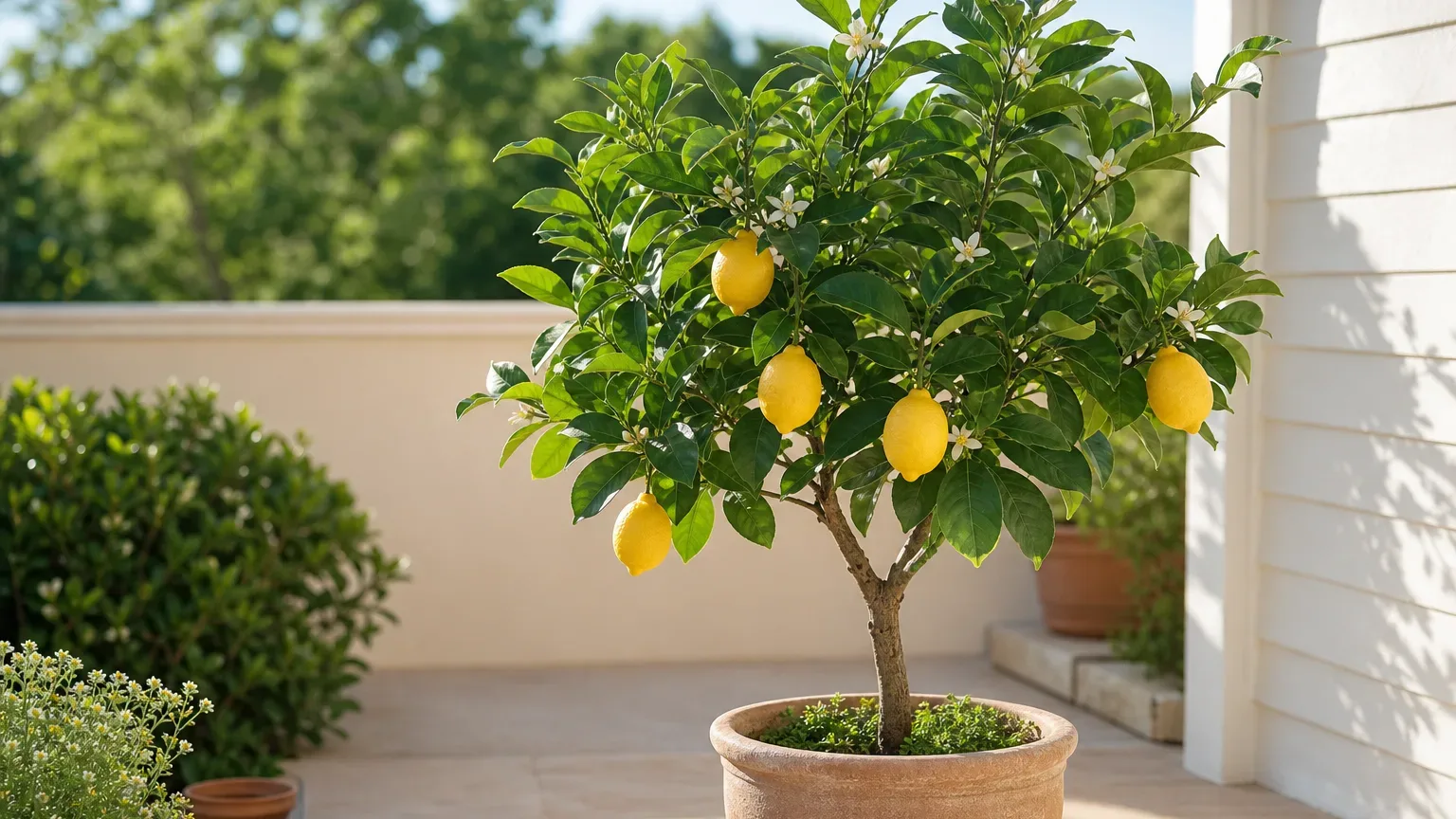
Blossoms, leaves, and fruit can fall, so keep the pot out of the pool’s fall line and off a busy barefoot route; pick ripe fruit promptly. A container can be useful in cold-winter regions if you have a protected place for it during freezes.
Pots dry faster than in-ground soil in sun and wind, may need regular watering and repotting, and can be heavy when saturated. Choose citrus only if you can meet its light, water, drainage, and winter-protection needs; the container is most useful when you need to test a location or move the tree seasonally.
7. Palo Verde for a low-water desert landscape
Palo Verde (Parkinsonia species) can fit a desert pool yard where a lush, frequently irrigated landscape would waste water or keep the surrounding soil too wet. Its green trunk and airy branches give the tree year-round structure, while seasonal blooms add a bright spring display. The relatively open canopy creates filtered rather than dense shade, so it is better for a light, naturalistic setting than for covering a hot deck with deep shade.
The open look still comes with seasonal cleanup. Flowers, small leaves, and pods can reach the pool, especially if the tree is planted upwind or directly over the water.
Set it where a fallen bloom lands in a dry bed rather than on wet coping. Confirm which Parkinsonia species or cultivar is sold for your region and check mature size, branch structure, and any thorn characteristics before buying; “palo verde” is not specific enough to predict those details.
Use it in a well-drained site and do not place it in the same irrigation zone as thirsty tropical plantings. Excess water can be as mismatched as too little.
Keep the planting bed large enough that the tree can form its expected canopy without being repeatedly sheared away from a wall, fence, or pool equipment area. A regional desert nursery or extension office can narrow the choice to species suited to your exact climate.
8. Desert ironwood for slow-growing Sonoran character
Desert ironwood (Olneya tesota) is an option for landscapes in its suitable arid region, especially when the design calls for a locally adapted tree with a light, irregular canopy. It is not a fast privacy screen or instant shade solution. Its slow growth and modest shade make it a patient choice for a pool yard where the goal is a desert-garden focal point rather than an overhead roof.
The most important condition is keeping its water needs separate from the poolside plants that require frequent irrigation. Use a well-drained planting area and water consistently while a new tree establishes, then follow local guidance rather than a generic weekly schedule.
A narrow irrigated strip beside the pool may be a poor location if it stays wet or has too little uncompacted soil. Because this tree is region-specific, do not treat it as a substitute for a broadly adaptable landscape tree outside the Southwest.
Plan the canopy where it will not shade solar-heated pool equipment, block a view, or drop material into the water. The tree’s growth rate means it is easier to preserve the intended shape by choosing the right location at planting than by relying on major corrective pruning later. If you want immediate privacy, use a separate screen or fence instead of asking a slow-growing desert tree to do a job it cannot perform quickly.
9. Desert willow for flowers in a hot, dry yard
Desert willow (Chilopsis linearis) brings trumpet-shaped summer flowers and a loose, small-tree form to warm, dry landscapes. It can work well at the edge of a southwestern pool garden when the site drains well and the tree receives the sun and space it needs. Its open crown lends a lighter feel than a dense evergreen screen and can add shade over part of a seating area without turning the pool into a shaded courtyard.
This is a deciduous tree, so it will drop leaves; flowers and seedpods are also part of its seasonal cycle. Keep those branches outside the direct water line, and avoid choosing it if your priority is year-round dense privacy or minimal cleanup.
As with other desert species, do not compensate for poor siting with daily irrigation. A frequently watered, poorly drained bed can undermine the point of choosing a drought-adapted plant.
Ask a regional native-plant nursery or extension office about local forms and mature width. Use its expected spread to mark a planting circle before digging.
If the available bed is narrower than the tree’s mature crown or is packed between coping and a property line, select a smaller plant or move the tree farther back. A species can be native to a region and still be wrong for a cramped or wet pool edge.
How far should a tree be from a pool?
There is no single distance that works for every pool and tree. A compact ornamental with a small mature canopy is different from a broad shade tree, and an in-ground pool with a wide planting bed is different from an above-ground pool with plumbing exposed nearby. A simple ten- or twenty-foot rule cannot account for species, soil, tree age, construction, buried utilities, or where the canopy will drop leaves and flowers.
Start with the tree’s mature width and mark the full canopy on the ground, including room for normal growth. Keep branches clear of water, coping, gates, equipment, and the path people use to reach the pool.
Then check the root zone: locate plumbing and irrigation lines, identify existing cracks or recurring leaks, and ask the pool builder or a qualified arborist if the proposed planting is close to a shell, liner, or service run. If roots are already near damaged plumbing, fix the leak and get a site-specific assessment instead of relying on a barrier or on tree species alone.
Consider prevailing wind, too. A tree on the far side of a yard can still blow its litter into a skimmer; a tree close to a patio may be manageable if its canopy sits outside the pool and can be swept from a planting bed.
A distance measured from the trunk is only one part of the decision. A mature-size drawing, site plan, and realistic cleanup check are more useful than a generic number.
Trees to avoid planting right beside a pool
Avoid putting a large, fast-growing tree into a narrow bed and assuming pruning will hold it at a smaller size. Roots, trunk, and crown continue developing, and hard pruning can leave a tree structurally weak or chronically stressed. Instead, choose a species and cultivar whose mature dimensions fit the area from the start.
Be cautious with trees that combine aggressive surface-rooting tendencies, a large mature canopy, or heavy seasonal litter. Willows and poplars are common examples of trees that can produce prominent surface roots; large, mature trees of many kinds can also affect shallow paving as roots thicken. The risk depends on the tree and site, so do not interpret a short list as proof that every specimen will damage a pool.
Purdue Extension advises selecting a shorter tree for constrained paved areas and notes that root barriers can fail over time. Purdue Extension on surface roots and barriers
A fruiting tree directly above the water is usually a poor low-maintenance choice. Even if the fruit is edible, dropped fruit can stain paving, attract insects, or be pulled into the filter.
Flowering trees, palms, and evergreens also shed; the right question is not whether a tree makes debris but where that debris lands and how often you are willing to remove it. Skip any tree that cannot tolerate your site’s winter cold, drainage, reflected heat, or irrigation pattern.
Build a poolside planting plan that is easy to maintain
Draw the pool, deck, planting beds, gates, equipment, plumbing runs, property lines, and nearby walls on paper. Add the mature canopy circle for each tree under consideration, then mark the likely direction of shade at the time you use the pool. This helps you separate the job of a shade tree from the job of a privacy screen; those functions do not always belong in the same location.
Use trees at the perimeter to frame a view or screen a neighbor, and keep lower planting near the water where it will not block supervision or maintenance access. A mixed border can soften hard edges without packing every inch with trees.
Better Homes & Gardens’ poolside examples show how planters, hedges, trees, seating, and ground surfaces can be combined for privacy and comfort; BBC Gardeners’ World notes that small trees can add patio shade where direct sun is a problem. Better Homes & Gardens’ poolside design examples BBC Gardeners’ World on small patio trees
Put trees that need different water regimes in separate beds or irrigation zones. A desert tree should not share daily irrigation with thirsty tropical foliage just because both create the look you want.
Leave a mulched, unpaved root zone around each in-ground tree, and do not pile soil or mulch against the trunk. If the only available spot is a narrow strip above pool plumbing, a container tree or a freestanding screen may meet the design goal with less excavation and more flexibility.
Keep the tree healthy without feeding debris into the pool
Water a new tree deeply enough to wet its root ball and surrounding soil, then adjust the interval for weather, soil, and species. Avoid keeping the root zone constantly saturated, especially for drought-adapted plants. The first growing season matters: a tree that dries out beside hot paving may drop leaves early or develop weak growth, while one that receives excess water in poorly drained soil can struggle for a different reason.
Maintain a modest mulch ring where it will not wash into the pool. It keeps mower damage away from the trunk and reduces the grass clippings that can end up in the filter.
Keep mulch off the bark itself, check that runoff does not carry soil toward the deck, and do not make the bed slope toward the water. Trim only as needed to remove dead, damaged, or crossing branches and to preserve clearances; do not repeatedly cut a large tree back because the original location was too close.
Expect some routine cleanup even with a well-chosen tree. Skim during flowering or leaf-drop periods, empty baskets when debris increases, and sweep dry planting beds before wind carries material onto the deck.
Better Homes & Gardens emphasizes placing litter-bearing trees outside the direct pool fall line. A few minutes of seasonal maintenance is easier to plan for than trying to find a tree that sheds nothing.
Conclusion: choose the tree for the whole site
The best poolside tree is not simply the one with the prettiest foliage or the smallest root label. Choose a species that suits your climate and water regime, verify the cultivar’s mature size, and put its crown where the shade and litter will be useful rather than costly. Japanese maple and dwarf Hinoki cypress can suit temperate gardens; crape myrtle, palms, and olive fit selected warm climates; desert species belong in dry regional landscapes; and container citrus works when you can manage fruit and pot care.
Before buying, mark the canopy’s future footprint, check underground utilities and pool plumbing, and decide who will handle seasonal cleanup. If the site is tight, wet, heavily paved, or close to a pool shell with existing cracks or leaks, consult a local arborist or pool professional before digging. Good placement does more for long-term success than any claim that a tree is universally pool-safe.