Tomato Blossom Drop: Causes, Signs, and Practical Fixes
Tomato blossom drop can come from heat or poor pollination. Learn how to separate it from fruit problems and which fixes may help your next flowers set soon.
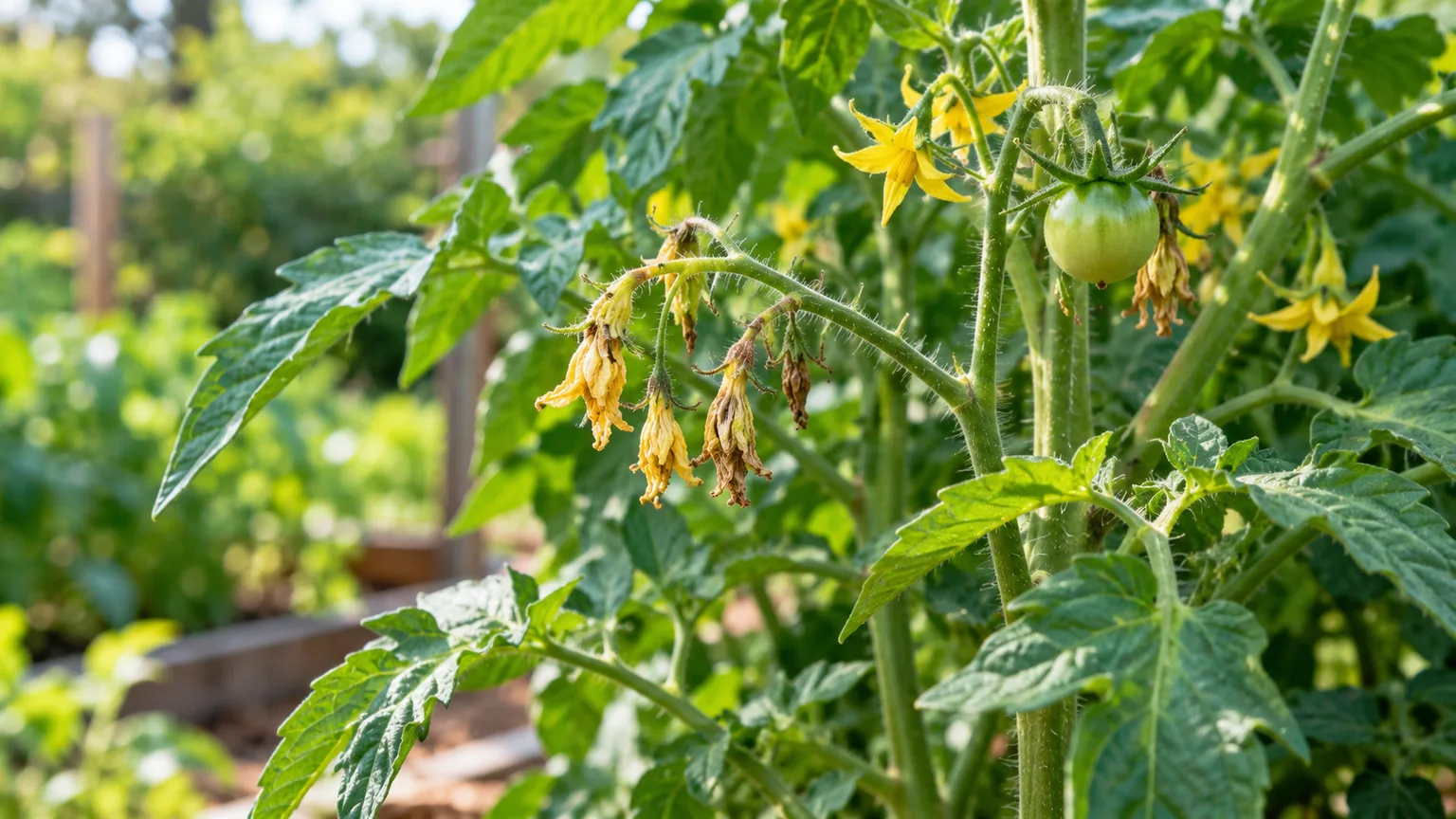
Tomato blossom drop is when a flower dries up and falls before a small fruit begins to swell behind it. The plant can look leafy and healthy while the flower stalk turns yellow and the bloom drops, leaving no tomato at all. Heat is a frequent trigger, but cold nights, dry soil, humidity, weak pollination, excess fertilizer, and heavy fruit loads can also interfere with fruit set.
Start by checking what actually fell and what the weather was like while the flowers were developing. That short diagnosis matters: adding fertilizer will not repair pollen damaged by heat, and inviting more bees will not help if high temperatures have made pollen nonviable. You cannot revive a dropped bloom, but you can remove secondary stress and protect the next group of flowers.
What Tomato Blossom Drop Looks Like
In blossom drop, the flower dries, often turns tan or brown, and falls without leaving a swelling green tomato at its base. The short flower stalk, or pedicel, may yellow before the bloom falls. A few dropped flowers among many healthy blooms can happen; a run of flowers that all open and disappear without setting fruit is a signal to check conditions.
Do not confuse this with blossom-end rot. Blossom-end rot appears on the blossom end of a tomato that has already set and grown; it becomes a water-soaked, then dark, sunken patch. The flower did its job in that case, and the fruit is present. Wisconsin Extension explains that blossom-end rot is usually tied to calcium movement in the plant and uneven moisture, not to flowers failing to pollinate; see its blossom-end rot guidance. Calcium sprays, eggshells, or garden lime will not bring back a flower that never formed a fruit.
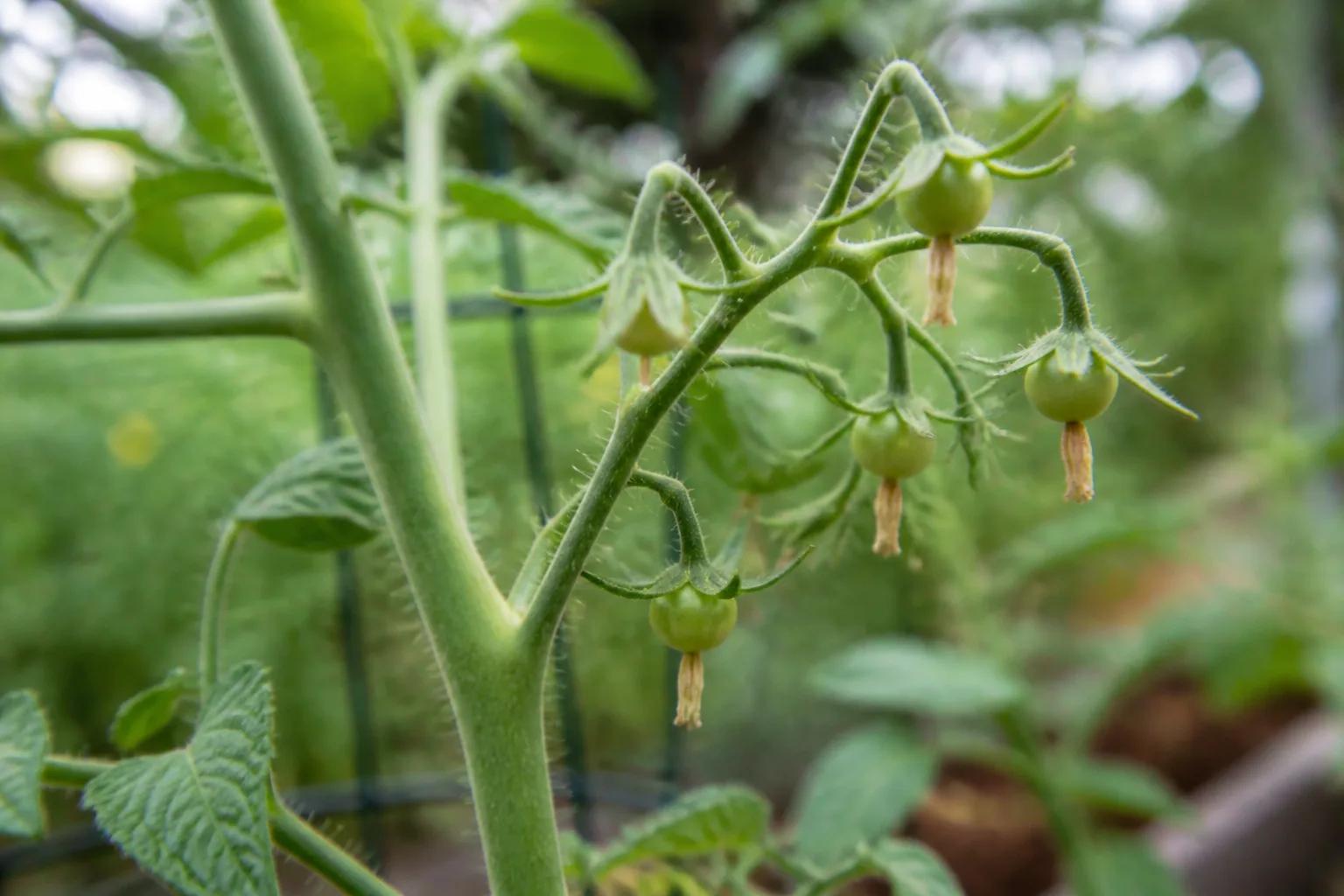
Fruit abortion is another related but different sign: a tiny tomato formed, then shriveled or fell. Heat and water stress can affect young fruit too, but the first diagnostic question is whether you ever saw a small, round ovary enlarging behind the flower. That tells you whether to investigate pollination or a later fruit problem.
A 10-Minute Check to Find the Likely Cause
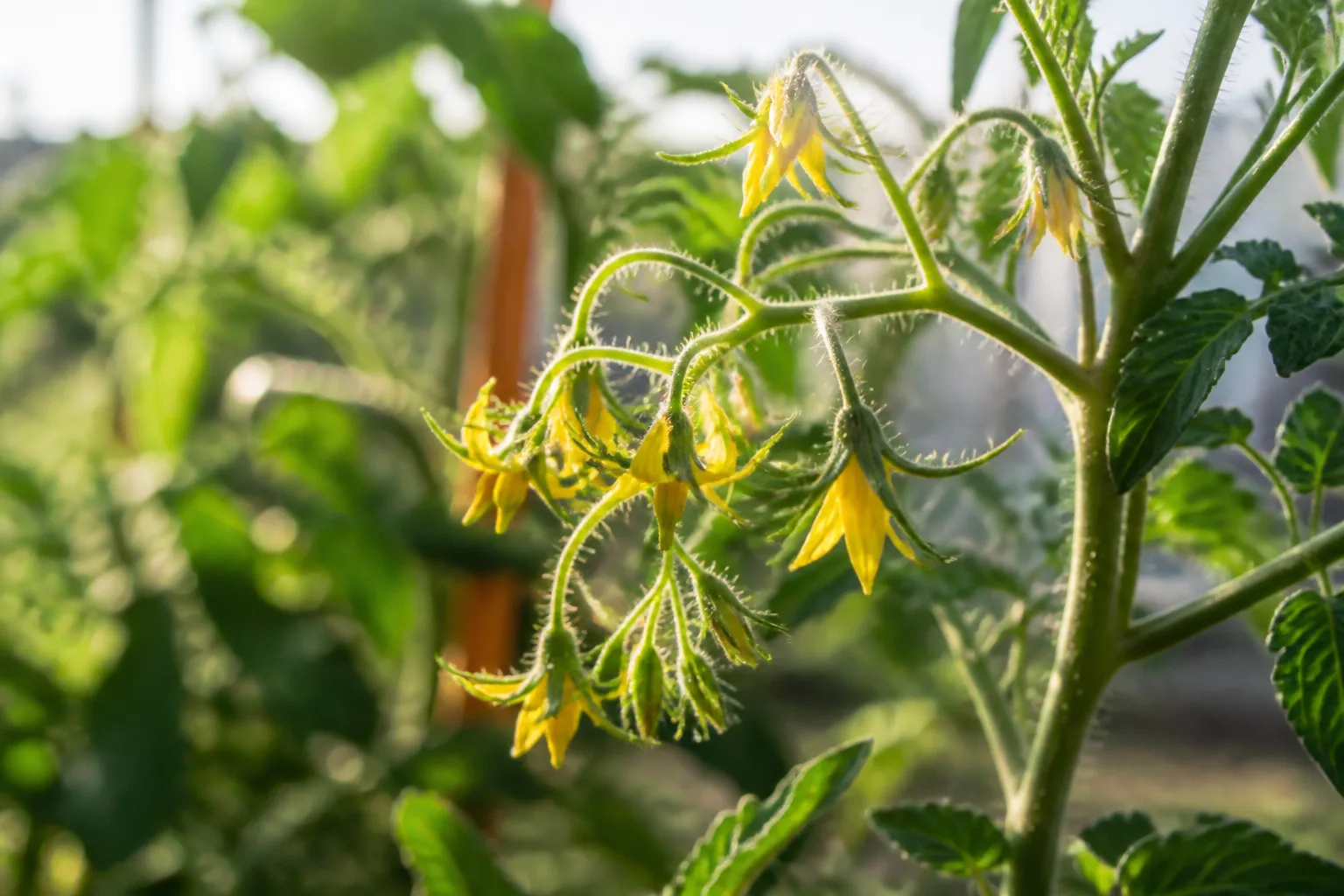
Before moving a plant, pruning it, or feeding it, inspect two or three flower clusters and write down what you see. Note whether the blossoms are newly open, already withered, or attached to a yellowing stem; whether any clusters set fruit; and whether the leaves are turgid, curled, spotted, or wilting. A few minutes of observation can keep you from treating the wrong issue.
Then compare the flower age with a short weather history. Check the daily high and overnight low for at least the past week, and note hot spells, cold snaps, heavy rain, strong wind, and long cloudy stretches. Use a thermometer near the garden if your yard runs hotter than the official weather station, especially beside a south-facing wall, paved patio, or enclosed greenhouse.
| What you see | First clue to check | Best first response |
|---|---|---|
| Many flowers drop after several hot days or warm nights | Recent highs and overnight lows | Keep moisture steady, reduce afternoon heat load, and wait for a cooler flowering window |
| Flowers fail after a cold snap | Nighttime lows and planting date | Protect future blooms from cold; avoid trapping daytime heat under covers |
| Flowers remain but almost no fruit sets in a still greenhouse or sheltered patio | Lack of vibration or airflow | Gently vibrate dry flower clusters when they are open |
| Plant wilts, soil is dry, or a container dries within a day | Root-zone moisture and container size | Water the root ball thoroughly and adjust the schedule to the actual drying rate |
| Plant is huge and dark green but has few flowers | Fertilizer history and light | Pause routine nitrogen and check whether the plant receives enough sun |
These clues are not a laboratory diagnosis. Several stresses can overlap, and the same plant can lose a flower to heat one week and set fruit normally the next. Treat the table as a way to choose the first sensible check, not as proof of a single cause.
Match the flower loss to recent weather
Tomato flowers do not respond only to the temperature at the moment you notice them falling. Heat can disrupt pollen development before the flower opens, so today’s dropped bloom may reflect conditions from earlier in the week. Purdue’s Vegetable Crops Hotline notes that pollen development occurs roughly nine days before flowers open and describes high-temperature effects on pollen and flower structure in its tomato fruit-set guidance.
That lag is why a plant may still drop flowers after the hottest afternoon has passed. Keep a simple record of flower loss and weather rather than judging a change from one day to the next. The notes are especially useful in containers, where a sunny wall or hot deck can create conditions warmer and drier than a nearby forecast suggests.
Read the plant before changing its care
If the entire plant is wilted, inspect soil moisture first. If leaves look normal and only flowers from a hot or cold spell fail, temperature is a stronger suspect than water or fertilizer. When leaves are spotted, streaked, or heavily damaged, inspect for disease or feeding insects before attributing every lost bloom to weather.
Also look at the pattern of fruit already set. A vigorous plant carrying a heavy load on its lower clusters may temporarily set fewer flowers higher up as it directs resources toward existing fruit. Missouri Extension notes this competition in its explanation of tomato fruit set. It is different from a whole plant dropping flowers during a heat wave, and it usually does not call for a drastic intervention.
Why Temperature Disrupts Tomato Fruit Set
Tomato flowers are self-fertile, with male and female parts in the same bloom, but pollen still must mature, release, and reach the stigma for a fruit to begin. Hot or cold conditions can disrupt those steps. Pollen may not develop normally, become sticky, or fail to germinate; heat can also change flower structure so pollen does not land where it needs to.
Tomato plants can tolerate brief temperature swings better than a prolonged run of stressful days and nights. Alabama Cooperative Extension says the duration of high temperature affects how long blossom drop lasts, and it notes that short exposures may have less impact than extended heat. Purdue also describes fruit-set failure after very high temperatures, particularly when plants experience repeated extreme exposure. The practical message is to consider both the thermometer and how many days the plant has been exposed.
Treat temperature ranges as warning bands
There is not one universal cutoff that predicts every lost flower. Alabama Extension reports that flowers often abort when daytime temperatures exceed 85°F and nights exceed 72°F; University of Missouri Extension flags daytime temperatures over 85°F or nights over 70°F, as well as nights below 55°F. Oklahoma State Extension notes poor set with nights below about 60°F or above 70°F and days consistently above about 92°F. Penn State Extension likewise warns that blossom drop can occur when nights dip below 55°F or rise above 75°F.
Those ranges overlap, but they are not identical. Cultivar, duration, humidity, plant health, and growing system all affect the outcome; the bands are an early warning, not a promise that fruit will set below one number or fail above it. A Tomato Almanac comparison of Extension recommendations makes the spread between published thresholds clear. As a practical rule, investigate when days repeatedly reach the upper 80s or 90s, when nights stay near or above 70°F, or when nighttime temperatures fall into the 50s. Purdue’s tomato fruit-set article explains the pollen-development timing and other heat effects.
Humidity can affect pollen release too. Missouri Extension gives a broad relative-humidity range of roughly 40 to 70 percent for tomato pollination; pollen may shed poorly in very humid air and may dry under very low humidity. Most gardeners do not have a reliable humidity reading at flower height, so use humidity as a supporting clue rather than chasing a target with frequent misting.
What to Do During a Hot Spell
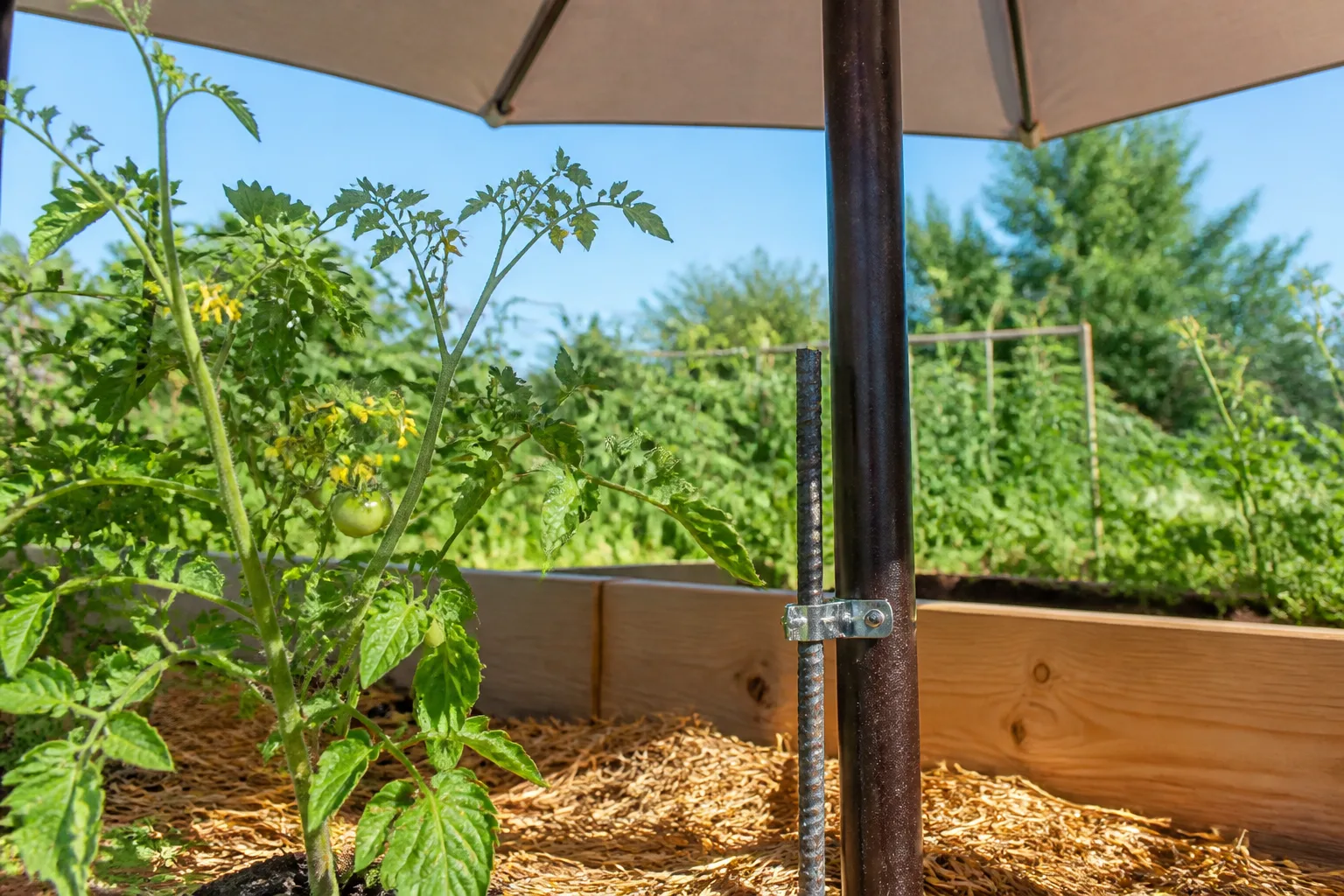
You cannot cool the night air around an outdoor tomato, and shade does not fix pollen already damaged during development. Keep the root zone evenly moist, mulch the soil to slow evaporation, and reduce intense afternoon sun if the plant is in a container or exposed bed. A breathable shade cloth or a well-positioned patio umbrella can lower direct solar load, but leave room for airflow and do not wrap the canopy in plastic.
Use shade as a temporary tool during the hottest part of the day, not as an all-season roof. Too much shade can reduce the energy available for flowering and fruit growth, while shade cannot lower warm night temperatures. Oklahoma State Extension recommends at least six hours of sun for tomatoes in its tomato blossom-drop article; preserve good morning and indirect light while reducing the harshest afternoon exposure. For a deeper discussion of temperature thresholds and shade trade-offs, see the related tomato heat and fruit-set guide.
Avoid trying to compensate with extra fertilizer or constant watering. Water deeply enough to wet the active root area, then let soil condition and weather determine the next irrigation; do not keep the bed saturated. Heat-tolerant varieties can extend the fruiting window in future plantings, but even those varieties are not immune to prolonged extreme heat.
How to Handle Cool Nights and Early-Season Drop
When flowers drop after a cold spell, avoid setting out new transplants too early just because the daytime weather feels pleasant. Soil and night air can remain cold after sunny afternoons, and tomatoes are warm-season plants. Penn State Extension recommends waiting until conditions are suitable and reports that nighttime temperatures below 55°F can contribute to blossom drop; other Extension guidance uses a slightly warmer caution range.
For a brief cold night, use a row cover or other breathable protection that does not rest heavily on flowers. Open or remove it once daytime temperatures climb so the plant does not overheat underneath it. A cover can soften a short cold dip, but it cannot make a badly timed planting thrive through repeated chilly nights.
If a few early flowers drop but the plant remains vigorous, keep it growing rather than replacing it. Later clusters may set when nights warm. In climates with a short spring, choose early-maturing cultivars and transplant after the local frost risk has passed; in climates with long hot summers, plan a spring crop that can set before peak heat and a second heat-tolerant crop only where the season allows.
When Pollination Is the Problem
Tomatoes do not normally need honeybees to transfer pollen from one plant to another. Their flowers are usually self-pollinating, but pollen must move from the anthers onto the stigma, often through wind or vibration. Missouri Extension describes air movement outdoors and mechanical vibration in protected growing systems as common ways pollen moves.
Poor vibration is more plausible when plants grow inside a greenhouse, tunnel, screened enclosure, or very sheltered patio, or when the weather stays still and wet. A healthy tomato plant can flower heavily in those settings without setting much fruit. In contrast, adding pollinator flowers is not the primary remedy for flowers aborting during a heat wave: no amount of insect activity can correct pollen damaged by temperature.
Horticulture writer Madison Moulton’s horticulture-reviewed Epic Gardening guide to tomato blossom drop describes gentle hand vibration as a practical step when natural movement is limited. Try it only after the flowers are open and dry; it is a targeted aid for an indoor or sheltered plant, not a cure-all for every dropped bloom.
How to vibrate flowers by hand
On a dry morning or late morning, lightly tap the flower truss or flick the supporting stem so the open blossoms quiver. You can also touch an electric toothbrush briefly to the flower stem, not the petals, to imitate vibration. Repeat gently every day or two while new flowers are open if the space has little air movement.
Do not shake so hard that stems crack or flowers are knocked off. If temperatures are too high or too low, hand vibration may move pollen that is not viable, so check the weather first. A small green fruit appearing behind the flower is the sign that pollination and fertilization have progressed; a flower simply shedding old petals is not necessarily a failure if the ovary is swelling.
Watering and Root Stress
Drought stress can make tomatoes abort flowers, especially when a hot spell increases water loss through leaves. Aim for steady moisture through the active root zone instead of alternating between bone-dry soil and a heavy soak. Alabama Extension suggests roughly 1 to 1.5 inches of water weekly as a general garden baseline, but rainfall, soil texture, raised beds, container size, and heat all change what a plant actually needs.
Check the soil a few inches down before adding water. If it is dry at root depth, water slowly at the base until moisture reaches the root ball; if it remains wet and heavy, more irrigation is not the answer. Containers may need more frequent checks than in-ground plants because their smaller soil volume warms and dries faster.
Mulch with a few inches of clean straw, shredded leaves, or another garden mulch to slow evaporation and buffer soil temperature. Keep mulch a little away from the stem and water at soil level where possible. Penn State Extension’s tomato growing guidance recommends regular irrigation and notes that high-nitrogen or excess fertilizer can favor foliage over fruit; Oklahoma State also advises keeping soil from drying out and using mulch to reduce moisture loss.
Do not assume that a plant watered every day is well watered. A short, shallow splash can wet only the surface, while frequent heavy watering in poorly drained soil can suffocate roots. If the plant wilts even when soil is wet, check drainage and roots rather than increasing the schedule.
Humidity, Wind, and Disease
Very humid air can keep pollen from shedding cleanly; very dry air can make it harder for pollen to stick. This matters most in a greenhouse, dense planting, or a region with prolonged muggy weather, where the flower zone may differ from the humidity reading on a household weather app. Missouri Extension’s 40 to 70 percent range is a useful reference, not a requirement that every gardener must measure or force.
Improve airflow by spacing plants according to their growth habit, tying vines to supports, and removing only necessary damaged or crowded growth. Do not heavily prune healthy leaves to “dry out” flowers: leaves make the carbohydrates the plant needs, and excessive pruning can expose fruit to sunscald. In humid regions, prioritize open spacing, morning watering, and removal of diseased material rather than wetting the foliage to manipulate humidity.
Strong, dry wind can desiccate flowers or physically knock them off, while diseases and severe pest injury can stress a plant enough to affect flowering. Look for lesions, mold on blossoms, deformed growth, or visible insects before spraying. If you find a specific pest or disease, identify it and use local Extension guidance; a broad insecticide application can harm pollinators and will not address a temperature-driven failure.
Fertilizer, Sunlight, and Heavy Fruit Loads
A tomato plant covered in lush, very dark foliage but carrying few flowers may be getting too much nitrogen. Excess nitrogen can push vegetative growth at the expense of flowering and fruit set; high fertilizer rates can also raise salts around roots. Alabama Cooperative Extension advises avoiding overfertilizing and using a soil test to determine what the bed actually needs.
Do not respond to every dropped flower with a “bloom booster.” Adding phosphorus without a diagnosed shortage may not help, and repeated feeding can create another imbalance. Follow the fertilizer label and local soil-test recommendations; if you fertilized heavily, stop adding more until you know what the soil requires.
Light matters because tomatoes need enough sun to make energy for growth and fruit. Oklahoma State recommends at least six hours of sunlight a day. A shaded plant may flower sparsely or produce weak growth rather than show the concentrated flower-drop pattern that often follows a heat event.
Some flower loss can also occur when the plant is carrying many developing fruits. If lower clusters have set a heavy crop while upper flowers fail, give the existing fruit time to mature and keep moisture and nutrition stable. Do not remove healthy fruit to “force” more flowers unless an Extension recommendation for your growing system specifically supports that practice.
Choose Varieties and Planting Dates for Your Climate
Variety choice is a useful prevention step, especially in regions with a long hot summer or a short cool spring. For early crops in cool climates, choose an early-maturing tomato and set it out when nights are warm enough. For mid- or late-season harvest in hot climates, look for descriptions such as heat-set, heat-tolerant, or hot-set and compare those claims with trials or local Extension recommendations.
Alabama Extension lists cultivars such as Bella Rosa, Phoenix, Red Bounty, and Tribute as varieties that have performed well in Alabama heat; Oklahoma State recommends choosing early-, mid-, and late-season types suited to the local planting calendar. Names that succeed in one region are not guaranteed to perform the same way in another, so use local trial results and seed descriptions as a starting point.
Do not expect any cultivar to set fruit through unlimited heat. Heat tolerance improves the odds in a stressful window; it does not eliminate the effects of high nighttime temperatures, drought, or very hot days. For the current crop, focus on moisture, airflow, and temporary afternoon shade. For next year, plan the planting date so the first major flower flush does not coincide with the most extreme part of the season.
Why Common Quick Fixes Often Miss
Blossom-set sprays are not a reliable solution for all conditions. Oklahoma State Extension notes in its tomato blossom-drop guidance that hormone-type sprays may reduce spring drop caused by cool nights but have little effect on fruit set during high temperatures. Even when a spray encourages a fruit-like structure to form, it cannot replace sound growing conditions or guarantee normal fruit.
Do not mist leaves repeatedly to “raise humidity” without knowing that the air is too dry. Wet foliage can increase disease risk, and a spray of water will not repair pollen already damaged by heat. Likewise, Epsom salt is magnesium sulfate, not a universal bloom treatment; adding it without a diagnosed need can create nutrient problems.
Avoid piling on nitrogen, calcium, phosphorus, or homemade remedies because blossoms fell. First identify whether there is no fruit at all, a tiny fruit that aborted, or a fruit with a disorder. Match the treatment to the stage where the problem occurred and change one or two controllable factors at a time so you can see what actually helps.
What Recovery Looks Like
A fallen blossom will not reopen or turn into a tomato. The recovery you are looking for is a later flower cluster that stays attached and develops a small green fruit. Once conditions move back into a suitable range, healthy plants can resume setting flowers, although the number and timing depend on the cultivar, season length, and the plant’s overall condition.
Give the plant time after a hot or cold stretch. Because temperature can affect pollen before a flower opens, the first new blooms after a weather change may still reflect earlier stress. Continue steady watering, avoid extra fertilizer, and inspect the next few trusses rather than expecting a same-day turnaround.
If blossom drop persists through several weeks of mild weather, revisit the diagnosis: check the nighttime temperatures at plant level, soil moisture and drainage, fertilizer history, sun exposure, airflow, and visible disease or pests. If the plant remains healthy but does not set fruit, contact your local Extension office with the cultivar name, planting date, recent day/night temperatures, and a photo of the flower stalks. That information is far more useful than a generic request for a “blossom drop spray.”
Conclusion
Tomato blossom drop is usually a sign that conditions interrupted pollination or early fruit development, not a reason to dump fertilizer on the plant. Confirm that no small fruit formed, review temperatures over the previous week, then check root-zone moisture, light, airflow, and fertilizer use in that order.
Keep soil evenly moist, use temporary afternoon shade when intense sun compounds heat stress, and gently vibrate flowers only when still air is the likely issue. Choose varieties and planting dates for your climate next season. You cannot save a bloom that has already dropped, but you can keep the plant healthy and give its next flowers a better chance to set.



