How to Grow Tall Fescue Grass: Seed, Mow, and Care
Learn when to seed tall fescue grass, how much seed to use, and how to water, mow, and repair thin patches without overwatering or overfeeding your lawn.
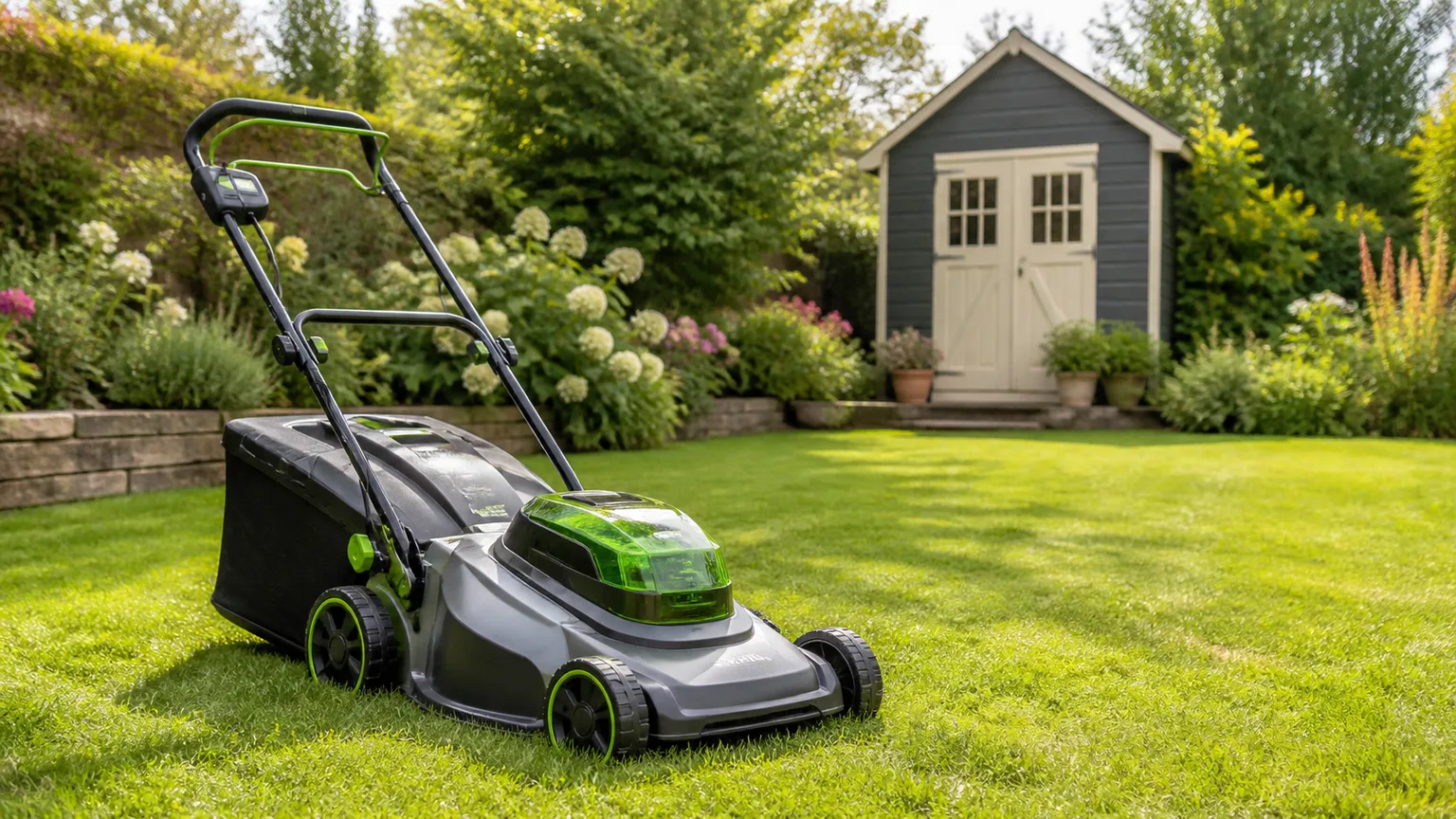
Tall fescue can make a resilient lawn where cool-season grass is appropriate and summer heat is a recurring challenge. It tolerates heat and dry spells better than many cool-season grasses, but that does not make it a warm-season grass or a no-irrigation solution: it may go dormant in hot weather, and a thin stand will not fill a wide bare area quickly.
The two decisions that matter most come before routine mowing. First, make sure your climate and site suit cool-season turf. Then choose a locally adapted turf-type seed blend and sow it in your region’s fall window. Once established, mow high enough to retain leaf area, water according to weather and soil, and repair thinning before weeds occupy the gaps.
Is tall fescue the right grass for your yard?
Tall fescue (Festuca arundinacea) is a perennial, cool-season turfgrass. It grows most actively in mild weather, so it generally establishes and recovers best in late summer and fall, with growth resuming in spring. Its strong point is its relative tolerance for heat, drought, and wear among cool-season grasses. Its limits are just as important: it is not immune to summer stress, and its bunch-forming growth habit does not knit damaged turf back together like a spreading grass can.
That trade-off makes tall fescue a sensible candidate in parts of the transition zone and in cooler regions where homeowners want a tougher cool-season lawn. It can also be used farther south where local extension guidance supports it, but summer heat and humidity may thin it. In the warmest parts of the South, compare local warm-season options before committing to a cool-season lawn that may need recurring fall repair.
Cool-season does not mean summer-proof
Tall fescue is often sold as a heat-tolerant or drought-tolerant lawn grass. Those terms are comparative: tall fescue may survive dry conditions better than another cool-season turf, yet still turn gray, roll its leaves, slow growth, or go brown and dormant during prolonged heat and drought. If you need an actively growing, green lawn during a hot summer, plan for supplemental water or choose a species adapted to that climate.
A dormant lawn is not automatically dead. Maryland Extension’s lawn maintenance calendar notes that established tall fescue can stop growing and turn brown during hot, dry weather, then green up when cooler temperatures and rainfall return. Prolonged drought, shallow soil, tree-root competition, or repeated foot traffic can still kill portions of the lawn. In other words, “survives a dry spell” is not the same promise as “stays green without water.”
Tall fescue is also a bunch-type grass. Individual plants expand by producing shoots called tillers, with modern turf types sometimes having weak rhizomes, but they do not spread aggressively across a bare patch. Iowa State Extension describes tall fescue as high in wear resistance but low in recuperative ability compared with Kentucky bluegrass, which spreads through rhizomes. That distinction explains why an old lawn may contain isolated coarse clumps: the species can persist, yet fail to close the spaces between plants.
Turf-type tall fescue versus K-31
Seed labels can make two very different-looking lawns sound as if they are the same product. Kentucky 31, usually labeled K-31, is an older tall fescue cultivar historically used for forage and rough utility turf. It remains an option for some low-cost, low-input applications, but it tends to have wider, coarser blades and a more open appearance than modern turf-type cultivars.
Turf-type tall fescue seed is generally sold as a blend of multiple cultivars rather than one named variety. The blend is intended for home-lawn texture and density, and the individual cultivar mix may change as seed availability changes. Alabama Cooperative Extension describes modern turf types as finer, shorter, darker, and denser than K-31; Colorado State Extension’s species-selection guide likewise notes that retail turf-type blends commonly combine several cultivars. Read the species and cultivar information on the tag rather than relying on a brand name or a phrase such as “dense shade.”
For a home lawn, look for a turf-type blend suited to your region and intended use. Where trial data are available, local extension recommendations and National Turfgrass Evaluation Program results are more useful than a generic national “best seed” list because cultivar performance depends on climate and maintenance. NTEP’s current testing program publishes tall fescue performance data by location; it is a comparison tool, not a guarantee that one cultivar will win in every yard.
Where tall fescue performs—and where it does not
Tall fescue performs best where it receives sun for much of the day, grows in reasonably drained soil, and has enough room for roots to develop. It tolerates light to moderate shade better than Kentucky bluegrass in many comparisons, but no turfgrass thrives indefinitely under dense tree canopy or beside large roots competing for water. A few hours of filtered afternoon shade is a very different site from a north-facing strip that stays dim and dry all day.
It adapts to many soil textures, including clay and sandy soil, but “adaptable” does not mean drainage and structure are irrelevant. Waterlogged soil deprives roots of air; compacted soil limits infiltration and rooting; a shallow layer over rock leaves little space to store moisture. Before spending on seed, check whether the area drains after rain, whether the top few inches are compacted, and how much direct light it gets during the growing season. A soil test can identify pH or nutrient issues, but it cannot fix deep shade or a poor site.
Match the grass to light, soil, and traffic
Use the grass’s strengths and weaknesses as a quick selection screen. Tall fescue is a reasonable choice for a sunlit or partly shaded lawn in a cool-season or transition climate, especially when you want more heat and drought resilience than Kentucky bluegrass offers. It can handle moderate activity, but repeated games on the same worn path may expose soil faster than the grass can recover.
| Yard condition | Tall fescue fit | What to consider |
|---|---|---|
| Full sun, cool-season or transition climate | Often a strong fit | Choose a locally recommended turf-type blend; expect regular mowing |
| Light or filtered shade | Often workable | Tall fescue can tolerate some shade, but fine fescues may suit deeper shade and lighter traffic better |
| Dense shade or heavy tree-root competition | Usually a poor fit | Reduce the lawn area, prune only where appropriate, or consider a groundcover adapted to the site |
| Hot, humid summer with limited irrigation | Conditional | Summer dormancy and thinning are possible; compare warm-season turf suited to your locality |
| Heavy, concentrated wear | Conditional | Tall fescue tolerates wear but repairs slowly; Kentucky bluegrass may recover faster where climate and shade allow |
| Wet, poorly drained soil | Fix drainage first | Persistent wetness increases root stress and disease risk |
Homes & Gardens’ comparison of drought-tolerant grasses makes a similar practical distinction: tall fescue suits some cooler-climate lawns needing more drought resilience, while fine fescue can be a better fit for lower-traffic sites where reduced water use and shade matter more. Use that comparison as a starting point, then let local extension advice settle the species and blend choice.
When to seed tall fescue
For most cool-season regions, late summer into early fall gives tall fescue the best balance of warm soil, cooler air, and time to root before winter. Seedlings can establish while weeds compete less aggressively than in spring, and the lawn gets another cool growing period before the next summer. That is a seasonal pattern, not one universal date range.
Follow local fall dates, not the calendar alone
Your local extension calendar should decide the deadline. University of Maryland Extension’s lawn calendar identifies late summer to early fall as its prime tall fescue establishment period and advises seeding no later than mid-October in its region, with local weather and frost timing still relevant. NC State Extension’s tall fescue calendar gives different windows within North Carolina: August 15 to September 1 in the western region, and September 1 to October 1 in the Piedmont and coastal plain. The difference is a useful reminder that “September is best” can be too late in one place and too early in another.
Soil temperature and the expected time to frost help explain the dates. Maryland Extension’s seeding guidance places the optimum germination range for cool-season grass seed at about 50–70°F, measured near one inch deep. Seed needs time after sprouting to form roots and tillers; germination alone does not mean a stand is ready for winter. Use your state extension’s tall fescue calendar, check the weather forecast, and work backward from the point when seedlings must be established before hard freezes.
Plan soil testing and site preparation earlier than the seed date. If the test calls for lime, it may need time to alter the soil; if the site is compacted, you may want to schedule core aeration before spreading seed. Buying seed at the last minute can also leave you with whatever mix happens to remain on the shelf, rather than a blend suited to your region.
Treat spring as a fallback window
Spring seeding can repair a small area that cannot wait, and Maryland Extension notes it may help thicken a lawn after poor fall establishment. It is a narrower path to success: young grass has less time to root before summer heat, while warm-season weeds are beginning to germinate. Spring can work when you can water carefully and the local extension calendar supports it, but it is not automatically equal to fall.
If you must seed in spring, prepare the surface well, keep seed moist without washing it away, and protect seedlings from foot traffic. Do not sow into a weed-control schedule without checking the product label: some pre-emergent products interfere with grass seed, and waiting periods vary. If a large renovation can wait until the locally recommended fall window, postponing often makes establishment less stressful.
How to establish a new lawn from seed
A successful tall fescue lawn begins with seed-to-soil contact, not a deep layer of cover. The main failure points are planting at the wrong time, burying seed, letting the surface dry during germination, and applying more seed or fertilizer than the site needs. Work through the job in that order rather than trying to compensate for one mistake with another.
Prepare a shallow, even seedbed
Start by measuring the area and inspecting the soil. Remove debris and weeds, correct drainage problems where feasible, and loosen compacted soil rather than merely dusting seed over hard ground. A soil test helps determine whether lime or nutrients are needed; don’t assume every lawn needs lime or phosphorus. If the existing lawn is thin rather than bare, core aeration is most useful where traffic or clay has compacted the soil. It is not a yearly ritual for every lawn.
Rake the surface level and break up large clods so the seed can land evenly. Tall fescue seed should sit at or very near the soil surface, pressed against the soil or covered only lightly. Maryland Extension warns that turfgrass seed needs light and should not be covered by more than about half an inch of soil or a quarter inch of compost or straw. A half-inch burial is not a target depth: for most home seeding, a gentle raking or rolling is enough to secure contact without hiding the seed.
A thin layer of clean compost can help retain moisture on a small patch, but a thick blanket can block light and delay emergence. Straw is optional; if you use it, apply only a sparse layer that lets you see the soil between stems. Do not use hay that may introduce weed seed, and avoid netting or coverings that can entangle wildlife or make later mowing difficult.
Spread a measured rate and keep the surface moist
Read the seed label and local extension recommendation before calculating the amount. For a new tall fescue lawn, University of Maryland Extension’s starting-a-lawn guide lists 6–8 pounds of seed per 1,000 square feet. Alabama and North Carolina recommendations are in a similar general range, though local rates and mixtures differ. Seed labels may quote a rate for a blend or for pure tall fescue, so follow the label and regional guidance instead of automatically applying the maximum.
Divide the measured amount in half and spread one half north-to-south, then the other half east-to-west. Two lighter passes usually distribute seed more evenly than one heavy pass. A hand spreader is useful for patches; a broadcast spreader covers a large area. Lightly rake or roll afterward, then water gently so the seed settles without running into low spots.
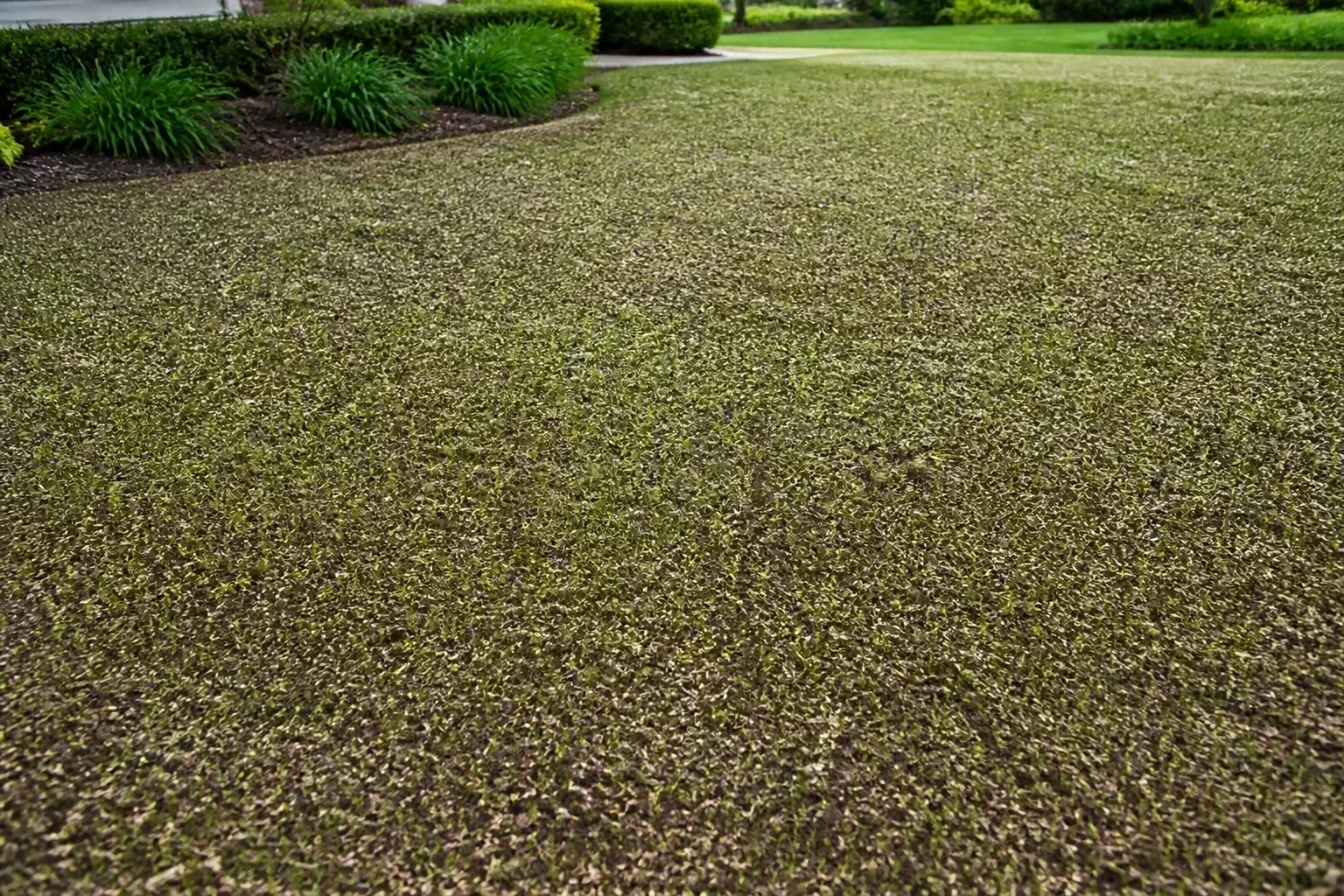
The top layer of soil must stay consistently moist until seedlings emerge. Depending on sun, wind, soil texture, and rain, that may mean several short, gentle waterings during the day rather than one deep soaking. The goal is to prevent the seed zone from drying, not to keep the ground soggy. On slopes or compacted clay, apply water in shorter cycles to limit runoff; on sandy soil or a sunny site, check more often because the surface dries faster.
Germination time varies with seed quality and weather. Iowa State reports that tall fescue may germinate in five to ten days under favorable conditions, while Maryland Extension gives about two weeks as a planning estimate. Do not dig up a bed after a few days to look for seed. Once most seedlings are up, gradually reduce watering frequency and encourage deeper rooting while avoiding dry spells that wilt tender plants.
Keep people and pets off the new area as much as possible. Maryland Extension recommends restricting traffic for at least a month after germination or until the lawn has been mowed twice. Make the first mow when seedlings are rooted firmly and have reached the upper end of your intended mowing height; use a sharp blade and remove no more than one-third of the leaf. A mower that tears seedlings out can undo the work of even, careful sowing.
Overseed a thinning lawn without creating a mat
Tall fescue can look clumpy because it fills space by producing shoots from existing plants rather than spreading rapidly sideways. Before reseeding, find out why the lawn thinned. Summer heat, shade, compacted soil, poor drainage, tree roots, insects, disease, and concentrated traffic need different fixes. If you simply broadcast seed over a continuing problem, the new grass may fail for the same reason the old grass did.
Estimate how much of the target area is genuinely bare or dead, then scale the seed amount to that portion. Alabama Extension illustrates this as a percentage calculation: if half the lawn area needs new grass, use about half the establishment rate for that lawn area, not a full renovation rate over all of it. Follow your local label and extension directions, especially if the lawn is only patchy. Excessively dense seeding makes seedlings compete for light, moisture, and nutrients and can increase disease pressure.
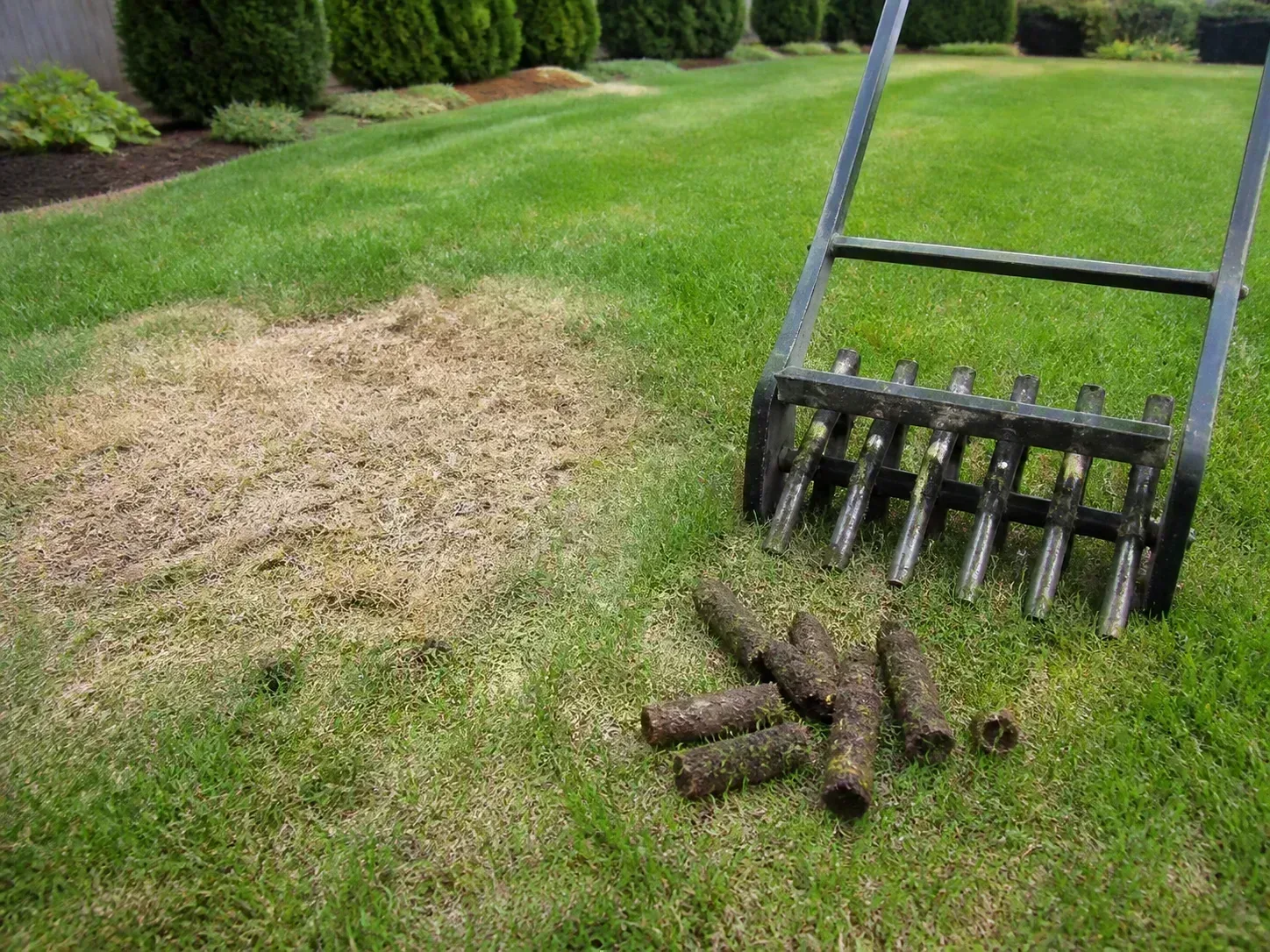
For small bare spots, rake the surface to expose soil, spread seed evenly, and press it in. For broad thin areas, core aeration can create openings for seed where compaction is the underlying problem; seed immediately afterward and keep the surface moist. A slit seeder is another option for a large renovation. Aeration does not cure every cause of thinning, and it will not compensate for deep shade or a badly drained site.
Do not automatically dethatch. NC State says thatch removal is generally unnecessary for tall fescue lawns. If the lawn feels spongy or water cannot reach soil because of an unusually thick layer, identify the layer and correct the underlying management issue before using aggressive equipment. For a normal lawn with compacted soil, core aeration addresses soil structure; dethatching removes an above-soil layer and is a different job.
Mow for roots, leaf area, and usable turf
A practical mowing range for an established tall fescue lawn is about 3–4 inches, adjusted to local guidance, cultivar, season, and the look you want. Iowa State recommends 3–4 inches for tall fescue; NC State’s established-lawn calendar commonly uses 2.5–3.5 inches and raises the summer cut to about 3.5 inches. In hot weather, staying near the higher end preserves more leaf area and shades the soil. Do not confuse a range with a precise universal setting: mower calibration and uneven ground change the actual cut.
Follow the one-third rule: remove no more than one-third of the blade at a time. If the grass has reached five inches and your target is 3.5 inches, it is ready for mowing; if it has grown much taller, lower it in stages over several cuts instead of scalping it. Tall fescue can grow quickly during mild weather, so mowing frequency should respond to growth rather than a fixed weekly schedule.
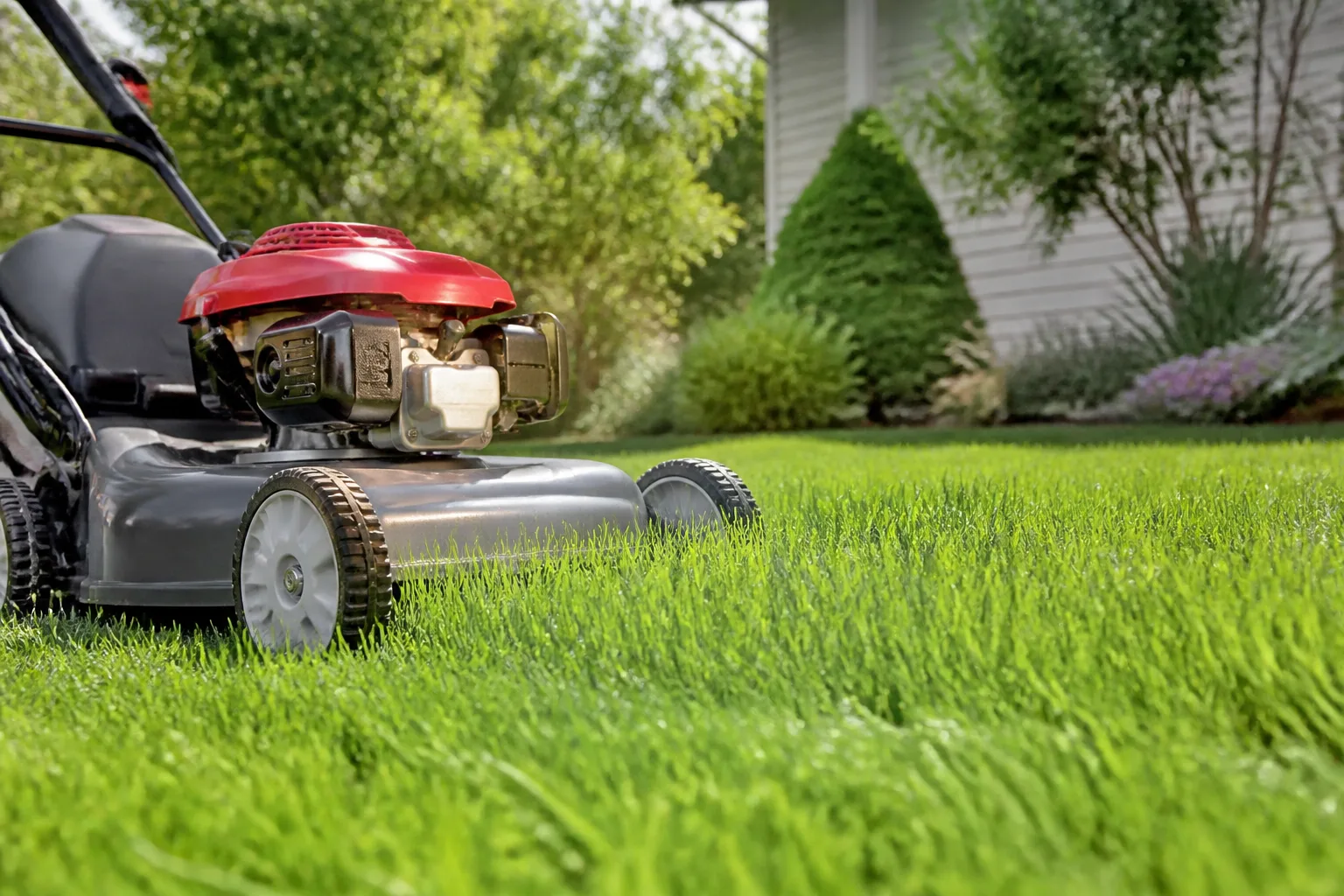
Keep mower blades sharp. A dull blade shreds leaf tips, leaving a whitish cast and ragged edges, while cutting too short exposes soil and weakens the turf’s ability to shade itself. Mulch fine clippings back into the lawn when they are not clumped; collect them if they smother the grass or if a local disease diagnosis calls for a specific change. Leave dormant summer turf unmowed while it is not growing, then resume when active growth returns.
Water and feed established grass by condition
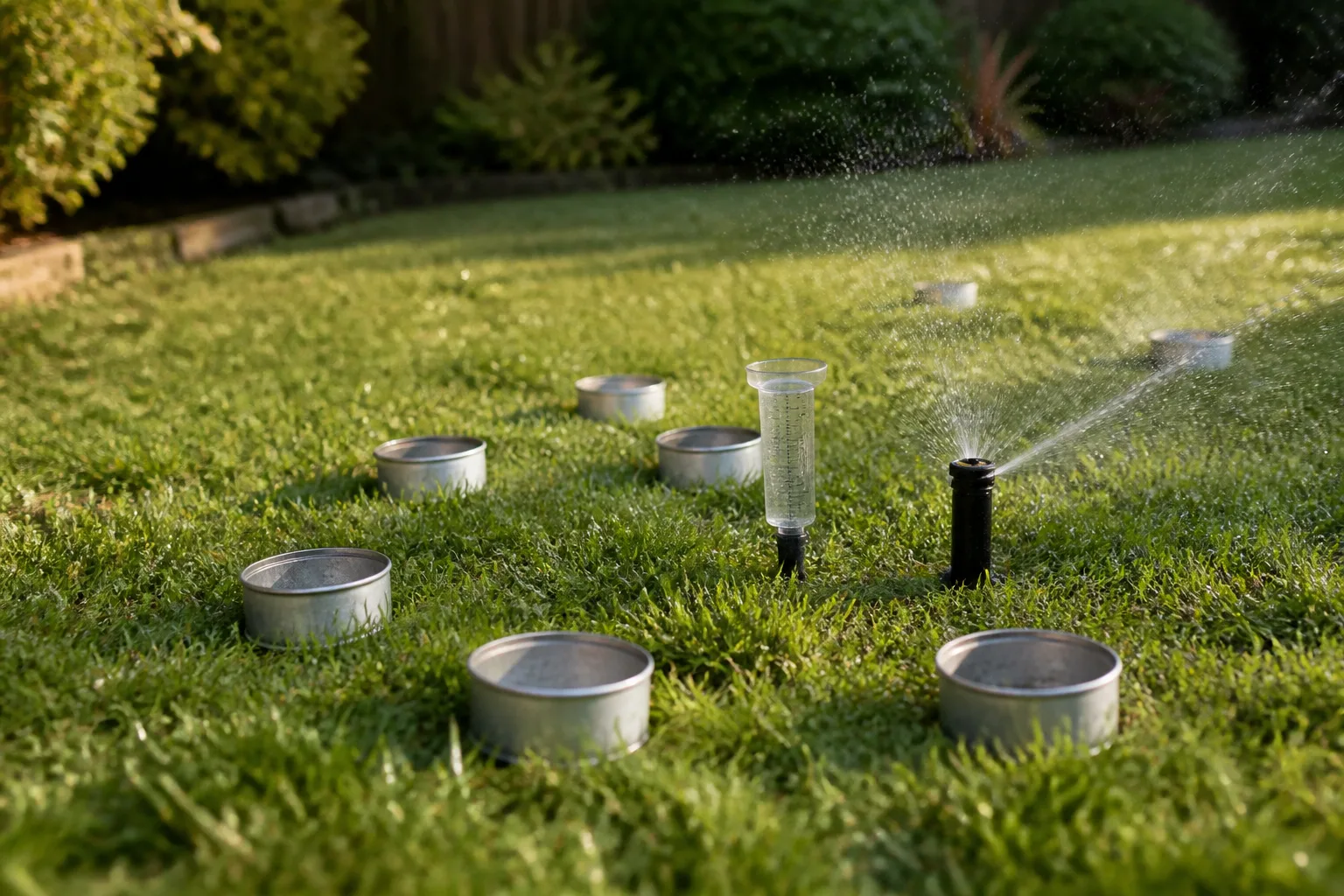
For actively growing, established tall fescue, roughly one inch of water per week from rainfall and irrigation is a common starting point, not a mandatory weekly prescription. Soil, slope, shade, wind, temperature, and root depth all change how quickly a lawn dries. Alabama Extension’s tall fescue guidance advises watering when the grass begins to show moisture stress, such as a gray cast and rolled or wilted blades, and wetting soil several inches deep. Use a screwdriver or soil probe to check whether irrigation reached the root zone, and use catch cups to measure how much a sprinkler actually applies.
When irrigation is needed, water in the early morning and apply enough to wet the root zone, then allow the surface to dry before watering again. A few deeper applications generally encourage better rooting than frequent shallow sprinkling on an established lawn. If water runs off, split the irrigation into shorter cycles with time between them. During summer, decide whether your goal is to keep the lawn actively green or simply keep crowns alive through a dry spell; those goals require different amounts of water.
Fertilize from a soil test and a local tall fescue calendar, not a generic annual nitrogen total. Nitrogen needs depend on climate, clippings left on the lawn, soil, use, and the expected color and growth rate. Excess nitrogen in hot, humid weather can worsen brown patch risk, and fertilizer cannot correct poor drainage, deep shade, or drought. In some regions fertilizer use is also subject to local restrictions, so check the current rules and label before applying it.
Grass clippings left in fine pieces return some nutrients and organic matter to the lawn; they do not mean you can skip soil testing indefinitely. Phosphorus and lime are especially poor candidates for guesswork: apply them when a test indicates a need. A local calendar will tell you whether an established lawn benefits from a fall application, whether spring feeding is needed, and when to avoid fertilizer during dormancy or heat stress.
Handle summer color, dormancy, and brown patches
Summer browning is a symptom, not a diagnosis. Tall fescue may turn tan because it has gone dormant in hot, dry weather; it may also thin because of drought that killed crowns, uneven sprinkler coverage, compaction, shade, pet urine, insects, or disease. Look at the pattern and the conditions before watering or reseeding. Check soil moisture at several spots, compare sunny and shaded areas, and see whether brown sections follow sprinkler gaps or traffic paths.
If a lawn is dormant but the crowns are alive, cooler weather and rain may restore growth. Maryland Extension advises not mowing or fertilizing dormant tall fescue. Avoid the temptation to push stressed turf with a heavy summer feeding; that can add growth demand just when roots and leaves are coping with heat. If keeping the lawn green through summer is a firm requirement, consider whether a locally adapted warm-season grass would be a better long-term fit.
Distinguish likely disease from other stress
Brown patch is a fungal disease that can damage tall fescue in warm, humid weather, especially when grass leaves stay wet for long periods. NC State Extension’s lawn calendar describes roughly circular tan, brown, or yellow patches in mown lawns, often several inches to several feet across; close inspection may reveal tan leaf lesions with dark-brown borders. A photo of a brown patch is not enough to confirm the disease, because drought, gray leaf spot, grub injury, poor irrigation coverage, and other problems can look similar.
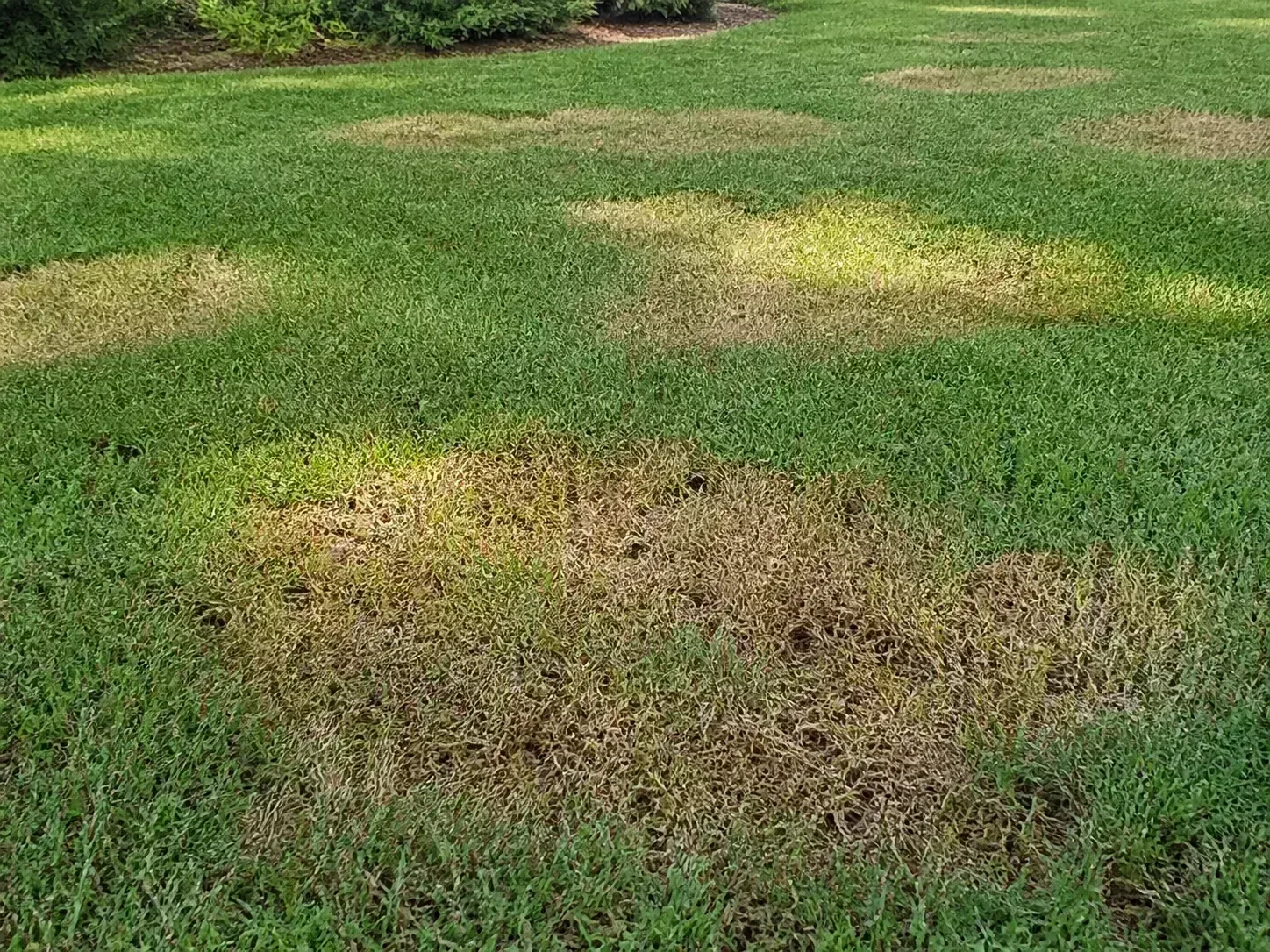
Conditions matter as much as appearance. NC State Extension notes that prolonged leaf wetness, poor drainage, shade, overwatering, late-day irrigation, and excessive nitrogen favor brown patch. Watering in the morning gives foliage time to dry; avoid keeping the canopy wet overnight. Cultivars also vary in susceptibility, which is another reason to buy a locally recommended blend rather than choosing seed by color or price alone.
If patches expand, seedlings or grass blades show lesions, or the lawn repeatedly fails in the same conditions, ask your county extension office or a turf diagnostic service to inspect a sample. Correct irrigation timing, soil compaction, drainage, and mowing first when those are the likely stressors. Use a pesticide only if a reliable diagnosis and local guidance show it is appropriate, and follow the current product label; brown color alone is not a reason to apply fungicide.
Conclusion
Tall fescue is useful when a lawn needs a cool-season grass that handles more heat and dry weather than many alternatives, but the fit is conditional. Choose turf-type seed for a home lawn, confirm your local fall seeding window, prepare a shallow seedbed, and keep new seed evenly moist while it establishes. Afterward, mow around 3–4 inches, irrigate when the soil and grass show need, and base fertilizer on a soil test and regional guidance. When summer browning appears, diagnose the cause before you reseed: dormancy, drought, disease, and shade call for different responses.