24 Tall Perennial Flowers to Add Height to Your Garden
Find 24 tall perennial flowers for sunny, shady, wet, or dry gardens, with realistic heights, bloom seasons, spread, and notes on staking and winter care.
A tall perennial can make a border feel layered, screen a fence, or lift flowers above a low groundcover. But a plant labeled “6 feet” may be a poor fit if its flower stalk is the only part that reaches that height, it needs consistently damp soil, or its heavy blooms topple in an exposed bed.
Use the mature height and spread on the plant tag as a starting point, then check the plant’s needs against your actual site. The choices below range from sturdy 3-foot clumps to dramatic back-border plants; each profile names the species or type so you can distinguish a reliably tall perennial from a short plant with one unusually long flower stem.
What counts as a tall perennial?
“Tall” is relative to the bed. In a small raised border, a 3-foot plant can be a backdrop; in a deep bed viewed from a patio, it may sit in the middle. This list includes plants that commonly reach about 3 feet or more, as well as a few whose flower stalks provide vertical height above shorter foliage. The height range is not a promise: cultivar, light, moisture, soil, climate, and establishment all affect the result.
Read plant labels carefully. Some list the foliage clump’s height; others describe the flowering plant at its seasonal peak. A daylily such as ‘Autumn Minaret’ is tall because its flower scapes rise well above the leaves, while a peony’s flowers sit on a broader mound. If you need an opaque screen, neither type substitutes for a shrub or dense tall grass.
Choose plants by site, not height alone
A tall plant is only useful when it can grow upright in its assigned spot. Before buying, note how many hours of direct sun the bed gets, whether water drains quickly or lingers after rain, how much room the plant can spread into, and whether wind funnels through the site. These checks narrow the list faster than choosing by flower color alone.
Match the light and moisture
Do not assume all tall flowers want full sun and average soil. Joe Pye weed, hardy hibiscus, and Culver’s root tolerate moist ground far better than Russian sage or globe thistle, which need drainage and struggle when the crown stays wet. Delphiniums and many foxgloves accept some shade, but their light and moisture preferences still depend on species and cultivar. Penn State Extension’s native perennial plant list makes the wet-to-dry range clear for plants such as Joe Pye weed and Culver’s root.
Check spread and mature size
Height alone will not tell you whether a plant belongs in a narrow bed. A clumping flower may stay within a few feet, while rhizomatous sunflowers or some cutleaf coneflowers can expand into neighboring plants. Compare the expected mature width with the space available, and treat a spreading plant as a small colony unless the cultivar or root barrier limits it.
Plan for stem strength and winter survival
Some plants are naturally sturdy; others need a sheltered location or a support installed before flowering. Delphinium spikes and hollyhock stems catch wind, while peonies and large-flowered hybrids can sag after rain. There is also a difference between hardy and tender perennials: cannas and some agapanthus are perennial by nature but may need frost-free winter storage in cold climates. Gardeners’ World’s perennial guide is a useful reminder that perennials range from low border plants to garden “giants,” not one uniform size or habit.
24 tall perennial flowers for garden height
The profiles are grouped roughly by when they add their strongest vertical display. Bloom timing shifts with climate and cultivar, so use it as a planning guide rather than a calendar guarantee.
Early-summer spikes and classic border flowers
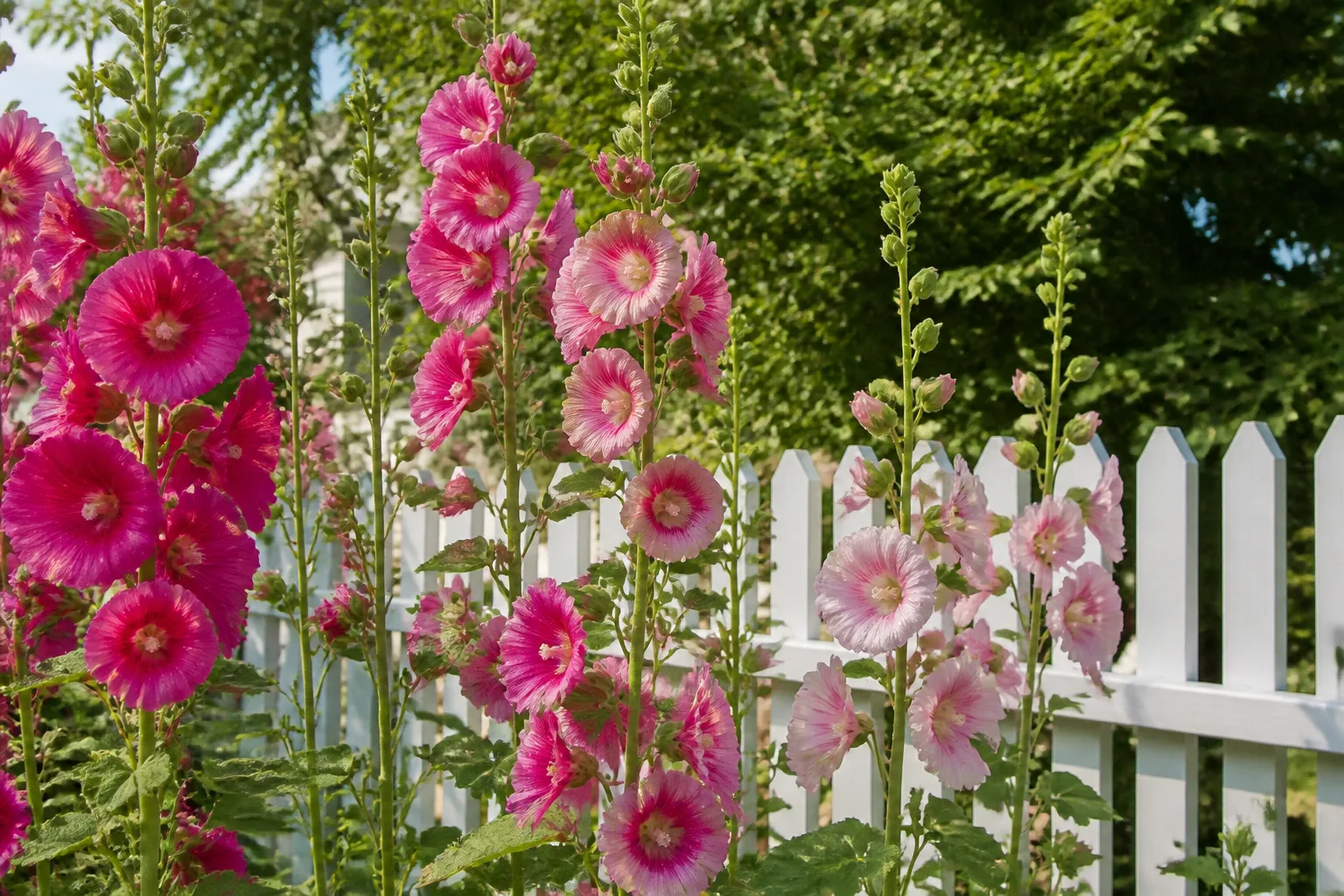
1. Hollyhock (Alcea rosea) can send flowering spires roughly 5 to 8 feet high, making it one of the clearest choices for a wall or back edge. Traditional hollyhocks are usually biennial or short-lived perennials: a leafy rosette grows first, then a flowering stem follows, and self-sown seedlings often replace the original plant. Give it full sun, allow airflow, and stake exposed stems; older plants are especially prone to rust. The RHS hollyhock guide explains their life cycle, wind exposure, and rust susceptibility.
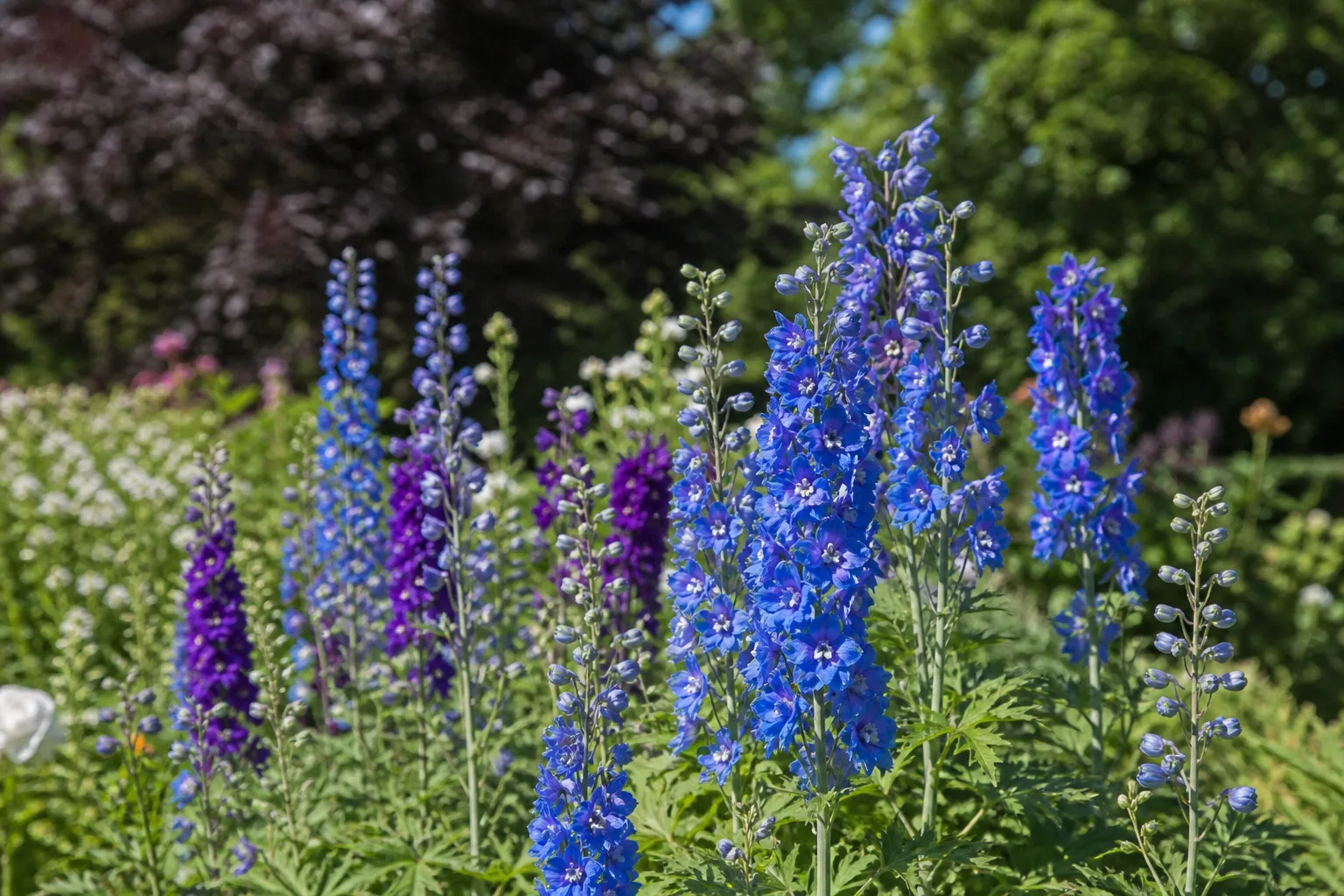
2. Delphinium (Delphinium hybrids) is the classic blue or violet spire, with tall cultivars reaching 4 to 6 feet or more. Choose a named perennial cultivar and a sheltered site with sun, fertile soil, and steady moisture; a windy position can snap the stems before flowers open. Install a stake or grow-through support while shoots are still short, and keep all parts away from children and pets because delphiniums are toxic if eaten. The RHS delphinium growing guide recommends shelter from strong winds for tall perennial types.
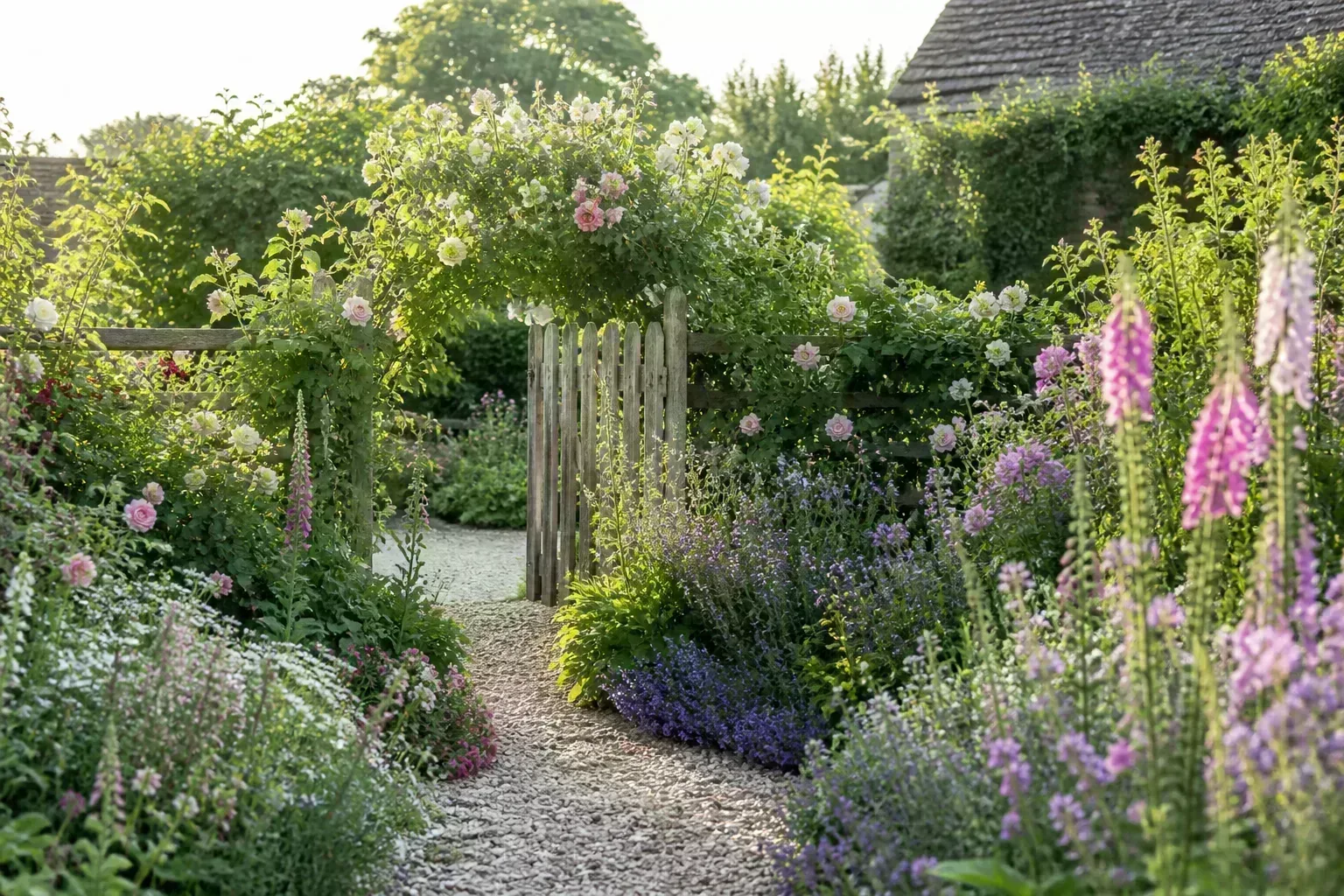
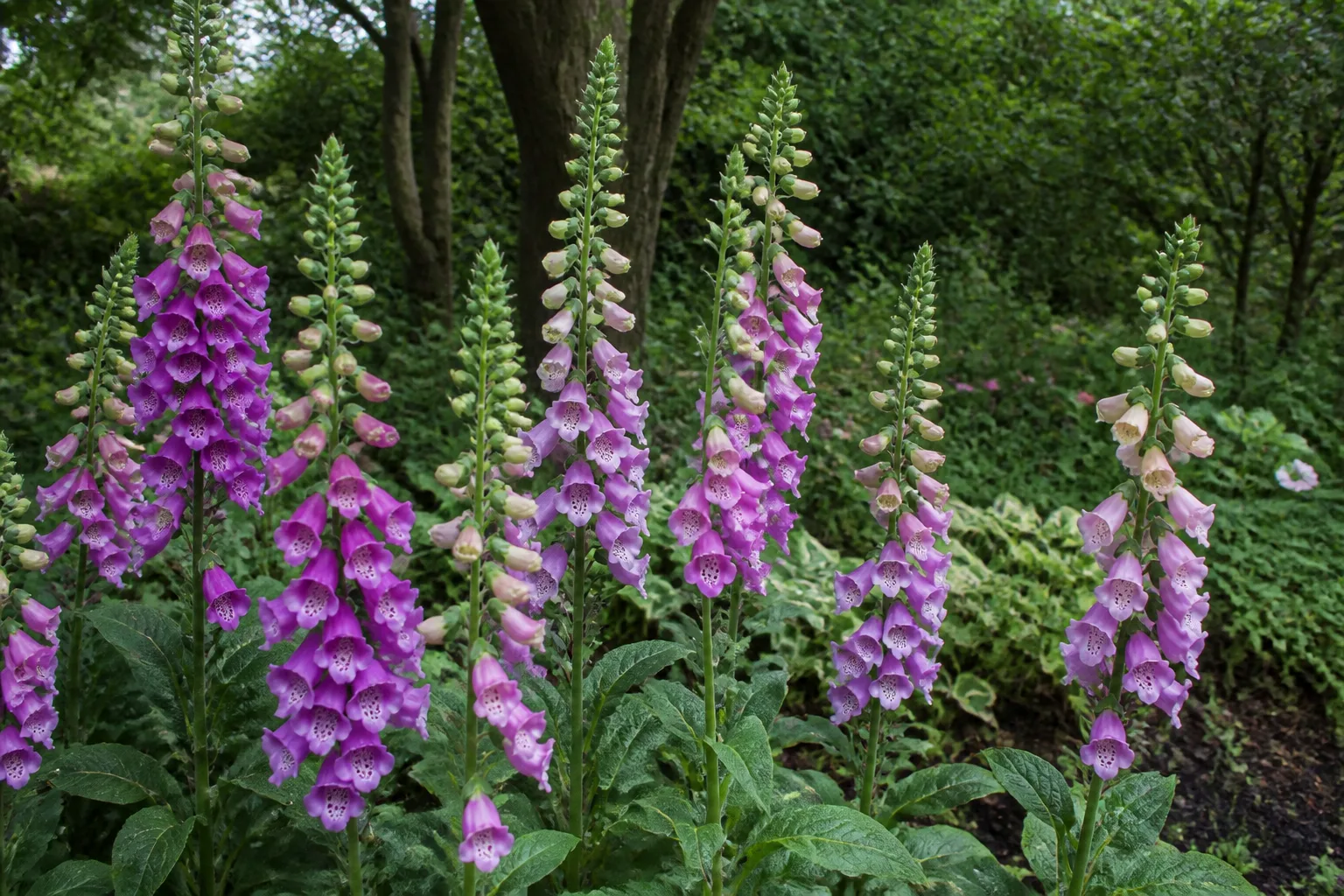
3. Perennial foxglove (Digitalis ferruginea or D. grandiflora) provides upright bells in partial shade, often around 2 to 5 feet depending on species and conditions. This is a better fit for a perennial list than treating common purple foxglove (D. purpurea) as a reliably long-lived perennial; the common species is usually biennial or short-lived. Perennial foxgloves are also short-lived, so plan for replacements, and remember that all foxgloves are poisonous if eaten. The RHS perennial foxglove guide compares species and notes the toxicity.
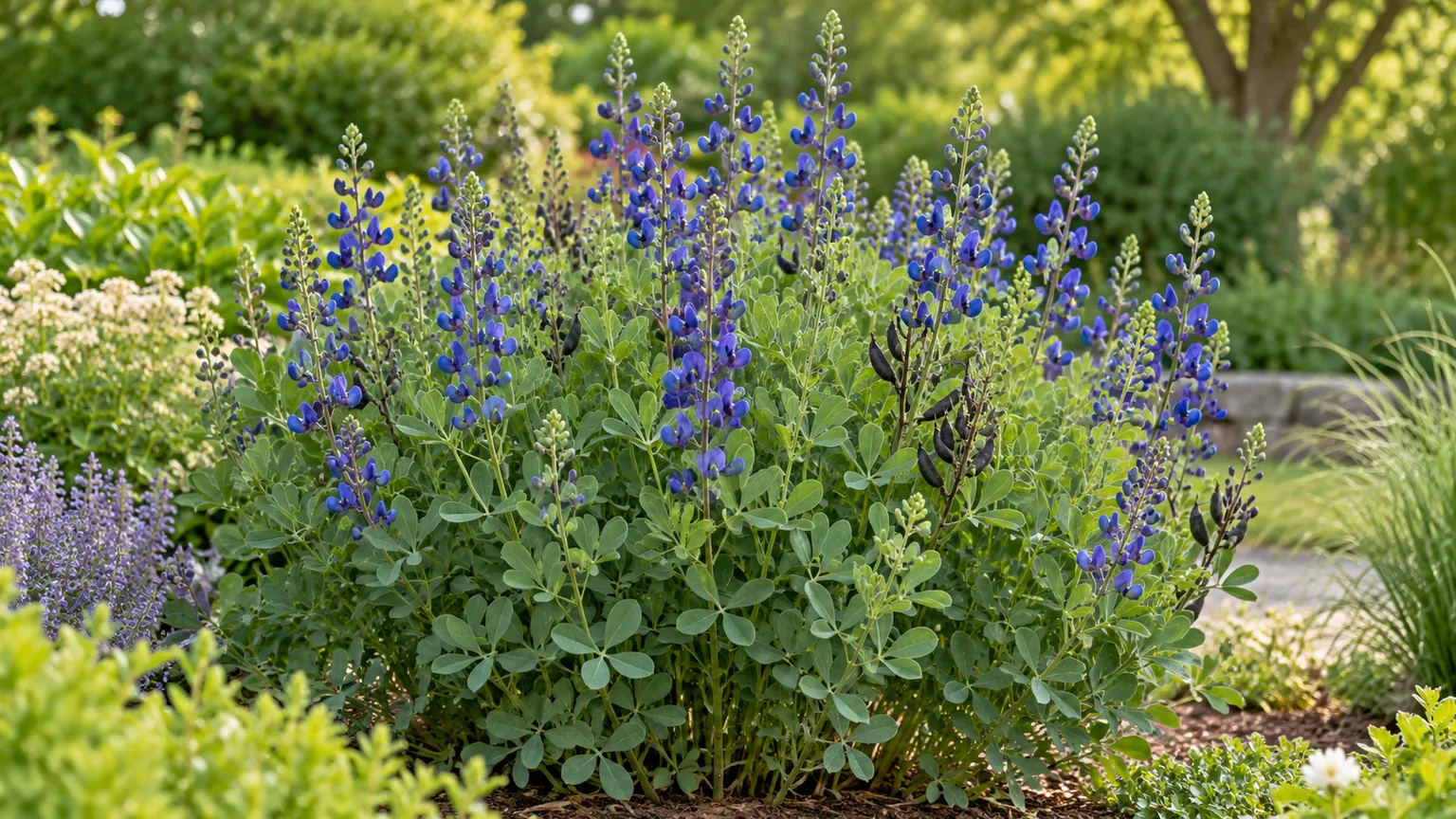
4. Wild indigo (Baptisia australis) grows into a sturdy 3- to 4-foot clump with blue spring flowers and decorative seed pods later in the season. It tolerates drought once established, but its deep taproot makes mature plants difficult to move, so choose the location carefully before planting. Full sun brings the strongest bloom; a little shade is tolerated but can make the stems looser. North Carolina State Extension describes its size and taproot in its blue false indigo profile.
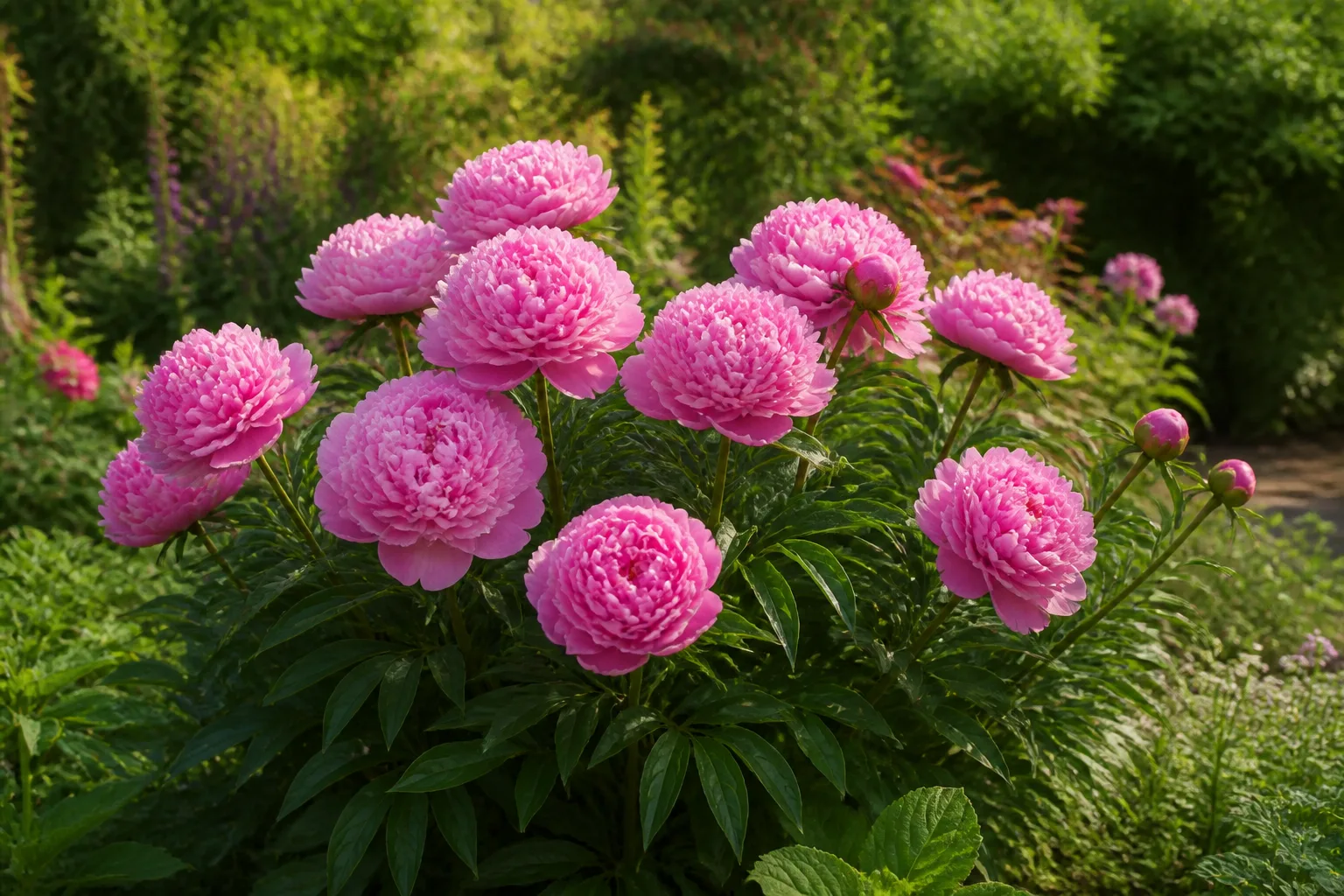
5. Herbaceous peony (Paeonia lactiflora) is usually about 2 to 3 feet tall, so it does not create a wall of height, but its large spring blooms add a strong focal point in the middle or back of a shorter border. Double-flowered varieties can be especially top-heavy after rain. Place a peony ring around emerging shoots in spring rather than trying to force support over a fully grown plant; Iowa State Extension recommends support as buds form when stems need help carrying blooms.
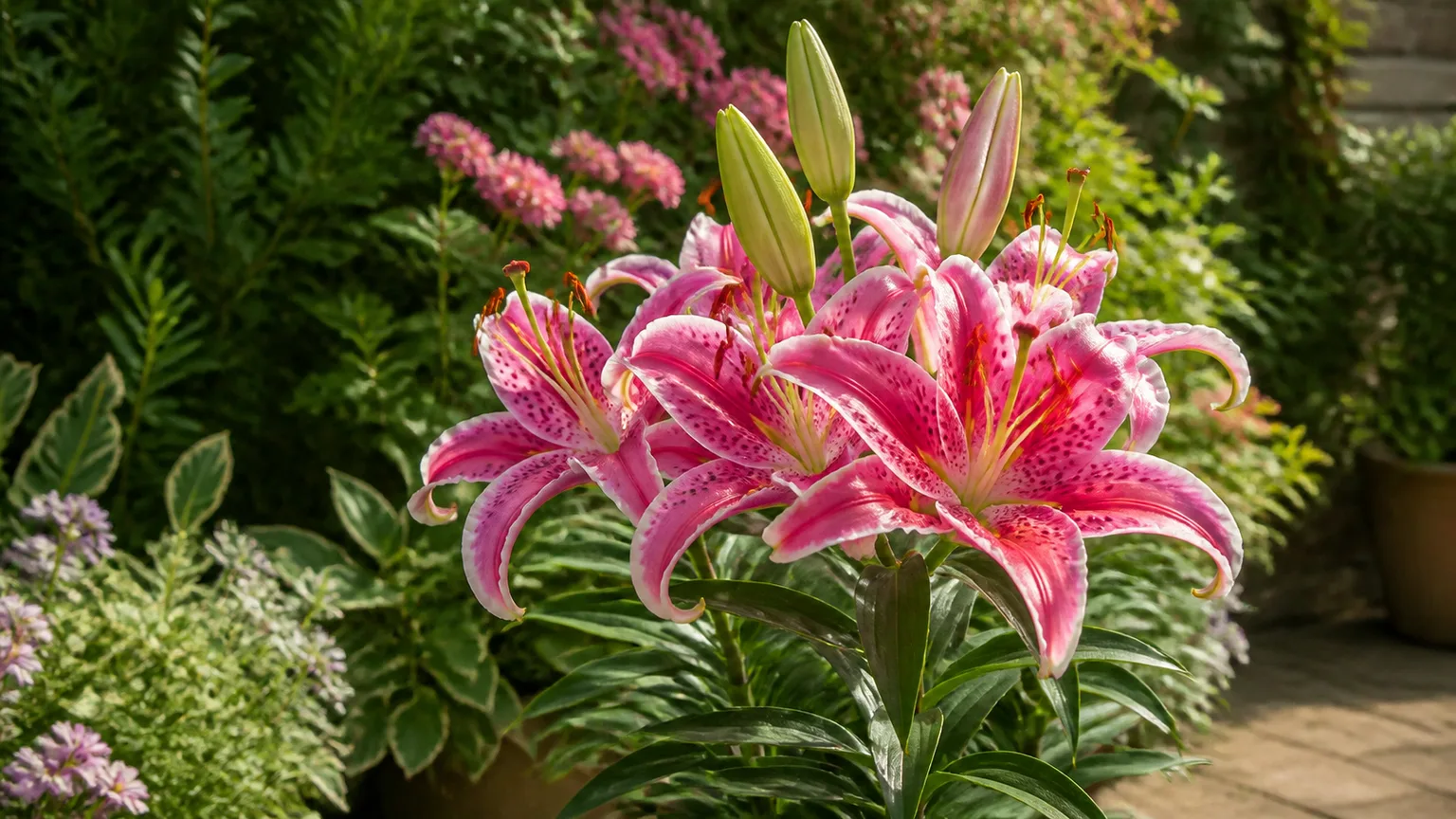
6. Oriental lilies (Lilium Oriental hybrids) range from compact cultivars to tall stems around 4 to 6 feet, with fragrant blooms that add height without making a wide clump. Give bulbs fertile, well-drained soil and follow the package directions for planting depth; soggy ground can rot them, and heavy mulch should not bury emerging shoots. Their fragrance can be strong, and true lilies are dangerous to cats, so avoid planting them where pets may chew them. North Carolina State Extension’s Oriental lily profile gives the cultivar-dependent height and soil needs.
Summer flowers for color and upright foliage
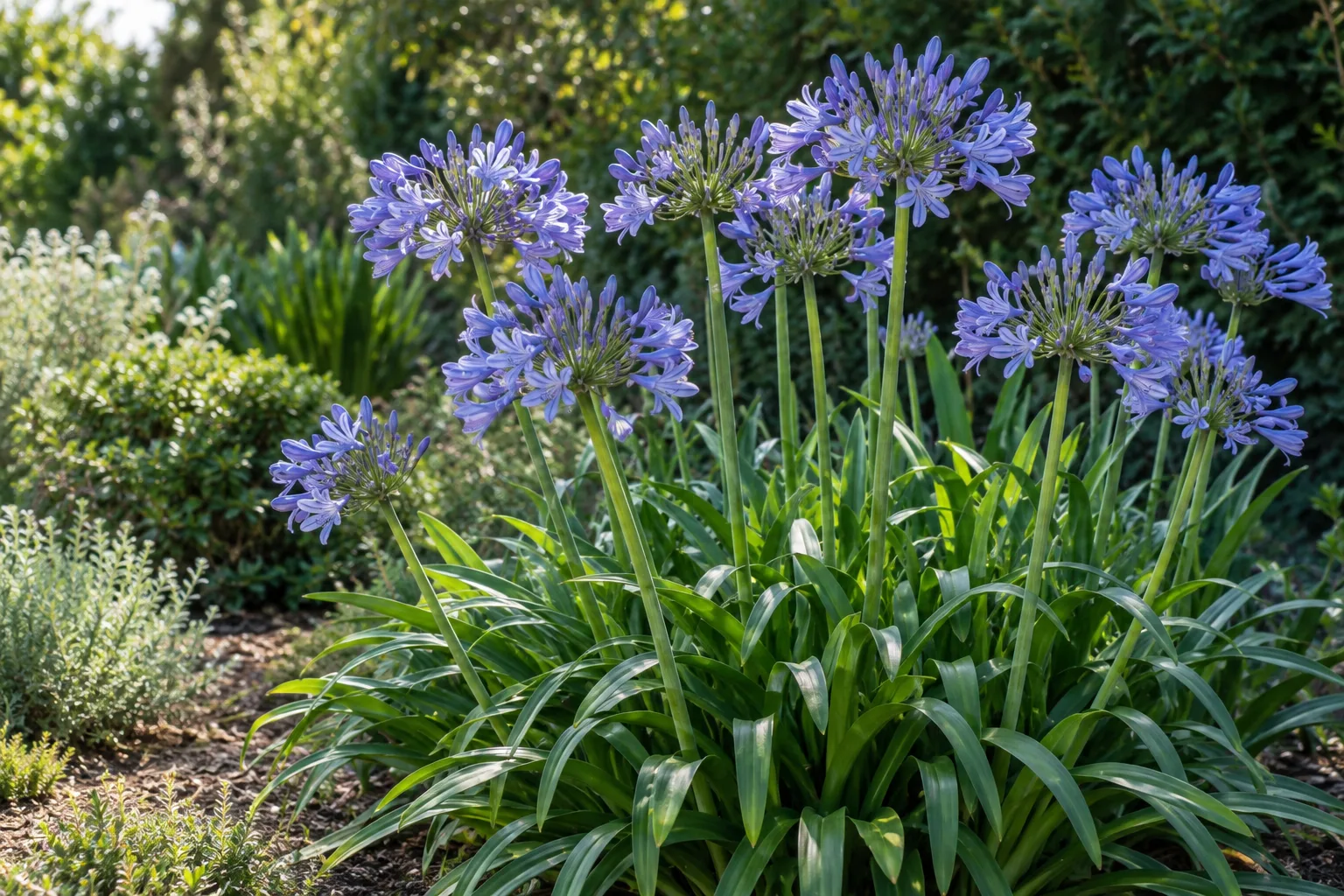
7. Agapanthus (African lily) sends round blue or white flower clusters above strap-like leaves; the stems make a useful 2- to 4-foot accent in a sunny border or large container. The foliage itself is shorter, so check the named cultivar’s flowering height. Deciduous types are generally more cold-tolerant than evergreen forms, but in colder climates evergreen plants need winter protection and deciduous rhizomes may need to be stored above freezing. Keep the soil from staying waterlogged, which can rot roots; see North Carolina State Extension’s Agapanthus profile for winter differences.
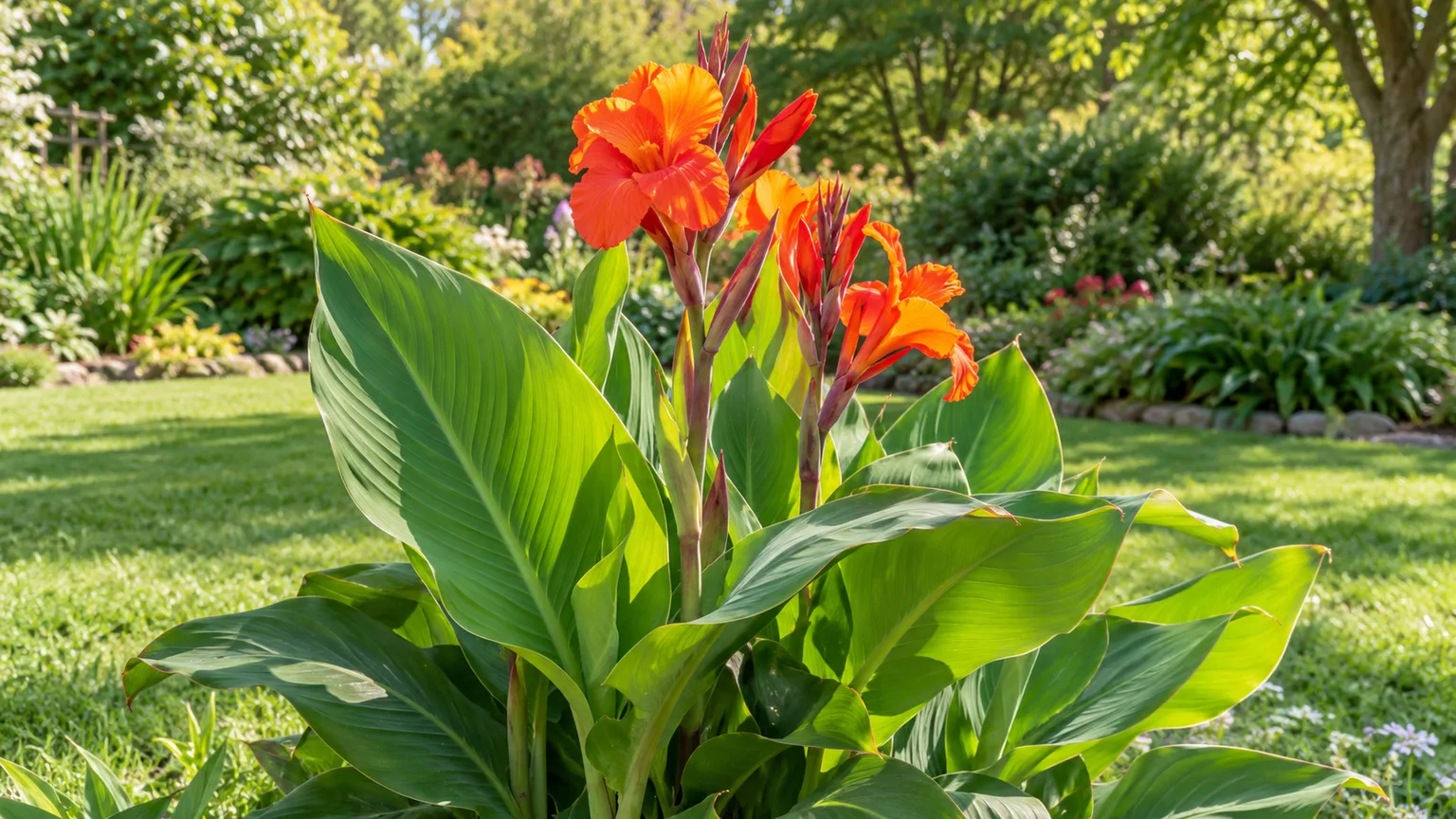
8. Canna (Canna hybrids) can reach 3 to 8 feet, with broad leaves that provide as much visual height as the blooms. Cannas make a bold summer screen in warm climates, but their tropical rhizomes are not reliably winter-hardy everywhere. In areas with hard freezes, lift the rhizomes after frost, let them dry, and store them in a cool, dry, frost-free place; replant after the last frost. North Carolina State Extension’s canna growing profile details cold injury and storage.
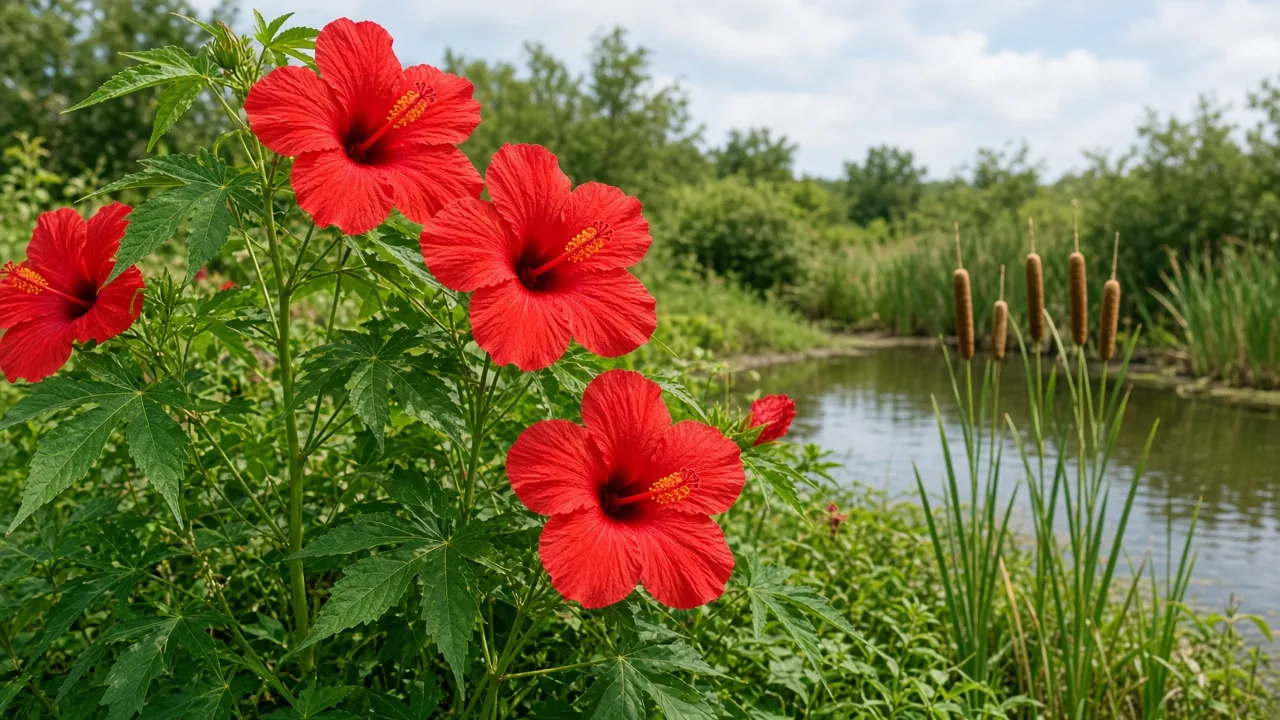
9. Hardy hibiscus (Hibiscus hybrids) reaches about 4 to 8 feet and produces very large summer flowers on sturdy stems. Unlike tropical hibiscus, hardy hybrids die back and regrow from the roots in cold-winter regions; confirm the cultivar’s hardiness before choosing it. They prefer sun and reliably moist to wet soil, so they suit a rain garden or pond edge better than a dry border. North Carolina State Extension notes that hardy hibiscus hybrids tolerate average to wet soils but flower best in full sun.
10. Tall daylily (Hemerocallis ‘Autumn Minaret’) is an example of why a flower stalk and foliage clump should not be confused. Most daylilies make a low mound of leaves, but this cultivar can reach about 5½ feet when in flower, sending arching, branched scapes above the foliage. It suits a sunny or lightly shaded border where that stem can be seen from a distance, though a single daylily flower opens for only one day. The RHS profile lists its flowering height.
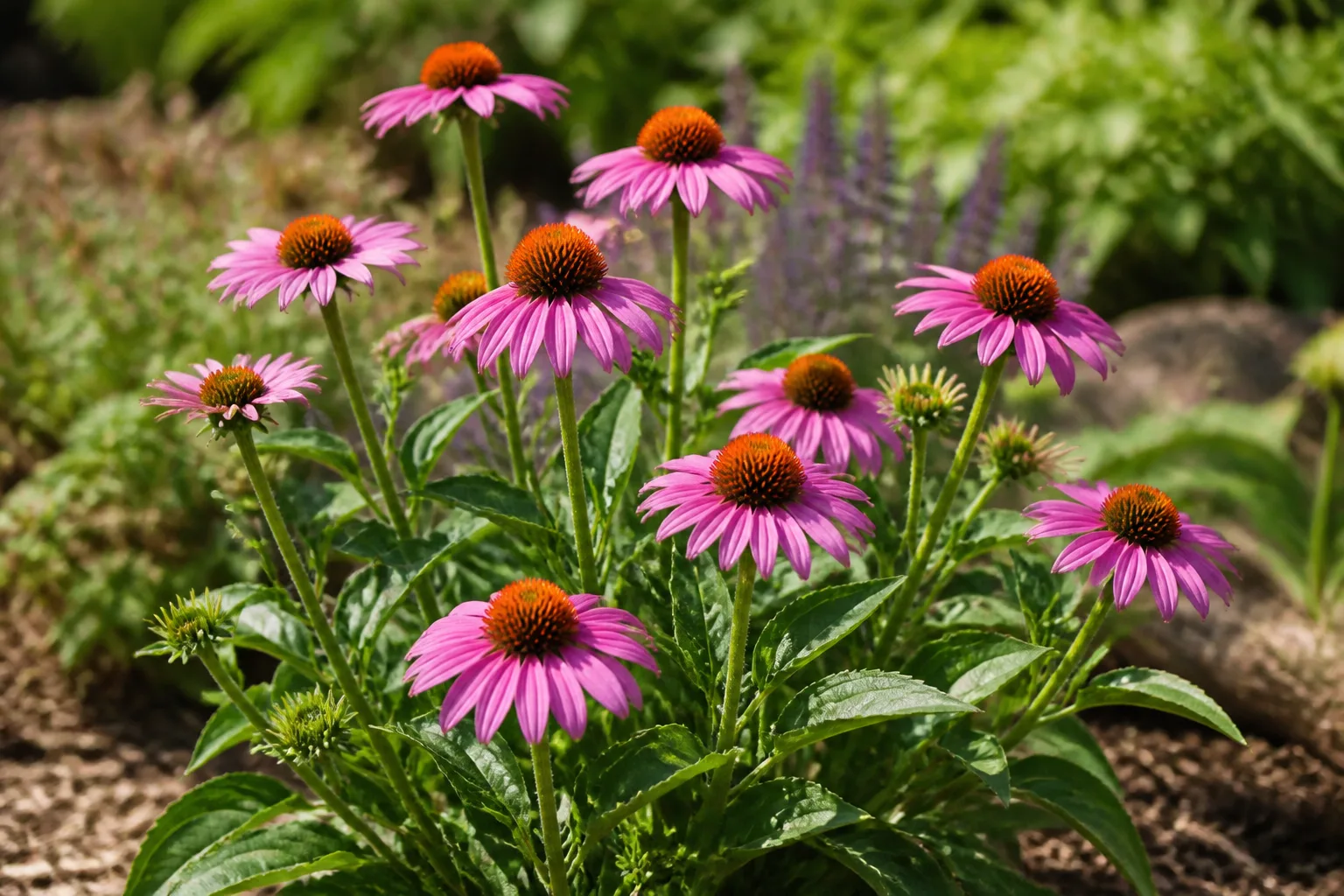
11. Purple coneflower (Echinacea purpurea) is a dependable 3- to 4-foot perennial with summer-to-fall flowers and seed heads that can remain for birds. It is not an 8-foot backdrop, but it combines well with taller plants because its upright stems keep flowers visible among neighboring foliage. Grow it in sun or part shade and well-drained soil; once established, it tolerates dry spells better than moisture-loving hibiscus or Joe Pye weed. North Carolina State Extension’s coneflower profile describes its size and adaptable conditions.
12. Giant brown-eyed Susan (Rudbeckia maxima) is the tall Rudbeckia to choose when you want dramatic height: it can reach roughly 5 to 7 feet, with striking blue-green leaves and yellow flowers. Do not assume every black-eyed Susan is this tall; common R. fulgida is typically much shorter, while R. maxima is a distinct species with a different look. Give it sun and enough room for a broad clump, and check the mature height listed for the cultivar. North Carolina State Extension documents the range in its Rudbeckia maxima profile.
Vertical structure from midsummer into fall
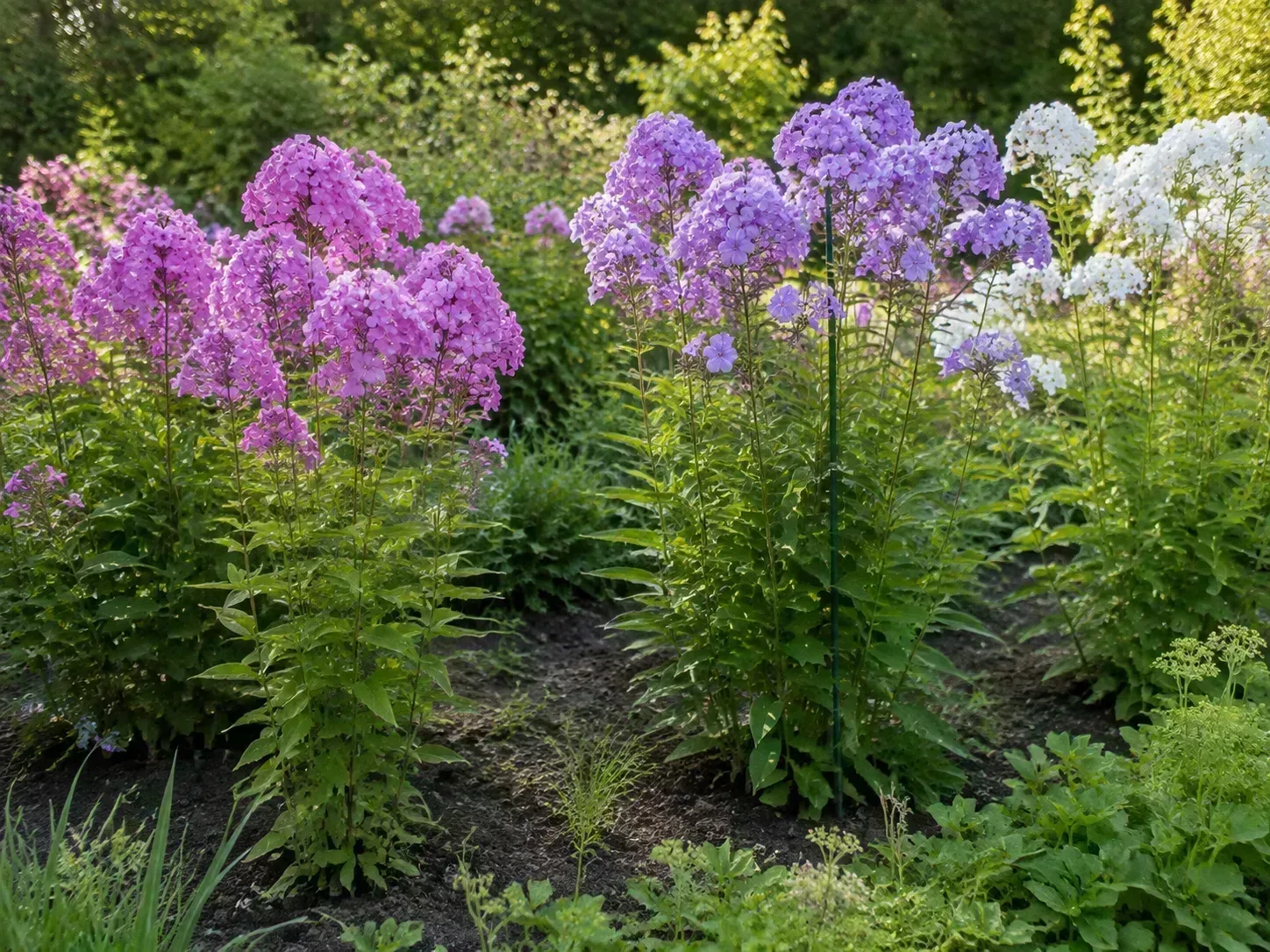
13. Garden phlox (Phlox paniculata) grows about 2 to 4 feet, with selected cultivars reaching the taller end of that range. Its broad clusters of fragrant flowers extend summer color, but crowded, humid plantings can develop powdery mildew. Leave air around the stems, water at the base during dry spells, and avoid placing it in a stagnant corner. The North Carolina State Extension profile describes spacing, moisture, and mildew precautions.
14. Culver’s root (Veronicastrum virginicum) grows about 2 to 6 feet, with narrow flower spikes that add height without the bulky silhouette of a large sunflower. It suits a sunny or lightly shaded native border and appreciates ordinary to moist soil; stems growing in too much shade may lean. Unlike plants that need constant wet ground, it tolerates some variation in moisture once established. Penn State Extension includes Culver’s root among native perennials for the garden and describes its site and moisture preferences.
15. Milky bellflower (Campanula lactiflora) reaches about 3 to 5 feet on branched stems covered in small star-shaped flowers. The airy, multi-stemmed habit softens the transition between a solid backdrop and shorter flowers in front. Because the genus includes many low-growing bellflowers, buy this named species or cultivar rather than a generic “campanula” label if height is the goal. The RHS plant profile lists its upright habit and mature height.
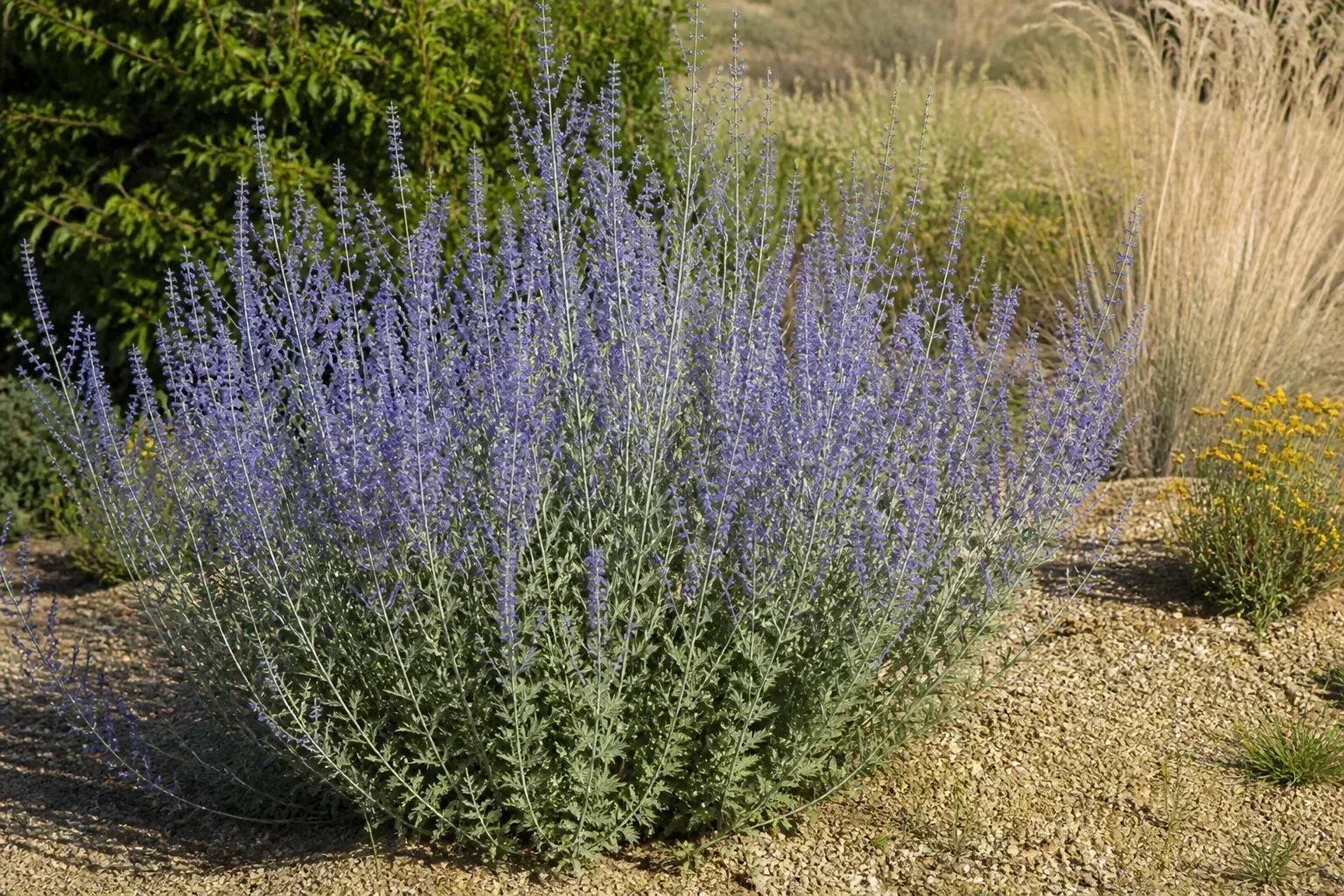
16. Russian sage (Salvia yangii, formerly Perovskia atriplicifolia) is a woody-based perennial that generally reaches 2 to 4 feet, with airy blue-purple flower panicles and silvery foliage. It works best in full sun and freely draining soil; planting it in wet clay or giving it rich, frequent fertilizer encourages weak, sprawling growth. Its open form is better as a textured middle or back-border plant than as an opaque screen. North Carolina State Extension’s Russian sage profile covers its drainage needs and growth habit.
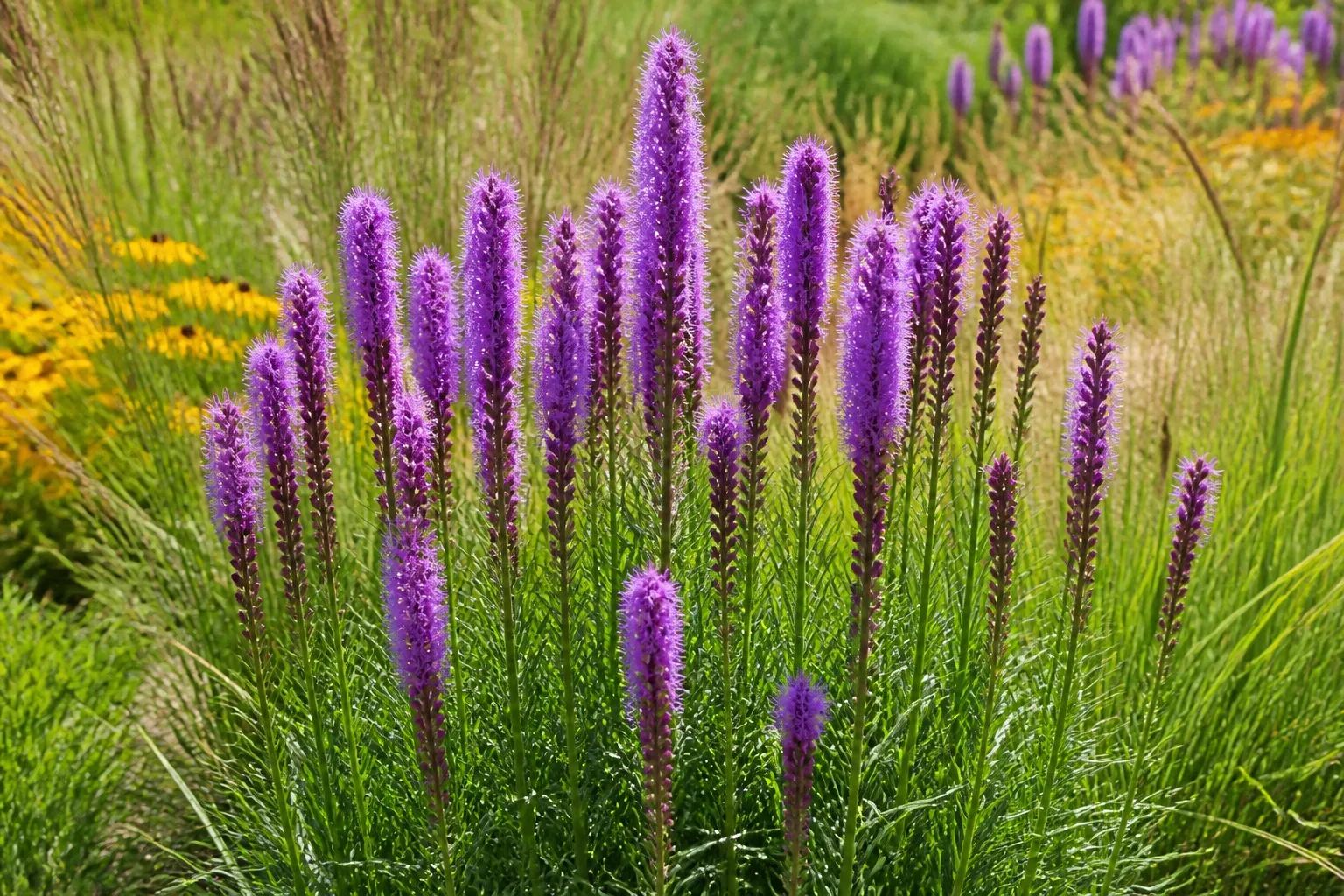
17. Blazing star (Liatris spicata) makes upright flower spikes, often 3 to 6 feet tall, with flowers opening from the top downward. It prefers sun and reasonably well-drained soil; this species handles moisture better than some other blazing stars but still should not sit in stagnant water. Its grass-like basal leaves keep the plant narrow, which is useful when the bed is tight. North Carolina State Extension notes its height, sun preference, and pollinator value.
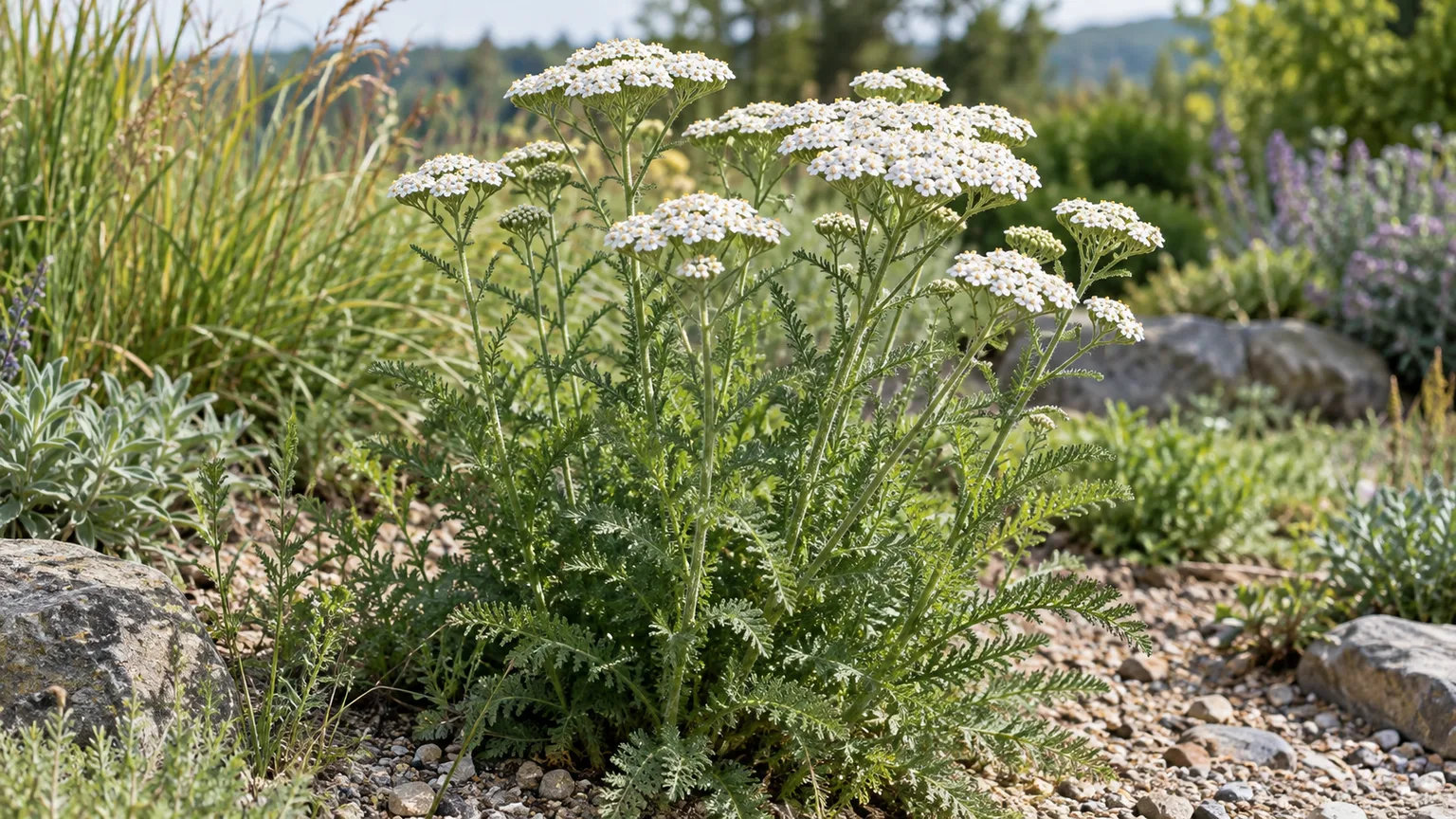
18. Fernleaf yarrow (Achillea filipendulina) rises about 3 to 4 feet above finely divided foliage and forms broad, flat flower clusters. It is a strong option for hot, sunny, relatively dry beds, but it dislikes overwatering and rich, soft growth; divide it when a clump spreads beyond its space. In a windy spot, its tall stems can lean, so use neighboring plants or discreet support if needed. The North Carolina State Extension yarrow profile gives its height and moisture cautions.
Late-season color and big back-border presence
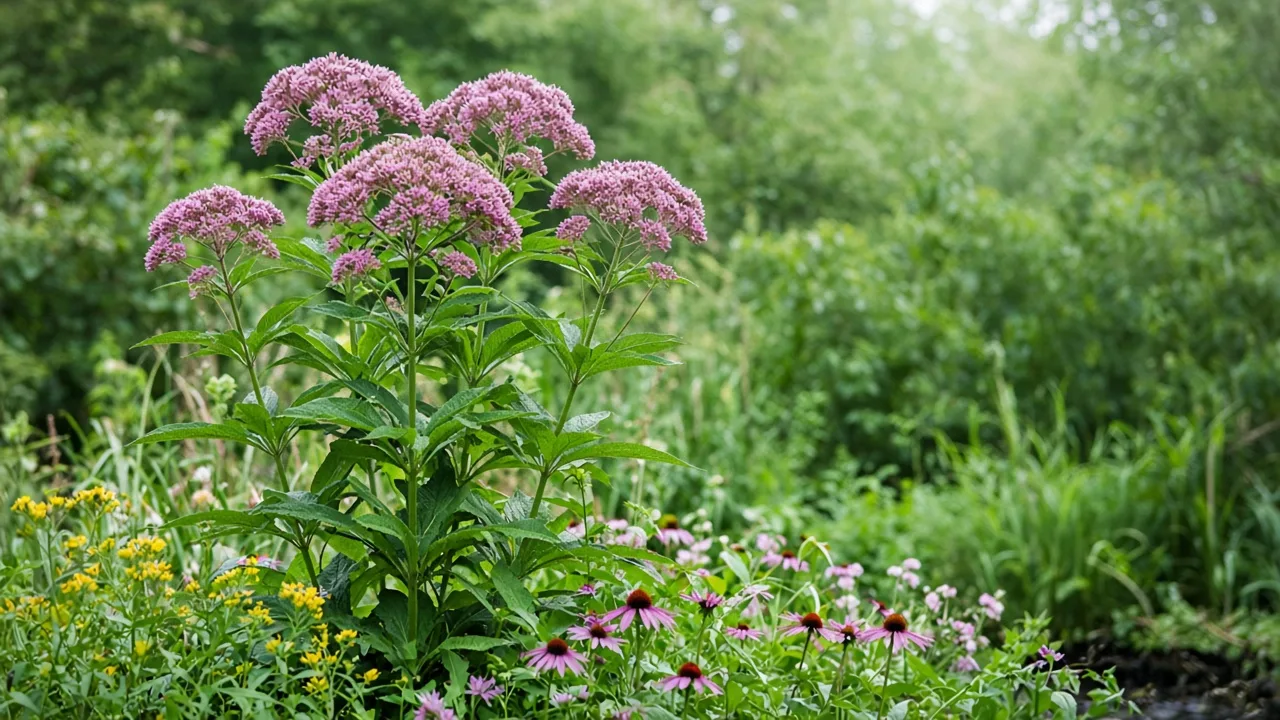
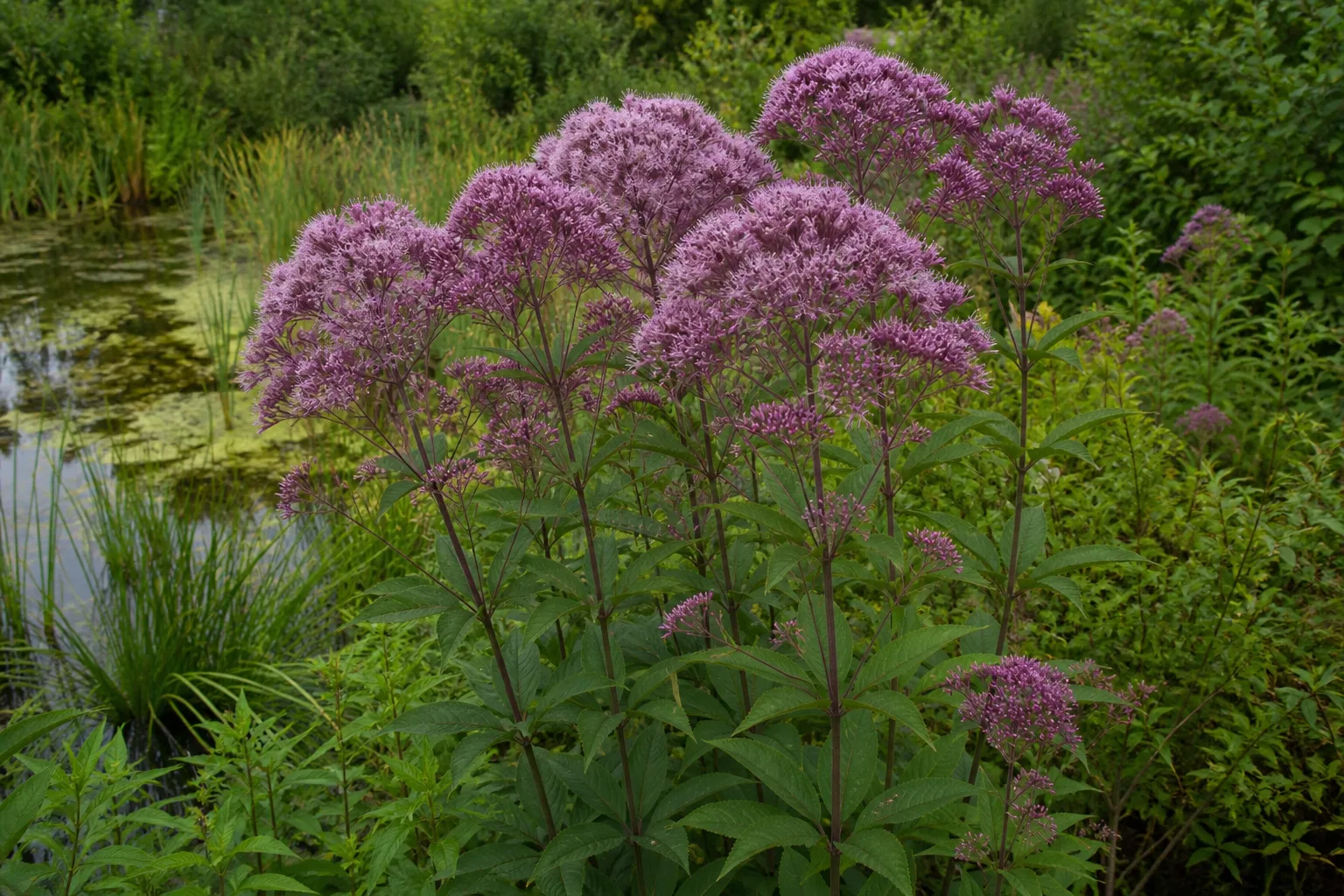
19. Joe Pye weed (Eutrochium fistulosum) is one of the strongest choices for genuine height, commonly growing 4 to 8 feet with domed mauve flower heads in late summer. Give it room and moisture: this native perennial thrives in rich, damp soil but can scorch if the root zone dries, and stems in part shade may need support. It can be a graceful pond-edge screen, but it is too large for a narrow bed. North Carolina State Extension’s hollow Joe Pye weed profile notes its size, moisture, and spacing needs.
20. Boltonia (Boltonia asteroides) offers a cloud of small daisy-like flowers from late summer into fall, usually on a 3- to 5-foot plant. It grows taller in moist ground, but the same lush growth can flop, so do not plant it where soil stays saturated without planning support. Cutting stems back in spring can make a shorter, sturdier plant with less height; that is a useful trade if you want more control. North Carolina State Extension explains the height and moisture-support trade-off.
21. Maximilian sunflower (Helianthus maximiliani) can reach several feet and, in favorable conditions, approach 10 feet. Its golden flowers are a late-season highlight, but the rhizomes can form a large spreading patch, making this a poor choice for a small mixed border unless contained. Use it in a naturalized area or a bed where new shoots can be removed without harming neighboring plants. North Carolina State Extension lists its variable height and spreading habit.
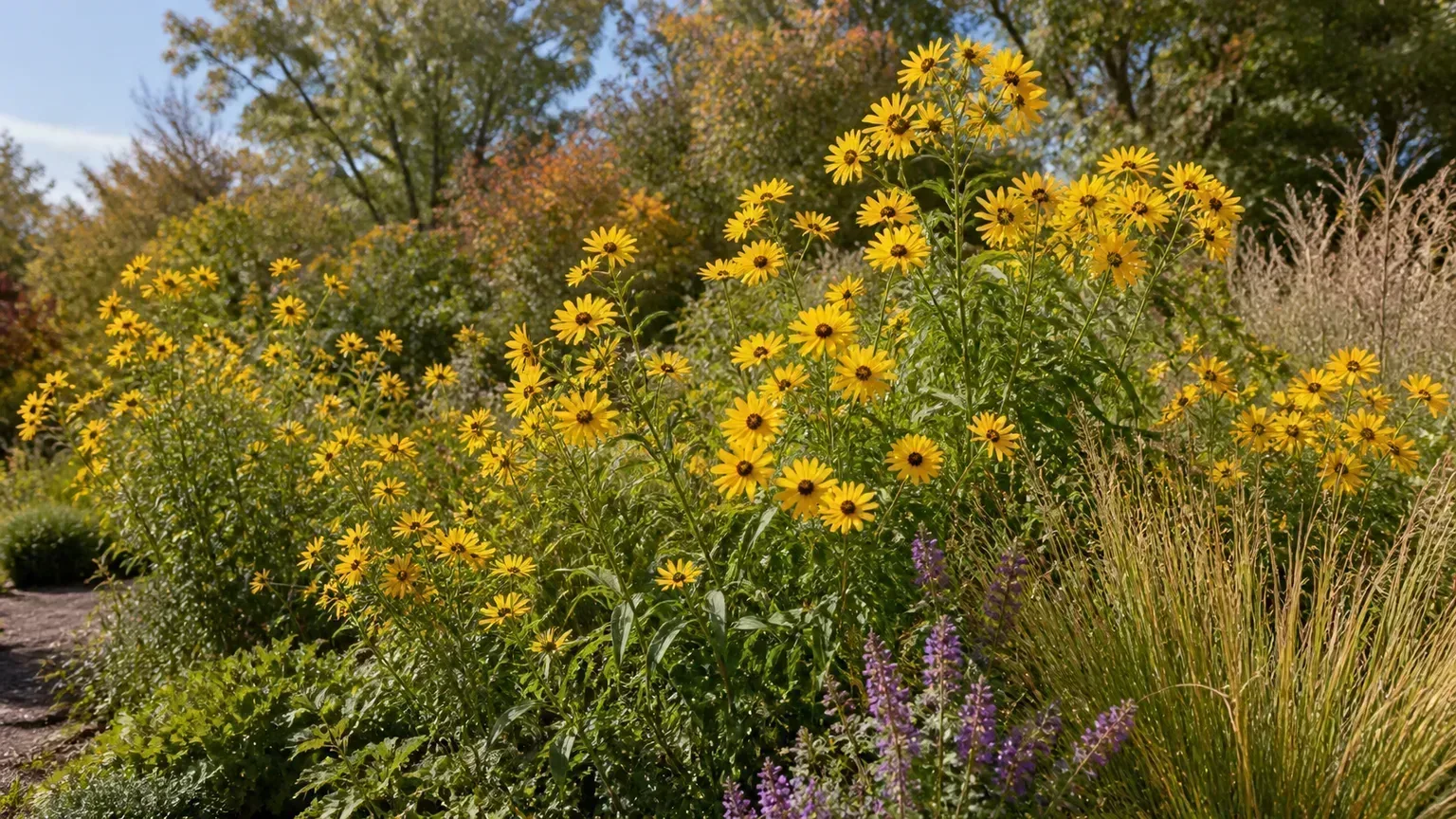
22. Helenium (Helenium autumnale) grows about 3 to 5 feet and brings yellow, orange, or copper-colored daisy flowers into late summer and fall. Unlike drought-tolerant yarrow, it prefers moist to wet soil and full sun to part shade. If the plant becomes leggy, cutting stems back in early summer encourages branching and can produce a shorter, fuller clump with more flower stems; do not use this treatment on every perennial. North Carolina State Extension describes Helenium’s moisture needs and early-summer cutback.
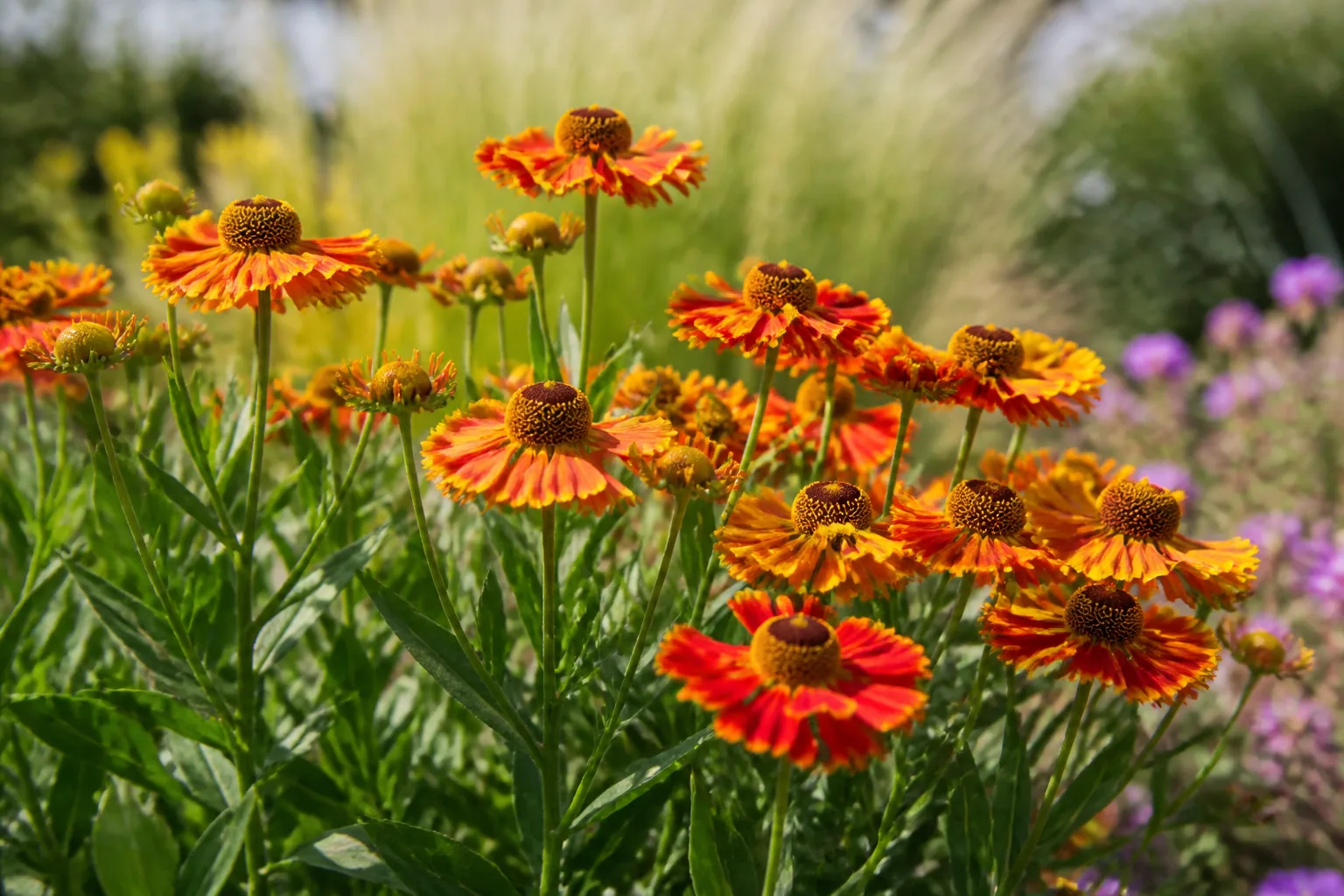
23. Steel globe thistle (Echinops ritro) reaches around 3 to 4 feet and carries steel-blue spherical flower heads above stiff, silvery stems. It handles dry, poor-to-average soil better than heavy feeding, so avoid enriching the bed simply to push more growth. Full sun keeps the stems more compact; shade and rich soil can make them lanky, and the taproot makes established plants difficult to divide. North Carolina State Extension’s globe thistle profile covers drainage, height, and transplanting.
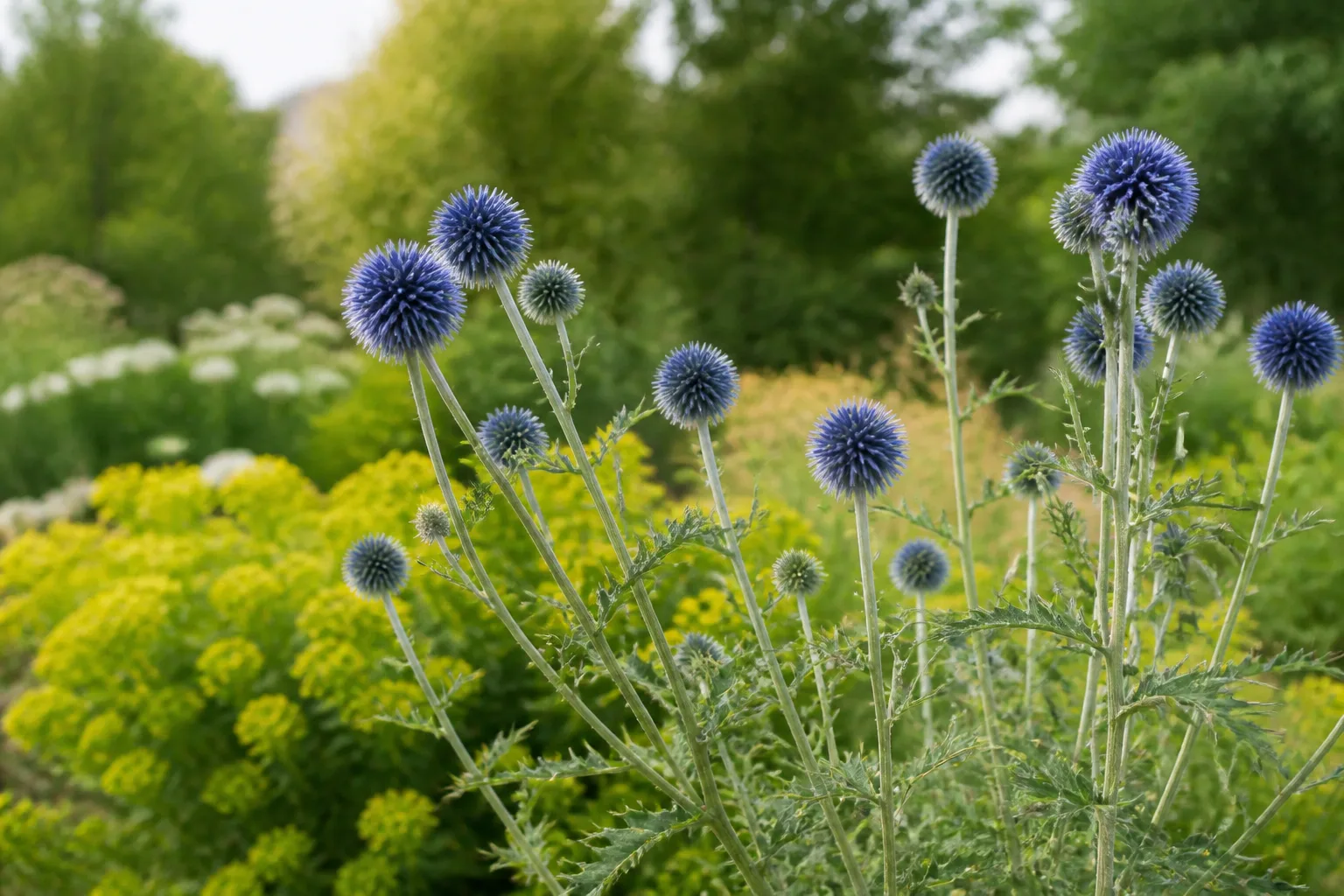
24. Red hot poker (Kniphofia) adds upright flower torches above a clump of strap-shaped leaves. Heights vary widely, but classic border types are often about 3 to 4 feet; check the named cultivar rather than assuming all are tall. Plant it in sun and well-drained soil, especially where winters are cold and wet, because winter moisture around the crown can be more damaging than cold alone. The RHS growing guide describes its summer-to-autumn color and drainage needs.
Design a border that stays balanced
Height works best as a sequence, not a wall. A layered bed lets tall stems contribute drama while leaving shorter flowers visible, and it keeps the border from becoming a crowded thicket by midsummer.
Put plants where they will not shade their neighbors
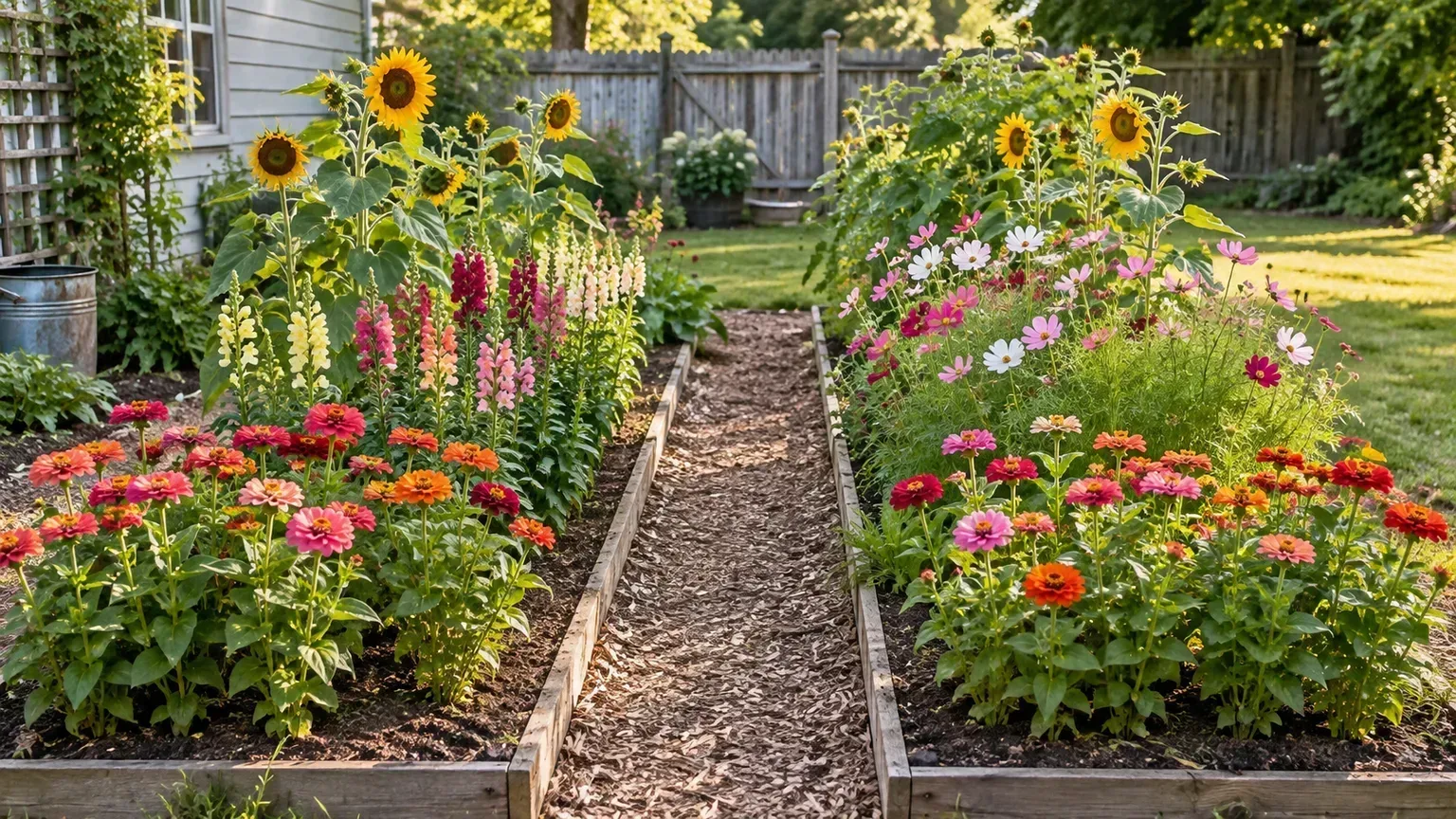
For a border viewed from one side, place the tallest plants at the back, often along the north edge in the Northern Hemisphere so they cast less shade over shorter plants. If the bed is seen from a path or patio on both sides, put the tallest clumps near the center and step down toward each edge. A plant’s morning and afternoon shadow matters too: a 6-foot sunflower may shade sun-loving neighbors even if it is technically planted “at the back.”
Leave enough depth for the mature spread listed on the tag. A 6-foot Joe Pye weed that is 3 to 4 feet wide needs room; wedging it beside a narrow walkway makes routine pruning and access harder. Use a vertical plant as a screen only if it fills enough width to block the view, not simply because its flower stalk is tall.
Stagger bloom seasons and foliage
Combine an early spire such as delphinium or hollyhock with summer phlox, lilies, and hibiscus, then let Joe Pye weed, Boltonia, Helenium, and perennial sunflower carry the bed later. A flower calendar depends on climate, but this mix spreads risk: if one plant’s bloom is brief or a storm damages its stems, the bed still has color and structure.
Look beyond flowers as well. Canna leaves, the blue-green rosette of giant Rudbeckia, and the silvery foliage of Russian sage maintain height and contrast when a neighboring plant is between blooms. Leave some sturdy seed heads standing through winter if they remain attractive and do not create a disease problem; remove or cut back stems that harbor serious disease or obstruct spring growth.
Plant and support tall perennials
Tall plants are not automatically high-maintenance, but their height magnifies planting mistakes. A few careful choices at installation time can prevent years of moving or tying stems after they have already bent.
Plant at the right depth and spacing
Set each plant at the same soil depth it grew in its container unless its label gives a different instruction. Do not bury crowns or rhizomes under extra soil or mulch: many perennials rot when the growing point sits wet and deep. Spread roots gently, backfill with the original soil, and water to settle it; avoid filling the planting hole with a rich, isolated pocket of compost that drains differently from the surrounding bed.
Space by mature width, not the small pot size at purchase. Newly planted gaps can look large, but crowding reduces airflow and makes it harder to install a support later. If you want a filled-in look before slow-growing plants mature, add annuals or short-lived fillers that can be removed instead of forcing permanent perennials too close together.
Water and feed for sturdy growth
Water new plantings deeply enough to moisten the root zone, then adjust frequency to soil and weather. Moisture-loving hibiscus and Joe Pye weed need steadier water than Russian sage or globe thistle; a fixed “once a week” schedule ignores rainfall, drainage, and heat. A thin mulch layer helps slow evaporation, but keep mulch off the crown and stems.
Avoid heavy nitrogen feeding just to make a plant taller. Excessively lush growth can weaken stems, and the right height depends on a plant’s light and root conditions rather than fertilizer alone. If a perennial is much shorter than its label, check for shade, drought, root crowding, cultivar differences, or an establishment year before adding more fertilizer.
Stake before stems bend
Supports work best when installed while new shoots are still short, before leaves and buds hide the structure. Use a ring or grid for a clump such as peony, or one stake per stem for a delphinium or hollyhock; tie stems loosely with soft garden ties so they can move without being pinched. Penn State Extension’s support guide advises matching the support to the plant’s habit, while Iowa State Extension’s staking guide explains when to set supports and how to keep them unobtrusive.
Support is not a cure for the wrong site. A sun-loving plant in deep shade may stretch and lean; a wet-soil plant in dry sand may remain stunted; a tall species exposed to wind may need a sheltered location even when staked. Correct the growing condition first, then add support where the species and weather still call for it.
Conclusion
The best tall perennial flowers are the ones whose mature height, spread, bloom timing, moisture needs, and winter behavior fit your garden. For a reliable 6-foot accent, look closely at delphinium, hardy hibiscus, Joe Pye weed, giant coneflower, or a named tall daylily; for a dry sunny site, try Russian sage, yarrow, or globe thistle instead. Match the label to your climate and plant early supports where needed, and a tall border can stay varied and upright rather than turning into a row of flopped stems.