When to Plant a Clover Lawn: Early Fall Explained
Learn why early fall suits many clover lawns, when spring is safer, and how to time, prepare, seed, and water white clover or microclover.
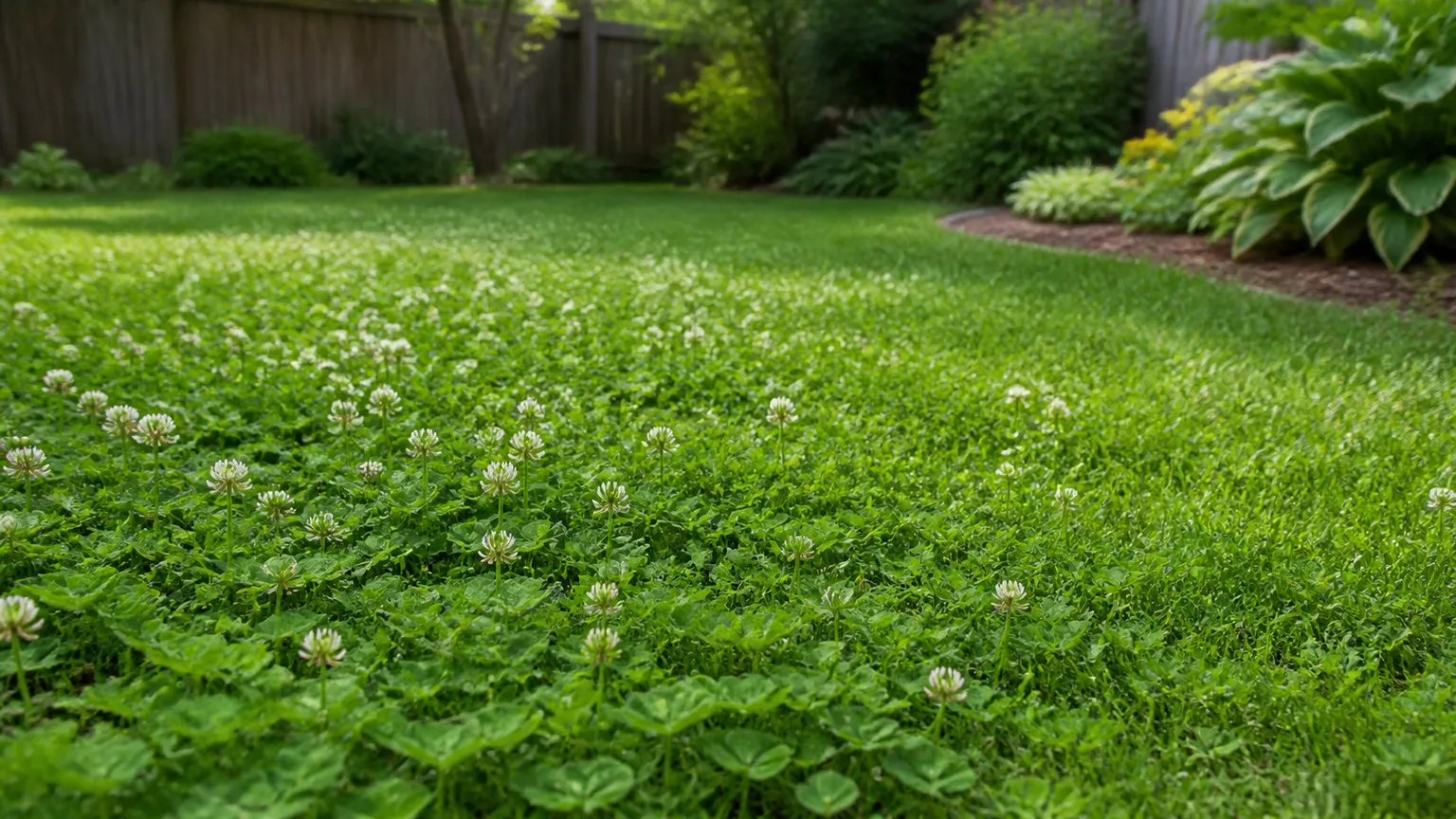
For many homeowners, early fall is the easiest season to establish a clover lawn: summer heat is easing, the soil is still workable, and white clover seed germinates in cool, moist conditions. But “fall” is not a magic date. Seed scattered just before a hard freeze, into dry thatch, or over dense grass can sit until spring—or disappear without making a lawn.
The useful rule is to sow after the harshest heat has passed but while your area still has enough mild weather for seedlings to emerge and anchor. Penn State Extension notes that white clover seed germinates during cool, moist periods in both spring and fall. That supports fall as a real planting window, not a guarantee that every fall planting will establish. (Penn State Extension)
Short answer: aim for early fall, not just any time in fall
Choose the first stretch of reliably cooler weather when the soil is moist but not waterlogged, the seedbed can be prepared, and you still have time before the ground freezes. In a cool-summer region that may be late summer or early fall; in a warmer region it may be later. Your local growing conditions and the seed supplier’s guidance matter more than a single month printed on a generic calendar.
Early fall is particularly useful for overseeding a thin, healthy cool-season lawn. You can expose small patches of soil between grass plants, sow clover into those openings, and use autumn moisture to help the seed start. If the turf is thick, badly weedy, compacted, or full of bare areas, timing alone will not solve the underlying competition or soil problem; treat the project as a renovation rather than broadcasting seed and hoping.
If your area is already experiencing hard freezes, frozen ground, or long dry spells with no reliable irrigation, do not force a fall planting because a date says it is time. Prepare the site now and wait for a suitable spring window, or follow a locally recommended dormant-seeding method if that is specifically appropriate for your seed and climate. Dormant seeding is a different strategy from trying to grow tender seedlings before winter.
Why early fall can favor clover establishment
Timing works because it changes the conditions around a tiny seed. Clover seed is small and needs close contact with moist soil; it does not have the reserves to push through a thick layer of thatch or a deep blanket of topsoil. Early fall often gives the gardener a manageable combination: less intense heat than midsummer, fewer days of rapid surface drying, and enough warmth in the soil for germination.
Penn State Extension describes white clover as a perennial whose seed germinates in cool, moist periods in spring and fall. Its foliage may die back in winter and regrow from the crown in spring, so a fall-sown lawn should be judged by seedling establishment—not by expecting a perfect green carpet through the cold months. (Penn State Extension)
Cool air and moist soil matter more than a calendar date
Hot, dry weather can make the top few millimeters of soil dry between waterings, exactly where clover seed sits. When temperatures moderate and rain becomes more regular, the surface may stay evenly damp for longer. That lowers the amount of emergency irrigation needed, though it does not remove the need to check the seedbed during a dry spell.
There is also a practical advantage to working before winter: the lawn is often easier to inspect and prepare than it is during spring’s rush of new growth. You can dethatch lightly, correct small bare spots, and decide whether you are overseeding or replacing the lawn before the seed goes down. The benefit is preparation time, not a special ability of clover to “know” that it is autumn.
Fall weather is an opportunity, not a guarantee
Autumn can be dry, unusually hot, stormy, or abruptly cold. A soaking rain may wash seed into piles or off a slope; several sunny windy days can dry the surface before roots form. If the forecast is extreme, delay seeding until you can give the seed a gentler start.
Also account for what is already growing. A dense grass canopy shades the ground and intercepts seed, while vigorous weeds compete for light and water. In that situation, opening the turf and reducing competition matter more than choosing the theoretically perfect week. Clover can fill gaps over time, but it cannot reliably establish through a closed mat of grass.
When spring is the better window
Spring is the safer choice when autumn arrives too late for seedlings to establish, when the site is still in summer drought, or when you need to renovate a lawn and the preparation cannot be finished before cold weather. It can also be a better fit in regions where winter is severe and unpredictable, provided you can keep the seedbed moist as temperatures rise.
Practical recommendations do differ. Gardening Know How advises planting white clover in spring or summer so it has time to establish before cold weather, while Penn State describes germination during cool, moist periods in both spring and fall. Those statements can be reconciled: the first emphasizes a long runway before winter for a newly converted lawn; the second describes when white clover seed commonly germinates. For a lawn project, use the early-fall window only if the remaining mild weather and moisture are adequate. (Gardening Know How; Penn State Extension)
Spring has trade-offs. The soil may be wet enough to work poorly, weeds and existing turf can grow quickly, and young clover may face heat or drought soon after emergence. If spring is your choice, prepare the area as soon as soil is workable, sow when a stretch of mild weather is expected, and be ready to irrigate. The goal is still the same: give seedlings a period of steady moisture and low competition before asking them to tolerate summer stress.
Choose the clover type before choosing a date
“Clover seed” can describe different species and cultivars, and the right choice depends on the job you want the lawn to do. Most lawn discussions mean white clover (Trifolium repens), a low, creeping perennial that spreads by stems rooting at nodes. NC State Extension describes it as a mat-forming plant that grows about four to six inches tall, spreads a foot or more, and performs in moist soil from sun to part shade. (NC State Extension Plant Toolbox)
Read the seed label before you buy. Confirm the botanical name, cultivar, whether seed is coated, the recommended use, and whether the product is intended for a pure clover stand or a grass-clover blend. Coating changes how much actual seed is in a given weight, and a rate for one cultivar is not automatically correct for another. Gardening Know How gives one white-clover lawn rate, but it should not override the directions for the specific product in your hand.
White clover, microclover, and blends do different jobs
Standard white clover is the more visible, flower-forward option. It can suit a relaxed lawn where you accept a mixed texture, blooms, and some seasonal browning. Its creeping stems help it spread, but that same habit can carry it over edging into a nearby bed if you do not maintain the boundary.
Microclover is a smaller-leaved selection of white clover, often sold as a lawn blend component. It may look finer when mowed, but it is not a different species with entirely different needs. Epic Gardening notes that microclover can go dormant in colder climates, is less suitable for heavily trafficked areas, and still needs consistent moisture while establishing. A grass-clover blend can keep more turf cover in winter and help in active play areas, but only when the grass and clover are compatible and the mix is meant for your region. (Epic Gardening)
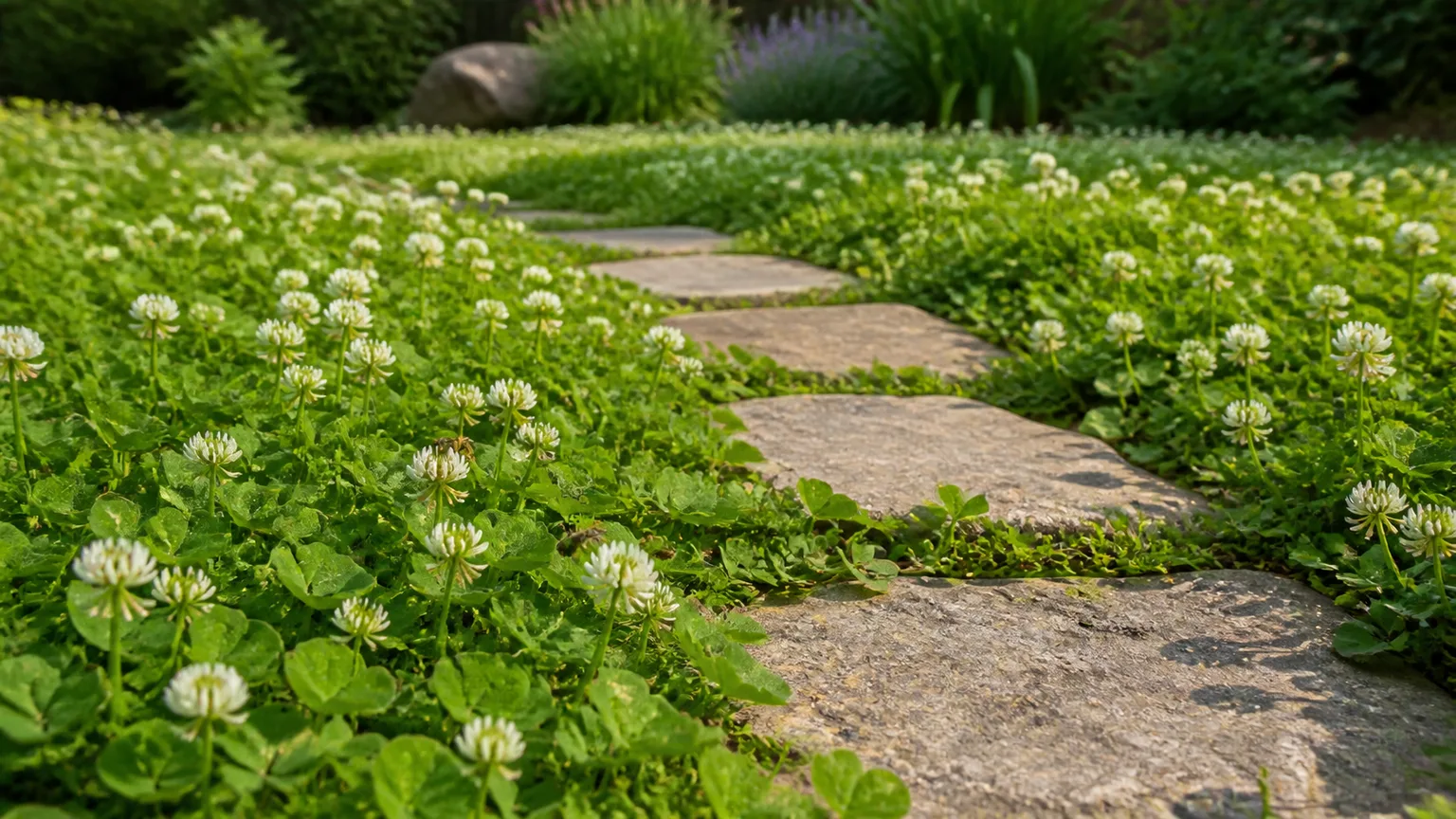
If you want a uniform, close-cut, sports-ready surface, a pure clover lawn may not match your expectations. If you want flowers, reduced nitrogen inputs, or a softer alternative in a low-traffic sunny area, clover may be a better fit. Make that design decision before buying seed; otherwise, the first spring can feel like a failure even when the clover is growing exactly as expected.
Set your planting window from local conditions
Start with your local average first-frost information, but treat it as a planning reference—not a forecast. The first light frost is not the same as frozen soil or a killing freeze, and local pockets can be warmer or colder than the nearest weather station. Ask your county extension office or the seed supplier for a local clover-seeding window if your climate has a short or unpredictable autumn.
Then check four conditions: the soil can be scratched open without turning to mud; the surface can remain moist after sowing; the forecast does not show an immediate heat wave or hard freeze; and the seed will have a meaningful establishment period before winter dormancy. There is no universal number of days that guarantees success across cultivars, soil types, and climates. If the seed package gives a latest sowing date, use it as the product-specific limit rather than substituting a generic online rule.
| What you see | Practical decision |
|---|---|
| Cooler days, workable soil, and dependable moisture | Prepare and sow in early fall |
| Warm, dry weather with no reliable watering | Wait for rain or choose spring |
| Frozen or waterlogged soil, or a hard freeze is imminent | Do not expect active fall establishment; plan for spring or locally appropriate dormant seeding |
| Dense turf or weeds cover most soil | Open the surface or renovate before sowing |
This approach is more reliable than planting by USDA hardiness zone alone. A hardiness zone describes average winter minimum temperature, not the date your local soil cools, how long autumn stays mild, or whether a shaded lawn remains wet. Use local frost and weather information together with the seed label and a real inspection of your site.
Overseed or renovate? Decide before buying seed
Overseed when the existing lawn is reasonably healthy, has scattered thin places, and you want clover threaded through the grass rather than a complete visual change. Mow a little shorter than usual, remove clippings and leaves, and expose small patches of soil with a rake or dethatcher. The openings are where tiny seed can reach soil instead of resting on grass blades.
Renovate when turf is sparse across most of the yard, the area is dominated by unwanted weeds, or compaction and drainage problems keep returning. Renovation may mean removing the old vegetation, correcting grade or soil problems, and rebuilding a seedbed. Do not simply scalp healthy grass everywhere: a living lawn can protect soil, and excessive disturbance invites weeds and erosion. If you use a lawn product to remove vegetation, check its label for reseeding intervals and clover compatibility; many broadleaf weed controls are designed to kill clover.
A quick lawn-readiness check
Walk the site after rain and again during a dry period. Note where water puddles, where it runs off, which sections get several hours of direct sun, and where repeated foot traffic follows the same route. NC State lists white clover for sun to part shade and moist soil, but that does not mean it will thrive in deep shade, standing water, or a heavily worn path. (NC State Extension Plant Toolbox)
If the lawn has hard, compacted soil, address compaction before seeding; otherwise water and roots may not move into the profile evenly. If the soil is very sandy and dries rapidly, consider whether you can irrigate through establishment or whether another ground cover suits the site better. A soil test can help you avoid guessing with lime or fertilizer. Clover’s nitrogen-fixing partnership is not a reason to add nitrogen or other amendments blindly, and too much nitrogen in a mixed lawn may favor grass over clover.
Prepare the seedbed for fall
Pick a calm, mild day when the soil is moist enough to scratch but not sticky. Mow the existing lawn and collect the clippings. Rake away leaves, dead grass, and thick thatch; then use a leaf rake or garden rake to loosen only the surface where you want seed to land. For a thin lawn, small exposed patches are often enough. For a full conversion, remove or suppress competing vegetation and prepare a level, firm seedbed rather than scattering seed over an intact turf canopy.
Correct obvious site problems before sowing. Fill small depressions so water does not pool over seedlings, and redirect foot traffic temporarily if a route crosses the new lawn. Avoid adding a heavy layer of compost or topsoil over the whole area: burying clover seed too deeply can prevent emergence. If you need a light covering to keep seed from moving, use only the thin layer recommended for the selected product.
Do not apply a broadleaf weed killer right before or after seeding unless the label explicitly allows the use and timing for clover. Clover itself is a broadleaf plant; Epic Gardening warns that broadleaf herbicides can kill microclover, and Penn State Extension’s white-clover control guidance illustrates why products used against clover are not neutral to a clover planting. When weeds are the main issue, remove them mechanically before sowing or postpone the project until you can prepare safely. (Epic Gardening; Penn State Extension)
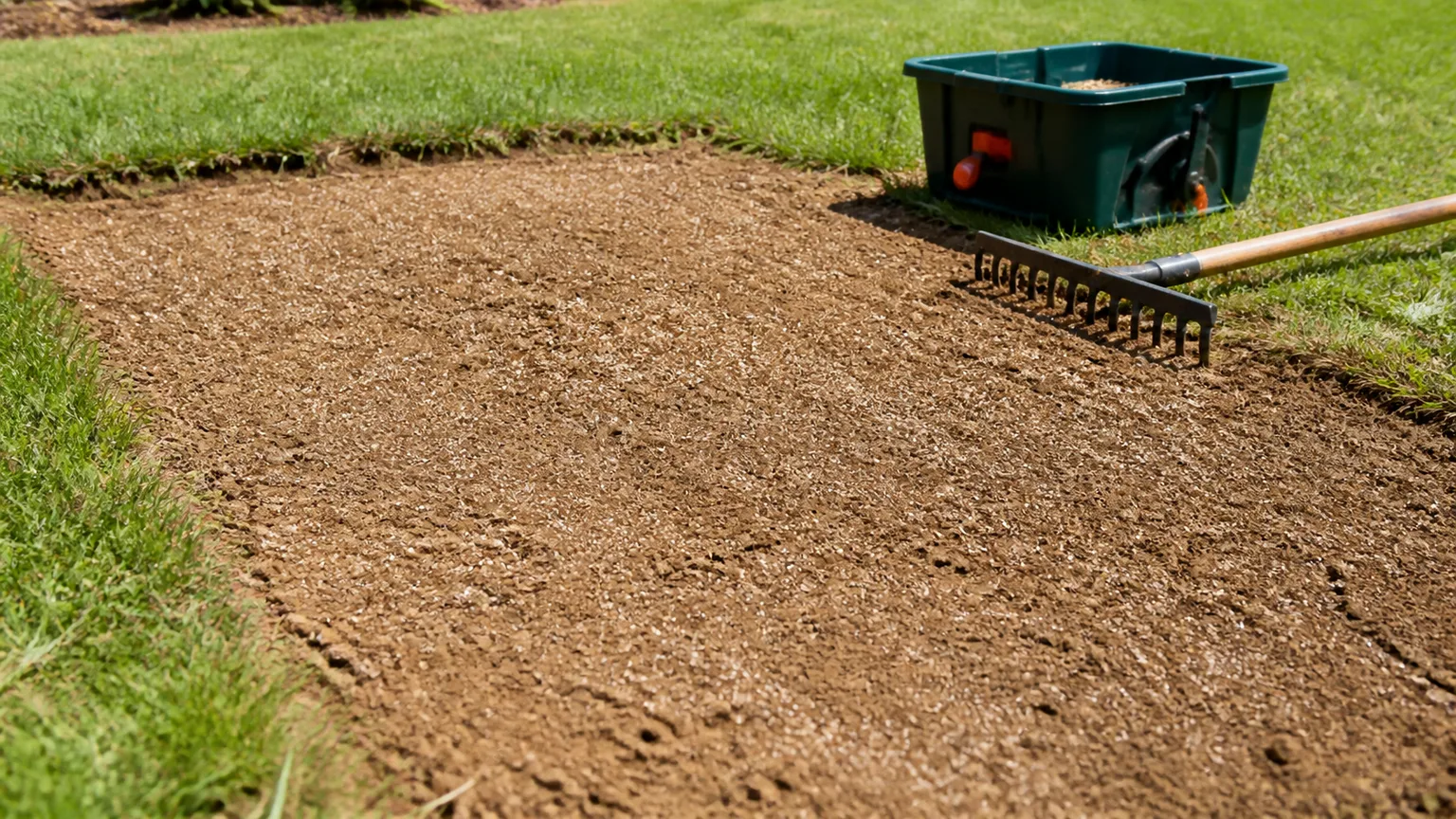
Sow shallowly and keep seed in contact with soil
Measure the area and follow the seed package’s rate. White-clover seed is tiny, so a handheld spreader or two passes at half-rate—one lengthwise and one crosswise—can help avoid obvious bands. If the label permits, blending seed with a dry, inert carrier can make the volume easier to distribute, but do not use a carrier as an excuse to increase the amount of seed.
After spreading, press or roll the surface lightly so seed touches soil. Clover is generally surface-sown or covered only very lightly; a deep layer can block seedlings. A gentle rake is useful if it moves seed into openings without burying it. On a slope, sow in calm weather and water with a fine spray so seed does not collect at the bottom.
Keep seed away from gutters, pavement, and garden beds. White clover spreads by creeping stems and can self-seed, so set a clear edge where you do not want it. If you are sowing a mixture, distribute clover and grass seed according to the blend instructions; their seed sizes and recommended rates may differ. Do not substitute a pasture or cover-crop rate for a residential lawn rate without checking the supplier’s purpose and label.
Keep the surface moist while seedlings establish
After sowing, water gently enough that the seed stays in place. The target is even surface moisture, not a saturated lawn. During a dry spell, light irrigation may be needed more than once a day because the seed sits close to the surface; after rain, skip watering if the soil is already damp. Adjust to the soil and weather rather than following a fixed schedule.
Once seedlings emerge, gradually reduce watering frequency while allowing moisture to reach a little deeper. That encourages roots to follow water downward instead of keeping the surface constantly wet. Check the actual soil with a finger or small trowel; a lawn can look damp on top while the seed zone has dried, or look glossy after irrigation while water is running off compacted ground.
Avoid letting the seedbed dry completely during germination. If you cannot water during a period of hot wind or leave town without someone checking the lawn, postpone sowing. Conversely, do not keep watering through puddles or prolonged rain. Persistent saturation can move seed, deprive roots of air, and create a thin stand that looks like poor seed quality.
Protect young clover from mowing, traffic, and herbicides
Keep people, pets, and mower wheels off the newly sown patches while seedlings are small. Foot traffic can press or displace seedlings before they knit into the soil. If a path is unavoidable, lay a temporary board or redirect activity; a narrow worn track is easier to prevent than to repair after the stand establishes unevenly.
Wait to mow until the clover has enough growth to tolerate a light cut and the mower will not pull up seedlings. There is no single height that suits every blend, so follow the seed supplier’s directions and avoid cutting into soft, wet ground. For a grass-clover mixture, the grass may become tall before clover is ready; use a higher mower setting and make the first cut gently rather than forcing both plants into a short, polished look.
Keep broadleaf herbicides away unless the product label specifically permits use on the clover species and at that stage. Hand-pull a few conspicuous weeds while the ground is moist, or tolerate minor weeds during establishment rather than treating the entire new lawn. Once established, clover can coexist with a more diverse lawn, but the area will not behave like a grass-only surface under every maintenance routine.
Troubleshoot a thin or patchy fall stand
Do not reseed the entire lawn at the first sign of uneven emergence. First inspect a few square-foot patches: is the seed still visible on top of thatch, buried under soil, washed to one side, or sitting in a dry spot? Compare the shaded and sunny areas, check whether the soil is compacted, and look for evidence of bird disturbance or foot traffic. Each pattern points to a different correction.
If seed remains on grass blades or thatch, rake small openings and overseed those spots. If seed has washed into piles, correct the slope or adjust watering before reapplying a measured amount. If the soil has dried repeatedly, wait for a cooler, more reliable moisture window. If the lawn is patchy only in deep shade or a high-traffic corridor, consider a different plant or surface there instead of repeatedly buying clover seed for a site it cannot handle.
Germination can be uneven because soil temperature and moisture vary across one yard. Give seedlings time to appear under suitable conditions, and do not mistake winter browning or dieback for immediate seed failure. Penn State notes that white clover foliage commonly dies back in winter and returns from crown growth in spring; persistent bare soil after spring growth resumes is a better signal to reassess the stand. (Penn State Extension)
Plan for winter and the following spring
The first winter is a test of expectations as much as plant survival. White clover may lose foliage in cold weather, and microclover can go dormant in colder regions. Epic Gardening recommends considering a grass-clover mix when year-round green color matters in a northern climate; that is a design trade-off, not proof that clover has died. (Epic Gardening)
In spring, wait for conditions that support growth before judging thin areas. Check whether crowns and rooted runners are alive, whether drainage or shade caused repeated failure, and whether the grass has crowded clover out. Rake away winter debris, repair bare spots with the same compatible seed mix, and keep the area lightly watered until new growth is established.
If you want flowers for pollinators, avoid mowing the whole lawn just as clover begins to bloom; you can leave some patches taller or mow in sections. Flowering clover attracts bees, so consider where children walk barefoot and where people sit. If you prefer fewer flowers or a tighter look, mow more often—but remember that the result is a managed ground-cover lawn, not maintenance-free turf.
Conclusion
Early fall is often the best time to plant a clover lawn when the heat is easing, the soil is workable, moisture is dependable, and the seed still has time to establish before winter. It is not automatically better than spring, and late fall is not a shortcut: a good window is the one your local weather and seed label can support.
Choose white clover, microclover, or a blend for the way you use the yard; open soil so seed reaches the surface; sow at the labeled rate; and keep the seed zone evenly moist. If the lawn is dense, the site is deeply shaded, the ground is waterlogged, or a hard freeze is near, fix the mismatch first or wait. Those decisions will do more for a durable clover lawn than planting on a date that merely sounds right.