How to Evaluate Garden Product Reviews
Use a garden-specific checklist to compare product tests, star ratings, fertilizer claims, tool fit, warranties, and the costs that appear after checkout.
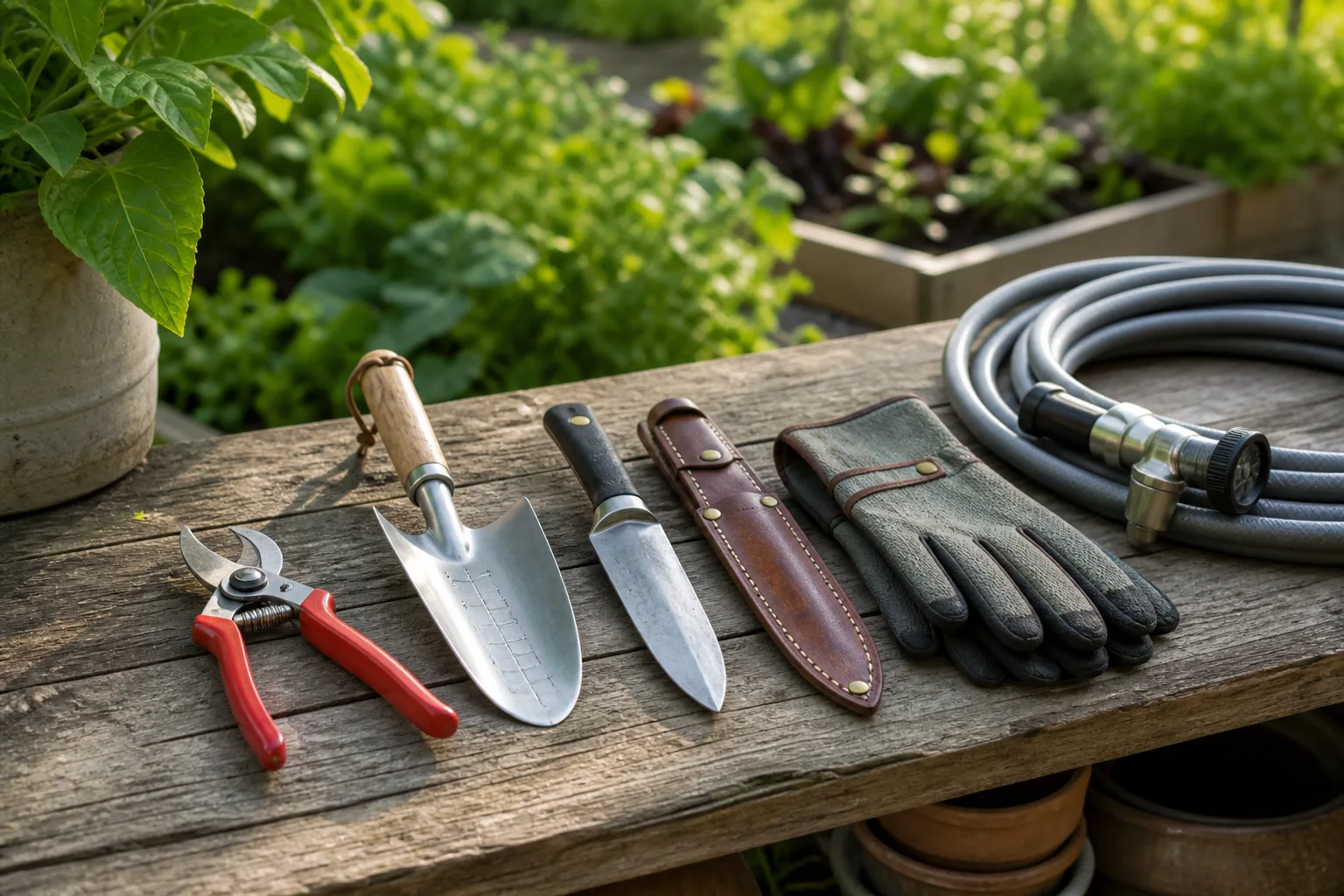
A five-star rating can tell you that some buyers were pleased. It cannot tell you whether a shovel will penetrate your compacted soil, whether pruners fit your hand, or whether a fertilizer addresses the problem in your bed. To evaluate a garden product review, look for evidence that connects a defined test to the conditions you care about, then check whether the reviewer explains limits, drawbacks, and any relationship with the seller.
Garden purchases range from simple hand tools to powered equipment and products that affect soil, plants, wildlife, and people. The amount of scrutiny should match the purchase. A decorative pot may need a quick check of dimensions and drainage; a pesticide, spreader, or expensive battery system deserves a closer read of the label, use case, maintenance, and safety information.
Start with the job your garden needs done
Write down the task before you compare models. “I need a better tool” is too vague; “I need to cut live stems up to about three-quarters of an inch in a crowded perennial bed” gives you criteria. The task also gives you a fair way to evaluate a reviewer’s conclusions: did the test imitate the work you actually need to do?
Describe the conditions that can change performance: soil texture and moisture, bed size, plant spacing, frequency of use, storage, your hand size or reach, and whether you want manual or powered equipment. A product can be excellent for a large, loose vegetable plot and awkward in raised beds where space is tight. NC State Extension’s garden tool overview makes the same practical point in a different way: different tools fit different crops and tasks, and a home gardener need not own every type.
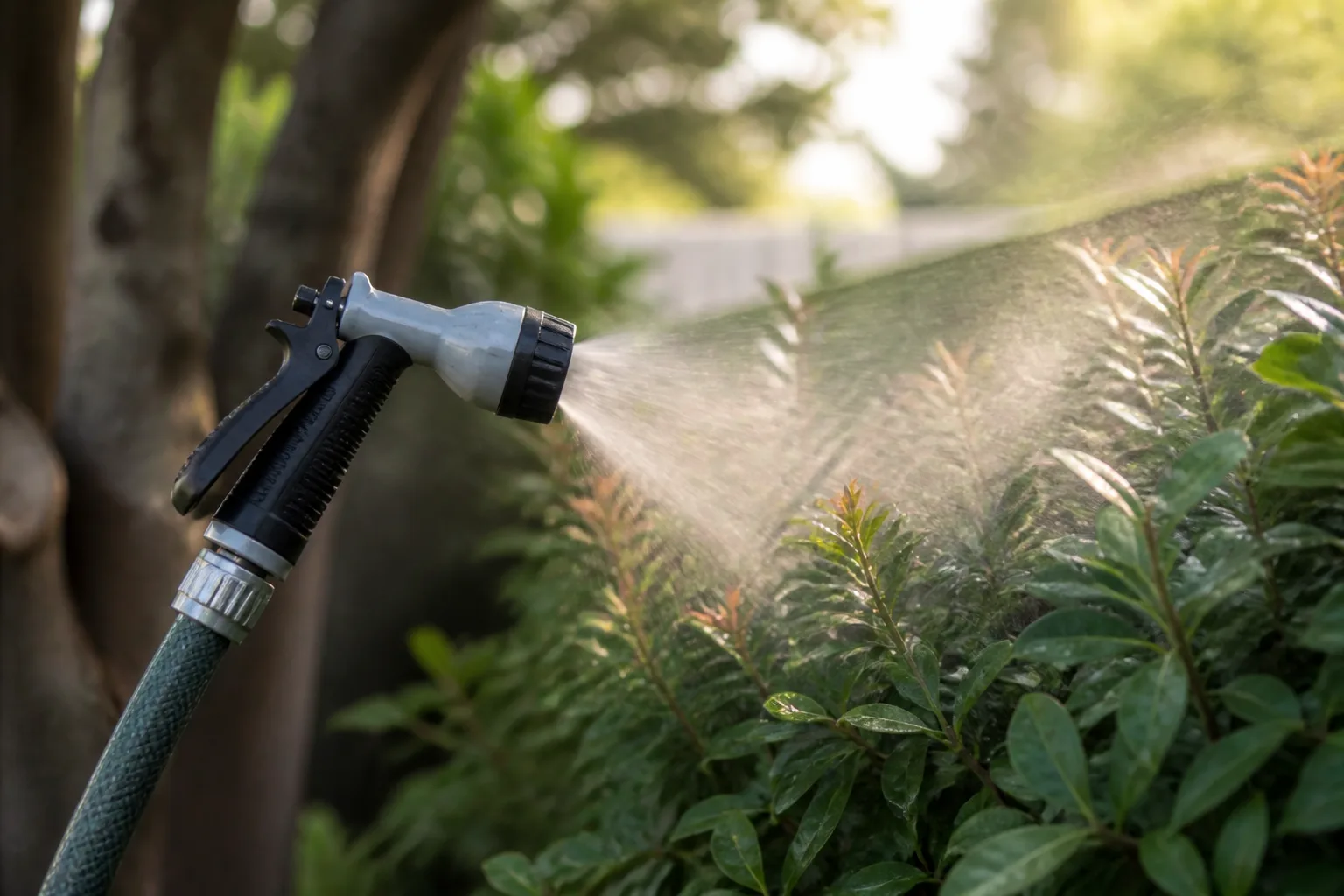
This first step also prevents review drift. If the question is “Will this hose reach the far bed without kinking?”, a review that spends most of its space on color, packaging, or how the hose coils in a studio has not answered your buying question, even if the reviewer seems enthusiastic.
Treat ratings as a signal, not a verdict
The average star score compresses many experiences into one number. It hides the number of reviewers, the spread of ratings, how recent they are, whether the reviewers bought the same model, and whether the product changed during the review period. A 4.7 average based on a few dozen recent users is not directly comparable with a 4.7 based on thousands of ratings accumulated across several model revisions.
Open the rating distribution and read a sample of recent low and middle reviews before reading only the glowing ones. Look for repeated, specific reports: a handle loosening after several weeks, a sprayer seal leaking, or a battery losing capacity after storage. One complaint may be an outlier; the same failure described independently by many buyers can point to a real risk.
Then ask whether the review contains enough detail to be useful. “Works great” tells you little. “The bypass pruner cut fresh stems cleanly, but its lock was hard to operate with gloves” gives a task, a result, and a limitation. Reviews are evidence of individual experience, not a controlled test, so use them to find questions to investigate rather than as a final verdict.
Check who tested the product and what they disclosed
Look for the reviewer’s relevant experience and the relationship between the reviewer, publisher, seller, and manufacturer. A horticulture educator or experienced gardener may be better positioned to judge plant-specific use than a general lifestyle reviewer, while an ergonomics or tool specialist may be better at comparing grip and force. Expertise helps only when the person shows what they actually evaluated.
Check for a clear disclosure of free samples, payment, affiliate links, sponsorship, or other material connections. A disclosure does not prove a review is biased, and an undisclosed relationship is not by itself proof that every claim is false. It does mean you should distinguish the reviewer’s commercial context from the strength of the evidence.
The useful question is not simply “Is this review independent?” but “Can I see what supports this recommendation?” A review that explains why a product lost points, lists the models tested, and shows actual use is more inspectable than a badge or a statement that a team follows high standards. Treat a publication’s description of its own process as background; trust grows when the page lets you verify the method and results.
Look for a method another gardener could repeat
A credible test names the product version, the task, the duration, the conditions, and the criteria used to judge performance. For a pruner, that might mean the branch material and diameter, the number of cuts, blade sharpness before testing, hand comfort after repeated use, ease of cleaning, and whether the lock works reliably. For a hose, it might measure usable length, flow at the intended pressure, coupling leaks, kinking, and storage after watering.
Comparison tests are most useful when products face the same task under similar conditions. If one tool is tested on soft potting mix and another on dry clay, the comparison does not tell you which is better for your garden. When a review cannot control important differences, it should say so and avoid presenting a precise ranking as if it were universal.
The Penn State Extension article “Using the Right Tool Is Self-Care” explains why the details matter: tool shape and handle design change leverage and the body position needed for digging, weeding, and cutting. That is the kind of mechanism a strong review should explain. It should connect an observed result—less wrist strain, cleaner cuts, fewer jams—to a design feature and a task, rather than repeat an adjective from a product listing.
Match the test to your garden’s conditions
Garden products are unusually sensitive to context. A digging tool that performs well in friable loam may struggle in rocky clay; a rain gauge can be accurate in an open lawn and misleading beneath an eave; an irrigation timer may behave differently with low household pressure. A review that gives no location, soil, weather, plant type, or test duration may still offer useful impressions, but it cannot establish that the same result will occur everywhere.
Check whether the review covers the season and duration relevant to your decision. A short unboxing test can judge assembly, initial fit, and basic operation. It cannot establish how a wooden handle holds up through several seasons, whether a compost thermometer remains accurate, or how a battery performs after repeated charge cycles and winter storage. Long-term claims need long-term observation, or the author should label them as uncertain.
Practical horticulture writing can add task context that laboratory metrics miss. Fine Gardening’s “Great Garden Tools for the Season” and GrowVeg’s guide to versatile garden tools help illustrate how a tool’s value depends on the work and garden layout. Use such editorial guidance for practical ideas, then verify any performance promise that matters to your purchase.
Read for failures, not only highlights
The most valuable part of a review may be the sentence after the praise. Does the tool work only in loose soil? Does the sprayer clog unless it is rinsed immediately? Is the storage bag too small for the accessory it is supposed to hold? Does the reviewer say that the handle suits smaller hands but feels cramped for larger ones? Specific limits help you decide whether a drawback matters to you.
Good reviewers separate a defect from a preference. A dull blade arriving out of the box is a potential quality issue; preferring a heavier tool is a personal choice. They also distinguish an early failure from ordinary maintenance. A garden tool may need cleaning and sharpening; a review should not call it “maintenance-free” unless it defines the period and care conditions behind that claim.
Watch for review language that erases trade-offs: “perfect for every garden,” “never needs maintenance,” or “doubles your harvest” without a measured comparison. Strong reviews say who is likely to benefit, who may not, and what would change the conclusion. A limitation is a sign of useful calibration, not necessarily a reason to reject a product.
Separate measurable facts from marketing claims
Sort each claim into one of three buckets: verifiable specification, observed test result, or broad promise. Length, weight, materials, capacity, and included parts are specifications you can often confirm from a manual or product label. “Cuts 50 percent faster” is a performance comparison that needs a baseline and a defined test. “Healthier plants” or “weed-free all season” is broad language that requires much more context than a product page usually supplies.
Look for the denominator behind a number. “Lasts twice as long” compared with what, under which maintenance schedule, and measured how? “Covers 5,000 square feet” may describe theoretical capacity at a particular application rate, not the area you can treat with your chosen setting. If the review repeats a manufacturer’s claim without testing it or finding independent evidence, treat it as a claim—not as a result.
Photographs and videos can verify some visible details: assembly, included accessories, actual dimensions, spray pattern, or how a tool sits in a hand. They cannot alone prove durability, chemical effectiveness, or a yield increase. A polished image is not a substitute for a method, and a dramatic before-and-after image may reflect differences in watering, light, soil, or timing rather than the product.
Compare materials, fit, and ergonomics
Product specifications become useful only when they meet your needs. For hand tools, inspect head material, joint construction, handle length, grip shape, total weight, balance, and whether parts can be replaced. For gloves, compare fit and dexterity as well as puncture resistance; for hoses, compare couplings and bend behavior as well as advertised length. A specification sheet can help you narrow choices, but the review should show how the combination feels and performs in real use.
Fit is personal, so seek a review that reports the reviewer’s hand size, strength, reach, or working position when those factors matter. A long handle can reduce bending for one gardener and be difficult to control in a narrow bed for another. Penn State Extension’s “Cool Tools for New and Seasoned Gardeners” discusses weight, handle shape, length, and leverage. Savvy Gardening’s guide to garden hand tools adds practical criteria such as grip comfort, multipurpose use, and comparing gardeners’ experiences. If possible, handle the tool in person or buy from a seller with a clear return policy.
Evaluate maintenance as part of construction. Ask whether blades can be sharpened, fasteners tightened, seals replaced, and batteries or other consumables sourced. A tool with a replaceable blade may be a better long-term fit than a sealed unit, even if the second feels smoother on day one. NC State Extension recommends cleaning, sharpening, tightening, and storing tools in a protected space; reviews should not imply a durable tool stays durable without care.

Vet fertilizers, soil amendments, and pesticides carefully
The stakes rise when a product is applied to plants, soil, pets, or people. A review can help you understand packaging or ease of application, but it cannot replace the label or local horticultural guidance. Before buying a fertilizer or amendment, identify the problem you are trying to solve and check whether a soil test or plant diagnosis is a better first step than adding another product.
Read the full label for ingredients, analysis, target use, application rate, timing, storage, and precautions. Do not infer a product’s safety or effectiveness from words such as “natural,” “organic,” “clean,” or “plant-based”; those terms do not tell you the dose, target, or conditions for use. For pesticide products, follow the current label directions and restrictions, and verify that the product is meant for the plant, pest, and site you intend to treat. A reviewer’s success in a different garden does not change those directions.
Claims about pest control, disease prevention, or dramatic growth should identify a specific target and a measurable outcome. If the evidence is only testimonials or photos, the review cannot show whether other causes were ruled out. Prefer extension or regulatory guidance for plant health, application rates, and safety, and treat user reviews as information about packaging, odor, storage, or ease of use—not as proof that a treatment will work for your situation.

Calculate the cost beyond the sticker price
Compare what it costs to get the job done, not just what one unit costs. A cheaper tool may need replacement sooner; a spreader may require calibration; a battery platform may require a separate charger and battery; and a concentrated product may be economical only if you can store and use the full container as directed. Price per ounce or per tool does not answer price per season or price per completed task.
Add likely consumables, maintenance, storage, shipping, and return costs. Consider whether the product saves enough time or physical effort to justify its price, but be cautious with vague time-saving claims. A five-minute claim is meaningful only if the test explains the starting conditions and compares the same job. For a rarely used tool, borrowing or renting may cost less than ownership; for a frequently used tool, durability and available parts may matter more than the lowest purchase price.
Think in scenarios rather than a single “best value” label. A homeowner who prunes a few shrubs each spring may value storage and a modest price. Someone maintaining a large orchard may reasonably prioritize serviceable parts, a comfortable grip over hundreds of cuts, and a local repair option. The right value is conditional on use, not a universal badge.
Check returns, warranties, parts, and recalls
Read the full warranty terms before treating “lifetime guarantee” as a reason to buy. Check who provides the warranty, what counts as normal wear, whether proof of purchase is required, whether shipping is your responsibility, and whether replacement parts are stocked. A long warranty is useful only if the process is practical and the covered component is the one likely to fail.
Separate the seller’s return window from the manufacturer’s warranty. The return policy is the short-term safety net for fit, setup, and mismatched expectations; a warranty covers specified defects under stated conditions. Confirm deadlines, packaging rules, restocking fees, and whether used or opened supplies can be returned. For chemical or perishable products, return terms may be narrower, so read them before opening anything.
Before buying used or older powered equipment, check whether a recall or safety notice applies to the exact model and serial range. For new products, keep the model number, receipt, and manual so you can act on later notices. A review may predate a redesign, ownership change, or recall; publication date and model number are part of the evidence.
Use a side-by-side decision scorecard
Turn the review into a compact decision rather than trying to remember every adjective. Give more weight to criteria tied to your task and less to cosmetic features that do not affect use. If two products are close, note where the evidence is strong and where you still need to test the fit yourself.
| Criterion | What useful evidence looks like | Your weight |
|---|---|---|
| Task fit | Demonstrated on the job and material you have | 1–5 |
| Conditions | Soil, scale, climate, and duration resemble yours | 1–5 |
| Performance | Specific result, method, and comparison are shown | 1–5 |
| Comfort and control | Grip, reach, weight, and repeated use are described | 1–5 |
| Durability and care | Failures, maintenance, and replaceable parts are covered | 1–5 |
| Cost and support | Full cost, return terms, warranty, and service are clear | 1–5 |
Score each product only after recording how much you trust the evidence for that criterion. A low score can mean either “the product performed poorly” or “the review did not test this”; keep those distinct. If a test is missing, mark it unknown and decide whether that uncertainty is important enough to seek another source or try the product in person.
A practical example: choosing a hand pruner
Suppose you need pruners for live stems and occasional harvests. One review praises a model’s hardened steel and comfortable handle but does not specify stem size, cut count, hand fit, or sharpening. Another reviewer tests several branch diameters, reports the maximum size that cut cleanly, mentions hand fatigue, notes sap buildup, and describes how the lock works while wearing gloves. The second review gives you more to act on, even if its overall score is lower.
Now match that evidence to your own work. If most of your cuts are small stems in a tight bed, blade access and handle fit may outweigh maximum capacity. If you routinely cut thicker branches, the review should tell you when to switch to loppers or a saw rather than encouraging you to force an undersized pruner. Penn State Extension notes the importance of selecting a cutter suited to the branch and distinguishes bypass from anvil action; that guidance turns a review’s “powerful” claim into a more useful question about cut type and material.
Before checkout, compare blade replacement, sharpening, lock operation, cleaning, spare springs, return terms, and total cost. The best choice may be a less expensive model that fits your hand and has available parts, or a premium model if you will use it heavily and it performs well in the exact range of cuts you make. The review narrows the decision; your use case makes it.
Run a short trial before the return window closes
For a tool or non-hazardous accessory, plan a small test as soon as it arrives. Check the model and included parts, read the manual, inspect joints and seals, and use it on a representative but low-risk task. Take notes on comfort, control, setup time, and the result. If the tool is meant for pruning, start with the material and diameter it is designed for; do not use an early trial to force it beyond its stated capacity.
For powered tools, begin in a clear area and follow the manual’s safety instructions. For fertilizers, pesticides, or other applied products, do not improvise a test or exceed the label; confirm the intended use and directions first. A review can identify questions, but it cannot authorize a different application rate or remove a safety precaution.
At the end of the trial, ask three things: did it solve the task, was it comfortable enough to use correctly, and did it create maintenance or setup burdens the review failed to mention? If a purchase does not fit, act before the return deadline and keep the packaging and receipt. That short, honest check is more valuable than buying an idealized tool for a garden you do not have.
Conclusion
The most trustworthy garden product review makes its recommendation inspectable. It identifies the task, the product version, the conditions, the method, the trade-offs, and the reviewer’s relevant experience; it also shows where the evidence stops. Star ratings, approval marks, and persuasive photographs can help you find candidates, but none can substitute for that detail.
Start with the job in your garden, compare evidence that resembles your conditions, and verify specifications, labels, support, and total cost. For tools, add fit, leverage, maintenance, and replacement parts. For products applied to soil or plants, use the label and qualified horticultural guidance as your authority. You do not need to buy the most popular product—you need one whose evidence and limitations match the work you will actually do.



