35 Coneflower Varieties and How to Choose Them
Compare 35 coneflower varieties by color, flower form, size, and garden use, then learn which are easier to grow and how to care for Echinacea.
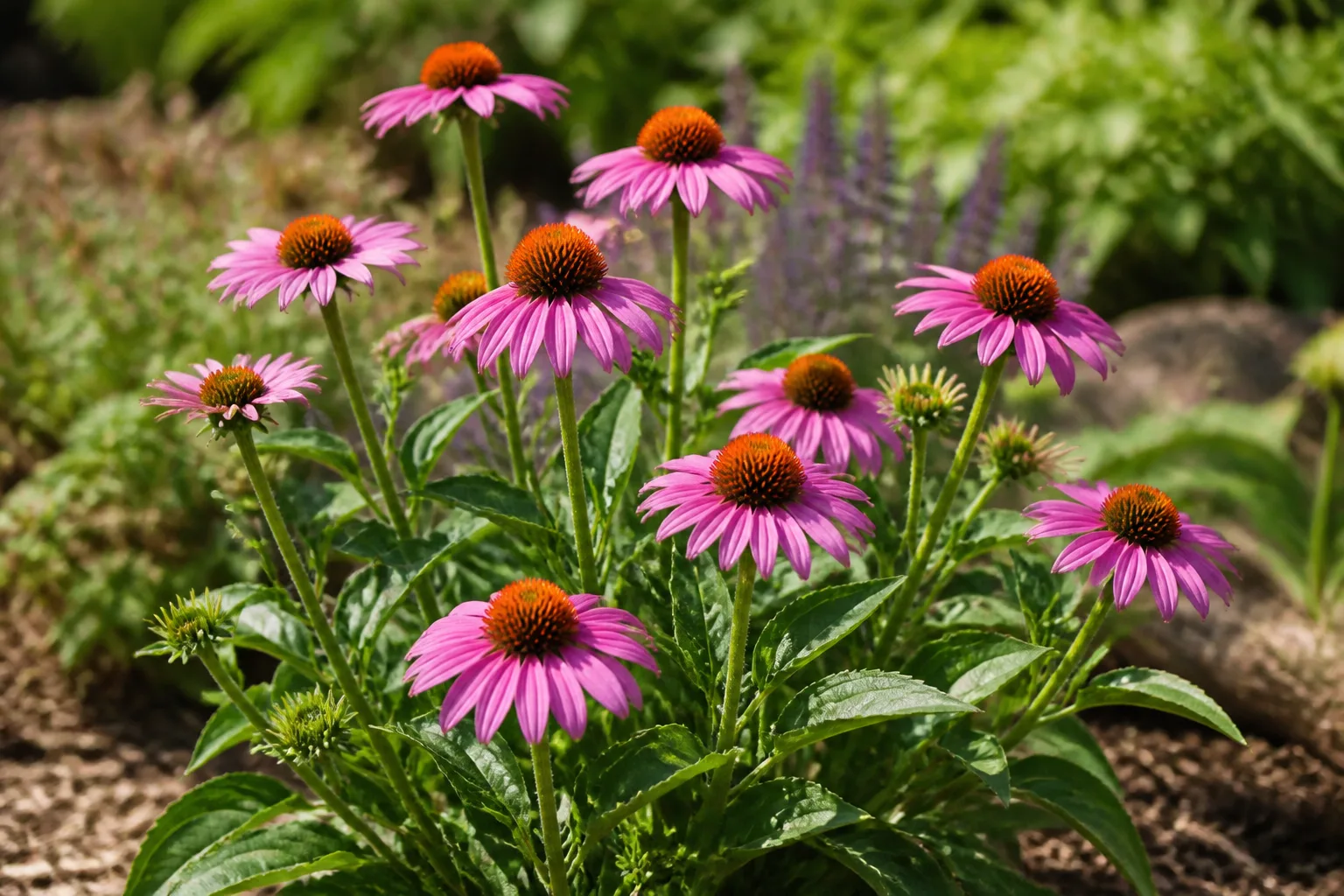
Coneflower shopping can feel like choosing among dozens of color swatches: pink, white, chartreuse, orange, red, yellow, and flowers with extra layers of petals. But the most useful distinction is often not color. It is whether you want an open, single flower with an exposed central disk, a fully double bloom for a showy border or vase, a compact plant for the front edge, or a vigorous cultivar whose garden performance has been tested over several seasons.
Coneflowers belong to the genus Echinacea. The familiar purple coneflower, Echinacea purpurea, is one species within a group of North American perennials; many named garden selections are hybrids, seed-grown strains, or cultivars selected for a particular flower form. A cultivar’s name does not by itself tell you whether it is straight species, a hybrid, or a stable clone. Check the plant tag or breeder description when native status, exact height, hardiness, or true-to-type propagation matters.
Start with the garden job, not the flower color
For a lively pollinator border, start with single-flowered selections whose central disks remain accessible. For a formal or cutting garden, a double flower may be exactly the feature you want, even though many double forms are less favored by pollinators. For the front of a bed, look for naturally compact branching rather than assuming you can keep a tall cultivar small by cutting it back. For longevity, favor a cultivar with regional trial evidence and give it a site with good drainage, especially in winter.
There is no universal “best” coneflower. A trial winner in a Mid-Atlantic clay-loam garden may behave differently in a dry western garden or a humid Gulf Coast site. Treat hardiness zones and catalogue heights as starting points, not guarantees, and leave room for the label’s mature width.
What trial ratings can and can’t tell you
Chicago Botanic Garden evaluated 52 selections over five growing seasons, scoring flower display, habit, health, winter survival, and longevity. Mt. Cuba Center ran a separate three-year Mid-Atlantic trial and recorded pollinator visits. These studies are more useful than color photos, but they reflect particular climates and soils—not every garden. Read the methods from Chicago Botanic Garden and the Mt. Cuba Center trial before treating a rating as a local guarantee. Fine Gardening’s coneflower comparison also considers how color and habit differ among selections.
Single, double, and changing flower forms
A typical single coneflower has a raised central disk surrounded by one ring of ray florets—the petals people notice first. Many bees and other insects land on the disk, while butterflies visit for nectar. A double flower has extra petal-like structures that partly or substantially cover the center. These cultivars can look lush and last well in a vase, but the added structure can make pollen and nectar less accessible.
Mt. Cuba’s pollinator observations found that the top 15 Echinacea selections preferred by visiting pollinators were all single-flowered; its report also found double selections less favored overall. That does not make every double cultivar useless to wildlife, or every single cultivar equally valuable. It does mean a garden planted entirely with pompom forms is a poor substitute for a diverse patch of open flowers. Mix flower forms and add other locally appropriate native plants so bloom and food sources do not depend on one cultivar. Mt. Cuba Center summarizes the pollinator findings.
Color can change as a flower opens and ages. Some newer cultivars shift from orange to pink or from deep pink to a softer shade, so a nursery photo captures only one moment. Chicago Botanic Garden’s trial notes that attractive fading colors can extend a cultivar’s display, while other plants lose ornamental appeal as the petals brown. If you are buying for a coordinated palette, look for photographs of mature and aging flowers, not just the first open bloom.
Pollinator value and seed heads
The cone itself is not decoration to insects: it is a cluster of tiny disk florets. The open center of a single flower offers a landing and feeding surface; a dense double can obscure that route. A regional trial is more meaningful than a blanket claim that every coneflower cultivar attracts the same number or variety of pollinators.
After flowering, seed heads offer structure and food for seed-eating birds, including goldfinches. Deadheading can improve appearance and encourage more flowers on some plants, but removing every spent head also removes that late-season resource. A practical compromise is to deadhead selectively through early and midsummer, then leave some healthy cones standing into fall and winter.
35 coneflower varieties, grouped by garden use
These selections are grouped by form and garden role, not ranked. Older introductions may be hard to find; confirm the cultivar name, mature size, and zone rating on the label. A photo cannot guarantee the same color or performance in every climate.
Open singles in classic and cool colors
1. Avalanche. This white-flowered selection has a greenish center and a compact, front-of-border scale. Choose it when you want a cooler, quieter patch of color beside purple or blue flowers. Its open center makes it a more useful pollinator pick than a comparable double white cultivar, provided the flower remains single as the plant matures.
2. Cheyenne Spirit. This seed-grown mix can produce orange, yellow, red, pink, cream, and purple flowers, so it offers variety without buying several separate color cultivars. Individual seedlings are not identical, which is part of the appeal and also a limitation if you need a uniform row. In the Chicago Botanic Garden trial it was a strong performer with a bushy habit and a long display.
3. Daydream. Soft yellow rays and a relatively compact, branching habit make Daydream useful where a traditional purple coneflower would dominate a small border. It is a good choice for gardeners who want a gentler palette while retaining the familiar exposed cone. Bloom timing and repeat flowering depend on local weather and establishment, so regard catalogue season claims as approximate.
4. Firebird. Its vivid red-orange, shuttlecock-like flower makes the cone itself a strong part of the display. Use Firebird as a focal point among grasses or beside cooler-colored flowers instead of repeating it as a solid block if you want the unusual shape to stand out. The upward, narrow rays are distinctive, but do not confuse them with a guarantee of superior longevity.
5. Flame Thrower. Yellow-to-orange rays paired with a darker central cone give this selection a warm, two-tone effect. It works best where the color has room to read clearly—near deep green foliage or burgundy-leaved companions—rather than mixed indiscriminately with every hot color in the bed. Allow for a medium-to-tall perennial habit and check the grower’s tag for local height.
6. Greenline. Green petals and a green center create a low-contrast flower that reads as texture more than a bright focal point. Plant it beside magenta, burgundy, or dark-leaved companions if you want the unusual shade to show. Its single form also keeps the disk visible; choose it for a design accent, not because green flowers are automatically more wildlife-friendly.
7. Leilani. Clear yellow flowers on sturdy stems suit a sunny border where height and cut-flower stems matter. Give it the back or middle of the bed and space it for airflow, rather than squeezing it into a crowded front edge. For a reliable yellow statement, compare it with other regionally tested cultivars and confirm the expected mature size at purchase.
8. PowWow Wild Berry. This seed-grown cultivar produces saturated pink-purple flowers and can keep flowering without constant deadheading. It is a practical middle-ground pick for a gardener who wants vivid color and a seed strain that can fill a broader bed. Seedlings may vary, so buy several together if a coordinated mass is the goal.
9. Tomato Soup. Large red flowers make this an attention-getter for a warm-color border. Red shades can shift or fade in strong sun, and catalogue images rarely show the full range of aging flowers; inspect mature-plant photos if color stability matters. Choose it for its impact and substantial blooms, then combine it with foliage or flowers that will still look good between flushes.
10. Intense Orange. The KISMET selection offers many orange-toned flowers on a compact, branching plant. It is a useful option when you want a bright display without a very tall plant. Mt. Cuba included the cultivar in its Mid-Atlantic trial, which gives gardeners regional performance evidence; the rating still reflects that trial’s conditions, not a universal guarantee.
11. Sunrise. Part of the Big Sky series, Sunrise is known for pale yellow rays around a center that develops from green toward gold. The warm, light color is easier to blend into mixed borders than a saturated orange. It is a good fit for a pale palette, but choose a local supplier with a clear cultivar label because series names can be confused with other Echinacea.
12. Green Envy. Green petals gradually develop magenta near the cone, giving the flower a two-color effect that changes as it opens. Use a few plants as a conversation piece among conventional pink and purple singles rather than expecting a uniform green patch all season. It generally has a shorter peak display than the most continuously floriferous selections.
13. Bravado. This taller, sturdy-looking pink selection has broad rays held more horizontally than the familiar drooping form. It can anchor a sunny perennial bed, but its scale makes placement important: avoid crowding it against low-growing companions. The benefit is a classic coneflower silhouette that reads clearly from a distance, not a compact plant for a small pot.
14. Fragrant Angel. A white, open flower with a golden-orange cone gives Fragrant Angel a traditional daisy outline and a reported fragrance. Its height makes it better suited to the middle or back of a border than a narrow container. The upright single form is a useful wildlife-garden choice; do not select it solely for fragrance, which varies with weather and individual perception.
15. Harvest Moon. Golden yellow rays around an orange center make Harvest Moon a stronger, warmer yellow than pale selections such as Daydream or Sunrise. It is a natural fit for a late-summer palette with grasses and seed heads. It belongs to the Big Sky group, whose hybrids draw on more than one species; do not label every plant in that series a straight native species.
16. Mango Meadowbrite. Tangerine and mango tones, plus a compact flower scale, make this a useful bridge between pinks and oranges. Its color can age differently from bloom to bloom, so the effect is often a moving mix rather than a perfectly matched block. Put it where new and fading flowers can mingle without clashing with a rigid color scheme.
17. Orange Meadowbrite (Art’s Pride). This selection is notable for copper-orange rays and a darker cone. It is a landmark colorful hybrid from the Chicago Botanic Garden breeding program, but the horticultural name and trade name can appear in different combinations. It offers a distinctive accent for a sunny border; confirm the cultivar identity rather than assuming any orange coneflower is the same plant.
18. Pixie Meadowbrite. This is a compact purple choice when the familiar coneflower color is right but a tall plant would overwhelm the bed. Use it near the front of a border or in a smaller garden, leaving enough room for a mature clump. A dwarf label describes relative scale, not a promise that the plant will remain a miniature in rich soil.
19. Green Jewel. Green rays and a darker green center make Green Jewel a quiet, unusual accent for a mixed planting. It is easier to appreciate close up than from across a large lawn, so place it near a path or seating area. Pair it with pink or deep purple flowers for contrast and use other open flowers nearby to broaden pollinator forage.
20. White Swan. White rays surrounding a bronze-orange cone bring the classic single-flowered shape into a white garden. It is more visually legible than a green-flowered cultivar and can link late-summer colors without dominating them. Plant several with consistent spacing for a calm drift, or use one plant as a bright counterpoint among grasses and purple blooms.
21. Solar Flare. Deep magenta-red rays, a dark cone, and dark stems create a saturated, dramatic flower. Use it as a focal point among silver foliage or grasses; in a busy palette the dark center can disappear visually. This is a hybrid selection, so consider its garden performance and form separately from the ecological claims you might make for a straight local species.
22. Sombrero Salsa Red. The Sombrero series contains several colors; Salsa Red is the orange-red selection discussed here. Compact branching can make it a good front-to-middle border plant. Labels may show the cultivar code and trade name together, so check that both match if you want this exact shade rather than another Sombrero color.
23. Primadonna Deep Rose. Large, deep rose-pink single flowers and strong stems suit cutting as well as garden display. Harvest stems when the ray florets are open and place the cut below a healthy branching point; leaving some stems behind preserves flowers for insects and later seed heads. Its moderate scale can fit a smaller border better than a four-foot selection.
24. Magnus Superior. This cultivar has large rosy-violet flowers with rays that tend to hold out rather than droop. It is a good classic purple-pink option when you want an open flower and a strong, traditional silhouette. Do not assume its name guarantees a better garden performance than every other Magnus form; compare the exact plant tag and local availability.
Gold, orange, red, and changing shades
25. Hot Papaya. This double selection opens in golden tones and develops into vivid orange. Its layered form is a strong ornamental choice for a cutting bed or a border that needs a high-color focal point. Because the center is more covered than on a single flower, balance it with single coneflowers and other accessible flowers if pollinator feeding is a priority.
26. Double Scoop Cranberry. This rich red member of the Double Scoop series has a dense central cushion surrounded by broader rays. It suits a close-viewed border or bouquet where the full flower shape is the point. Seedlings from a named cultivar may not repeat the same look; purchase a labeled plant when color and form need to be predictable.
27. Secret Passion. A fully petaled, pink double flower with a rounded center is designed for a lush, romantic display. It makes sense in a cutting garden, where its full shape can carry a bouquet, but it should not be the only flower in a pollinator planting. Pair it with open singles that provide an easier route to the disk florets.
28. Razzmatazz. Short inner petals form a dome above the skirt of longer pink petals, giving the flower a layered, pompom-like profile. It is among the more sculptural choices for a border or vase. The unusual center is also the trade-off: if you want to maximize access for bees, add single-flowered Echinacea rather than relying on this cultivar alone.
Compact, double, and sculptural choices
29. Doubledecker. This pink selection is known for a second tuft of short petals rising above the usual cone, but the top tier can be variable and is more noticeable once plants are established. Think of it as a distinctive form that may develop with age, not a feature every first-year flower must show. The cultivar is listed as a herbaceous perennial by the Royal Horticultural Society.
30. Kim’s Knee High. This compact pink-purple selection offers a traditional single flower on a shorter plant. It is a sensible choice for the front of a sunny border or a small-space planting, where a tall cultivar could shade neighbors. Compact does not mean no spread: give it room to branch and avoid excessive fertilizer, which can make stems softer and taller.
31. Butterfly Kisses. This compact double has pink rays around a darker raspberry center and is often described as fragrant. Its rounded, full flower is attractive at close range and suits the front of a mixed border. As with other doubles, treat it as an ornamental option, not as the sole pollinator food source.
32. Ferris Wheel. The quilled rays flare outward like spokes, starting pale and shifting toward lemon yellow around a reddish cone. The unusual geometry gives this cultivar a different look from the typical drooping daisy. Place it where the shape is visible from a path; its late-season flowering can help bridge the border toward autumn, depending on local conditions.
33. Milk Shake. Creamy white rays surround a pale, rounded center that develops a soft green-yellow look. This double is suited to a white border or a bouquet where texture matters more than an exposed cone. It can be a gentler alternative to bright colors, though nearby single flowers are a better choice when you want an insect-friendly central disk.
34. Pink Poodle. Numerous pink petals create a fluffy, rounded flower that resembles a clipped pompom. This is a deliberate departure from the simple wildflower form and works best as a focal point or cut flower. Give it air around the blooms so the shape does not vanish in a dense planting, and mix in open singles for pollinators.
35. Marmalade. The orange, shaggy double flower has a warm, textured look and a rounded center. It suits a high-color border or a bouquet, especially with bronze foliage and grasses. Its full flower form is the reason to grow it; for a garden designed around pollinators, treat it as one accent among open-centered flowers rather than the foundation of the planting.
Quick shortlist for common garden goals
- For pollinators: choose open singles and regionally native Echinacea; cultivar names alone do not prove native status.
- For a compact border: compare Pixie Meadowbrite, Kim’s Knee High, and Intense Orange, checking mature width.
- For trial evidence: Cheyenne Spirit, Intense Orange, and Fragrant Angel appear in regional studies; ratings are not universal.
- For cutting: consider Primadonna Deep Rose, Fragrant Angel, or Razzmatazz, while leaving some blooms in the bed.
- For white flowers: Avalanche, Fragrant Angel, White Swan, and Milk Shake differ in center and flower form.
- For warm color: compare Tomato Soup, Intense Orange, Harvest Moon, Orange Meadowbrite, and Salsa Red; shades shift with age.
Planting and care that help cultivars last
Light, soil, water, and spacing
The best starting point is a sunny, well-drained site. Most garden Echinacea bloom best in full sun, though some tolerate light afternoon shade. E. purpurea can handle a range of ordinary soils, including clay, but winter water that sits around the crown is a different problem from summer soil that holds moisture. Improve drainage or choose a raised bed if the site stays saturated; do not try to fix a wet bed by watering less after a plant is already rotting.
Water new plants deeply and keep the root zone evenly moist while they establish. Established purple coneflowers tolerate short dry spells, but heat, sandy soil, containers, or prolonged drought can still reduce flowering. Leave room for airflow. Illinois Extension recommends full sun and well-drained soil and cautions that heavy fertilization can produce leggy plants. Illinois Extension’s purple coneflower guide gives a useful baseline.
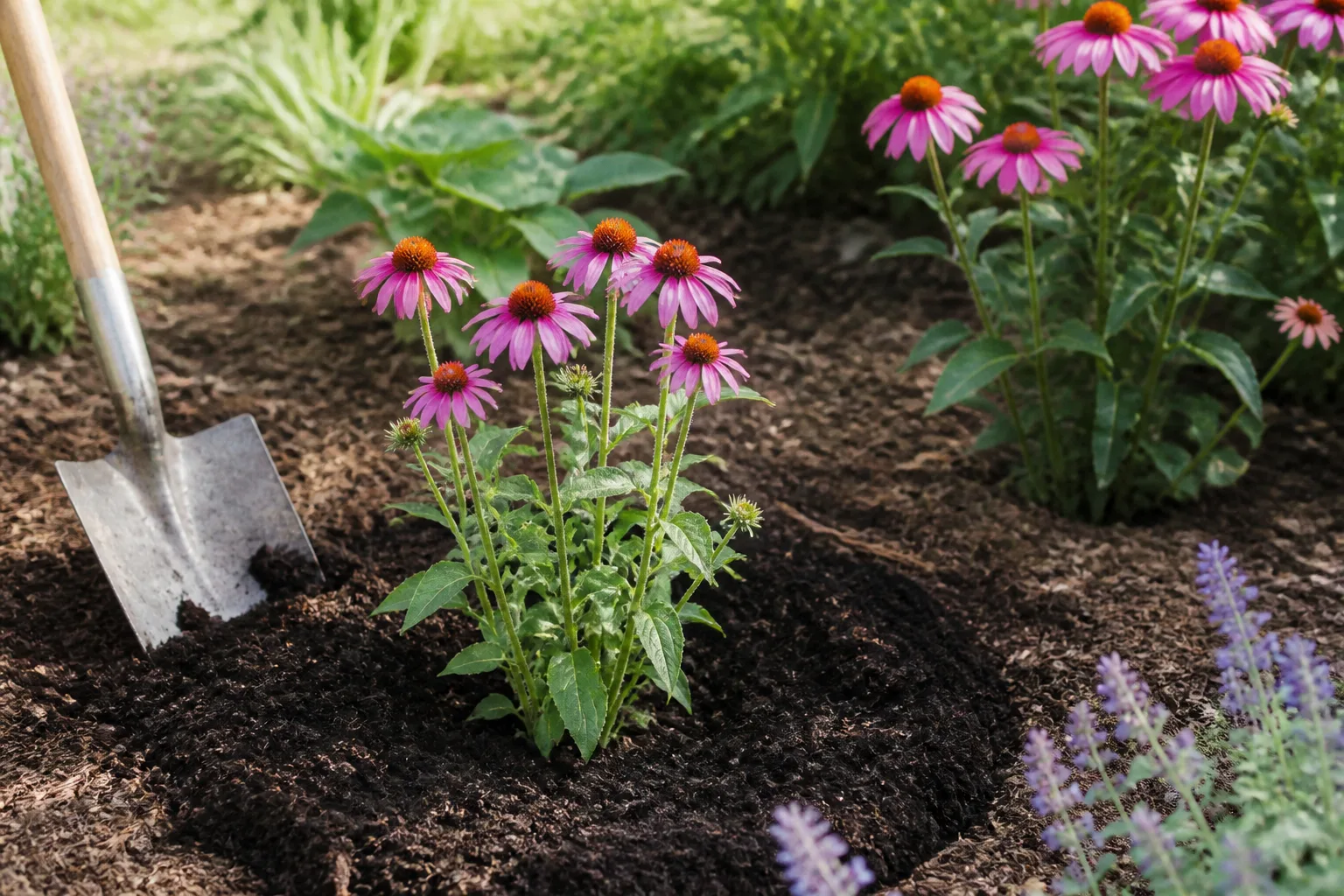
Do not reach for fertilizer just because a cultivar is not covered in blooms. First check the basics: sun exposure, crowding, drainage, and whether the plant is still establishing. Rich feeding can push leafy growth at the expense of sturdy stems. A light compost top-dressing is usually a more conservative choice than repeated high-nitrogen fertilizer in an already fertile garden.
Deadheading, seed saving, and division
Deadhead spent flowers when you want a tidier display or more flowering stems. Use clean pruners and cut back to a leaf or branching point, rather than shearing the whole plant. Deadheading often encourages rebloom, but weather, cultivar, and plant vigor determine how much; it cannot make a naturally short bloom flush flower continuously.
If you want birds to feed on seed, leave some mature cones. If you want seedlings, leave more, but expect the offspring of many named hybrids to differ from the parent. Coneflowers can cross-pollinate, and some named selections are maintained vegetatively to preserve a particular flower color or habit. The Chicago Botanic Garden observed seedlings crowding some trial plants; seedling growth can also make a bed look less uniform over time. Remove unwanted seedlings while young, before their roots intertwine with established crowns.
Division is not an annual chore. Divide a healthy, crowded plant or move a viable clump, accepting some disturbance. The Missouri Botanical Garden suggests dividing E. purpurea when overcrowded, about every four years; species and hybrids differ. Follow the cultivar’s propagation notes and avoid dividing a stressed plant. The Missouri Botanical Garden Plant Finder gives a baseline.
Troubleshooting weak growth and distorted flowers
A plant that flowers poorly may be too shaded, crowded, overfed, newly planted, or stressed by standing water. Compare its light and drainage with the conditions on its tag before assuming the cultivar is defective. Some Echinacea also have shorter individual lifespans than gardeners expect; the whole patch may persist through seedlings even while a named parent plant fades. The Chicago trial assessed longevity and winter survival for five seasons, underscoring why a one-season nursery photo is not a complete performance record.
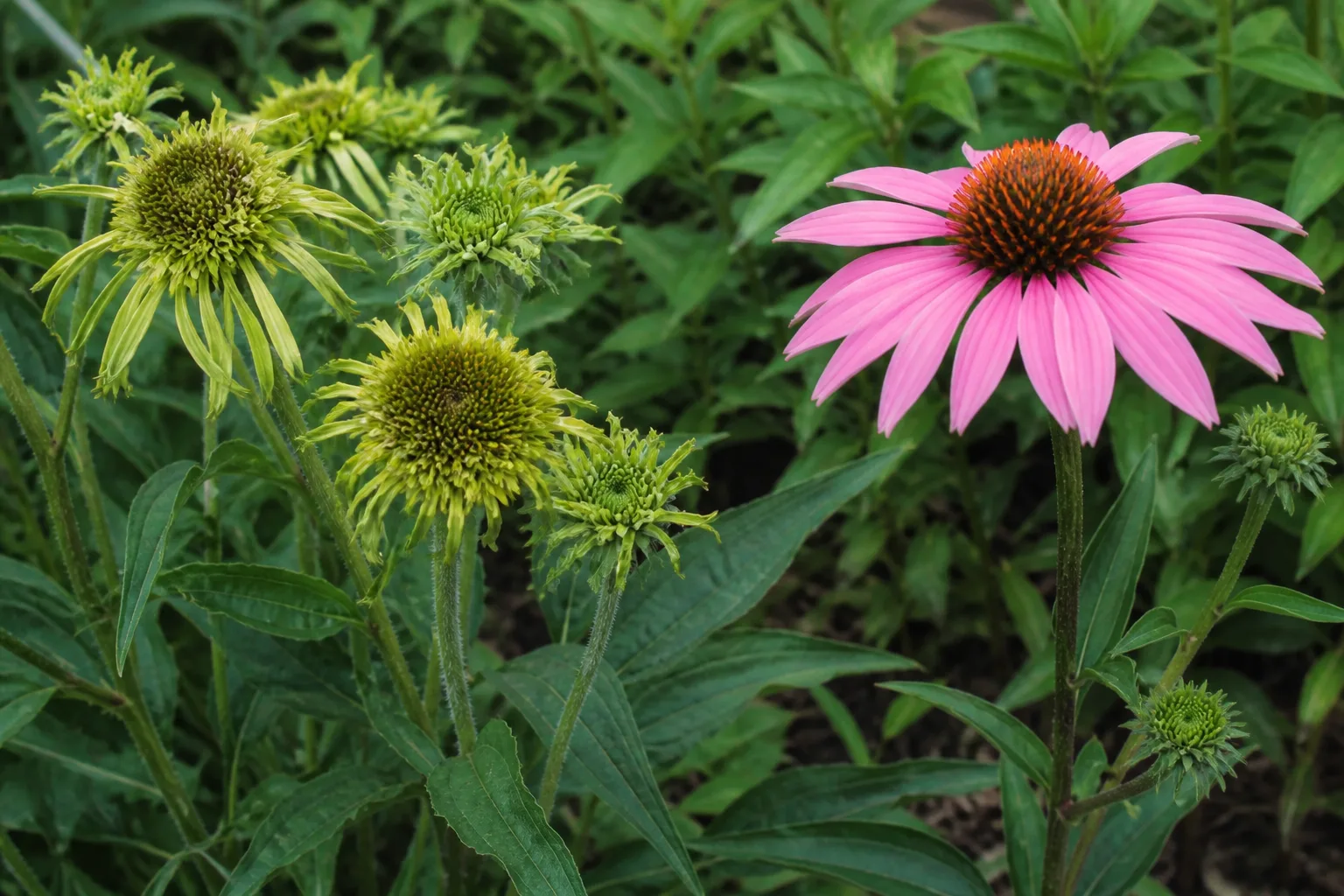
Watch for aster yellows if flowers develop green, leaf-like petals, lumpy or tufted cones, or several distorted growths, especially when foliage is yellowing or the whole plant is stunted. Aster yellows is spread by leafhoppers and has no cure. Remove a plant that shows a convincing whole-plant pattern, including roots, and dispose of it according to local guidance rather than composting it. University of Illinois Extension’s disease guide explains the symptoms and management.
A coneflower rosette mite can also distort the flower head, but its damage is generally concentrated in the flower while the rest of the plant looks normal. The two problems can be difficult to distinguish by a single odd bloom. Inspect leaves and stems as well as the cone, and ask a local extension office or plant clinic when the diagnosis would affect how you manage nearby susceptible plants. Avoid broad insecticide applications: they can harm beneficial insects and do not cure aster yellows.
Conclusion
Choose a coneflower for the job you want it to do. Open singles are the better foundation for an insect-friendly planting; doubles add a distinct, lush flower form; compact cultivars fit smaller borders; and trial-tested selections give you better evidence of performance than color alone. Among the 35 names here, start with a short list that fits your site and check the exact label before buying.
Plant it in sun and drained soil, water through establishment, avoid overfeeding, and decide deliberately whether to deadhead or leave seed heads. If a plant fails, investigate drainage, light, winter conditions, and disease before replacing the cultivar. A thoughtful mix of single blooms, a few ornamental doubles, and other locally appropriate flowers will give you a longer, more resilient display than any single “perfect” coneflower.



