How Much Does Tree Trimming Cost? 2026 Price Guide
Tree trimming cost depends on more than height. See current U.S. ranges and what a written estimate should include for access, hazards, cleanup, and haul-away.
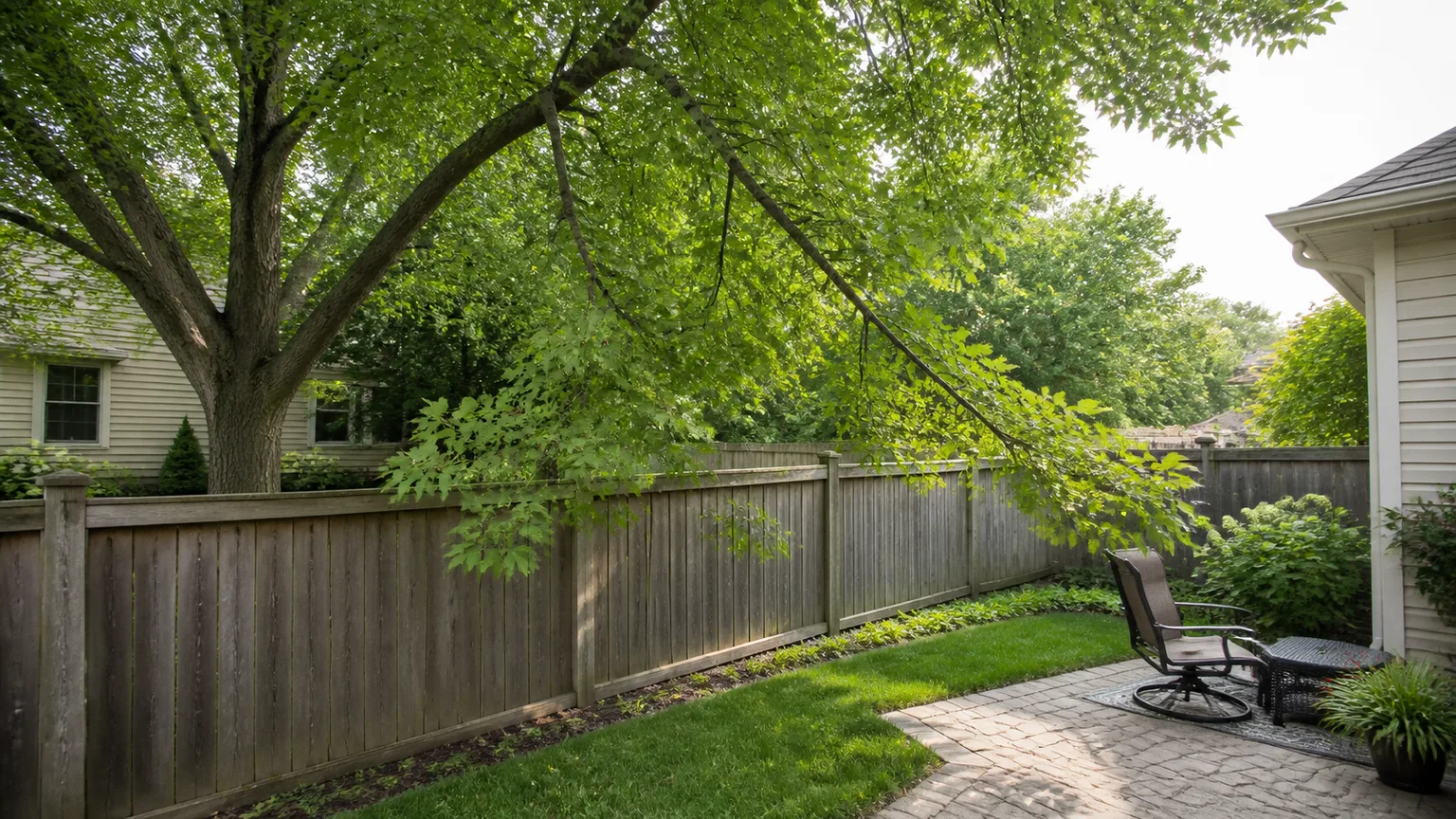
Tree trimming costs about $400 to $900 per tree in one current U.S. cost guide, with a reported national average of $650. The same guide gives a much wider spread—from roughly $80 for a small, straightforward job to $2,500 or more for a very large or neglected tree. These are U.S.-dollar planning figures from HomeGuide’s January 2026 guide, not a guaranteed market average or a quote for your address; your local written estimate may be lower or higher depending on the work, access, hazards, and cleanup included. HomeGuide’s tree-trimming cost guide also reports a common minimum job charge of $100 to $300 or more, which helps explain why trimming one small tree can cost more per tree than adding it to a larger visit.
Height is a useful first clue, but it cannot price the job on its own. A 25-foot tree with open access and a few dead twigs is a very different project from a 25-foot tree over a roof, wedged between fences, or showing a weak union. The clearest estimate names the tree, the reason for pruning, each work area, the crew and equipment plan, property protections, debris handling, and exclusions.
A realistic U.S. price range—and what it does not tell you
HomeGuide’s January 2026 guide lists an average range of $400 to $900 per tree, a displayed national average of $650, and outlying prices from $80 to $2,500 or more. The page describes its figures as estimates based on a proprietary cost database and research; it does not present a government price survey or a price index for every city. Treat the range as a first-pass budgeting reference in U.S. dollars, not as proof that a particular quote is fair or unfair.
The lower end can reflect an easy-to-reach small tree, a modest amount of selective pruning, and a contractor’s minimum service charge. The high end is more plausible when a mature tree needs many large limbs removed, climbing or lifting equipment, rigging over a structure, traffic control, extensive cleanup, or several workers for a longer visit. If a bid falls outside a broad guide range, ask what job conditions explain it before negotiating; estimates that sound similar may cover different tasks.
Local prices change with labor and equipment costs, insurance, travel, competition, disposal fees, and seasonal demand. A homeowner comparing a suburban U.S. price guide with quotes in a rural community—or outside the United States—should not expect the same currency, market, or scope. The estimates below are most useful for understanding price tiers, not for replacing on-site assessment.
Use tree height as a starting point, not a promise
HomeGuide’s 2026 height table gives these broad U.S. reference bands. It groups trees by height, but the actual quote also depends on canopy spread, branch structure, wood condition, site layout, access, and the specific pruning objective.
| Approximate height | HomeGuide 2026 reference range | Typical implication |
|---|---|---|
| Up to 30 feet | $250–$700 | May be manageable from the ground or with limited climbing if the crown is open and the drop zone is clear. |
| 30–60 feet | $600–$1,200 | Often requires more crew time, climbing or a lift, and careful lowering near buildings or beds. |
| More than 60 feet | $1,000–$2,500+ | Can involve skilled climbers, a bucket truck or crane, rigging, larger debris loads, or traffic planning. |
These are not fixed bids or a complete small-to-large pricing calculator. The same source reports the broader $80-to-$2,500-plus spread and a $100-to-$300-plus minimum fee, so its ranges overlap and can reflect different tree types and job scopes. A small tree may still fall outside a height band if a power line, narrow access, unstable ground, or a fragile roof makes every branch difficult to lower. Ask the estimator to describe what is driving the number rather than treating the height row as a promise.
A tape measure also misses the most important canopy details. A wide tree with heavy horizontal limbs may need more rigging than a taller, narrow tree with open ground below it. Evergreen branches, dense hardwood limbs, deadwood, multiple stems, and old pruning wounds can change cutting time and cleanup volume; species matters because the crew must protect the tree’s form as well as the property.
Identify the work before comparing the price
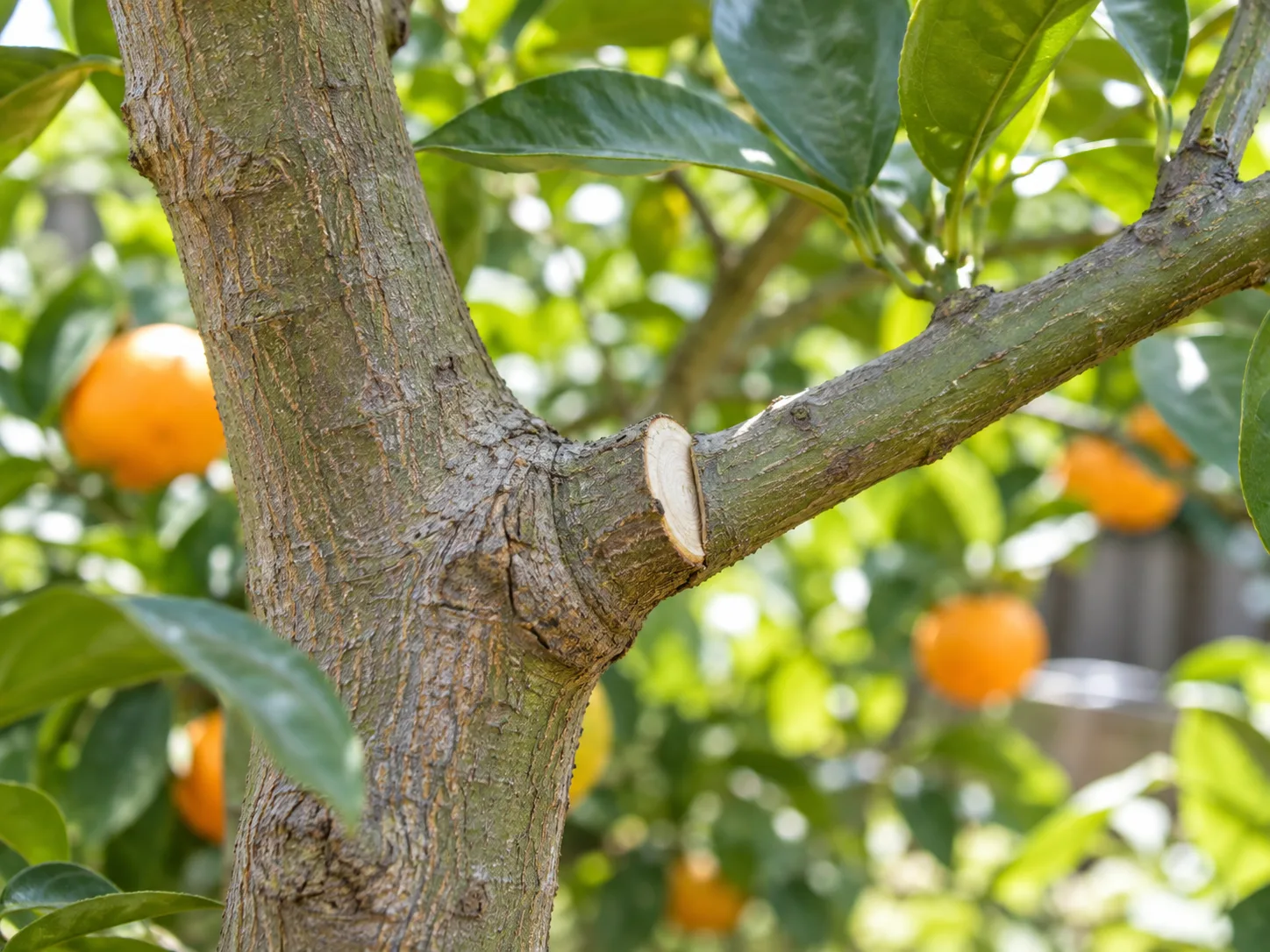
People use “trimming” and “pruning” interchangeably, but the goal changes what a competent crew should do. A quote might cover crown cleaning (removing dead, broken, diseased, or weakly attached branches), raising (creating clearance under the canopy), or reduction (shortening selected branches back to suitable laterals). A healthy tree should not be cut simply because a crew can remove more foliage; Texas A&M Forest Service explains that leaves support a tree’s food reserves and that excessive canopy removal can stress growth.
Before requesting bids, say what problem you are trying to solve: a dead limb, clearance from the roof, a blocked walkway, a branch rubbing another, or a canopy that has become too dense. Gardening Know How’s guide to pruning mature trees likewise emphasizes choosing a specific objective before removing live foliage. Ask the estimator to mark or describe the branches to be removed and explain the intended cut type. “Make it smaller” is not a precise scope, and asking a crew to top the crown can produce a damaging result rather than a healthy reduction. The International Society of Arboriculture’s pruning guidance distinguishes sound reduction cuts from indiscriminate topping and recommends pruning with a clear purpose.
Why two quotes for the same tree can differ
A professional estimate is usually a price for a crew, equipment, mobilization, risk, and defined outcome—not simply a charge for each cut or each foot of height. One contractor may use a climber and ropes; another may propose a bucket truck that cannot reach through a side gate. Either approach can be reasonable when it suits the site and protects the tree, workers, and nearby property.
Access, equipment, and property protection
A tree in a front lawn with room to stage a chipper and a clear drop zone may be faster to service than the same tree behind a narrow gate. If a crew must carry branches by hand, dismantle a fence panel with permission, protect a patio, avoid a septic field, or lower each limb on ropes over a roof, labor time and setup increase. A crane or lift can add mobilization expense, but it may also be the safest or only practical way to reach a section of canopy.
Ask how the team will keep limbs from landing on the house, shed, parked car, irrigation, garden beds, or neighboring property. A thorough quote may include mats, plywood, rigging, a spotter, traffic cones, or a second crew member; a cheaper quote may assume the site can be reached and branches dropped freely. Confirm that the estimator saw the access route and landing areas, not just the trunk from the street.
Tree condition, crew skill, and job risk
Dead, cracked, storm-damaged, or diseased wood can behave unpredictably under load. A visible lean, cavities, hanging branches, tight unions, or root disturbance may warrant an arborist’s assessment before anyone begins cutting. A contractor may price this work higher because it calls for a more experienced climber, extra rigging, more careful lowering, or a separate risk evaluation—not because the crew intends to remove the whole tree.
Certification can help you assess expertise, but it is not a universal license or a guarantee that every job is right. ISA describes its Certified Arborist credential as a voluntary, nongovernmental certification process that measures knowledge in areas such as tree biology, diagnosis, maintenance, and safety. You can verify a credential through the ISA Find an Arborist directory; still ask who will inspect the tree, who will supervise the crew, and who is responsible for the specific pruning plan.
Extras that may or may not be included
“Trim the tree” can describe anything from cutting a few branches to removing a large volume of wood and leaving a clean lawn. HomeGuide’s 2026 guide lists debris removal at an additional $75 to $250 in some cases, but local disposal arrangements vary. A quote should say whether branches will be chipped and hauled away, stacked as logs, left in a designated area, or cut into firewood lengths, and whether stump grinding is excluded.
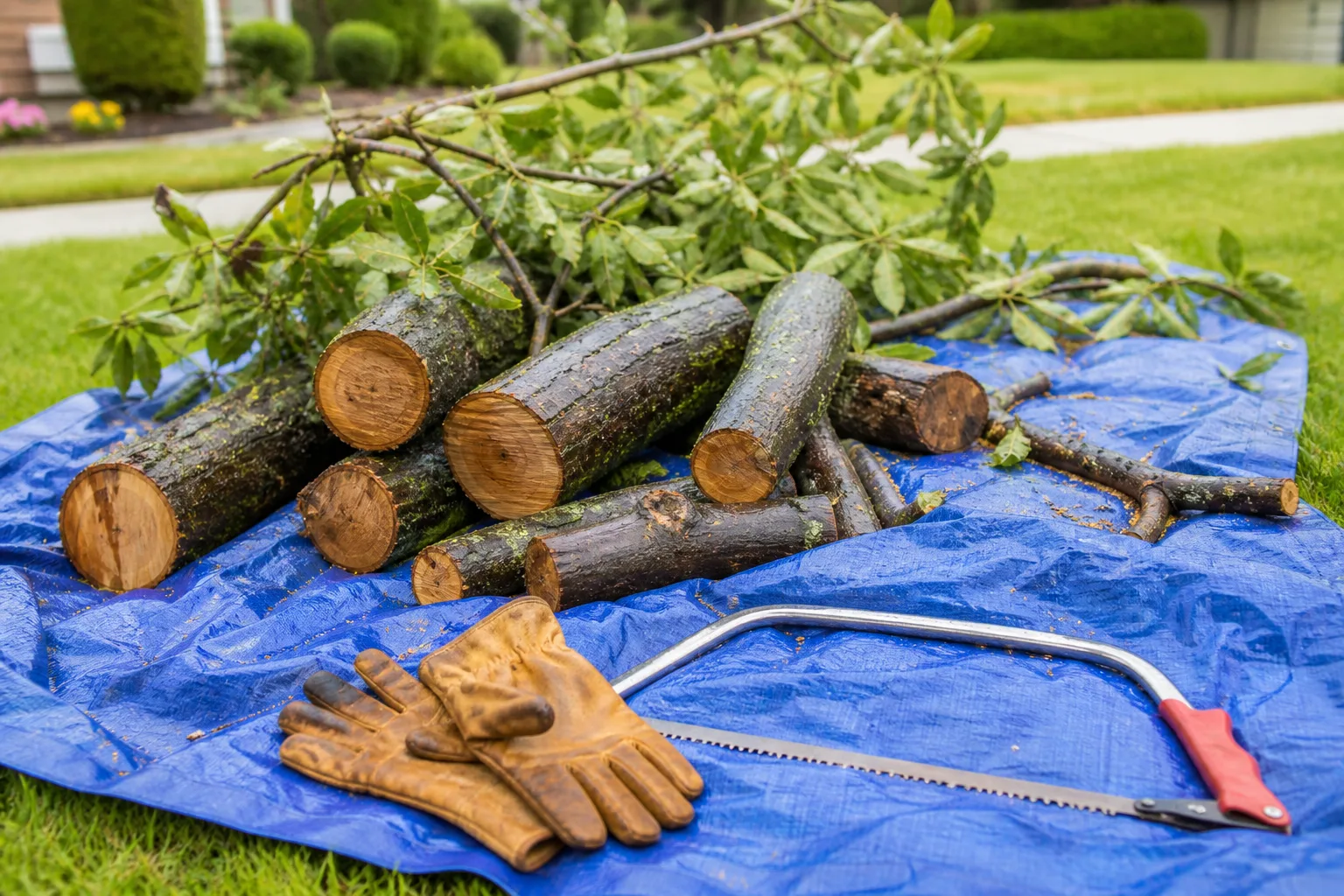
Other possible line items include travel or a minimum dispatch fee, lift or crane rental, rigging, traffic control, permit processing, treatment for a diagnosed pest or disease, and cleanup beyond the immediate work zone. These are not automatic add-ons. Ask the company to list each one and state whether tax, disposal, and any return trip are included before you compare totals.
An arborist’s inspection or written report may be separate from the trimming contract, particularly when the question is whether a tree is hazardous, protected, or suitable for removal. Ask whether assessment fees are credited if you hire the same firm for pruning. If a contractor discovers a condition that changes the plan, request a revised written price and your approval before extra work begins, except for a clearly agreed emergency protocol.
What a useful written estimate should spell out
Ask for an on-site written estimate for any large, complex, or risk-adjacent tree. The best estimate gives enough detail that another company could price the same work. It should identify the tree or marked trees, state the objective, list the branches or canopy sections to be pruned, and describe what will remain untouched.
A strong bid usually states the crew or method when it affects the work, how the site will be protected, what debris removal includes, and which tasks cost extra. It should include the projected start window, payment terms, permit responsibility, and how the contractor handles damage or a scope change. Where relevant, it should also specify whether the work is crown cleaning, raising, or reduction rather than an undefined “shape-up.”
Request current proof of general liability and workers’ compensation coverage, then verify it with the insurer or agent if the job is substantial. Insurance rules vary by jurisdiction and company structure, so do not assume a verbal “we’re covered” answers every question. The International Society of Arboriculture advises homeowners to seek more than one written estimate and verify credentials and insurance before hiring; its arborist hiring guidance also stresses that large-tree work can be dangerous and should be done by trained, equipped professionals.
Questions to ask before you accept a bid
Ask each estimator the same practical questions so the prices stay comparable:
- Which exact branches or parts of the crown will you remove, and why?
- Will a certified arborist assess or supervise the job, and who will climb or operate the lift?
- What equipment and property protections are included?
- Are chipping, hauling, log stacking, and final cleanup included? What is excluded?
- Do you expect a permit, utility coordination, traffic control, or a separate inspection fee?
- Is your liability and workers’ compensation coverage current, and can I verify the certificates?
- How will you handle an unexpected hazard or a change in scope before adding charges?
A bid that answers these clearly may be better value even when its total is higher. A low price that omits hauling, leaves a large pile of brush, or excludes protection around a greenhouse is not comparable to a full-service bid. If two bids use different pruning objectives, ask both companies to reprice the same written scope rather than guessing which one is more reasonable.
Permits, protected trees, and utility lines
Tree rules depend on the address. Cities, counties, historic districts, homeowners’ associations, and conservation areas may restrict pruning or removal of protected trees, especially street trees or trees in easements. A permit may be unnecessary for light routine pruning in one place and required for a substantial canopy reduction in another; there is no single permit fee that applies nationwide.
Before approving major cuts, contact the city or county tree office, local urban forester, or permitting department and ask whether the species, trunk size, location, or proposed amount of pruning triggers a rule. Ask the contractor who obtains the permit and whether its cost is included. If a tree sits on a property line, a public right-of-way, or a shared easement, establish who has authority to approve work before the crew arrives.
Treat any branch near an overhead electric line as a utility coordination issue, not a do-it-yourself trimming opportunity. Call the utility and ask who is responsible for the line and what qualified line-clearance crew must handle the work. BHG’s tree-pruning safety guidance places work near power lines, large hanging limbs, and large branches near buildings in the professional category; a homeowner should not select an ordinary landscaper based only on a low quote for this hazard.
Timing, seasonality, and emergency calls
A lower-demand season may produce a lower quote in some markets, but discounts are not automatic. HomeGuide notes that winter scheduling can sometimes be less expensive than peak periods and that storm emergencies often cost more; treat this as a market tendency, not a promise from every company. Weather, crew availability, local demand, and whether equipment has to be mobilized matter more than a calendar rule.
Tree health should take priority over a hoped-for seasonal discount. ISA says light routine pruning to remove weak, dead, or diseased limbs can often be done through the year, while species-specific diseases can make certain timing unsafe; Texas A&M Forest Service, for example, warns that oak wilt risk affects when susceptible oaks should be pruned in its region. Ask a local arborist about the species and the disease window where you live instead of assuming every tree should wait until winter.
After a storm, distinguish an urgent hazard from ordinary cleanup. Keep people away from a hanging limb, a split trunk, or a tree contacting a wire, and call the utility or emergency service when appropriate. Avoid climbing on debris or cutting a limb that is loaded, suspended, or under tension; emergency crews may charge more because access, risk, and dispatch timing differ from planned maintenance.
Trimming, pruning, topping, and removal are different jobs
The words “trim” and “prune” are often mixed in homeowner conversations and contractor marketing. For a useful price comparison, focus on the reason and cuts: removing deadwood, raising clearance, reducing selected limbs back to appropriate laterals, or selectively thinning a canopy. The ISA and Texas A&M guidance describe pruning as purposeful work; the quote should state the goal and preserve the branch collar and suitable lateral structure.
Topping means cutting major branches back to stubs or to limbs too small to take over their role. It is not a proper shortcut for making a large tree cheaper to maintain. Texas A&M Forest Service and ISA warn that excessive canopy loss can stress a tree, promote weak regrowth, and increase decay or risk; a tree that has outgrown its site may need a professionally planned reduction or, in some cases, removal and replacement with a better-sized species.
Removal is a separate job that includes taking down the tree, and may or may not include stump grinding, wood hauling, or restoration. Do not compare a trimming bid with a removal bid as if they cover the same service. If a contractor recommends removal when you requested pruning, ask for the specific defect or risk behind that recommendation and consider a second opinion from an independent ISA Certified Arborist for a valuable or disputed tree.
When a homeowner can do the work—and when to hire a pro
You may be able to remove a small, reachable twig with clean hand pruners when the cut is obvious, you can stand securely on the ground, and no person, structure, or utility is in the fall zone. Stop if the branch is thick enough that you are unsure how it will move, if the tree is unhealthy, or if you would need a ladder, chainsaw, climbing gear, or a pole tool near wires. Buying equipment does not replace training in tree structure, tool handling, or how loaded limbs behave.
Hire a qualified tree-care company for work above ground, large limbs, storm damage, branches over a roof or public walkway, trees with visible defects, and anything near utility lines. ISA explains that large-tree pruning can be dangerous and recommends trained, equipped professionals; BHG similarly names power-line work, large dead or dangling branches, and branches near buildings as jobs to leave to professionals. A responsible estimate should make the safety plan visible rather than simply promising the crew will “be careful.”
Ways to control cost without compromising the tree or crew
Schedule routine inspections before a small clearance issue becomes a large removal or rigging job. When several trees need similar work, ask whether bundling them in one visit reduces mobilization charges; companies may price by crew and equipment time, so savings are possible but not guaranteed. Provide clear access, move vehicles, unlock gates, identify irrigation and septic areas, and confirm where the crew can stage equipment, but do not enter the work zone while machinery is running.
Be specific about the outcome you need. If the goal is roof clearance, do not buy broad canopy thinning that was not requested; if the goal is removal of deadwood, ask the arborist to focus on those branches instead of treating all live growth as expendable. Pruning with a clear objective can protect the tree and keep the crew from doing unnecessary cuts. Texas A&M Forest Service notes that every cut affects future growth and that excessive removal of healthy canopy can stress a tree.
You can reduce uncertainty by sending daylight photos of the whole tree, trunk base, access path, and nearby structures before the site visit, but do not treat a photo quote as final for a risky job. Ask whether the company will honor a range or needs to inspect in person before confirming. Do not save money by skipping insurance checks, cutting near power lines yourself, accepting topping, or allowing surprise add-ons without written approval.
Red flags that matter more than a low price
Be cautious if a crew proposes topping without explaining a tree-health reason, cannot describe which branches it plans to cut, refuses to provide a written scope, or pressures you to sign immediately after an unsolicited visit. A quote that is dramatically below others may be legitimate, but ask whether it excludes disposal, permits, equipment, property protection, or insurance coverage that the other bids include. A contractor who cannot explain those gaps is not offering a meaningful comparison.
Also question estimates that promise to “make the tree safe” without discussing the limits of a visual inspection. No pruning plan can guarantee that a tree will never fail, and a tree’s condition can change after storms, disease, construction, or root damage. Ask for the assessment’s scope, what risks remain, and whether the proposed work is maintenance pruning or a formal tree-risk evaluation.
Conclusion: buy a defined scope, not a vague number
For a first budget, a current U.S. guide puts many tree-trimming jobs around $400 to $900 per tree, with a much wider published span from $80 to $2,500 or more. The estimate is only a starting point; height, access, hazards, pruning objective, equipment, crew skill, permits, and debris handling decide what your own project costs.
Get written bids for the same tree and the same work, confirm insurance, ask who supervises the crew, and spell out cleanup and exclusions. If the tree is large, damaged, near a building, or close to power lines, prioritize a qualified arborist or utility-approved crew over a quick price comparison. That is how you protect both the tree and the people around it while paying for work you can clearly evaluate.