10 Essential Fall Lawn Care Tasks for Your Yard
Put fall lawn care in the right order: identify your grass, clear leaves, test soil, repair thin spots, mow wisely, and prepare equipment for freezing weather.
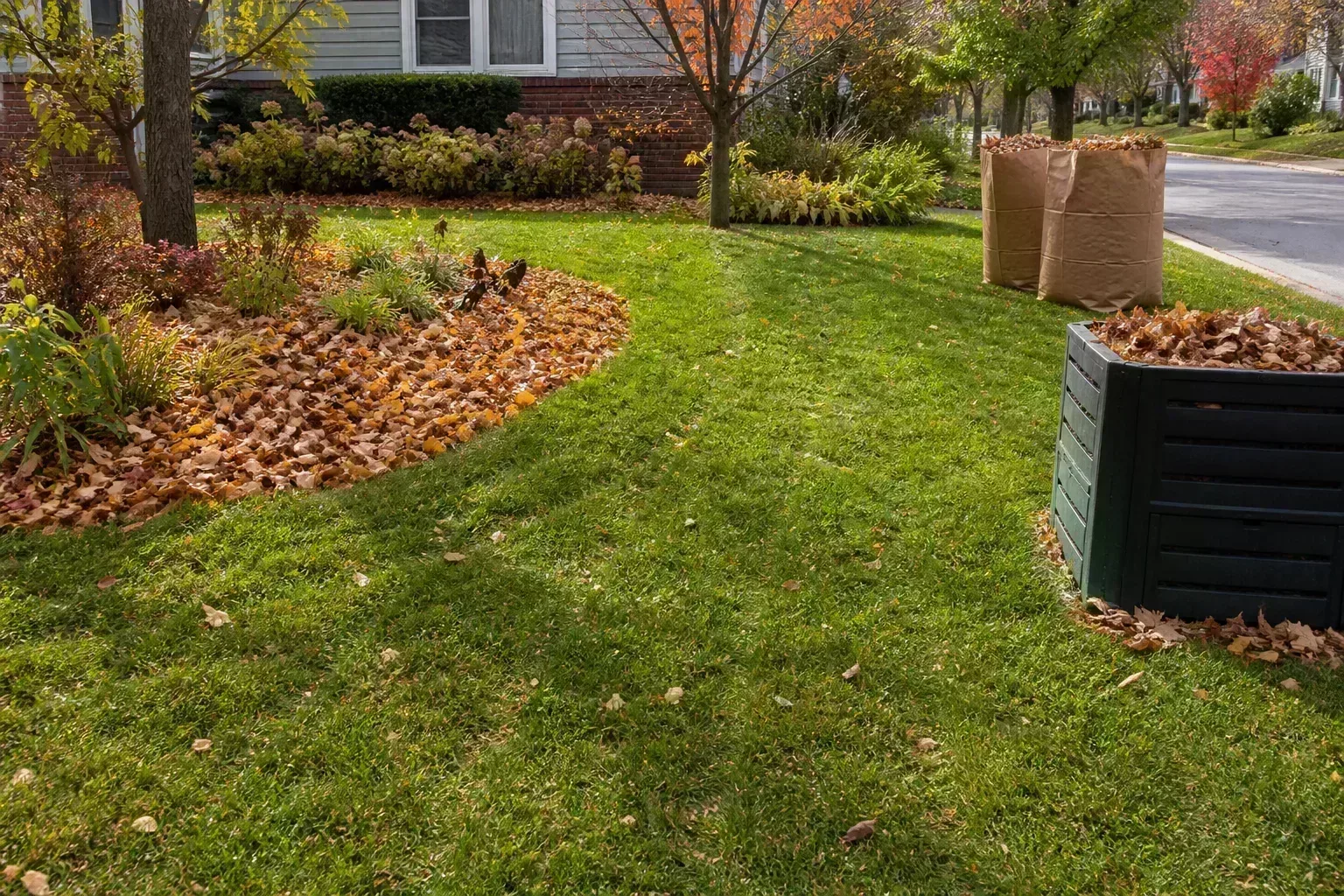
Fall lawn care is a set of choices, not a ten-step prescription that every yard needs to follow. Cool-season turf such as tall fescue, Kentucky bluegrass, fine fescue, and perennial ryegrass often resumes active growth as summer heat eases. Warm-season grasses such as bermudagrass, zoysiagrass, St. Augustinegrass, and centipedegrass follow a different schedule as days cool, so a task that helps one lawn can stress another.
Start with the condition of your grass and the time left before growth slows in your area. The order matters: identify the turf, clear leaf cover, test soil, correct compaction if present, then seed or feed only when conditions support the work. Several jobs below are conditional. If your lawn has no compaction, excessive thatch, bare areas, or soil-test need, skipping that task is part of good fall care.
1. Identify Your Grass and Set Priorities
Before you rent an aerator or open a fertilizer bag, identify whether your lawn is mostly cool-season or warm-season grass. If you know what was seeded or sodded, check an old invoice, seed label, landscape plan, or local extension lawn guide. If you do not know, take a clear close-up photo and ask a cooperative extension office, turf specialist, or reputable local garden center to help identify it; a mixed lawn can contain more than one grass.
This first check changes the entire job list. Cool-season grasses are most likely to benefit from fall repair and establishment while they are actively growing. Warm-season grasses are approaching slower growth or dormancy in many regions, so aggressive cultivation and new seeding are generally better scheduled for their active growing season instead. Virginia Cooperative Extension’s expert-reviewed fall lawn-care guidance treats these groups separately because fall management affects winter survival and next spring’s growth. For a current seasonal example, Farmers’ Almanac’s fall lawn-care guidance also emphasizes adjusting work to local weather and waiting when heat or drought is still stressing turf; local extension timing should take priority.
Next, walk the lawn once and mark only what you observe: thin or bare patches, heavy leaf cover, places where water puddles, compacted paths, a spongy thatch layer, recurring weeds, and areas that remain wet. Note slope, shade, foot traffic, and recent drought too. A yellow or brown patch is not automatically a fertilizer problem; it could reflect dormancy, drainage, compaction, disease, or a sprinkler pattern.
Prioritize work with a real trigger and a recovery window. In a northern climate, a cool-season lawn may have a short window for seed establishment, so seed repair may outrank cosmetic cleanup. In a warm, humid region, keeping leaves off the lawn and avoiding late-season stress may matter more than trying to turn a slowing warm-season lawn green.
| If you see… | Put this first |
|---|---|
| A mat of leaves covering grass | Mulch or remove leaves before they stay wet |
| Hard, heavily walked ground or repeated puddles | Test for compaction before considering core aeration |
| A bare or thin patch in actively growing cool-season turf | Check local seeding time, seed type, and weed-control history |
| Healthy, dense grass and no soil-test need | Keep mowing as growth continues; skip renovation |
| Warm-season turf slowing down | Follow local warm-season timing; avoid a cool-season fall checklist |
2. Manage Falling Leaves Before They Smother Turf
Leaves are the first recurring fall job because a deep, damp layer can cover grass for weeks. A sparse scatter is not an emergency, and the lawn does not need to be scraped perfectly bare after every windy night. The useful threshold is whether leaves are accumulating into a mat that blocks light, traps moisture, or hides the turf.
You can mulch a light layer with a mower if the leaves are dry enough to chop and the pieces settle between the blades. Make a pass and look across the lawn: if you can still see grass through the chopped leaves, the mulch is thin enough to break down in place. If the leaf layer remains visible on top, the mower leaves clumps, or the grass disappears beneath the pieces, collect some and mulch the rest.
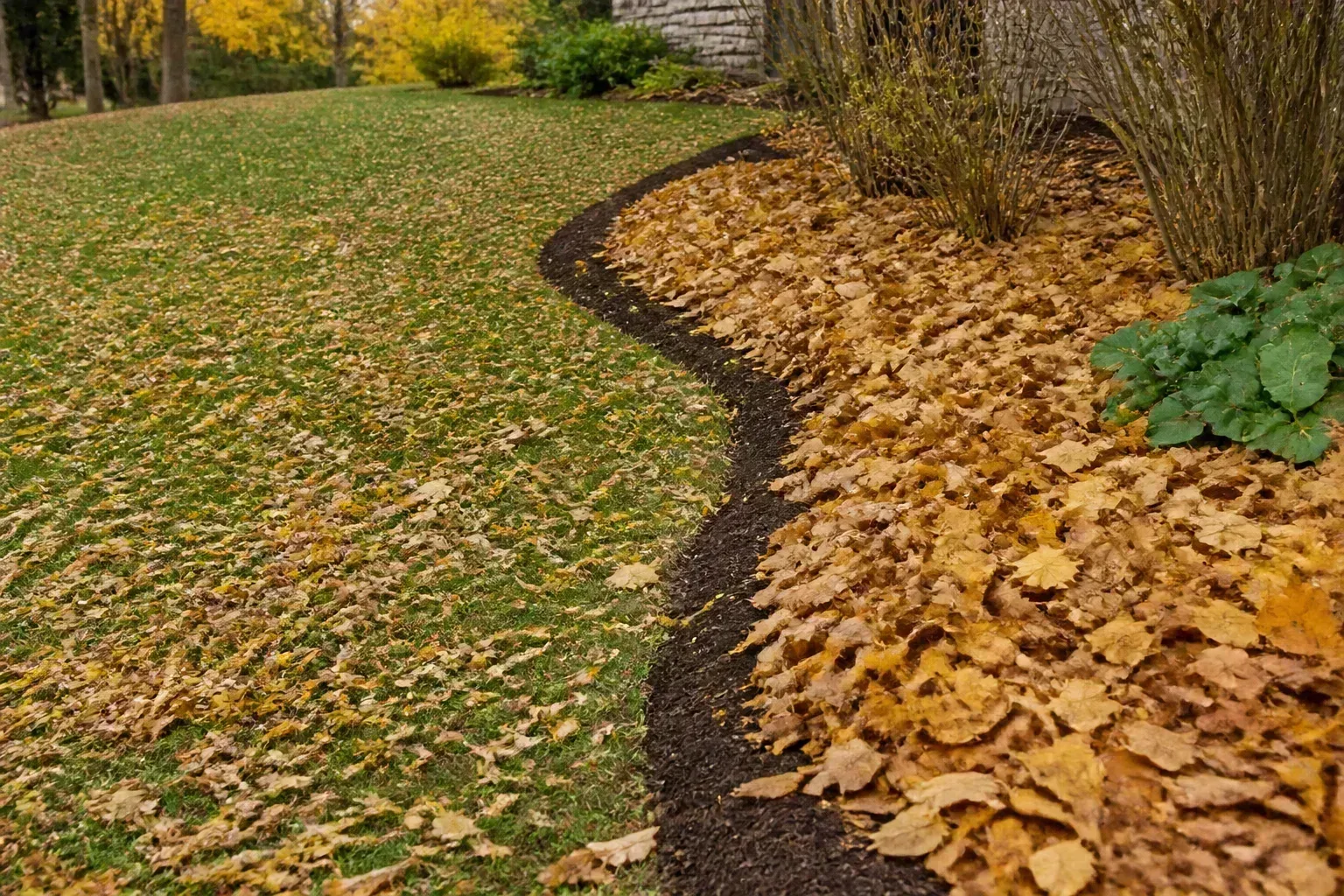
Wet leaves are heavier and harder to shred, so raking, a leaf vacuum, or a second pass after they dry may be easier than forcing a mower through them. Use a rake gently; there is no benefit to digging the tines into healthy soil just to remove ordinary leaves. Repeated rough raking can pull up turf and expose bare soil, especially where grass is already thin.
Choose the destination as carefully as the removal method. Healthy chopped leaves can stay in the lawn as a thin mulch or go to a compost pile, where shredding speeds decomposition. Move excess leaves out of gutters, drains, paths, and curb gutters; Wisconsin Horticulture Extension’s fall lawn discussion notes that mulched leaves can add organic matter when the grass remains visible, while leaves washed or blown into streets can carry nutrients into waterways. Leave some leaf litter in out-of-the-way habitat areas if it is not smothering plants or blocking drainage.
If leaves are mixed with diseased or pest-infested garden material, do not assume every home compost pile will destroy the problem. Keep that material separate and follow your local extension or municipal disposal guidance. The goal is not to make the whole yard sterile; it is to keep a wet blanket off the grass and manage the material responsibly.
3. Test Soil Before Applying Lime or Fertilizer
A soil test is the most reliable way to decide whether the lawn needs a pH adjustment or nutrients beyond routine nitrogen management. Testing before you spread lime, phosphorus, potassium, or a “winterizer” prevents you from treating a guessed-at problem. Virginia Cooperative Extension recommends testing lawn soil periodically, including at least once every three years, to understand pH and nutrient status; the exact interval and lab options vary by state.
Use the instructions from the lab you plan to send the sample to. Usually, that means collecting small cores from several representative points in a uniform lawn area, mixing them in a clean container, and sending the combined sample. Keep a front lawn, a shaded side yard, and a newly renovated area separate if their soil or management histories differ. Avoid sampling right after fertilizer or lime applications unless the lab says it is acceptable.
The report is a plan, not a demand to buy every amendment listed at a garden center. If it recommends lime, follow the recommended material and rate; pH changes take time, so fall or winter may provide a useful lead-in before spring growth. If phosphorus is already sufficient, extra phosphorus is not a harmless “starter” addition. It can leave the site in runoff, so use it on established turf only when the test and local rules support it.
Do not try to diagnose every lawn problem with a fertilizer spreader. Brown spots, thin turf under trees, muddy depressions, and poor growth along a path each have different possible causes. If the soil report is normal, look at light, drainage, mowing, traffic, watering, and grass suitability before adding more product. That single check can save money and reduce the chance of feeding weeds or sending nutrients off the property.
4. Aerate Only Where Soil Is Compacted
Aeration is useful when soil compaction is limiting root growth, water movement, or seed establishment; it is not an annual fall ritual. Clues include hard soil in high-traffic routes, water that runs off rather than soaking in, shallow roots, or turf that thins repeatedly where people and equipment cross. Confirm the pattern across the lawn rather than judging one dry patch.
For cool-season grass that is actively growing, fall can be a suitable cultivation window in many regions. Warm-season turf is usually better aerated during its late-spring or early-summer active growth, when it can recover. Virginia Cooperative Extension explains that cultivation benefits depend on growth stage and distinguishes aeration from vertical mowing, which is used to remove thatch.
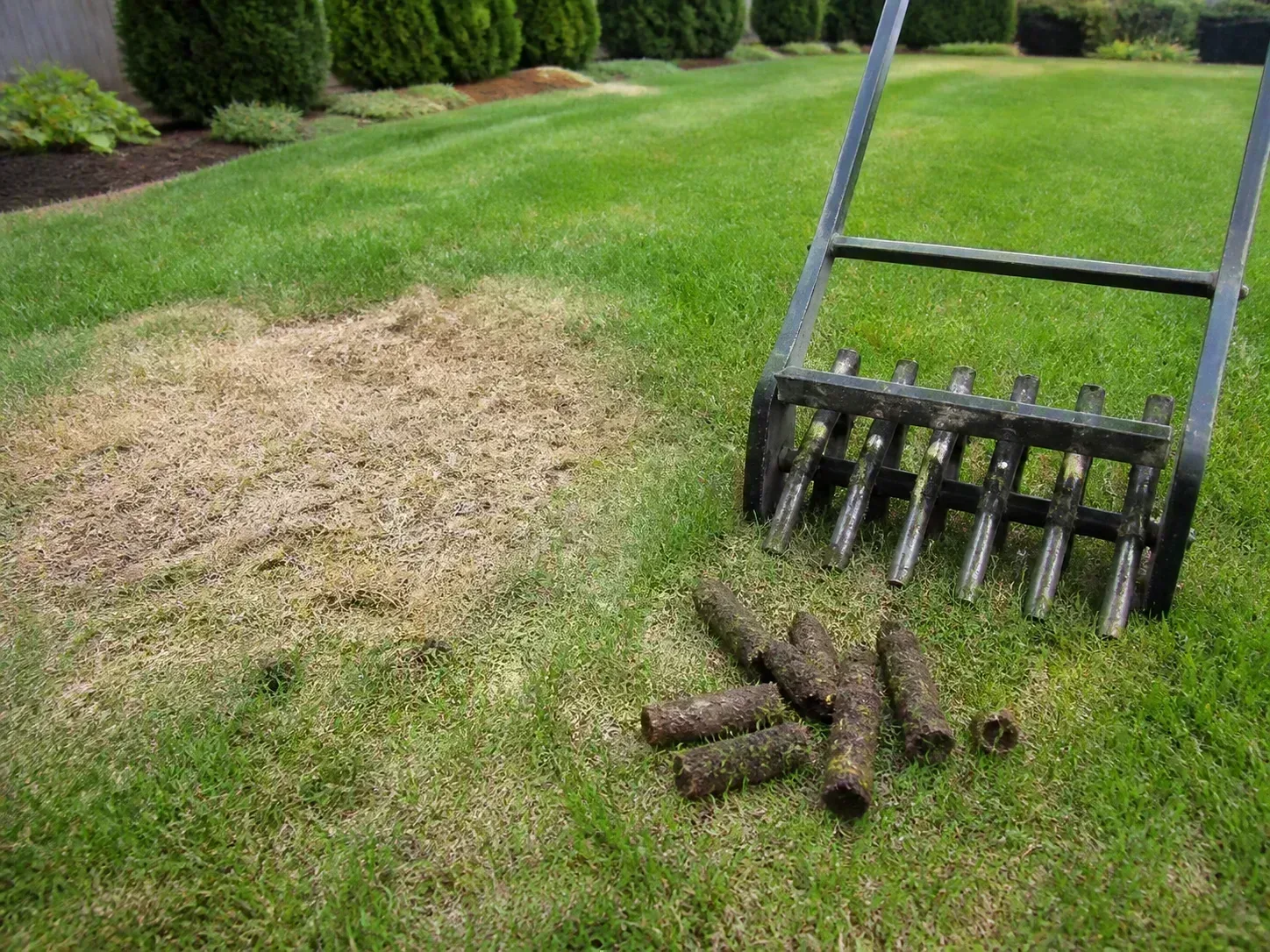
If aeration is warranted, choose a core or plug aerator that removes small cylinders of soil. That creates open channels and leaves the plugs on the surface to break down; a solid-spike tool merely punches holes and can press soil outward around each puncture. Core aeration is usually most worthwhile across compacted sections rather than across a soft, healthy lawn with no compaction signs.
Soil condition affects the result. The ground should be moist enough for the machine to pull clean cores but not so wet that wheels rut the lawn or the surface smears. Bone-dry soil can be difficult to penetrate. If the ground is too hard or waterlogged, wait for a better day rather than pushing heavy equipment over it.
Once plugs are pulled, leave them to crumble unless they create a real nuisance. If you plan to overseed, aerating before spreading seed gives some of it access to exposed soil, but it does not replace using the right seed and rate. For a small compacted spot, a garden fork can be a reasonable light-duty option; for a broad, repeatedly compacted lawn, a hollow-tine machine or a professional assessment is more effective.
5. Dethatch Only When the Layer Is Excessive
Thatch is a tight layer of living and dead stems, roots, and organic material between green grass and soil. It is different from loose leaves sitting on top of the lawn, and it is not simply the result of leaving clippings after mowing. A thin layer is normal; the problem is a thick, spongy mat that interferes with water movement, seed contact, or the way the turf feels underfoot.
Check before you rent a power rake. Cut a small wedge from an inconspicuous area and look at the brown layer between the green canopy and mineral soil. Virginia Cooperative Extension advises paying attention as thatch approaches about one-half inch and removing it when it reaches roughly an inch; most cool-season lawns do not build a problematic layer, while certain high-management or creeping grasses may be more prone to it.
If the layer is excessive, remove it only when the turf is growing strongly enough to recover. Dethatching can tear out healthy grass and expose soil, so do not do it to a drought-stressed, heat-damaged, dormant, or newly seeded lawn just because fall has arrived. For warm-season grasses, local extension guidance generally schedules major dethatching during their active warm-weather growth rather than late fall.
Do not confuse dethatching with core aeration. Aeration opens channels through compacted soil; dethatching rakes or cuts through the surface mat. One cannot reliably substitute for the other. If the lawn feels hard but the thatch layer is thin, core aeration may address the problem; if it feels springy and a measured wedge shows a deep mat, dethatching may be the relevant repair.
6. Repair Bare Areas and Overseed Cool-Season Grass
Fall is often a strong establishment season for cool-season grass because warm soil and cooler air can favor germination while easing the heat stress that hurts new seedlings. It is still a local window, not a nationwide date. The best time in a northern area may be earlier than in a milder transition zone, and a late start can leave new grass without enough growing time before persistent cold.
Before buying seed, decide whether you are patching a few small spots or renovating a large portion of the lawn. Choose a seed mix suited to your region, sun, shade, drainage, and intended use, and check the label for species and quality information. Virginia Cooperative Extension cautions that seed scattered onto an intact canopy without soil preparation may never touch soil; a few passes with core aeration or vertical mowing can expose a better seedbed when those practices are otherwise appropriate.
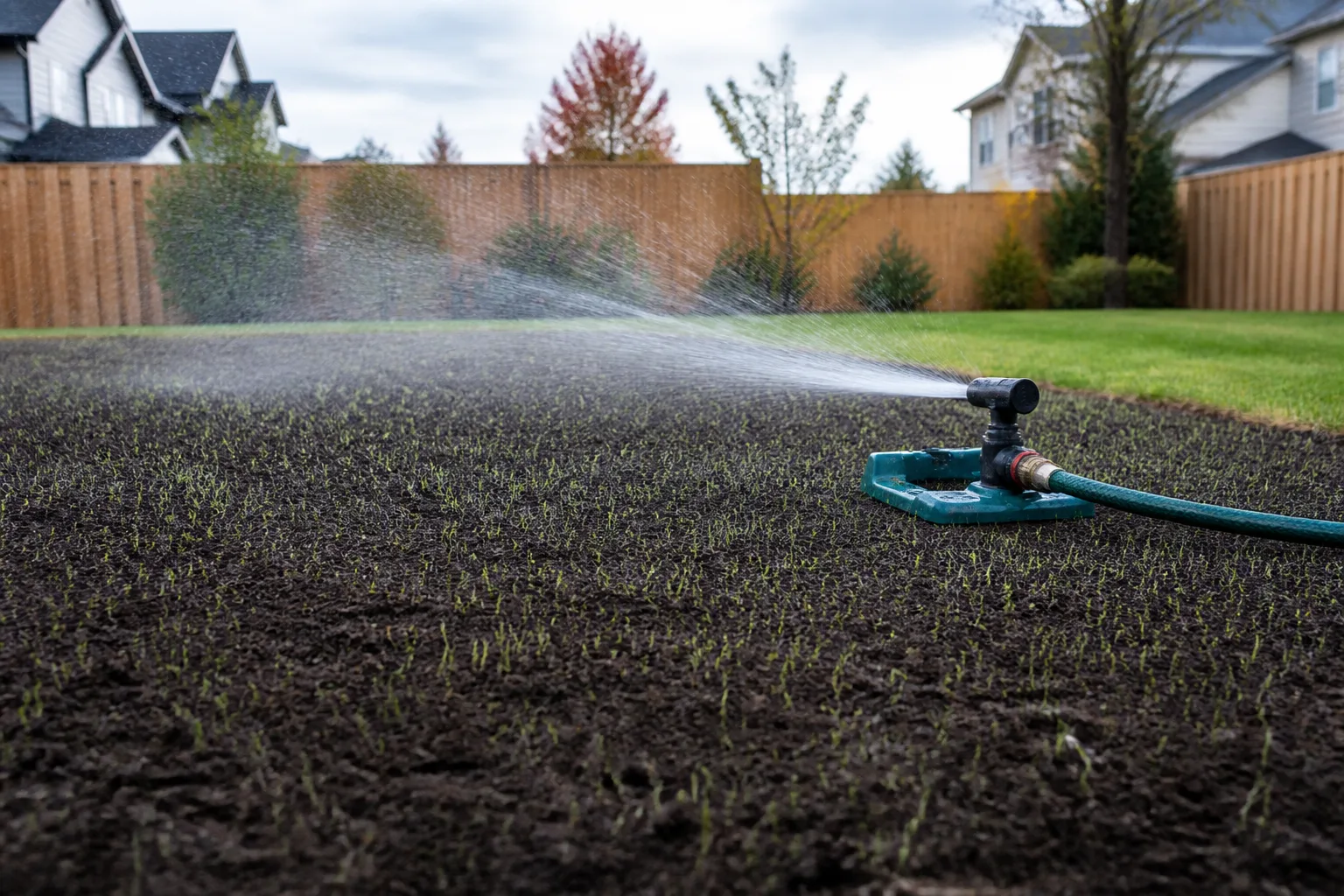
Mow to a suitable height, clear heavy debris, loosen bare soil lightly, and distribute seed at the rate on its package. A fan-shaped spread pattern in two directions helps avoid obvious stripes. Rake lightly or use a slit seeder so seed contacts soil; do not bury it deeply. Avoid walking over the patch while it is saturated, and use a thin, appropriate mulch only if local guidance recommends it for your seed and site.
Keep the seed zone consistently moist while seeds germinate and young roots establish, using brief, light watering that does not wash seed into low spots. As seedlings grow, gradually reduce frequency and let water penetrate farther. This is one important exception to a mature lawn’s fall watering routine. If you cannot keep the surface moist during dry or windy weather, delay seeding until you can or choose a more suitable local window.
Do not seed over a recent pre-emergent treatment without checking its label and waiting period. Many weed-prevention products also interfere with turfgrass seed, and the interval can vary by active ingredient and product. If seeding is the priority, plan weed management around the seed job instead of applying a product that can prevent it from germinating.
Warm-season lawns generally should not be overseeded with warm-season seed in fall, when soil and turf are cooling. Some homeowners intentionally overseed bermudagrass with a cool-season grass for winter color, but that is a specialized trade-off: it can complicate spring transition and is not necessary for lawn health. Follow local extension advice before making that choice.
7. Keep Mowing and Adjust Water to Actual Conditions
Keep mowing while grass is actively growing. In many cool-season lawns, fall growth can remain steady for a while after summer heat fades; in warm-season lawns, growth usually slows as temperatures fall. The calendar alone cannot tell you when to put the mower away, and one warm spell can produce another flush of growth.
Use the recommended mowing height for your grass and remove no more than about one-third of the blade in a single cut. If the lawn has grown too tall, bring it down over more than one mowing instead of scalping it. A sharp blade makes cleaner cuts, and mowing when the soil is firm reduces ruts and compaction. Gardeners’ World also recommends continued mowing through active autumn growth and uses a slower mowing rhythm as growth eases; match the principle to local turf guidance rather than copying a UK weekly schedule.
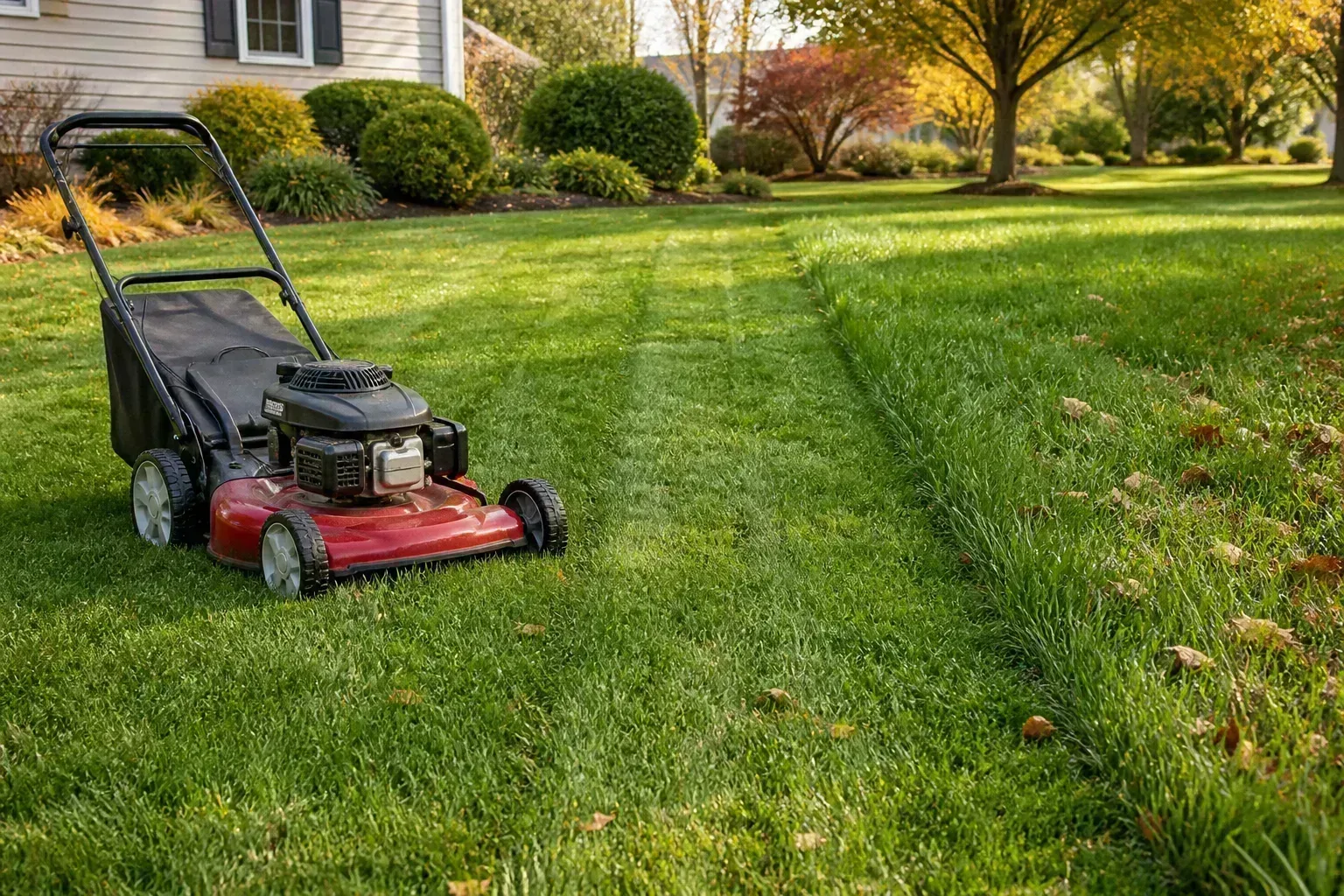
A modest adjustment to the final mowing height can help prevent a long canopy from matting under snow, but there is no single final height for every species and climate. Never cut so low that you expose crowns or remove too much leaf area at once. If your local extension recommends a particular last-cut height for your grass, follow that regional advice; otherwise, maintain the normal healthy range and make any change gradually.
Reduce irrigation as cooler weather and rainfall lower demand, but do not use the old summer timer by default. Check recent rain and soil moisture, and water established grass only when conditions call for it. Newly seeded areas need a separate establishment schedule, as described above. This checklist does not try to set a universal final-watering date; for that narrower decision, see when to stop watering your lawn in fall.
8. Feed Grass Only When the Soil and Species Call for It
Fall feeding is most often useful for actively growing cool-season turf, but “fall fertilizer” is not one formula or one application date. A soil test, grass species, recent feeding history, rainfall, regional advice, and local fertilizer rules all matter. Virginia Cooperative Extension’s fall guidance discusses how cool-season grasses can use appropriately timed nutrition while also emphasizing soil-test-based phosphorus decisions and avoiding fertilizer on frozen soil.
Start with the test from Task 3. Apply only the nutrients the soil and local recommendation call for, and measure the lawn area so you do not guess at product quantity. Use the fertilizer label’s rate, application method, and watering instructions. More nitrogen does not automatically make the lawn healthier; overapplication can push soft leaf growth, increase runoff risk, and waste money.
Warm-season grass needs a separate calendar. In many regions it is winding down as fall arrives, so late nitrogen can encourage growth at a time when the plant should be preparing for cooler weather. The safe cutoff differs by species and climate, especially in warmer regions with a longer season. Check your local extension calendar rather than following a northern cool-season recommendation.
Skip fertilizing dormant or severely heat- and drought-stressed turf until conditions support growth. If you recently seeded, follow the seed supplier’s and local extension’s establishment recommendations; a starter fertilizer is not automatically required, and phosphorus use may be restricted. Keep granules off sidewalks and driveways, sweep any that land on hard surfaces back onto the lawn as the label directs, and never apply before heavy rain if runoff is likely.
9. Control Weeds Without Blocking New Grass Seed
Weed control starts with identification, not a product. A few broadleaf weeds in otherwise dense turf may be hand-pulled when the soil is moist, while widespread weeds can indicate that the grass is thin, the site is too shady, or the mowing and soil conditions are favoring them. Correcting the turf conditions often does more for long-term control than spraying the same patch every year.
Remove annual weeds before mature seed heads disperse if you can do so without tearing up large sections of lawn. For perennial weeds with deep roots, loosen the soil and remove as much of the root as practical; simply clipping the top may leave the plant able to regrow. Gardeners’ World describes hand removal as one way to deal with common lawn weeds, while its broader lawn guidance also stresses that dense, healthy grass helps limit open space weeds can occupy.
If you consider an herbicide, use only a product labeled for the grass species, target weed, site, and season. Follow all label directions, including weather conditions, protective equipment, watering instructions, and restrictions around children or pets. Do not spray through wet leaf cover or onto grass that is stressed by heat, drought, or recent renovation.
Check the product label before combining seeding and weed control
Seeding and weed prevention can work against each other. A pre-emergent product is designed to stop seeds from establishing and may block grass seed along with weed seed. Post-emergent products may also require a waiting period before or after seeding. Because these windows differ among products and grass types, read the exact label and local extension advice before scheduling either job.
If seed establishment is the priority, remove or manage weeds with a method that does not compromise the new grass, then revisit longer-term control after the seedlings are ready. If weed control is more urgent, postpone seeding until the label’s interval has passed. Never improvise a shorter wait or double a rate to compensate for delay.
10. Clear Garden Debris and Winterize Outdoor Equipment
A lawn sits inside a larger yard, so fall cleanup also means dealing thoughtfully with garden beds, paths, and irrigation equipment. After the last harvest, remove rotting annual vegetable plants, fallen fruit, and debris that is harboring a visible pest or disease problem. Do not strip every bed bare by default: some healthy perennial stems and seedheads can provide winter structure and wildlife food, while material that is collapsing, diseased, or blocking drainage may need removal.
Sort the material before composting it. Healthy leaves, disease-free plant debris, and ordinary grass clippings can be useful compost ingredients when mixed and managed properly; shred dry leaves so they break down more quickly. Wet clumps of grass, perennial weed seed heads, or diseased foliage may create a mess or preserve the problem in a cool home pile. Follow local guidance for those materials rather than assuming all yard waste belongs in the compost bin. Gardeners’ World’s autumn garden tidy-up guidance similarly distinguishes useful cleanup from removing every seedhead and plant stem.
Fall can be a practical time to move some shrubs and trees, but it is not a lawn-care requirement. Transplant only if the plant species, soil moisture, and local climate make the move appropriate, and prepare the new site before digging. A shrub with fleshy or disturbance-sensitive roots may need a different season; check its local guidance rather than moving it simply because the leaves are falling.
Finally, prevent freeze damage to equipment where winter temperatures can fall below freezing. Disconnect garden hoses, drain them, and store them before hard freezes. If you have an irrigation system, follow the installer’s or manufacturer’s winterization procedure and your local utility or extension guidance; do not assume every system can safely be cleared with compressed air. Clean mower clippings from the deck, sharpen or service blades if needed, and store tools dry. Finish these jobs before a weather emergency turns them into a rushed repair.
Conclusion
The best fall lawn plan starts with the grass you have and the problems you can actually see. Clear leaf mats, test soil before adding amendments, aerate only compacted areas, dethatch only when a thick layer is present, and seed only when your grass and local growing window make establishment realistic. Keep mowing while growth continues, then adjust feeding, watering, and weed control to the species, weather, and product labels.
Some yards need most of these tasks; healthy, dense lawns may need only leaf management and routine mowing. Move through the checklist in order, protect new seed from conflicting treatments, and handle garden debris and irrigation equipment before local freezes. A few well-chosen fall jobs will do more for the lawn than trying to complete every task on a calendar.



