21 Types of Aloe Plants: ID and Care Tips
Compare 21 aloe types by leaf shape, teeth, size, and hardiness. ID charts, indoor vs outdoor picks, pet safety, and care rules that actually prevent rot.
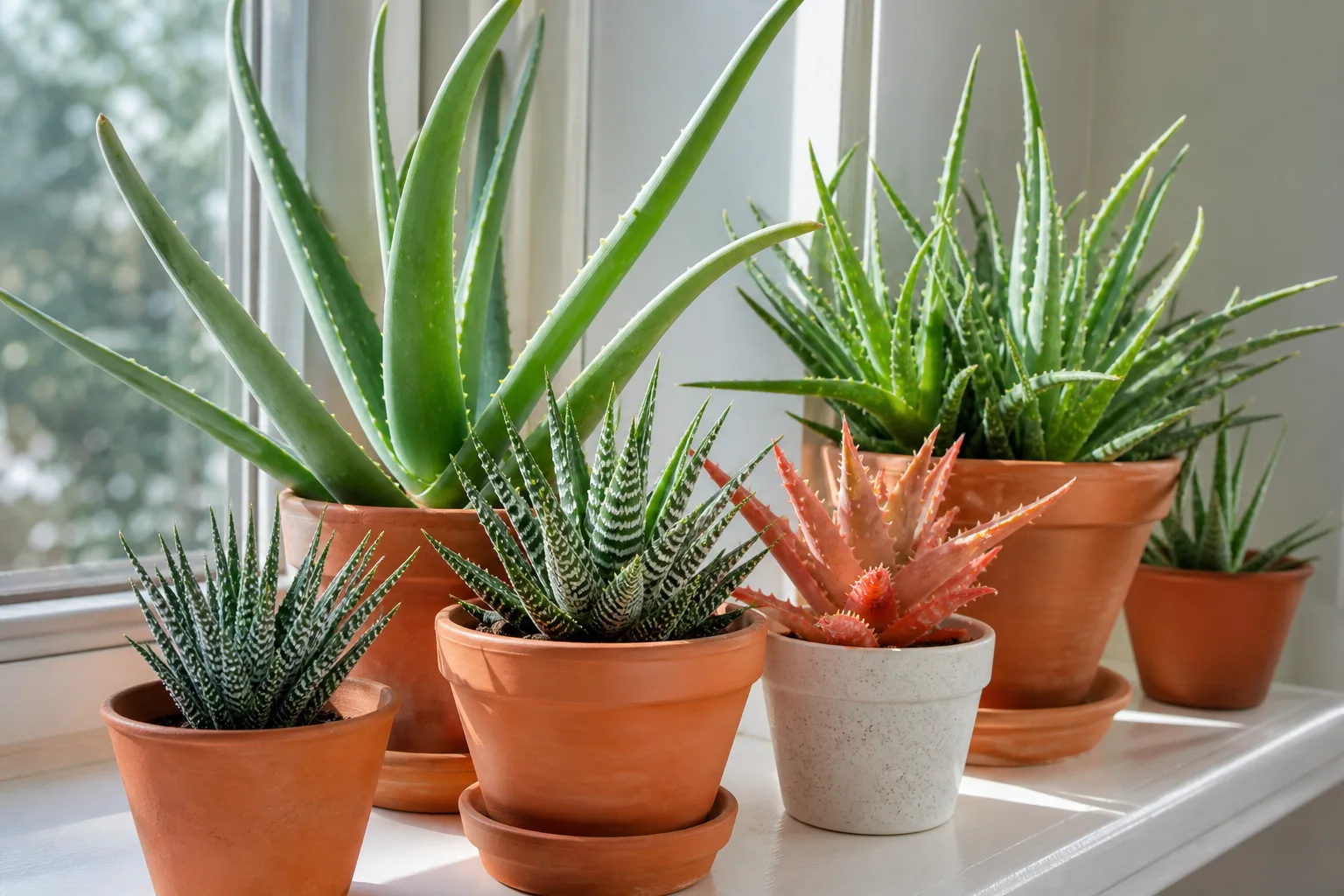
Walk into any garden center and you will see pots labeled “aloe” that look nothing alike — tiny striped rosettes, spotted monsters with teeth like a cactus, and trunked specimens taller than you. The genus Aloe holds 500 or more species plus countless hybrids, according to the National Gardening Association, yet most guides stop at Aloe vera. That leaves you guessing whether the plant on your bench is a frost-tolerant ground cover, a finicky indoor novelty, or a 30-foot landscape tree waiting to happen.
This guide covers 21 cultivated aloe types you are most likely to encounter — with field marks to tell them apart, USDA hardiness ranges, bloom colors, and honest guidance on pot vs landscape placement. If you already own the classic medicinal species, our Aloe vera care hub goes deeper on watering, light, and troubleshooting.
How to Identify an Aloe Before You Buy
Nursery tags lie. Wholesale growers reuse generic “aloe mix” labels, and recent taxonomic splits moved several popular plants into new genera. Identification starts with what you can see without a microscope.
Leaf Shape, Teeth, and Spots
Most aloes form thick, fleshy leaves in rosettes, often with marginal teeth (RHS). Run through this quick checklist:
- Smooth, spineless edges → likely Aloe striata (coral aloe) or a hybrid; verify by checking for faint longitudinal stripes on the leaf surface.
- White bumps or “whiskers” on small rosettes → lace aloe (Aristaloe aristata), often confused with haworthia.
- Bold zebra banding → tiger aloe (Gonialoe variegata), now in genus Gonialoe, not Aloe.
- Spots on both leaf surfaces → soap aloe (Aloe maculata) or other maculate (spotted) group members (Garden.org).
- Soft, flexible teeth vs rigid spines → tiger tooth aloe (Aloe juvenna) feels harmless; soap aloe bites back.
Flower color is the tiebreaker when leaves look similar. Medicinal Aloe vera typically blooms yellow; the commonly confused Aloe officinalis (“chinensis”) shows orange or coral flowers — and that distinction matters if you are harvesting gel (Garden.org).
Growth Habit: Rosette, Shrub, or Tree
Size at maturity separates impulse buys from landscaping mistakes:
| Habit | Mature size clue | Examples in this guide |
|---|---|---|
| Stemless rosette | Under 2 ft | Vera, lace, tiger tooth, spiral |
| Sprawling ground cover | Wide spread, low height | Jewel, short-leaf |
| Shrub / candelabra | Multi-stemmed, 6–10 ft | Krantz aloe |
| Climbing / scrambling | Long stems, needs support | Climbing aloe (Aloiampelos ciliaris) |
| Tree | Trunk forms, 8–30+ ft | Malagasy, mountain, tree, Cape |
If you cannot picture where a full-size plant will stand, keep it in a pot until you can.
Shared Care Rules Every Aloe Type Needs
Aloes are succulents, not cacti — they store water in leaves but still need periodic drinks. The RHS recommends full light, sharp drainage, and compost that never stays wet. Indoor plants belong on the sunniest unobstructed window you have; outdoor specimens want gritty, neutral to slightly alkaline soil and protection from standing water in winter.
Light, Water, and Soil That Prevent Rot

Light: Most aloes tolerate full sun in mild climates. Move indoor plants gradually to brighter spots — sudden exposure burns foliage adapted to dim rooms. Red and copper leaf colors (Aloe cameronii, sunset aloe) intensify in strong light and wash out green in shade.
Water: Let the mix dry between waterings. In winter, many aloes prefer near-dry rest, especially lace aloe, which naturally tightens its rosette during drought in habitat (Garden.org). Overwatering kills more aloes than underwatering ever will.
Soil: Use cactus or succulent mix with extra perlite or grit in containers. In heavy clay beds, raise planting mounds or stick to pots — short-leaf aloe (Aloe brevifolia) tolerates poor clay only where rainfall stays low.
One problem every aloe collector should know: Aloe mite causes distorted, bubbly “aloe cancer” growth. Garden.org advises surgical removal or destroying affected plants — ordinary insecticides rarely work. Aloe arborescens (krantz aloe) is a common host; cut off suspicious flower stalks immediately (Garden.org).
Pet Safety and Medicinal Aloes
The ASPCA lists Aloe vera as toxic to dogs, cats, and horses, citing saponins and anthraquinones that cause vomiting, lethargy, and diarrhea. That applies to most aloes in the home — the clear inner gel is not a free pass for pets to chew leaves.
For humans, topical gel from identified Aloe vera is widely used on minor burns. Internal use is a different conversation: yellow latex near the rind is a strong cathartic, and the FDA removed aloe latex from over-the-counter laxatives in 2002 over safety concerns (Garden.org). Only a few species — Aloe vera, Aloe arborescens, and Aloe ferox — have documented medicinal history, and positive ID usually requires seeing the plant in flower. Do not eat random “aloe” from a mixed succulent bowl.
Compact Aloes for Pots and Windowsills
These stay manageable in containers and forgive apartment light — if you respect dry winters and drainage.
Aloe Vera (Aloe barbadensis)
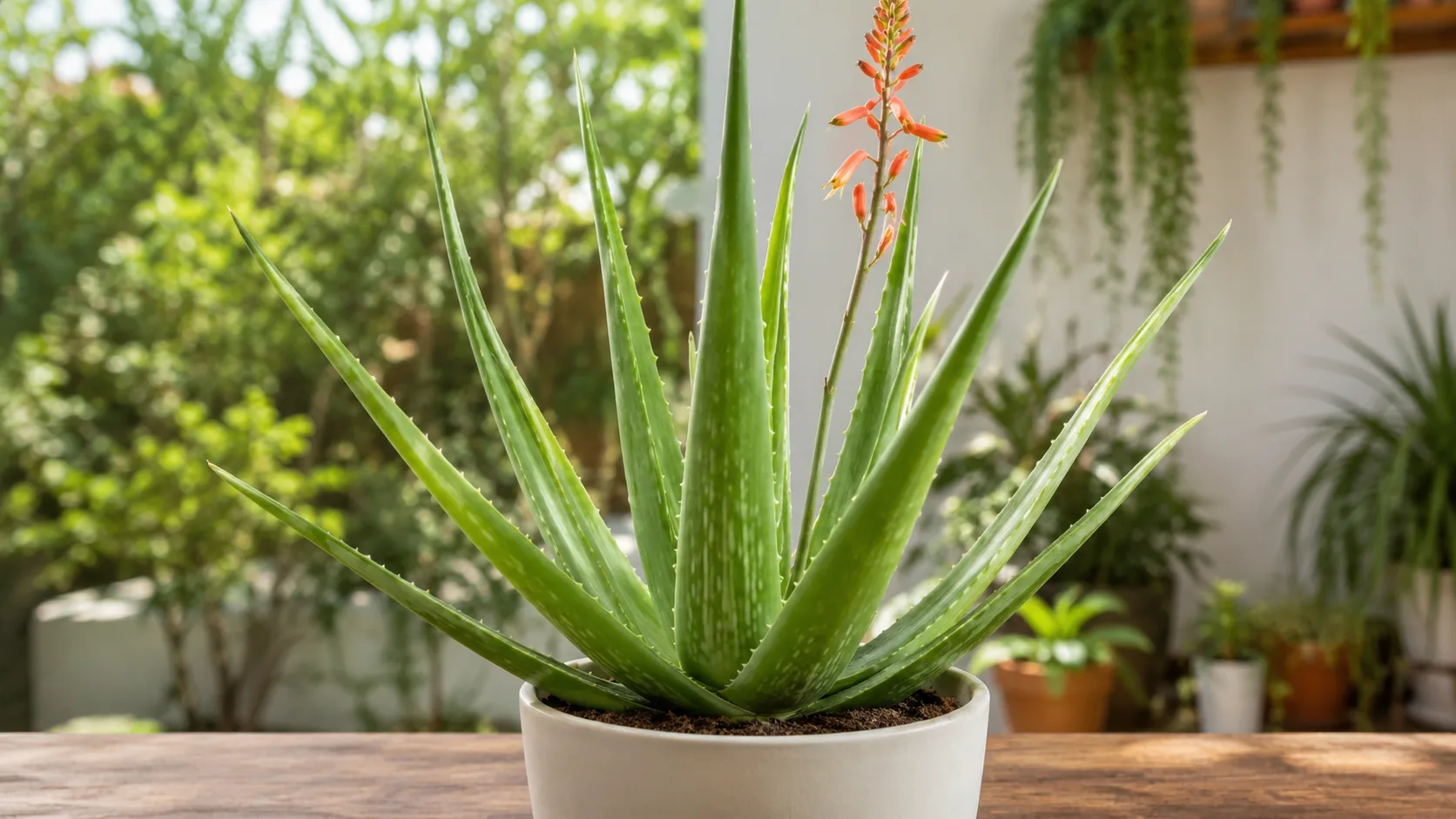
The household standard: lance-shaped gray-green leaves, serrated edges, and yellow tubular flowers on tall stalks when mature. Synonyms include Aloe barbadensis Miller and A. vera (RHS). Hardy in USDA zones 8–11 outdoors; everywhere else, treat it as a houseplant near your brightest window.
Aloe vera offsets freely — those pups are the reliable propagation path. For watering schedules, rot fixes, and repotting timing, see Aloe vera care.
Lace Aloe (Aristaloe aristata)
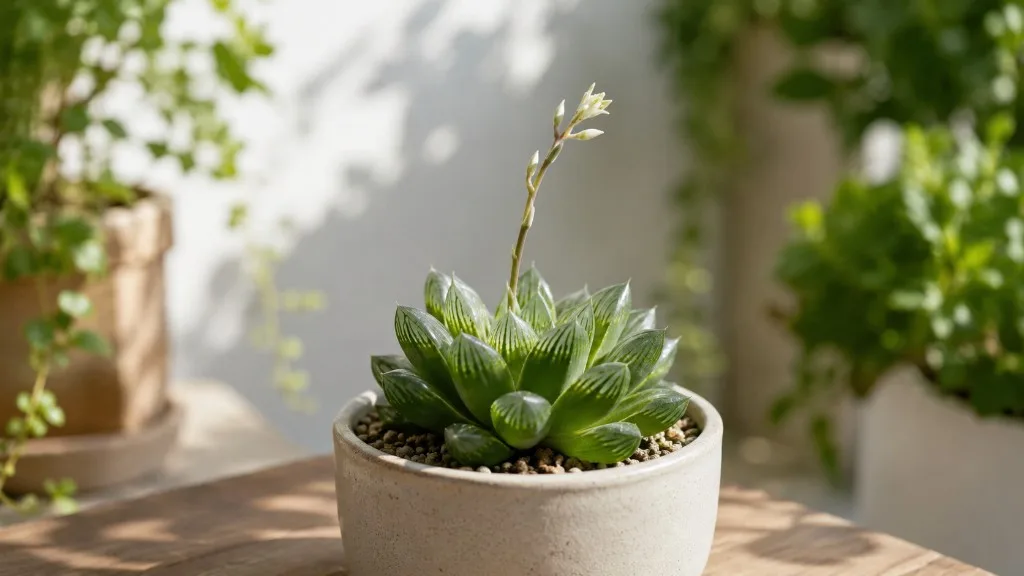
Once Aloe aristata, now Aristaloe aristata — a monotypic genus split from true aloes (Garden.org). White tubercles and soft marginal teeth make it look like Haworthia at first glance. It is more shade-tolerant and cold-hardy than many aloes (to about 19°F / zone 7 in dry soil) but rots instantly in soggy mix. Withhold water in winter for tighter rosettes, or water lightly year-round for plump indoor specimens.
Tiger Tooth Aloe (Aloe juvenna) and Tiger Aloe (Gonialoe variegata)
Two striped favorites, easy to confuse by common name alone:
Tiger tooth aloe (Aloe juvenna) stacks small green rosettes with soft, harmless teeth. It blushes red in strong sun, offsets aggressively, and blooms orange-red after a warm outdoor summer.
Tiger aloe (Gonialoe variegata, formerly Aloe variegata) shows bold white bands on triangular leaves — the partridge-breasted aloe of RHS plant profiles. It is a slow, clumping indoor star with salmon to coral flowers in late summer. Genus Gonialoe holds three spotted Namibian species with distinctive V-shaped leaf cross-sections (Garden.org).
Both want bright light, sparse water, and pots only slightly larger than the root ball.
Jewel Aloe (Aloe distans)
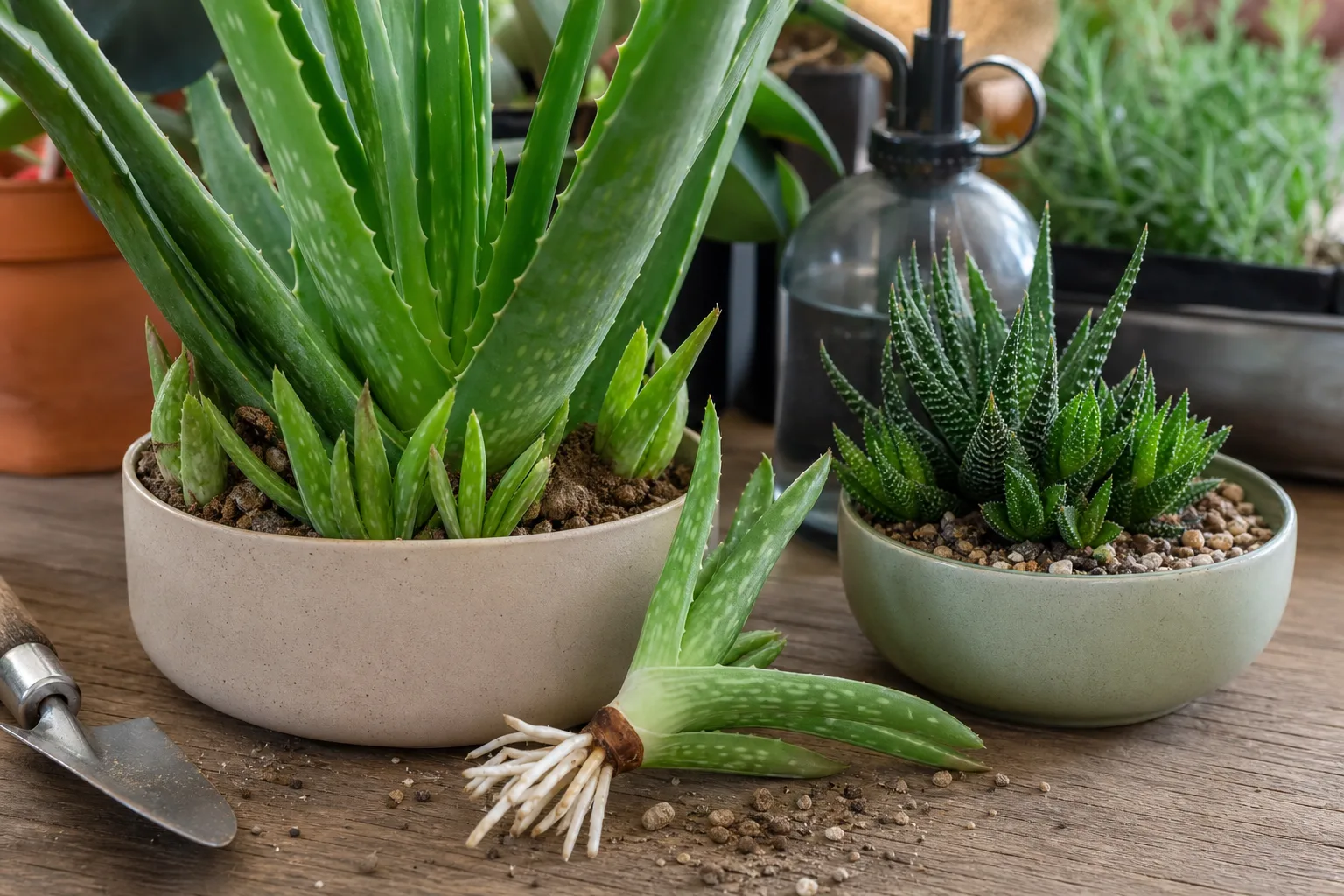
A ground-cover sprawler: rosettes stay 5 inches tall but colonies reach 5 feet wide. Waxy blue-green leaves carry fierce teeth; yellow to red flowers attract pollinators. USDA zones 9–11. Give it room in a wide bowl or rock garden — it is not a single-rosette windowsill plant despite the cute height tag.
Colorful and Spotted Landscape Aloes
These earn their keep with sunset leaf colors and showy blooms in frost-free or nearly frost-free gardens.
Golden Toothed, Red, Sunset, and Coral Aloes
Golden toothed aloe (Aloe nobilis) packs yellow-orange marginal teeth and rose-tipped leaves in a 6–12 inch rosette — a classic mixed-dish succulent. Red aloe (Aloe cameronii) shifts from green to copper-red under drought and sun; overwatering keeps it stubbornly green. Sunset aloe (Aloe dorotheae) needs full sun for orange-salmon foliage and is endangered in native Tanzania — buy nursery-propagated plants, not wild-collected specimens. Coral aloe (Aloe striata) offers smooth, spineless gray leaves with pink margins and coral-red winter flowers; it is among the more cold-tolerant show aloes (zone 9, sometimes lower in dry sites) and does not offset, making it a predictable 2-foot container specimen (Gardener’s Path).
Soap Aloe and Sand Aloe
Soap aloe (Aloe maculata) — maculate group, heavily spotted, fiercely spined, and slow to recover if you cut leaves for the traditional soap sap. Treat it as an ornamental; harvesting destroys symmetry for years. Sand aloe (Aloe hereroensis) shifts silver, green, or pink depending on light and water, with scarlet flowers and cold tolerance to about 25°F. Wear gloves when weeding around either — teeth are real.
Cold-Hardy Ground Covers and Rock Garden Aloes
Short-Leaf Aloe (Aloe brevifolia)
At 4–6 inches tall, this clumping gray rosette handles poor clay and deer pressure where winters stay above 25°F (zones 8–11). Orange flowers appear in fall and winter. It spreads by pups into a dense mat — plan spacing accordingly in rock gardens.
Shrub, Climbing, and Candelabra Forms
Krantz, Climbing, and Van Balen’s Aloes
Krantz aloe (Aloe arborescens) — torch or candelabra aloe — builds multi-stemmed shrubs 6–9 feet tall with red-orange winter flowers on branched stalks. Hardy to about 20°F (zone 9b) and a landscape workhorse for hummingbirds. Watch for aloe mite on flower spikes.
Climbing aloe is now Aloiampelos ciliaris, one of seven scrambling species moved out of Aloe (Garden.org). Soft, toothless juvenile stems resemble Aloe vera, but mature plants scramble 10–30 feet with red-orange blooms — provide a trellis or warm wall in zones 9–11.
Van Balen’s aloe (Aloe vanbalenii) grows 2–3 feet with curving, tentacle-like leaves that smell spicy when crushed and flush red in sun. Treat it as a focal container or conservatory plant unless you live in a mild desert climate.
Tree Aloes and Large Specimens
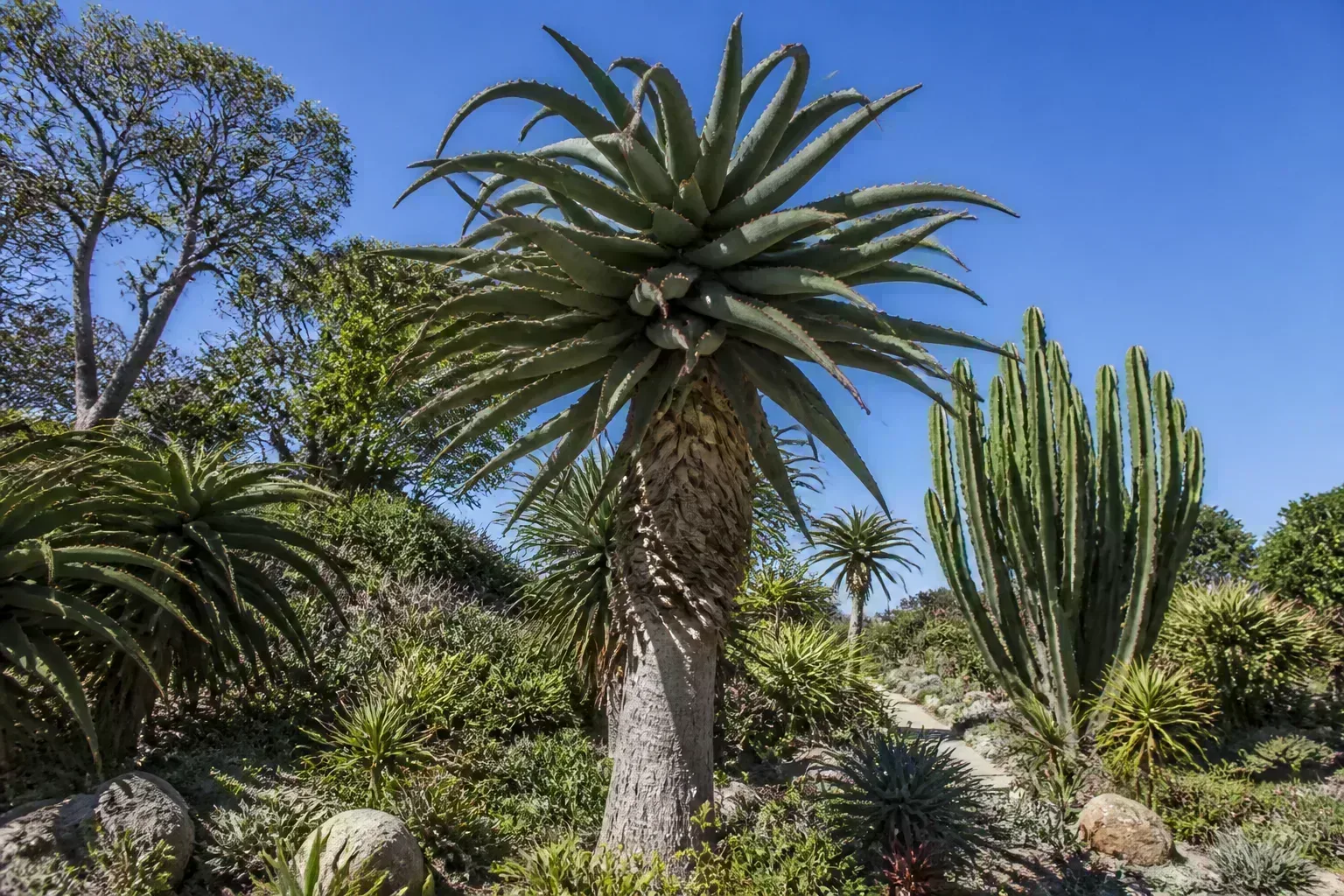
These are landscape commitments, not coffee-table plants. Frost-free climates only for most.
Snake aloe (Aloe broomii) — sometimes called mountain aloe in trade — forms stiff rosettes with hidden flowers wrapped in long bracts, giving blooms a serpentine look. 1–3 feet tall, zones 9–11.
Malagasy tree aloe (Aloe vaombe) from Madagascar develops a single trunk 8–12 feet topped by a dark rosette and red flower clusters that seed freely in warm, moist conditions.
Mountain aloe (Aloe marlothii) builds a skirted trunk 8–12 feet with broad, spiny leaves and multi-colored winter inflorescences — stunning but needs space and full sun.
Tree aloe (Aloidendron barberae, formerly Aloe barberae) reaches 20–30 feet, nearly mess-free beside pools in zones 9–11, with rose-pink winter flowers. Genus Aloidendron now holds the largest tree aloes (Garden.org).
Cape aloe (Aloe ferox) — bitter aloe — grows 10-foot columns with red-orange flower candelabras up to 4 feet above the foliage. Historical medicinal use exists, but internal products belong to professionals, not home experiments.
Spiral Aloe: The Iconic Showpiece
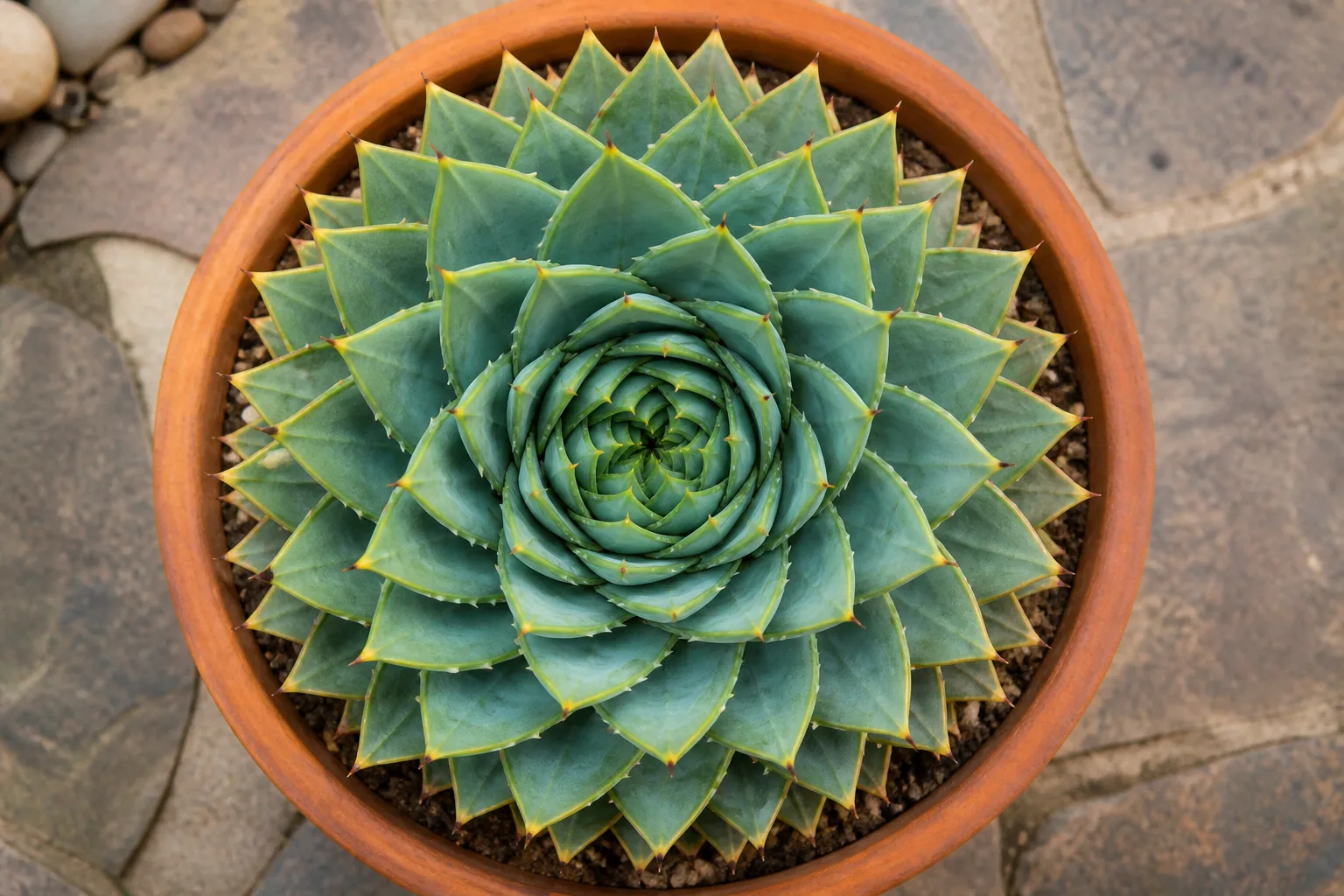
Spiral aloe (Aloe polyphylla) is the photographer’s favorite: a perfect geometric spiral of blue-green leaves, 1 foot tall and 2 feet wide, with red to salmon flowers. It is native to Lesotho highlands, endangered in the wild, and fussy about heat and summer irrigation — cool nights and excellent drainage are non-negotiable. USDA zones 9–12 with dry summers. If you are not in a suitable climate, enjoy it as a single heroic container rather than a mass planting.
Conclusion
Choosing among 21 types of aloe plants comes down to three decisions: Can you identify it (teeth, spots, stem habit, flowers)? Does your space match its mature size (6-inch rosette vs 30-foot tree)? Can your climate keep it alive (freeze tolerance, wet winter soil, indoor light)?
Start with field marks, match the plant to pot or landscape, water only when dry, and keep toxic species away from pets. For the species already on your windowsill, Aloe vera care is the next stop for day-to-day care — and for everything else on this list, you now have enough context to grow it without guessing.