19 Types of Arborvitae for Privacy and Small Yards
Compare 19 types of arborvitae by mature size, privacy value, hardiness, color, spacing, and site limits before you plant.
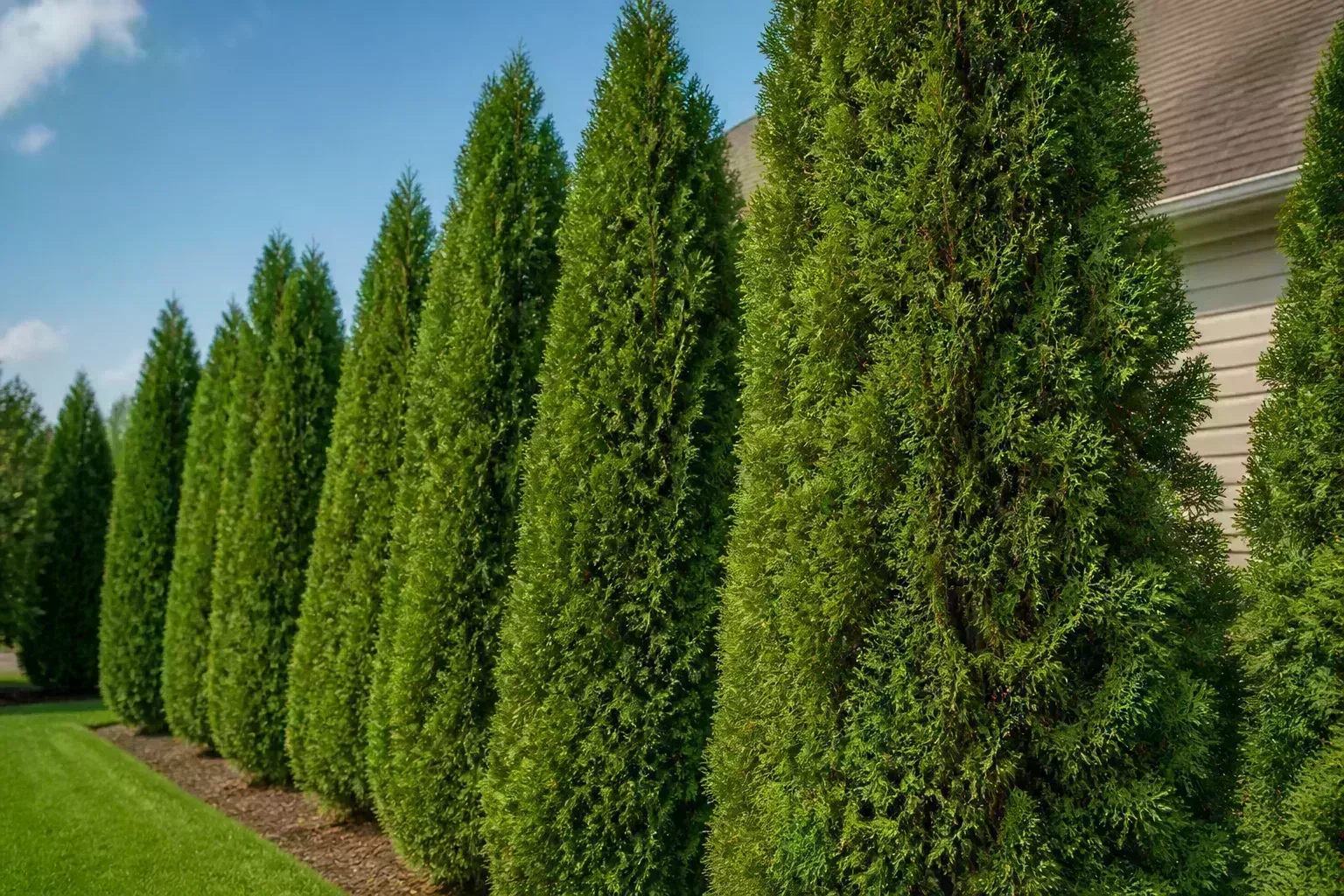
Arborvitae are evergreen conifers that can make a living privacy wall, a narrow foundation accent, or a tidy globe for a small border. The catch is that “arborvitae” describes a wide range of plants. A six-foot hedge cultivar and a 60-foot tree may share the same common name, but they do not belong in the same planting plan.
The best choice is the smallest, naturally shaped type that will reach the height and width you need. That one rule prevents most arborvitae regrets: fewer hard pruning cuts, less crowding, better airflow, and a screen that stays green from the ground up.
Is arborvitae the right plant for your privacy problem?
Arborvitae are useful when you want year-round screening in a sunny to lightly shaded site with soil that drains reasonably well but does not dry out constantly. The genus Thuja includes eastern and western species, hybrids, and hundreds of named cultivars, from towering trees to rounded plants only a foot or two tall. UConn Extension describes the group as flexible enough for screens, windbreaks, gold-foliaged specimens, and dwarf garden forms, but the site still determines whether a particular selection is easy to grow. (UConn’s arborvitae guide explains the range of forms and basic planting needs.)
They are not a universal solution for every boundary. A narrow yard may not have room for a mature Green Giant, while a dry, exposed lot can leave even a well-chosen arborvitae scorched and thin. Heavy deer pressure is another serious limitation: arborvitae foliage is attractive to browsing deer, particularly when winter food is scarce. If you cannot protect young plants, consider whether a mixed screen with less-palatable species would be more reliable.
Quick picks by screen job
| Your main goal | Start with | Why it fits | Main caution |
|---|---|---|---|
| Tall screen in a large yard | Green Giant | Vigorous, dense, and capable of becoming a very tall screen | It can outgrow a narrow lot quickly |
| Classic medium-height privacy hedge | Emerald Green | Narrow pyramidal habit and strong winter color | Do not plant on a tiny spacing grid just to fill the gap fast |
| Cold-climate or exposed screen | American arborvitae or Techny | Hardy eastern forms with dense green foliage | Deer and winter damage still need planning |
| Narrow side-yard screen | Holmstrup, Yellow Ribbon, or a narrow cultivar sold for your region | More vertical than broad and easier to fit beside paths | Confirm mature width, not just the pot size |
| Small garden accent | Danica, Tiny Tim, Mr. Bowling Ball, or Hetz Midget | Globe-shaped plants stay compact and need little shaping | They are not tall privacy plants |
| Golden foliage | Rheingold, Fire Chief, or Yellow Ribbon | Adds contrast to an all-green planting | Color and winter tone vary by cultivar and climate |
| Weeping or unusual texture | Whipcord | Cord-like foliage and a distinctive loose habit | Better as a specimen than as a formal screen |
How to choose among arborvitae types
Start with mature size and spacing
Read the full botanical name and cultivar, then look up the expected mature height and width for your region. A nursery tag that says “grows 12 inches per year” tells you almost nothing about where the plant ends up. Mature width controls your planting distance, the clearance from a fence or house, and how much sunlight reaches neighboring plants.
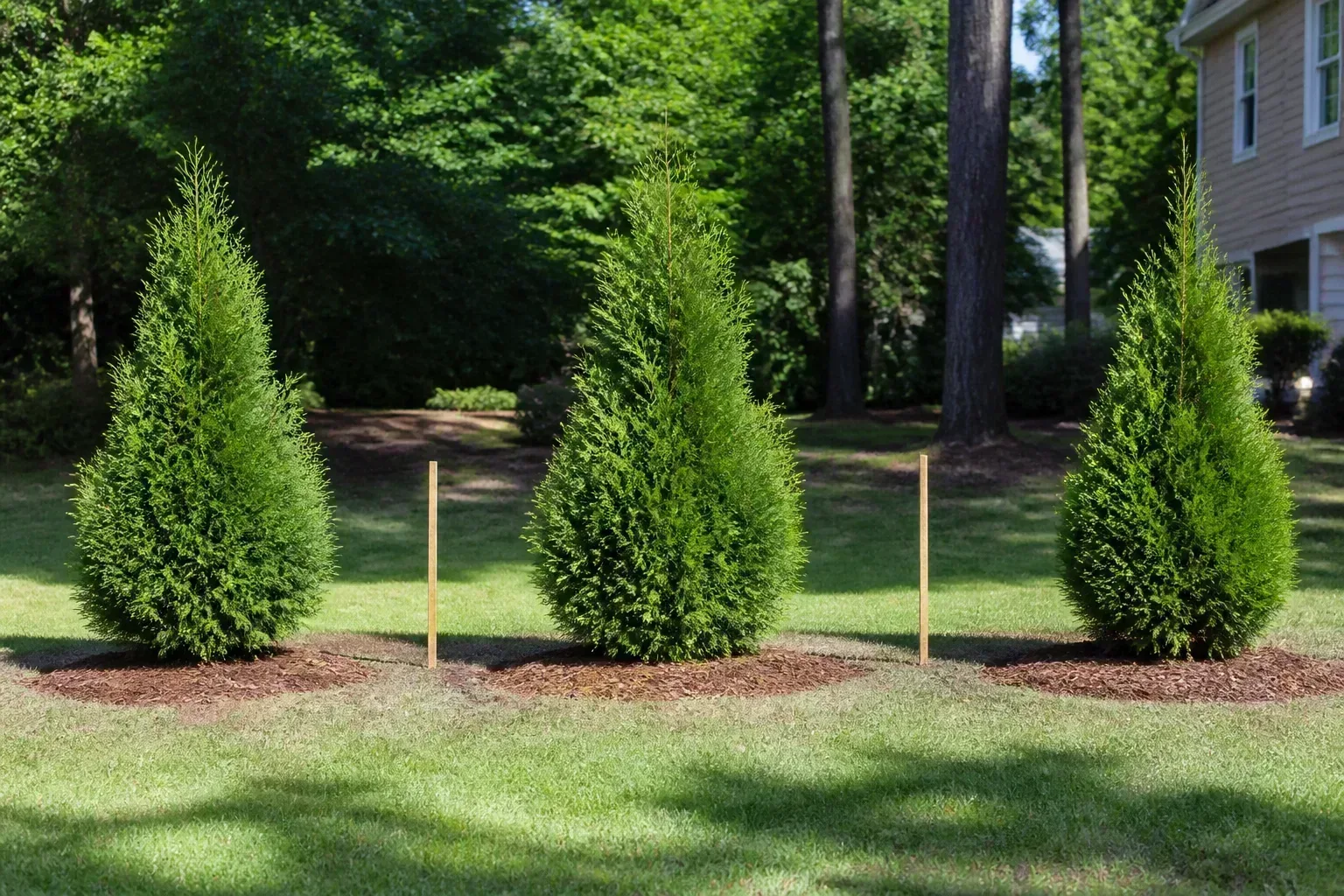
For a natural screen, space plants so their mature branches can nearly meet without forcing the root systems and foliage into a permanent squeeze. For a formal hedge, you may start closer, but closer is not automatically better; overcrowding encourages thin lower branches, poor airflow, and more irrigation competition. Iowa State Extension recommends spacing formal hedges at roughly one to two and a half feet only when the plants are suited to that treatment, while informal hedges should be spaced according to mature size. (Its hedge-selection guidance is a helpful distinction.)
As a rough planning method, use the mature width as your first spacing number, then adjust only after checking the cultivar’s instructions. For example, a four-foot-wide Emerald Green hedge may be planted around three to four feet on center for a faster visual screen, while a broad species or Green Giant needs more room. Oregon State Extension gives three to four feet as a practical starting range for many hedge plantings but also warns that drainage, sun, and mature size matter. (OSU’s arborvitae hedge advice includes that spacing guidance and the site conditions that make it work.)
Check sun, soil, water, and hardiness
Most arborvitae grow best in full sun, though many tolerate light or partial shade. More shade usually means slower growth and a less dense screen, especially when trees are already competing with roots from mature trees. Count direct light at the planting line, not on the other side of the yard where the sun is unobstructed.
Arborvitae prefer moisture that is dependable but not stagnant. Dig a test hole before you buy a hedge: if water remains in it long after rain, solve the drainage problem or choose a different plant. At the opposite extreme, a strip beside pavement or a south-facing wall may become too hot and dry for western redcedar types. The NC State Plant Toolbox notes that western redcedar prefers moist, well-drained soil and does not tolerate drought or dry winds. (NC State’s Thuja plicata profile gives the species’ site limits and mature dimensions.)
Use hardiness zones as a starting filter, not a promise. Cultivars can differ in winter color, wind tolerance, and heat performance, and a plant in a protected bed may succeed where the same plant fails on an exposed corner. Ask a local nursery or extension office which selections have a good record in your exact climate.
Plan for deer and winter exposure
Arborvitae are often sold as low-maintenance privacy plants, but deer can turn a perfect row into a ragged one. Deer browsing removes lower foliage and can create holes that a Thuja may never fill because old, bare wood often does not produce new shoots. Minnesota Extension also documents deer feeding and antler rubbing on arborvitae, along with rabbit damage to young trunks and branches. (Its arborvitae diagnosis guide shows how to distinguish those injuries.)
Wind and winter sun create a second risk. Evergreen leaves continue losing water when the ground is frozen, and cold dry wind can cause bronzing or dead tips. Water a new hedge thoroughly before the ground freezes if the soil is dry, avoid late-season fertilizer that pushes tender growth, and use a real barrier when browsing pressure is high. Do not wrap foliage tightly in plastic; it can trap moisture and cause more problems.
19 types of arborvitae worth growing
The profiles below are grouped by the job they do. Sizes are useful planning ranges, not guarantees; soil, climate, age, and nursery provenance all affect growth. Treat a cultivar name in single quotation marks as part of the plant’s identity, not as optional decoration.
Tall species and large-space screens
1. American arborvitae (Thuja occidentalis) — Also called eastern white cedar, this is the native species behind many familiar cultivars. It can become a 40- to 60-foot tree with a 10- to 15-foot spread in landscape conditions, so the straight species belongs in a large property, naturalized edge, or windbreak rather than a narrow foundation bed. It tolerates full sun to partial shade and a range of soils, but deer enjoy the foliage. NC State lists screening, wildlife cover, and windbreak value among its landscape uses. (See the NC State profile for Thuja occidentalis.)
2. Green Giant (Thuja standishii × plicata ‘Green Giant’) — This is the fast, tall privacy choice many gardeners mean when they say “giant arborvitae.” The U.S. National Arboretum identifies it as a hybrid of Japanese arborvitae and western redcedar, with rich green foliage and a mature range commonly cited around 40 to 60 feet tall. It can grow several feet per year after establishment, which is useful when you need height but dangerous when the bed is narrow. Use it in a large yard, space it generously, and do not assume repeated shearing will keep it permanently small. (The National Arboretum’s plant note explains the hybrid’s identity and history.)
3. Western redcedar or giant arborvitae (Thuja plicata) — The species is native to the Pacific Northwest and can reach 50 to 70 feet tall with a 15- to 25-foot spread. It has rich green, scale-like sprays, reddish-brown bark, and a naturally broad, pyramidal form. It is better for a spacious, moist, protected site than for a hot, dry suburban strip. In regions with dry summers or dry winter wind, Green Giant may be a more predictable screen than the straight species, but neither should be planted without room for its eventual base.
4. Japanese arborvitae (Thuja standishii) — Japanese arborvitae is a medium to large tree with a looser, gently drooping habit and aromatic foliage. It is a good specimen or background screen where you want a softer outline than a tightly clipped row. Give it space, sun to light shade, consistent moisture, and protection from the harshest exposure; it is not a dwarf simply because “Japanese” sounds ornamental.
5. Korean arborvitae (Thuja koraiensis) — This lesser-known species has soft blue-green foliage and a more ornamental presence than the common green hedge forms. It is useful as a specimen or mixed screen in a suitable cool-to-temperate climate, especially where the color adds contrast. Verify availability and local hardiness before buying because it is less widely grown than T. occidentalis cultivars and is not the automatic answer for a fast privacy wall.
Pyramidal cultivars for everyday privacy
6. Emerald Green (Thuja occidentalis ‘Smaragd’) — Emerald Green is one of the most dependable medium-size choices for a residential screen because its foliage usually stays a rich green through winter and its pyramidal habit remains relatively narrow. Expect roughly 12 to 15 feet tall and about 3 to 4 feet wide at maturity, depending on conditions. It is a strong fit for a side boundary or moderate-height hedge when you can give each plant enough root room.
7. Techny (Thuja occidentalis ‘Techny’) — Techny forms a broader pyramid with dark green foliage and good cold-climate utility. It can become around 10 to 15 feet tall and 6 to 10 feet wide, so it is better for a broad bed or informal screen than a strip only a few feet deep. Its wider footprint can create a fuller lower hedge, but it also makes spacing and fence clearance more important.
8. Holmstrup (Thuja occidentalis ‘Holmstrup’) — Holmstrup is a slower, narrow pyramidal cultivar with dense horizontal sprays that tend to hold their color well in winter. It commonly reaches about 6 to 8 feet tall and 3 to 4 feet wide, making it a patient choice for a small privacy screen or foundation planting. Penn State Extension notes that choosing a dwarf or compact cultivar whose mature size matches the site reduces the need for corrective pruning. (Penn State’s pruning guidance for needled evergreens includes arborvitae selection and pruning limits.)
9. Yellow Ribbon (Thuja occidentalis ‘Yellow Ribbon’) — This semi-dwarf, narrow selection brings yellow-gold foliage to a screen without the broad footprint of a full-size species. It can reach roughly 8 to 10 feet tall and 2 to 3 feet wide. Plant it where the color will be visible and where strong afternoon sun will not scorch it; yellow foliage also looks greener in shade, so the final effect depends on light.
10. Fire Chief (Thuja occidentalis ‘Congabe’) — Fire Chief is a compact, rounded cultivar with gold foliage that develops orange-red tones in cooler seasons. Its mature size is often around 3 to 4 feet tall and wide, so it is best for a colorful front-yard accent, low border, or mixed planting rather than privacy. It is valuable when you want an arborvitae’s evergreen structure without another tall green column.
Narrow and mid-size cultivars
11. Globe arborvitae (Thuja occidentalis ‘Globosa’) — Globe arborvitae forms a rounded, soft-looking mound, often around 3 to 4 feet tall and wide. It works well at an entry, along a path, or in a foundation bed where a vertical screen would be too much. Its rounded habit reduces the need for shaping, but it does not block a neighbor’s view at eye level unless it is part of a layered planting.
12. Woodwardii (Thuja occidentalis ‘Woodwardii’) — Woodwardii stays broadly globular and can grow to about 4 to 6 feet in height and width. Its bright green foliage makes a useful anchor at the end of a bed or beside a taller screen. Give it enough room to keep its round outline; planting it in a narrow slot and shearing it into a cylinder defeats the reason to choose it.
13. Rheingold (Thuja occidentalis ‘Rheingold’) — Rheingold is a compact cultivar with gold to copper-toned foliage. Young plants are often rounded, while mature specimens can become more conical, reaching approximately 3 to 5 feet tall and wide. It is a strong color accent for a mixed evergreen planting, but its warm winter tones should not be mistaken for drought damage without checking the soil and new growth.
14. Whipcord (Thuja plicata ‘Whipcord’) — Whipcord is unmistakable: long, dangling, cord-like sprays create a weeping, shaggy texture. It usually stays around 4 to 5 feet tall and wide and makes a conversation-piece specimen near a path or rock garden. It is not a substitute for a formal hedge, and its loose habit is best appreciated when surrounding plants do not crowd it.
15. Little Giant (Thuja occidentalis ‘Little Giant’) — Little Giant is a slow-growing, globe-shaped arborvitae that reaches roughly 4 to 5 feet tall and wide. It is useful when you want a dense evergreen mound but do not want to spend years cutting back a fast-growing hedge. Use it for foundation beds, low screens, or repeated accents; the word “giant” refers to the cultivar’s name, not its final size.
Dwarf, globe, and ornamental types
16. Hetz Midget (Thuja occidentalis ‘Hetz Midget’) — Hetz Midget forms a dense, layered globe, usually around 3 to 4 feet tall and wide. Its flattened sprays give it a finer texture than some of the coarser globe types. It is a good choice for a small garden, rockery, or foundation corner where a naturally rounded plant is preferable to a clipped ball.
17. Mr. Bowling Ball (Thuja occidentalis ‘Bobozam’) — Often sold under the trademarked name Mr. Bowling Ball, this cultivar makes a compact, finely textured rounded plant around 2 to 3 feet tall and wide. It can look remarkably tidy with almost no pruning when planted in full sun to part shade and well-drained soil. Use it to repeat a shape through a border, not to create a privacy screen.
18. Danica (Thuja occidentalis ‘Danica’) — Danica is a very small, bright green globe, often only 1 to 2 feet tall and wide. It is excellent for edging, containers in suitable climates, and welcoming foundation plantings. Its small size is its virtue and its limitation: it cannot provide meaningful privacy, but it can finish the bottom of a layered screen without competing with taller plants.
19. Tiny Tim (Thuja occidentalis ‘Tiny Tim’) — Tiny Tim is another miniature globe, usually around 1 to 2 feet tall and wide, with dense green foliage. It suits small gardens, troughs, and formal repetitions where you need a low evergreen shape. Plant it only after checking drainage and winter exposure; a small plant still needs enough sun and root-zone moisture to stay dense.
Why Sichuan arborvitae is a special case
Sichuan arborvitae, Thuja sutchuenensis, is a real and botanically important species, but it is not a routine substitute for a nursery privacy cultivar. Kew lists it as endangered, with a native range in China, so availability, provenance, and conservation responsibility matter. (Kew’s Plants of the World Online record documents its accepted name and conservation status.)
If a specialist collection offers it, treat it as a conservation-minded specimen rather than a hedge filler. For ordinary residential screening, choose a well-identified cultivar with a mature size and climate record that you can verify locally.
Planting an arborvitae screen that lasts
Planting day sets the ceiling for future maintenance. Mark the finished screen line first, measure the spacing from trunk center to trunk center, and check how the mature plants will relate to fences, gates, sidewalks, utility lines, windows, and neighboring property. A row that is easy to mow and inspect is easier to keep healthy than one squeezed against a fence.
Dig each hole no deeper than the root ball and several times wider. Set the top of the root ball level with, or slightly above, the surrounding soil, especially in heavy ground. Break up circling roots gently, backfill with the native soil you removed, and water slowly enough to settle the soil without leaving a crater around the trunk.
Water and mulch correctly
Arborvitae need the most supervision during the first growing season and during extended heat or drought. Water the entire root ball deeply, then check the soil before repeating the job. A lawn sprinkler that wets only the foliage is not a substitute for soaking the root zone.
Apply about two to three inches of mulch over the root area, keeping it away from trunks and stems. Mulch reduces evaporation and grass competition, but it cannot repair compacted, waterlogged soil. Do not build a mulch volcano around the base; persistent moisture against bark encourages decay and hides problems.
Give new plants a full establishment season
Do not fertilize a newly planted hedge automatically. Root recovery and consistent moisture matter more than a flush of top growth, and fertilizer can intensify stress when roots are dry or damaged. If a soil test indicates a nutrient need, follow its recommendation and avoid late-summer nitrogen that may produce tender growth before winter.
Inspect the hedge every few weeks while it establishes. Look under foliage for browning that starts on one side, check the soil around individual plants rather than watering the whole line blindly, and watch for browse marks. Replacing one struggling plant early is easier than letting a gap widen for several seasons.
Pruning and troubleshooting arborvitae
Arborvitae are easiest when their natural size matches the design. Remove dead, broken, or crossing branches and lightly trim new growth only when the cultivar’s shape or a path requires it. Avoid cutting deep into old brown wood on arborvitae and junipers; many will not refill a bare section.
Brown foliage, pests, and browsing
Some interior browning in autumn is normal as older foliage is shed. Browning that begins on the exposed side after a cold, dry winter can be winter desiccation, while scattered browning during a dry summer often points to root-zone stress. Penn State Extension notes that drought combined with cold, windy weather can cause evergreen water loss and winter injury, especially in recently planted specimens. (Its winter-injury guidance recommends reducing stress and watering during extended dry periods.)
Inspect for bagworms, which look like small brown cone-shaped cases hanging from the foliage. University of Maryland Extension warns that heavy bagworm infestations can permanently defoliate conifers and may kill severely affected plants. Hand-pick and destroy bags when practical, scout early, and use only a treatment labeled for the plant and pest in your region. (The University of Maryland’s bagworm guide covers their life cycle and damage.)
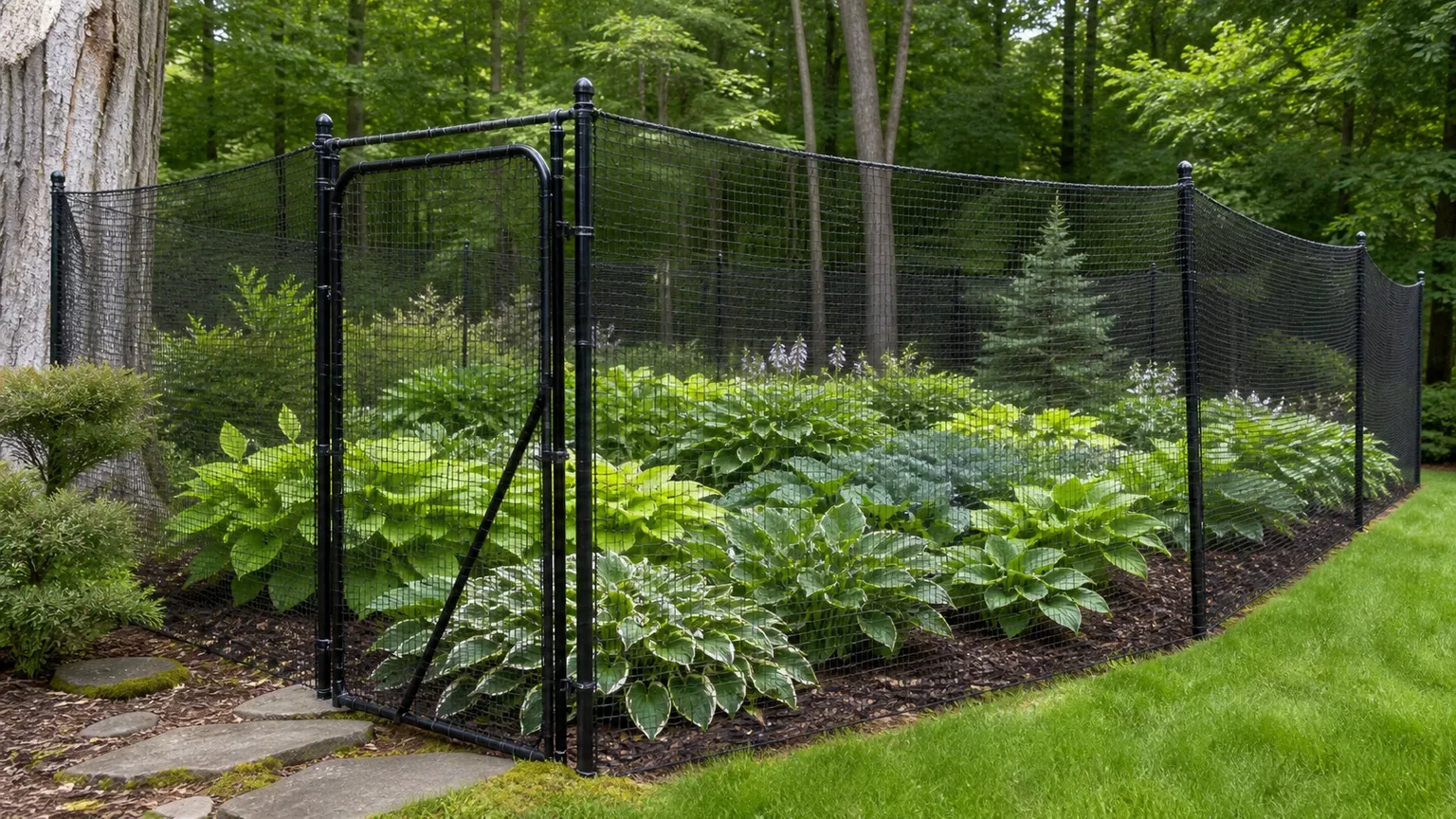
Deer browsing produces ragged lower growth, while rabbits may remove bark or clip young twigs. A physical barrier is more dependable than hoping a particular arborvitae will be deer-proof. If a plant is browsed back to bare wood, do not shear the entire tree in an attempt to hide the gap; protect it, correct the cause, and wait to see where live buds remain.
Keep a hedge dense without over-shearing
The healthiest privacy screen is usually tapered slightly wider at the base than at the top. That shape lets light reach lower branches and reduces the dead-bottom effect that develops when the top shades the base. Shear lightly during active growth if the cultivar responds well, and stop early enough that new growth has time to harden before severe cold.
If the hedge is already too tall, do not assume it can be cut in half. Arborvitae often have little usable growth on old interior wood, so severe reduction can leave permanent holes. Remove or relocate plants that fundamentally do not fit, then replace them with a cultivar whose mature height and width match the view you need to block.
Conclusion: choose the smallest arborvitae that does the job
Green Giant and the straight species are compelling when you need a tall screen on a large property. Emerald Green, Techny, Holmstrup, and Yellow Ribbon are more practical for many residential boundaries, while Danica, Tiny Tim, Mr. Bowling Ball, Hetz Midget, and the other globe forms belong in low borders and foundation plantings rather than privacy rows.
Before buying, write down the height you need, the maximum width your bed can hold, the hours of direct sun, how quickly the soil drains, and the level of deer pressure. Then choose a named cultivar that fits those facts, space it for its mature size, and protect it through establishment. That decision will do more for a full, long-lived privacy screen than any promise of fast growth.