How to Grow a Lawn in Shade: 5 Expert Fixes
Learn how to grow a lawn in shade by measuring light, choosing the right grass, pruning carefully, mowing high, watering wisely, and knowing when to switch groundcovers.
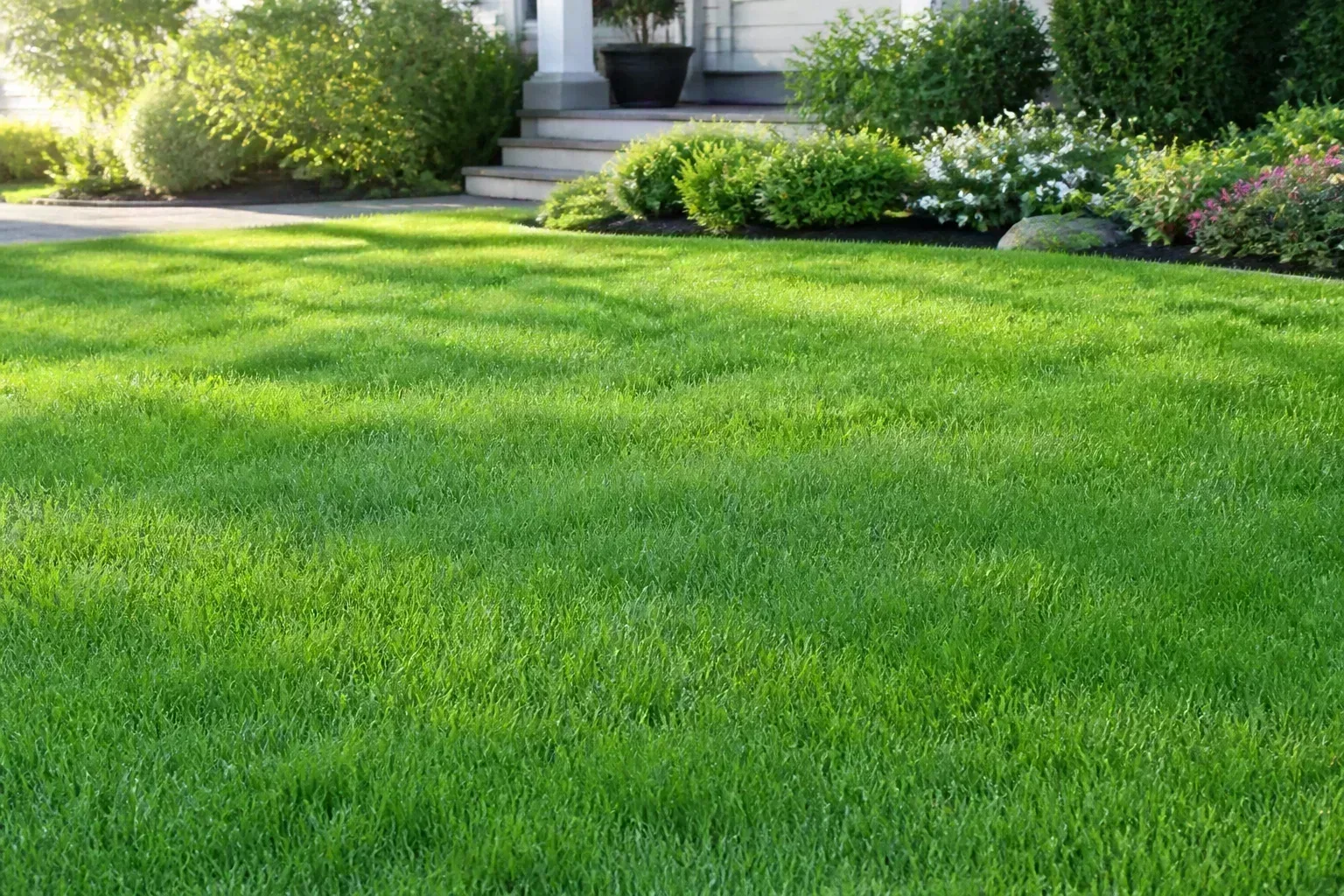
A shady lawn fails for a reason that is easy to miss: “shade” changes more than the amount of light. Under trees, grass also competes with roots for water and nutrients, while trapped humidity and weak air movement raise disease pressure. Beside a north-facing wall or fence, the same amount of darkness may produce damp soil instead of thirsty soil.
That is why the best fix is not automatically more seed, more water, or more fertilizer. Start by identifying the kind of shade you have, then match the grass, mowing, irrigation, and expectations to that site. Purdue University turf specialists note that turf generally performs best with at least four to six hours of full sun, while Penn State Extension emphasizes that light, water, nutrients, drainage, and air movement all influence whether shaded turf persists (Purdue University; Penn State Extension).
Start by Measuring Usable Light, Not Guessing at Shade
Before you buy seed, map the light. On a clear day during the growing season, walk the area at breakfast, midday, and late afternoon, or use a phone light-meter app as a rough comparison tool. Mark where direct sun reaches the grass, where light is bright but filtered through leaves, and where the ground stays dim all day.
The goal is not a laboratory-grade reading. You need to know whether the site has a few hours of moving sun, bright dappled light, or almost no usable light. Also measure the lawn in several zones: the strip near the tree trunk may be much darker and drier than the edge of the canopy, and a patch beside a building can lose its only direct sun in winter.
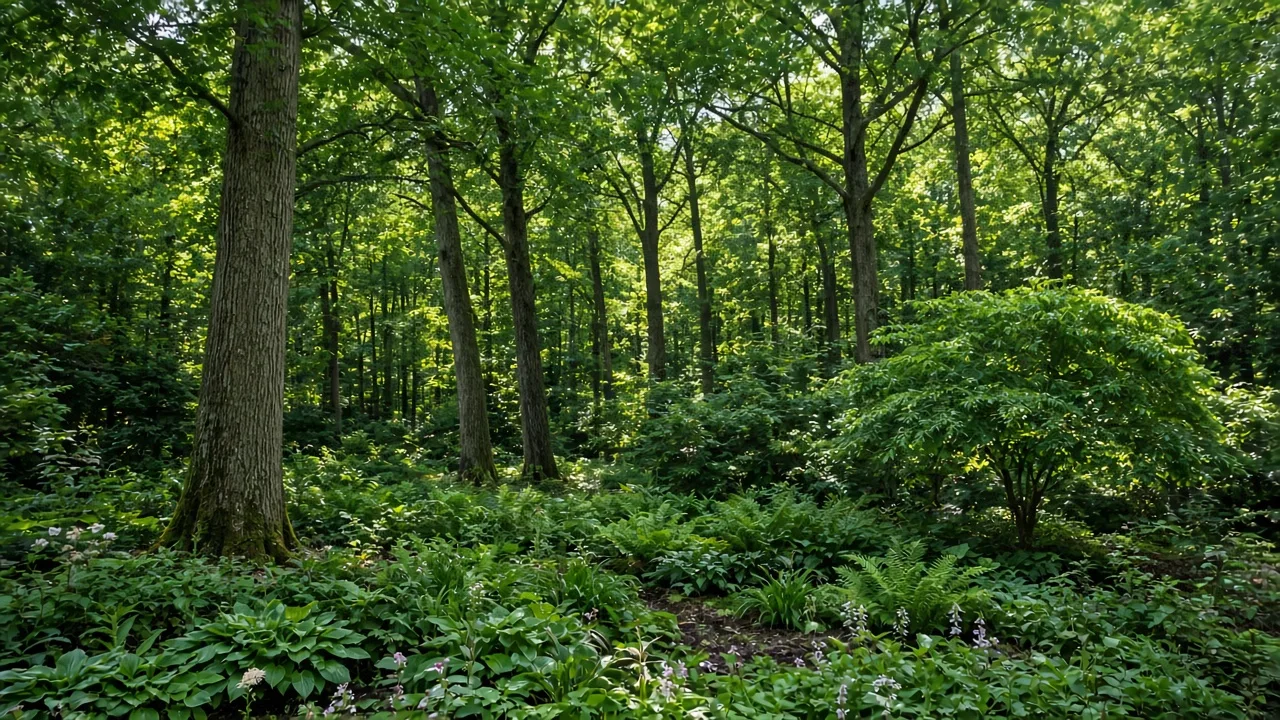
Use four to six hours of direct or strong filtered light as a practical starting range, not a guarantee. Grass species and cultivars differ, and “shade tolerant” means better able to persist under stress—not able to grow without photosynthesis. If light is consistently below what turf needs, maintenance can slow the decline but cannot turn a deeply shaded floor into a sunny lawn.
Three shade patterns that change the plan
Dappled tree shade moves throughout the day and may be workable for fine fescue or turf-type tall fescue in a cool-season region. Dense evergreen shade is more severe because the canopy blocks light year-round. Structural shade from a house, fence, or shed can be bright at one time of day but cool and slow to dry, especially where rain cannot reach.
There is also a useful moisture split. Tree shade is often dry shade because shallow or extensive roots intercept water before turf can use it. Shade from a structure is more likely to be wet shade when drainage and evaporation are poor. Check the soil several inches down before watering; the color of the grass alone cannot tell you which problem you have.
Decide Whether Turf Is the Right Groundcover
Ask what the area must do. A small path to the shed, a play area, and an ornamental space under a mature tree need different surfaces. Grass is attractive and comfortable, but it is a living surface that must recover from mowing, foot traffic, root competition, and seasonal stress.
If the site receives less than roughly four hours of useful light, stays wet for days, or has exposed tree roots that make soil work risky, a grass replacement may be the more successful lawn decision. Purdue recommends considering groundcovers, rock beds, mulch, or pavers where turf cannot receive adequate light or where traffic is heavy; Penn State likewise lists nongrass groundcovers for conditions in which grass will not provide adequate cover (Purdue University; Penn State Extension).
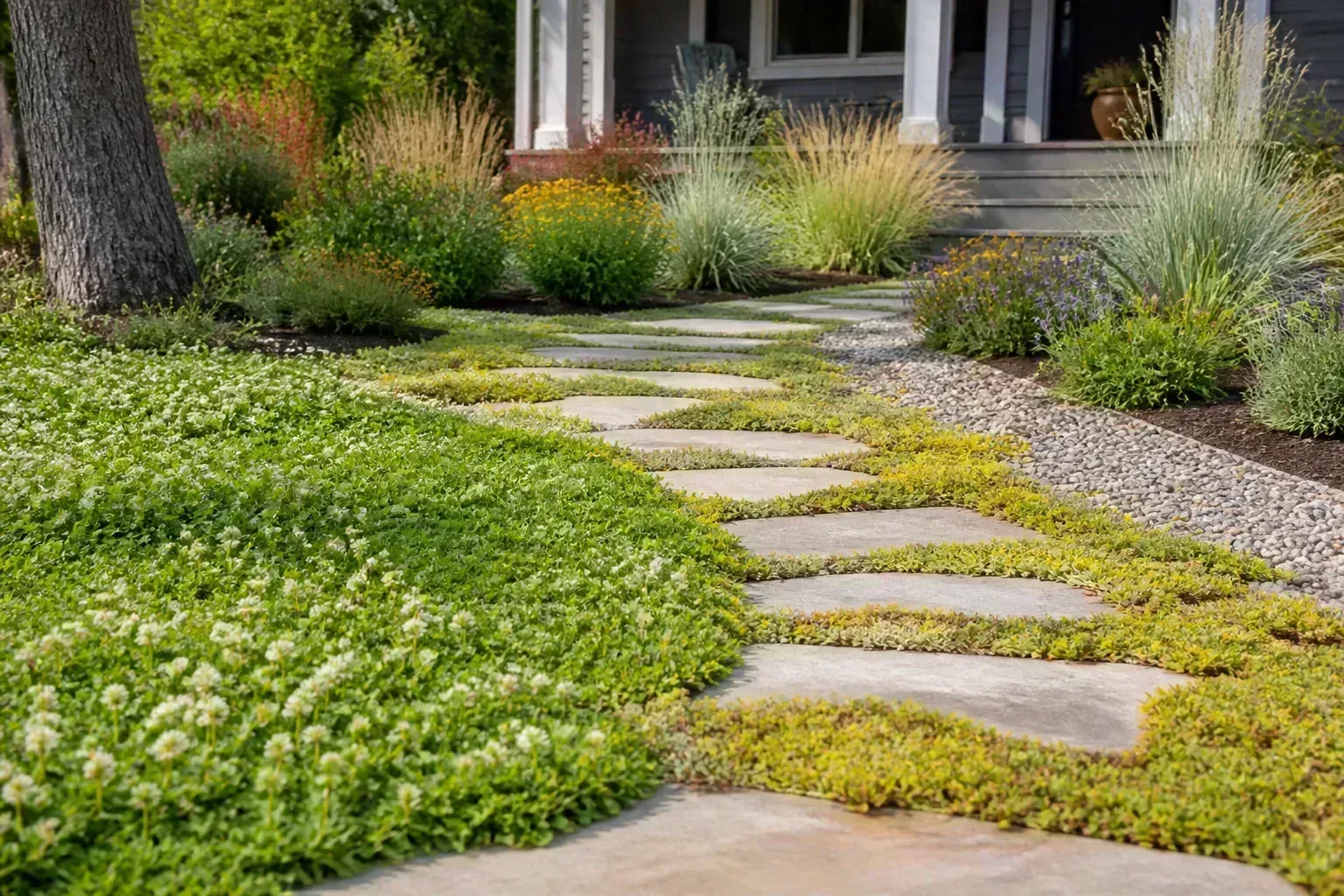
That does not mean removing every tree or giving up at the first thin patch. It means separating a repairable lawn from a site that is asking turf to perform a job it cannot perform. Keep grass where you need a walkable, mowable surface, and consider sedges, ferns, hostas, pachysandra, or a designed mulch-and-paver area where the shade is permanent. Choose non-grass plants carefully: some groundcovers spread aggressively, and any plant should be matched to your region and soil.
Open the Canopy Without Harming the Tree
If tree shade is only slightly too dense, selective pruning can improve both light and air circulation. Start with dead, broken, crossing, or low branches that block light at the lawn edge. Raising a canopy gradually may help the turf, but removing large limbs or a substantial share of the crown can injure the tree and create a weak structure.
Pruning is not a one-time cure. Trees grow back into openings, and the sun angle changes by season. Think of canopy work as a recurring light-management task, not permission to strip a healthy tree bare. For large limbs, work near utility lines, or any cut that requires climbing, use a qualified arborist rather than treating the lawn as the only plant that matters.
Improve airflow and protect tree roots
Rake or blow leaves and fallen twigs off the turf promptly, particularly after wet weather. A leaf layer can shade seedlings, hold moisture against the grass, and create a surface where disease develops. Penn State Extension specifically warns that accumulated leaves can smother grass and favor disease or harmful insects (Penn State Extension).
Do not solve compacted soil by cutting through large tree roots or piling soil over the root flare. Those roots belong to the tree and may also be the reason the area is dry. Where the soil is compacted, core aeration can improve air and water movement in the turf root zone, but work shallowly and cautiously around major roots. A soil test is more useful than an automatic lime or fertilizer application; the lawn and the tree do not need every amendment sold for turf.
Choose Grass by Climate, Moisture, and Traffic
There is no universal “best grass for shade.” Choose first between cool-season and warm-season turf based on your climate, then narrow the choice by moisture and use. A shade-tolerant grass that cannot survive your winter, summer heat, wet soil, or foot traffic is not shade tolerant in any practical sense.
| Grass or group | Best fit | Important tradeoff |
|---|---|---|
| Fine fescues | Cool-season, drier shade, light to moderate traffic | Fine texture and low nitrogen needs, but slow recovery from wear and possible summer dormancy |
| Turf-type tall fescue | Cool-season, moderate shade, variable moisture, more wear | Deep-rooted and durable, but needs careful establishment and quality cultivars |
| St. Augustine grass | Warm-season regions with partial shade | Broad blades capture light, but winter limits and local disease pressure matter |
| Zoysia grass | Warm-season lawns with light to moderate shade | More shade tolerant than bermudagrass, but slow establishment and dormancy can be drawbacks |
| Perennial ryegrass or Kentucky bluegrass | Bright, lightly shaded areas or blends | Quick germination or attractive sod, but generally weaker shade persistence |
The table is a starting filter, not a seed-buying prescription. Colorado State University Extension advises considering use, maintenance level, water availability, soil texture, drainage, shade, establishment method, and pest history before choosing a turf species. Its species guidance rates fine fescues as very shade tolerant and turf-type tall fescue as shade capable, while perennial ryegrass and Kentucky bluegrass are poorer choices for persistent low-light conditions (Colorado State University Extension).
Cool-season choices: fine fescue and turf-type tall fescue
Fine fescues—including Chewings, hard, and creeping red fescue—are often the strongest choice for cool-season dry shade and lower-input areas. They have fine leaves and can perform with less nitrogen than hungrier turf, but they are not a good match for a narrow, heavily used play route. Their recovery from traffic is limited, and prolonged hot weather can push them dormant.
Turf-type tall fescue is the better first look when you need more wear tolerance or the soil moisture swings. Its deep-rooting reputation helps only when roots can actually penetrate the soil; shallow soil over tree roots or compaction can erase that advantage. Kansas State turf specialist Ross Braun recommends fine fescues for dry shade and tall fescue for wetter shaded sites, while also warning that shaded turf needs less nitrogen and higher mowing than full-sun turf (Kansas State University Turf and Landscape Newsletter).
Warm-season choices: St. Augustine and zoysia
In warm-season regions, St. Augustine is a common shade candidate because its broader blades can intercept limited light. It still needs direct or filtered sun, adequate drainage, and a climate where it can grow for a long season. Do not assume a St. Augustine cultivar sold locally has the same shade performance as every other cultivar; ask a local extension service or reputable sod grower about the specific selection.
Zoysia can be a better shaded warm-season choice than bermudagrass, especially where the site gets only partial shade. Its slow establishment is a real cost: a thin zoysia lawn may take patience, and an area with constant foot traffic can remain worn while it fills. Neither option makes dense evergreen shade suitable for turf.
Read seed labels with skepticism
“Sun and shade” on a bag is a marketing category, not a guarantee that most of the mix will persist in your yard. Read the species and cultivar percentages. A mix dominated by Kentucky bluegrass or perennial ryegrass may germinate quickly and look promising, then thin as the shade stress continues.
For tall fescue, look for turf-type cultivars rather than forage-type Kentucky 31 when a lawn-quality surface is the goal. For fine fescue, a blend of several appropriate cultivars can spread risk across different stresses. Local availability varies, so use the label as a decision tool and get regional recommendations rather than selecting the most familiar name.
Prepare the Soil and Overseed at the Right Time
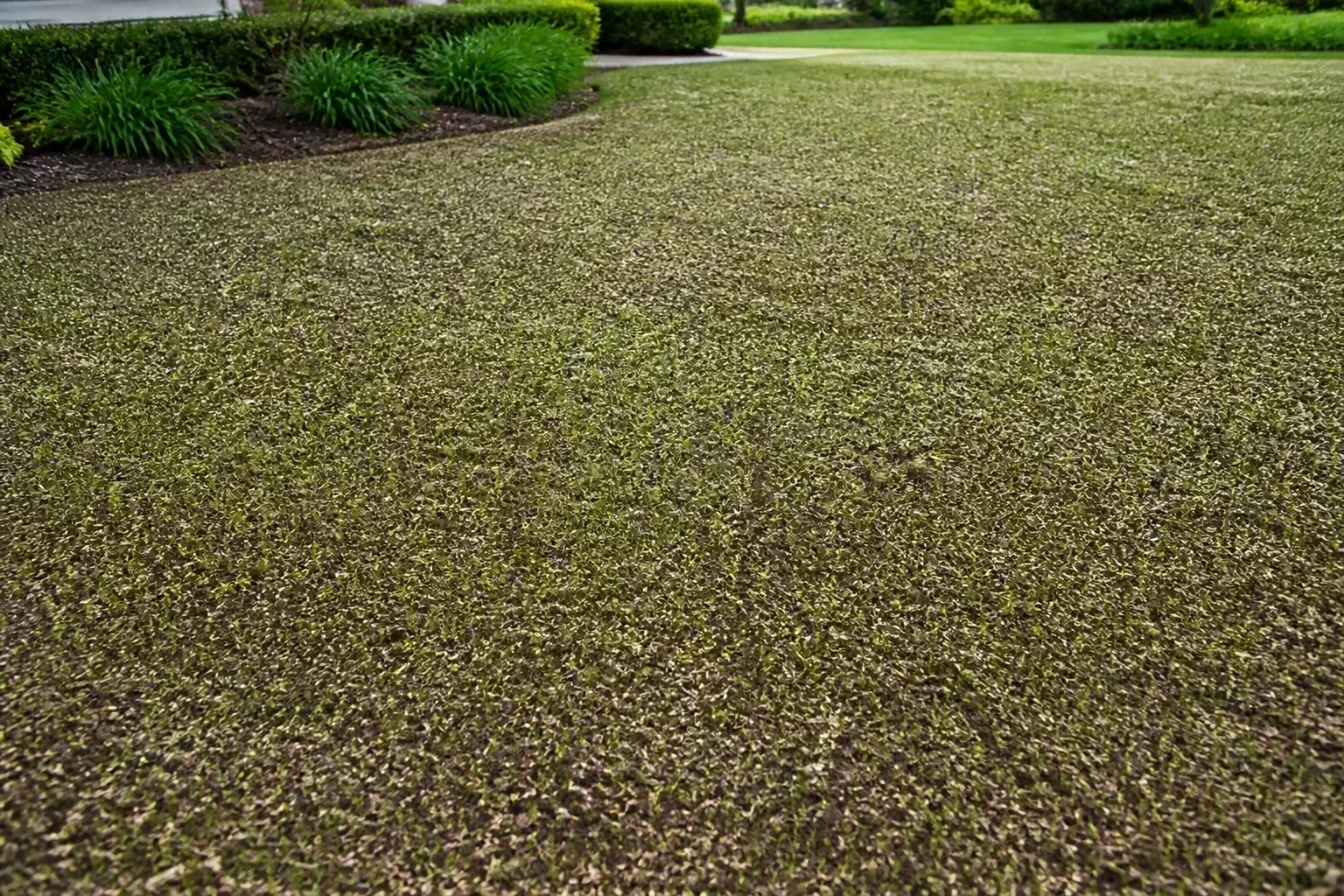
Seed cannot compensate for a sealed, compacted, waterlogged, or root-filled seedbed. Before overseeding, mow the existing turf at its normal height, rake away thatch and leaves, and inspect the soil. If water sits on the surface, fix drainage or change the planting plan before adding seed. If the soil is hard, core-aerate when the grass is actively growing and the soil is moist enough to penetrate—not saturated.
For cool-season lawns, early fall is usually the best overseeding window because soil remains warm for germination while new seedlings face less summer heat. Purdue notes that mid-August to mid-September is a useful early-fall window in its region, while spring seeding can work but requires more irrigation as summer stress arrives (Purdue University). Adjust the calendar to your local growing season rather than copying that date across climates.
A practical reseeding sequence
- Fix the cause first. Prune safely, redirect foot traffic, correct obvious drainage problems, and confirm that the zone receives enough usable light.
- Choose seed for the zone. Use a shade-appropriate species or blend, not one universal mix for the entire property.
- Make seed contact. Rake lightly after aeration or use a slit seeder where appropriate; seed sitting on leaves or thatch will not establish well.
- Keep the surface evenly moist. Use short, light irrigations during germination, then transition to deeper watering as roots develop. Do not keep a shaded soil surface constantly wet.
- Protect seedlings. Keep leaves off the new turf and minimize traffic until it has rooted and can tolerate mowing.
Overseeding is a density repair, not a reset button. If seedlings repeatedly die in the same darkest strip, compare that strip with the light map and soil moisture notes. Repeating the same seed-and-water cycle without changing the limiting condition only spends more money on a predictable failure.
Mow High, Mow Less, and Keep the Blade Sharp
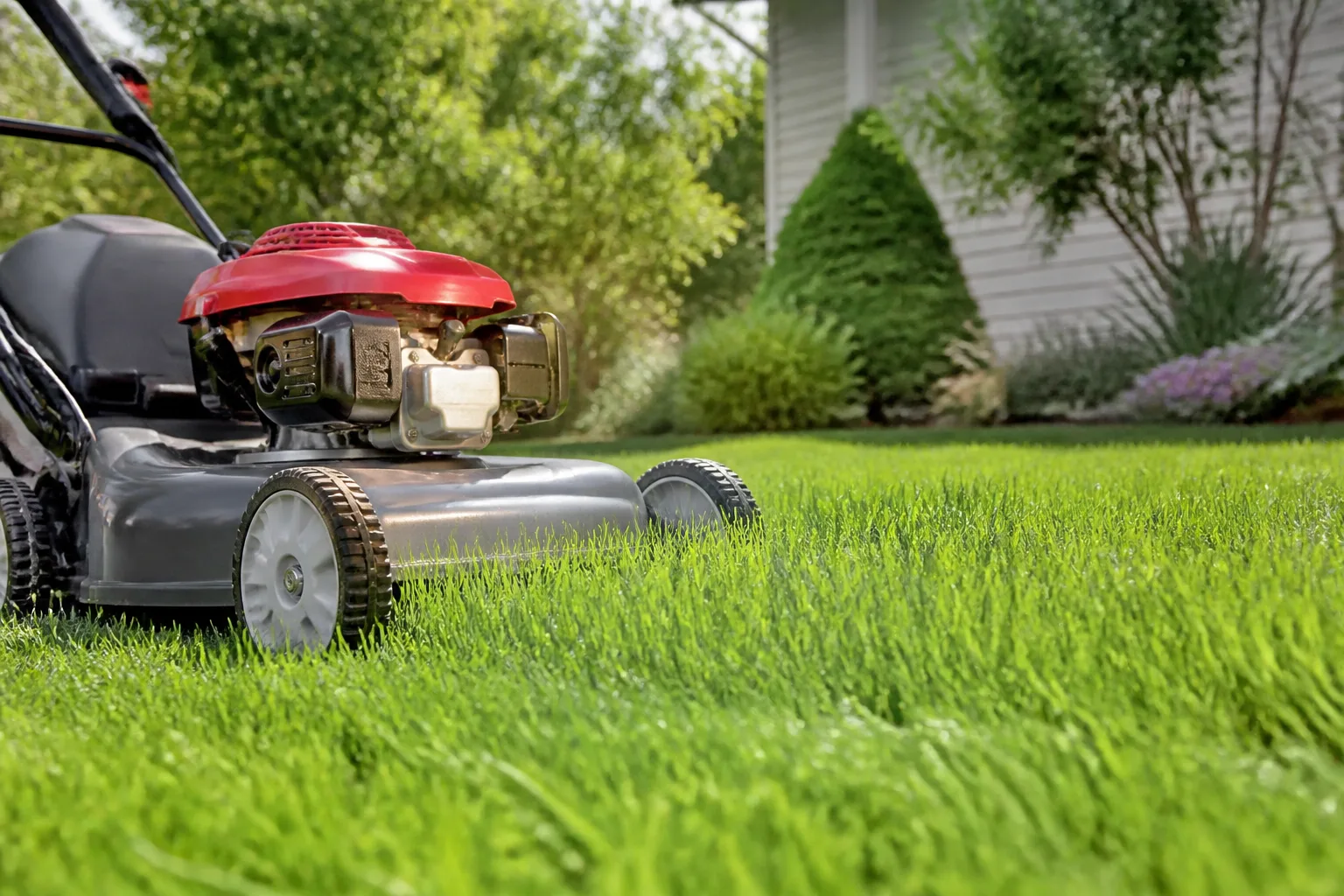
Shaded grass needs more leaf area because every blade has fewer opportunities to collect light. Raise the mower deck rather than scalping the lawn to a short, uniform height. Purdue recommends cool-season turf in shade be mowed at least 2.5 inches and preferably around 3 to 3.5 inches; Penn State advises mowing about an inch higher than the same species in open sun (Purdue University; Penn State Extension).
Use the one-third rule: never remove more than one-third of the blade in a single mowing. Because shaded turf grows slowly, the correct interval may be longer than the sunny lawn’s schedule. If only the sunny part needs cutting, mow by zone. A sharp blade matters especially for tall fescue and other grasses that can shred when cut with a dull edge; ragged tips lose water faster and look gray or brown.
Leave fine clippings dispersed on the lawn when they do not form clumps. Do not leave thick windrows on thin turf, and do not mow wet soil simply to keep a calendar. Footprints and mower ruts compact the same root zone you are trying to improve.
Water the Root Zone, Not the Calendar
“Water deeply” is useful only after you determine whether the shade is dry or wet. Under a mature tree, the canopy may reduce rainfall while roots take up water aggressively. Next to a building, the soil may stay cool and wet for days even when the grass looks dull.
Use a screwdriver or soil probe to compare moisture at several spots. Water when the root zone is beginning to dry, apply enough to move moisture below the surface, and then allow the upper layer to dry rather than making small daily sprinkles. Water in the morning when possible so foliage can dry; Planet Natural’s practical lawn guide also recommends infrequent, thorough watering and checking soil texture before adjusting frequency (Planet Natural).
Diagnose dry shade versus wet shade
Dry tree shade: Grass is thin near trunks, soil is dry below the surface, roots or exposed soil are visible, and the sunny lawn may look fine. Improve canopy light where safe, reduce competition only without damaging tree roots, water deeply when the root zone needs it, and choose a grass suited to dry shade.
Wet structural shade: Soil feels cool and sticky, water puddles or drains slowly, moss or algae appear, and the grass may have a soft, weak root system. Improve drainage and air movement first, avoid routine irrigation, and do not add nitrogen to force lush top growth into a wet disease-prone site.
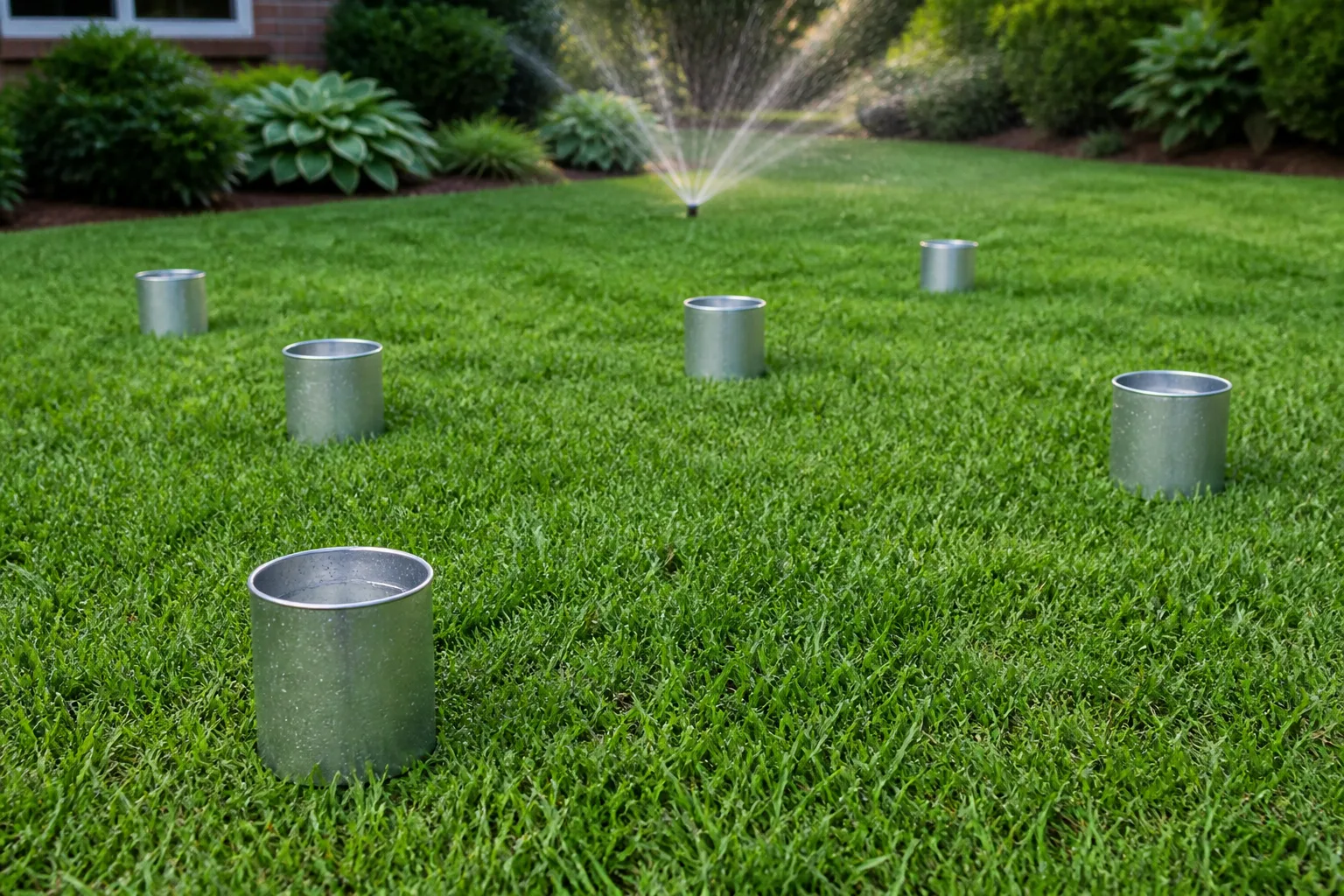
Neither diagnosis supports watering by a fixed “30 minutes twice a week” rule. Sprinklers differ, soils differ, and shade changes evaporation. Set out empty cans to measure an irrigation cycle, then use a probe to confirm that water is reaching the root zone without leaving it saturated.
Fertilize Lightly and Manage Leaves, Weeds, and Disease
Thin grass makes many homeowners reach for fertilizer, but extra nitrogen can create soft, succulent growth that the low-light site cannot support. Kansas State guidance recommends reducing nitrogen in shade by about half compared with full-sun areas and notes research showing good dense-shade quality at about 1 pound of nitrogen per 1,000 square feet annually; the exact rate still depends on species, soil test, climate, and local rules (Kansas State University Turf and Landscape Newsletter).
Use a soil test to identify pH or nutrient deficiencies before applying lime or fertilizer. Choose a slow-release product when appropriate, follow the label, and keep fertilizer off roots, sidewalks, and waterways. “Shade formula” is not a substitute for knowing what the soil and grass actually need.
Keep leaves moving, weeds from setting seed, and the canopy open enough for the site. Shade favors some broadleaf weeds, moss, algae, and diseases because turf is slow-growing and surfaces stay humid. Start with cultural controls—light, drainage, mowing, leaf removal, traffic reduction, and correct fertility—before reaching for herbicides or fungicides. If a treatment is necessary, verify that it is labeled for the grass, season, and tree-canopy situation in your area.
Use a Simple Seasonal Plan
The most reliable shady-lawn routine changes with the grass’s growth cycle rather than repeating one treatment all year.
- Late winter to spring: Recheck light as the sun angle changes, clear leaves, inspect drainage, and avoid heavy nitrogen while the turf is still slow. Warm-season lawns can be assessed as they green up; cool-season lawns may be recovering from winter wear.
- Late spring to summer: Raise the mowing height, reduce traffic during heat or drought, and probe the soil before irrigating. Tree shade can hide drought stress, while structural shade can hide overwatering. Watch for disease when nights stay warm and humid.
- Late summer to early fall: For cool-season turf, prepare the seedbed and overseed during the local cool-season establishment window. Keep seed moist but not saturated, and keep falling leaves from covering seedlings.
- Fall to early winter: Continue mowing while growth requires it, remove leaf layers, and note where the canopy becomes too dark. Use those observations to decide whether to prune, shrink the lawn, or plant an alternative before next spring.
This plan also creates a useful record. Take the same photo from the same spot each season, note mowing height and irrigation dates, and mark where grass repeatedly thins. Patterns are more informative than a single week of green color.
Know When to Replace Grass
A lawn alternative is not a failure; it is often the durable answer to a light problem. Consider replacing turf when the area receives less than about four hours of useful light, remains wet despite reasonable drainage work, loses grass after ordinary foot traffic, or repeatedly needs reseeding without holding density.
For low-traffic woodland-style areas, regional sedges, ferns, hostas, pachysandra, or other shade-adapted groundcovers may provide better cover. For a route that people actually walk, combine plants with stepping stones, mulch, or pavers so the living surface is not asked to absorb every footfall. In a play or service area, a hard-wearing surface may be more honest and easier to maintain than a struggling green carpet.
Avoid choosing English ivy or another aggressive spreader simply because it covers shade quickly. Check your local invasive-plant guidance and choose a groundcover that fits the site, stays where you plant it, and supports the appearance and maintenance level you want.
Conclusion: Aim for a Lawn That Fits the Shade
To grow a lawn in shade, first measure the light and moisture, then decide whether turf belongs in that spot. If it does, improve light and airflow safely, choose a species and cultivar for your climate, seed in the right season, mow higher, water by soil condition, and fertilize with restraint.
The most important expert habit is knowing what not to force. A thinner, slower-growing lawn can be healthy in workable shade, but complete shade, chronic wetness, root-filled soil, and heavy traffic may call for a different groundcover. Match the surface to the site and you will spend less time chasing symptoms—and get a yard that stays useful for more than one season.



