What Is a Shrub? Shrubs vs. Bushes and Trees
Learn what defines a shrub, how bushes differ in everyday use, and how to tell shrubs from trees, herbs, and edge-case plants in the garden.
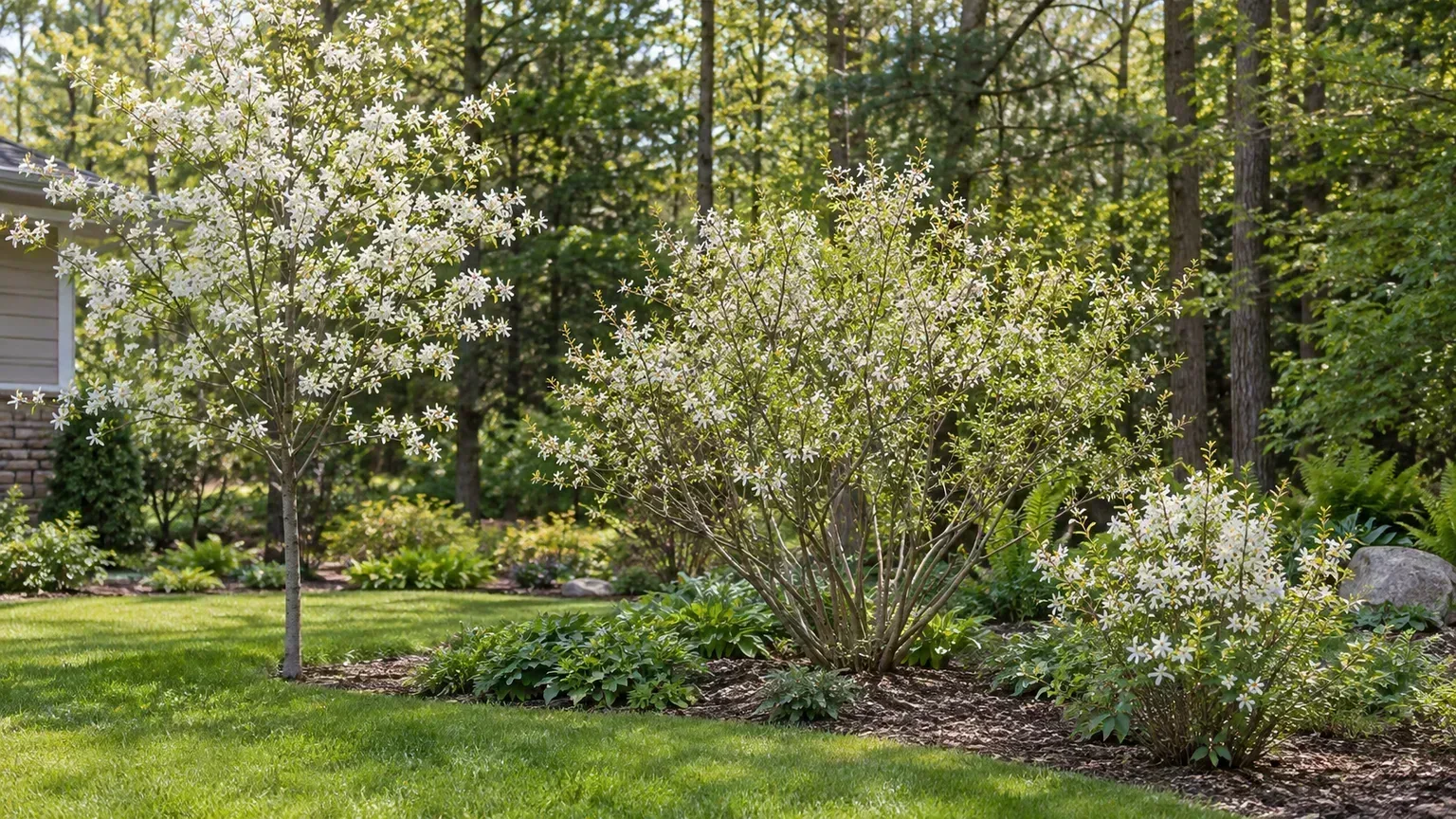
Short answer: a shrub is a perennial woody plant whose natural form usually has several stems beginning near the ground instead of one dominant trunk. Shrubs are often smaller than trees, but height is only a clue—not a universal boundary. A tall multi-stemmed plant can still be a shrub, while a young tree can look like a bush for years.
That distinction matters when you are choosing a plant, judging its eventual size, or deciding how to prune it. The most reliable way to identify a shrub is to read the whole plant: stem texture, branching point, natural habit, and mature form. Labels such as “bush” and “tree” are useful shorthand, but they can hide how a plant actually grows.
The short answer: a shrub is woody, perennial, and usually multi-stemmed
In horticulture, a shrub is generally a woody perennial. Its stems develop a persistent, hardened structure rather than dying back completely to the ground at the end of every growing season. The plant may drop its leaves in autumn, as a deciduous hydrangea or forsythia does, but its branches remain alive and ready to grow again.
The second strong clue is architecture. Most shrubs send multiple stems from the root crown or from very near the soil line, creating a low branching framework. The Royal Horticultural Society describes shrubs as plants with a permanent woody framework that are commonly multi-stemmed, evergreen or deciduous, and smaller than many trees, although some become substantial plants (RHS shrub guide).
There is no single height at which every shrub stops being a shrub. Virginia Tech uses “less than 15 feet” as a practical starting point, then immediately cautions that these categories are human-made and ambiguous; a shrub does not automatically become a tree because it grows taller than that (Virginia Tech’s guide to shrubs). That is why structure and natural growth habit should outrank a ruler when the two disagree.
What makes a plant a shrub?
Three traits do most of the work: the stems are woody and persistent, the plant branches low with multiple main stems, and its mature habit is generally lower and more compact than a conventional tree. None of those traits works perfectly alone, so use them together.
Woody stems persist above ground
Scratch a young stem lightly with a fingernail only if you are already handling the plant and will not damage it. A woody stem feels firm, develops bark or a bark-like outer layer, and stays part of the plant’s framework from year to year. Green, flexible growth at a twig tip does not disqualify a shrub; most woody plants produce soft new shoots that harden later.
This is the key difference between a shrub and a true herbaceous perennial. Penn State Extension explains that herbaceous perennials can live for many years, but their top growth dies back to the ground each winter while the roots or crown persist. In a woody perennial, the above-ground stems remain, even if the leaves fall (Penn State’s plant life-cycle guide).
Several stems rise from a low base
Stand back and follow the plant down to where it meets the soil. If you see a cluster of substantial stems emerging from one root crown, you are looking at classic shrub architecture. The stems may be upright, arching, fountain-shaped, or tangled, but the branching begins low instead of waiting several feet above the ground.
That low branching is why shrubs look full from the ground up. A lilac, azalea, blueberry, or many roses can fill a bed with foliage and flowers without first building a single tall trunk. Some shrubs sucker and create a colony over time, while others remain as one clump of stems; both can still be shrubs.
Mature size helps, but does not decide the category
Size is useful when you are planning a border, hedge, foundation planting, or wildlife screen. It is not a botanical switch. University of Florida IFAS summarizes a common working definition: trees are woody perennials with one central stem and are generally taller than about 12 feet, while shrubs have several stems near the soil line and are generally shorter—though exceptions can reach 20 feet or more (UF/IFAS on tree and shrub differences).
Treat those numbers as measuring conventions, not laws of nature. A dwarf shrub may stay under a foot, a large shrub may exceed the height of a small tree, and poor light or drought may keep a tree shorter than its potential. The plant’s expected mature height and spread still matter for landscaping, but they should be interpreted alongside its natural stem pattern.
Shrub vs. bush: related words, different jobs
In everyday gardening, shrub and bush often mean the same thing. If someone says “rose bush,” “berry bush,” or “that bush by the fence,” they are usually describing a woody plant with a rounded, dense, or spreading appearance—not making a formal botanical claim.
In more precise horticultural language, shrub describes a type of woody perennial, while bushy describes a growth habit. A young tree may be bushy because it has not yet developed a clear trunk. A trained shrub may look tree-like. A plant can therefore be a shrub that grows bushy, or a different kind of plant that merely has a bushy shape.
This is mostly a language distinction, not a care distinction. A plant tag that says “butterfly bush” does not mean the plant is somehow outside the shrub category. Before you decide where to plant it, look for the cultivar’s mature height, spread, hardiness, light needs, and natural stem habit. The common name is not enough.
Shrub vs. tree: inspect structure before height
The cleanest contrast is architectural. A tree generally develops one dominant trunk or leader that lifts the crown above the ground. A shrub generally branches at or near the base and carries its foliage closer to the ground. The line blurs when a tree is naturally multi-trunked, a shrub is trained into tree form, or a plant is young.
Tree form: one leader and an elevated crown
A conventional tree invests in vertical growth. Its main stem becomes a trunk, side branches begin higher up, and the foliage forms a crown above a visible length of trunk. The American Forests tree-measuring guidance describes a tree’s normal development as a single erect woody trunk, while noting that injury, environmental pressure, and species genetics can produce secondary trunks (American Forests Tree-Measuring Guidelines).
That “normal development” language is important. It tells you to ask what the plant would do if left undisturbed, not merely what it looks like after years of heading cuts, deer browsing, storm damage, or nursery training. A multi-trunk river birch or serviceberry can still be sold and grown as a tree when its intended form is a raised crown.
Shrub form: low branching and a dense canopy
A shrub’s main stems compete from the base rather than resolving into one permanent leader. Its branches usually begin lower, and the canopy often has a fuller, layered, or arching outline. A large rhododendron and a small tree may occupy similar vertical space, but their silhouettes and trunk-to-crown relationships differ.
Fine Gardening’s discussion of cane-growing shrubs is useful here: these plants send multiple stems from the ground and develop a fountain-like, free-flowing habit rather than a single branched trunk (Fine Gardening on cane-growing shrubs). The visual difference is not just “many branches versus few branches”; it is where the plant begins branching and how it renews its framework.
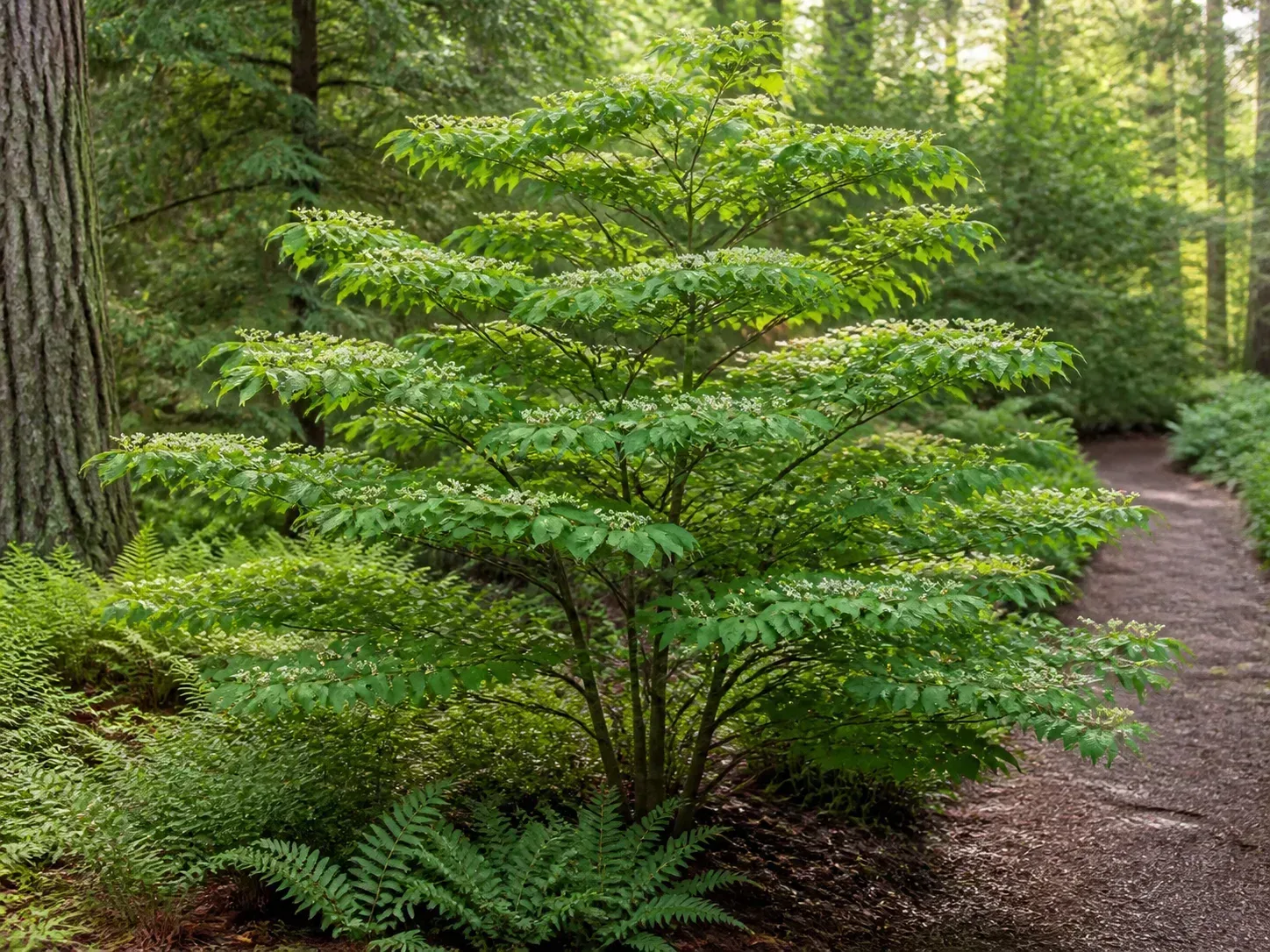
A four-step field test for any woody plant
When a plant label, a neighbor, and your own eyes disagree, use this sequence. It works best in winter or early spring when the structure is visible, but you can still inspect the base and growth habit during the growing season.
Start at the soil line
First, clear leaves or mulch gently enough to see the root crown. Count the main woody stems, then note where they divide. One thick stem that stays dominant for several feet points toward tree form. Several similar stems arising low points toward shrub form.
Do not count every twig. A shrub may have one older stem that looks trunk-like, and a tree may have several small shoots at its base. You are looking for the plant’s main framework, not every piece of growth. Basal shoots may be suckers, seedlings, or damage responses rather than evidence that the entire plant is naturally a shrub.
Check mature size and natural habit
Next, check the plant’s expected mature height and width for the exact species or cultivar. Compare that information with the plant in front of you, but do not assume the current nursery size is meaningful. A one-year-old tree in a container can be shorter than an established shrub, and a tightly clipped hedge can conceal a naturally loose form.
The RHS recommends choosing a shrub for the actual site—soil, light, moisture, wind, and frost—not simply for its flower color. Mature size belongs in that same decision. A shrub planted too close to a path may need constant shearing, while a tree planted under wires may eventually require risky clearance work.
Use leaves, bark, and flowers as supporting clues
Leaves, bark, flowers, fruit, and buds can confirm an identification, but they do not replace structural evidence. Shrubs may be evergreen or deciduous, broadleaf or needle-bearing, thorny or smooth-barked, flowering or primarily grown for foliage. There is no universal “shrub leaf.”
The same caution applies to bark. Young trunks and old shrub stems can both be smooth, rough, peeling, or gray. Flowers are excellent for identifying a genus or cultivar—pink azalea blooms and large rhododendron trusses are obvious clues—but they do not by themselves tell you whether the plant is a shrub or a small tree.
Judge the plant’s future, not just today’s shape
Ask what the plant is likely to do without corrective pruning. A shrub can be limbed up by removing lower stems. A tree can be cut back, browsed, or coppiced until it looks like a bush. If your goal is to select a plant for a narrow bed or beneath a window, its natural mature habit is more useful than its current silhouette.
This is also the step that prevents pruning mistakes. If you want a shrub to remain shrub-like, remove a few old stems at the base to renew it instead of repeatedly shearing the outer surface. If you want a shrub trained into a small tree, choose one promising leader early and accept that the form will require ongoing maintenance.
Shrubs vs. herbaceous perennials and annuals
“Perennial” only tells you that a plant lives for more than two growing seasons. It does not tell you whether the plant is woody. Shrubs are usually woody perennials, while peonies, hostas, daylilies, and many ornamental grasses are herbaceous perennials whose top growth dies back seasonally.
An annual completes its life cycle in one growing season, though a tender plant may survive longer in a frost-free climate. A biennial takes two seasons to flower and set seed. These life-cycle words answer how long the plant lives; shrub, tree, herb, vine, and groundcover describe how it grows and is structured.
The distinction changes maintenance. A dormant shrub still has a visible framework, so pruning cuts, branch collars, and old stems matter in winter. A herbaceous perennial may look empty after frost because its living crown is below ground. Cutting back the dead tops is not the same as removing a woody framework.
What is an herbal shrub?
An herbal shrub is a plant valued as an herb that also develops a woody, shrub-like structure. Rosemary, lavender, sage, and thyme can all complicate the old idea that an herb must be soft-stemmed. Penn State’s herb guide notes that modern use of “herb” includes both herbaceous and woody plants, including shrubs, vines, and even trees valued for flavor, fragrance, medicine, or other uses (Penn State on growing herbs).
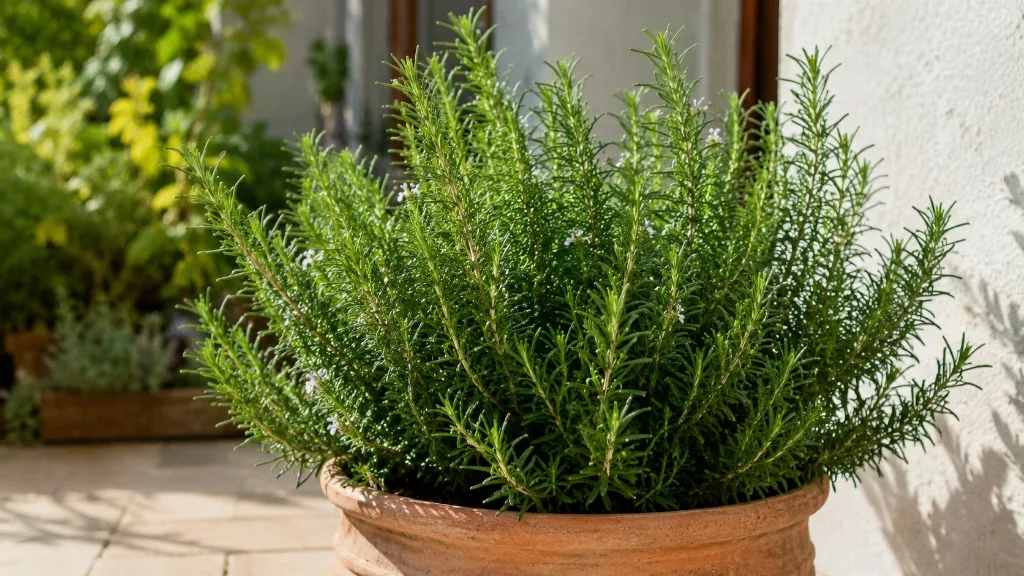
Rosemary is a useful example: it can form a woody evergreen mound with many stems, but gardeners still call it a culinary herb. Lavender may be woody at the base while producing tender green flowering shoots each season. That makes the plant a woody herb and, in many landscapes, a small shrub—not a contradiction.
Do not use the word “herb” as a stem test. Instead, inspect which parts persist. If a plant’s top reliably dies to the crown each winter, it is herbaceous even if it grows tall and looks shrub-like in summer. If the lower stems remain woody and support next year’s growth, it belongs on the woody side of the comparison.
Common shrub types and the jobs they do in a landscape
Shrubs are not one visual category. Their value comes from the range of forms they occupy. Deciduous shrubs lose their leaves but may contribute spring flowers, summer berries, fall color, or colorful winter stems. Evergreen shrubs keep foliage through winter and often provide year-round structure, screening, or a wind buffer.
Flowering shrubs such as azaleas, rhododendrons, hydrangeas, roses, camellias, and forsythias are chosen for seasonal display, but their flowers are only one part of the plant’s job. A shrub can also be a hedge, privacy screen, foundation anchor, wildlife shelter, slope stabilizer, fragrance plant, fruit producer, or background layer for herbaceous perennials.
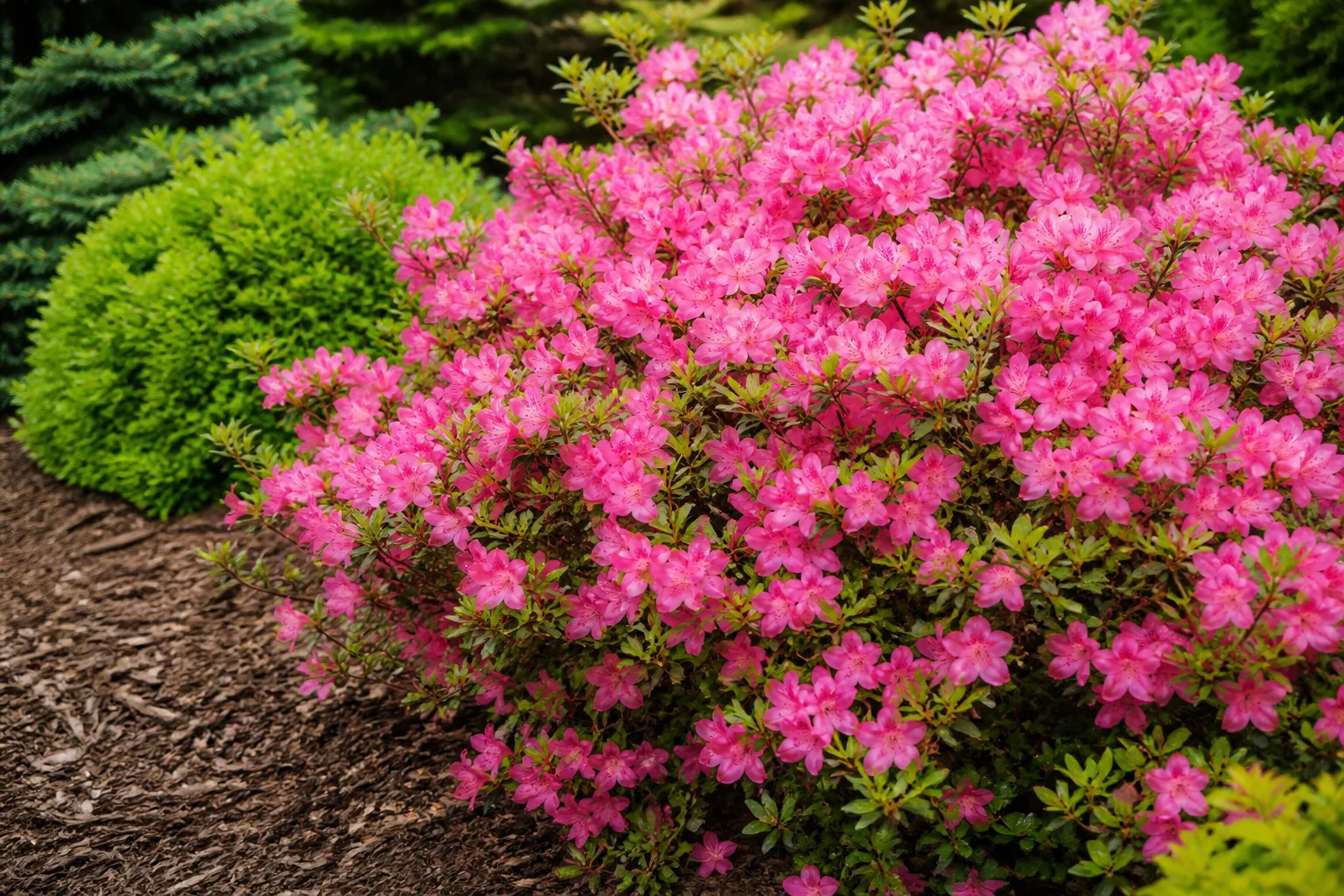
The University of Arkansas Extension groups shrubs by leaf retention, flowering, fruiting, and fall color, and emphasizes matching the plant to the site rather than treating “shrub” as a maintenance plan (Arkansas Extension’s ornamental shrub guide). That is the practical takeaway: two plants can both be shrubs while needing completely different soil, light, pruning, and climate conditions.
Exceptions that break the simple rule
Multi-trunk trees
Some trees naturally produce more than one trunk or are deliberately sold as multi-stem forms. Birch, serviceberry, dogwood, and Japanese maple may be grown this way. If the intended plant has a raised crown and tree-sized mature dimensions, multiple trunks do not automatically make it a shrub.
Tree-form shrubs
Many shrubs can be trained into a small tree by selecting one stem and removing competing stems over time. Rose, lilac, hydrangea, and some evergreen shrubs are commonly sold in standards or tree forms. The plant’s appearance has changed, but its underlying tendency to produce basal stems has not.
Training is a commitment, not a one-time haircut. New shoots may emerge from the base, and the selected trunk can become weak if cuts are poor or the plant is not suited to the form. If you want low maintenance, buy a cultivar whose natural shape already fits the site.
Subshrubs and plants at the boundary
Subshrubs are partly woody: the lower stems persist while the newest growth may die back in cold weather. Lavender can behave this way in a harsh climate, and some low-growing plants sit between a shrub and a groundcover depending on conditions. In borderline cases, the most useful answer is descriptive—“low, woody, spreading perennial”—rather than forcing a perfect label.
Size and environment can mislead you
Cold, drought, shade, poor soil, browsing, and repeated pruning can keep a tree small or make a shrub sparse. Conversely, a shrub in rich soil may exceed the size printed in a generic reference. Genetics sets the range, but environment and management determine where the plant lands inside it.
Conclusion
A shrub is best understood as a woody perennial with a naturally low, often multi-stemmed framework. “Bush” is usually an everyday description of a dense or rounded growth habit, while “tree” generally suggests a dominant trunk and an elevated crown. Mature height helps with planning, but it cannot settle every case by itself.
When you need to identify a plant, start at the soil line, trace the main stems, check the mature form, and use leaves, bark, flowers, and the plant’s history as supporting evidence. That method handles young trees, trained shrubs, multi-trunk trees, woody herbs, and subshrubs without relying on an arbitrary cutoff. It also leads to better planting and pruning decisions because you are responding to how the plant is built—not just what someone happened to call it.



