How to Get Rid of Ants in the House: Bait + Seal
Ants keep returning each spring? Use bait for the colony, clean the scent trail, and seal the route—plus know when carpenter ants need a pro.
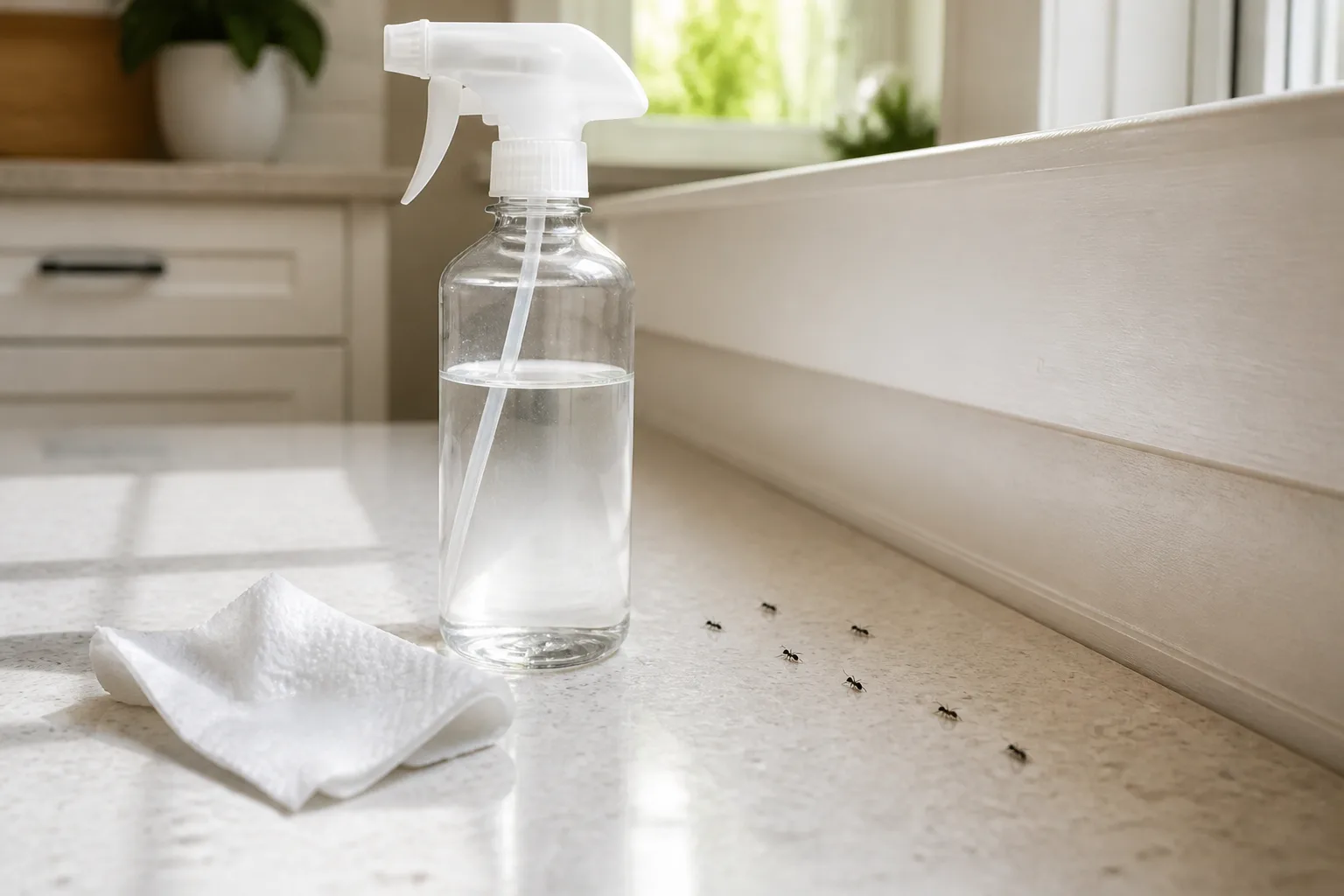
The most reliable home-ant combo is not “spray everything, then hope.” It is a sequence with three different jobs: slow-acting bait for the colony, trail cleanup or a short-lived repellent for the route ants are using, and exclusion to keep the next wave out. The order matters as much as the products.
If you see only a few scouts, start with inspection and cleanup. If a steady line is already moving along a baseboard, windowsill, sink cabinet, or door threshold, put a labeled bait station where the ants can reach it safely, leave the trail alone long enough for workers to carry the bait home, and only then wipe and seal the route. That approach is slower than a contact spray but far more likely to reduce the source of the traffic.
The Short Answer: Bait the Colony, Then Clean and Seal
For common nuisance ants, the useful combination is bait + sanitation + sealing. Peppermint spray can be an optional short-term barrier on a separate route, but it is not the part that eliminates a nest. UC IPM explains that worker ants collect bait and carry it back to the nest, where it can be shared with larvae and queens; that is why a slow-acting formula matters.
Here is the simple version:
- Watch the trail for a few minutes and identify where ants enter, what they are eating, and whether there are signs of moisture or wood damage.
- Remove exposed food, pet food, standing water, and sticky residue, but do not scrub the active route immediately if you are about to bait it.
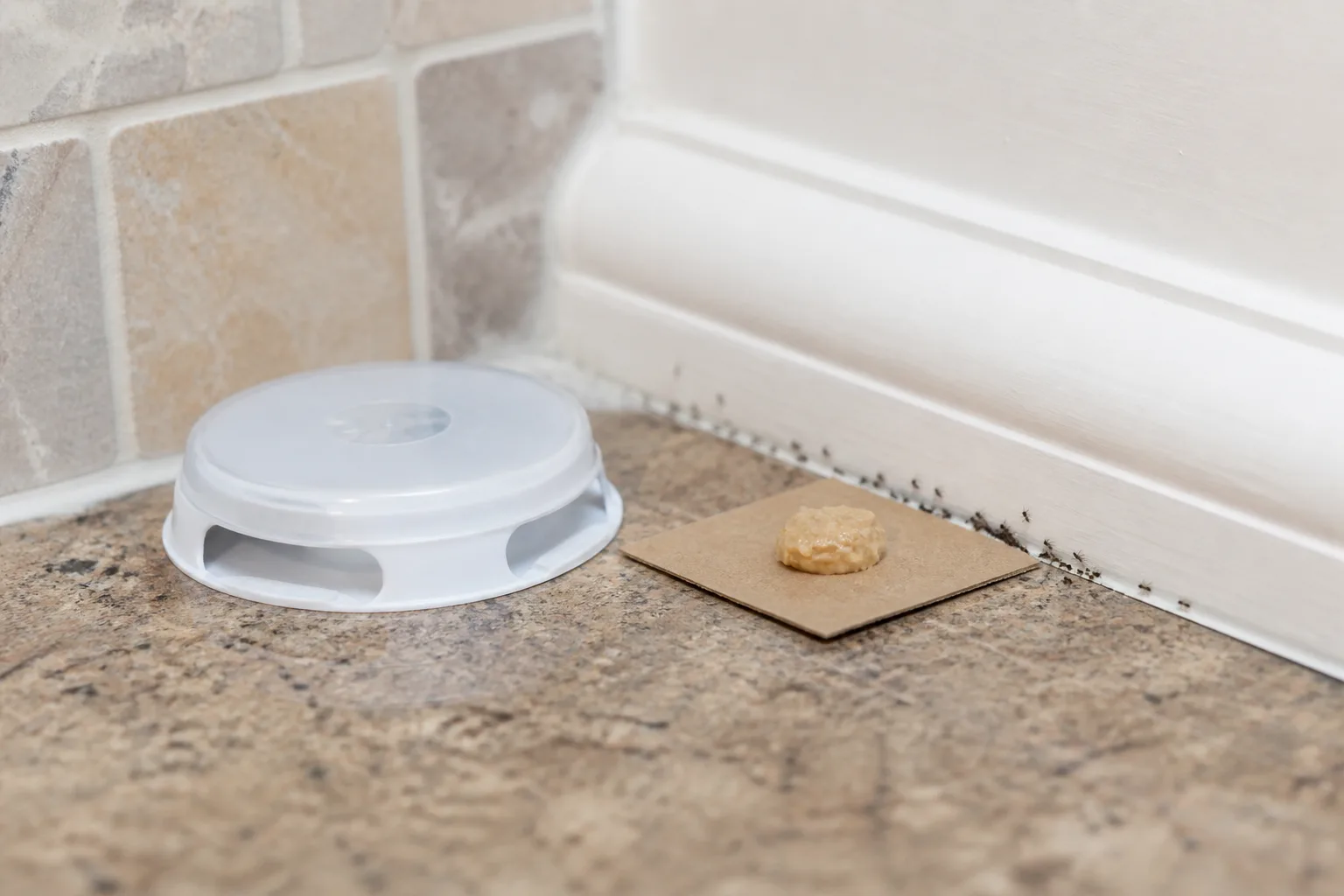
- Place a fresh, commercially formulated bait station beside the trail or near the entry point, never on a food-preparation surface and never where a child or pet can reach it.
- Do not spray insecticide or peppermint directly around the bait. Let the workers visit it and carry it away.
- Once activity is clearly declining, wipe remaining trails with soapy water, caulk the opening, repair moisture problems, and address outdoor nesting sites.
This routine handles the common situation in which ants are coming from an outdoor nest to an indoor food or water source. It needs to change if the insects are large carpenter ants, winged ants emerging indoors, or ants associated with persistent damp wood.
Why Spring Ants Show Up Indoors
Spring brings warmer surfaces, fresh plant growth, rain, and renewed foraging. An ant colony that was quiet or less visible during cold weather may send workers toward a sugary spill, pet bowl, leaky pipe, damp windowsill, or sheltered wall opening as soon as conditions improve. Missouri Botanical Garden notes that late winter and early spring are useful times to watch for indoor ant activity and to use bait when workers are actively foraging.
The ants you see are usually workers, not the entire colony. Killing those visible workers can make the counter look better for an hour, but it does not remove the queen, brood, or the outdoor nest. That is why a spring infestation often seems to disappear after a spray and then return through a different crack a few days later.
Food, Water, and Scent Trails
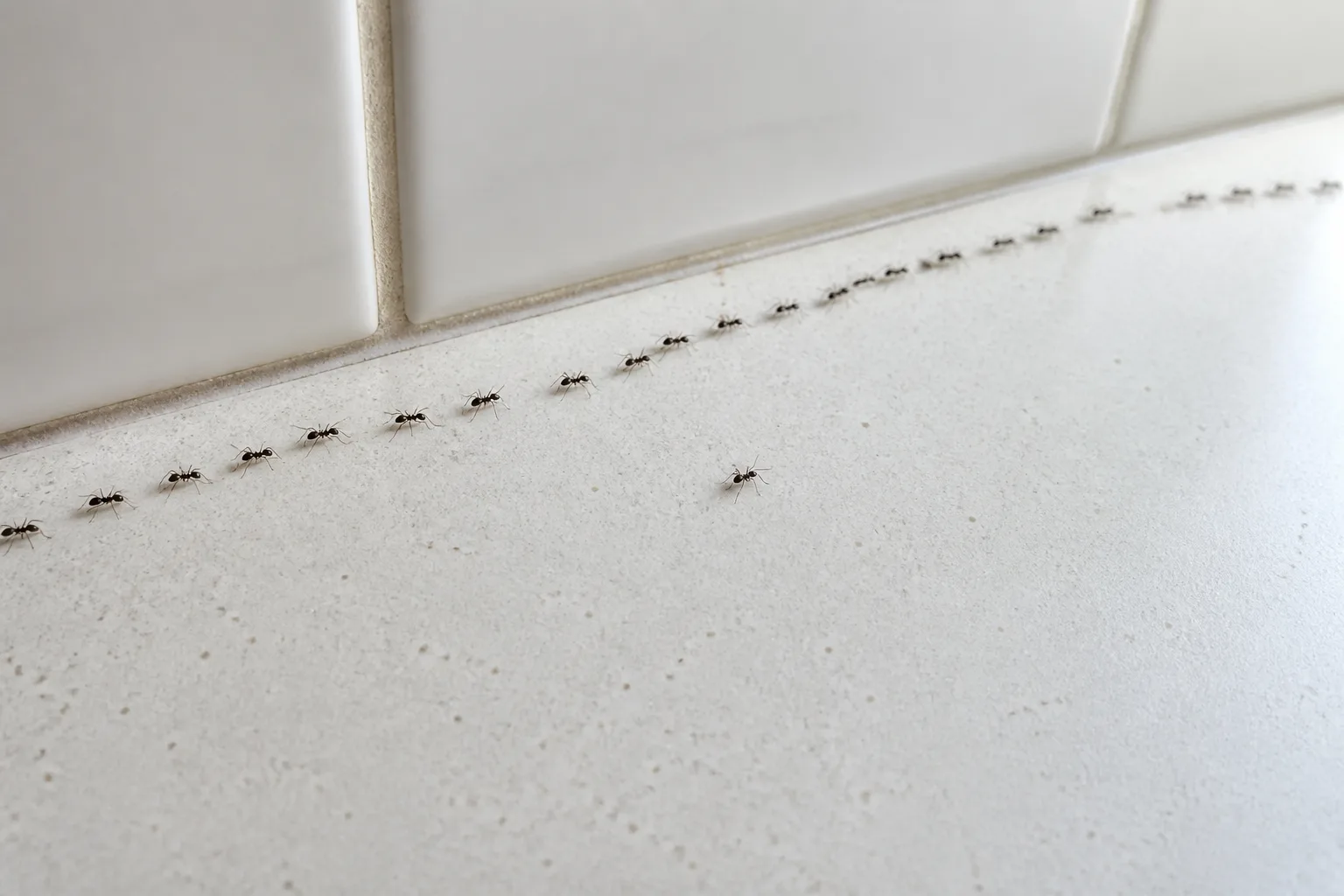
Ants do not need a messy kitchen to find a reason to enter. A thin film of syrup under a toaster, a damp sponge, a pet-food crumb beneath a cabinet, or condensation around a pipe can be enough to establish a route. Once a worker finds a useful resource, it leaves a chemical trail that helps other workers follow the same path.
The visible line is therefore valuable information. It tells you where to inspect, but it is also part of the baiting system: workers need to keep traveling between the food source and the nest so they can find and transport the bait. A quick wipe is excellent for immediate cleanup when you are not baiting; wiping at the wrong moment can make an otherwise good bait placement harder for ants to discover.
When the Ants May Be Carpenter Ants
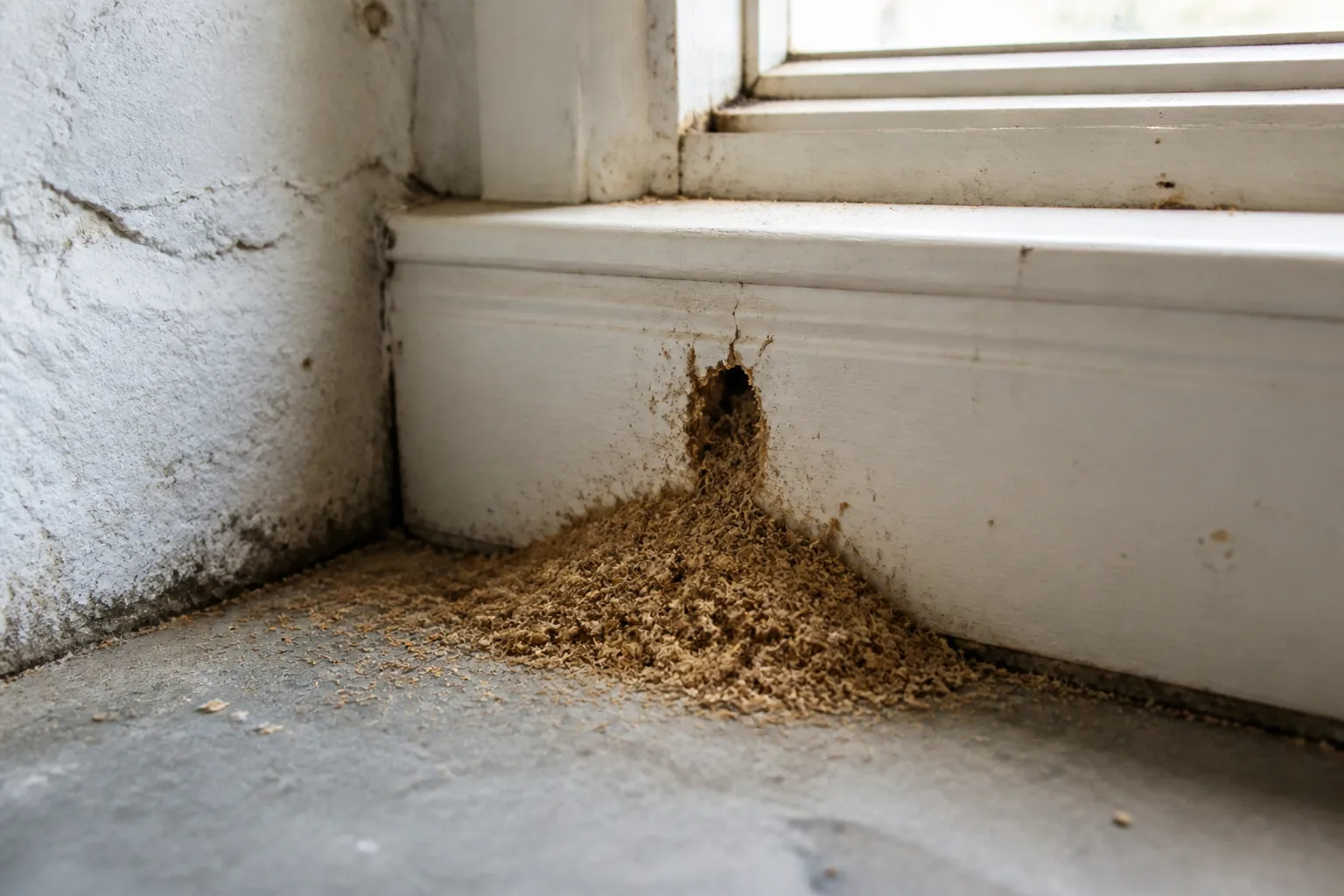
Size and behavior change the decision. Large dark ants—often roughly a quarter to a half inch long—especially when seen at night, near damp wood, or with coarse sawdust-like material nearby, deserve more investigation than a line of tiny kitchen ants. Carpenter ants excavate galleries in damp or decayed wood; they do not eat wood as food, but a hidden nest can point to a leak, rot, or a structural moisture problem.
Winged ants emerging from a wall, ceiling, window frame, or baseboard are another warning. They may be reproductive ants leaving a mature nest, and they should not be dismissed as a routine spring trail. University of Minnesota Extension recommends looking for moisture-damaged wood, coarse frass, damp plumbing areas, and nests in hollow doors, window frames, or wall voids.
The First 15-Minute Ant Inspection
Before buying a spray, spend fifteen quiet minutes watching. Do not crush every ant as soon as you see it; let several workers move naturally so you can learn the route. A phone flashlight, a small piece of paper for notes, and a camera zoom are usually enough.
Follow the Trail Without Destroying It
Start at the most concentrated group and follow the line in both directions. Look for the point where it disappears under a baseboard, through a cabinet seam, behind an appliance, around a pipe, under a door, or through a window frame. Then look outside that same wall or threshold for a crack, mulch pocket, plant stem, branch, firewood stack, foundation gap, or damp area.
Notice what the ants are carrying and what they stop to investigate. Many small household ants prefer sweet liquids at one time and protein or oily food at another. NC State Extension advises choosing bait by the food the ants accept rather than assuming that every species will take the same formula.
Do not put a homemade bait or a liquid puddle directly on a countertop, beside a sink drain, or next to a pet bowl. If you need to observe bait preference, place a tiny non-toxic food test on disposable paper away from food-preparation surfaces, remove it after the observation, and use a labeled product for the actual treatment.
Check Windows, Plumbing, Cabinets, and Outdoor Edges
Inside, inspect under sinks, around dishwasher and refrigerator legs, behind trash bins, along pipe penetrations, and at the corners of window trim. Outside, check the foundation, hose bibs, gutters, downspouts, irrigation leaks, low branches, stumps, stacked firewood, and thick mulch.
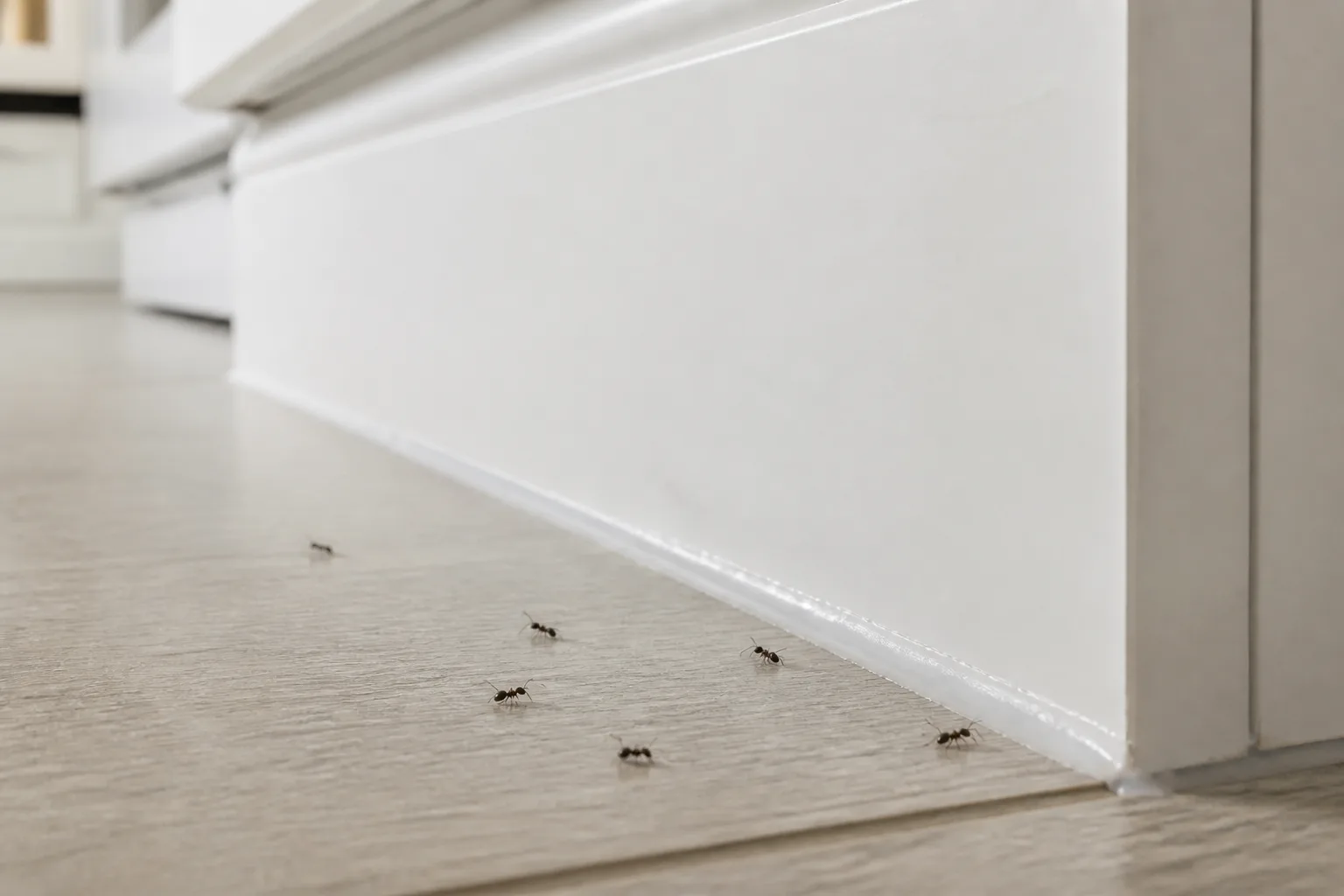
Ants often use edges because edges are protected and easy to follow. A trail that seems to “come from nowhere” is frequently traveling through a wall void or along a utility line before appearing at the first warm, food-rich room. If the route crosses a bathroom or laundry area, treat moisture as a clue rather than an unrelated housekeeping issue.
How Ant Bait Actually Works
An ant bait combines an attractant with a delayed insecticide. The worker has to survive long enough to return to the nest and share it; a fast contact poison that kills at the station may produce a pile of dead ants while leaving the colony untouched. UC IPM’s ant guidance describes bait as a key colony-management tool because the material is transferred beyond the individual worker.
Choose the Bait Ants Will Eat
Start with a ready-to-use station, gel, or liquid bait labeled for the site and ant type you are managing. Sugar-loving ants often accept sweet liquid baits, while other species or seasons may favor protein or oily formulations. If the ants ignore one bait after you have followed the label and given it a reasonable trial, move it closer to the trail or try a different attractant rather than scattering more of the same product everywhere.
Freshness matters. Liquid bait can dry out, and food-based bait can become less attractive as it ages. Check the station on the schedule given by the manufacturer and replace it when consumed, dried, contaminated, or no longer attractive. Never increase the amount or make a stronger mixture because more insecticide is not automatically better for colony transfer.
Avoid treating “natural” as a synonym for harmless. Borate, boric acid, fipronil, hydramethylnon, and other actives have different labels, concentrations, and use restrictions. Choose a product registered for the location, read the label before opening it, and do not put loose bait where children, pets, wildlife, or food-contact surfaces can reach it.
Place It Without Interrupting Foragers
Place bait beside an active trail, near an entry point, or in a protected location where ants are already traveling. The station should be easy for ants to find but difficult for people and animals to touch. In a kitchen, that often means a crack beside or behind an appliance, under a cabinet toe-kick, or another label-approved spot—not on the counter where food is prepared.
Expect the trail to look busier at first. More workers may arrive because the colony is recruiting for a valuable food source. That is not proof that the bait failed; it is often the part that looks worst before it looks better. Do not wipe the trail, spray the ants, move the station repeatedly, or seal the crack while workers are still using the placement.
Indoor bait is not always the best first move. If you can locate the outdoor route, UC IPM recommends using outdoor baiting and exclusion to reduce the chance of drawing more ants indoors. Use indoor stations when the infestation is serious, the entry point cannot be found, or the label specifically supports the placement you need.
Where Peppermint Spray Fits—and Where It Does Not
Peppermint is best understood as a temporary repellent or trail-disrupting tool, not a colony treatment. Certain plant-based oils can provide strong contact activity with limited residual effect, and a peer-reviewed study of European red ants found peppermint oil had repellent potential in controlled pot and field tests. That result is useful evidence that peppermint can change ant behavior, but it does not prove that one household spray will eliminate every indoor species or nest.
The practical role is narrow: use a labeled peppermint product, or a carefully diluted product made for the intended surface, on a cleaned entry edge after the baiting phase is complete. Apply it to non-food-contact surfaces such as a door threshold or window trim only if the product label permits that use. Reapply only as directed; scent barriers fade with cleaning, ventilation, sunlight, and rain.
Use Repellent After Baiting, Not Beside It
Do not spray peppermint, vinegar, pyrethroids, or another repellent directly on the trail leading to bait. UC IPM warns against spraying pesticides around baits or on trails leading to them because the treatment can repel workers before they pick up the material. This is the key correction to the popular “spray plus bait at the same time” routine.
If ants are on a surface where you need immediate relief, use a damp soapy cloth to remove food residue and the trail, then place bait on a separate, still-active route or wait for a new route to establish. If the goal is colony control, tolerate a short period of visible activity. If the goal is simply to keep a few scouts off a clean threshold after the colony has been addressed, a repellent may have a role.
The Pet and Surface-Safety Check
Keep essential oils away from pets’ mouths, bedding, food bowls, and skin. ASPCA lists mint as toxic to dogs, cats, and horses when essential oils are involved, with vomiting and diarrhea possible after large ingestions. A spray intended for a baseboard is not a pet treatment, and a pet-safe label claim still does not mean a pet can lick a wet surface.
For any pesticide or repellent, follow the product label, remove food and water bowls, ventilate as directed, and keep children and animals away until the label says the area is safe. EPA guidance also recommends baits as a lower-exposure first chemical defense when they are kept out of reach and used correctly. If a child or animal may have swallowed bait or concentrated oil, contact a medical professional, veterinarian, or poison-control service instead of waiting for symptoms.
The Cleanup-and-Seal Sequence
Once bait traffic begins to slow—often within several days, sometimes longer—finish the job in the order below. The goal is to remove the reward, erase the map, and close the door the next colony would use.
Remove Food and Water
Wipe syrup, juice, grease, and crumbs from cabinet edges and appliance seams. Empty indoor food-waste bins regularly, rinse recycling, store sugar and pet food in tight containers, and do not leave pet food sitting out overnight if ants are using it as a predictable meal.
Then look for water. Dry the sink area overnight, repair dripping faucets, replace a damp cabinet liner, improve ventilation, and investigate condensation or leaks around dishwashers, refrigerators, pipes, and windows. Ant control that ignores a reliable water source often becomes a yearly loop.
Erase the Trail and Close the Route
After the colony is no longer actively feeding at the station, vacuum remaining ants or wipe the path with soapy water. A thorough wipe matters more than a strong fragrance because it removes the chemical route rather than simply covering it for a few hours. Do not pour cleaner into wall voids, electrical openings, or drains where it can create a different problem.
Seal the gap only after ants have stopped using it. Use the right material for the opening: caulk for a narrow crack around trim, a door sweep for the bottom of a door, repair or replacement for a damaged screen, and an appropriate seal around pipes or utility penetrations. A visible bead of caulk is useful only if it closes the actual path instead of sealing one side while leaving a wider route behind the cabinet.
Make the Exterior Less Inviting Before Next Spring
Spring prevention begins outdoors because many house-invading ants nest in soil, mulch, wood piles, stumps, wall voids, or damp landscape edges. Keep firewood elevated and away from the foundation, prune branches and shrubs that touch the house, correct leaking gutters and downspouts, and reduce direct earth-to-wood contact. Do not try to eradicate every ant in the yard: ants have ecological roles, and outdoor control should focus on routes into the building or valuable areas.
Inspect plants touching the house for aphids, scale insects, whiteflies, and sticky honeydew. Ants may protect honeydew-producing insects because the sugary residue is food, so an ant problem around a shrub can sometimes be an insect-on-plant problem in disguise. Treat the plant pest according to its own identification and label, rather than spraying the whole garden with a blanket ant insecticide.
Use outdoor bait only when ants are active and only in stations or placements the label allows. Put it near trails, nest openings, or likely entry routes, keep it away from children, pets, pollinators, and water, and check it regularly. An outdoor station close to the route can reduce indoor pressure; a random station at the far end of the yard is less likely to change the path into your kitchen.
What to Expect Over the Next Two Weeks
Ant control is a monitoring process, not a one-evening test. A useful timeline looks like this:
- First day: inspect, remove obvious food and water, place fresh bait, and record the route. Some increase in activity is normal.
- Days two through five: workers may continue feeding, the trail may shift slightly, and bait may need replacement if it dries or is consumed. Do not spray near it.
- Around one week: many nuisance-ant trails should be noticeably smaller if the bait matches the ants and the colony can reach it. Keep watching for a second route.
- One to two weeks: clean and seal routes that have gone quiet, then inspect the same room and exterior wall after rain or a warm spell.
- After two weeks: if the same heavy traffic continues, try a different labeled bait formulation, reassess the species and entry point, and consider professional help rather than adding random sprays.
There is no universal deadline because species, colony size, nest location, weather, and bait acceptance differ. University extension guidance commonly warns that complete control can take a week or more, and larger or multi-nest infestations may take longer.
When This Combo Is Not Enough
Call a licensed pest-management professional when you see winged ants emerging indoors, repeated large carpenter ants, coarse frass, rustling in walls, damage around damp wood, or trails that continue despite correct baiting and exclusion. A professional can inspect wall voids, moisture, structural wood, and multiple nests without turning the entire building into a spray zone.
Escalate sooner if anyone in the home has asthma or chemical sensitivity, if children or pets can reach every possible bait location, or if the infestation is in a food-service area where sanitation and pesticide placement have stricter requirements. Keep product containers and labels available so a professional knows what has already been used.
Do not solve a bait failure by mixing several insecticides, pouring borax into cracks, flooding a wall with liquid, or sealing active ants inside a void. These shortcuts can create exposure, drive ants into new rooms, contaminate surfaces, or hide a moisture problem that needs repair. The right next step is better identification and placement, not simply a stronger smell.
Conclusion
The spring ant routine that holds up best is bait first, cleanup second, sealing third. Slow bait gives workers time to carry the food back to the colony; cleanup removes the food and scent map; exclusion and moisture repairs make the house less useful to the next foraging wave.
Peppermint spray can help keep a cleaned threshold quiet, but it should stay away from an active bait route and should never be treated as a colony killer. If the ants are large, winged, tied to damp wood, or still pouring out after a careful two-week plan, stop experimenting with household sprays and investigate the nest or call a professional.