Swedish Ivy Care: Light, Water, and Pruning
Learn how to grow Swedish ivy with the right light, wet-dry watering, airy soil, pruning, propagation, and fixes for yellow leaves and pests.
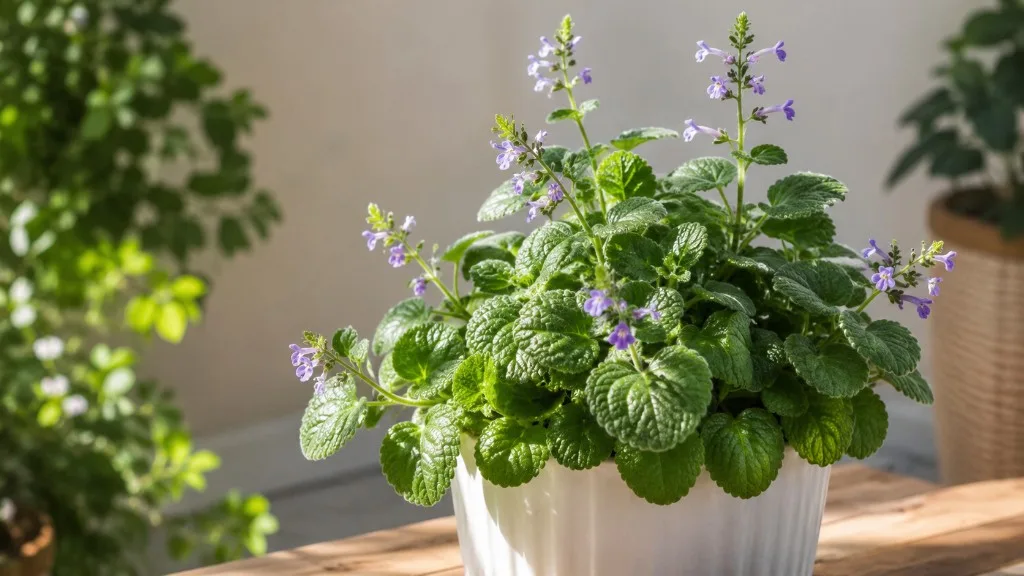
Swedish ivy (Plectranthus verticillatus) is an easy, fast-growing trailing houseplant when two conditions line up: the leaves receive enough filtered light, and the roots get both water and air. It is not a true ivy, and it is not a plant to water automatically every Sunday. Give it a bright place, let the mix dry slightly before a thorough soak, and pinch the tips when you want a dense basket instead of a few long vines.
The most useful Swedish ivy care rule is this: light sets the plant’s water demand. A bright, actively growing basket may need frequent checks, while the same plant in a dim winter room stays wet much longer. The sections below turn that rule into a practical routine, then cover propagation, repotting, outdoor growing, pet safety, and the symptoms that most often confuse new growers.
Swedish Ivy Care at a Glance
| Care factor | Reliable starting point | Adjust when |
|---|---|---|
| Light | Bright, filtered or indirect light; gentle morning sun is usually fine | Leaves bleach or stems stretch |
| Water | Soak when the top inch of mix is dry, then drain fully | The pot is still heavy or the room is cool and dim |
| Soil | Loose, well-drained houseplant mix with added perlite | Mix stays wet for many days or collapses into sludge |
| Temperature | Average indoor temperatures; protect from prolonged cold | Night temperatures approach 50°F (10°C) |
| Humidity | Average home humidity is usually adequate | Dry heat brings mites or crispy margins |
| Fertilizer | Balanced liquid feed about monthly in active growth | Freshly repotted, dormant, or stressed |
| Pruning | Pinch tips for branching; cut long bare stems back to nodes | You want a cascade, a fuller crown, or recovery |
| Outdoor use | Summer container plant in bright shade or partial shade | Frost, cold nights, or harsh afternoon sun are forecast |
These are starting points, not commands. A small terracotta pot in a hot, bright room can dry in a few days; a large plastic hanging pot several feet from a window may still be wet after ten days. Lift the container, feel the mix, and look at the leaves before you decide.
Identify Swedish Ivy Before You Copy Its Care
The plant sold as Swedish ivy has glossy, rounded leaves with scalloped or crenate edges and soft, often slightly succulent stems. The leaves grow in opposite pairs, and the stems first rise before arching under their own weight. Small white, pale pink, or pale mauve flowers can appear on loose spikes, but the plant’s main value is its foliage and trailing habit.
The name causes genuine confusion. Swedish ivy is in the Lamiaceae, or mint family, rather than the ivy family Araliaceae. The Royal Horticultural Society lists Plectranthus australis as a misapplied synonym of Plectranthus verticillatus, while Kew’s Plants of the World Online records the older Ocimum verticillatum name as a synonym of the accepted species. If a nursery tag uses either P. australis or P. verticillatus, compare the leaves and stems before assuming you have a completely different care problem.
There is another lookalike trap. The silver-marked plant sometimes sold as Swedish ivy may be Plectranthus oertendahlii, a different species. SANBI’s PlantZAfrica profile also points out that the familiar hanging-basket trade name is not always applied consistently. This matters most when you are comparing flower timing, leaf texture, or a plant that reacts differently to humidity. For ordinary houseplant care, bright filtered light and a draining mix remain sensible defaults, but save the label if you want to identify a cultivar later.
The plant’s natural history explains its behavior. SANBI describes P. verticillatus as a semi-succulent perennial groundcover from woodland and forest margins in southeast Africa, where it does not tolerate frost. Missouri Botanical Garden lists it as a fast-growing perennial for part shade, medium moisture, and well-drained soil. Indoors, that becomes a soft-stemmed trailer that likes regular moisture but not a permanently wet root ball.
Give Swedish Ivy Bright, Filtered Light
Place Swedish ivy near a bright east-facing window, on a north-facing sill with good daylight, or a few feet back from a south- or west-facing window behind a sheer curtain. A little gentle morning sun can improve compact growth, but strong afternoon sun through glass can bleach leaves and crisp the edges. Outdoor plants need even more care with exposure: light shade or dappled shade is safer than assuming an indoor plant can take full summer sun.
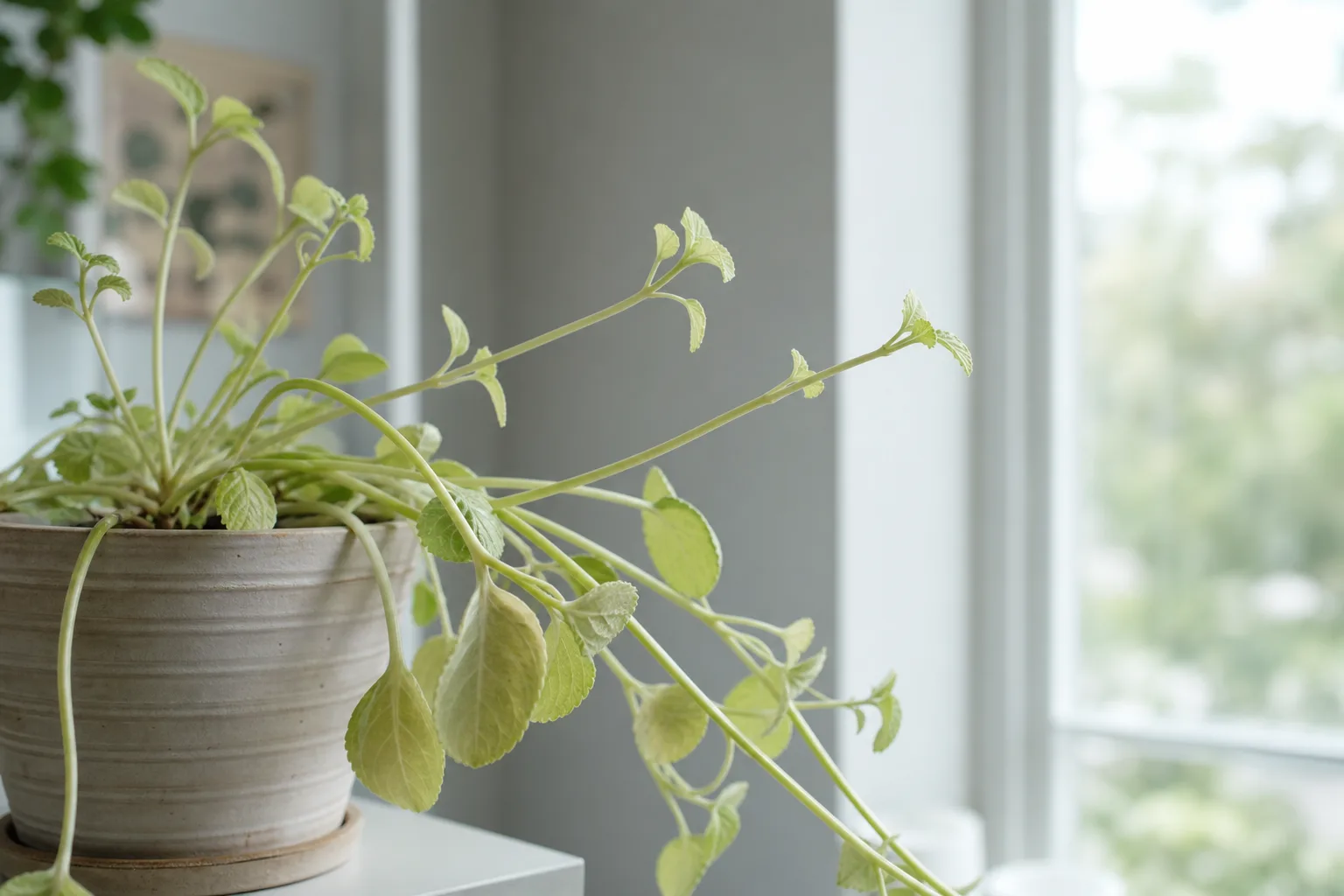
The plant tells you when the light is too weak. Look for long spaces between leaf pairs, smaller new leaves, stems leaning toward the window, and a crown that thins while the ends continue to lengthen. This is not usually a fertilizer shortage. Move the plant closer to useful daylight or add a suitable grow light before you start cutting it back; pruning a dim plant only leaves you with fewer leaves and the same low-light problem.
Too much light has a different signature: pale or bleached patches on the window-facing side, dry brown margins, curling, or drooping that does not improve when the soil is appropriately moist. Damaged tissue will not turn green again, so judge the correction by the next leaves. Make changes gradually if the plant is moving from a shaded nursery or a dim interior to a bright window.
Light also changes the watering interval. More usable light means more photosynthesis, more growth, and usually faster drying. Less light means slower growth and a wet pot for longer. That is why a “weekly” watering schedule works briefly for some homes and quietly causes root trouble in others.
Water by Soil Condition, Not by Calendar
During active growth, water when the top inch of potting mix feels dry. Pour slowly over the surface until water runs from the drainage holes, allow the pot to drain, and empty the saucer or cachepot. UF/IFAS Gardening Solutions gives the same practical starting rule and emphasizes that Swedish ivy should never sit in water. The goal is a fully moistened root ball followed by a modest dry-down—not repeated sips that wet only the surface.
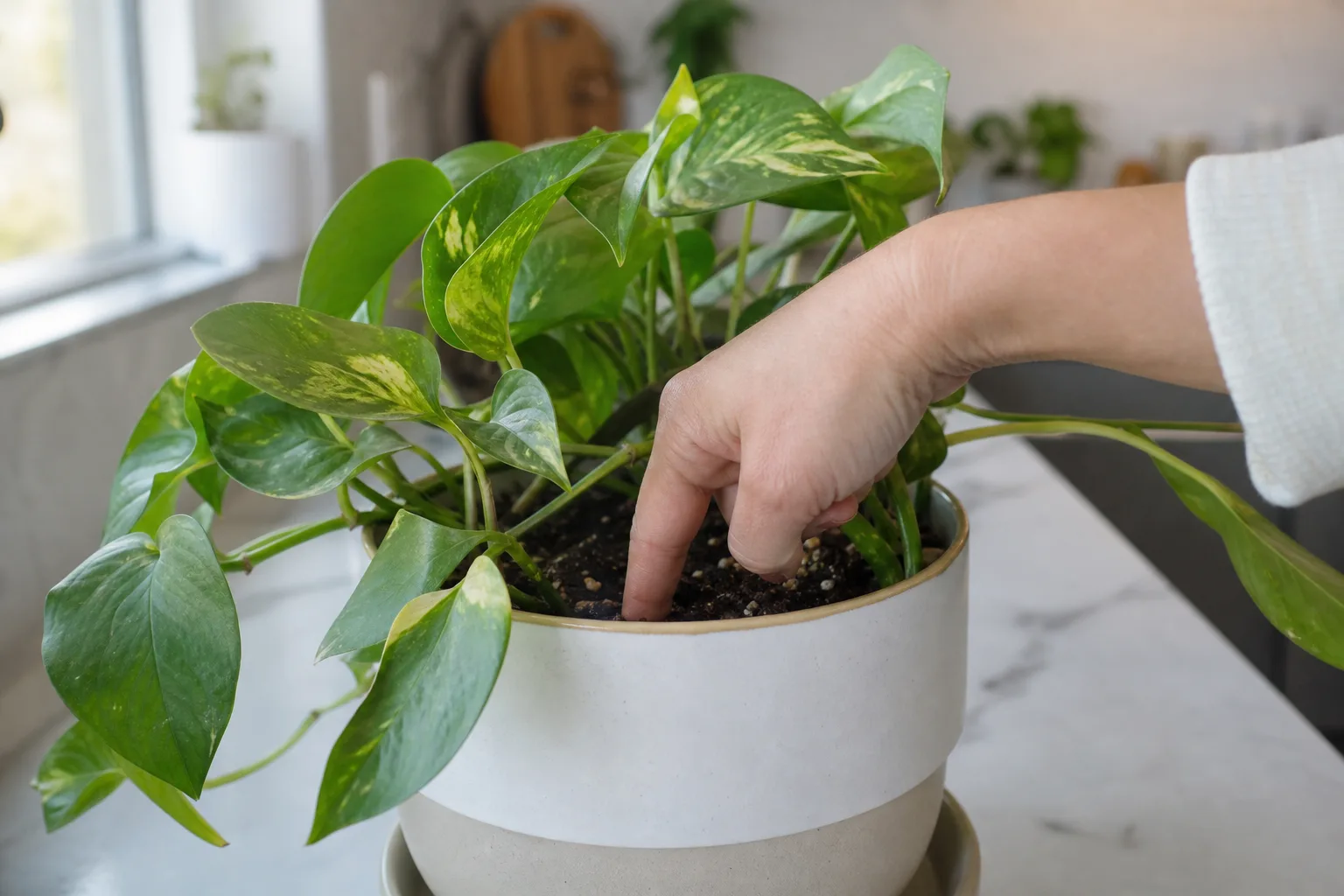
Use three checks together: finger depth, pot weight, and leaf firmness. A dry, light pot with slightly soft leaves is ready for water. A heavy pot with soft leaves is not automatically thirsty; it may have roots damaged by excess moisture. If water races through the pot, the mix may be hydrophobic or the root ball may be severely crowded, so soak more slowly and plan a root-zone inspection instead of simply pouring more often.
Water quality is rarely the first Swedish ivy problem to solve. Ordinary tap water is generally workable, but very hard water can leave a mineral crust over time. If you see white deposits, flush the pot with plain water on a watering day and remove the runoff. Do not confuse a surface salt crust with a reason to water more often.
In fall and winter, the plant usually uses water more slowly because daylight, temperature, and growth all decline. Check the mix more deeply before watering and stretch the interval when the root ball remains cool or damp. A bright heated room can still dry a basket quickly, while a cold windowsill can leave a large plastic pot wet for weeks. The correct winter adjustment is observation, not a fixed number of days.
If the leaves wilt, check the pot before you reach for the watering can. Wilting on a light, dry pot should improve after a thorough drink. Wilting on a heavy wet pot, especially with yellow lower leaves or a sour smell, points toward root stress. Watering the second plant can rescue it; watering the first can finish it.
Use an Airy Mix and a Pot That Drains
Use a quality indoor potting mix that holds some moisture but does not compact. A practical starting blend is about three parts houseplant mix to one part perlite, pumice, or another aerating ingredient. SANBI describes a rich, well-drained mix and allows the surface to dry slightly between waterings; Missouri Botanical Garden likewise specifies humusy, medium-moisture, well-drained soil. The shared principle is more important than a perfect recipe: roots need air spaces after water drains away.
Choose a pot with a real drainage hole. A decorative cover pot is fine only if you can lift the inner pot out to water and drain it. Do not put gravel in the bottom as a substitute for drainage; it reduces the depth available for roots without removing the perched wet zone that causes trouble. Avoid heavy garden soil indoors because it compacts and dries unevenly in a container.
Terracotta dries faster than glazed ceramic or plastic, which can be useful for a grower who tends to overwater and inconvenient for someone who often forgets. Hanging baskets also dry differently from floor pots because warm air moves around them. Let the container type change your checking rhythm rather than changing the plant’s basic watering target.
Balance Temperature, Humidity, and Airflow
Average indoor temperatures suit Swedish ivy. Aim for a stable room rather than chasing a narrow number, and protect the plant from cold drafts, heating vents, and hot glass. Brief cool exposure may not kill it, but prolonged temperatures near 50°F (10°C) can slow growth and make wet soil more dangerous. SANBI is clear that the species does not tolerate frost, and UF/IFAS recommends bringing it in before freezing weather.
Average household humidity is usually enough. If winter heating dries the air and the leaves develop crisp margins or spider mites appear, group plants, run a clean humidifier, or move the plant away from the hottest dry airflow. A pebble tray may add a small local effect, but it cannot compensate for a pot that stays waterlogged, and misting is temporary. Air movement matters too: crowded, constantly damp foliage dries slowly and is more vulnerable to leaf-spot problems.
Humidity is not a replacement for light. A dim, soggy Swedish ivy will not become healthy because the room is more humid. Fix the order: establish useful light, correct the watering decision, then adjust humidity if the room is genuinely dry.
Fertilize for Foliage and Occasional Flowers
Feed during spring and summer, when the plant is making new stems, with a balanced liquid houseplant fertilizer diluted according to its label. A monthly application is a conservative starting point. Water the plant normally before feeding if the mix is very dry, because fertilizer salts against dehydrated roots can burn them. Do not feed a plant with mushy roots, severe pest damage, or a recent emergency repot.
Most indoor growers want leaves and branching, not a heavy flower display. Too much nitrogen can push soft, leafy growth while discouraging flowering, and excess fertilizer can leave salts in the mix. If blooms matter to you, keep the plant bright and healthy first, avoid overfeeding, and remove spent flower spikes so the plant can return energy to new shoots. Do not chase flowers with strong fertilizer while the plant is light-starved or root-stressed.
Fresh commercial mix often contains enough nutrition for a newly potted plant to settle. Reduce or pause feeding after repotting, then resume only when new growth is visible. Brown margins, white crust on the mix, or wilting despite moist soil can all be reasons to flush salts and reassess the dose.
Prune for a Cascade or a Fuller Basket
Pruning is how you choose Swedish ivy’s shape. For a long cascade, allow healthy stems to extend and trail over the edge. For a compact, bushy plant, pinch the soft growing tip just above a leaf pair. Removing the tip redirects growth toward side buds, so repeated light pinching creates more branches over time.
Do not use pinching as a substitute for light. If the internodes are already long and the crown is sparse, first improve placement, then cut the longest bare sections back to a leafy node. The new growth will be fuller only if it develops under brighter conditions. Swedish ivy tolerates a substantial cutback, but a severely stressed plant is better handled in stages so it retains enough leaves to recover.
Remove yellow, dead, or damaged leaves with clean scissors. After flowering, trim spent spikes and lightly shorten stems if the plant has become uneven. Save firm green tips for propagation. Avoid cutting every stem at the same height; varied cuts above different nodes produce a more natural basket and reduce the “flat haircut” look.
Propagate Swedish Ivy From Stem Cuttings
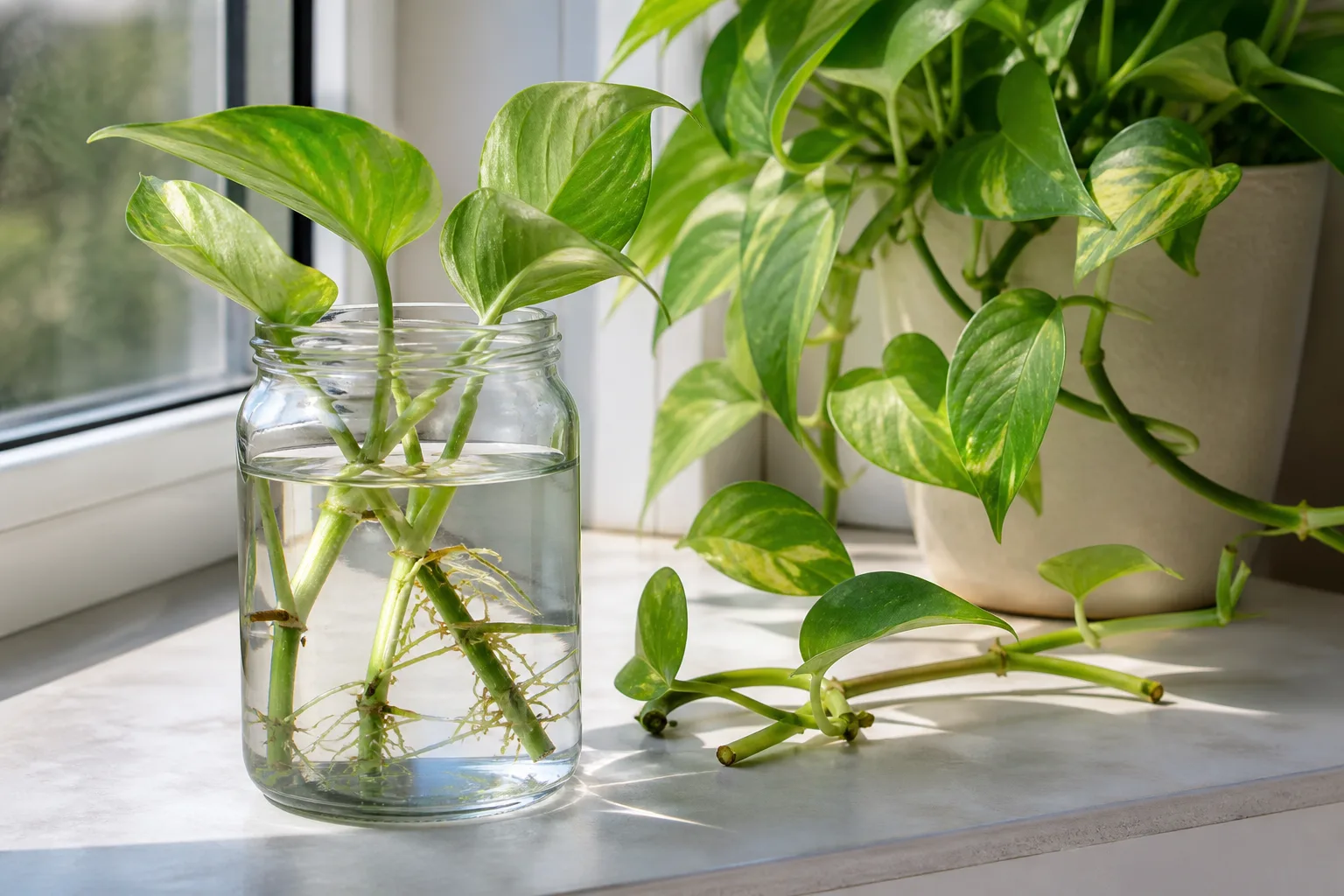
Stem cuttings are the easiest way to make more Swedish ivy and to rescue healthy upper growth when the parent has root rot. Choose a firm, non-flowering stem with several leaves. Using clean scissors, cut just below a leaf node, making a cutting roughly 3–6 inches long. Remove the lower leaves so no foliage sits in water or below the soil surface.
For water propagation, place one or two bare nodes under room-temperature water in a clean glass. Keep the leaves above the water, place the glass in bright indirect light, and change the water when it becomes cloudy—weekly is a useful upper limit, and more frequent changes are sensible in warm rooms. Blooming Expert’s practical Swedish ivy guide likewise recommends clean water and moving rooted cuttings into mix when roots are short and manageable. Roots commonly appear within two to four weeks, though cool or dim conditions take longer. Pot the cutting once the roots are about 1–2 inches long rather than waiting for a tangled mass.
For soil propagation, insert the bare nodes into a small pot of lightly moist, well-drained mix. Firm the mix around the stem, keep it evenly moist but never saturated, and provide bright indirect light. A loose clear cover can slow moisture loss, but it should not touch the leaves and needs ventilation. New growth and gentle resistance when you tug the cutting indicate that roots are forming.
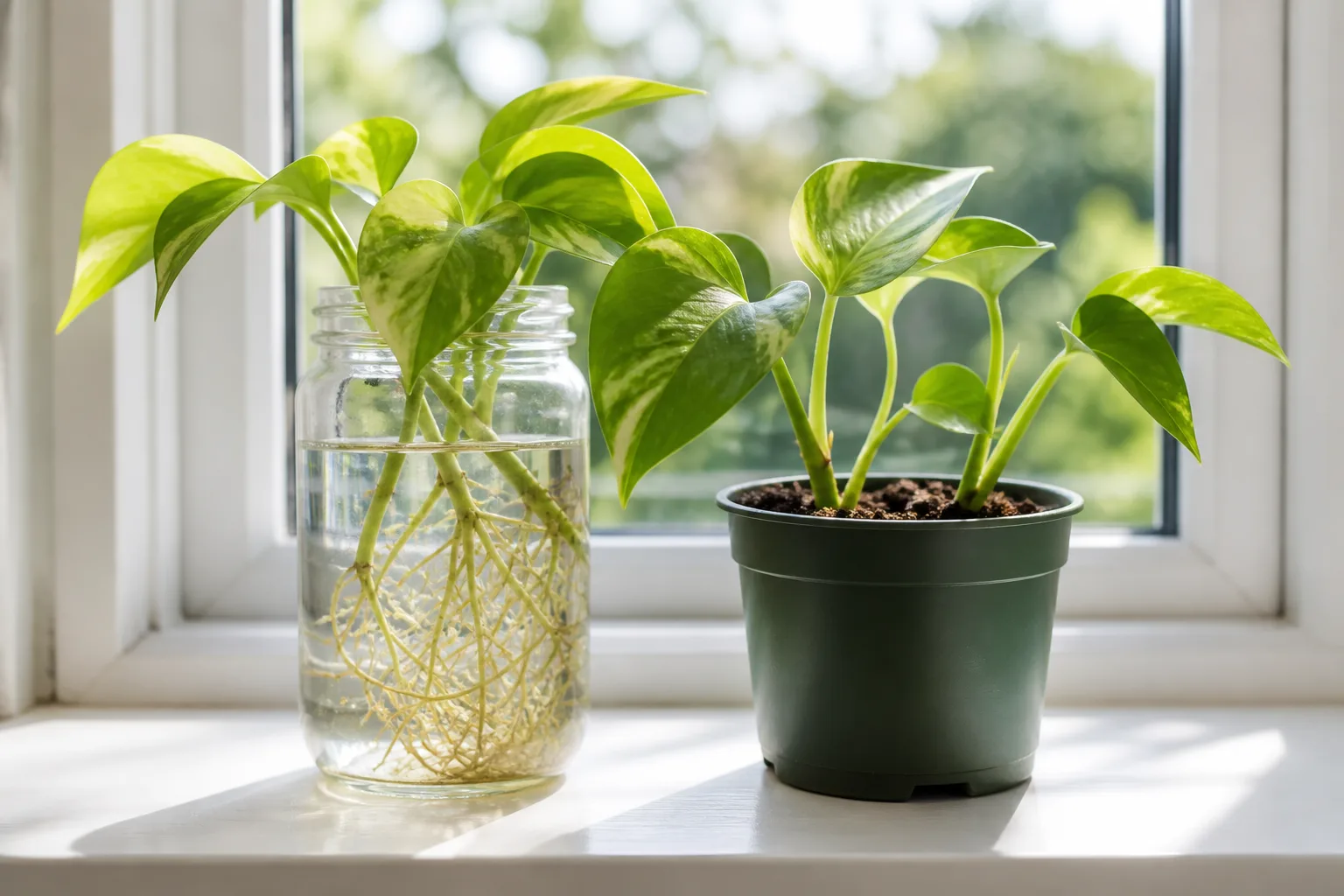
Water or Soil: Which Propagation Method Is Better?
| Method | Strength | Main risk |
|---|---|---|
| Water | Roots are visible; simple for beginners; useful when you are rescuing tips | Cloudy water, submerged leaves, and long roots can lead to rot or a difficult transition |
| Soil | Roots develop in their final medium; less transition shock after potting | Root progress is hidden; excess moisture can rot an unrooted stem |
Water is the better teaching method because you can see what is happening. Soil is often the better production method when you already understand moisture control and want to avoid moving water roots into mix. Either way, the node is non-negotiable. A leaf without a node can remain green for a while but cannot produce the new root-and-shoot structure you need.
Pot several rooted cuttings together if you want a full hanging basket quickly. One cutting can become a healthy plant, but it will look sparse until side shoots develop. Three to five compatible cuttings around the pot’s edge create a denser starting framework without burying a tiny root system in an oversized container.
Repot When Roots or Mix Are Limiting Growth
Repot in spring or early summer when roots circle the pot, emerge from the drainage hole, the mix has collapsed, or the plant dries unusually fast despite good care. A healthy Swedish ivy does not need a larger pot simply because the calendar says two years have passed. Check the roots and the mix first.
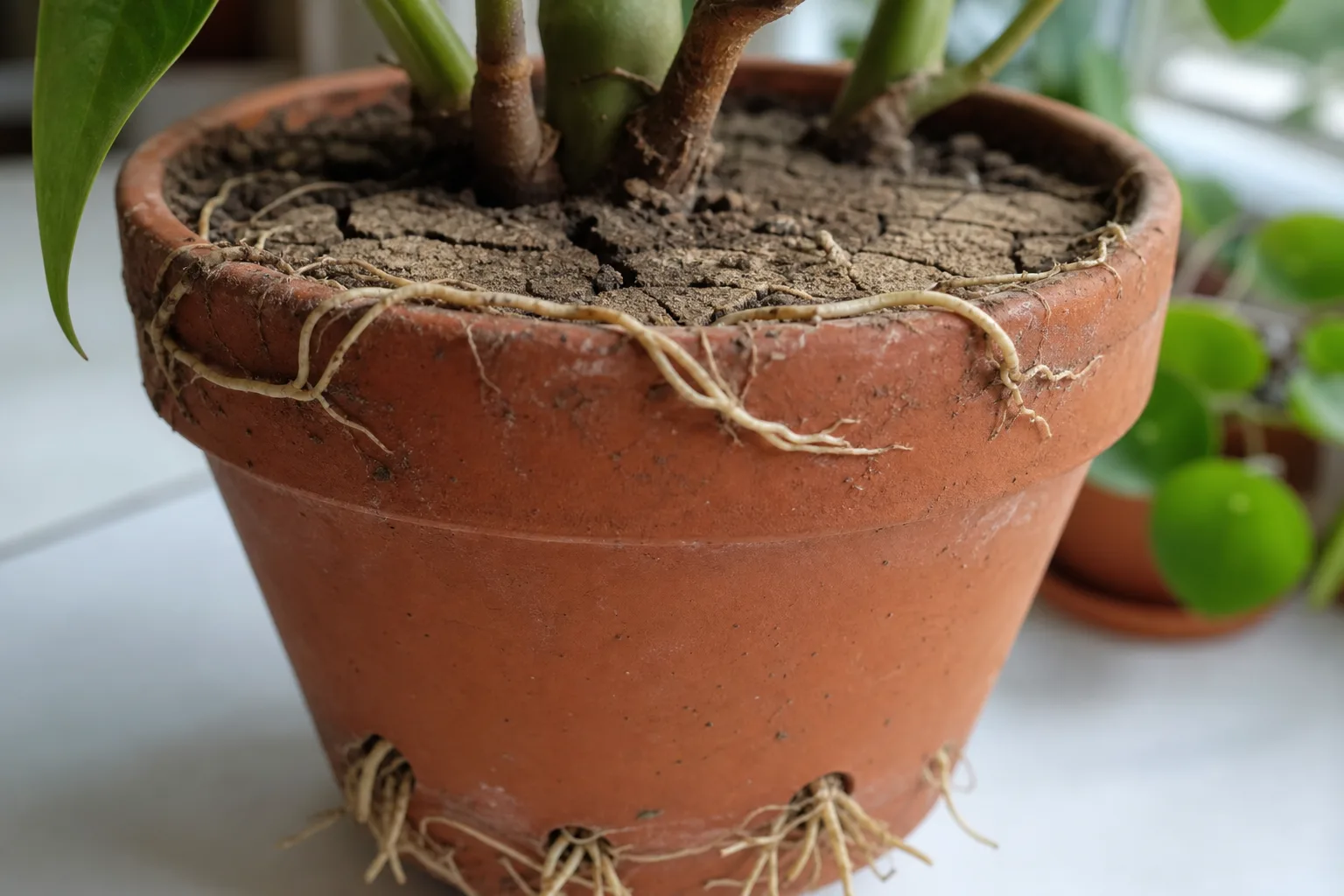
Move up only one pot size, usually about 1–2 inches wider. An oversized container leaves a large volume of wet mix around a relatively small root ball, which is a common route to yellow leaves and root rot. Use fresh, airy mix and keep the crown at the same depth. Do not bury the lower stems deeply in an attempt to stabilize a trailing plant.
If the roots are firm and pale or tan, loosen only the outer circling layer and repot. If they are brown, soft, or foul-smelling, remove the damaged tissue with clean scissors, use fresh mix, and choose a pot that fits the remaining root mass. A routine repot can wait for spring; root rot cannot always wait, even if the plant is in winter dormancy.
After repotting, place the plant in bright indirect light, water enough to settle the mix, and let excess drain. Hold fertilizer for a few weeks while new roots re-establish. Mild drooping or a short pause in growth can be normal. Persistent wilting in a wet pot means you should inspect the roots again rather than adding water or repeatedly changing containers.
Move Swedish Ivy Outdoors Without Scorching It
Swedish ivy can spend the warm season outdoors in a container, but the move needs acclimation. Start in bright shade or a sheltered porch, then increase exposure gradually over several days. Keep it away from strong afternoon sun, which can burn foliage that was adapted to filtered indoor light. Outdoor wind also dries hanging baskets quickly, so check the mix more often without watering automatically.
Bring the plant indoors before frost and before nights become consistently cold. Inspect stems, leaf undersides, and the pot rim for pests before the plant returns to your indoor collection. Quarantine it for a week or two if possible. A sudden move from a humid patio to dry indoor heating can trigger leaf drop or mites, so make the transition before the room becomes its driest.
In frost-free Zones 10–11, Swedish ivy can be grown outdoors as a perennial in a sheltered, well-drained, part-shade position. In colder climates it is a seasonal outdoor container plant unless you overwinter it indoors. The exact hardiness label matters less than the immediate weather: frost is a hard stop, and harsh sun is a scorch risk even when the temperature is comfortable.
Troubleshoot Yellow Leaves, Wilting, and Sparse Growth
Start with the newest leaves, the soil condition, and the light direction. A few old lower leaves aging out is different from widespread yellowing across new and old growth. Pale leaves with long internodes suggest low light; soft yellow leaves in a heavy pot suggest excess moisture or root injury; crisp margins on the sunny side suggest scorch or dry air.
If growth is sparse, move the plant toward brighter filtered light before feeding or pruning. If the mix stays wet for a week or more, test the drainage hole, remove any liner holding runoff, and improve the mix at the next appropriate repot. If leaves remain limp after the soil has dried and a thorough drink, inspect for root rot or a pest problem rather than repeating smaller waterings.
Treat Mealybugs and Spider Mites Early
Mealybugs look like cottony clusters at leaf axils, stem joints, and the undersides of leaves. Spider mites are smaller; look for fine webbing, pale stippling, bronzing, or a dusty appearance. Swedish ivy’s dense trailing growth gives pests many protected places to hide, so inspect the crown and the stems that touch the pot rim.
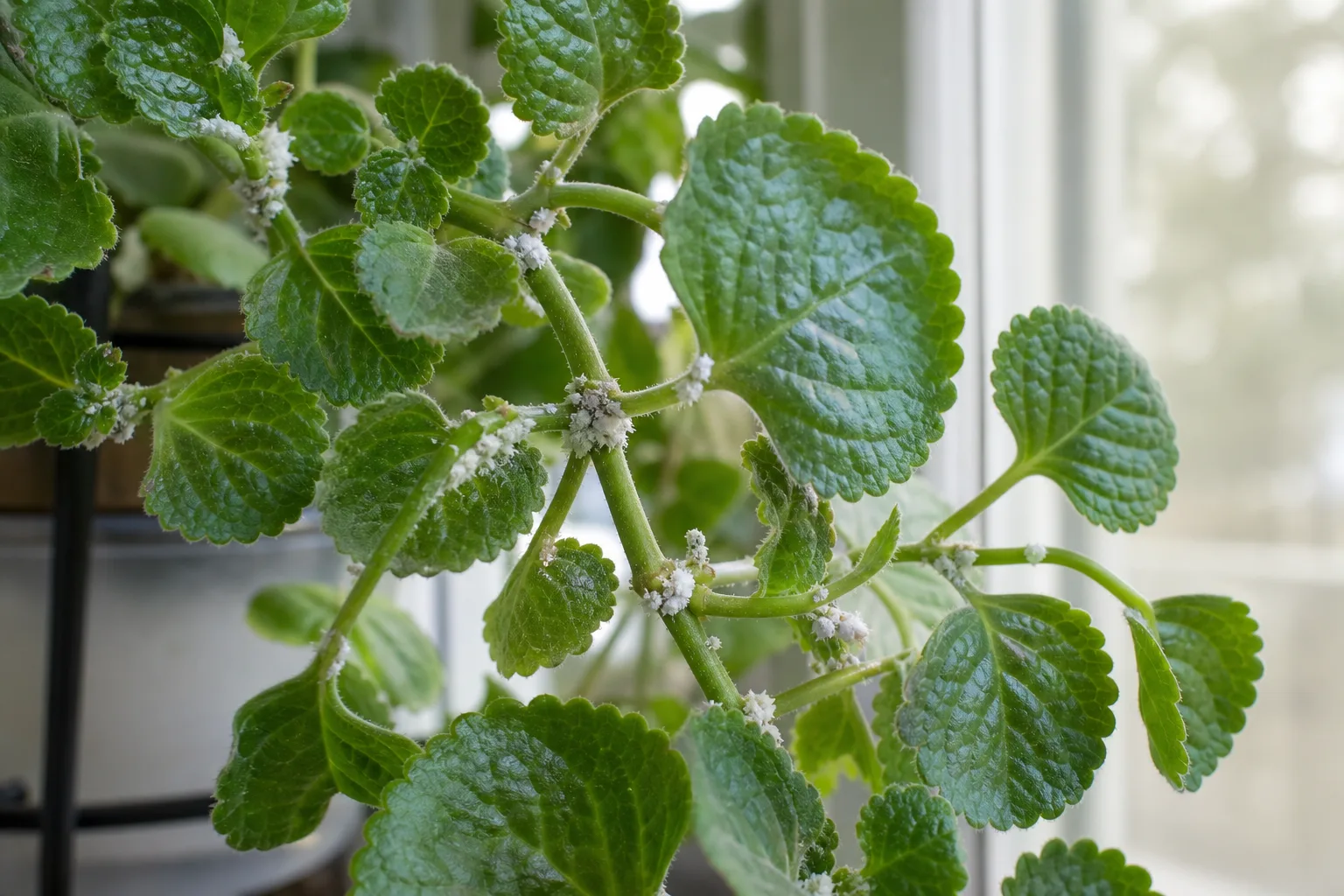
Isolate an infested plant before treatment. Remove visible mealybugs with a cotton swab or soft cloth, then use an insecticidal soap or another product labeled for the pest and plant, following the label exactly. Repeat on the schedule the label specifies because one treatment rarely reaches eggs or every hidden insect. Penn State Extension’s indoor-plant pest guidance is a useful general reference for identifying and managing recurring houseplant pests, while Healthy Houseplants’ Swedish ivy guide provides practical symptom descriptions for this plant.
Avoid spraying a stressed plant in hot direct sun, and do not assume neem or soap is harmless at any concentration. Test a small area first, keep treated foliage out of intense light until dry, and never mix products casually. If the infestation is severe, repeated, or spreading across a collection, discard badly affected tissue and ask a local extension service for a product-specific plan.
Recognize Root Rot Before Adding More Water
Root rot is most likely when wet soil, poor drainage, and low light combine. Warning signs include a sour smell, soft stems near the soil line, widespread yellowing, roots that are brown and mushy rather than firm, and wilting that does not improve after the soil is already wet. The last sign is especially misleading: damaged roots cannot transport water normally, so the plant can look thirsty while sitting in saturated mix.
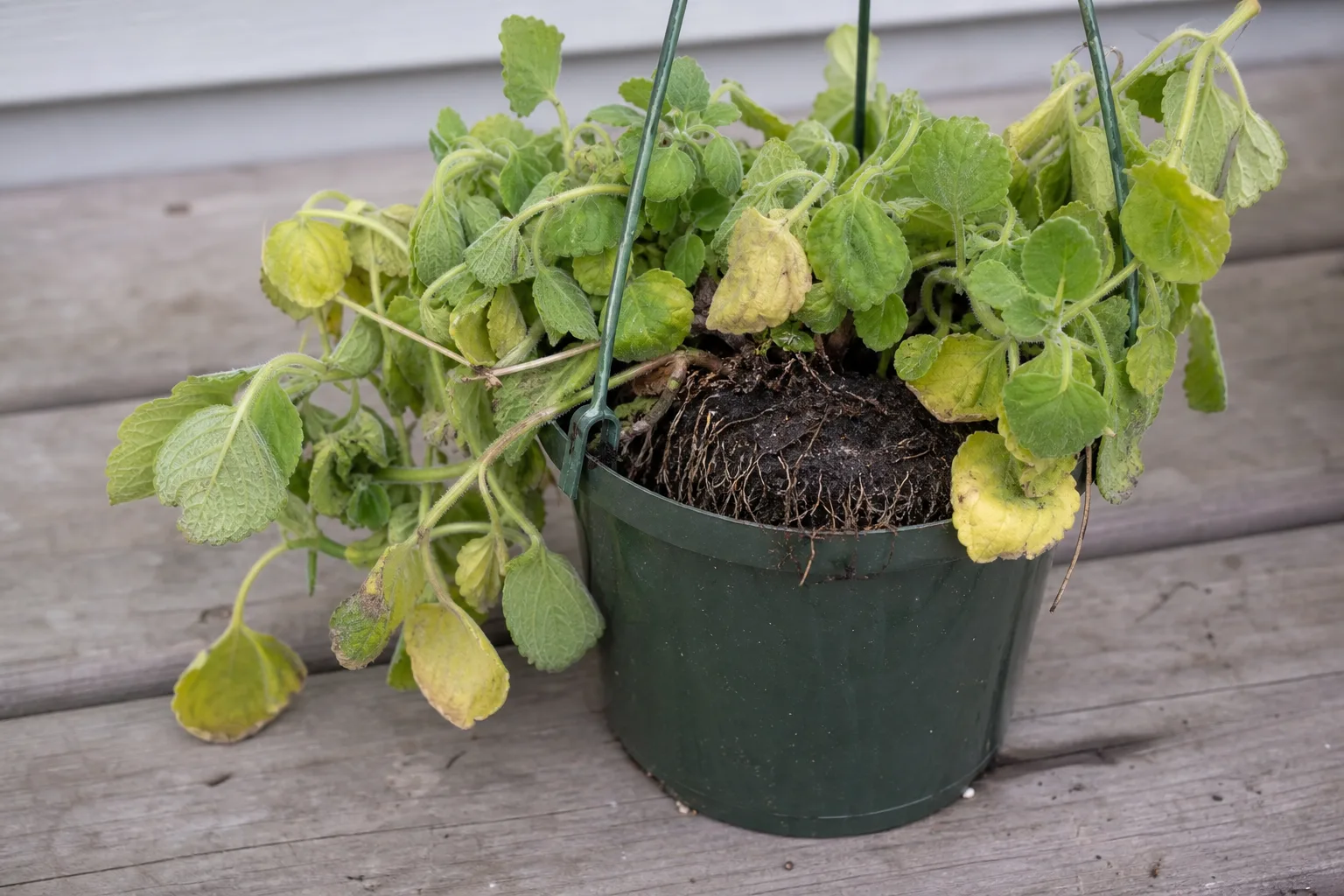
If the plant is still salvageable, take firm upper-stem cuttings first. Then unpot the parent, remove rotted roots, cut away soft stems, and repot only healthy tissue into fresh, draining mix and a clean, appropriately sized container. Do not reuse sour, decomposed mix. Water lightly after the repair and wait for the surface to dry before the next drink.
Root rot prevention is more reliable than rescue: use a drainage hole, match pot size to roots, let the mix dry slightly, and reduce watering when light and growth decline. A saucer that stays full is not a humidity system; it is a standing-water problem.
Swedish Ivy and Pet Safety
The ASPCA lists Swedish ivy under Plectranthus australis as non-toxic to dogs, cats, and horses. That listing is reassuring for a pet-conscious home, but “non-toxic” does not mean edible or guaranteed to cause no reaction. A large mouthful of fibrous plant material can still upset an animal’s stomach, and plant labels can be wrong when common names overlap.
Keep the pot out of reach if your cat or dog chews plants habitually. If a pet eats a large amount, becomes ill, or the plant’s identity is uncertain, contact your veterinarian or an animal poison service and provide the botanical name or a photograph. Do not assume that a true ivy or another Plectranthus sold under the same nickname has the same safety profile.
A Simple Swedish Ivy Routine by Season
Spring: Move the plant into its brightest filtered light, check the root ball, and repot only if it is crowded or the mix has degraded. Take cuttings from healthy tips, begin monthly balanced feeding after new growth starts, and pinch stems if you want a compact basket.
Summer: Keep the mix evenly supplied but allow the surface to dry slightly between thorough waterings. Deadhead flower spikes, continue tip pinching, and inspect weekly for mealybugs and spider mites. If the pot goes outdoors, keep it in bright shade and acclimate it rather than setting it straight into full sun.
Fall: Reduce feeding as growth slows and watch how quickly the pot dries. Bring outdoor plants in before frost or sustained cold, then quarantine and inspect them before placing them beside other houseplants. Prune lightly if needed, but do not combine a major cutback, repot, and drastic location change unless the plant has a clear problem that requires it.
Winter: Keep the plant in the brightest available spot without pressing foliage against cold glass. Water only when the mix has reached its dry-down point, and check more deeply than you would in summer. If heating creates very dry air, improve the room conditions and inspect for mites rather than compensating with frequent watering.
Conclusion: Build the Plant Around Its Light
The right Swedish ivy care routine is simple once the order is clear: bright filtered light first, soil-based watering second, pruning for the shape you actually want third. Use a loose mix and a draining pot, feed lightly during active growth, and root healthy cuttings whenever you prune. Treat a wet, wilting plant differently from a dry, thirsty one, and bring outdoor baskets in before cold weather turns a forgiving houseplant into a recovery project.
When the plant is correctly identified and placed, Swedish ivy rewards you with quick, repeatable growth. A few cuttings can become a full basket, and a few thoughtful checks can keep that basket leafy for years.