16 Types of Zucchini: Which One Fits Your Garden Best?
Compare 16 types of zucchini: dark-green bushes, round and striped heirlooms, yellow squash, harvest cues, space needs, and seed-saving fit for your garden.
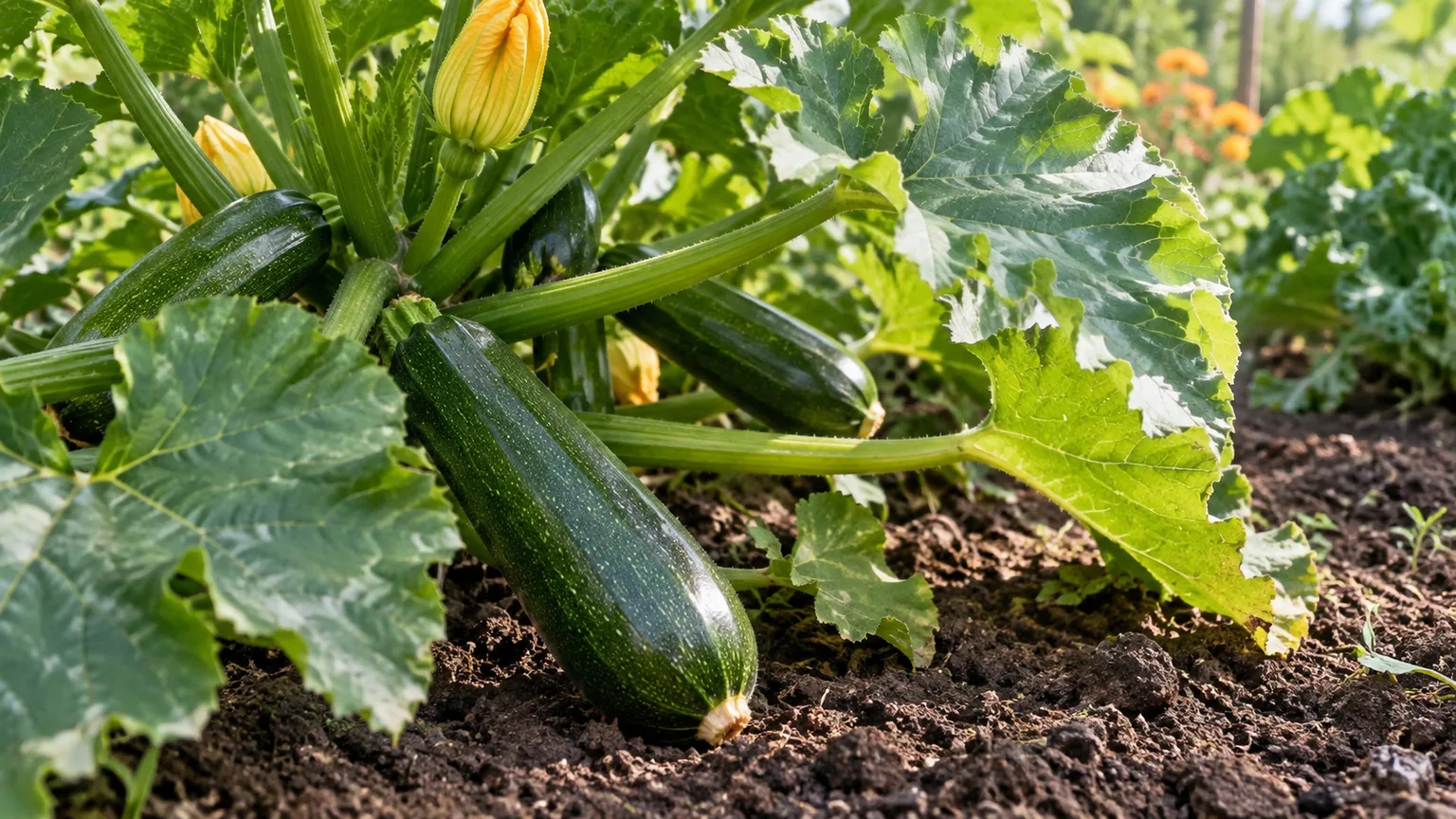
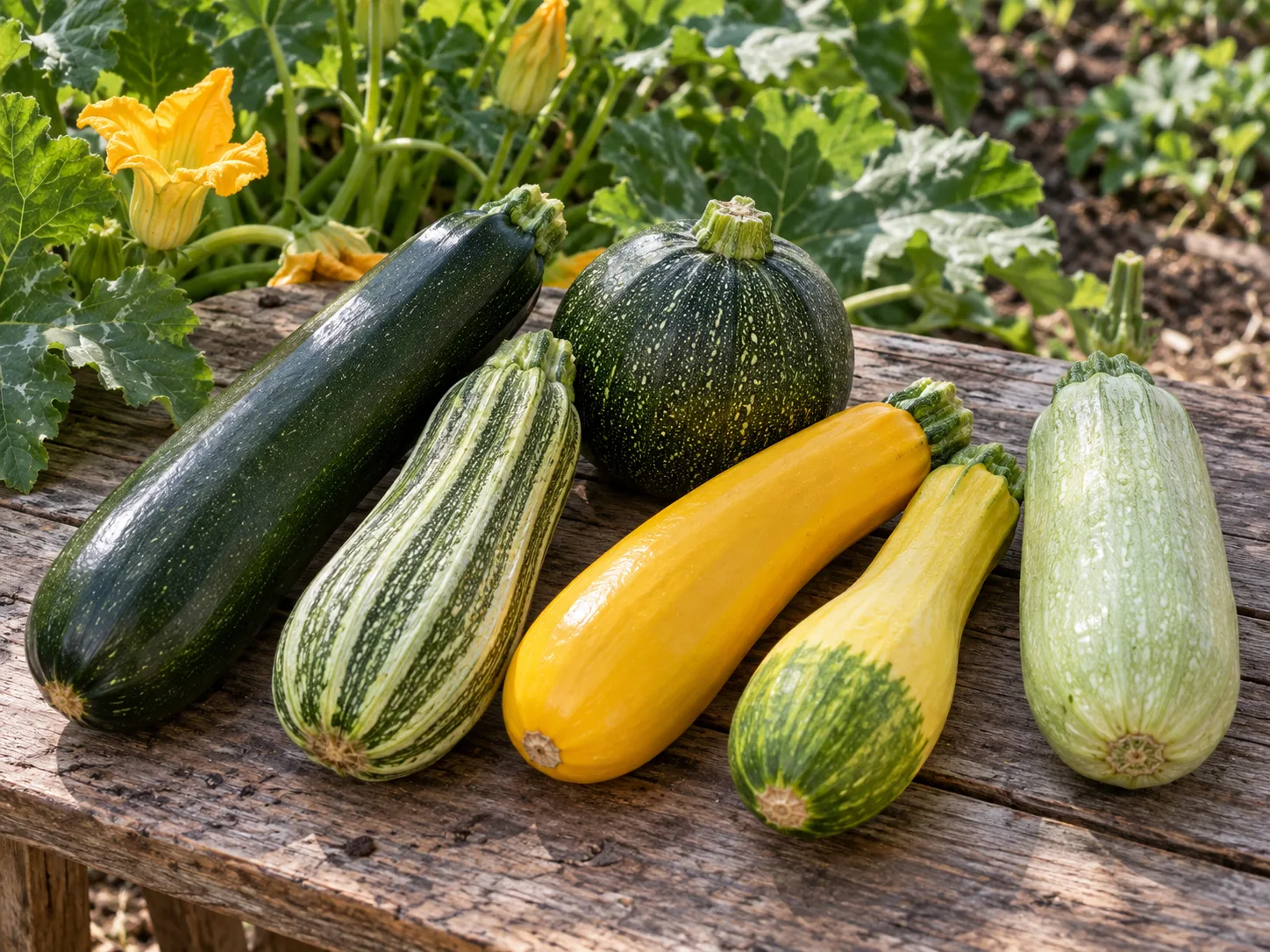
Zucchini is a useful crop to grow, but the familiar long green fruit is only one option. Gardeners can choose round, striped, ribbed, yellow, and pale green forms, plus vigorous squash that work like zucchini when harvested young. Their differences matter most at harvest: a good pick for stuffing may be a poor fit for a patio pot, and a seed-saving heirloom can be less predictable than an F1 hybrid if nearby squash flowers share pollen.
For an ordinary garden bed, a dark green bush type such as ‘Black Beauty’ is the straightforward choice. Choose a round type such as ‘Ronde de Nice’ or ‘Eight Ball’ for individual stuffed portions, a pale ‘Magda’ for a firm cousa-style squash, or a vining ‘Tromboncino’ if you want young summer squash and have space for a long vine. The guide below compares sixteen options by the fruit they produce, the plant habit to expect, and the job each does best.
Quick picks: 16 varieties at a glance
The names in seed catalogs are not all the same kind of label. Some are established cultivar names, some describe a broad color type, and a few are other summer squashes commonly cooked like zucchini. The table makes that distinction visible so you can use fruit appearance and plant habit as a starting point, then confirm the exact growth habit and maturity estimate on the packet you buy.
| Type | Fruit and harvest cue | Why grow it |
|---|---|---|
| ‘Dark Green’ | Long, cylindrical, dark green; pick while firm and tender | Familiar zucchini for everyday cooking |
| ‘Black Beauty’ | Glossy near-black green skin and pale flesh; often picked at 6–8 inches | Classic bush zucchini with a strong home-garden track record |
| ‘Ronde de Nice’ | Pale mottled green spheres; pick at about 2–3 inches across | French round zucchini for stuffing or grilling |
| ‘Golden’ | Yellow cylindrical fruit; harvest young like green zucchini | Easy-to-spot color contrast in a leafy bed |
| ‘Tromboncino’ | Curved, long-necked fruit; pick young around 8–12 inches | Dual-purpose squash for gardeners with room for a vine |
| ‘Zephyr’ | Slender yellow fruit with a green blossom end; pick at 4–6 inches | Distinctive, firm summer squash with nutty notes |
| ‘Eight Ball’ | Dark green round fruit; pick at roughly 2–3 inches across | F1 hybrid for neat individual portions |
| ‘Cocozelle’ | Slender green fruit with pale stripes and ribs; pick small | Italian open-pollinated heirloom with striking skin |
| ‘Bolognese’ | Oval, lightly mottled green fruit; pick while still small | Italian type with creamy flesh and edible flowers |
| ‘Striato d’Italia’ | Long fruit with alternating green stripes and ribs | Italian heirloom grown for firm flesh and blossoms |
| ‘Novodiamant’ | Long gray-green fruit on a vigorous bushy plant | F1 hybrid option for an early, steady crop |
| ‘Yellow Crookneck’ | Bright yellow curved neck; pick before the skin hardens | Classic yellow summer squash, not a zucchini cultivar |
| ‘Costata Romanesco’ | Ribbed dark-green fruit with paler stripes | Flavor-forward heirloom and edible blossoms |
| ‘Tatume’ | Round to oval green fruit, often striped; harvest at baseball size | Vining, dual-purpose summer squash for warm gardens |
| ‘Magda’ | Pale green, blocky, slightly tapered fruit; pick around 3–4 inches | Cousa-style squash with a firm texture for stuffing |
| ‘Tonda Scuro di Piacenza’ | Dark green spheres; pick at about baseball size or smaller | Italian open-pollinated alternative to round hybrids |
Use these harvest sizes as practical cues, not universal standards: a catalog’s recommended stage can shift with the particular seed line and the way you plan to cook it. Johnny’s Selected Seeds gives specific small-fruit targets for ‘Eight Ball’ and ‘Zephyr,’ while Cornell Cooperative Extension’s cultivar database describes ‘Tondo Scuro di Piacenza’ as best picked at baseball size or smaller. For other varieties, a firm skin and immature, tender seeds are more useful than letting a fruit reach the longest size printed in an online description.
What seed packets mean by “zucchini”
Zucchini is one familiar kind of summer squash. Most of the standard long green, round, striped, and yellow zucchini in this list are Cucurbita pepo. Summer squash is a broader garden category: it also includes crookneck, straightneck, and pattypan forms. University of Minnesota Extension groups those crops together because they share warm-season growing needs, even though the fruit shapes and names differ.
Two selections here widen the category further. ‘Tromboncino’ is Cucurbita moschata, a species that also includes butternut squash; gardeners harvest its young fruit as a tender summer squash, then can leave fruit on the vine to mature into a hard-skinned winter squash. ‘Tatume’ is usually sold as C. pepo and is similarly useful at both the tender and mature stages. So, if you want only cylindrical zucchini, skip those cousins; if you want a more varied squash harvest, they earn their place on the list.
This label distinction is practical rather than fussy. A packet for a round ‘Eight Ball’ still calls it zucchini, while ‘Zephyr’ is more often sold under yellow summer squash. A zucchini recipe can usually take either one at its tender stage, but a vine-boring pest strategy, plant size, and seed-saving plan may differ. The University of Minnesota’s summer squash guide lays out the shared growing needs and the wider group of fruit shapes.
Classic green and Italian striped types
‘Dark Green’ and ‘Black Beauty’
‘Dark Green’ represents the straight, dark-skinned zucchini most gardeners picture: cylindrical fruit, pale flesh, and a bushy plant that sends its leaves out from a central crown. Seed catalogs use ‘Dark Green’ both as a named selection and as a useful description, so compare the packet’s own maturity estimate, disease-resistance codes, and spacing notes rather than assuming two sellers are listing the identical line. This is the sensible choice when you want ordinary zucchini for sautéing, grilling, freezing, or bread and are less interested in unusual fruit shape.
‘Black Beauty’ is another traditional dark green selection, with glossy skin and a clear contrast against cream-colored flesh. It suits a first vegetable bed because there is no special harvest technique: check under the leaves every day or two and cut the fruit while it is still firm and about 6–8 inches long. The plant is a bush, not a compact miniature; its leaves can occupy several feet of bed even though it does not trail like a pumpkin vine. Epic Gardening’s cultivar comparison includes ‘Black Beauty’ among the familiar green types and notes how growth habit affects small-space choices. Leave a reachable path on one side so hidden fruit do not turn into oversized marrows before you spot them.
‘Cocozelle’ and ‘Bolognese’
‘Cocozelle’ is a classic Italian striped zucchini, usually long and slender with dark green skin, paler lengthwise stripes, and shallow ribs. Its appearance stands out without changing the way you cook it: slice it for roasting, grill it in strips, or use small fruit where you want a firmer bite. Epic Gardening’s guide also describes its striped, open-pollinated form. That makes it appealing to seed savers, but compatible pollen still needs to be managed if you want next year’s plants to match the packet.
‘Bolognese’ is an Italian zucchini that tends to have a shorter oval body with a plump end rather than the uniform tube of ‘Cocozelle.’ Catalog descriptions vary, but the fruit is generally pale or medium green with mottling and creamy flesh; harvest it before the seeds become prominent. Its slightly rounded shape lends itself to halving and roasting or stuffing, while the edible blossoms can be used in fritters. A Kokopelli seed profile describes it as a bushy C. pepo type with oval green fruit, so it is easier to fit into a bed than a long-running squash vine.
‘Striato d’Italia’ and ‘Costata Romanesco’
Choose ‘Striato d’Italia’ if you like pronounced stripes and want a traditional Italian zucchini with a firm texture. It produces elongated dark green fruit with lighter stripes; the ribs make cross-cut slices look scalloped at the edge. Young fruit around 6–8 inches is a versatile kitchen size, while somewhat larger fruit can still be useful when harvested before the skin becomes tough and the seed cavity expands. The Royal Horticultural Society’s plant profile describes it as a bushy annual with striped fruit and edible yellow flowers.
‘Costata Romanesco’ is also striped and ribbed, but its fruit is broader and more strongly defined by the raised ribs. The texture is dense enough to hold its shape in a pan, and the blossoms are a reason some gardeners grow it even when it does not outproduce every modern hybrid. In its California Dry Farm Trial report, Organic Seed Alliance describes the variety’s nutty flavor and edible orange blossoms, while also noting that it can be more susceptible to powdery mildew later in harvest and may yield less than some varieties. That is a fair trade: grow it for eating quality and character, not as the only plant meant to feed a large household.
‘Novodiamant’
‘Novodiamant’ is a gray-green, cylindrical zucchini sold as an F1 hybrid. A Franchi Sementi product listing describes it as an early, vigorous, bush-type plant with numerous long fruit. Compared with an open-pollinated heirloom, that makes it the more straightforward choice if you want a named hybrid and do not plan to save seed; the seedlings from an F1 crop will not reliably repeat the parent’s exact traits.
Its name is less familiar in some North American seed catalogs than ‘Black Beauty’ or ‘Cocozelle,’ so check regional availability before building a planting plan around it. Do not infer a tiny footprint from the word “bush”: zucchini bushes spread broad leaves, and the supplier’s recommended plant spacing is a better guide than the height alone. A compact habit can simplify harvesting, but it does not eliminate the need to leave room around the crown.
Round zucchini for stuffing and small harvests
Round varieties are best treated as their own harvest format. Their appeal is not that they use less room—the plant is often a full-size bush—but that the small fruit has a useful cavity once hollowed. A freshly cut sphere about the size of a large egg or tennis ball is easier to portion than a long fruit, and it is less likely to have the oversized seed core you get when a hidden zucchini sits under a leaf for too long.
‘Ronde de Nice’ and ‘Eight Ball’
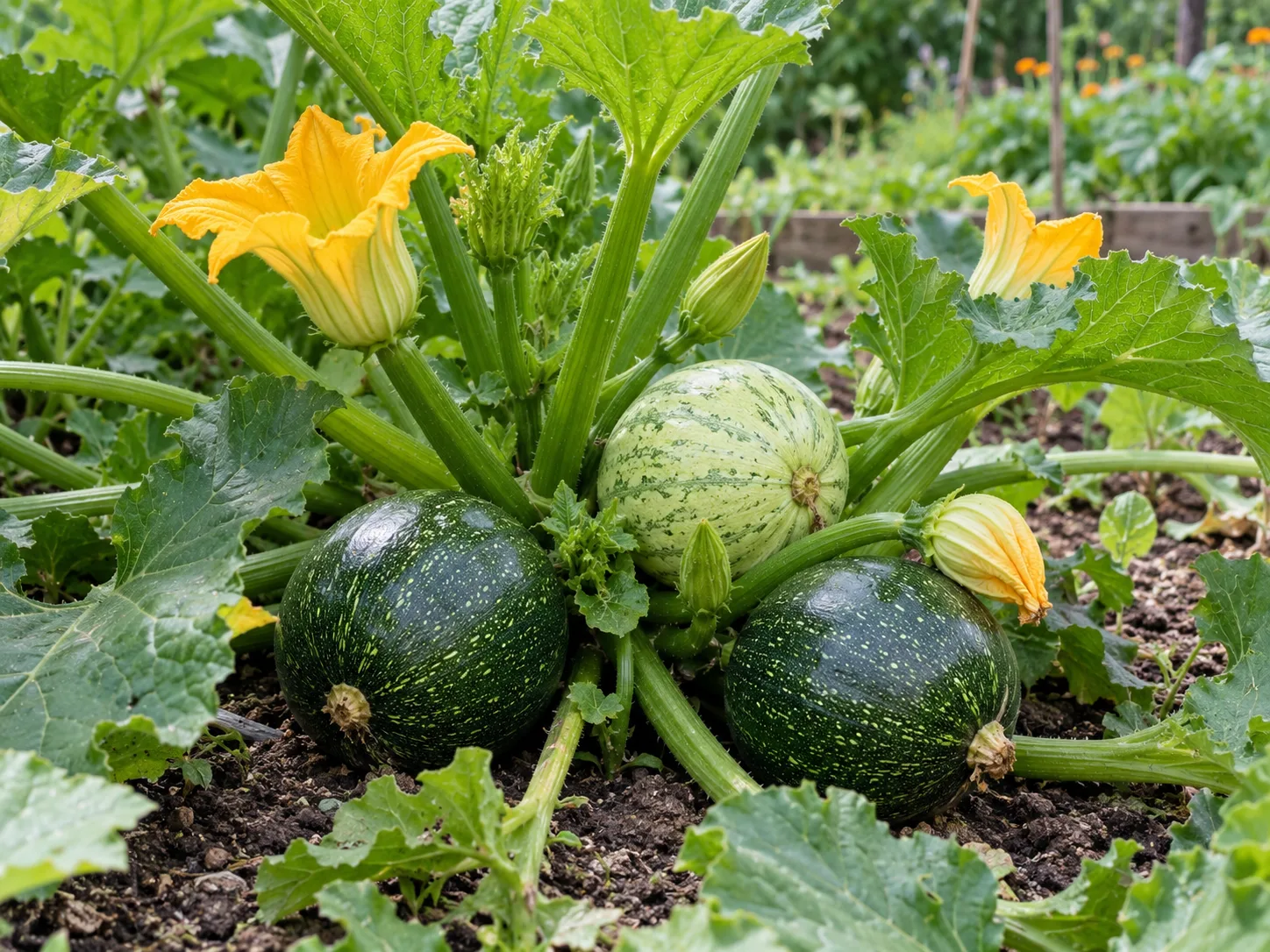
‘Ronde de Nice’ is a French heirloom with round, pale green fruit that may have mottled or faintly striped skin. Harvest it at about 2–3 inches across for delicate flesh, or let it grow a little larger if you want to scoop it out and stuff it. The round shape gives it visual appeal, but the plant still needs ordinary zucchini spacing, regular water, and repeated harvests. West Coast Seeds recommends picking it below about 3 inches in diameter, a useful reminder that small fruit is the goal for tenderness.
‘Eight Ball’ gives you a darker, usually glossy green sphere on a hybrid plant. It was bred as a round zucchini rather than a novelty caused by an oversized or misshapen fruit, so the shape is consistent when the plant is healthy. Johnny’s Selected Seeds lists ‘Eight Ball’ as an F1 with dark green round fruit and recommends harvesting it at 2–3 inches in diameter. Choose it if you want dark color and uniform portions; choose ‘Ronde de Nice’ if you want an open-pollinated heirloom option.
‘Tonda Scuro di Piacenza’
‘Tonda Scuro di Piacenza’ (also sold as ‘Tondo Scuro di Piacenza’) is a traditional Italian round zucchini with dark green skin. It gives you the shape of ‘Eight Ball’ with an open-pollinated seed line, which can make it the better pick for a seed-saving gardener. Cornell Cooperative Extension’s Vegetable Varieties for Gardeners database describes the fruit as round and dark green and recommends picking it at baseball size or smaller.
That seed-saving advantage has a condition: open-pollinated does not mean pollen-proof. If bees carry pollen from a different compatible squash variety into a female flower, the fruit you harvest this season still looks like ‘Tonda Scuro di Piacenza,’ but saved seeds may produce a cross next year. Buy it for its round form and use certified or isolated seed when true-to-type offspring matter.
Yellow, pale, and dual-purpose summer squash
The last group adds color and less familiar shapes, but do not read “different color” as “different care.” Most yellow and pale summer squash still want warm soil, sun, steady moisture, and regular picking. Their color does have a garden benefit: yellow fruit is easier to notice against green leaves, so it is less likely to grow into a giant marrow unnoticed.
‘Golden’
“Golden zucchini” is often used as a broad name for yellow, straight-fruited summer squash, rather than a single seed line with one universal growth habit. The Old Farmer’s Almanac’s zucchini guide includes golden fruit among its cultivar choices and distinguishes bush and vining habits, a reminder to check more than color when choosing a packet. The yellow skin makes ripe fruit easy to spot, and the shape cooks just like standard green zucchini: slice it for a skillet, grill it in planks, or grate young fruit into quick breads. Pick while the skin is still tender, often around 6–8 inches, but follow the seed packet when it gives a specific target.
If you want a precisely named cultivar, look for a packet that gives the cultivar name and not just “golden” in the product title. This distinction matters most if you are comparing days to maturity, disease resistance, or plant size across seed sellers. Yellow itself is a useful kitchen and harvest trait, but it does not tell you whether the plant is compact, high yielding, or suited to a container.
‘Zephyr’ and ‘Yellow Crookneck’
‘Zephyr’ is a hybrid yellow summer squash with a green tip near the blossom end. That two-tone fruit is normal for the type; heat or other stress can change how much green appears, so variable color is not automatically a seed mix-up. Its flesh is notably firm, and Johnny’s Selected Seeds recommends picking Zephyr young, around 4–6 inches, for its distinctive texture and flavor. It works well in the same meals as zucchini but is more accurately sold as yellow summer squash.
‘Yellow Crookneck’ is a separate summer-squash shape: a slender yellow body that bends near its narrow neck. Pick it small, before the rind toughens, and use it anywhere you would use a yellow zucchini. It is not a yellow form of the straight zucchini cultivar; it is a crookneck type in the same broad C. pepo summer-squash group. That distinction helps if you want a true zucchini cultivar or if you plan to save seed from just one variety.
‘Magda’
‘Magda’ is a pale green cousa-type summer squash: shorter and blockier than a standard zucchini, with a slight taper and a firm, creamy interior. Epic Gardening’s variety guide describes its nutty flavor, pale blocky shape, and small harvest size. It is popular for stuffing, where its shape leaves a practical cavity without needing to hollow out a long cylinder. Harvest it young, around 3–4 inches long, before the seeds and central cavity grow large. Its pale skin can make the fruit harder to spot in a thick canopy than a bright yellow variety, so check under the leaves frequently.
Do not assume the name guarantees open-pollinated seed. Johnny’s lists ‘Magda’ as an F1 hybrid cousa type. If future seed saving matters, read the variety line on the packet; a seed company may change which exact line it sells, and hybrid status affects whether saved seed will repeat the parent.
‘Tromboncino’ and ‘Tatume’
‘Tromboncino’ is the standout if you want a squash that bridges summer and winter use. Its long, curved neck can be harvested young as tender zucchini-like squash; left to mature, it develops a hard rind and can be stored and cooked like winter squash. The Royal Horticultural Society profile identifies it as a C. moschata used young like courgettes. Unlike a standard bush zucchini, it grows on a vigorous, sprawling vine that can run along the ground or climb a sturdy trellis. Leave space or give it support early, before the heavy vine and fruit are difficult to redirect.
It is a useful option where squash vine borers are common because C. moschata types tend to be less vulnerable than many familiar C. pepo summer squashes, but no cultivar is immune in every garden. Clemson Cooperative Extension’s profile describes ‘Tromboncino’ as a butternut-species heirloom used young like zucchini and recounts later-season harvests after ordinary summer squash was damaged by borers. Treat that as a relative advantage, not a guarantee; inspect vines and choose a planting date using local pest timing.
‘Tatume’ (sometimes spelled ‘Tatuma’ or sold as ‘Calabacita’) is another dual-purpose squash, usually grown on long, trailing vines. Cornell Cooperative Extension’s cultivar database describes its vines and round, pumpkin-shaped fruit. Pick the small green fruit while its rind is still tender, around baseball size, and cook it like summer squash; if you leave it longer, it becomes more like a mature winter squash. That habit suits a warm garden with spare ground, a fence, or a robust trellis better than a small patio pot. It is worth choosing for its flexible harvest and cultural culinary uses, not because it behaves like a compact zucchini bush.
Choose by space, kitchen use, and growing constraint
For a first garden bed or a family that wants routine green squash, plant one bush type such as ‘Black Beauty’ or ‘Dark Green.’ If a household rarely gets through a heavy harvest, start with one plant rather than three varieties: one healthy summer-squash bush can produce fruit over a short window quickly enough that daily checking and repeated harvest become the real work. A second planting a few weeks later can spread the harvest if your frost-free season is long enough.
For a container, prioritize a compact bush habit and a large, well-drained pot over color or fruit shape. ‘Eight Ball,’ ‘Ronde de Nice,’ and ‘Novodiamant’ are useful starting points to compare, but confirm the current supplier’s size and container guidance; a plant labeled “bush” can still fill a small balcony. Do not choose ‘Tromboncino’ or ‘Tatume’ for a tiny planter unless you can train and support a long vine. The Old Farmer’s Almanac’s guide outlines bush and vining zucchini habits, while University of Minnesota Extension recommends warm soil for direct sowing; both details are more useful than a hardiness-zone range for an annual crop.
For stuffing, choose ‘Ronde de Nice,’ ‘Eight Ball,’ or ‘Tonda Scuro di Piacenza’ for small round portions, or ‘Magda’ for a pale blockier fruit. For a firmer, more strongly flavored slice, test ‘Costata Romanesco,’ ‘Cocozelle,’ or ‘Zephyr.’ Flavor language in catalogs is subjective, and harvest maturity matters: a small, fresh fruit from an ordinary cultivar can taste better than an overgrown fruit from a variety sold as gourmet. Plant only a few of the unusual kinds the first year, then expand based on what you actually cook.
If your main goal is unusual color, compare ‘Golden’ yellow fruit, two-tone ‘Zephyr,’ and striped ‘Cocozelle’ or ‘Striato d’Italia.’ If your garden repeatedly loses bush zucchini to vine borers, consider trying ‘Tromboncino’ on a fence or sturdy trellis, while continuing local pest monitoring. If you want edible blossoms, grow one of the Italian heirloom types and harvest only a few male flowers at a time; taking too many flowers can reduce pollination and the squash crop.
Seed saving and the cultivar details that matter
Seed packets generally label an open-pollinated variety or an F1 hybrid. Open-pollinated plants can produce seed that resembles the parent when they are pollinated by the same variety; an F1 hybrid’s offspring can split into different traits, so saving seed is not a reliable way to reproduce the named hybrid. The University of Georgia Extension’s heirloom guide explains that hybrid traits segregate in the next generation and that most heirlooms are open-pollinated, while the University of Saskatchewan’s guide cautions that squash varieties can cross through insect-carried pollen.
Cross-pollination does not change the squash fruit currently growing on the plant. It changes the genetics inside its seeds, which only matters if you plant those seeds in a later season. Many familiar varieties in this list are C. pepo, and zucchini, crookneck, pumpkins, and other compatible squash within the same species may cross when they flower at the same time. If you want true-to-type seed, grow only one compatible variety for seed that year, separate varieties far beyond a typical home plot, or bag and hand-pollinate selected flowers using a region-specific seed-saving guide. Do not collect seed from an F1 if repeating its exact fruit and plant characteristics is the goal.
Days to maturity also needs a careful read. One seed company may count from direct sowing, another from transplanting, and weather can add or subtract time; compare estimates from the same seller before calling one cultivar “earlier.” For an annual summer crop, last frost, soil warmth, days to fall frost, and the actual packet estimate give a more useful schedule than an assigned hardiness-zone range. The University of Saskatchewan’s zucchini guide also shows why seed saving deserves a separate plan: pollen compatibility matters even though it does not alter the fruit you harvest this year.
Conclusion
Choose by the problem you want the plant to solve. ‘Black Beauty’ or a well-described ‘Dark Green’ line covers everyday cooking; ‘Cocozelle’ and ‘Costata Romanesco’ add striped fruit and firmer texture; ‘Ronde de Nice,’ ‘Eight Ball,’ and ‘Tonda Scuro di Piacenza’ give you useful round portions; ‘Magda’ is the pale, blocky option; and ‘Tromboncino’ or ‘Tatume’ suit a larger space where a vigorous dual-purpose vine is welcome.
Before buying, check three lines on the packet: plant habit and spacing, days-to-maturity counting method, and whether the seed is open-pollinated or F1. Then plant a number you can harvest every few days, pick each form while it is tender, and save seed only when the plant’s pollination history supports the result you want.