Weeping Cherry Tree Care: Planting and Pruning
Weeping cherry tree care starts with the right cultivar and a sunny, well-drained site. Learn when to plant, water, prune, and troubleshoot common problems.
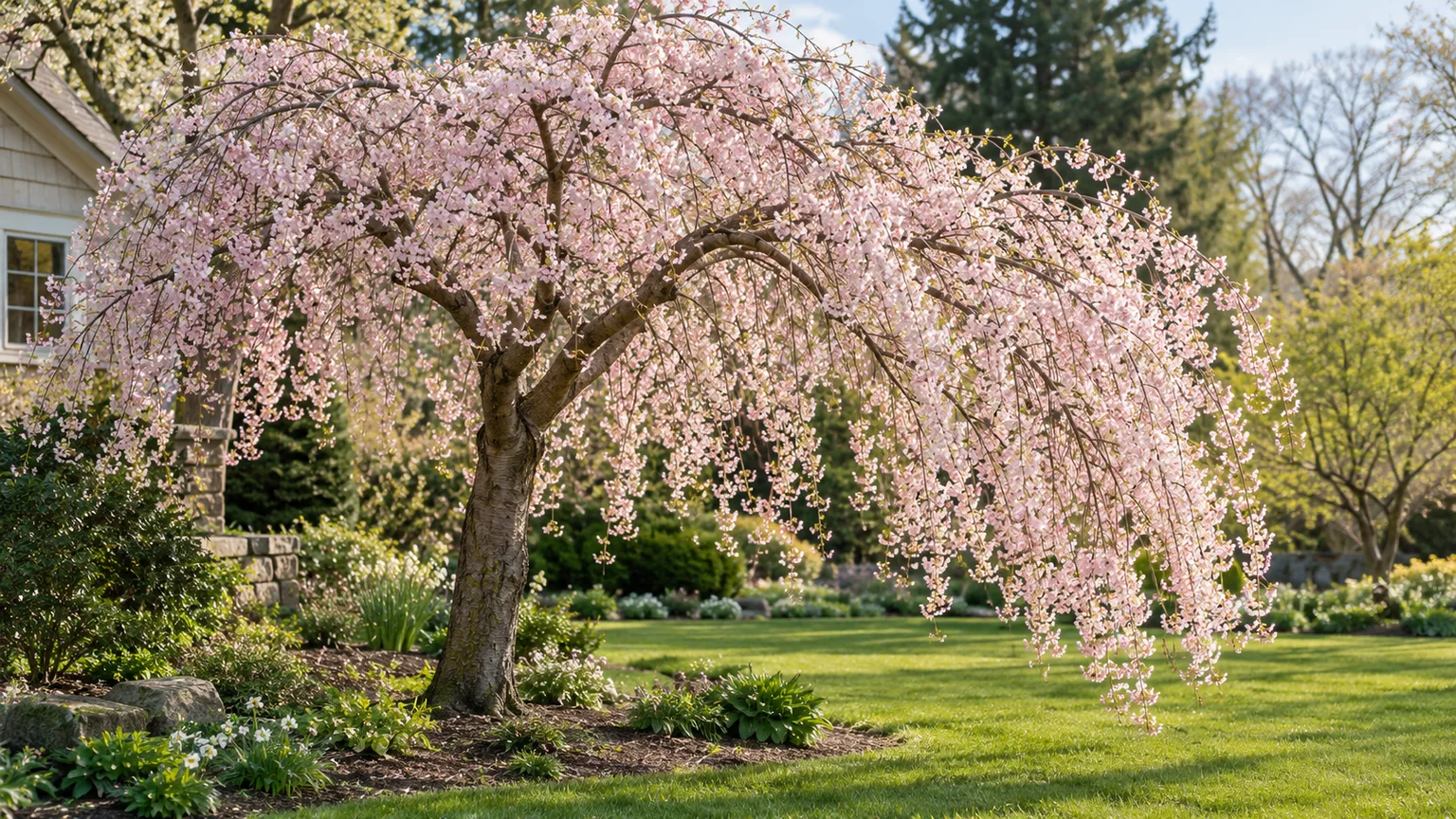
A weeping cherry is easiest to care for when you get two choices right before planting: the cultivar must fit your yard, and its roots must have a sunny, well-drained place to establish. After that, keep the root zone evenly supplied with water while the tree is young, mulch without piling material against the trunk, and prune only when a branch is dead, damaged, rubbing, or truly in the way.
“Weeping cherry” describes a graceful growth habit shared by several ornamental cherries, not one tree with a single size or hardiness range. A compact ‘Snow Fountains’ may stay around 8 to 15 feet tall, while other trees sold as weeping cherries can grow much larger. Check the name on the nursery tag and plan around that plant’s mature spread; repeated pruning cannot turn a poorly matched cultivar into a small tree.
Is a Weeping Cherry the Right Tree for Your Yard?
Choose this tree for a spring focal point and a canopy that drapes toward the ground, not for dependable edible fruit or dense shade. Weeping cherries typically bloom on bare or newly leafing branches in early spring, then carry green foliage through summer before dropping it in fall. The flowers are showy but seasonal; the tree’s architecture is the feature that remains once petals fall.
A weeping cherry earns its space when you can see its silhouette from a window, patio, or approach and give the branches room to hang. The cascading canopy can frame a lawn or garden bed, but it is a poor fit beside a narrow walkway, under low utility wires, or where regular clearance pruning would be unavoidable. Flowers can attract pollinators, and some cultivars set small fruits, but many ornamental selections produce sparse, insignificant fruit rather than a useful harvest.
Weeping Cherry Is a Shape Shared by Different Cultivars
The common name can refer to trees in the Prunus pendula and Prunus × subhirtella group, as well as weeping cultivars of other ornamental cherries. Names such as ‘Pendula Rubra,’ ‘Stellata,’ and ‘Snow Fountains’ do not describe interchangeable plants. Flower color, mature size, bloom timing, and whether the tree naturally weeps or is grafted onto a standard trunk vary with the selection.
For example, the Missouri Botanical Garden profile for ‘Snow Fountains’ lists (Prunus ‘Snofozam’) for Zones 5 through 8, at roughly 8 to 15 feet tall and 6 to 8 feet wide, with white flowers. RHS profiles for ‘Stellata’ and ‘Pendula Rubra’ describe different sizes and pink flowers. Those examples show why a generic “weeping cherry care” label cannot supply a dependable mature-size promise. Read the cultivar and rootstock information on the tag, then confirm the expected height and spread with the nursery or a local extension service.
Some cultivars naturally form a weeping plant; many nursery specimens are top-grafted, with the chosen cascading cultivar attached high on a straight trunk. The Missouri Botanical Garden notes that ‘Snow Fountains’ is available both ways. Knowing which form you have makes a difference when you see upright shoots or decide whether to prune.
Match the Mature Canopy to Your Space
Measure the planting spot against the cultivar’s listed mature spread, not the tree’s height in the pot. A top-grafted tree can have a fixed-height trunk but still develop a broad, sweeping canopy; a smaller weeping type may be more appropriate for a courtyard. Leave enough clearance for branch tips to hang without brushing a roof, fence, driveway, or neighboring tree. If you have to shear the edges every year to protect a path, the location or cultivar is wrong.
Use the mature spread to outline the planting space. Low branches can cover a bed or touch the lawn, and wind can push hanging tips farther than they appear on a calm day. Avoid overhead lines, foundations, and driveway sight lines; pruning cannot make a mismatched tree stay small.
Hardiness labels also belong to the exact selection. ‘Snow Fountains’ is listed for USDA Zones 5–8 in the Missouri Botanical Garden profile, but that range should not be transferred automatically to every weeping cherry. Winter minimums are only part of a tree’s fit; spring frost, summer heat and humidity, soil drainage, and local disease pressure matter too. If your yard is near the edge of a cultivar’s range, ask a regional nursery which form has performed well nearby.
Choose a Sunny Site With Fast Drainage
For the most consistent flowering, provide at least six hours of direct sun. Light shade may be tolerated, but a tree that receives little sun can flower sparsely and grow a thinner canopy. Full sun also helps foliage dry after rain, which is useful in a group that can be susceptible to fungal and bacterial problems. Epic Gardening’s care guide recommends six to eight hours of light, while Gardening Know How stresses full sun and good airflow.
Soil should hold enough moisture for steady growth yet drain between waterings. A fertile loam is convenient, but texture is less important than avoiding a root zone that remains saturated. Do not set a cherry in a low pocket that collects runoff or beside a downspout. If the soil is heavy clay, correct the site drainage across a broad area or choose a raised, well-drained location; filling only the planting hole with a light mix can create a water-holding basin where the roots sit.
Give the canopy breathing room from nearby trees and shrubs. Crowding blocks light and slows drying, while rubbing branches create wounds. Spacing young nursery trees for their eventual canopy helps prevent disease and avoids shortening graceful branches later.
Test the Site Before You Plant
Check the spot after a heavy rain. If water remains pooled long after the surrounding ground has drained, or the soil has a sour, swampy smell, investigate drainage before you buy the tree. You can also dig a trial hole and observe how quickly water disappears, but results depend on soil type and recent weather; a single quick test does not make a chronically wet location suitable.
Look for compaction, hardpan, nearby downspouts, and tree roots competing for water. Widening an amended planting hole will not fix those conditions; choose another site or improve drainage across the broader area. Before digging, call your utility-marking service and inspect the nursery tree for bark damage, a dry root ball, or a questionable graft union.
Plant the Tree Shallowly and Give Its Roots Room
Plant in fall or early spring when the weather is cool and the soil is workable, not frozen, waterlogged, or baking hot. A container-grown tree can often be planted outside those windows if you can keep the root ball from drying, but mild weather reduces stress. Water the nursery pot before planting so the root ball is moist rather than dusty or dripping.
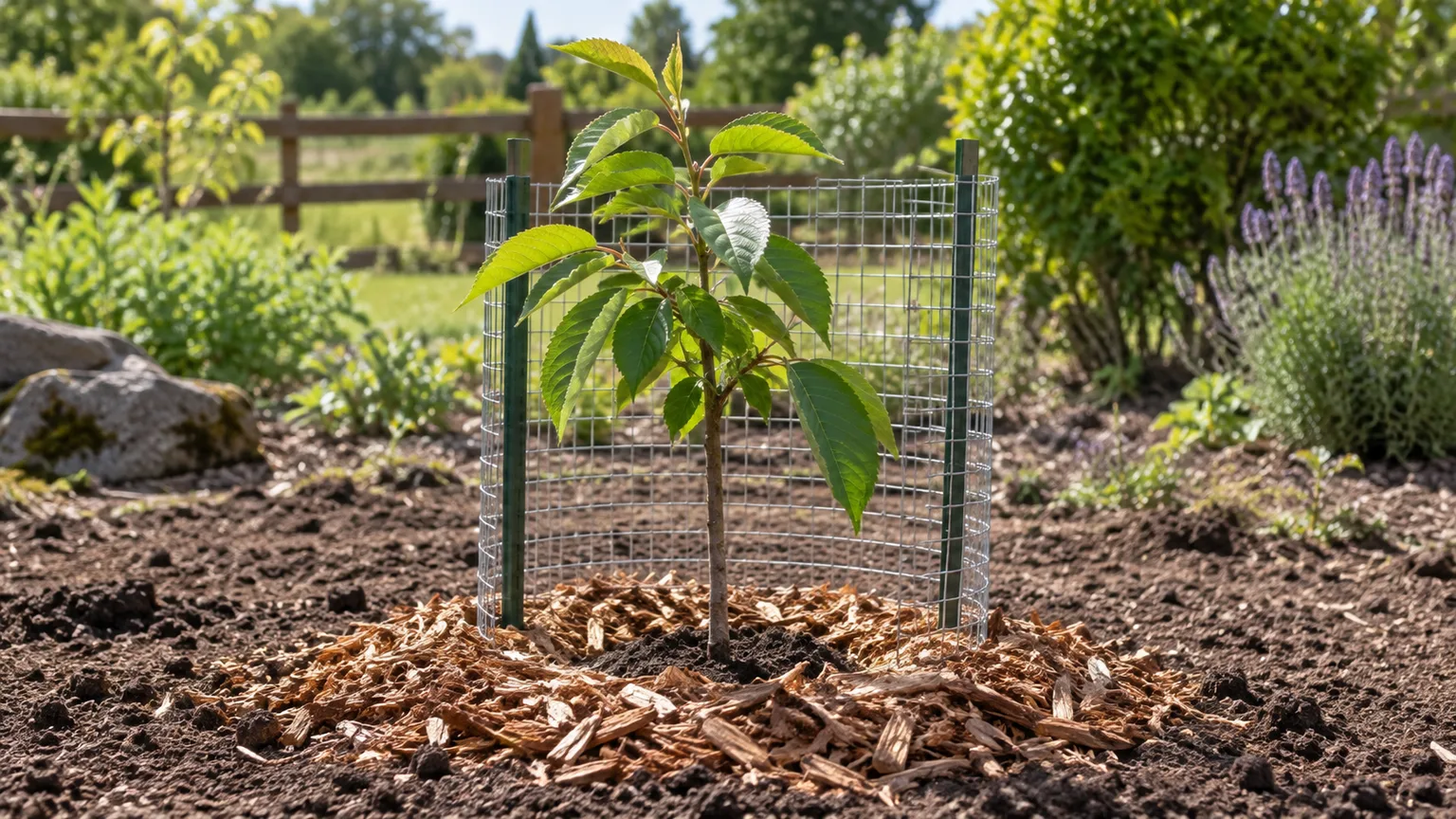
Dig a hole two to three times wider than the root ball but no deeper than its height. Set the root flare level with the surrounding grade or slightly above it in slow-draining soil; never bury the trunk to make the tree look stable. If a container root ball has circling roots, loosen or redirect the outer roots so they can grow into the site. Remove the container, synthetic twine, and any material that will constrict the trunk. Gardening Know How likewise recommends a broad hole, planting at the surrounding soil level, and avoiding a heavily amended hole.
Backfill with the soil you removed, breaking up large clods as you go. Do not pack it hard or put a pocket of compost or rich potting mix around the roots; the goal is to let new roots move into the surrounding ground. Add water partway through backfilling to settle soil around the root ball and reduce large air gaps. When the hole is filled, water again slowly over the root zone.
Stake only if the tree rocks or its root ball cannot stay upright. Use flexible ties that allow some trunk movement and remove them once the tree is stable, usually within a year. Finish with a broad mulch ring, leaving the root flare visible and mulch pulled from the bark. Correct planting depth and drainage matter more than fertilizer.
Water the Root Zone, Not the Trunk
During the first growing season, check the original root ball and the soil just beyond it at least weekly, more often during hot, windy weather. Water slowly when the root zone begins to dry; do not wait for leaves to wilt, and do not water automatically if the soil is already wet. The root ball can dry faster than the surrounding soil, so feel both areas or use a soil probe rather than judging from the surface alone.
Apply water over the root ball and nearby soil, not as a daily splash against the trunk. A slow hose or drip line gives moisture time to soak in instead of running off compacted ground. A brief sprinkle may wet the surface while leaving deeper roots dry. Once water begins to pool or run away, pause and let it infiltrate before continuing. In prolonged dry spells, a deep soak is more useful than frequent, shallow watering.
Continue this attentive routine through the first year and into the second as needed; the exact schedule depends on rainfall, soil, heat, and root-ball size. As the tree establishes and new growth remains steady, gradually lengthen the interval between waterings. A mature tree may tolerate short dry spells better than a young one, but long droughts can still cause stress and reduce flowering the following season.
Too much water is not a safer default: if leaves droop while soil is wet, check drainage, root flare, and moisture several inches down before watering again. Keep irrigation off foliage and the trunk when practical. Epic Gardening recommends regular establishment watering and trunk-clear mulch, a better guide than a fixed calendar for every yard.
Mulch and Fertilize Only When They Help
Spread a two- to three-inch layer of shredded bark, leaf mold, or other coarse organic mulch over a broad area around the tree. Keep the material a few inches away from the trunk so bark stays dry and the root flare remains visible. A donut-shaped ring is safer than a mulch volcano piled against the trunk. Extend the ring outward as the canopy grows rather than making a deep mound near the stem.
Mulch moderates soil temperature, slows evaporation, and limits mower damage. It cannot replace drought watering or fix poor drainage. Replenish only enough to maintain a loose layer; avoid turf if it forces you to mow close to the bark.
Do not fertilize by habit. A weeping cherry growing at a normal rate in reasonably fertile soil often needs no annual feed. Extra nitrogen can push leafy shoots without solving root, light, or drainage problems, and a lawn fertilizer applied over the tree’s roots may deliver more than the tree needs. If growth is weak or leaves are abnormal, inspect water and roots first and use a soil test to identify a nutrient problem before applying fertilizer.
If a test confirms a deficiency, follow its recommendation or the product label. Compost can be a thin surface top-dressing beneath mulch, not a rich pocket around the roots. Epic Gardening also notes that established weeping cherries usually do not need fertilizer to flower; correct site problems instead of trying to force blooms with a general-purpose feed.
Maintain the Tree Through the Seasons
In late winter, inspect the trunk and branching structure while the canopy is bare. Look for storm damage, rubbing branches, a loose stake, mower wounds, and shoots appearing below a graft. Do not start cutting simply because the tree is dormant; flowering cherries generally need very little routine pruning, and each unnecessary cut creates a wound. The tree’s branch pattern is part of its appeal.
As buds swell in spring, enjoy the flowers and watch the forecast if a hard frost is expected. A late freeze can damage open flowers or emerging leaves even when the tree itself survives. Petals may fall quickly in warm, windy weather and last longer during cool spells. Once bloom finishes, check for dead tips, broken branches, or a pattern of wilting blossoms that may deserve a closer look. Avoid spraying insecticides while flowers are open; pollinators visit them.
During summer, water young trees through dry periods and maintain the mulch. This is also the pruning window recommended for some Prunus cultivars, especially where silver leaf is a concern. In fall, rake heavily diseased leaves and keep wet debris away from the trunk.
Why a Weeping Cherry May Not Bloom
First confirm the tree is established and its branches are alive. A recent transplant may spend its first seasons building roots before it flowers. Look for flexible branches with plump buds; do not cut healthy tips just to test them.
Next, consider light and weather. A tree receiving only a few hours of sun may flower lightly, while a late freeze can destroy blossoms that were already open. Buds can also be lost if someone pruned the tree heavily before bloom or removed the previous season’s flower-bearing growth. A healthy tree does not need a high-nitrogen fertilizer to “wake it up.”
If flowers fail for more than one season, review the site and cultivar tag, then inspect for dieback, cankers, or repeated leaf loss. Local spring temperatures shift bloom timing, so compare with similar cherries nearby. Good care supports flowering but cannot override the tree’s genetics, age, or a damaging frost.
Prune Lightly and Protect the Grafted Form
Ask whether a cut is necessary. Remove dead, broken, diseased, or rubbing branches; shorten a healthy branch only if it interferes with a path or structure. Do not shear the canopy, top the trunk, or cut every hanging tip to one height. Those cuts erase the natural outline and can stimulate dense upright shoots.
Pruning calendars differ. General tree advice often favors dormant-season work, while RHS profiles for weeping Prunus pendula cultivars recommend summer pruning (‘Stellata’ and ‘Pendula Rubra’); the Missouri Botanical Garden says to prune ‘Snow Fountains’ after flowering if needed. RHS notes summer timing to reduce silver-leaf risk in its tree-pruning guide. Because cultivar and local disease pressure matter, do not apply a generic winter rule blindly: for ordinary shaping, wait until flowering is over and choose a dry, mild period in late spring or summer. If local extension guidance recommends another window for your disease conditions, follow that regional advice.
For a small branch, use sharp, clean bypass pruners and cut just outside the branch collar. Clean tools between diseased cuts and avoid cold, wet weather. Washington State University Extension’s cherry guidance for commercial orchards warns that cuts can be infection sites in such conditions; the article concerns fruit production, but the weather caution is relevant. Hire an arborist for large, overhead, or structural limbs.
Remove Rootstock Shoots at the Union
Find the graft union before you decide which upright growth to remove. On many top-grafted trees, the union looks like a swelling, seam, or change in bark where the cascading cultivar joins the straight trunk. Shoots that emerge below that point belong to the rootstock, not the weeping crown. Letting them grow can create a second, upright canopy that competes with and visually overwhelms the selected cultivar.
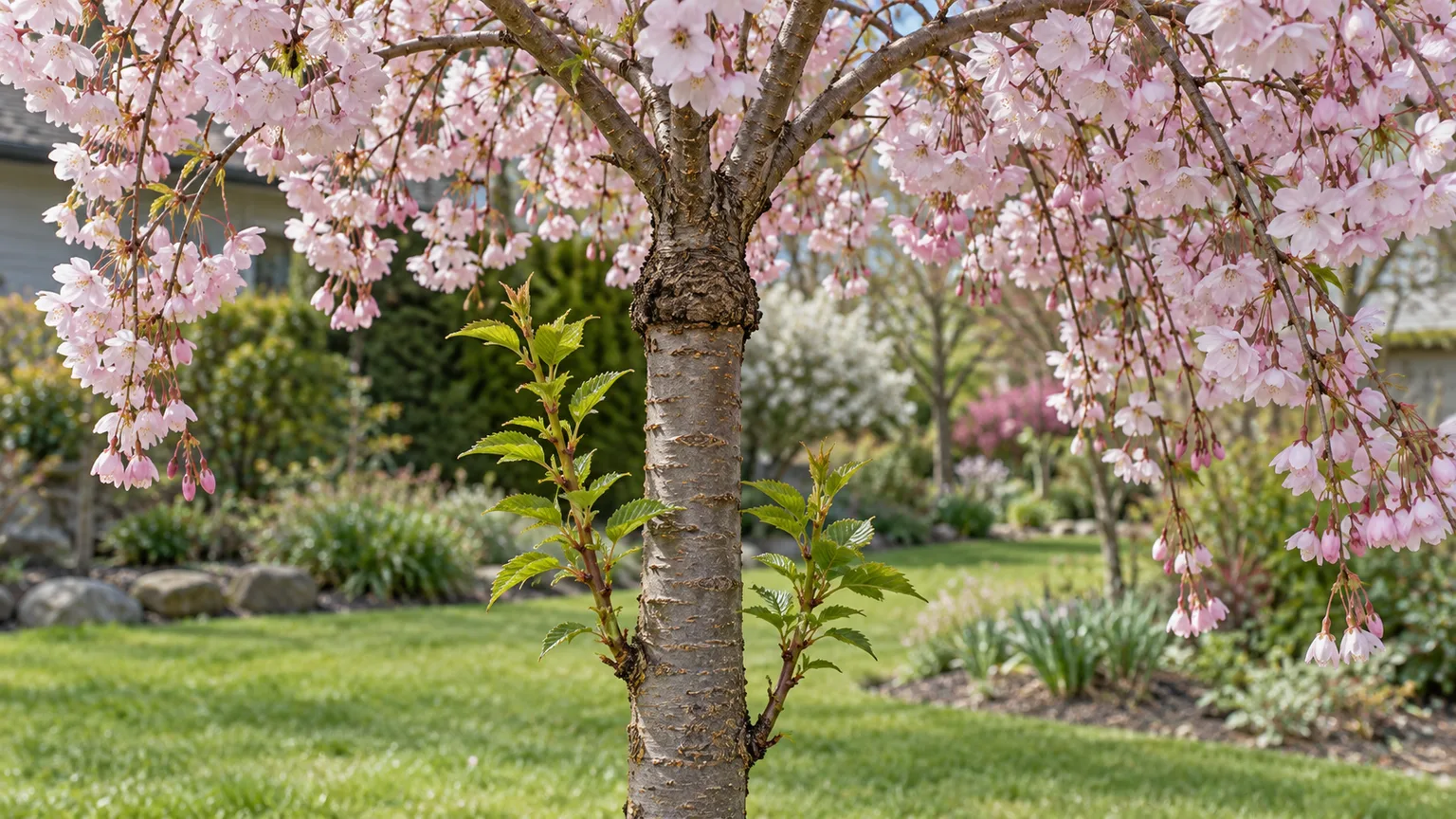
Remove a rootstock shoot while it is small, cutting it cleanly at its point of origin without damaging the trunk or leaving a tall stub. Check the base and the trunk below the graft a few times each season; suckers often reappear. Do not automatically remove every upright shoot above the graft, because that growth may be part of the chosen cultivar or a branch responding to light and pruning. Trace where it starts before cutting.
Not every weeping cherry is top-grafted, so a visible union is a clue rather than a requirement. Gardening Know How’s pruning guide recommends identifying the tree’s form before pruning, and the Missouri Botanical Garden documents natural and top-grafted ‘Snow Fountains.’ If the union is unclear, ask the nursery or an arborist before removing a major branch.
Diagnose Pests, Gum, Leaf Spots, and Decline
Weeping cherries can attract aphids, scale, caterpillars, borers, and other insects; they can also develop leaf spot, powdery mildew, cankers, blossom wilt, or root problems. A pest on one leaf does not automatically threaten the tree. Start with the affected part and the pattern: one branch, new growth, the trunk, or most of the canopy? Then check how wet the soil is and whether the problem appeared after drought, a storm, pruning, or spring bloom.
Look closely before treating. Sticky residue may be honeydew from aphids or scale; holes can be insect feeding or physical damage; yellowing may be seasonal or root-related. Note whether damage is spreading. Missouri Botanical Garden and RHS cultivar profiles list pests and diseases that can affect weeping cherries, but one symptom is not a diagnosis.
For a major tree problem, contact a local extension plant clinic or certified arborist rather than applying pesticide by guesswork. Confirm the pest or disease and follow the product label if treatment is warranted, especially while the tree is flowering and pollinators are active.
Treat Gumming and Dieback as Clues, Not Diagnoses
Amber or clear sap on a cherry trunk is gummosis, a response to stress or injury rather than the name of one disease. Check the exact location for cracked or sunken bark, a pruning wound, mower or string-trimmer damage, a borer entry hole, sawdust-like frass, or dead wood above the affected spot. A canker can produce bark lesions and dieback; insect injury and environmental stress can also lead to gum. The appearance of gum alone cannot tell you which cause is present.
Do not scrape away healthy bark or seal the wound with paint. Photograph the trunk and affected branch, look for sunken bark or similar symptoms elsewhere, and avoid extra cuts in wet weather. Washington State University Extension describes how cool, wet conditions and fresh wounds can favor bacterial canker in sweet cherries; use that as disease context, not a treatment recipe for an ornamental tree.
If the trunk is girdled, multiple branches are declining, or gum is paired with cankers, have the tree assessed. Do not apply insecticide based only on sap; the wrong product may harm beneficial insects and miss the cause.
Separate Moisture Problems From Leaf Disease
Wilting, yellowing, or early leaf drop can follow either too little water or too much. Feel the soil several inches down near the root ball. If it is dry and the tree is young or the weather has been hot, water deeply and recheck; if it is wet, soggy, or sour-smelling, pause irrigation and investigate drainage. A tree that wilts in wet ground may have damaged roots, so adding water can intensify the problem.
Leaf disease often leaves a visible pattern. Dark or purple spots, yellow halos, and early leaf drop point toward leaf spot; a white coating suggests powdery mildew. Check several leaves and whether symptoms are spreading. Rake diseased leaves and avoid routinely wetting foliage; do not strip the canopy after seeing a few spots.
Root trouble is more likely when decline coincides with wet soil, poor drainage, or a buried trunk flare. Correct moisture conditions before considering fertilizer. If decline continues or the trunk has cankers, seek a local diagnosis and share close photographs plus recent watering history.
Propagate With Realistic Expectations
Most named ornamental cherries are selected for a particular flower, size, or cascading form and are commonly sold as grafted trees. Seed from a cultivar is not a dependable way to recreate that same combination: offspring can vary, and a seedling will not inherit the grafted trunk-and-crown arrangement. Grow a seedling if you want an experiment, not if you need an exact replacement for a tree whose flowers and habit you already like.
Cuttings can sometimes root; the RHS profile for Prunus pendula ‘Stellata’ lists early-summer softwood cuttings with bottom heat as a possible method. Success is not guaranteed, and a cutting lacks the selected rootstock of a top-grafted tree. Grafting or budding preserves a cultivar while pairing it with a chosen root system, but both require practice.
For a predictable landscape tree, buy a named, nursery-grown cultivar and confirm whether it is naturally weeping or grafted. Check that the graft union is sound, the root flare is visible, and the tag lists mature spread and hardiness information. If you want to learn propagation, begin with a small trial and keep the original tree as your reference; do not remove its main branches to collect material.
Conclusion
The best weeping cherry care begins before the tree goes into the ground: choose a cultivar whose mature canopy fits the site, give it sun and free-draining soil, and plant the root flare at grade. Water the root zone consistently while the tree establishes, use a broad but trunk-clear mulch ring, and fertilize only when a soil test gives you a reason.
Once the tree is growing well, protect its natural cascade by pruning sparingly. Identify the graft union before removing shoots, favor a dry post-bloom or summer window when appropriate for your region, and treat gum, leaf drop, and dieback as symptoms to investigate rather than cues to spray. When a cultivar matches the space and the roots stay healthy, the tree can provide the spring display you planted it for without constant corrective work.