How to Water Plants While You’re on Vacation
Learn how to water plants while away on vacation, with trip-length plans for houseplants, garden beds, containers, and hanging baskets.
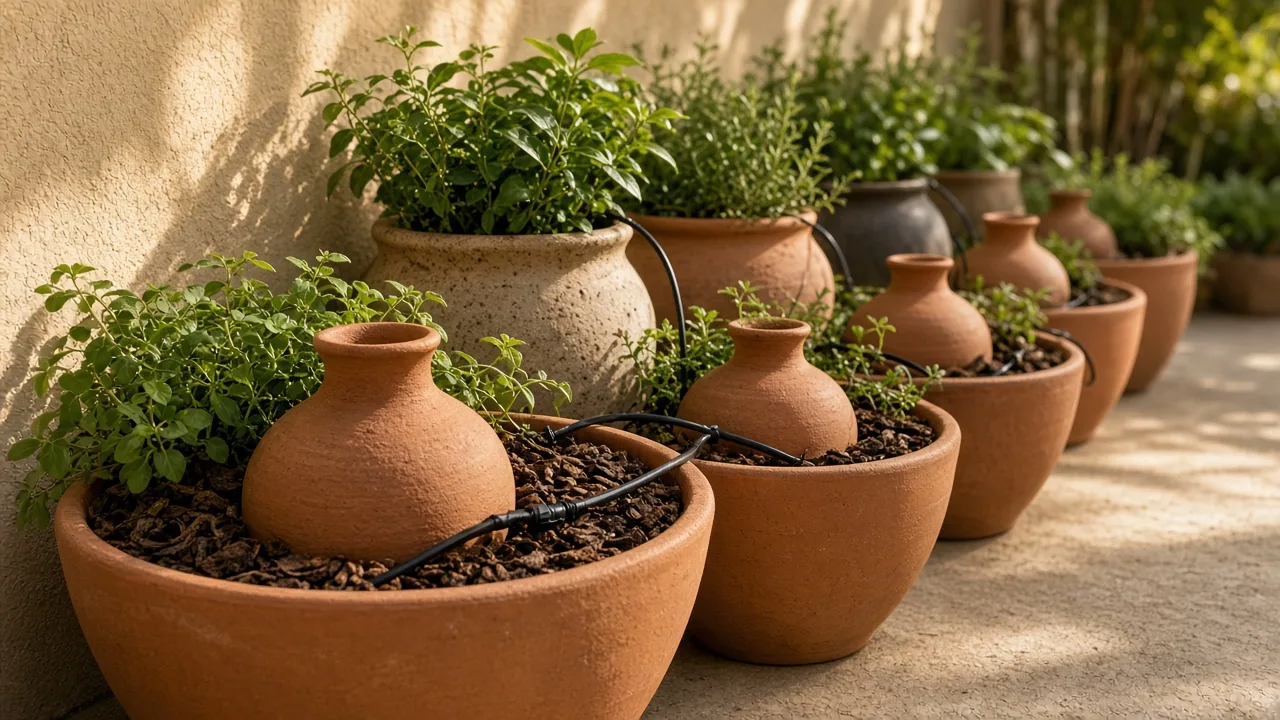
The safest vacation watering plan is the simplest one you have tested. A houseplant wick, a shaded cluster of patio pots, a drip line on a timer, and a neighbor who knows which containers dry fastest can all work—but each has different limits. Choose according to how long you’ll be gone, how quickly the plants normally dry, and what would happen if the system stopped or ran too long.
Start by sorting plants into indoor pots, outdoor containers, hanging baskets, in-ground beds, and newly planted trees or shrubs. Water thoroughly before departure, reduce unnecessary heat and wind exposure, then add a backup only where the plant’s normal watering interval is shorter than your trip. For valuable plants, very hot weather, or an absence beyond a week or two, a person checking in is more dependable than an unmonitored gadget.
Choose a watering method by trip length and plant risk
There is no number of days that is safe for every plant. A mature snake plant in a large pot can use water slowly, while a small basil pot on a sunny balcony may dry out in a day during hot, windy weather. In-ground plants also vary: established shrubs have a larger root zone than a recently planted perennial, and newly planted trees need closer attention than established trees.
Use the plant’s usual interval as your baseline. If you normally check a plant every six or seven days, a weekend away may need only a thorough watering and a cooler location. If it already needs water every day or two, a week away calls for a sitter or a tested system sized for that plant. Two weeks or more usually warrants a person or a dependable automatic system with someone available to respond if it fails.
Triage the plants that need attention first
Prioritize plants by how fast they lose water and how costly a missed watering would be. The Royal Horticultural Society recommends paying particular attention to containers, hanging baskets, vegetables, and newly planted trees or shrubs; those categories are useful starting points because their roots have less access to stored soil moisture or their foliage loses water quickly (RHS holiday-care guidance).
| Priority | Plants to check first | Best default plan |
|---|---|---|
| Highest | Hanging baskets, small sunny pots, seedlings, thirsty vegetables, newly planted trees and shrubs | Ask someone to check them; use a tested backup where practical |
| Middle | Larger outdoor containers, established annuals, tropical houseplants in bright rooms | Deep watering plus shade or a proven wick, mat, or drip setup |
| Lower | Established in-ground shrubs and perennials, large pots in cool shade, drought-adapted plants | Water deeply before leaving and reassess for heat or drought |
This is a triage tool, not a species guarantee. A heat wave, strong wind, a tiny pot, rootbound mix, or an unusually exposed location can move a plant into a higher-risk group. If you have only one person available for a quick visit, ask them to focus on the highest-risk group instead of watering every plant on a rigid route.
Prepare plants during the two days before you leave
Do the setup early enough to notice problems. One or two days before departure, water each plant according to its normal needs, clear blocked saucers and drainage holes, inspect for pests, and remove weeds that compete for moisture outdoors. Do not add fertilizer or repot at the last minute: those changes can alter water demand or stress roots just when you cannot monitor the response.
The morning you leave, water the root zone thoroughly rather than giving every plant a quick surface splash. For pots, apply water until it drains from the bottom, then let excess water run off. A very dry, peat-heavy or rootbound root ball can shrink away from the pot wall and let water race down the sides; if the mix is hydrophobic, soak the pot slowly from below until the center is damp, then drain it. Do not leave a pot sitting in deep water as a substitute for checking drainage.
For garden beds, water slowly enough for moisture to penetrate the root zone instead of running across the surface. UF/IFAS recommends a deep watering before leaving and describes wetting the upper 12 inches of soil as a useful target for landscape plants, while also emphasizing local conditions and irrigation rules (UF/IFAS vacation plant care). You do not need to force that depth in every soil or for every plant; sandy beds, compacted soil, shallow-rooted plants, and slopes behave differently. Check below the surface with a trowel or moisture probe in a representative spot.
Rehearse every watering system before departure
Set up a DIY wick, watering bulb, reservoir, hose timer, or drip line several days ahead. Watch it through at least one normal watering cycle and confirm both ends of the system are doing what you expect. A reservoir that empties immediately, a wick that stays dry, an emitter that misses its pot, or a hose connection that leaks is easier to fix while you are home.
For automatic outdoor watering, check every pot and bed after the system runs. Verify that the farthest emitter delivers water and that the root zone—not only the mulch or surface—is moist. Look for runoff, water pooling around stems, wet siding, and a timer that did not switch off. The practical guidance from Gardener’s Supply also recommends trying timer settings before a trip; the duration that works depends on the system and the plants, so use a soil check rather than copying a schedule from another garden (Gardener’s Supply vacation-watering guide).
Keep indoor houseplants hydrated while you’re away
Indoor plants usually lose water more slowly than exposed outdoor pots, but a sunny window, warm room, small pot, or thirsty species changes the calculation. Move plants a few feet back from hot direct sun or into bright indirect light, and group them where air still circulates. The goal is to reduce heat and drying without sealing plants into a humid, stagnant enclosure.
Water each plant according to its own moisture preference. A fern and a cactus should not share the same reservoir just because they sit on one shelf. Plants that prefer a dry interval may rot if their soil remains saturated; moisture-loving plants may tolerate a short period with their pot standing above a shallow reserve. The University of Minnesota Extension notes that most container plants prefer moist rather than soggy soil and cautions that prolonged waterlogged conditions are not beneficial (UMN Extension on container moisture).
Use a wick for a tested, low-cost reservoir
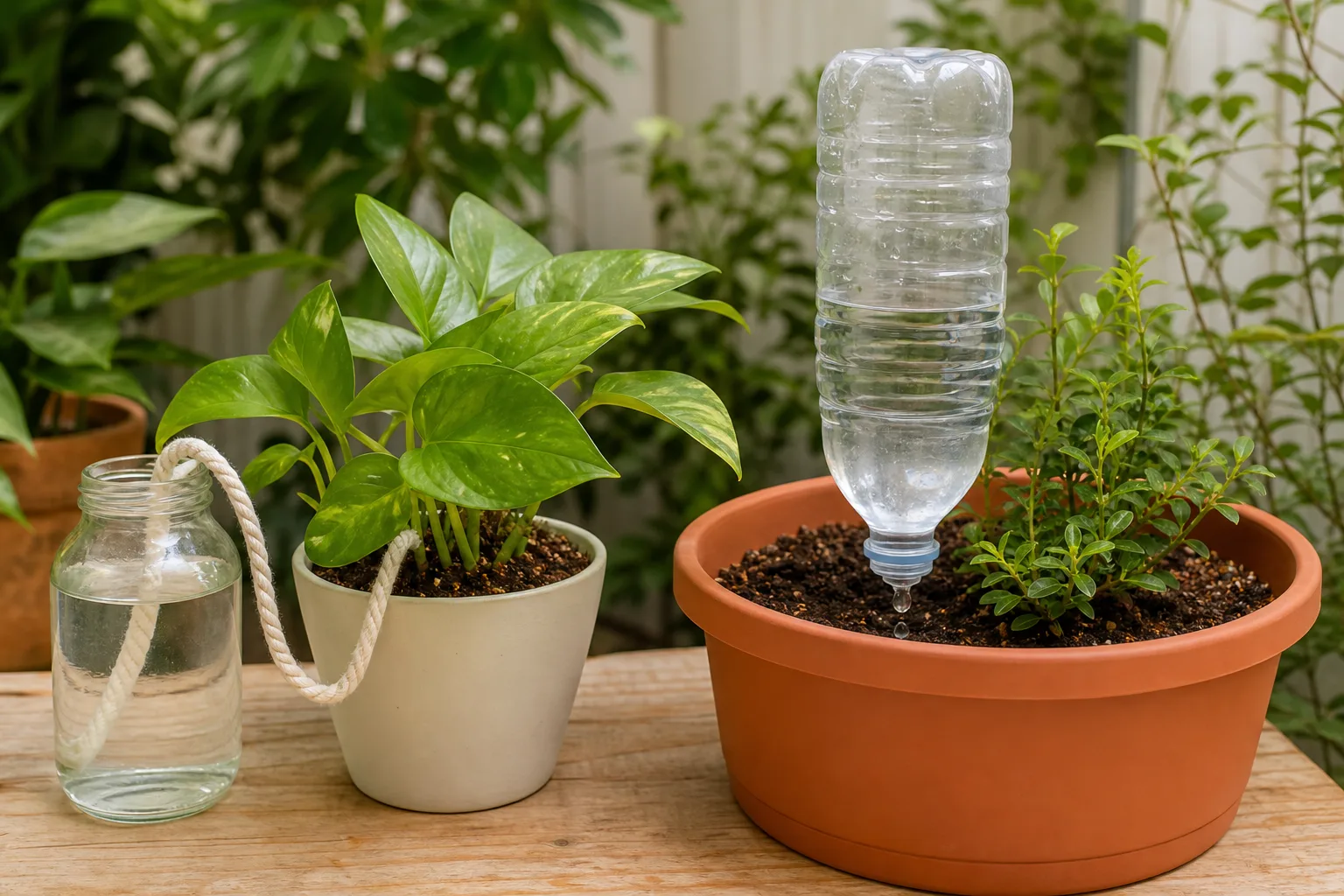
A wick moves water from a reservoir into potting mix by capillary action. Use absorbent cotton cord or a strip of cotton fabric; place one end below the water line and the other end a couple of inches into already-moist soil. Set the reservoir near the plant and keep the wick path secure so it cannot slip out when the water level drops.
The reservoir’s height, wick material, potting mix, and plant’s water use all affect the flow. A wick that works for one pot may overwater a smaller pot or fail to keep up with a larger, thirstier plant. Test it for several days while you are home: compare the reservoir level, pot weight, and soil moisture, then adjust the number or thickness of wicks. UF/IFAS describes this method for indoor plants and estimates that it can extend moisture availability for a couple of weeks, but that is not a guarantee for every pot or climate (UF/IFAS wicking method).
Use a separate wick and reservoir for plants with different moisture needs. If you connect several plants to one bucket, place the water source high enough for the wick to work but stable enough that it cannot tip. Keep it away from electronics, polished furniture, and floor seams; a slow leak over many days can cause more damage than a dry leaf.
Use trays and capillary mats with a drainage check
For a short trip, a wide saucer or shallow tray can supply a small reserve to a plant that tolerates bottom watering. Water the plant first, then add only a shallow layer to the tray so the drainage holes can draw moisture without submerging the pot for the entire trip. Check that the pot sits level and cannot tip, and keep water below the bottom of the root ball if the plant is sensitive to soggy soil.
Capillary matting or a thoroughly wet towel can work for several small pots with drainage holes. Set the fabric on a waterproof surface, place pots on it, and confirm that the material stays in contact with the drainage openings. This method can be convenient in a bathtub or sink for moisture-loving plants, but use it only after checking that the plants tolerate it, the bathroom is not hot and dark, and the tub cannot overflow. Do not leave succulents, cacti, or plants in cachepots without drainage standing in water.
UF/IFAS suggests that a saucer setup may extend watering by roughly a week for some indoor plants, while a bathtub arrangement may buy additional time for plants that need more water. Treat those as conditional examples, not a promised duration; pot size, plant demand, room temperature, and the amount of water held in the tray all matter. Empty leftover water and inspect the soil when you return.
Water in-ground beds and young trees efficiently
Established garden beds usually have a larger soil reservoir than pots, so many plants can manage a short trip after a slow, deep watering. Focus on recently planted shrubs and perennials, vegetable crops in active growth, shallow-rooted annuals, and plants in sandy soil or full sun. If rainfall is forecast, avoid programming a system that will water regardless of conditions unless it has a functioning rain sensor or someone can adjust it.
Mulch helps slow evaporation and keeps the surface cooler, but it does not replace root-zone watering. UF/IFAS recommends around three inches of mulch for landscape beds; apply it evenly and keep it away from direct contact with stems and trunks. A thin, settled layer may be enough if a bed is already mulched. Overly deep mulch can hide the soil, hold excess moisture at the crown, or make it harder to see whether irrigation reached the roots.
For a young tree, water slowly over the root ball and surrounding soil rather than pouring water against the trunk. A watering bag can provide slow delivery for some small trees, but it wets only a limited area and must be refilled. University of Missouri Extension notes that large trees should be watered around the drip line, under the outer reach of their branches, and that small tree bags cover only a limited radius (University of Missouri Extension vacation plant care). If a new tree is part of the landscape, arrange a person to check it during an extended absence rather than assuming one filled bag will last.
Protect outdoor pots and hanging baskets
Outdoor containers are often the first plants to suffer because they hold less soil than a bed, and wind and sun hit the whole pot. Before leaving, move portable containers to a bright but shaded, sheltered place—especially out of harsh afternoon sun. Group pots close together to make them easier to water and reduce their exposure, but leave enough space for airflow and access to each container.
Hanging baskets need extra care because they are elevated and exposed to moving air. If possible, take them down and set them on the ground in shade. A basket that normally dries by afternoon may need a sitter or a tested irrigation line even when larger ground-level containers are fine. The RHS specifically flags baskets and outdoor pots as high-priority plants during a holiday absence (RHS holiday-care guidance).
If a pot is too heavy to move, create temporary shade with a nearby structure or taller plants without blocking all light. A pot sunk a few inches into a garden bed can stay cooler, if that is practical and safe for the plant. Do not move tender plants suddenly into deep darkness or leave them in a closed carport or greenhouse that can overheat.
Use shade, grouping, and mulch to slow drying
These changes reduce water loss, so a backup system has less work to do. Add a modest layer of clean mulch to the surface of large containers, leaving a gap around the stems. Group plants with similar water needs so a person or irrigation line can serve them together; do not cluster a moisture-loving fern beside a drought-tolerant succulent and water both as if they were one plant.
Check whether the new location will actually be cooler through the hottest part of the day. A wall can reflect heat, a balcony can funnel wind, and a shaded spot under a roof may receive no rain at all. The RHS recommends moving portable pots into shade and shelter, and UF/IFAS likewise advises grouping outdoor containers and shifting them into shade (UF/IFAS container guidance). Leave a note for anyone watering so they know which pots remain in full sun and which should not receive extra water.
Automate watering with drip lines or a soaker hose
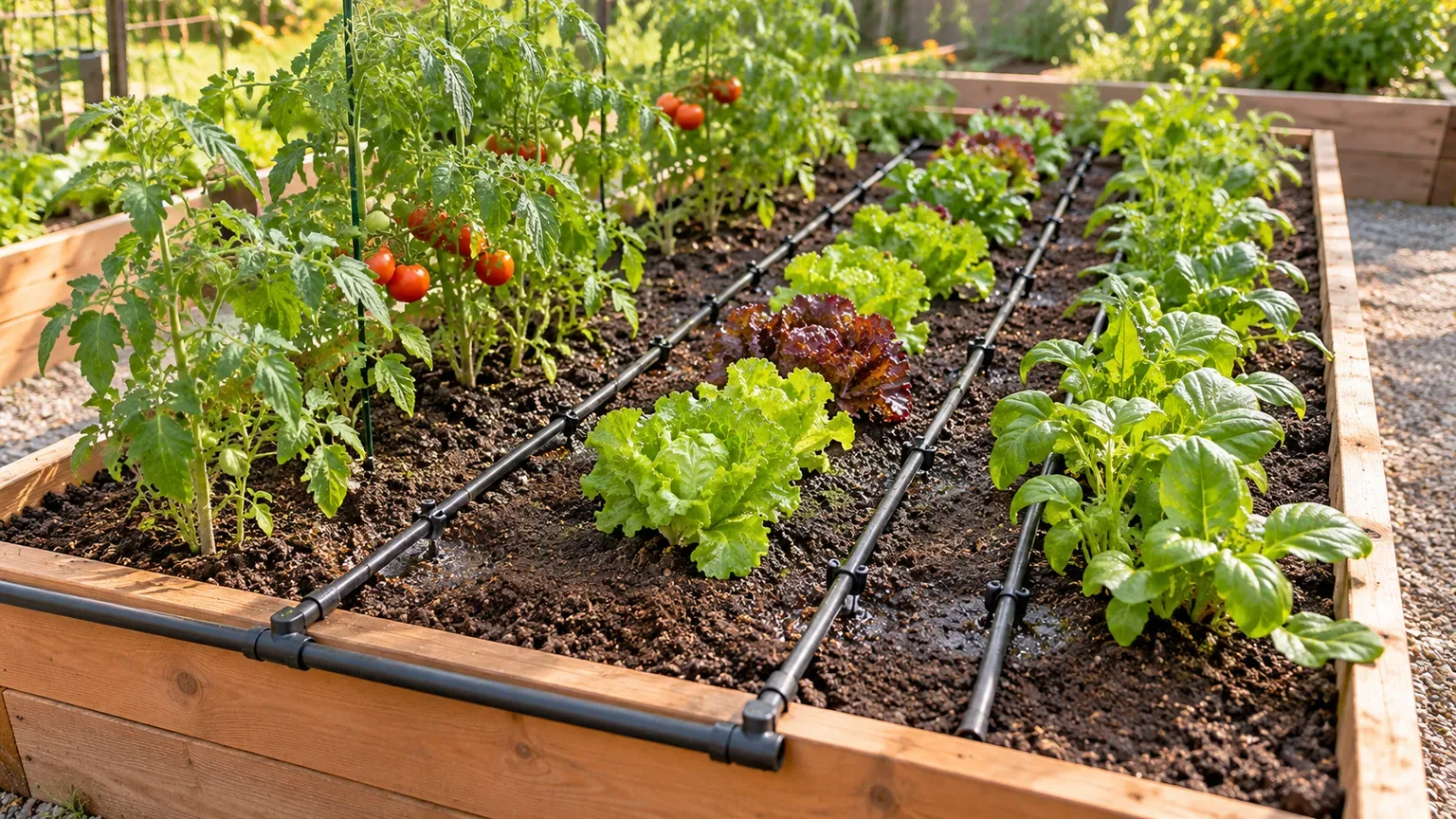
For a vegetable bed, many patio pots, or repeated summer trips, a hose-end timer connected to drip emitters or a soaker hose can be more consistent than improvised bottles. Drip lines put water near the root zone and can reduce water loss compared with spraying a large area, but only when the emitters are placed correctly and the flow is tested. A timer does not know whether a plant needs water unless the system also responds to rain or soil moisture.
Lay the line so every container has an emitter or receives water from a short branch. Avoid assuming that one emitter wets multiple pots equally. In a bed, secure soaker hose over the root zone and cover it lightly if appropriate; check that water exits along the full length instead of only near the faucet. The RHS describes drip irrigation as a targeted way to deliver water to roots, and UF/IFAS recommends installing a microirrigation setup in advance and checking it before departure (RHS holiday irrigation advice; UF/IFAS irrigation guidance).
Calibrate the timer and plan for rain or failure
Run the system while you are home for several scheduled cycles. Begin with a conservative duration, then dig or probe below the surface to see how far moisture moved. Increase or decrease the run time based on soil type, emitter rate, pot size, weather, and plant response. Watering for a fixed number of minutes is not a universal measure because different systems deliver very different volumes.
Use a rain sensor or weather-aware controller if you have one, and follow local watering restrictions. Test that the timer opens and shuts off, batteries are fresh, hoses are connected tightly, and the faucet will not leak under pressure. Walk the entire route after the first cycle and again the next day. If a single failure could flood a porch or kill a bed, ask a neighbor to check the setup at least once during a long trip.
Sprinklers can be adequate for a lawn or a broad bed when coverage is even, but they may miss pots, waste water on paths, or wet foliage without saturating roots. Set them for a permitted early-morning window and check that the outer edges receive water. If your timer cannot adjust for rain, use a shorter, less risky schedule and arrange a check-in rather than leaving the system running heavily for days.
Avoid shortcuts that create more risk than they solve
Do not soak every plant in the house simply because you are leaving. Roots still need air; plants that prefer a dry-down, pots without drainage, and soil already wet below the surface can suffer from excess water. A deep watering means thoroughly moistening the root ball and allowing drainage, not leaving all plants in standing water for the duration of the trip.
Treat commercial watering globes, upside-down bottles, and water-holding crystals as supplemental tools that must be tested. A bottle can empty too fast, clog, or deliver too little; a globe may not suit a plant in a chunky mix; and soil additives are not a substitute for a calibrated irrigation system. University of Missouri Extension notes that hydrogel products are not always reliable and do not conserve water (University of Missouri Extension). If a low-cost device is the only plan for a sensitive plant, try it on a less valuable plant first and keep a sitter as a fallback.
Avoid pruning healthy foliage aggressively right before a trip. Removing dead flowers or harvesting ripe produce can reduce clutter and make it easier to see the plant, but major pruning creates stress and can expose previously shaded leaves to stronger sun. Do not add fertilizer to “help” a plant survive; it does not replace water and can encourage growth that increases demand. Avoid moving plants abruptly into severe shade if they need bright light, and do not close houseplants in plastic bags unless you know the species and have controlled heat and airflow.
Plan differently for trips longer than two weeks
For an absence of more than two weeks, prioritize a person who can inspect plants, refill reservoirs, adjust for weather, and notice pests or equipment failures. UF/IFAS recommends sending houseplants to a sitter for absences beyond four weeks or having a sitter visit large plants at least weekly, noting that pests can become a problem even when moisture is adequate (UF/IFAS extended-absence guidance). The exact check-in schedule depends on conditions, but the principle is important: a reservoir cannot diagnose a sick plant or repair a disconnected hose.
Make watering instructions specific and short. Mark only the pots that need water during the expected interval, state how to check them (for example, “water when the top inch is dry”), and say how much to apply or where to stop. Put the correct watering can and hose nozzle nearby, remove obstacles, and show the sitter how to shut off the faucet. Mention pets, alarm systems, locked gates, local water restrictions, and any plant that must not sit in a full saucer.
If no sitter is available, combine methods rather than expecting one device to manage the whole collection. Move indoor plants away from hot windows, use tested wicks for appropriate pots, group outdoor containers in shade, mulch beds, and install a calibrated timer for thirsty plants. For a month away, ask a trusted person to check at least occasionally; otherwise be realistic that weather, pests, and system failures make a no-visit plan uncertain.
Check plants carefully when you return
Do not respond to every wilted leaf with a heavy watering. First check whether the soil is dry, damp, or saturated several inches down, and inspect the drainage holes and saucers. A dry pot that sheds water may need a slow soak or temporary bottom-watering so the root ball can rehydrate; a pot that is wet and limp may have a drainage or root problem and needs air, not more water.
For containers that dried out, water slowly in two or three passes with a few minutes between them so the mix can absorb moisture rather than sending it straight through gaps. Let the pot drain fully. Remove only clearly dead or broken growth after the plant has had time to recover, and wait before fertilizing a stressed plant. For beds, check soil moisture near the root zone and water the most stressed plants first rather than running every zone automatically.
Review what happened while the setup is fresh. Note which pots needed more water, whether any reservoir emptied early, and if an emitter left part of the bed dry. Adjust the next trip plan based on those observations. A short log with departure date, weather, pot locations, and system settings turns the next absence into a repeatable routine rather than another guess.
Conclusion
To water plants while you’re away on vacation, begin with the plants that dry fastest, water the root zones thoroughly, and reduce heat and wind exposure. Use a tested wick or capillary mat for suitable indoor plants, mulch and shade outdoor containers, and rely on a person or calibrated drip irrigation for high-risk plants and longer absences.
The essential step is a trial run. A simple system that you have watched deliver the right amount is safer than an elaborate setup you assemble on the way out the door. Match the plan to the trip, leave clear instructions, and give someone a way to spot a problem before it becomes a loss.



