WD-40 on a Lawn Mower Blade: What It Does
WD-40 on a lawn mower blade can reduce grass buildup and help protect metal. Learn the safe way to use it—and the mowing habits that actually improve turf.
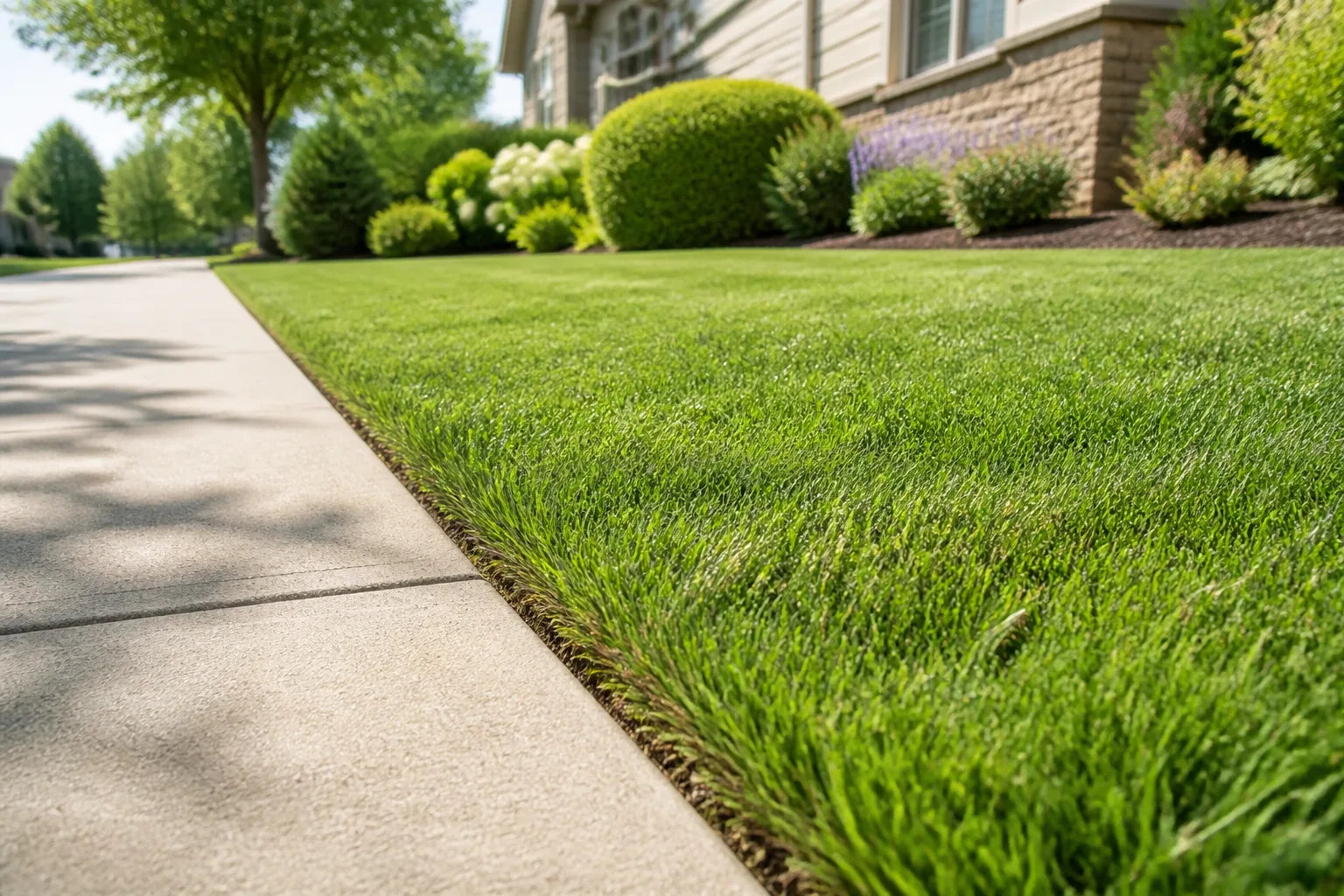
WD-40 can make mowing cleanup easier, but it does not make grass grow. The useful part of the trick is mechanical: a light film can make fresh clippings less likely to weld themselves to the metal, help displace moisture, and slow surface rust on a clean mower blade. The lawn benefit is indirect because a cleaner, better-maintained mower is more likely to keep cutting evenly.
That distinction matters. WD-40 cannot sharpen a dull blade, correct a mower set too low, or compensate for cutting wet, overgrown grass. If your lawn has brown, shredded tips, the priority is blade condition and mowing technique; the can is a small maintenance add-on, not the treatment.
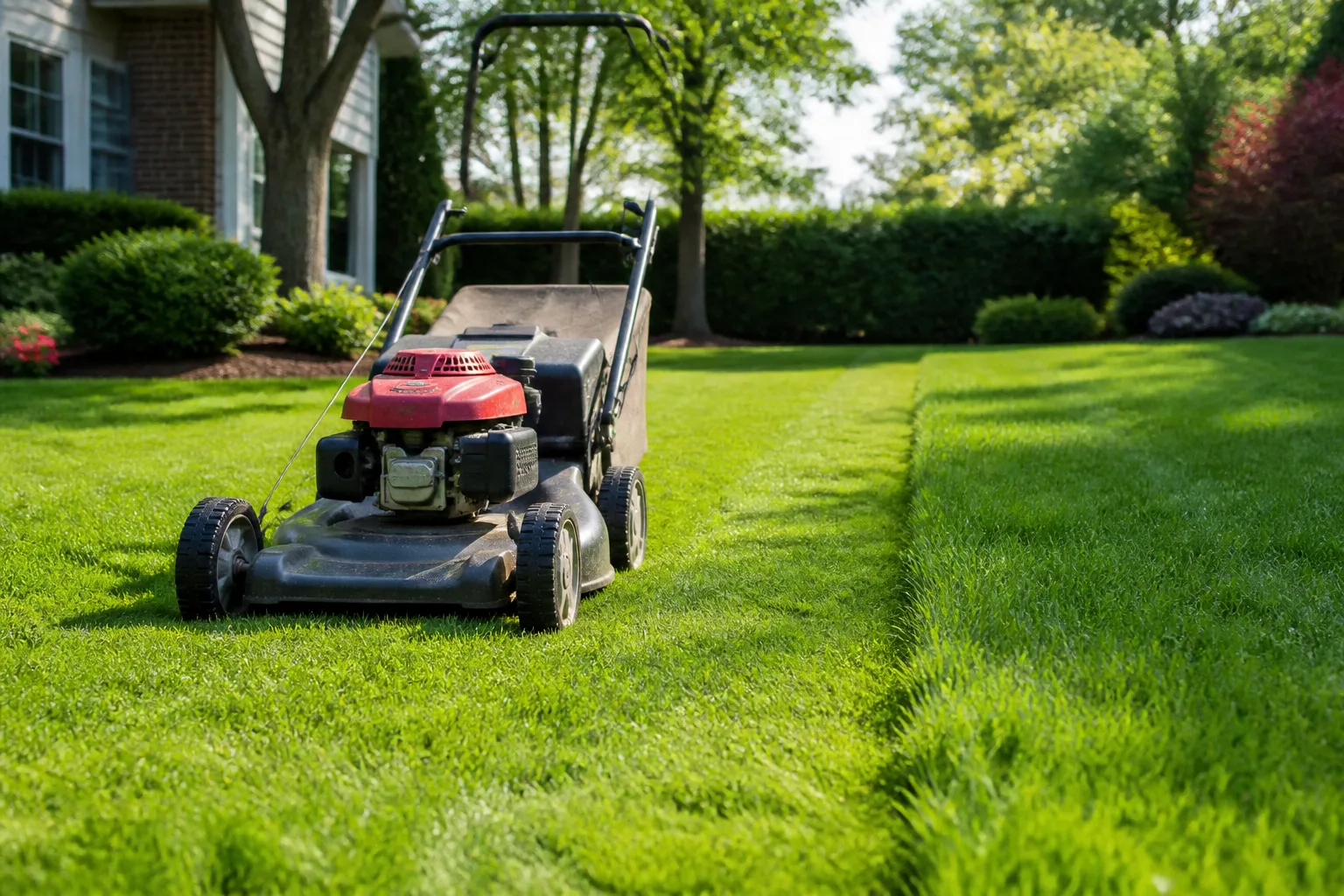
The short answer: yes, but WD-40 helps the mower more than the grass
The manufacturer specifically lists keeping grass from sticking to mower blades as a use for WD-40 Multi-Use Product. It also describes the product as a way to protect metal from rust and corrosion, displace moisture, and lubricate moving parts (WD-40’s mower-blade guidance; WD-40’s maintenance uses).
In practice, that makes the spray most useful before mowing or during cleanup—not while the blade is spinning, and not as a substitute for sharpening. A thin, wiped-down film may help clippings release from a dry blade and reduce the time moisture sits against bare or scratched steel. You still need to disconnect the mower, inspect the cutting edge, and follow the product label and mower manual.
For the grass, the bigger wins are a sharp blade, a suitable cutting height, dry mowing conditions, and a schedule that removes only a small portion of the leaf at once. Colorado State University Extension lists mowing height and frequency as the two most important mowing factors and warns that a dull rotary blade shreds and frays leaf blades instead of cutting them cleanly (Colorado State University Extension).
What WD-40 does on a mower blade
WD-40 is a surface-maintenance product. It changes how water, rust, and debris interact with metal; it does not change the geometry of the blade edge or supply the lawn with nutrients. That is why the spray can be worthwhile in a narrow role while still being overhyped as a grass-growing trick.
What it helps with: buildup, moisture, and corrosion
Fresh grass is especially sticky when the lawn is damp, the growth is tall, or the deck is already coated with old clippings. A light pre-treatment may reduce the bond between the grass residue and the blade, which makes post-mow wiping and scraping less frustrating. It may also help moisture leave the surface and slow rust on exposed metal, particularly around scratches, bolt holes, and edges that are not kept perfectly dry.
The benefit is greatest when the blade is already clean. Spraying over a thick mat of dried clippings only creates a wet, greasy layer on top of the problem. Remove the buildup first, then use the product sparingly as a protective finish. If the deck or blade is visibly rusty, treat the corrosion as a repair issue rather than assuming more spray will restore the metal.
WD-40’s own guidance also groups mower and saw blades with moving parts that need routine maintenance. That is useful context, but it is still product guidance: the exact mower manual has priority for approved lubricants, blade removal, deck washing, and where spray may be used.
What it cannot do: sharpen, feed, or cure a lawn problem
There are four common misunderstandings to eliminate before you reach for the can:
- It does not sharpen steel. A blunt edge stays blunt until it is filed, ground, or replaced.
- It does not fertilize grass. Petroleum-based maintenance spray is not a lawn nutrient and should not be deliberately broadcast onto turf or soil.
- It does not fix poor mowing height. A sharp, coated blade can still scalp a lawn if the deck is set too low.
- It does not diagnose brown patches. Brown grass may reflect drought, disease, heat, compaction, pests, scalping, or a torn cut; spraying the blade does not tell you which one.
If the blade leaves a ragged edge after cleaning and sharpening, replace it when the metal is cracked, bent, deeply gouged, or too thin to hold its original profile. A product film cannot make a structurally damaged blade safe.
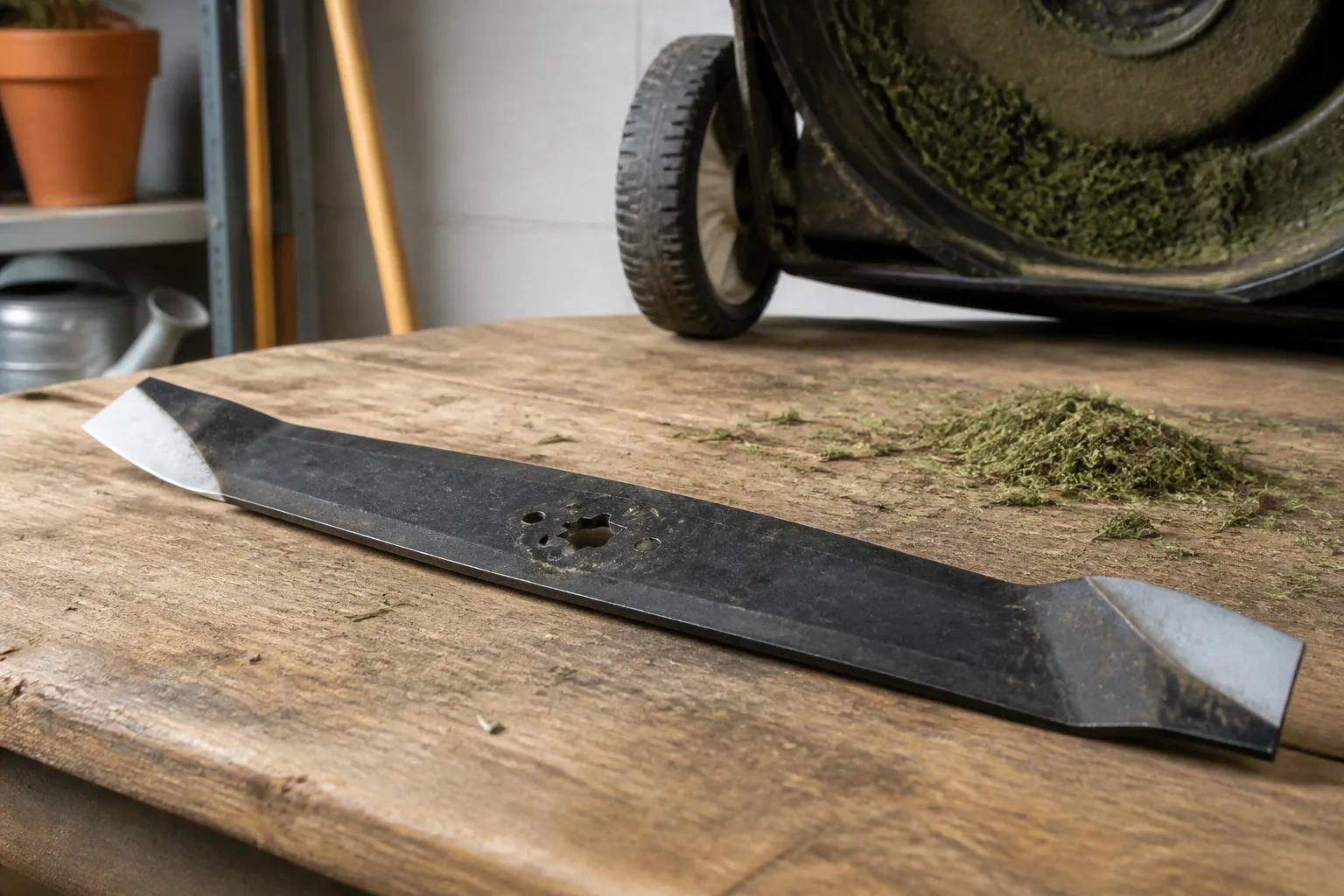
The safest way to use WD-40 on a mower
Treat this as a mower-maintenance task, not a spray-and-go shortcut. The blade is sharp even when the engine is off, and some mower designs can move unexpectedly if the blade is turned by hand. Briggs & Stratton’s mower troubleshooting guidance says to disconnect the spark plug before checking the blade and undercarriage, then inspect for nicks, bends, and debris (Briggs & Stratton). Battery and corded models have their own isolation steps, so use the owner’s manual when it differs from this general sequence.
Make the mower safe and clean the metal first
Start on a flat, well-lit surface with the mower stopped. For a gas mower, remove the spark-plug lead and secure it away from the plug; for a battery mower, remove the battery or safety key; for a corded mower, unplug it. Engage the parking brake on a riding mower and keep children and pets away from the work area.
Never put your hand under a deck to test whether the blade is free. Wear work gloves when handling the removed blade, and use a block or clamp to keep it from rotating while you loosen the bolt. If your mower manual says to tip the machine in a particular direction, follow it so oil and fuel do not enter the air filter, muffler, or carburetor.
Brush away loose clippings and scrape the underside with a plastic scraper or stiff brush. Avoid a metal tool that can gouge the deck, and do not use a pressure washer unless the manual explicitly allows it. If water is permitted, dry the blade and deck completely before applying any maintenance spray.
Apply a light coat, then wipe it dry
Spray a small amount onto a cloth or use the can’s narrow stream to wet the metal lightly. Coat the blade’s broad surfaces and the areas where residue sticks, but avoid saturating the spindle, belt, electrical parts, brake components, or the ground around the mower. For a deck, a wipe-on application gives you much better control than fogging the entire underside.
Let the film sit only long enough to loosen residue or leave a thin protective layer, then wipe away the excess. The finished surface should look lightly conditioned, not wet enough to drip. Allow the aerosol propellant and solvent to evaporate in a ventilated area before reinstalling the blade or starting the mower, and keep the can away from heat, sparks, flames, and the running engine.
Reinstall the blade in the correct orientation and tighten it to the manual’s specification. If you removed the blade for sharpening, balance it before reinstalling. An imbalanced blade can vibrate, cut unevenly, and strain the spindle even when the cutting edges are sharp.
When not to spray WD-40
Skip the spray when you cannot safely isolate the mower, when the blade is still wet or caked in debris, or when you are trying to solve a cutting problem that has not been inspected. A slippery film on the wrong surface can make handling more hazardous and can collect dust, sand, or clippings instead of preventing them from sticking.
Do not spray a running mower, spray toward the belt or electrical housing, or leave a puddle under the deck. Do not treat WD-40 as a lawn pesticide, fungicide, herbicide, or fertilizer. If the product label for your market gives a different instruction, that label wins.
Also skip it when the issue is a bent or cracked blade, a loose blade bolt, a damaged spindle, a leaking fuel system, or a deck that has lost structural strength. Those are repair or replacement decisions. A small-engine shop is the safer choice when you cannot identify the power-isolation step or when the blade bolt is seized and forcing it could damage the spindle.
The cut-quality checks that matter more than the can
After maintenance, look at the grass rather than judging success by how clean the blade appears. The strongest test is a clean, even cut across the lawn. If the tips still look torn or the mower needs multiple passes, address blade sharpness, height, speed, and mowing conditions before applying another coat.
Keep the blade sharp and follow the one-third rule
A sharp blade slices leaf tissue; a dull blade pulls and shreds it. The damaged tips dry to a straw-colored fringe, lose water more quickly, and make the entire lawn look gray-brown even when the roots are adequately watered. Colorado State University Extension recommends checking equipment regularly and sharpening rotary blades about every fourth mowing, especially for fescue and ryegrass; your soil, grass type, rocks, and mowing hours may require a different interval.
Use the lawn’s symptoms to shorten the schedule. Sharpen sooner after hitting gravel, a curb, or a hidden branch, or when you see fraying along most of the cut line. Replace rather than sharpen when the blade has a crack, bend, deep impact damage, or a cutting edge worn too thin to match its original shape. If you sharpen at home, keep the original bevel and balance the blade before installation.
The one-third rule is just as important: remove no more than one-third of the grass blade’s height in a single mowing. Cutting more at once strips away too much leaf area and can expose the crown, especially during heat or drought. If the lawn has become overgrown, raise the deck for the first pass and return a few days later for a normal cut instead of trying to reclaim the final height in one session.
Set cutting height by grass type and weather
There is no single perfect mowing height for every lawn. Cool-season grasses often benefit from a taller setting during hot, dry weather, while warm-season grasses are commonly maintained lower; the species, cultivar, shade, traffic, soil, and local climate all change the target. Use the mower manual and local extension recommendations as the final authority rather than copying a number from another yard.
As useful benchmarks, Colorado State University Extension gives 2 to 3 inches for several common Colorado lawn grasses and warns that mowing below 2 inches reduces drought and heat tolerance. BBC Gardeners’ World Magazine recommends keeping many lawns around 2.5 to 4 centimeters in ordinary conditions, leaving high-wear or shady patches longer, and raising the blade in hot, dry weather (BBC Gardeners’ World Magazine’s mowing guide). Gardening Know How likewise emphasizes that the height should change with season and grass type, not stay at the factory setting all year (Gardening Know How).
Measure the deck height on a flat surface if you are unsure what the mower’s numbered notches mean. A slightly taller cut is usually the safer temporary choice when the lawn is heat-stressed, recovering from drought, or growing unevenly. A taller canopy shades the soil and keeps more leaf area available for photosynthesis, but leaving grass excessively tall and then removing half of it is still stressful.
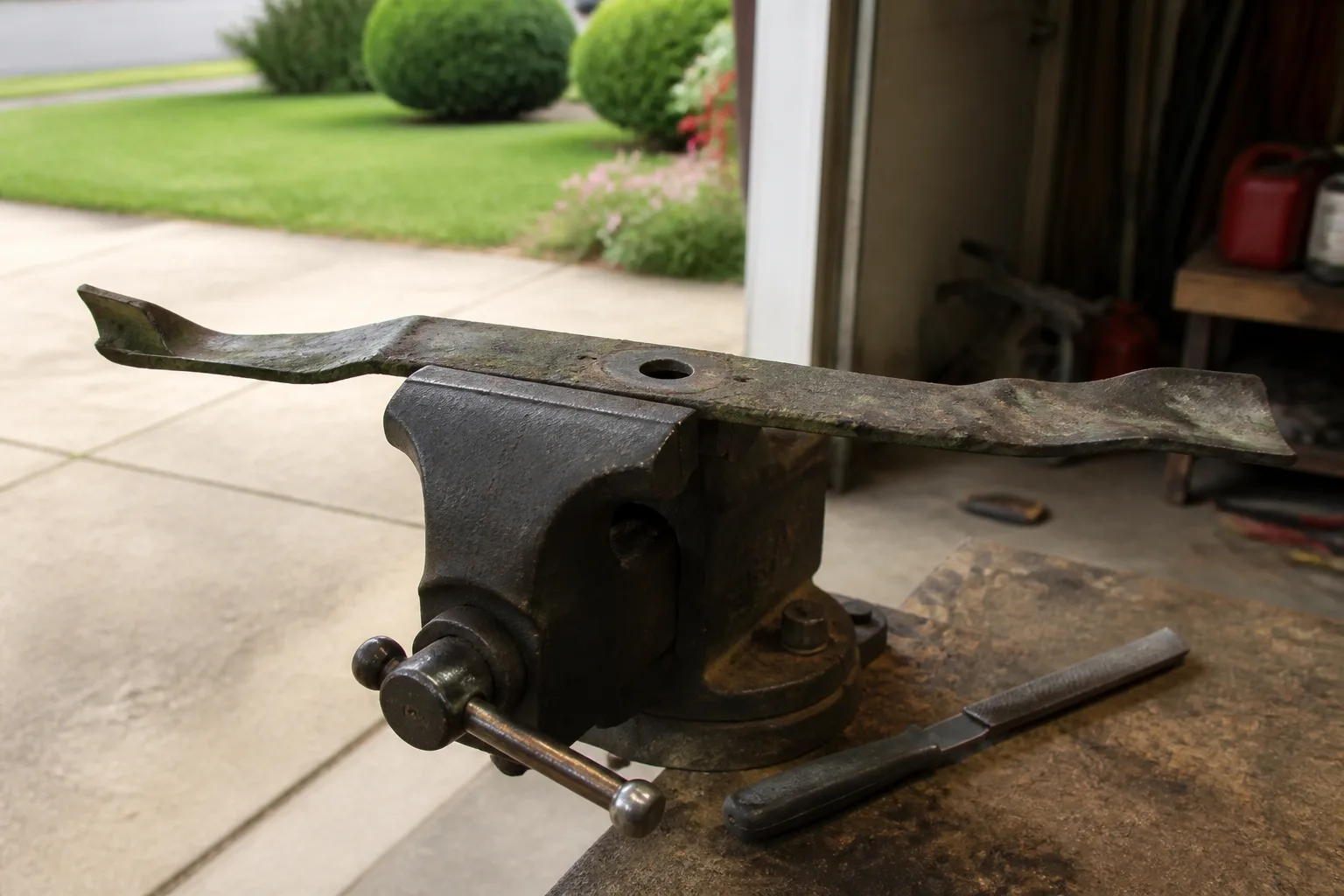
Mow dry and follow the lawn’s growth schedule
Dry conditions solve several problems at once. BBC Gardeners’ World Magazine advises mowing only when the grass and soil are dry because sodden ground compacts and ruts under the mower, while wet clippings clump and can smother the turf below. Wet foliage also sticks more readily under the deck, so WD-40 may reduce some adhesion without making wet mowing a good idea.
Wait until the leaf blades have dried and the soil can support the mower without leaving footprints or wheel tracks. If rain is frequent, mow when the surface dries rather than forcing a calendar appointment. The same rule applies after heavy irrigation: a dry blade and a dry deck are more useful than any spray.
Frequency should follow growth, not a fixed weekly ritual. During a cool, wet spring, a fast-growing lawn may need more than one cut per week to respect the one-third rule. When growth slows in heat, drought, cold, or dormancy, mow less often and raise the height if the grass is struggling. Gardeners’ World gives weekly summer mowing as a general guide, but local weather and grass type decide whether that is enough.
Return fine clippings to the lawn when the grass is dry and the mower distributes them evenly. Colorado State University Extension notes that clippings decompose quickly, recycle nutrients, and do not cause thatch by themselves; the problem is leaving thick wet clumps on the surface. If your deck is clogged, the blade is slow, or the clippings form piles, stop and correct the machine instead of making another pass.
Diagnose the lawn after mowing
A two-minute inspection after the cut can tell you whether the WD-40 step was useful or irrelevant. Look at individual tips, the consistency of the cut, the amount of residue under the deck, and the pattern of any damage. Those clues narrow the next action better than adding another household product.
Frayed brown tips and ragged strips
Fraying that appears across the whole lawn usually points first to a dull or nicked blade. A low deck, mowing too infrequently, or cutting heat-stressed grass can amplify the damage. Clean and sharpen the blade, raise the mower if needed, and cut only the top third on the next pass; if the fraying persists, inspect the blade balance and spindle.
Brown tips only on a few strips can point to a blade that is sharp on one side and damaged on the other, a deck that is tilted, or a wheel that is out of adjustment. On a riding mower, check tire pressure against the manual before changing the cutting height. Do not assume a darker stripe is a disease or that more irrigation will fix it.
Clumps, stalls, and scalped patches
Clumps under the deck or on the lawn usually mean the grass was wet, too tall for the chosen setting, or too dense for the mower to discharge. A dirty cutting chamber can also restrict airflow and trap material. Disconnect power, scrape the deck clean, and resume only when the grass is dry enough for the mower to spread the clippings.
An engine that bogs in tall grass can make the blade cut inconsistently, leaving missed tufts and low spots. Gas mowers may need an air-filter, oil, fuel, or spark-plug check; battery mowers may need a charged battery, clear deck, and blade inspection. If the motor sounds normal but the pattern remains uneven, check wheel and deck adjustment.
Scalped patches are a height or terrain problem, not a WD-40 problem. Low spots, soft ground, underinflated tires, a tilted deck, or a sudden drop in height can expose soil and crown tissue. Raise the setting, avoid mowing saturated soil, and give the damaged area time to recover before cutting it again.
Clean the deck and protect the rest of the machine
Blade care works best as part of a small after-mow routine. Once the mower is off and isolated, remove the clippings from the underside, wheels, discharge chute, and bag connection. Brush grass out of cooling vents and keep the motor housing dry according to the manual.
If you use WD-40, apply it to a cloth or a clean metal surface rather than coating every component. Wipe away overspray from rubber tires, plastic controls, painted areas, and the floor. The goal is a dry mower that is easier to inspect next time, not a glossy machine that attracts a new layer of dust.
At the end of the season, clean and dry the deck, sharpen or replace the blade, inspect the fasteners, and store the mower under cover. Gas models need the fuel and oil procedure specified by their engine manual; battery models need the manufacturer’s storage temperature and charging guidance. A quick note of the date and mowing hours makes the next sharpening decision much easier.
What changes for gas, battery, and electric mowers
The blade-and-deck rules apply to all three types: isolate the power, keep the blade sharp, clear buildup, mow dry, and adjust height carefully. The power source changes the safe shutdown and the rest of the maintenance list.
| Mower type | Still required | Additional considerations |
|---|---|---|
| Gas | Blade sharpening, deck cleaning, height checks | Disconnect the spark-plug lead before blade work; follow the manual for fuel, oil, air filter, and storage. |
| Battery | Blade sharpening, deck cleaning, height checks | Remove the battery or safety key; keep battery contacts and electronics dry; follow the model’s charging and storage instructions. |
| Corded electric | Blade sharpening, deck cleaning, height checks | Unplug from the outlet before any cleaning; protect the cord and keep the motor housing dry. |
WD-40 is most relevant to exposed metal, blade fasteners, and corrosion-prone maintenance points—not to every moving or electrical part. Use the product label and mower manual to decide where a lubricant or rust protectant is appropriate. If a part needs a specialized grease or dry lubricant, substitute products only when the manufacturer allows it.
Household “lawn hacks” to skip
The same instinct that sends people to WD-40 can lead to riskier lawn experiments. Do not spray WD-40, gasoline, motor oil, bleach, or dish soap across the turf to kill weeds, fungus, or insects. These products are not interchangeable with a labeled lawn treatment, and a home mixture can injure grass, contaminate soil, harm beneficial organisms, or create a fire and exposure hazard.
Baking soda is not a universal fungus cure, coffee grounds are not a complete fertilizer, and dish soap is not a harmless pest-control concentrate. If you suspect a pest, disease, or nutrient problem, identify the cause first and use a treatment labeled for that site and problem. For a mower, the safer household substitutions are simple tools: a stiff brush, a plastic scraper, a clean cloth, and a blade balancer.
The useful WD-40 lesson is smaller and more practical: maintenance products can reduce friction, moisture, and cleanup effort, but they cannot replace the biological requirements of turf. Healthy grass still needs the right cut, enough leaf area, suitable water, and recovery time.
Conclusion: use WD-40 as a small maintenance aid
Yes, you can use WD-40 on a lawn mower blade as a light, controlled maintenance film to make grass residue easier to release and to help protect clean metal from moisture and corrosion. Apply it only with the mower safely isolated, the blade and deck clean and dry, and the excess wiped away. Never treat the spray as a sharpener, fertilizer, pesticide, or permission to mow wet grass.
If the lawn looks ragged, start with the fundamentals: sharpen or replace the blade, remove no more than one-third of the leaf, raise the deck when heat or drought calls for it, and mow only when the ground is dry. The can may make the next cleanup easier, but those choices are what let grass recover with a clean, even cut.



