Cucumber Plant Not Producing Fruit: 5 Causes
Flowers but no cucumbers? Diagnose the five most common causes, hand-pollinate at the right time, and reset water, light, weather, and feeding.
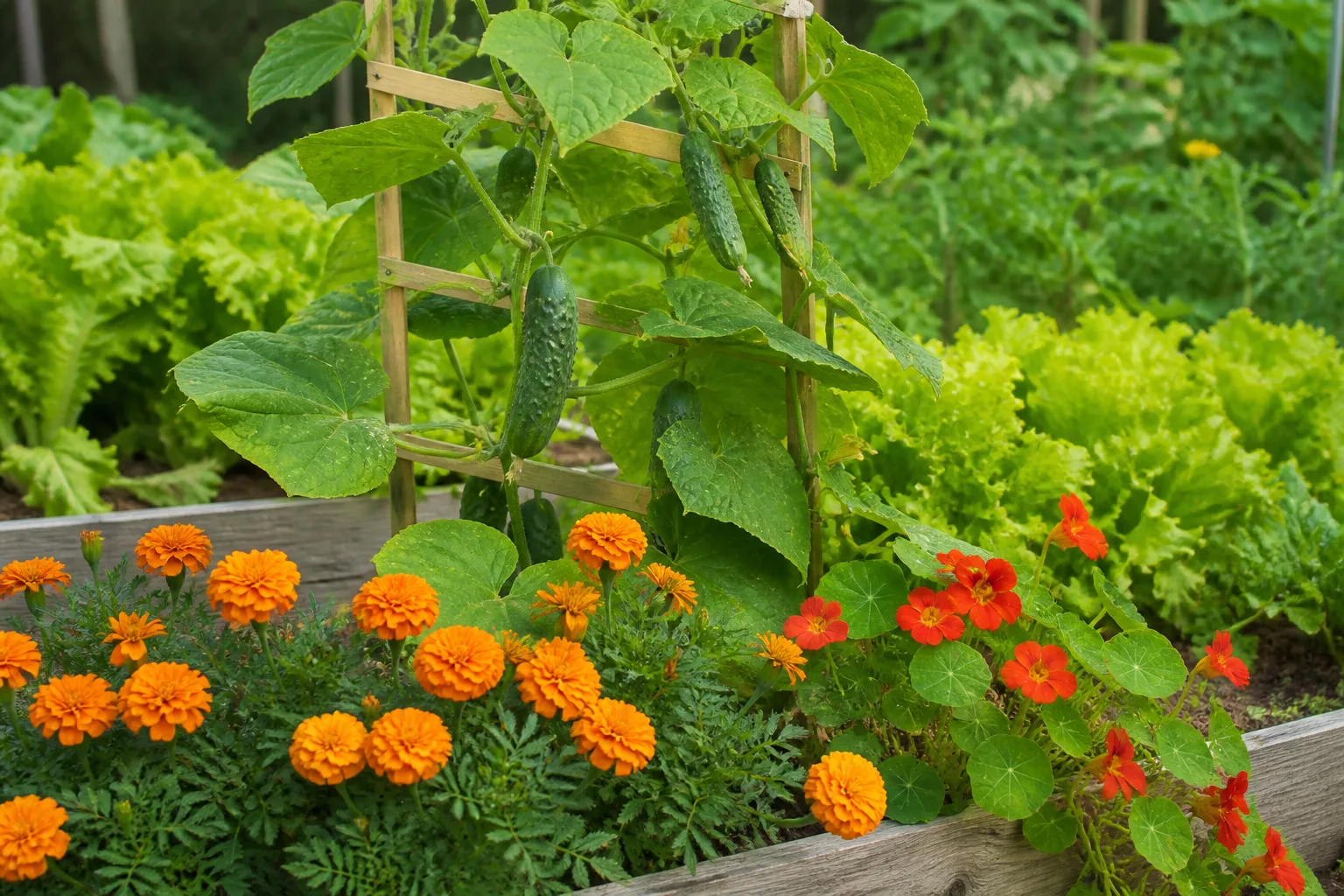
A cucumber vine can look vigorous, flower constantly, and still give you nothing to pick. That does not automatically mean the plant needs more fertilizer. Often, the flowers are the wrong type for fruit production yet, or the right flowers opened during weather that kept pollen from moving.
Start by inspecting the flower and the tiny stem behind it, then check the soil and recent weather. Those three clues usually tell you whether to wait, hand-pollinate, change your watering rhythm, or stop feeding nitrogen.
First, determine what “no fruit” means on your vine
There are two very different situations hiding behind the same complaint. A young vine with only yellow flowers may simply be moving through its normal flowering sequence. A mature vine with swollen female flowers that turn yellow and drop has a fruit-set problem, and the first suspect is pollination or plant stress.
Look at several flowers at different nodes rather than judging the whole plant from one bloom. A successfully pollinated female flower keeps the small cucumber-shaped ovary behind the petals green and begins to elongate; an unpollinated one often stops growing, yellows, and falls within a few days.
Flowers but no swelling versus no flowers at all
If there are no flowers, focus first on plant age, light, temperature, and excess nitrogen. A vine that is growing long, soft, and leafy in shade or cool weather may not have enough energy—or the right conditions—to transition into productive flowering.
Also consider whether the plant was recently transplanted, root-disturbed, or chilled. Cucumbers dislike a sudden change in root conditions, and a short pause after planting is different from a mature vine that has flowered for weeks without setting. Give a young transplant time to establish, keep the root zone steady, and avoid aggressive pruning while it rebuilds roots and leaves.
If there are flowers but no small cucumbers, separate male flowers from female flowers before you change anything. This single check prevents two common mistakes: removing healthy male flowers from an outdoor variety and dumping extra fertilizer on a plant that only needs time or pollen transfer.
| What you see | Most likely first question | First action |
|---|---|---|
| Many flowers, no swelling behind them | Are they all male? | Wait and inspect new flowers over the next week. |
| Tiny cucumber behind flowers, then yellow drop | Was pollen transferred that morning? | Watch bees or hand-pollinate the next open flowers. |
| Flowers and tiny fruit during a heat wave | Is the root zone evenly moist? | Cool and water the soil consistently; do not flood it. |
| Dark green leaves, long vines, few flowers | Has nitrogen been added repeatedly? | Pause feeding and test the soil before applying anything else. |
1. The plant is still in its male-flower phase
Most ordinary outdoor cucumbers are monoecious: one plant carries separate male and female flowers. The first flush is commonly male-heavy, which is useful because those flowers begin supplying pollen and attracting insects before the plant invests in fruit.
That early imbalance can look like failure, especially when a gardener sees dozens of yellow blooms and not one cucumber. It is usually a waiting problem when the vine is otherwise healthy, expanding steadily, and has only been flowering for a short time.
How to identify male and female cucumber flowers
Male flowers sit on a slender stem with no swelling behind the petals. Inside, you will find the pollen-bearing anther. Female flowers have a noticeable miniature cucumber or oval swelling between the stem and the yellow petals; that swelling is the ovary that can become fruit.
Gardenary’s practical guide recommends identifying the flower type before trying to fix fruit set, and a Penn State PlantVillage answer likewise notes that female flowers may appear after the first male flowers. The exact timing varies with variety and growing conditions, so use the plant’s pattern—not a rigid day count—as your guide (Gardenary’s cucumber flower guide; Penn State PlantVillage on cucumber flowers).
Do not remove male flowers from a normal outdoor cucumber. You need their pollen. Removing them makes the real problem worse unless you have a greenhouse variety whose seed packet specifically says male flowers should be removed.
2. Female flowers are not being pollinated
Once female flowers are present, pollen has to move from a male flower to the stigma inside the female flower. Bees do most of that work outdoors, but they may be absent from a new garden, grounded by cold rain, deterred by wind, or reduced after broad-spectrum insecticide use.
The window is short. Cucumber flowers commonly open in the morning and remain receptive for only part of that day, so a garden can have plenty of flowers but very few opportunities for successful pollen transfer. Oklahoma State University Extension identifies insect pollination as critical for fruit set and notes that flowers are receptive for only hours on the day they open (Oklahoma State’s cucumber production guide).
Check for pollinators during the short morning window
Go outside on a dry morning and watch the flowers for several minutes. You do not need a particular number of bees for a backyard harvest, but repeated visits to both male and female flowers are a good sign. If female flowers keep appearing and then yellowing without any swelling, while the garden is quiet, lack of pollen transfer becomes more likely.
Avoid spraying insecticides while flowers are open, especially products that can harm bees. If treatment for a serious pest is unavoidable, identify the pest first, follow the product label, and apply only when the label permits; do not use a blanket spray as a substitute for diagnosis.
Hand-pollinate a cucumber flower correctly
Hand pollination is a backup for a quiet garden, not a reason to panic after one missed flower. Do it in the morning while both flowers are open and the pollen looks fresh.
- Find a newly opened male flower with a straight stem and no swollen ovary behind it.
- Use a small, dry paintbrush or cotton swab to collect pollen from the anther.
- Dab the pollen onto the sticky stigma inside a female flower, which has the tiny cucumber behind it.
- Repeat with fresh male pollen for each female flower, then leave the vine undisturbed for the rest of the morning.
You can also remove the petals from a male flower and gently touch its pollen-bearing center to the stigma of the female flower. The goal is generous, direct coverage—not brushing the outside of the petals. Mark the pollinated flower with a loose piece of yarn so you can check whether its ovary begins to enlarge over the next few days.
A healthy cucumber trellis with flowers nearby gives pollinators a reason to keep visiting the bed.
3. Heat, cold, rain, or low light is interrupting fruit set
Cucumbers are warm-season plants, but “warm” is not the same as “as hot as possible.” Cold soil slows growth and cold, wet weather keeps bees inactive. At the other extreme, intense heat can increase water loss, shorten flower life, and make a plant shed flowers or tiny fruit before they develop.
Oklahoma State recommends waiting until soil is at least 60°F for planting, with a warmer range preferred for rapid germination, and describes cucumber as susceptible to cold and frost damage. The same guide notes that extreme heat can affect fruit color and flavor. If your vine began flowering during a sharp weather swing, give it several stable days before declaring the season a failure (Oklahoma State’s cucumber production guide).
Light matters too. A cucumber can survive in a bright-but-shaded corner and still make leaves, but fruit production needs enough daily light to pay the energy cost of flowers and expanding fruit. If the vine receives only a few hours of direct sun, do not expect fertilizer to compensate; move a container to the brightest safe position or plan the next crop for a sunnier bed.
Rain creates a double problem: pollinators may not visit, and repeated wetting can dilute or wash pollen from flowers. Heavy, poorly drained soil adds root stress at the same time. After a rainy spell, wait until the root zone is no longer saturated before watering again, then improve drainage with a raised bed, a mound, or a container with open drainage holes.
4. Water stress is causing flowers or tiny fruit to abort
Cucumbers need a steady supply of moisture while flowering and setting fruit, but roots still need air. A plant that alternates between bone-dry soil and a sudden drenching may drop flowers even when it looked fine the day before. A plant sitting in saturated soil can also wilt and stop setting fruit because damaged roots cannot take up water normally.
Check moisture several inches below the surface before you reach for the hose. If the soil is dry down to the root zone, water slowly at the base until the bed is thoroughly moistened. If it is wet and heavy, pause irrigation and correct the drainage; adding more water to a wilted plant is not always the fix.
As a broad field benchmark, Oklahoma State cites about 1.5 inches of supplemental water every seven to 10 days during the hottest months when rainfall is insufficient. That is not a universal home-garden prescription: sandy beds, raised beds, containers, heat, wind, mulch, and rainfall all change the schedule. RHS guidance similarly recommends keeping greenhouse and container cucumbers evenly moist, with extra attention during hot spells and fruit formation (RHS cucumber growing guide; RHS watering guidance).
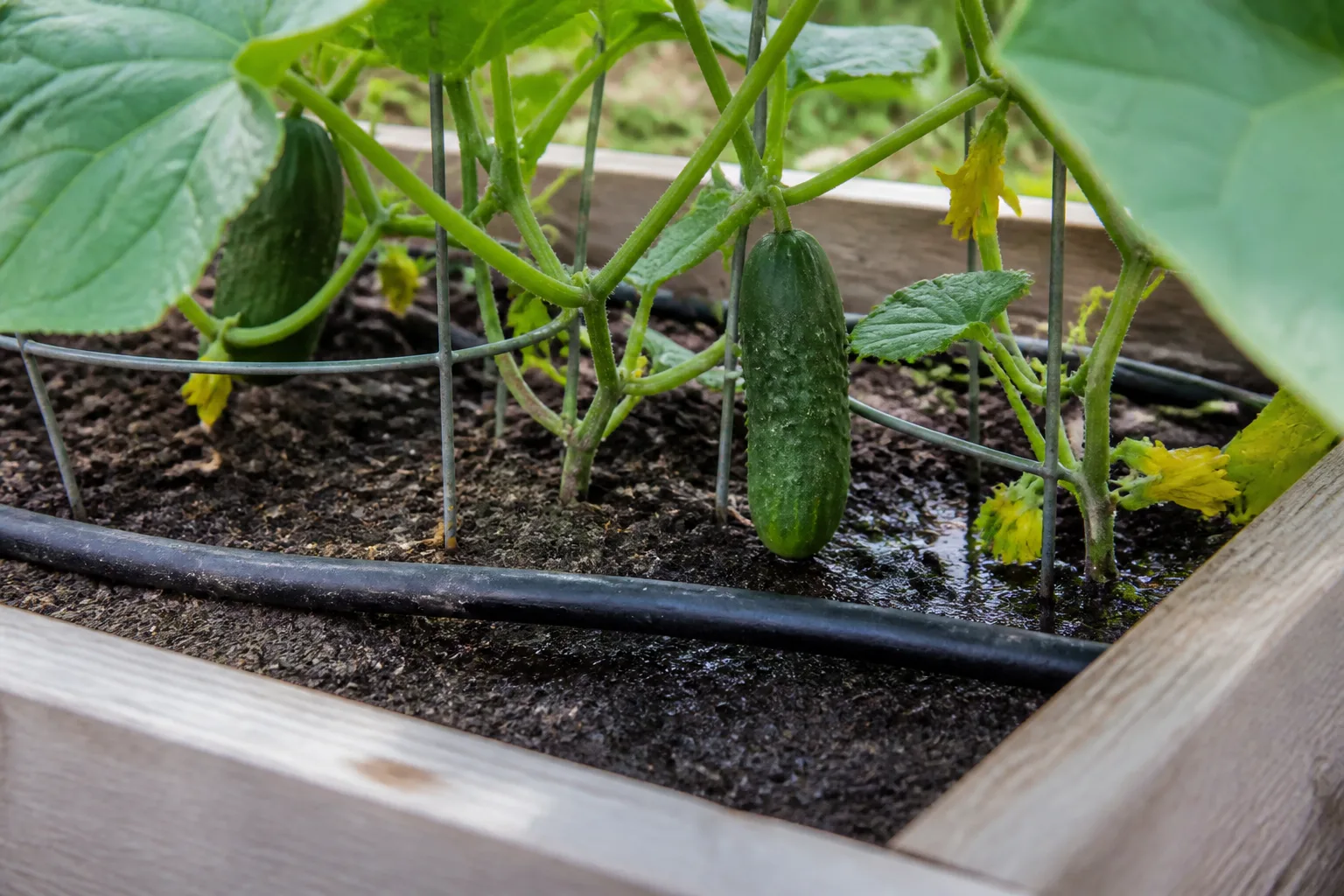
Root-zone irrigation keeps moisture more even and avoids soaking open flowers or wetting the foliage unnecessarily.
Adjust the plan for containers and raised beds
Container cucumbers dry faster because the root volume is limited and the sides of the pot heat up. Check the pot daily during hot weather, but water only when the mix needs it; a daily check is not a command to water daily. Apply enough to wet the full root ball and let excess drain, then empty a saucer so the plant is not standing in water.
Raised beds drain quickly and warm early, which helps in cool springs but increases the need to monitor moisture during heat. Mulch the soil surface after it has warmed to reduce evaporation, keeping the mulch a few inches away from the stem. Drip irrigation or a soaker hose is especially useful because it delivers moisture without disturbing pollen or leaving leaves wet overnight.
If tiny cucumbers are turning pale yellow and dropping, inspect pollination and moisture together. A failed pollination is common, but a dry root zone, waterlogged bed, or heat wave can cause the same final symptom.
5. Nitrogen-heavy feeding is making a leafy vine
One of the clearest patterns is a cucumber plant that is enormous, dark green, and almost all leaf. Nitrogen drives vegetative growth, and too much can delay flowering and fruit set. It can also hide a separate problem by making the vine look “healthy” while it produces very little.
The fix is not to swing to an extreme phosphorus fertilizer. Oklahoma State recommends basing cucumber fertility on a soil test and specifically warns that high soil nitrogen can cause excessive growth and delayed flowering and fruit set. RHS likewise advises regular feeding for container plants but recommends following a general liquid feed early and switching to a high-potash feed once flowering begins (Oklahoma State’s cucumber production guide; RHS cucumber growing guide).
Feed from a soil test, not a “bloom booster” reflex
If you have applied blood meal, manure, composted poultry litter, lawn fertilizer, or repeated high-nitrogen liquid feed, pause. Do not add another product until you know what is in the root zone. A soil test is more useful than a guessed N-P-K ratio, and excess phosphorus can build up without solving a pollination or water problem.
If the plant is pale, growing slowly, and has stable moisture, a real nutrient shortage remains possible. Use a vegetable fertilizer at its label rate or amend based on the soil-test recommendation; do not double the rate because the first application did not produce fruit within a few days. Nutrients do not turn an unpollinated flower into a cucumber.
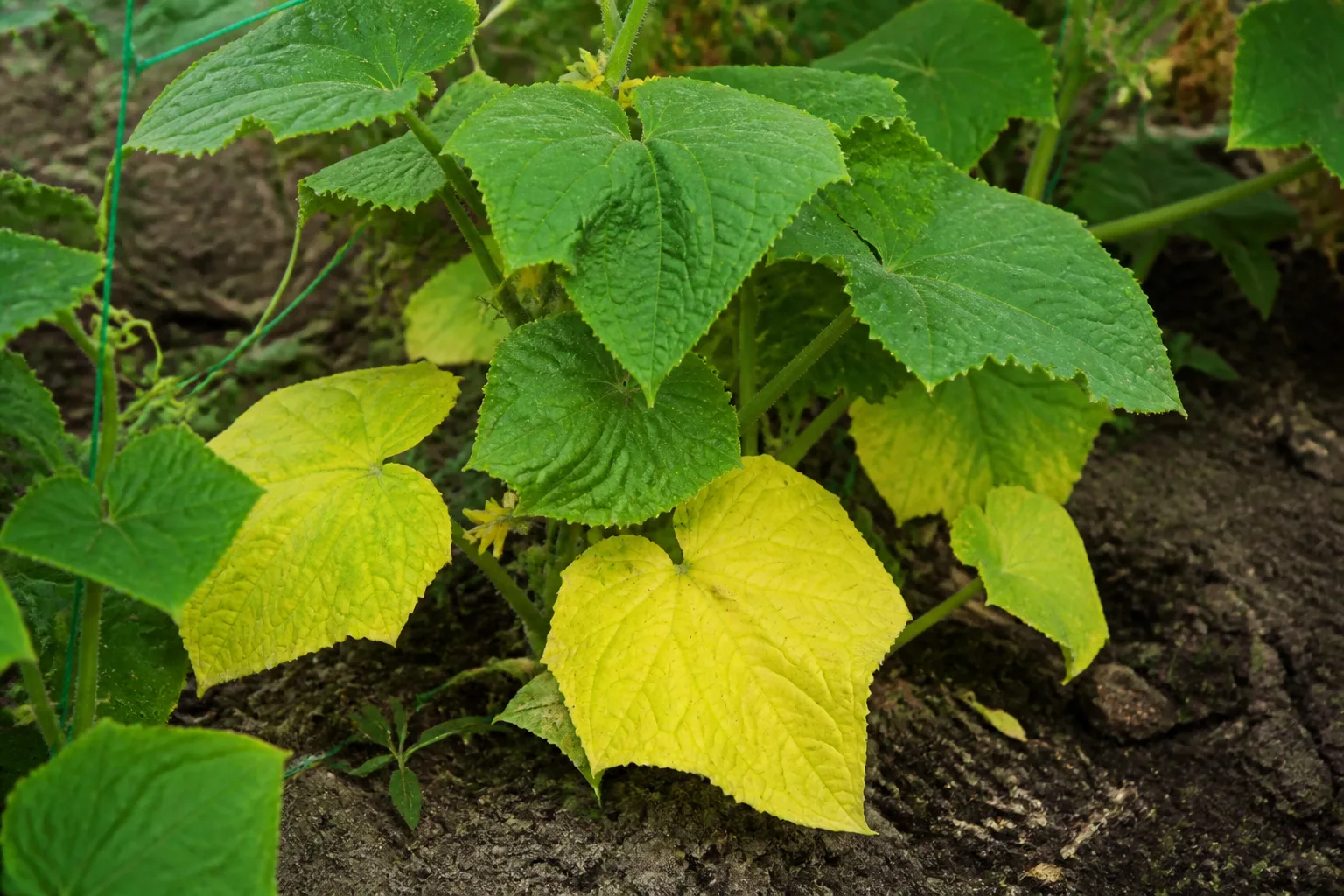
Leaf color can provide a clue about fertility, but a soil test is safer than diagnosing every yellow leaf by eye.
Variety changes the pollination rule
Read the seed packet or plant tag before you decide that bees are the problem. Standard outdoor cucumbers usually produce both male and female flowers, so they need pollen transfer. Gynoecious varieties produce mostly female flowers and may need a compatible monoecious pollinator variety nearby. Parthenocarpic varieties can set fruit without pollination and are often selected for greenhouse or protected growing.
The distinction matters because the wrong fix can reduce your harvest. Oklahoma State lists parthenocarpic cultivars for protected production and explains that some mostly-female cultivars need a pollinator plant. RHS also warns that many greenhouse cucumbers should not be pollinated because pollination can make their fruit bitter; check the variety instructions before hand-pollinating every flower (Oklahoma State’s cucumber production guide; RHS guidance on removing male flowers).
If a greenhouse cucumber has female flowers with tiny ovaries but no fruit, start with water, temperature, light, and plant health—not a paintbrush. If an outdoor slicing cucumber has female flowers and no bees, hand pollination is a sensible short-term bridge while you improve the garden’s pollinator resources.
A 10-minute diagnosis and seven-day reset plan
When you want a simple sequence, walk through this order:
- Inspect five flowers. Count how many are male and how many have the tiny ovary behind them.
- Check the plant tag. Look for greenhouse, parthenocarpic, gynoecious, or pollinator requirements.
- Feel the soil several inches down. Record dry, evenly moist, or saturated rather than watering by calendar.
- Look at recent weather. Note cold nights, heavy rain, extreme heat, or a run of cloudy days.
- Watch the flowers in the morning. Look for bees, and hand-pollinate open female flowers if appropriate for the variety.
- Review feeding. Pause repeated nitrogen applications and use a soil test before adding a “fruiting” product.
- Check for collapse or pest pressure. A suddenly wilted vine, chewed leaves, sticky residue, webbing, or mottled new growth needs a pest or disease diagnosis rather than more fertilizer.
For the next seven days, keep the root zone evenly moist, keep flowers open to pollinators, avoid overhead irrigation during the morning flower window, and leave healthy leaves in place. Photograph the same flower or node each morning. A pollinated ovary should become visibly larger; if it does not, you will have a much clearer record of what happened than if you change three variables at once.
Fixes that often backfire
Watering every day without checking the soil can turn a dry-weather problem into root stress. Containers may need frequent water, but in-ground vines after rain may need none; moisture depth matters more than a universal schedule.
Removing all the male flowers feels logical when only female flowers make cucumbers, but outdoor varieties need male pollen. Remove male flowers only when the variety instructions call for it, usually in protected growing where unwanted pollination produces poor-quality fruit.
Adding high-nitrogen fertilizer to a leafy vine usually gives you more leaves. If the plant is already dark green and vigorous, pause and investigate pollination, light, temperature, and soil-test results instead.
Hand-pollinating in the afternoon misses the most reliable window because the flowers may have closed or the pollen may no longer be fresh. Work with newly opened flowers in the morning and use a clean, dry brush.
Pruning heavily to “force” fruit removes the leaves that power fruit growth. Remove diseased or badly damaged leaves, but do not strip a healthy vine while it is trying to recover from weather or water stress.
When to expect cucumbers after fruit set
Once a female flower is successfully pollinated and the plant has enough warmth, light, moisture, and leaf area, the ovary should start enlarging within several days. The exact harvest date depends on variety and growing conditions, so use the seed packet’s maturity range as a guide rather than counting from the first flower.
When fruits begin growing, harvest them regularly and while they are still the size and color described for the variety. Oklahoma State notes that repeated harvests are needed for slicing cucumbers because leaving mature fruit on the vine can interfere with continued production. A healthy vine that sets one cucumber and then seems to pause may simply be overloaded with mature fruit, not permanently finished (Oklahoma State’s cucumber production guide).
If no ovaries enlarge after a week of appropriate hand pollination, stable moisture, and suitable weather, revisit the variety label and inspect for pests or disease. A vine that is collapsing, badly mottled, or covered in spreading lesions needs a separate diagnosis; fruit-set advice cannot repair damaged roots or a pathogen already moving through the plant.
Conclusion
When a cucumber plant is not producing fruit, identify the flower before you feed or prune. Male-only blooms may be normal early on; female flowers that yellow and drop point more often to missed pollination, weather, or root-zone stress.
Give the vine stable moisture, enough direct light, and a morning pollination opportunity. Check the variety’s pollination rules, pause excess nitrogen, and change one factor at a time. With that sequence, most gardeners can tell within a week whether the plant was simply waiting for female flowers—or whether it needs a more serious pest, disease, or site correction.



