How to Grow and Care for Whale Fin Snake Plant Like a Pro
Master whale fin snake plant care with clear guidance on light, watering, soil, repotting, propagation, pests, root rot, and pet safety.
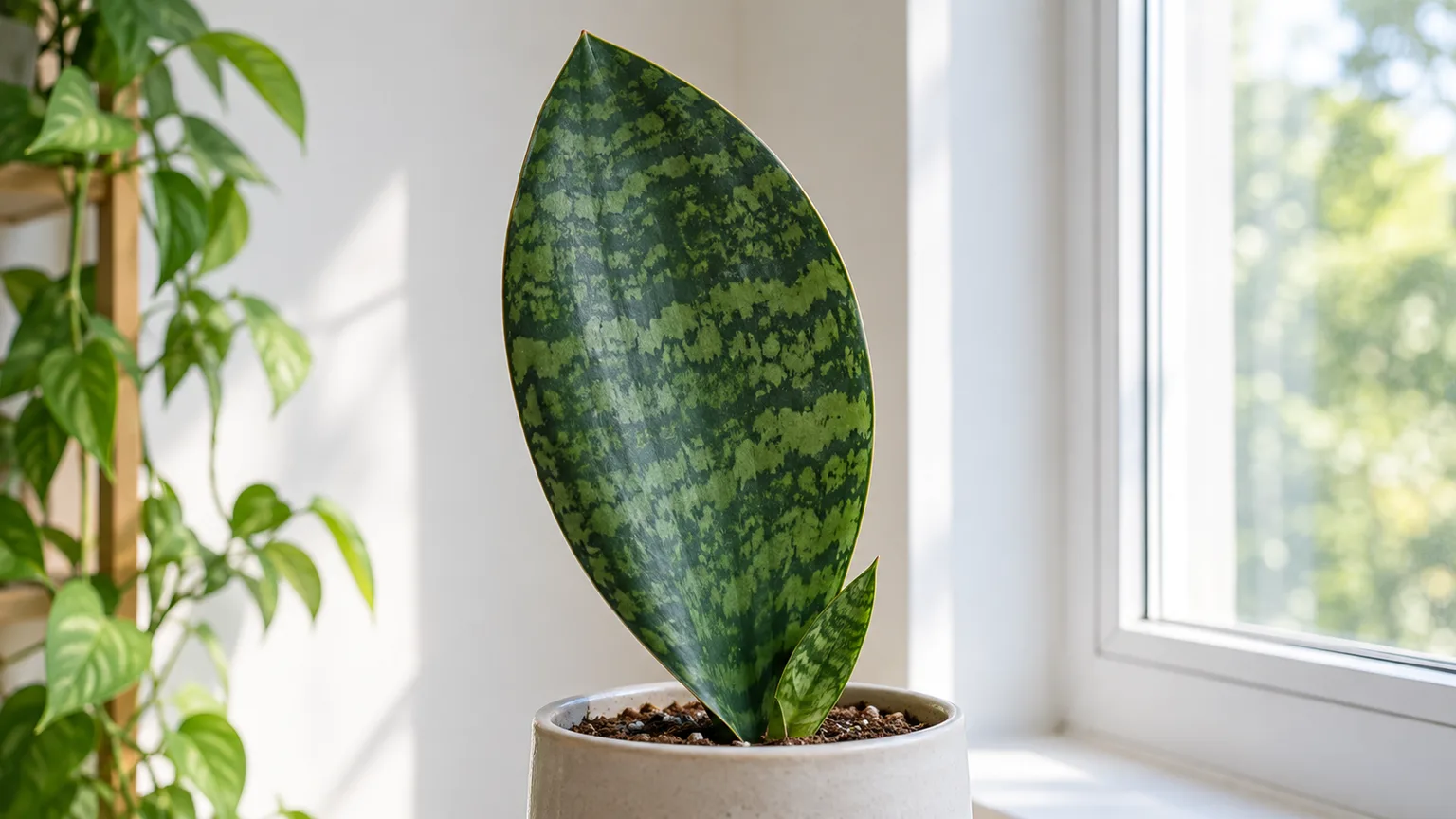
Whale fin snake plant (Dracaena masoniana, formerly Sansevieria masoniana) is a houseplant for people who like a strong shape more than a fast-growing jungle. Its broad, paddle-like leaf can look almost architectural, and a healthy plant may spend months making little visible progress while it builds energy underground. That slow pace is normal; the real challenge is resisting the urge to compensate with extra water, fertilizer, or a much larger pot.
The most reliable routine is simple: give it bright filtered light, use a mix that dries before the next watering, keep it warm, and make changes gradually. The decisions below are designed for a potted indoor plant, with notes for warm-climate outdoor growing and for the symptoms that most often send owners in the wrong direction.
Meet the Whale Fin Snake Plant
The whale fin is a succulent perennial with thick, leathery leaves that emerge from an underground rhizome. The rhizome stores energy and produces new growth points, which is why a plant can look like a single leaf for a long time and then send up a small offset beside it. The Royal Horticultural Society describes snake plants as erect, rhizomatous succulents with evergreen leaves that vary in shape and size among cultivated forms (RHS plant profile).
Its broad leaf is not a sign that the plant needs tropical-forest watering. It still has succulent tissue and a root system that needs air between waterings. Think of the leaves as a reservoir and the potting mix as a place that must drain and dry, not as a permanent water bank.
How it differs from common snake plants
The familiar bird’s-nest and Laurentii snake plants usually make several narrow, upright leaves in a clump. A whale fin often begins with one or a few much wider leaves, sometimes with a mottled pattern and a subtly reddish edge. Retail labels can be inconsistent, so the leaf’s shape and the plant’s growth habit are more useful than a name tag alone.
Do not judge the plant by the growth rate of a different snake-plant type. A new leaf may take a long time to appear, especially in a dim room, a cool season, or a pot that stays damp. Slow growth is acceptable; a soft base, sour-smelling mix, or a leaf that collapses at the soil line is not.
Give it bright filtered light first
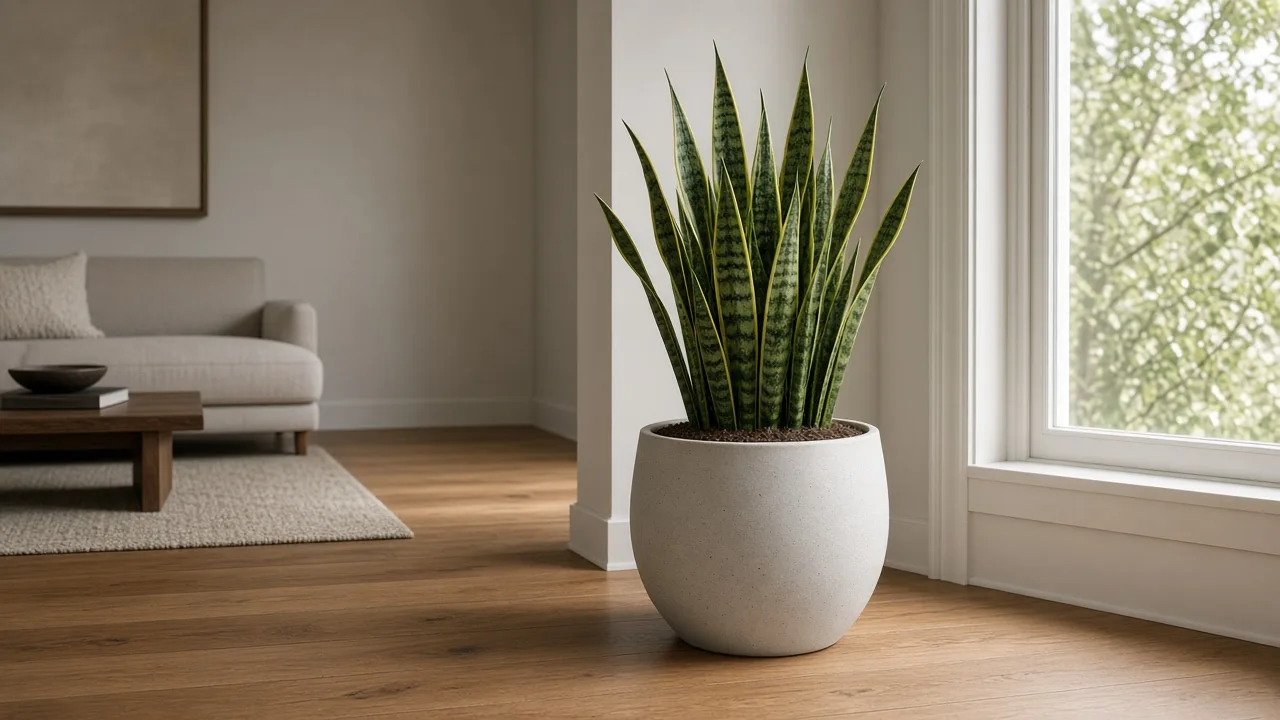
Place a whale fin snake plant near a bright east- or west-facing window, or a few feet back from a brighter south-facing window where a sheer curtain filters the strongest rays. It can tolerate lower light, but low light usually means slower growth, weaker response after watering, and less opportunity for the soil to dry. Moderate direct or indirect light is also the practical default for snake plants described by Fine Gardening, with filtered light especially useful when foliage is prone to scorching (Fine Gardening’s indoor snake-plant guidance).
The broad surface of a whale-fin leaf can heat quickly behind glass. Watch the plant’s position throughout the year: winter sun through a cool window may be gentle, while summer afternoon sun through the same window can create pale, tan, or crispy patches. A bright room is helpful; a hot leaf pressed against glass is not.
Acclimate it before moving it into stronger sun
A plant bought from a shaded shop or shipped in a dark box has not been prepared for intense light. Move it into brighter conditions in stages: start with bright indirect light, then add a short period of gentle morning sun after about a week if the leaves remain comfortable. Increase exposure gradually over another week or two, and stop if the leaf surface becomes bleached, tan, or unusually hot.
The same rule applies when moving a whale fin outdoors in a warm climate. Use dappled shade first, keep it protected from rain, and extend the morning-light period gradually. Even a plant that can live outside in a frost-free zone can be damaged by a sudden jump from indoor light to open midday sun.
Build a fast-drying root zone
Use a commercial cactus or succulent mix, or make an airy blend from regular indoor potting mix plus generous mineral material such as perlite, pumice, or coarse grit. The exact recipe matters less than the result: after a thorough watering, the mix should drain freely and become dry throughout the pot within a reasonable interval for the room. Dense, fine, peat-heavy soil that stays wet at the bottom is a warning sign even if the surface looks dry.
The roots need both water and oxygen. Adding a handful of stones to the bottom of a pot does not create drainage; it can leave the root zone sitting above a perched layer of saturated mix. Improve the whole mix instead, and make sure the container has an open drainage hole.
Choose the pot before choosing the mix
A whale fin is usually safer in a snug pot than in a decorative container that is much too large. A large volume of unused mix holds moisture longer than the plant can use it, especially in winter or low light. When the plant needs a new container, choose one only a little wider than the current root ball—often about 1 to 2 inches larger—and keep the planting depth the same.
Unglazed terracotta can help a heavy, top-heavy plant dry a little faster and stay upright, but it is not a cure for an unsuitable mix. A plastic nursery pot is perfectly workable when it has drainage holes and is set inside a cover pot that can be emptied. Never leave the nursery pot standing in runoff.
Water only after the pot dries
Do not water by weekday, calendar reminder, or the number of leaves. Check the mix instead. Push a finger or wooden skewer about 2 inches into the pot, or lift the container to learn how light it feels when dry. Savvy Gardening recommends using the lower soil profile and environmental conditions—not a fixed schedule—to decide when a snake plant needs water (watering guidance from Savvy Gardening).
When the mix is dry through the root zone, water slowly over the surface until excess drains from the bottom. Wait a minute and water again if the soil has pulled away from the pot or repels water, then let the container drain completely. Empty the saucer or cover pot; a whale fin should never sit in a puddle between waterings.
Avoid small sips that wet only the top layer. They can leave the lower roots dry while repeatedly keeping the crown and upper mix damp. A complete drink followed by a real dry-down is easier for this plant to manage than frequent light sprinkles.
Adjust watering for the season and room
A whale fin in bright light, a warm room, and a porous mix may dry much sooner than one in a cool north-facing room. Check weekly, but water only when the plant passes the dryness test. During active spring and summer growth, that may be every couple of weeks; in winter, the interval may stretch considerably. The plant, pot, and room decide the timing.
If a leaf curls or develops a slightly wrinkled surface while the mix is truly dry, water deeply and observe the next week of recovery. If the mix is wet and the leaf is soft, yellowing, or collapsing at the base, adding more water is the wrong first move. Root damage can prevent a plant from taking up water even when its pot is saturated.
Keep temperatures steady and humidity ordinary
Normal household humidity is usually adequate. You do not need to mist a whale fin, and misting does not fix a wet root zone or permanently raise room humidity. A room with moving air and stable warmth is preferable to a humid, stagnant corner where water stays on the leaf base.
Keep the plant away from cold drafts, freezing temperatures, and blasts from an air conditioner. A brief cool spell may leave only cosmetic damage, but prolonged temperatures around 50°F or below can injure tropical and subtropical snake plants. If you move it outdoors for summer, bring it inside before cold nights and rainfall become regular; harden it off in both directions.
Feed lightly during active growth
Whale fin snake plants are not heavy feeders, and slow growth does not automatically mean they need more fertilizer. Feed only when the plant is actively growing, using a balanced houseplant fertilizer diluted according to the label or to a conservative half-strength rate when the product permits. Apply it to already-moist mix rather than to bone-dry roots.
One or two modest feedings in spring and summer are generally more defensible than monthly doses in a dim room. Pause in late fall and winter, and do not fertilize a plant that is waterlogged, recently divided, sunburned, or recovering from root loss. Brown tips, crusty soil, or a sudden decline after feeding are reasons to stop and flush the mix with plain water when drainage is good—not a reason to add another product.
Prune damaged leaves without reshaping the plant
Pruning is mostly cosmetic. Remove a leaf that is fully dead, mushy at the base, badly damaged, or leaning beyond recovery by cutting it cleanly at the soil line with sterilized pruners. If only the tip is brown, you can trim the dry tissue to follow the leaf’s natural outline, but the mark will not turn green again.
Do not cut a healthy whale-fin leaf in half simply to make the plant look shorter. The plant has few leaves to spare, and every cut is a wound. If the container is too tall for its space, improve the light and drainage first, then remove only the leaf that is genuinely damaged or blocking safe placement.
Know when to repot or divide
A whale fin can remain in the same pot for years if the mix still drains, the roots are healthy, and the plant is stable. Repot because the roots are crowded, the container is cracking or tipping, water runs straight through a compacted root mass, or the mix has broken down—not because the calendar says the plant is due. Savvy Gardening lists crowded foliage, stalled growth during the growing season, a bulging container, and persistent foliage stress as useful signs to investigate (repotting guidance from Savvy Gardening).
Spring or early summer is the least stressful time for a routine move because the plant has more light and warmth to recover. If you suspect active root rot, act when needed rather than waiting for spring, but treat it as a rescue: remove the wet mix, cut away soft roots, and return the healthy portion to a clean, appropriately sized pot with fresh dry mix.
Repot step by step
First, let the pot dry enough that the root ball can be handled without turning into mud. Prepare a clean pot with a drainage hole, fresh fast-draining mix, and sterilized scissors or a knife. Slide the plant out by supporting the root ball; pulling on the broad leaf can tear it away from the rhizome.
Inspect the underground rhizome and roots before choosing the new pot. Healthy roots are firm and light-colored to tan; soft, dark, hollow, or foul-smelling tissue should be removed. If the roots are healthy and only crowded, move up one pot size. If there is extensive rot, use the same pot after cleaning it rather than surrounding a small remnant with a large reservoir of wet soil.
Set the plant at its old depth, backfill without burying the leaf bases, and press the mix lightly so the plant is stable. Wait a few days before the first thorough watering if you made substantial cuts, then return to the dry-down routine. A newly repotted plant may pause; that is not proof that it needs more fertilizer.
Propagate by division for the best clone
Division is the most reliable method when a whale fin has produced an offset connected to a rhizome. It preserves the parent plant’s form because the new piece is already a small section of the same plant. Wait until an offset has at least one healthy leaf and its own roots or a firm rhizome connection, then separate it during active growth.
Unpot the plant and brush away enough mix to see where the offset joins the mother plant. Use a clean blade to cut the rhizome, leaving roots attached to the offset. Allow a fresh cut to dry in a shaded, airy place for a day or two, then pot it in a small container of fast-draining mix at the same depth it was growing before.
Keep the division in bright indirect light and water sparingly while it re-establishes. The goal is lightly settled mix, not constant moisture. A new leaf is a better sign of establishment than a fixed number of days, and the first new growth may take a full growing season.
Try leaf cuttings only when patience is part of the plan
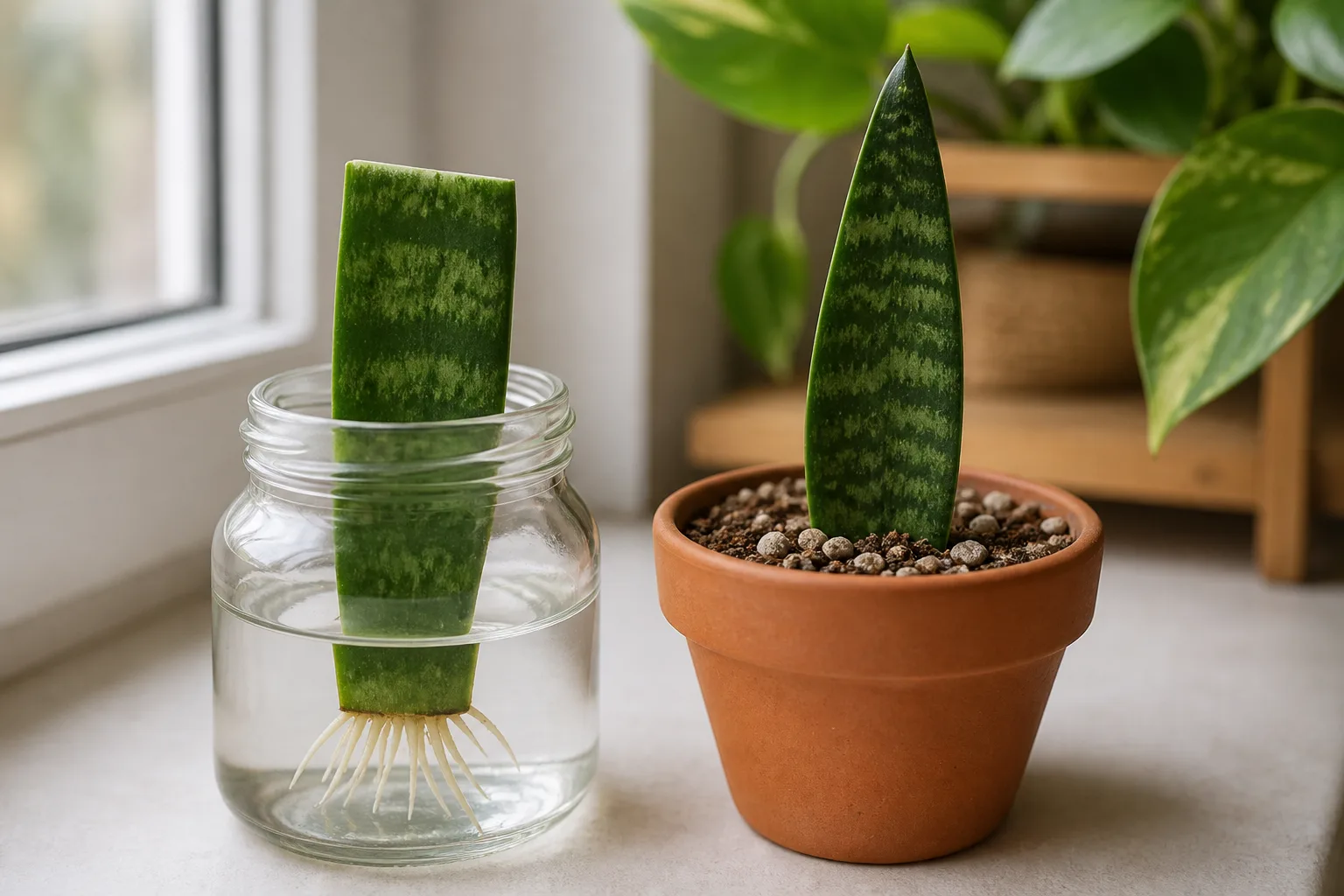
Leaf cuttings can work, but they are slower and less predictable than division. Choose a firm, healthy leaf, cut it into sections with a clean blade, and mark which end was closest to the soil. Each section must be planted or placed in water in the same orientation; upside-down pieces commonly fail to grow.
Let the cut surfaces callus in a dry, shaded place before rooting. A specialist whale-fin propagation guide describes using short sections, keeping their original orientation, allowing the cuts to dry, and waiting months for roots before potting (Teak and Terracotta’s whale-fin propagation guide). Use only a shallow water level or lightly moist mix, keep the cutting warm and bright, and discard any piece that becomes soft or smells sour.
Leaf propagation is a good experiment or insurance policy when the mother plant is declining. Division is the better choice when you want a vigorous, recognizable whale-fin offset quickly. If a particular cultivar has stripes or unusual color, division is also the safer way to retain the parent’s traits; leaf propagation can produce a greener, less identical result in some snake plants.
Troubleshoot symptoms in the right order
Start with the root zone before changing light, fertilizer, humidity, and water all at once. Feel the mix several inches down, inspect the leaf texture, check for drafts or recent moves, and look at the leaf base. One symptom can have more than one cause, but these checks narrow the possibilities quickly.
Curling, yellow, or brown leaves
Curling or wrinkling with dry mix usually points to a plant that has gone too long without water, especially in a bright, warm room. Water the entire root zone once it is dry, then check whether the leaf regains firmness over the next several days. Do not keep the pot wet in an attempt to make a damaged leaf look full again.
Yellow, soft, or translucent tissue with wet mix is more concerning for overwatering or root stress. Stop watering and inspect the roots if the pot remains damp for many days, the base is soft, or the mix smells sour. Cut away rot, refresh the mix, and improve light and drainage; trimming a yellow leaf alone does not solve the root problem.
Dry tan patches can follow sudden strong sun, a hot window, cold injury, or physical damage. Move the plant to bright filtered light and remove only tissue that is fully dead. Brown tips may also reflect dry roots, salt buildup, or water quality, so consider the pattern and the recent care instead of assuming that humidity is the answer.
Pests, root rot, and flowering
Inspect the leaf bases and the undersides of leaves for cottony mealybugs, scale, or fine webbing from spider mites. Isolate an infested plant, wipe or rinse pests away when practical, and use only a product whose label is meant for the plant and pest. Avoid improvising concentrated soaps, oils, or pesticides on a stressed succulent leaf.
Root rot is a condition of damaged tissue, not a single leaf color. If roots are soft and dark, remove the affected material, replace saturated mix, and correct the cause—usually a pot that is too large, poor drainage, low light, or watering before the previous drink has dried. The RHS also lists sucking pests such as red spider mites, mealybugs, and scale among possible dracaena problems (RHS growing guide).
Mature whale fins may occasionally produce a fragrant white flower stalk, but indoor flowering is uncommon and not a useful health requirement. Provide steady light and good roots rather than forcing bloom with drought or excess fertilizer. For pet safety, keep the plant away from animals that chew foliage: the ASPCA lists snake plant and Dracaena entries as toxic to dogs and cats, with saponins and gastrointestinal signs noted in its listings (ASPCA snake plant entry, ASPCA Dracaena entry). Those pages do not identify every retail cultivar, so treating an uncertain whale-fin label as potentially toxic is the safer household rule; contact a veterinarian or poison-control service promptly after suspected ingestion.
Conclusion: Grow slowly, water deliberately
The best whale fin snake plant care is patient rather than complicated. Give the plant bright filtered light, a snug pot with a drainage hole, a fast-drying mix, and a thorough watering only after the root zone dries. Expect slow growth, especially while it is establishing, and judge progress by firm leaves, healthy roots, and new offsets—not by weekly height.
When something looks wrong, begin at the soil line: check moisture, feel the leaf, inspect the base, and remember the last change you made. That simple sequence prevents the most common mistake with this plant—adding more care to a problem caused by too much care.