What Is a Flocked Christmas Tree? DIY, Care, and Safety
A flocked Christmas tree is coated with artificial snow. Compare pre-flocked, DIY, and fresh-cut options, then get practical care and fire-safety rules.

A flocked Christmas tree is a real or artificial tree coated with artificial snow to make the branches look freshly dusted or heavily blanketed. The white material may be applied at the factory, sprayed from a can, or built up from flocking powder and water at home.
The look is easy to love, but “flocked” does not automatically mean mess-free, fireproof, pet-safe, or longer-lasting. The best choice depends on whether you value convenience, control over the snow effect, the scent and ritual of a fresh tree, or the ability to pack everything away and reuse it next year.
Flocked, frosted, and snowy are not always the same thing
The terms overlap in product listings, so look at the coverage rather than trusting the label alone. In general, a flocked tree has a visible layer of artificial snow across branch surfaces; a frosted tree has a lighter, snow-kissed treatment concentrated on needle tips; and “snowy” is often a broad marketing term for either style.
Think of the difference as a spectrum, not a regulated standard. A light treatment lets more green show through and usually feels closer to frost. A dense treatment hides much of the green and creates the deep winter-wonderland look people usually mean by flocked. If you are shopping online, inspect several photos, read whether the coating covers the inner branches, and check whether the seller calls the finish sealed or loose.
Coverage changes more than color. A dense white finish makes a tree look fuller from across the room, but it also makes bare spots, crushed branches, dark wires, and uneven application more noticeable. A sparse finish is easier to blend with existing greenery and usually takes less time to clean, repair, and store.
What flocking actually is—and what it does not do
Flocking is the process of attaching a snow-like decorative coating to branches. Commercial products vary, and a powder kit is not necessarily made from the same material as an aerosol spray or a factory finish. That is why the product label, ventilation instructions, drying directions, and any manufacturer safety information matter more than a homemade formula copied from a craft video.
The coating is decorative. It does not make an artificial tree a safer substitute for a real one, and it does not preserve a fresh-cut tree. A flocked fresh tree still needs a suitable stand, a fresh trunk cut, and daily water checks. The National Christmas Tree Association’s care guidance specifically warns that the stand reservoir must not fall below the base of the trunk and recommends keeping real trees away from heat.
Flocking also changes the way you handle the tree. Branches can feel heavier, the white surface can shed when rubbed, and water or aggressive cleaning can disturb the finish. Treat the coating like a delicate decorative layer: finish the flocking before adding lights, let it dry fully, lift ornaments instead of dragging them through the branches, and use gentle dusting when the season ends.
Choose the right kind of flocked tree
There are three practical routes: buy a pre-flocked artificial tree, flock an artificial tree yourself, or flock a fresh-cut tree when the product instructions allow it. A fourth category—rooted living trees in pots or burlap—is technically possible to decorate, but flocking is usually a poor fit because the plant has different care needs and the coating can complicate watering and later planting.
Pre-flocked artificial trees
A pre-flocked artificial tree is the easiest option if you want a consistent finish and predictable setup. The coating has already been applied, and a good factory finish is generally less prone to immediate powder clouds than a home project. You can focus on branch shaping, lighting, and storage rather than finding a place to spray or sift snow.
The trade-off is limited control. You cannot easily make only the windward branch tips snowy or change a heavy white finish to a sparse one. You also need enough storage space to protect the coating from crushing. If the tree is pre-lit, inspect how the lights are attached and whether the instructions allow the branches to be compressed in a bag.
Choose this route when your priority is repeatable setup, a tidy first impression, and no need to clean flocking from a garage or patio. It is also the sensible choice for a small apartment where an overspray project would be difficult to isolate.
DIY-flocked artificial trees
DIY flocking is best when you already own a tree you like or want to control the amount and placement of snow. You can leave some inner branches green, build extra coverage on the upper surfaces, or create a lighter effect that works with your room rather than replacing it.
The work is messier than most tutorials suggest. Powder can drift, spray can overshoot the branch, and a tree that looks lightly dusted while wet may look much heavier after it dries. Use a commercially labeled product intended for Christmas trees, protect the floor and nearby surfaces, and test a small hidden branch first. Do not assume a baking ingredient, plaster, adhesive, or generic fake snow is appropriate for an electrical tree or a home with pets.
DIY makes the most sense when you have a ventilated workspace, time to let the finish dry undisturbed, and a willingness to store the result carefully. It is a poor weekend shortcut if you need the tree decorated immediately or if a family member is sensitive to airborne dust or spray.
Fresh-cut and rooted living trees

You can flock a fresh-cut tree if the product directions permit it and the tree is still in good condition. Pick a tree with flexible, well-hydrated branches, make the fresh trunk cut before placing it in the stand, and finish the flocking in a location where overspray or powder will not contaminate the water reservoir. Once the coating is dry, move the tree carefully into position.
Flocking does not extend a real tree’s useful life. It can hide some thinning, but it can also make it harder to see whether needles are drying, dropping, or changing color. The tree still needs water every day, distance from heat, and prompt removal when it becomes dry. A rooted living tree is a separate decision: do not cover the root ball or turn flocking into a substitute for the species-specific light, temperature, and watering care it needs.
What to check before you buy or flock one
Start with the finish, not the decorations. Decide whether you want green branches visible, white tips only, or a dense coating that reads as a snow-covered tree from across the room. Then check these practical details:
- Coverage: Look for photos of the upper, lower, and interior branches. A tree that is white only at the front may look sparse from the side.
- Shedding: Some loose particles are normal when a flocked tree is unpacked or decorated. Ask whether the finish is sealed and read care instructions before buying.
- Storage: Measure the storage bag or closet, not just the tree’s assembled height. A flocked tree may need more room than a bare artificial tree because crushing the branches can remove the snowy finish.
- Lighting: If the tree is pre-lit, inspect the cords, plugs, and branch hinges. Flocking should never cover a damaged wire or become a reason to use more light strings than the manufacturer allows.
- Household needs: If children or pets can reach the lower branches, favor a stable base, nonbreakable ornaments, and a product with clear handling directions. Keep loose flocking out of mouths and away from food-preparation surfaces.
- Cleanup: Decide where the tree will be assembled, decorated, and taken down. A washable floor or drop cloth is part of the project, not an optional accessory.
If you are choosing between a pre-flocked tree and a DIY project, use a simple rule: buy pre-flocked for consistency and speed; DIY for control and a tree you already own. If the choice is between a flocked artificial and a flocked fresh-cut tree, choose based on the whole season. Artificial wins on reuse and storage planning; fresh-cut wins on scent and tradition but demands water and a firmer end-of-season safety decision.
How to flock an artificial tree step by step
Flock the tree before it is in its final decorated position. An artificial tree is easier to reach when it is on a protected surface, and you can turn or rotate the sections without brushing ornaments through wet coating.
Powder or spray: which method fits your project?
Powder gives you the most control over coverage. A mesh sifter helps distribute it across the top of the branches, and you can build a thin layer, inspect it, and add more where the green still shows. It is a good option for a soft, uneven snowfall effect, but it creates loose dust and requires a damp surface to adhere.
Spray is faster for small trees or targeted touch-ups, but it can be harder to make even. Aerosol products may need more ventilation and a longer wait before you can handle the branches. Follow the can’s distance and drying directions; do not bring an aerosol can near a lit fireplace, candle, heater, or hot light.
Prepare the workspace and the tree
Set up outdoors when weather and the product label allow it. Otherwise use a well-ventilated garage or a large room with protected flooring, no irreplaceable furniture, and enough space to walk around the tree. Open a drop cloth or plastic sheeting beyond the tree’s footprint because powder and overspray travel farther than the branches.
Fluff the artificial tree completely before flocking. Straighten hinged branches, expose the inner structure, and cover the stand, trunk section, cords, and any part that should remain green. Put on the protective equipment specified by the product label, and keep children and pets out of the area until the coating is dry and the space has been cleaned.
Build the snow effect in light layers
With powder, mist one section lightly so the branch surface is damp rather than dripping. Hold the sifter over the upper surfaces and let a small amount fall through; do not dump a full cup onto one branch. Work from the top down so a little material naturally settles on lower branches, then rotate the tree and repeat.
With spray, keep the can at the label’s recommended distance and use steady passes instead of stopping over one tip. The goal is a translucent first layer, not instant opacity. Let the first pass settle before deciding that you need more. Building two or three light layers produces a more believable result and reduces the heavy clumps that form when wet material is repeatedly added to one spot.
Step back several times. Flocking looks different close up than it does from a doorway, which is where most people will see the finished tree. Concentrate extra coverage on visible upper branch surfaces and leave some interior green if you want depth. If a section is not sticking, mist it lightly rather than soaking the whole tree.
Dry, inspect, and decorate
Give the tree the full drying time stated on the product. A dry-looking surface can still be soft inside a dense clump, so press nothing into it and do not string lights through it until the branches are firm. The practical sequence of fluffing, light misting or spray, layering, and complete drying is also the basis of the Better Homes & Gardens flocking method.
When the tree is dry, gently shake or tap one hidden branch over the drop cloth. A few loose particles are expected; a steady curtain of powder means the finish is too loose, too thick, or not suited to that branch material. Clean the workspace before moving the tree, then add lights and ornaments carefully. If you need to touch up bare spots, do it before decorating rather than trying to spray around finished ornaments.
How to decorate a flocked Christmas tree without flattening it
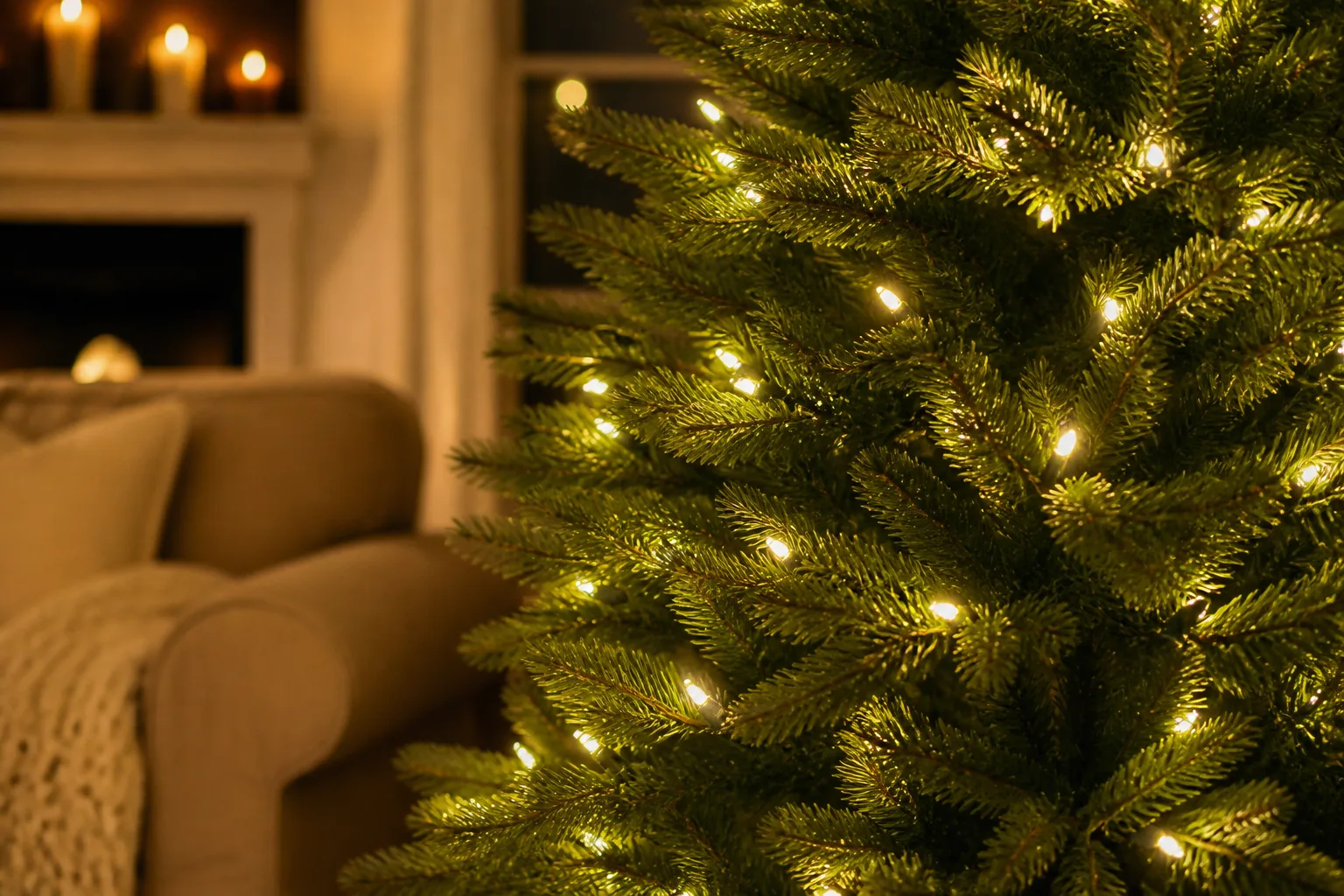
Start with lights that are rated for the setting and in good condition. Weaving lights into the interior branches adds depth, while keeping some bulbs near the outer tips lets the white coating catch the glow. Use fewer, lighter decorations on the farthest tips because heavy ornaments pull down flocked branches and expose gaps.
Color is a style choice, but contrast helps the snowy surface read clearly. Red, green, wood, and warm metallics make the tree feel traditional; silver, blue, white, and cool glass lean toward an icy palette. A restrained ribbon or garland can fill a thin section, but do not use dense decoration to hide a structural problem you should have corrected by fluffing the tree first.
Hang ornaments from the branch rather than dragging them along the coating. When you remove them, lift them out one at a time. Put the largest pieces deeper inside the tree and reserve delicate or reflective pieces for stable outer tips. A skirt or collar can hide the stand, but leave access to a real tree’s water reservoir so you do not turn a decorating detail into a watering obstacle.
Are flocked trees messy?
They can be, but “messy” depends on when and how the flocking was applied. DIY powder and spray create the most cleanup during application. Any flocked tree may shed when it is unpacked, fluffed, decorated, moved, or stored, while a well-sealed pre-flocked tree generally sheds less during ordinary use.
Plan for small white particles under the lower branches and around the stand. A drop cloth during setup and a gentle dry cleanup after decorating are more effective than trying to make the surface completely shed-free. Avoid placing the tree where a strong air current from a vent will blow loose material around the room.
The coating also changes how you clean. The storage guidance from Better Homes & Gardens recommends a dry microfiber cloth for flocked branches and warns against vacuuming the finish. Test any cleaning method on an inconspicuous section first. A damp cloth, scrub brush, or household spray can dissolve, smear, or pull off the artificial snow.
How to care for and store a flocked tree

For an artificial tree, take down ornaments and lights before compressing the branches. Work from the outside inward so you are not dragging hooks through the flocking. Brush loose dust from a dry cloth or use the product’s recommended method; do not treat a flocked finish like washable plastic.
Store the sections in a moisture-resistant tree bag in a cool, dry place. A bag keeps dust, pests, and humidity away more reliably than a softened cardboard box. If the tree is small enough to remain assembled, an upright bag can reduce repeated squeezing of the branches; if it must be disassembled, support the sections without forcing them into a container that bends the tips.
Before packing, let the tree become fully dry and check for dampness at the trunk and branch joints. Moisture trapped in storage can create odors and damage wiring even when the flocking itself looks fine. Label the bag with the section order and keep the stand, gloves, touch-up product, and care instructions together so next year’s setup does not become a guessing game.
For a fresh-cut flocked tree, storage means removal rather than packing it for next year. Continue daily water checks while it is indoors, keep it away from heat, and take it out as soon as it is dry or begins dropping needles heavily. Flocking can make the tree look snowy after it has begun to decline, so use the tree’s condition—not its white appearance—as your guide.
Flocked tree safety around heat, lights, children, and pets
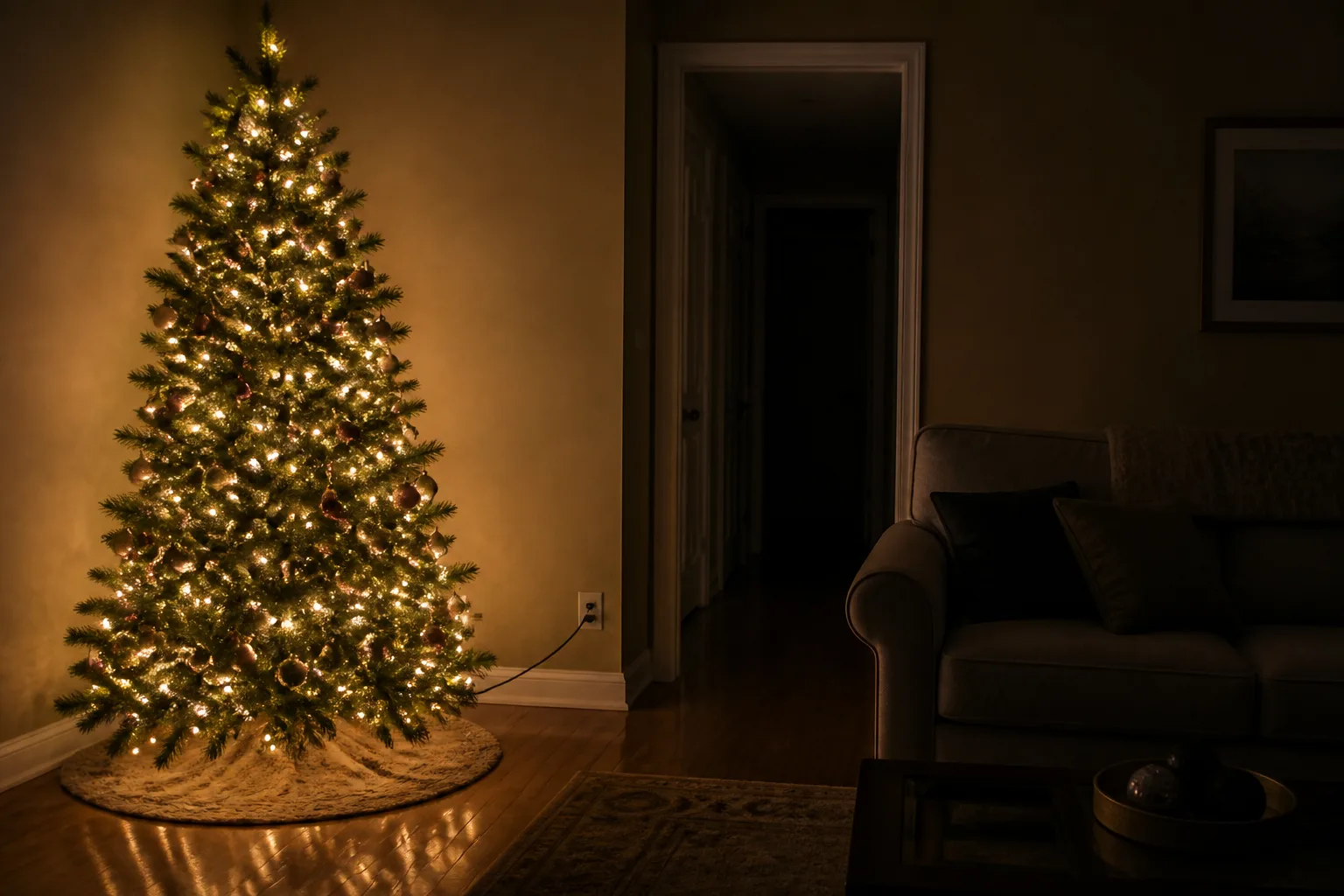
Flocking is a decorative finish, not a fire-safety treatment. The NFPA reports that U.S. fire departments responded to an average of 143 home fires that began with Christmas trees each year from 2020 through 2024. NFPA also notes that heat sources too close to a tree cause nearly one in four of those fires and that electrical problems account for nearly half, so a white coating should never change your placement or electrical habits.
Keep the tree at least three feet from fireplaces, radiators, heat vents, candles, and other heat sources. Inspect every light string before use, follow the manufacturer’s limit for connecting strands, and turn the lights off when you leave home or go to bed. The American Red Cross includes these distance, water, light, and artificial-tree label precautions in its holiday guidance.
For a real tree, cut the trunk before placing it in a stand and check the water level daily. The NCTA recommends a stand with roughly one quart of capacity per inch of trunk diameter, but capacity is not a substitute for checking the actual water line. Never let the base sit above the water, and never use a candle as a tree decoration. A flocked surface can hide drying needles, so do not rely on appearance alone.
Keep the product container and instructions in case you need to check cleanup or exposure directions. Prevent children and pets from chewing flocked branches, ornaments, cords, or light bulbs, and secure a tall tree if it can be pulled over. If a product label gives stricter precautions than this general guidance, follow the label. If the coating is visibly flaking into a food area or a pet is repeatedly trying to eat it, move or remove the decoration rather than trying to seal it with an untested household product.
Common flocking mistakes and how to fix them
Applying too much at once: A heavy first pass creates clumps and makes the tree look like it has been dipped in paint. Let each layer settle, then add only where the green still shows more than you want.
Skipping branch fluffing: Flocking closed branches locks empty spaces into the finish. Open the tree first; if you already flocked it, wait until it is dry and gently separate branches rather than pulling through wet material.
Decorating while it is damp: Wet flocking transfers to hands, ornaments, and wires. Give it the full label drying time, then test a hidden branch before adding lights.
Using a kitchen or craft recipe: Homemade mixtures may clump, shed, stain, or behave unpredictably around wires and pets. Use a product intended for the job and follow its directions instead of improvising ingredients.
Vacuuming the white finish: A vacuum can pull off the coating and leave obvious green patches. Use a dry microfiber cloth or the manufacturer’s recommended tool, and test first.
Compressing it tightly for storage: Pressure crushes branch tips and can strip flocking. Use a roomy, moisture-resistant bag and support each section without forcing it into a too-small box.
Treating flocking as preservation: A flocked fresh tree still dries out. Keep the stand full, place the tree away from heat, and remove it when it becomes dry even if the white finish still looks attractive.
Ignoring the electrical setup: Do not add light strands to compensate for a tree that looks flat, cover damaged cords with flocking, or place the tree closer to a heat source so it is more visible. Fix the lighting plan before decorating.
Conclusion
A flocked Christmas tree is simply a tree finished with artificial snow, but the best way to use one depends on the format. Choose a pre-flocked artificial tree for a consistent, repeatable display; flock an artificial tree yourself when you want control and have a suitable workspace; or flock a fresh-cut tree only when the product allows it and you are prepared to keep up normal watering and fire-safety care.
The reliable process is straightforward: decide how much white coverage you want, protect the workspace, fluff the branches, apply light layers, let everything dry completely, decorate gently, and store the tree in a cool, dry, protected space. Keep it away from heat, inspect lights, supervise children and pets, and remember that flocking creates a winter look—it does not make a tree fireproof, maintenance-free, or immortal.



