What Are Digger Bees? ID, Nests, and Garden Impact
Spot likely digger bee nests, understand their short seasonal activity, and use low-disturbance steps to protect people, pets, and pollinators.
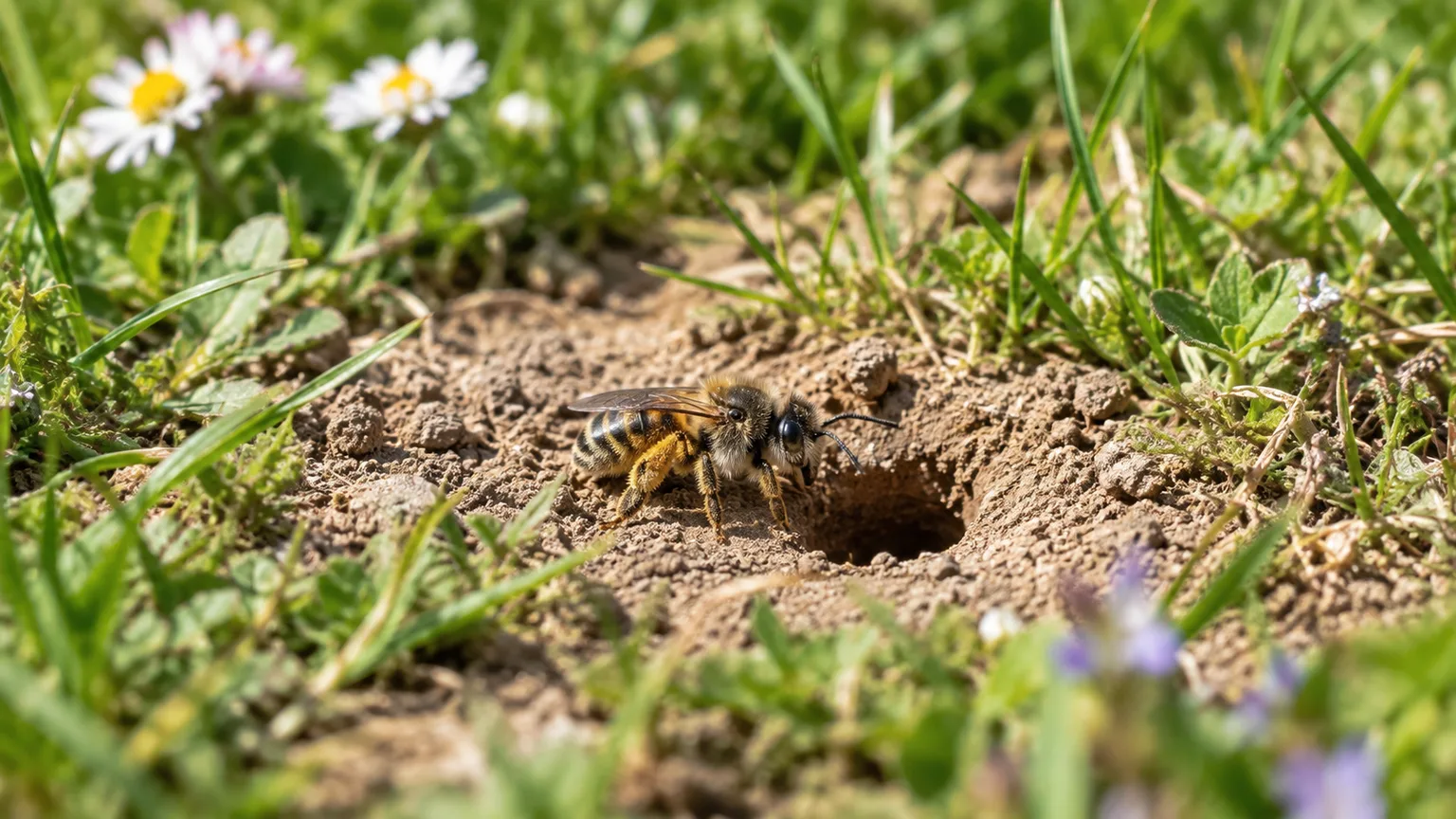
A small round hole in a sunny patch of lawn can look like the start of a pest problem. If bees fly low over the soil and disappear into several separate openings, the visitors may be ground-nesting bees, often called digger bees or mining bees. In many gardens, they are seasonal pollinators using a patch of suitable soil to raise the next generation, not insects feeding on grass roots or chewing plants.
“Digger bee” is a broad everyday label, not a precise species name. It can refer to mining bees in the genus Andrena and, more loosely, to several kinds of solitary bees that nest in soil.
That matters because a bare-soil hole can also belong to a wasp, and not every ground-nesting bee is solitary. Watch the pattern from a safe distance before deciding what to do.
Quick answer: what “digger bee” means
Most gardeners use digger bee for small or medium-sized bees that excavate individual nests in the ground. A female digs a tunnel, creates brood cells, and stocks each with pollen and nectar for her young. She does not build a honeycomb hive or share the work with a queen and a large worker force.
The common name can blur several groups. “Mining bee” often means Andrena bees in the family Andrenidae, while ground-nesting bees also include species from other bee families. NC State Cooperative Extension notes that solitary ground nesters vary in appearance and that many females use their own burrows; a local extension service or native-bee specialist can narrow down a species from a clear photo, location, season, and flower visits. (NC State Cooperative Extension)
There are many species, and their schedules and nesting habits are not interchangeable. A 2022 article in Ecological Applications summarizes evidence that about 70 percent of wild bee species nest below ground, but that figure describes wild bees broadly; it does not mean 70 percent of bees in your particular yard are digger bees. (Ecological Applications via PubMed Central)
How a ground-nesting bee builds a nest
A female bee chooses a patch where the soil and exposure suit her species, then excavates a main tunnel with one or more side chambers. She provisions each cell with a compact pollen-and-nectar supply, lays an egg, and closes the chamber. The larva develops underground on that food; depending on the species and climate, the next adult may emerge later in the same season or after overwintering.
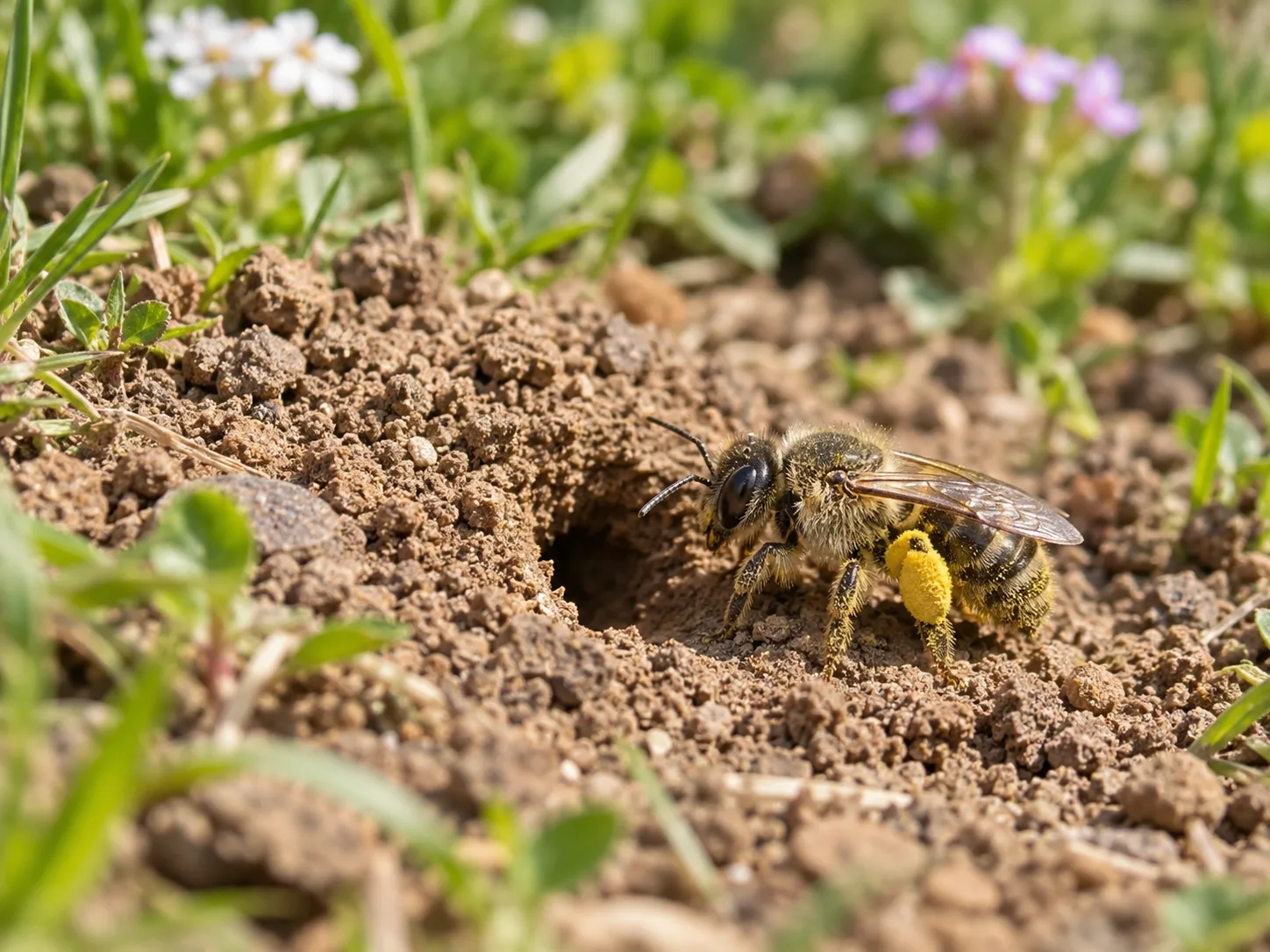
The nest belongs to one female even when the entrances sit close together. A cluster of holes can be an aggregation: many independent nests in a patch that offers attractive soil, warmth, drainage, or nearby flowers. It is not automatically a communal hive, and the insects do not necessarily cooperate or defend a shared stockpile.
That underground stage is easy to overlook because adult bees may be visible for only a short flight period. Backyard Ecology’s field account describes how a patch can be busy above ground for a few weeks while the offspring remain below ground much longer. The useful garden takeaway is simple: when you see adults leave, the nest may still contain developing brood, so digging or tilling immediately afterward can still disturb it. (Backyard Ecology)
Why one patch can hold many nests
Ground bees often aggregate where the site works for them, not because one queen has established a colony. Each opening may have its own female, and the adults may appear to stream across the same small area because their nests are concentrated there. Male bees may also patrol over the nesting patch when females are emerging, which can make a small aggregation look more threatening than it is.
The distinction changes how you read the yard. A dozen entrances do not equal a dozen defensive colonies, but they do mean a larger area of soil is occupied. Avoid stepping through the patch or testing holes with a stick, and leave enough room around it for bees to fly without being brushed, trapped, or accidentally stepped on.
How to recognize a likely digger bee nesting site
A likely ground-bee nest is a small, neat opening in bare or sparsely covered soil, sometimes ringed by a low mound of loose excavated earth. The opening may be roughly pencil-width, but size varies by species and soil. You may see a bee enter and exit one hole while other bees use separate holes nearby.
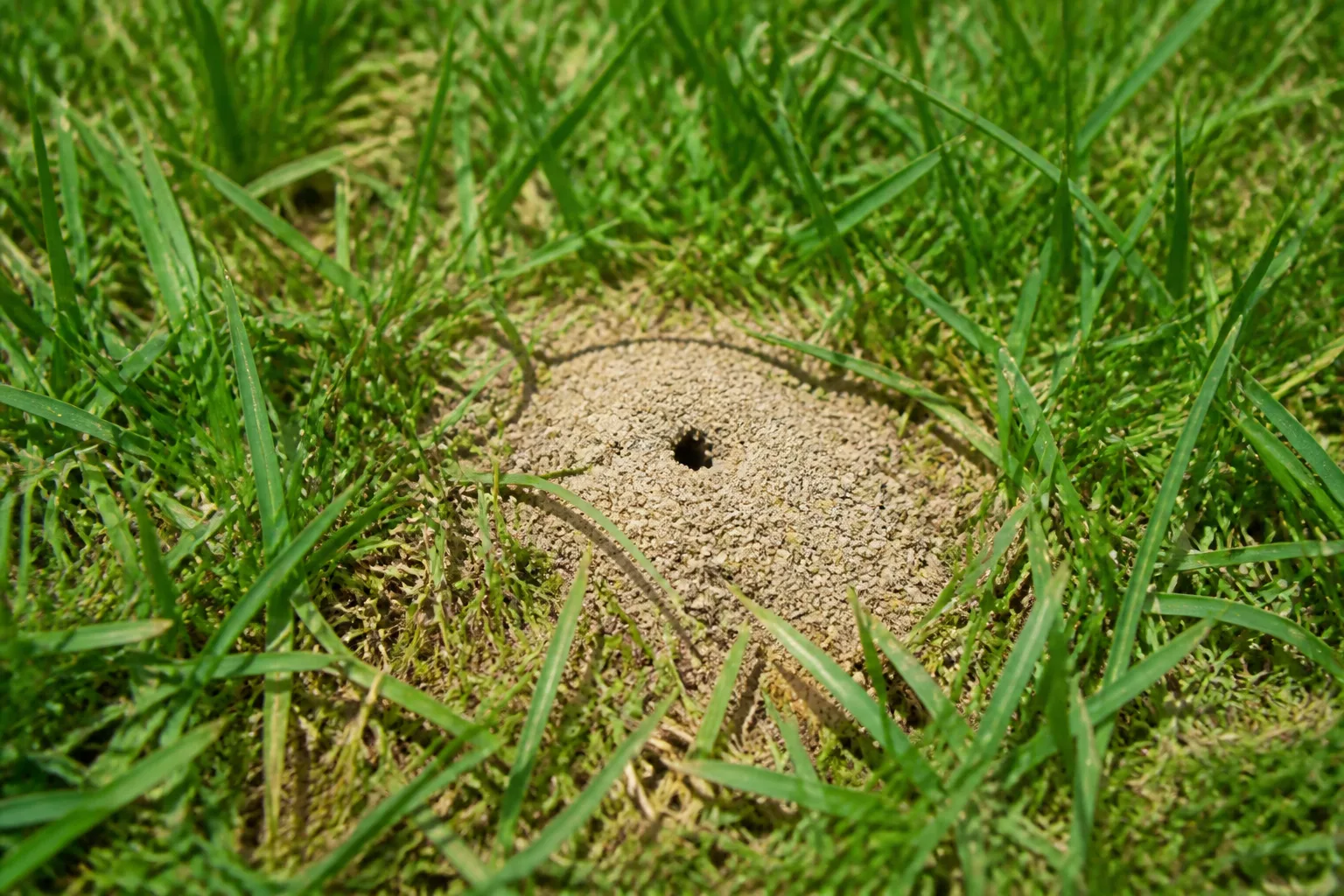
The site is a clue, not a diagnosis. Ants can move soil into tiny mounds, and some solitary wasps also dig underground.
A hole’s diameter alone cannot tell you whether a bee is native, whether it stings, or whether it is socially nesting. Observe the traffic pattern over a few minutes from several feet away, then take a zoomed photo rather than crouching at the entrance.
Look for a combination of signs: separate round openings rather than one large shared entrance; small bees flying low and returning to specific holes; a short seasonal burst of activity; and a sunny, well-drained patch with little vegetation. No single sign confirms identity. If insects are repeatedly entering one hole in a steady stream, treat the site as uncertain until a local expert can identify it.
When one hole may mean a social wasp
Yellowjackets are wasps, not bees, and some species nest in the ground. A colony may use one main opening with workers repeatedly coming and going, and wasps can defend the nest if it is disturbed. A hole with a busy, continuous traffic lane deserves more caution than a few separate holes with occasional bee activity.
The pattern is not foolproof: social wasps may have more than one opening, and a bee aggregation may have many entrances only inches apart. Do not block, flood, burn, spray, or dig into a hole to find out. If you see repeated wasp-like traffic, hear buzzing from an underground cavity, or need to work close to the entrance, keep people and pets away and contact a qualified local pest professional for identification.
What the bee itself can tell you
Ground-nesting bees vary from dark and nearly smooth to fuzzy, banded, or metallic. Females often carry pollen on specialized hairs, but the pollen-carrying area differs among bee groups, and color alone is unreliable. Males may be smaller or more active around the nest, but it is difficult to sex a moving insect from a casual glance.
A close photograph of the insect’s side, back, and face can help an extension entomologist or native-bee group. Include your region, the month, the flowers the bees visit, whether each bee uses its own opening, and whether traffic is occasional or continuous.
Bumblebees also nest underground in some situations, but they are social bees with a queen and a colony; carpenter bees excavate wood, not soil. Avoid collecting or handling a bee for identification; a clear, distant image is safer and often more useful than a specimen with no site context.
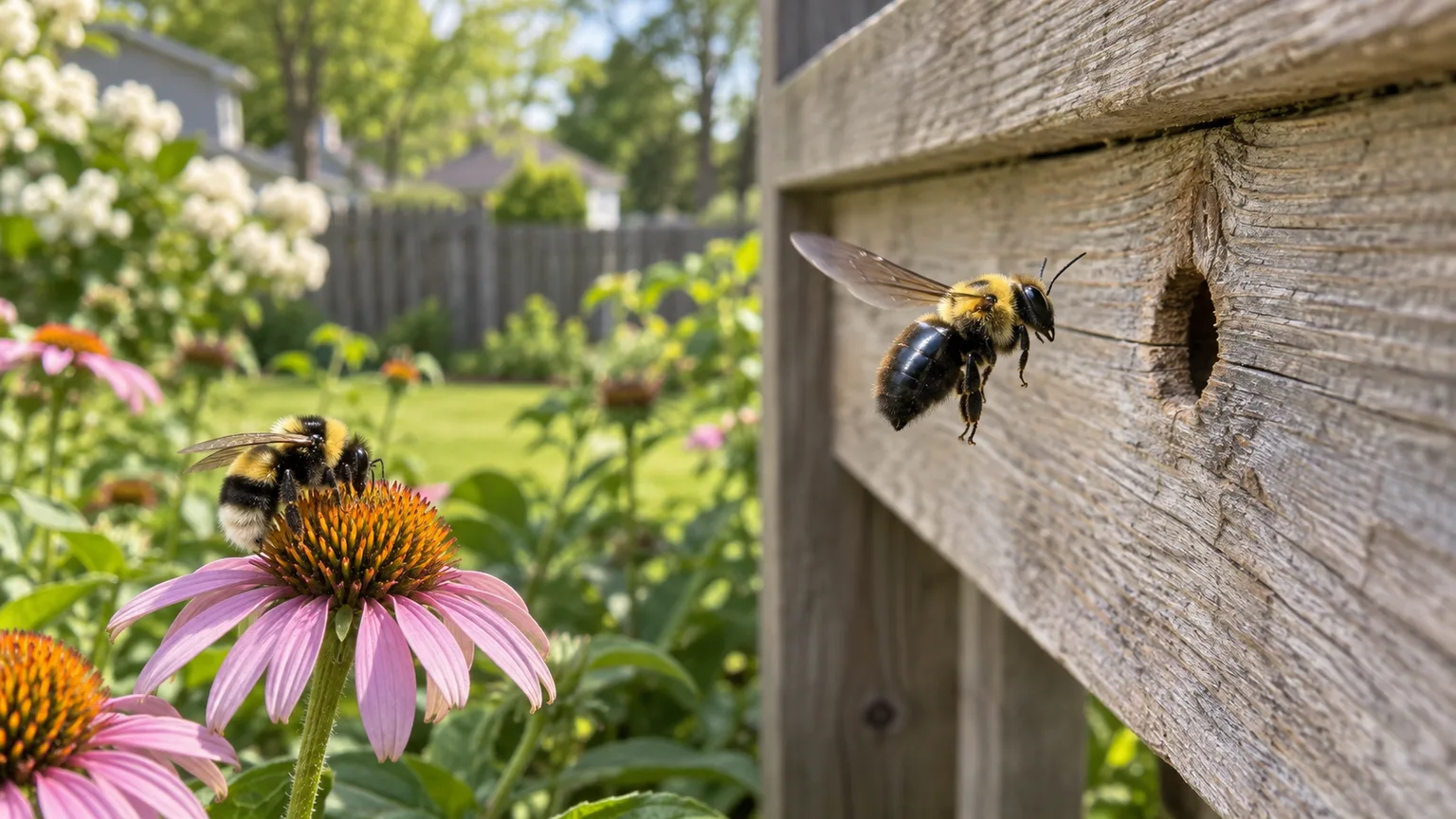
Carpenter bees excavate wood, while bumblebees can use underground cavities; neither is the same as a solitary mining bee.
Where digger bees nest and when they appear
Many ground-nesting bees favor sunny, open soil that drains well, with bare or lightly vegetated spots nearby. Some use sandy or loose earth, while others tolerate firmer soil; a preference found for one species or region should not be treated as a universal rule. A patch beside a lawn, garden edge, path, or native planting can offer both nesting ground and access to flowers.
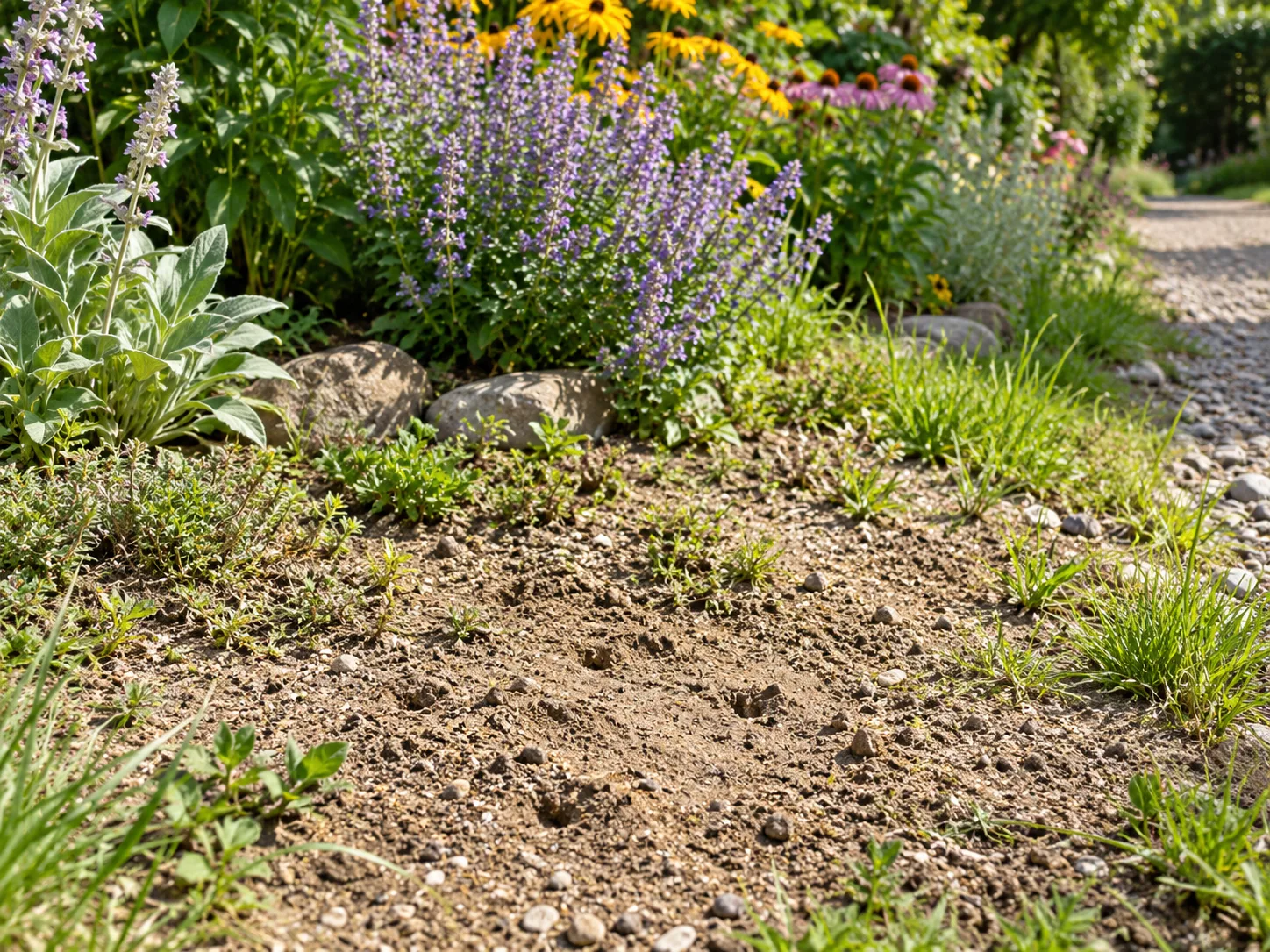
In much of the United States, people first notice some solitary ground nesters in spring, when adults emerge and begin mating and provisioning. The timing depends on latitude, weather, bee species, and bloom cycles, and other ground-nesting bees fly later.
A spring sighting is common, not a reliable calendar for every yard. Gardening Know How describes spring activity and sparse lawn patches as familiar observations for some ground bees; treat these as clues rather than a schedule for every species or region. (Gardening Know How)
Look for activity during daylight, especially when temperatures support flight and flowers are available. The National Park Service identifies sunny bare soil as a favored nesting condition for many native ground-dwelling bee species, while NC State Cooperative Extension describes nests in bare or sparse areas with well-drained soil. These are habitat clues rather than a recipe: changing a site’s moisture or soil surface during active nesting can affect brood and other organisms, not just discourage future bees. (National Park Service; NC State Cooperative Extension)
What digger bees do for a garden
Adult bees visit flowers for nectar and pollen; females also carry pollen back to the nest to feed their offspring. While foraging, they transfer pollen among flowers, supporting seed and fruit production in plants that depend on insect pollination. Which plants they pollinate depends on the species: some visit a broad range of flowers, while others are closely associated with particular plant groups or bloom periods.
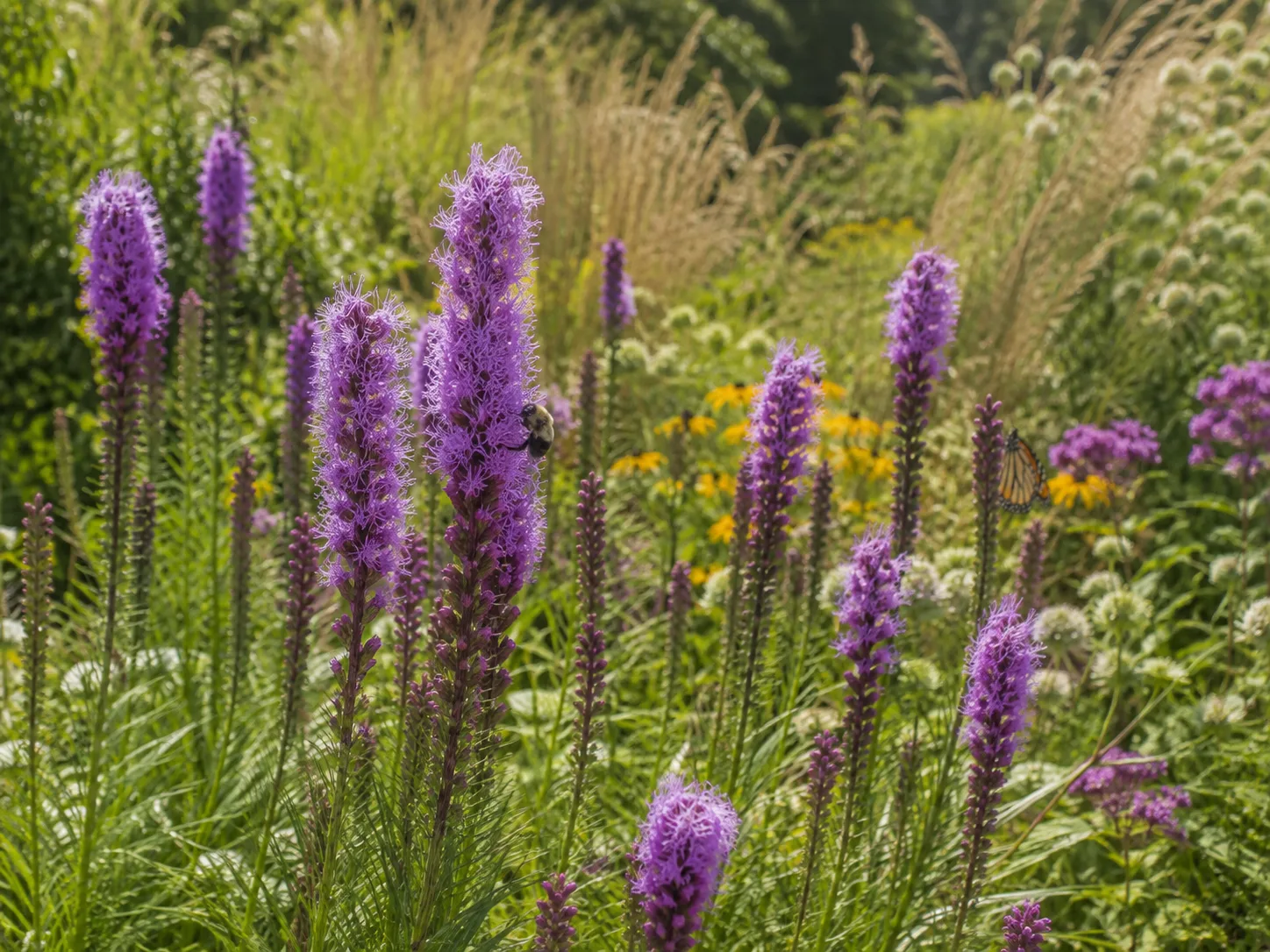
This broader pollinator scene shows the flower resources available in a garden; it is not a species identification for digger bees.
This is one reason a small nesting patch can be useful in a home garden. The bees may be active when fruit trees, spring bulbs, and early perennials are flowering, then disappear from view as the next generation develops below ground. The same Ecological Applications article explains that ground-nesting pollinators can be exposed to soil disturbance and chemicals during the underground part of their life cycle, a reminder that their value is not limited to the weeks when adults are visible. (Ecological Applications via PubMed Central)
The visible soil disturbance is usually localized to the nest entrances. Do not count on tunnels to meaningfully aerate a lawn, improve plant roots, or control insect pests; those are not reliable garden services to promise from an unidentified bee. The clearest benefit is pollination, and the clearest cost is that an active nest can be inconvenient where people need to walk, play, or mow.
Why early flowers and local plants matter
A nest site alone does not feed a bee. Females need accessible pollen and nectar near the period when they are provisioning brood, so a garden with flowers across multiple seasons is more useful than a single short bloom. Choose regionally appropriate flowering plants with overlapping bloom times, and allow some flowers to remain available instead of deadheading every bed at once.
Local plant choices can also matter because some bees specialize in certain pollen sources. Backyard Ecology describes ground-nesting bee species associated with plants such as violets, hollies, and dogwoods, while stressing that habitat includes both nesting soil and food. That does not mean every digger bee needs those plants; use a regional native-plant or extension list to select species that fit your climate and soil. (Backyard Ecology)
Avoid spraying blooming plants while bees are foraging, and do not apply insecticides to a nest area as a routine response to holes. Pesticide exposure can affect pollinators, and soil-nesting bees contact the ground while excavating. If a pest treatment is genuinely needed for a separate problem, identify the target first, follow the product label, and ask an extension service about lower-risk timing and alternatives.
Are digger bees dangerous to people or pets?
Most solitary bees are not defending a large communal nest, so their behavior is often less defensive than that of social wasps. That does not make every bee harmless. A female bee can sting if pinned, grabbed, stepped on, or repeatedly disturbed, and anyone with a history of severe sting allergy should treat an uncertain nesting area with extra distance and seek medical guidance about their own risk.
The most practical safety measure is to avoid surprise contact. Keep bare feet, hands, lawn toys, and pet paws away from active entrances; move play or seating to another part of the yard during the flight period. If a bee lands on clothing or skin, stay calm and let it leave rather than swatting, squeezing, or trapping it.
Children may read many flying insects as one swarm even when each hole is a separate nest. Explain that the small holes are a boundary to walk around, mark the area with stakes placed outside the cluster, and supervise young children until activity ends. If someone has a known severe allergy, route them away from the entire patch rather than asking them to judge which insect is present.
Should you remove digger bees from the yard?
If nests are in a low-traffic corner and no one is at special risk, leaving the soil undisturbed is usually the simplest choice. The adult flight period for a given species may be brief, but the brood develops below ground after the adults disappear. Avoiding disturbance protects the current generation as well as the adults you can see.
Removal is not warranted just because the ground looks untidy. The small mounds may settle with rain, and the bees do not feed on roots or tunnel through sound wood. If the holes are damaging a sports surface or occupy a narrow entrance that cannot be rerouted, first confirm whether the insects are bees or a social wasp; the right management depends on the identification and the site.
Skip home remedies that pour hot or soapy water into holes, seal the entrances, burn the soil, or dust the area with a broad-spectrum insecticide. Those steps can kill brood and non-target soil life while failing to solve a misidentified wasp nest safely. A pesticide is not a substitute for identifying the insect, and it is unnecessary when the issue is only a temporary patch of benign-looking bee activity.
How to coexist with digger bees safely
Treat the nest cluster like a temporary garden feature that needs a boundary. Pick a route that goes around it, place a visible marker outside the flight path, and let household members know which section of lawn to avoid. A few simple changes in movement can prevent most accidental encounters without disturbing the nesting soil.
Mark a small nest zone and shift traffic
Mark the perimeter rather than placing flags directly into individual holes. Use a short temporary fence, lawn stakes, or a low sign set beyond the openings so feet, mower wheels, and curious hands stay out of the active area. If the cluster is beside a walkway, shift the path for the season or set a barrier that guides people around it without blocking the bees’ flight route.
Keep pets leashed or redirect them across a different section of the yard while adults are active. Dogs that dig or sniff into holes are more likely to trigger contact than pets simply passing nearby. If a child’s play area overlaps the patch, move play equipment rather than trying to cover the nests while bees are using them.
Protect the nesting patch during garden work
Do not till, dig, rake, plug, or spread a thick layer of mulch over active nest openings. Avoid running a mower directly across a cluster; if the surrounding lawn must be cut, use a different route and do not pause over the holes. Leave the actual nesting patch alone until local bee activity has ended, then check with an extension service before changing the soil if you want to preserve native pollinators.
Keep routine sprays and granular insecticides off the nesting ground and nearby flowers. Research on ground-nesting pollinators notes that chemicals and deep tillage can expose bees during their underground stage, so a visible adult-free patch is not necessarily an empty patch. In a pollinator garden, the safer default is targeted pest management away from the nest and product-label compliance, not blanket treatment of the whole yard. (Ecological Applications via PubMed Central)
Reduce future nesting in one high-use spot
If the location will remain a hazard after the current season, plan a lasting surface change after you have confirmed the bees are no longer flying and have asked a local extension office about timing. A dense, healthy lawn, groundcover, or planted bed may make that specific bare patch less suitable for some ground nesters. The trade-off is that this changes habitat, may not deter every species, and can displace bees to another suitable area rather than eliminate them from the neighborhood.
Do not respond by keeping the soil permanently wet. Some extension guidance notes that heavy watering may discourage nesting in dry lawn areas, but regular flooding is not a dependable or considerate fix for an active nest and can damage turf, garden plants, and soil structure. For an established site, rerouting traffic is safer than trying to drive the bees out with water.
When a professional should identify or manage the nest
Ask your local cooperative extension office, university entomology department, or native-bee organization for identification when the species is unclear. Send a photo from a safe distance and describe the number and size of the openings, the month, the flight pattern, and whether insects use one entrance or many. Those details help an expert distinguish a bee aggregation from ants, solitary wasps, or a social yellowjacket nest.
Contact a qualified pest professional if there is continuous wasp-like traffic, a suspected social colony near a doorway or play space, or a serious unavoidable exposure risk. Tell them that you want the insect identified before treatment and that the site may contain ground-nesting native bees. If anyone has a severe allergy, prioritize avoidance and their clinician’s advice while identification is underway; do not approach the nest to collect a sample.
Common mistakes when identifying ground nests
The first mistake is assuming that every bee-shaped insect over a hole is a digger bee. Yellowjackets, solitary wasps, bumblebees, and several kinds of solitary bees can use or excavate ground cavities, but their social behavior and risk differ. When the pattern is uncertain, keep your distance and ask for identification rather than relying on color or hole size.
The second mistake is confusing a dense aggregation with one hive. Many separate holes can belong to many females that happen to prefer the same patch, while a social wasp colony may funnel repeated traffic through a principal opening. Watch where each insect goes before deciding how many nests are present.
The third mistake is treating a useful bee habitat as a lawn disease or root pest. These bees forage on flowers and provision underground brood cells; they do not eat turf roots. Their tunnels affect only a limited soil area, so preserving them is a pollinator choice rather than a lawn-aeration strategy.
Finally, do not assume that all species are active in spring, prefer identical soil, or pose zero sting risk. Species vary by region, and common names often get used loosely. A little patience, a photo, and a local extension identification can prevent both unnecessary pesticide use and an unsafe guess.
Conclusion
Digger bees are a useful name for several kinds of ground-nesting bees, especially solitary mining bees, but a hole in the soil is not enough to identify them. Separate small entrances, bees flying to individual holes, and a sunny, lightly vegetated patch make bee nests plausible; steady traffic through one entrance raises a different concern and should be treated cautiously.
When the bees are in a quiet corner, protect the patch, keep people and pets from stepping into it, and let the adults complete their short active season. Their strongest garden contribution is pollination, while the mounds and tunnels are localized signs of nesting rather than proof of plant damage. If the site is risky or the insect is uncertain, seek local identification before disturbing the ground.



