Acidic Soil: How to Test It and When to Change It Safely
Learn what acidic soil means, which plants prefer it, how to test pH, and when to use lime or sulfur without guessing or overcorrecting your garden first.
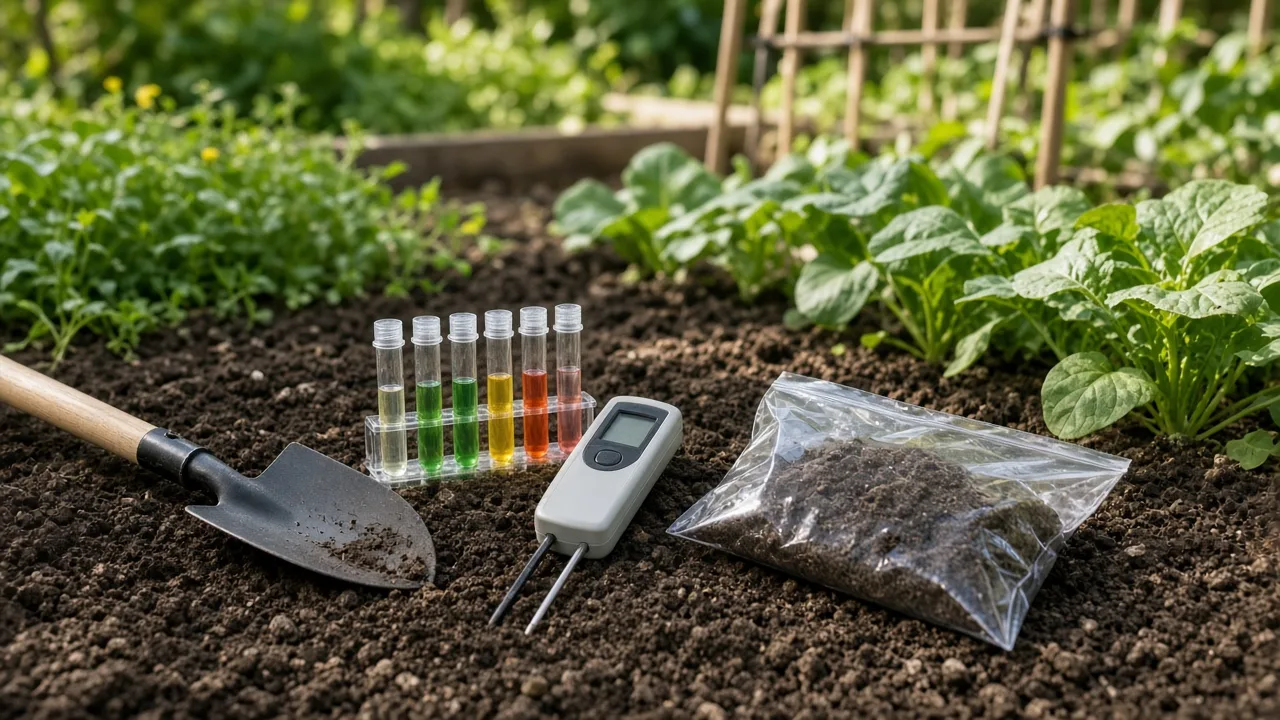
Acidic soil is soil with a pH below 7, as NC State Extension explains, but that definition alone does not tell you whether a garden bed needs treatment. Blueberries, azaleas, and rhododendrons are adapted to acidic root zones; many vegetables grow better closer to mildly acidic conditions. The useful question is not “Is this soil acidic?” but “Is its pH suitable for the plants I want to grow here?”
Before adding lime or sulfur, match the test result to the plant’s preference and the site’s soil. Yellow leaves, slow growth, or a disappointing harvest can come from pH, but they can also come from poor drainage, damaged roots, drought, pests, or a nutrient shortage. A soil test helps separate those possibilities and prevents a correction that creates a new problem.
Fast answer: acidic does not mean bad
On the pH scale, 7 is neutral, numbers below 7 are acidic, and numbers above 7 are alkaline. In gardening, “acidic soil” is often used loosely for soil below about 6.5, but the exact cutoff matters less than the target for the crop or ornamental. Some plants prefer a low pH; others tolerate it only within limits.
You do not need to raise every acidic bed to pH 7.0. In fact, pushing soil toward neutral can deprive acid-loving plants of the conditions they need, and raising pH too far can reduce the availability of iron, manganese, and other nutrients. NC State Extension explains that the target pH varies by crop and soil type; even its regional recommendations differ from targets used in other parts of the country.
| What the test and plant tell you | Sensible first move |
|---|---|
| The reading fits the plant’s recommended range and it is growing well | Leave pH alone; keep normal soil and water practices |
| The reading is slightly outside the preferred range but there are no symptoms | Confirm the lab’s target and monitor before making a change |
| The reading is outside the plant’s range and growth is poor | Ask for a lab recommendation that accounts for soil texture and buffering |
| A plant is struggling but pH is suitable | Investigate water, roots, pests, drainage, nutrients, and planting depth |
What pH measures, and why roots care
Soil pH describes the acidity of the soil solution, which is influenced by hydrogen ions and the soil’s reserve acidity. It is not a direct measurement of how much fertilizer is present. Instead, pH changes the chemical forms and solubility of nutrients, which affects what roots can take up.
The scale is logarithmic: a soil at pH 5 has roughly ten times the hydrogen-ion activity of soil at pH 6, not merely “one point more acidic.” NC State Extension explains why small numerical shifts can matter biologically and why liming aims at a crop-appropriate range, not neutrality for its own sake.
The pattern of nutrient availability also changes across the scale. At sufficiently low pH, soluble aluminum or manganese can reach levels that injure roots, while phosphorus and some base nutrients may be less available. At high pH, iron and manganese can become difficult for roots to access even when those elements are present. Ohio State University Extension describes these effects as part of a wider network of soil chemical reactions and microbial activity, not a single deficiency switch.
That distinction matters when a test report shows a pH outside the preferred range. The number may explain why a nutrient is unavailable, but it does not identify every nutrient present or prove that pH is the only cause of a plant’s condition. Read pH alongside the report’s nutrient results and the plant’s growing conditions.
Symptoms can point to a problem, but cannot diagnose low pH
A very acidic soil may restrict roots, slow growth, or contribute to foliage that looks pale, scorched, or stunted. Those clues are real, but they are not unique to low pH. Waterlogged roots can look nutrient-starved; drought can stop nutrient movement; compacted soil can restrict roots; and pests or disease can yellow foliage while the pH is perfectly acceptable.
Look for a pattern before treating. If only one plant is affected, inspect its root zone and the soil immediately around it. If a whole bed or row is declining, consider a shared factor such as irrigation, recent fertilizer, fill soil, drainage, or a pH difference. A symptom that follows a certain plant species can also reflect that species’ sensitivity rather than a problem affecting every crop.
Blossom-end rot, purple leaf edges, yellowing, and poor flowering are especially tempting to interpret as pH signals. They can have several causes, and some may point to water balance or a particular nutrient rather than acidity. Do not use a leaf symptom to calculate a lime or sulfur dose. Test the root zone first, then use a broader nutrient test or local extension diagnostic if the pH result does not fit the symptoms.
Think of pH as one part of a diagnosis, not a verdict. A home pH reading can help you decide whether to seek a full lab report, but it cannot tell you that adding a general fertilizer, lime, or sulfur will correct the underlying cause.
Why garden soil becomes acidic
Some soils begin acidic because of the rock or sediment from which they formed. In regions with heavy rainfall, water moving through the soil can gradually leach calcium, magnesium, potassium, and other base cations. Over long periods, that weathering can leave more acidic conditions, while soils formed over limestone or carbonate-rich material are more likely to resist acidification or remain alkaline.
Garden practices can shift pH too. Ammonium-based fertilizers become acidifying as their nitrogen is transformed in soil; repeated applications can contribute to a gradual change, especially when crops also remove nutrients at harvest. Penn State Extension notes that soil acidification is natural and can be accelerated by production practices such as nitrogen fertilization. Compost, crop residues, and other organic inputs affect soil chemistry as they decompose, but their net effect depends on material and conditions.
This slow drift is not a reason to lime on a calendar. Rainfall, parent material, irrigation, fertilizer history, and soil texture vary from bed to bed, even in one yard. The same practice can leave one soil nearly unchanged and move another outside a plant’s preferred range.
Plant pH preferences are not one-size-fits-all
Plants evolved in different soils, so “acid-loving” is not a single target. The following examples are useful starting points, not replacement recommendations for a local soil test. The numbers below illustrate how far preferences can differ even among familiar garden plants.
| Plant or group | Illustrative pH target | What that means |
|---|---|---|
| Blueberry | About 4.5–5.5 | A true acid specialist that often needs a dedicated bed |
| Azalea, rhododendron, camellia | Around 5.0–6.0 | Prefer acidic soil but still need drainage and organic matter |
| Potato | Roughly 5.5–6.0 | Tolerates moderately acidic soil; does not need blueberry-level acidity |
| Tomato | Around 6.0–6.5 in many recommendations | Usually prefers mildly acidic soil, not strongly acidic ground |
| Many vegetables and ornamentals | Often near 6.0–6.5 | Check the plant and regional lab target rather than assuming one range |
NC State Extension lists different target pH values for blueberries, azaleas, tomatoes, potatoes, and other crops in its North Carolina guidance. Those values are a useful comparison, not a national rule: the same page explains that target ranges can vary with soil class and the local lab’s method. For a plant-by-plant list, see our guide to acid-loving plants. GrowVeg and Harvest to Table also organize vegetable preferences by crop, reinforcing why a mixed garden may contain plants with different needs.
Acid specialists
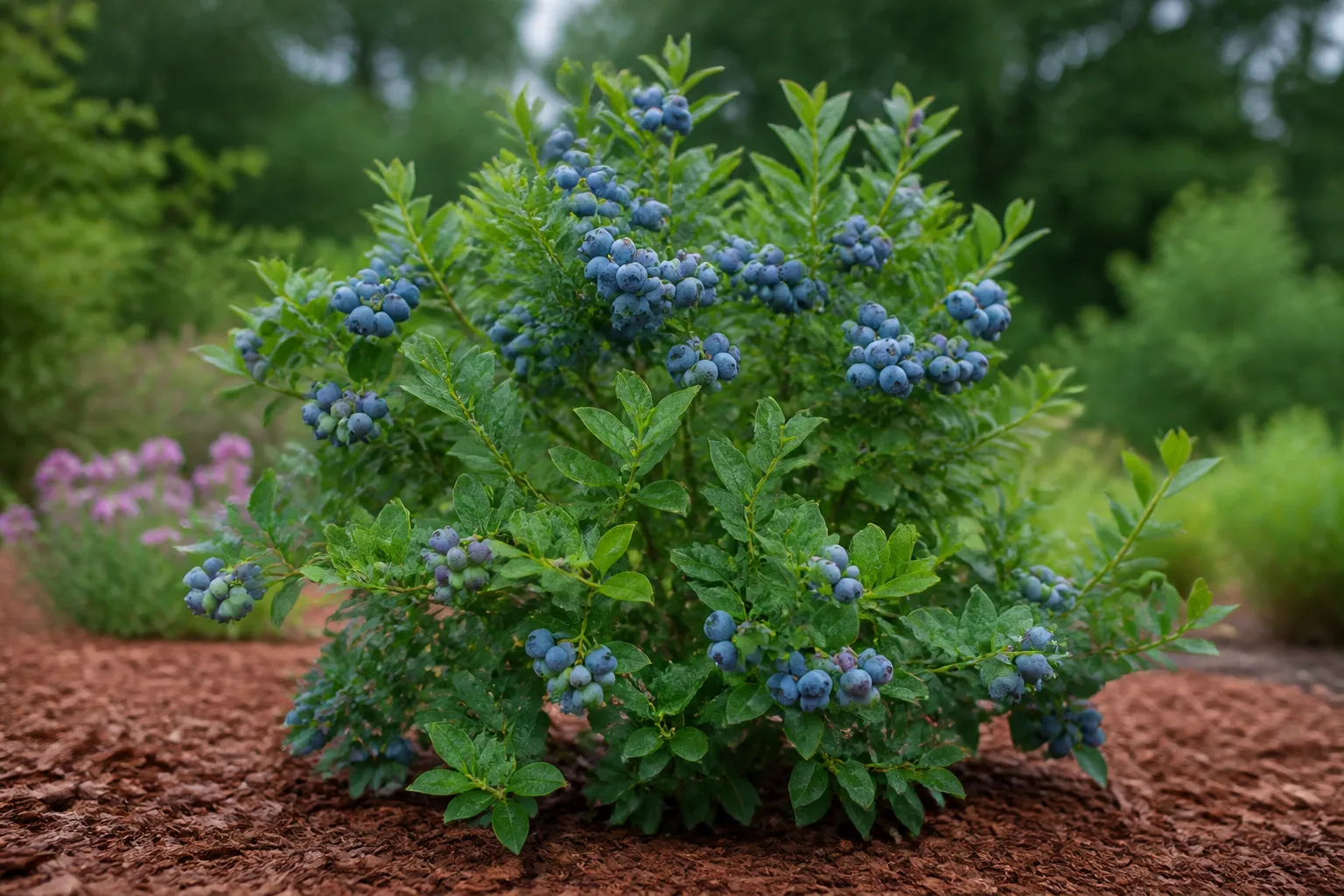
Blueberries are among the clearest examples of a plant that needs genuinely acidic soil. NC State Extension lists a target pH of 4.5 for blueberry on mineral soil, while many garden references describe a practical range around 4.5 to 5.5. Azaleas and rhododendrons also favor low-pH soil, with NC State’s table listing a target near 5.0. These plants may show iron-related chlorosis or lose vigor when grown outside their preferred root-zone conditions.
A specialist should not dictate the pH of the whole garden. A blueberry bed can be kept separate from a vegetable patch, lawn, or border that has a different target. If a plant requires a low pH and the native soil is strongly alkaline, consider a raised bed or container rather than acidifying the entire yard.
Plants that tolerate mild acidity
Tomatoes and potatoes are sometimes grouped with acid-loving plants because they tolerate slightly acidic soil. That label can mislead: a tomato’s preferred range is usually much closer to the middle of the garden range than to a blueberry bed. Many vegetables perform well in mildly acidic soil, but cole crops, asparagus, and other species may prefer a higher pH.
Plant labels and state extension recommendations are more useful than a generic acid-loving list. If a mixed bed contains both blueberry and tomato, it is usually easier to manage separate growing areas than to chase a single pH that satisfies both imperfectly. Stephen Albert’s crop-by-crop guide at Harvest to Table is one practical reference for comparing vegetable tolerances, while local extension targets should guide amendments.
Decide whether to change the soil
Start with three facts: the plant’s preferred pH, a representative soil test, and whether the plant is actually struggling. If the test is already within range, adding an amendment is unlikely to solve unrelated stress. If the plant is healthy and the pH is only slightly outside a broad preference, waiting and improving drainage or moisture may be more useful than chasing decimals.
Also ask whether the planting area is a permanent bed, a container, or a site where soil chemistry is hard to change. A raised bed filled with a suitable growing medium is easier to manage than a large lawn, especially on limestone-derived soil. Changing the soil can take months, and an amendment does not fix compaction, poor drainage, excessive fertilizer, or an unsuitable site.
A good decision sequence is: identify the crop, test the soil, compare the result with a local target, check the report for a lime requirement or other recommendation, and then decide whether the amendment effort is worthwhile. The safest action may be no action at all.
Choose between changing the soil and changing the plant
If pH is close to the plant’s tolerance and it is otherwise healthy, choose the plant that fits the soil rather than changing the whole bed. If an acid specialist is essential to the design, set aside a manageable root zone and test it separately. If the native soil has abundant carbonate or the irrigation water continually pushes pH upward, switching to a container or raised bed may save years of repeated amendment.
The choice is practical as well as chemical. A single azalea in a mixed border may be easier to grow in a container than to maintain a separate acidic pocket. A row of blueberries may justify a dedicated bed, pre-plant soil preparation, and regular retesting. Match the scale of the correction to the number and importance of the plants.
How to test a garden bed accurately
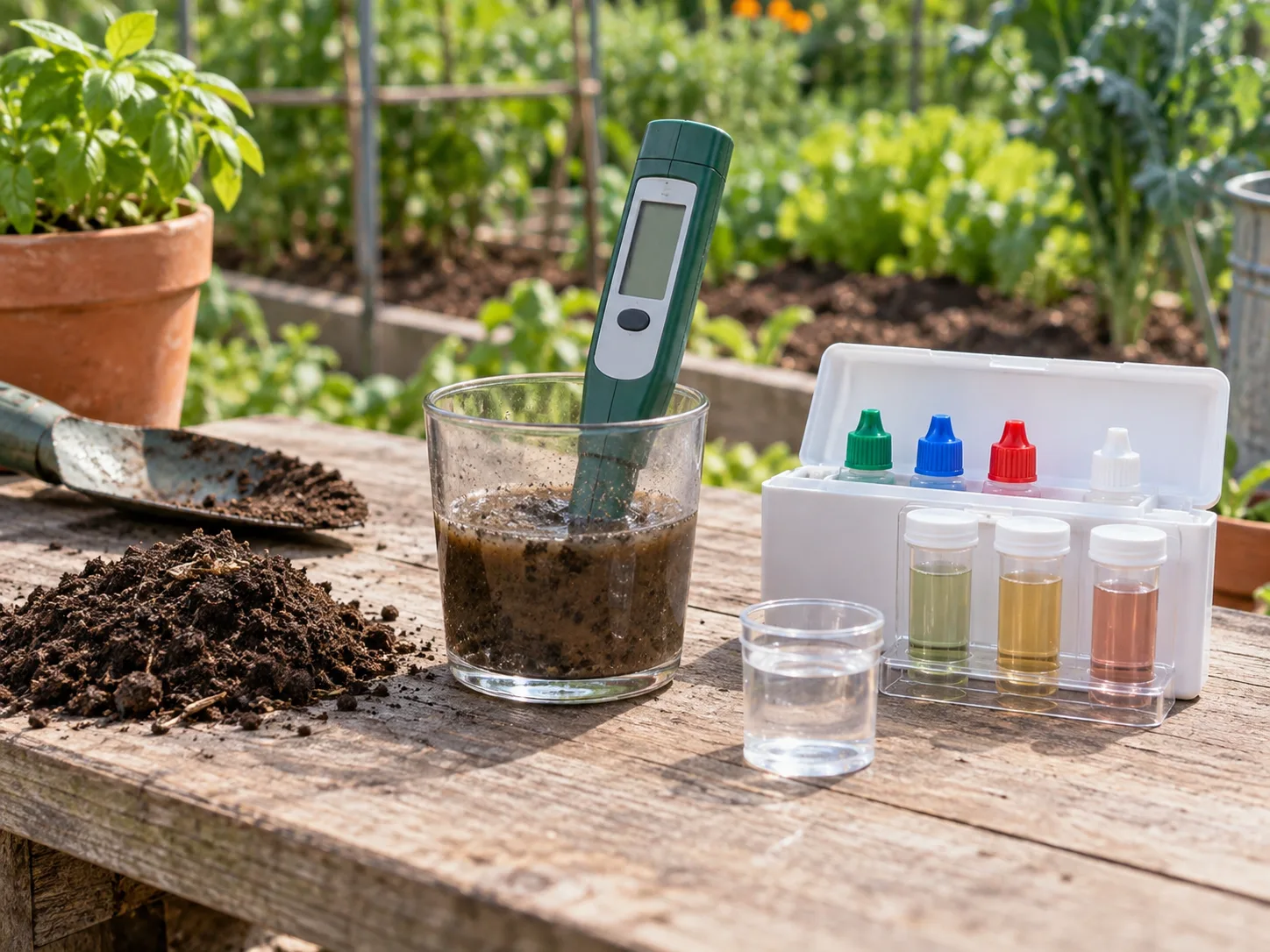
A soil test is only as representative as the sample you send. One scoop from the compost pile, beside a fertilizer spill, or next to a concrete foundation can give a misleading reading. Test areas with different uses or histories separately, such as a lawn, vegetable garden, shrub border, and recently amended raised bed.
A home color kit or pH meter can screen a bed, especially if you are deciding whether a lab test is warranted; Harvest to Table’s soil pH guide describes the strengths and limits of home tests alongside laboratory analysis. A calibrated meter or a kit used exactly as directed is more useful than a soil probe pushed into an arbitrary patch. For a major pH correction, however, a lab result that includes nutrient levels and an amendment recommendation is usually the better starting point. Our guide to testing soil acidity at home explains what quick checks can and cannot tell you.
Build a representative sample
First, divide the garden into areas that share the same soil, plants, and management history. Remove surface mulch and plant debris, then take several narrow cores or slices from across the area using a clean trowel or soil probe. Mix the subsamples in a clean plastic bucket, break up clods, and submit the amount required by the lab. This composite sample represents the bed better than a single scoop; Stephen Albert’s soil sampling instructions at Harvest to Table also emphasize combining samples from similar areas.
Follow the lab’s instructions for sampling depth rather than assuming every garden uses the same one. Ohio State Extension recommends different depths for tilled and no-till soils, and a home lawn, a cultivated vegetable bed, and a raised bed may each use a different protocol. Avoid sampling soil that is saturated or extremely dry, and do not combine samples from places with visibly different soil or recent lime, manure, or fertilizer applications.
Label the sample with the intended crop or use. A lab cannot choose a meaningful target if it does not know whether the bed is for blueberries, lawn grass, vegetables, or a mixed ornamental border. If the area has been amended recently, wait for the period specified by the testing service before resampling; otherwise, the result may reflect an uneven dose rather than the settled root zone.
A DIY kit is useful for a rough pH check, not for an exact prescription. Follow its soil-to-water ratio and instructions, use the water recommended by the kit, and repeat a surprising reading with a new sample. Cheap probes can drift or depend on soil moisture and contact, so calibrate meters according to their manufacturer’s directions.
What a soil-lab report adds
A pH value tells you whether soil is acidic, neutral, or alkaline, but it does not tell you how much lime or sulfur to use. Two beds with the same pH can require different amounts to move because one has more clay, organic matter, or carbonate buffering than the other. Soil scientists may measure buffer pH, exchangeable acidity, or a laboratory-specific lime requirement to estimate how strongly the soil resists change.
The report may also include phosphorus, potassium, calcium, magnesium, organic matter, and other measurements. That helps answer a different question: is a plant’s poor growth tied to nutrient levels, pH, or both? Testing services use different methods and target assumptions, so use the recommendation that belongs to that report instead of copying a rate from a bag, online chart, or another state’s guidelines.
Ohio State Extension notes that a pH reading alone cannot determine an accurate lime rate because the soil’s buffering capacity also matters. A 2024 University of Minnesota Extension nutrient-management post makes the same practical distinction between active pH and buffer pH, and it warns that over-liming can create nutrient-availability problems. Robert Pavlis at Garden Myths makes the useful gardener-facing point that soil buffering helps explain why a small amount of lime may not change pH as expected; the lab’s lime recommendation is more informative than pH alone.
If pH is too low, raise it by the lab recommendation
When a soil test says pH is below the target for the intended plants, agricultural lime is the usual way to raise it. Calcitic lime supplies calcium carbonate; dolomitic lime also supplies magnesium. Choose between them based on the soil report’s magnesium recommendation, not just because a product is marketed as the more complete option.
Use the lab’s rate for the correct area, depth, and crop. The amount is affected by soil texture, organic matter, lime quality, and how deeply it will be incorporated; a universal pounds-per-bed recipe can undercorrect one soil and overcorrect another. Spread the selected material evenly, incorporate it before planting when the recommendation and garden setup allow, and follow the product label for application and handling.
Lime does not change soil instantly. A fine material mixed into moist soil can react sooner than coarse particles left on the surface, but the full shift still takes time. Penn State Extension explains that lime quality and fineness affect how quickly it reacts. Retest after the interval recommended by the laboratory before applying more.
Do not lime merely because the soil is acidic by definition. Many garden plants are healthiest in acidic soil, and a bed that tests within its crop’s range needs no correction. Routine, untested liming can push pH too high, making iron, manganese, or phosphorus less available even when the soil contains those nutrients.
If pH is too high, lower it slowly
A soil test may show that the soil is too alkaline for the chosen plant. Elemental sulfur is a common soil amendment for gradually lowering pH, but it is a slow treatment that needs time and suitable soil conditions; GrowVeg’s practical overview describes pH changes as a months-long process. It should be used before planting when possible, measured for the area, and selected according to the soil-test recommendation and label.
Do not apply sulfur by guessing from pH alone. A sandy bed may shift more quickly than a clay-rich one, while soil with carbonate minerals can neutralize repeated applications. Adding extra because the first application has not changed the meter reading can create a sharp, damaging shift around roots without solving the underlying site condition.
Some ammonium-based fertilizers can gradually acidify soil while supplying nitrogen. They are not a substitute for a soil correction when pH is far outside a crop’s needs, and they can add nitrogen when the plant does not need it. Choose fertilizer to meet a demonstrated nutrient need, not simply to change pH. If a product is labeled for acid-loving plants, follow its directions and re-test rather than repeating it on a calendar.
The best time to change soil pH is generally before planting, when you can mix an amendment through the root zone without disturbing established roots. For a deeper comparison of methods, see our guide to making soil more acidic. If you are correcting a planted bed, use smaller, test-guided adjustments and let the material react before deciding whether to repeat. A gradual move toward a suitable range is safer than trying to force a one-season transformation.
When native lime makes lowering pH impractical
Some soils sit over limestone or contain enough carbonate to strongly resist acidification. Minnesota Extension notes that in parts of the state with lime naturally present deep in the soil profile, attempts to acidify the surface can have only temporary or minimal impact. The same principle applies wherever the native substrate continuously buffers added acidity: repeated sulfur may cost more than creating a separate growing medium.
For blueberries, azaleas, or rhododendrons in persistently alkaline soil, consider a raised bed or a large container with a suitable acidic mix and good drainage. That does not eliminate testing, but it gives you a smaller root zone to manage. A soil pH test also cannot change the water supply or bedrock, so be realistic about what a correction can accomplish.
Container soil needs a separate plan
Potting mixes, garden beds, and raised beds are not interchangeable test areas. A container holds a small volume of growing medium, receives repeated irrigation and fertilizer, and can change more quickly than an established landscape bed. Test or replace the mix using guidance for container media, and do not apply an outdoor lime rate to a pot.
If a potted acid-loving plant has a pH problem, first check drainage, fertilizer history, and water quality. A small amount of accumulated fertilizer salt or alkaline irrigation can affect the root zone, but yellow leaves alone cannot identify which factor is responsible. For a severely unsuitable or exhausted mix, repotting into a fresh medium formulated for that plant may be more predictable than repeatedly adding amendments to old soil.
Use an acid-forming fertilizer only when the plant also needs feeding and the label fits the species. Keep granules away from stems, water as directed, and avoid combining fertilizer and sulfur treatments without guidance. The goal is a stable root zone that supports the plant, not a particular meter reading in isolation.
Common shortcuts that do not replace a test
Pine needles and oak leaves can be useful organic mulches, but a surface layer is not a measured way to lower the pH throughout a root zone. GrowVeg describes woody mulch as one part of maintaining a blueberry bed, not as a reliable amendment dose for any garden soil. Soil buffering also affects how much a pH treatment can change a bed, as Robert Pavlis explains in his overview of liming acidic soil.
Used coffee grounds can add organic material to compost, but they are not a dependable pH treatment. Garden Myths’ review of used coffee grounds notes that grounds vary and generally will not acidify most soils. Compost modest amounts rather than piling them around a plant that needs a specific pH adjustment.
Vinegar, lemon juice, baking soda, and Epsom salt are not substitutes for a lab-guided correction. A kitchen acid can change the pH of a small amount of water briefly without changing the soil’s reserve acidity; baking soda adds sodium and raises alkalinity; Epsom salt supplies magnesium and sulfate but does not reliably lower soil pH. Adding any of these without a test can complicate the diagnosis or stress roots.
Retest and keep a simple amendment record
After applying lime or sulfur, wait for the reaction time specified by the test lab or product label before measuring again. An immediate reading may show the material still reacting, while a second dose applied too soon can push the final pH beyond the target. Retesting is how you decide whether a correction worked, not a formality after spreading product.
Keep a simple record with the test date, bed, crop, pH, lab target, amendment, amount, area covered, and application date. The record helps distinguish slow natural change from the effect of a treatment and makes next year’s test easier to interpret. Ohio State Extension says that routine soil testing every two to four years is usually adequate because pH changes slowly under natural conditions; retest sooner when a lab recommends it, the crop is sensitive, or you have amended the soil.
Use a similar approach for all beds, but never assume the same schedule or pH goal fits every plant. A blueberry bed may need closer monitoring than a mixed perennial border, while a well-performing bed that has not been amended may not need another test each season. Good soil management is measured by plant health and the test result together.
Conclusion
Acidic soil is not automatically unhealthy soil. It is a pH condition that may suit one plant and restrict another, so a low reading only becomes a problem when it falls outside the intended plant’s range or contributes to nutrient or root stress.
Before changing anything, identify the crop, take a representative sample, and use a lab report that accounts for soil texture and buffering. Apply lime or sulfur only when the report supports it, then wait and retest. If the plant and soil are a poor match—or the native ground makes a lasting correction unrealistic—choose a separate raised bed, container, or plant that already fits the site.



