How to Get Rid of Fruit Flies at Home and Keep Them Away
Find the source of fruit flies, clear produce and drain breeding sites, and use a vinegar trap correctly so the swarm fades instead of returning—and stays away.
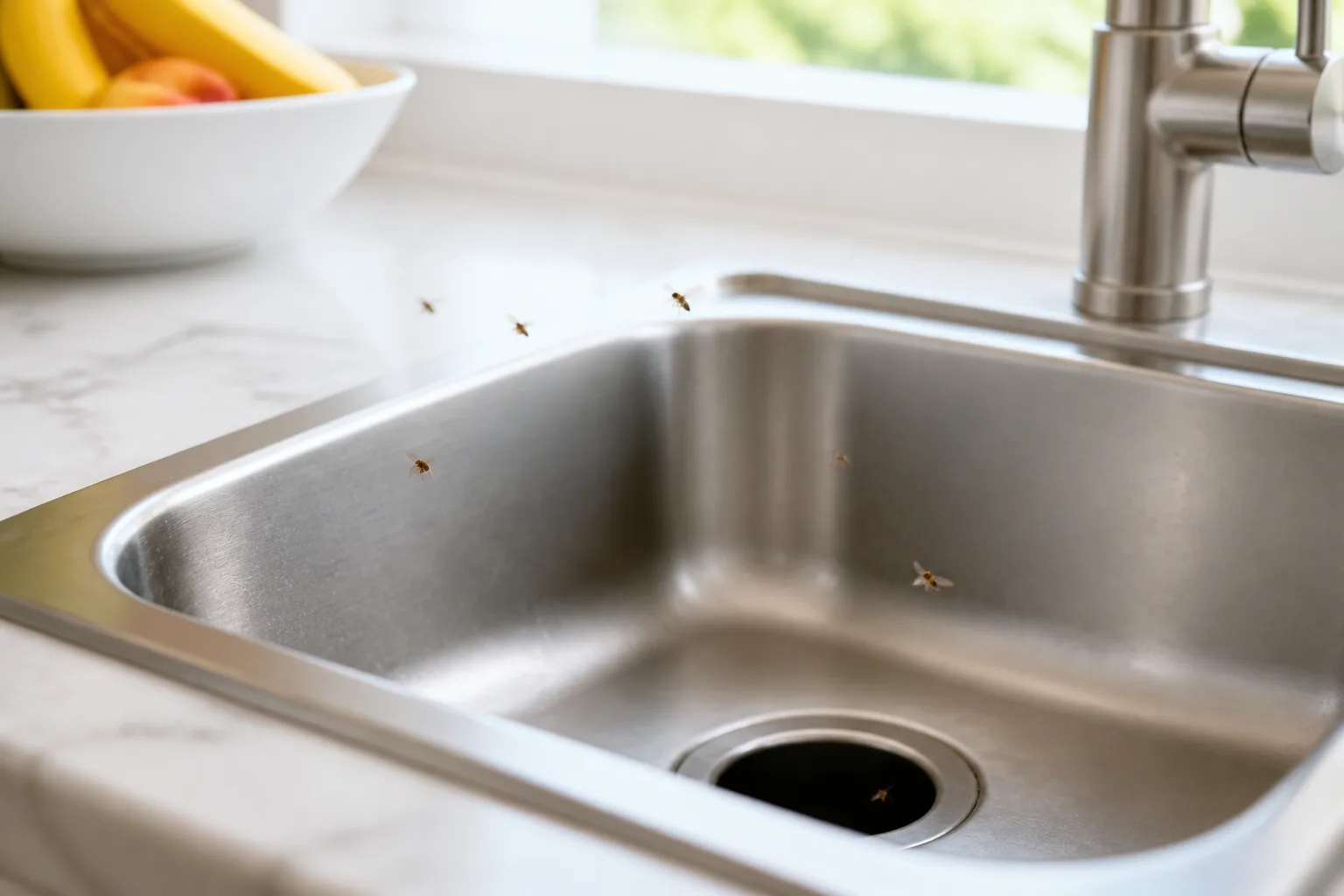
A vinegar trap may catch a dozen fruit flies and leave you with a dozen more the next morning. That does not mean the trap failed; it usually means adult flies are still emerging from a source the trap cannot reach. The dependable fix is to remove the food or damp organic residue where they reproduce, then use traps to collect the adults that remain.
Start with the room where you see the most activity, usually the kitchen. You do not need to spray the air or empty every cupboard: take a deliberate pass through produce, waste, recycling, drains, and damp cleaning items, and treat only the sources that fit what you find.
Start with a 20-Minute Source Audit
Fruit flies are small, but a breeding site does not need to be large. A soft peach, a sticky patch beneath a recycling container, or a narrow film of residue inside a drain can support new flies. Move from obvious food to less visible residue in a consistent order, so the search does not become random cleaning.
Watch where adults gather when the room is quiet. A loose cloud over a fruit bowl points toward produce or nearby scraps; repeated activity around a sink raises the priority of the drain, disposal, or overflow. These are clues, not proof: adults travel, and a trap placed beside a source can attract flies from elsewhere.
Check Food and Produce First
Look over fruit and vegetables on counters, in bowls, and in the pantry. Check the undersides of bananas, the soft side of stone fruit, produce bags, onions and potatoes, and any forgotten item at the back of a drawer. Fruit flies are associated with ripe or fermenting material, so a single damaged piece can matter more than a large bowl of sound produce.
Discard fruit that is leaking, fermenting, moldy, or visibly breaking down. Put sound produce that tolerates chilling in the refrigerator for the next several days; keep other items under a washable mesh cover or in a sealed container. The goal is not to refrigerate every vegetable indefinitely but to make attractive food unavailable while the current generation dies out. The University of Georgia Extension notes that these flies can develop from egg to adult in about a week, which is why one quick cleanup may not make every adult disappear that day (UGA Extension).
Then check anything that held food or drink. A half-empty juice glass, a sticky syrup bottle, a fermented food jar, wine residue, and the bottoms of unwashed cans can all provide the smell or film that keeps flies feeding. Rinse beverage containers before recycling, close lids tightly, and take food scraps outside in a tied bag rather than moving them from the counter to an open indoor bin.
Follow the Odor to Hidden Breeding Sites
If produce looks clean, trace the next most likely sources rather than buying a stronger trap. Check the kitchen compost pail, trash can, recycling bin, bottle-return box, and the cabinet floor below them. Lift liners and wipe residue from the inside bottom of each container; rinsing only the lid will not remove sticky liquid pooled underneath.
Look at the sink drain opening, the underside and folds of the garbage-disposal splash guard, the disposal chamber, and the sink overflow channel. Also check damp sponges, dishcloths, mop heads, and broom bristles for trapped food particles. A small splash of juice behind an appliance or under a bin can be easy to miss and difficult for a trap to solve.
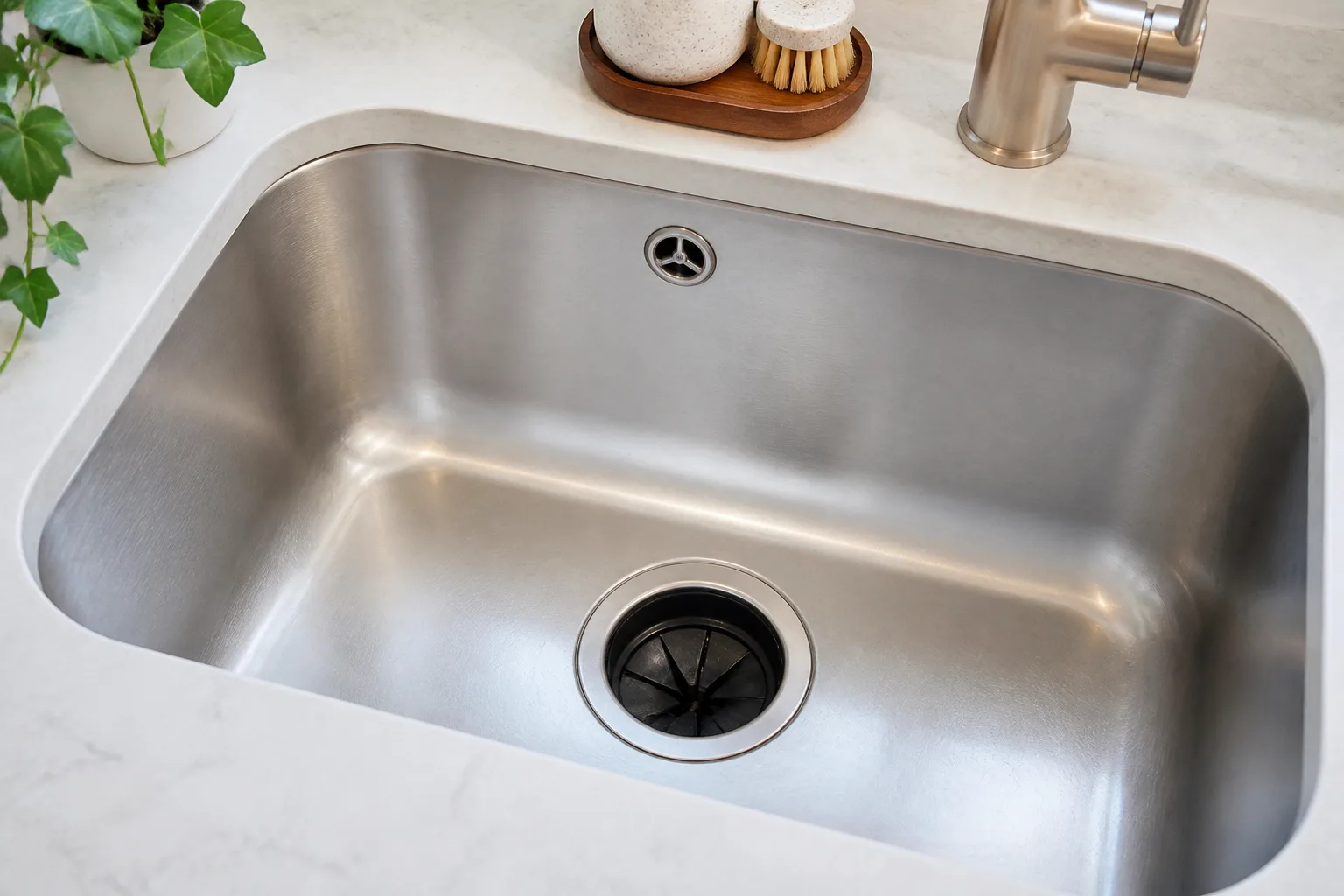
The University of Georgia Extension specifically calls out drains, garbage disposals, trash bins, cans, and overlooked spills as possible sources. Utah State University Extension’s integrated pest management guidance adds floor drains, mop and broom heads, and keeping refuse containers clean and covered. Use those examples as a checklist, not as a reason to assume the drain is guilty before you inspect it (Utah State University Extension).
Confirm They Are Fruit Flies Before You Treat Them
A small fly near the sink is not automatically a fruit fly. That distinction matters because fruit flies are drawn to fermenting produce, while other tiny flies may be reproducing in a drain’s organic film or in damp potting mix. Treating the wrong source wastes time and can make you over-clean the wrong part of the home.
Fruit Flies vs. Drain Flies vs. Fungus Gnats
| What you see | More likely insect | Where to look first | First useful response |
|---|---|---|---|
| Tiny tan or brown flies, often with red eyes, hovering around fruit, drinks, or recycling | Fruit or vinegar flies | Produce, food residue, compost, beverage containers | Remove fermenting material and set a vinegar-baited trap |
| Small gray, fuzzy, moth-like flies resting near a sink or shower | Drain or moth flies | Drain film, overflow, wet plumbing, or leaks | Scrub the breeding film and investigate persistent moisture |
| Slender dark flies that run or hover close to houseplant soil | Fungus gnats | Consistently damp potting mix and decaying plant matter | Adjust watering and remove decaying matter |
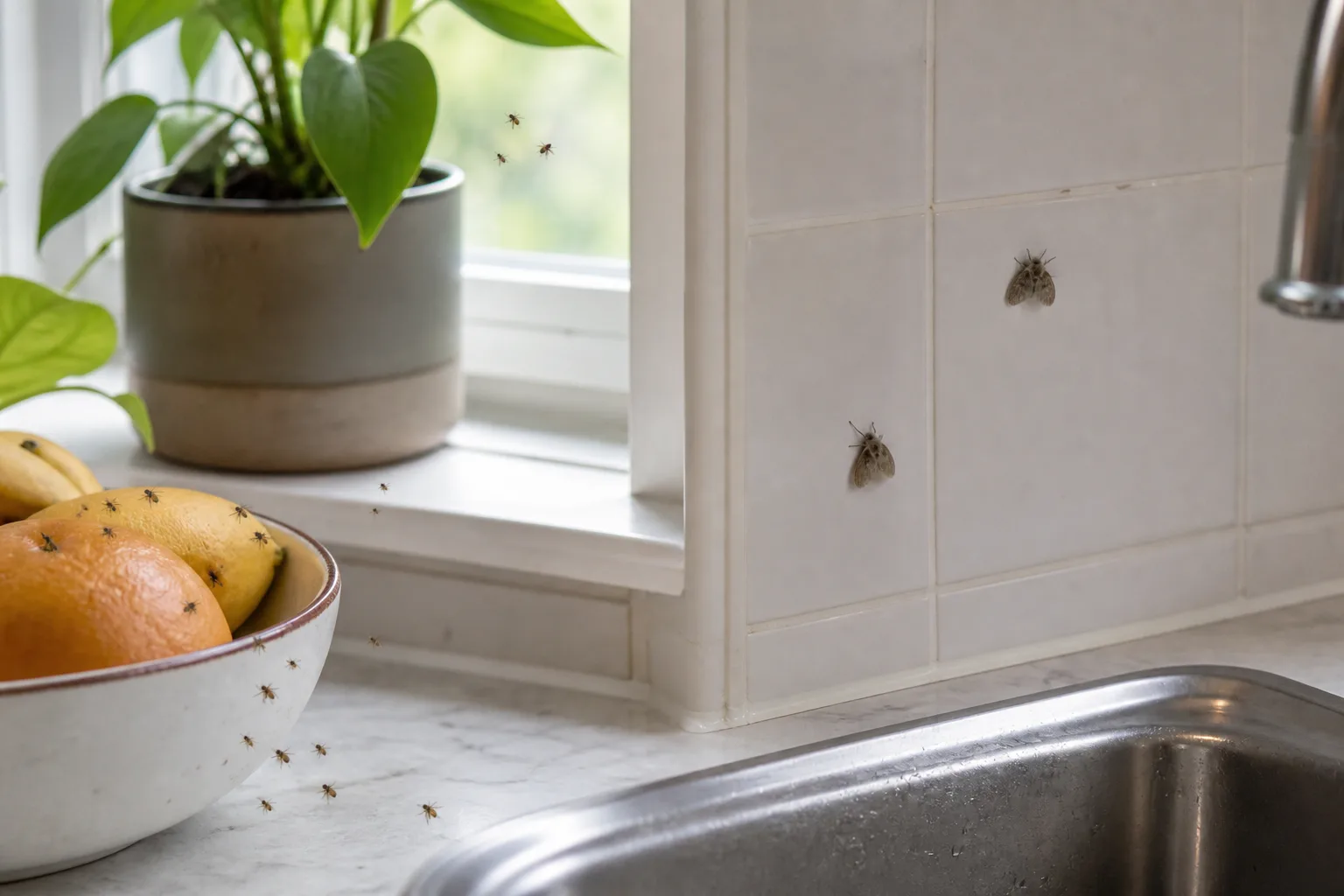
Fruit flies are about one-eighth of an inch long and commonly have bright red eyes, although color and eye visibility vary by species and lighting. They often make short, erratic flights around produce or a fermenting drink. Utah State Extension lists their small size and red eyes as useful identification features; Colorado State University Extension explains that fungus gnats develop in potting media, while moth flies breed in wet plumbing and can look fuzzy or moth-like.
If the insects are concentrated around houseplants, look at the soil before cleaning fruit bowls. If they sit on walls near a drain and look fuzzy, inspect the plumbing film and moisture instead. Colorado State University Extension separates these small-fly groups by their breeding material. A vinegar trap that catches few or none is a useful hint to reconsider the identification, but it is not a definitive insect test.
One edge case is fruit from a garden. The common kitchen vinegar fly is different from spotted-wing drosophila, a pest associated with ripening garden berries and other soft fruit; if larvae appear inside freshly picked produce, get a local identification rather than treating it as a countertop swarm. Gardener’s Path explains the indoor and crop contexts separately.
Use a Seven-Day Plan, Not a Spray
A fruit fly cleanup works in two stages: remove the material that lets new flies develop, then reduce the flying adults. Because eggs or larvae may already be present in a missed piece of produce or residue, expect some adults after the first cleaning. Colorado State University Extension notes that adults can remain for a week or more after breeding material is eliminated; University of Georgia Extension says a generation can complete in about a week under favorable conditions. Together, those timelines explain why steady follow-through beats judging success by the first evening.
Day One: Remove the Breeding Material
Take the obvious attractants off the counter, tie discarded scraps into a bag, and take that bag to a covered outdoor bin. Wash the produce bowl and the surface beneath it, empty and clean indoor compost and waste containers, rinse recyclables, and wipe beverage spills. If you cannot clean an item immediately, put it in a sealed container or bag until you can.
Do a second pass after the visible food is gone. Lift the bin, look behind the toaster and refrigerator if accessible, inspect the refrigerator’s produce drawer, and check the cupboard below the sink for a leak or old spill. Replace a sponge or cloth that holds sour food odor, or wash and dry it thoroughly. These modest tasks are often more useful than fogging the kitchen because they target what feeds the larvae.
Keep a simple note of where you saw flies and what you cleaned. If the next day’s activity has shifted toward a sink or houseplant, follow the new evidence instead of repeating every cleaning step. The source may be a drain, plant soil, or another small pocket of fermenting material, rather than the fruit bowl you already emptied.
Day One: Scrub Drains and Disposal Safely
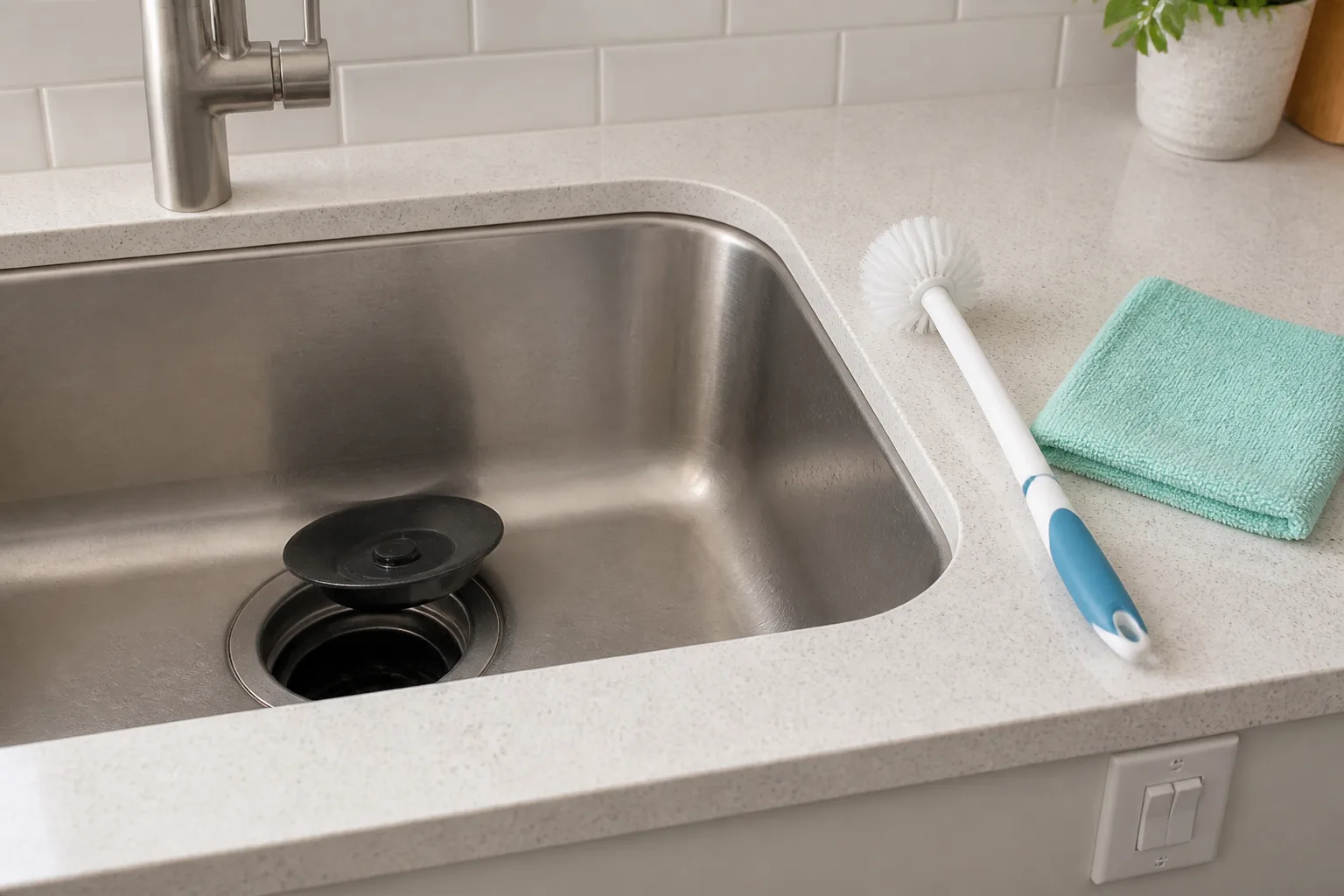
Only focus on the drain if the clues support it or if produce, garbage, and recycling have been checked. Remove visible debris from the drain opening with a tool, then use a long-handled drain brush to scrub the inside walls where accessible. Clean the sink strainer and the underside of the disposal’s rubber splash guard; food film can remain on the hidden surface even when the basin looks spotless.
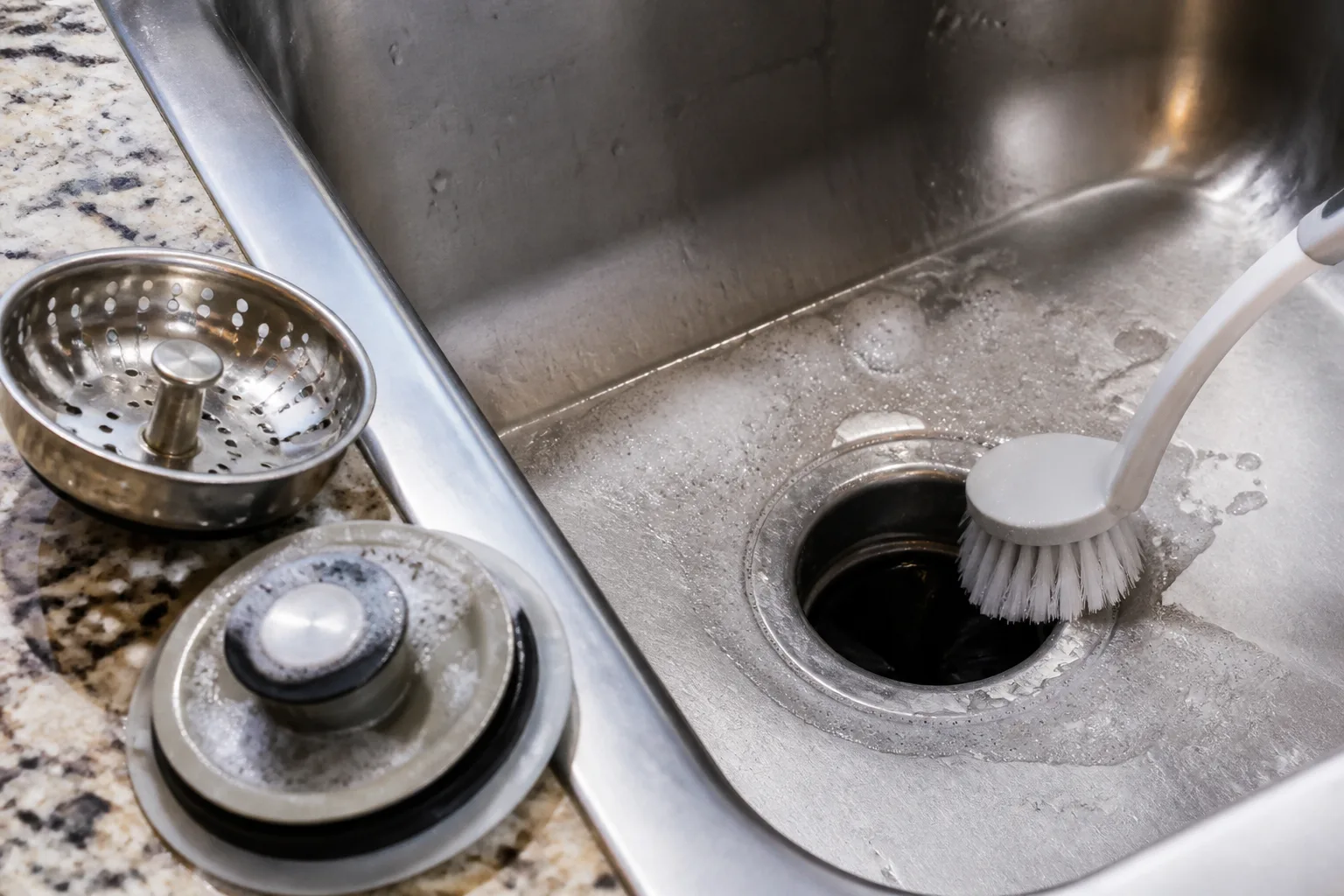
For a garbage disposal, follow the manufacturer’s cleaning instructions, turn it off before inspection, and never put fingers into the grinding chamber. A purpose-made brush lets you clean the splash guard and reachable surfaces without reaching into the mechanism. Rinse the cleaned area and keep the sink clear of food scraps; do not pour pesticide into a kitchen drain.
Avoid combining drain products or using boiling water as a substitute for brushing. Colorado State University Extension explains that drain films and lodged organic matter require physical removal or an appropriate labeled cleaner; caustic drain openers and hot water alone do not reliably remove the breeding material. If you use any plumbing product, follow its label and do not mix it with bleach, vinegar, or another cleaner.
Set a Trap to Reduce Adults and Track Activity
A simple vinegar trap is useful after the sources are removed. Put a small amount of apple cider vinegar, wine, or beer in a jar or cup, add a drop or two of dish soap, and cover it with plastic wrap secured by a band. Poke a few small holes in the wrap, or use a paper funnel with its narrow opening pointed into the jar. The fermented scent attracts adults; the soap reduces surface tension so flies that touch the liquid are more likely to sink.
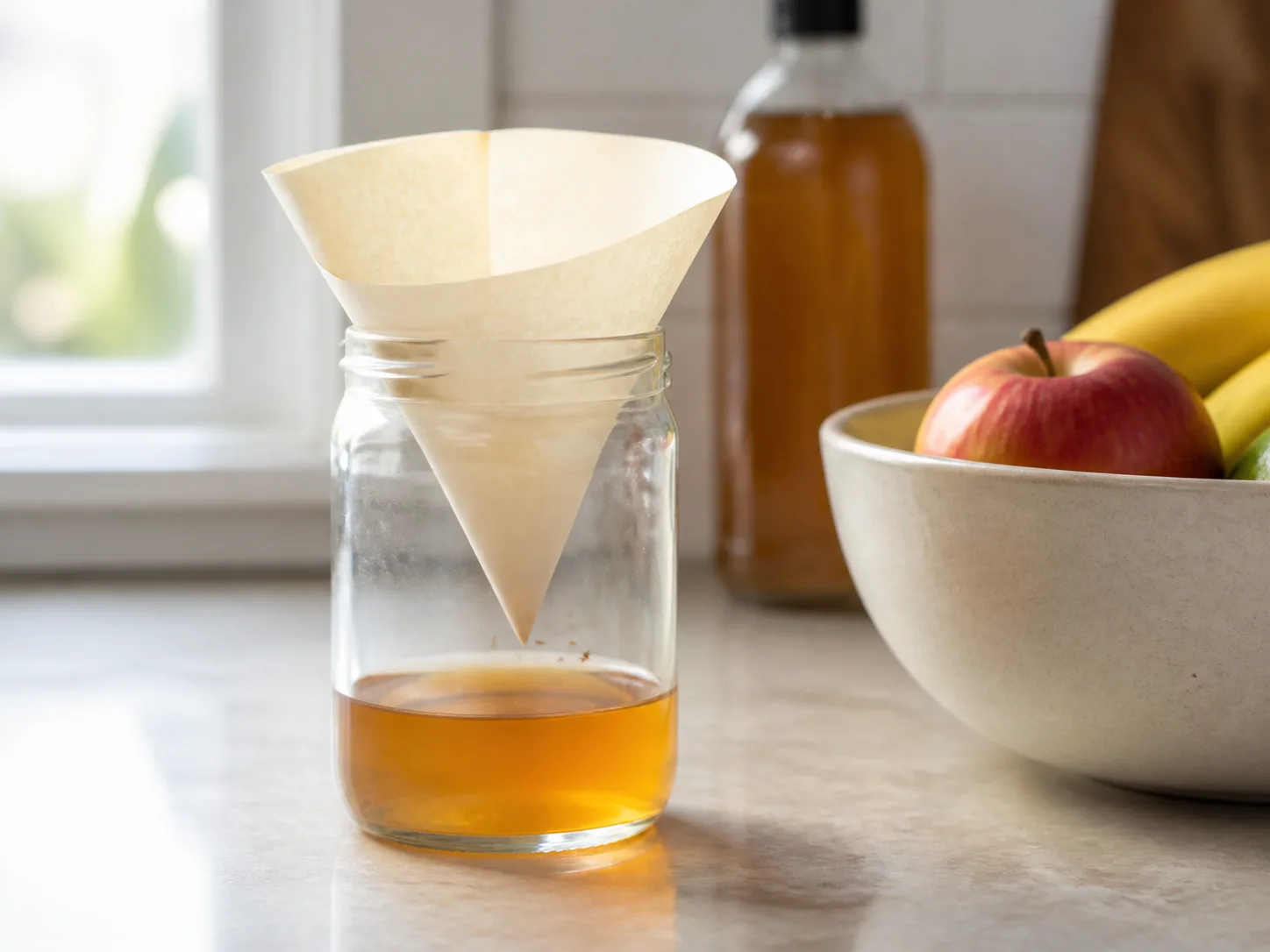
Place one trap near, but not directly on, the former activity area, away from food-preparation surfaces, children, and pets. Label the trap if you have other household members, and empty and refresh it every few days. A commercial fruit fly trap can serve the same monitoring role; follow its directions and keep bait inaccessible to children and animals.
Do not expect the trap to draw larvae out of produce or scrape residue from a pipe. A trap counts or catches adults that are flying; it does not prove the breeding source is gone. Epic Gardening describes vinegar or fermenting liquid plus soap as a way to trap adults, while Colorado State Extension cautions that traps used alone do not provide satisfactory control. If the trap keeps catching flies beyond several days, reopen the source audit.
Protect Food While the Population Dies Down
Keep susceptible produce covered, sealed, or chilled where appropriate until you have had several fly-free days. Use a lidded compost pail and empty it frequently during an outbreak; if you compost indoors, wipe the rim and wash the container after emptying it. Do not leave cut fruit or an uncovered drink on the counter overnight while traps are running.
If flies were visible on produce, inspect it closely. Discard soft, leaking, moldy, or visibly larva-infested pieces, and clean the bowl or drawer they touched. Sound produce that is still suitable to eat should be handled with normal food hygiene and washed before use; there is no need to throw away an entire kitchen’s groceries because an adult fly was seen nearby.
Keep counters and floors dry after juice or wine spills. Fruit flies need moist, fermenting material for reproduction, but the source may be a very thin residue that is not obvious from standing height. Wipe beneath the area where the item sat, and check the underside of reusable mats or trays that may have trapped sticky liquid.
Prevent a Repeat Infestation
The simplest prevention routine is to make food and residue inaccessible. Store ripening fruit in a covered bowl or refrigerator where suitable, remove damaged produce promptly, rinse bottles and cans before recycling, close garbage and compost lids, and wash bins when residue accumulates. If you keep bananas or tomatoes on the counter for quality, inspect them daily and remove damaged pieces before they ferment.
Keep the drain strainer free of food scraps and clean the disposal splash guard regularly. Empty indoor compost more often in warm weather, and wash the pail rather than merely replacing a liner. If you mop up a spill, rinse and dry the mop head instead of leaving it damp in a bucket; a cleaning tool can become part of the problem when it retains food and moisture.
Screens and closed doors reduce entry from outside, especially around a kitchen or compost area, but exclusion is only one part of control. Utah State Extension recommends repairing screens and sealing entry gaps along with locating breeding material and improving sanitation. If fruit flies continue after a careful cleanup, look inside before assuming that a new wave is coming through the window.
If Flies Keep Returning, Change the Diagnosis
A few adults on the first day after cleanup do not necessarily mean the treatment failed. What matters is the trend: are traps catching fewer flies, and are sightings shrinking after the food sources are removed? A steady or rising count after several days suggests that a source remains, the insect was misidentified, or a hidden area is inaccessible.
Repeat the audit in a tighter radius around where each new cluster appears. Look below and behind bins, around refrigerator feet and drip trays, inside the disposal guard folds, under a countertop appliance, and around any damp cabinet or pipe. If the source is a plant pot, that points away from fruit flies; if the flies are fuzzy and emerge near plumbing, the drain-fly pathway is more likely. Colorado State Extension’s home-fly guide is useful because it links each small-fly group to its own breeding material instead of treating every tiny insect as the same pest.
When to Call a Plumber or Pest Professional
Call a plumber if the flies repeatedly emerge from a drain after you have cleaned the accessible film, or if you find a leak, slow drain, or wet area beneath a cabinet. A broken or leaking line can keep material damp where a brush cannot reach, so more traps will not repair the underlying condition.
Consider a licensed pest professional if you have checked produce, waste, drains, disposal, and damp cleaning tools and the population still does not fall after a full week. Bring a photo or a captured specimen if possible, and note which rooms and traps have activity. Correct identification helps the professional choose a source-specific treatment instead of applying a broad spray to a food area.
Avoid Fixes That Create New Problems
Do not spray insecticide into the air over counters, dishes, fruit, or a sink and expect the infestation to end. A spray may kill a fly it directly contacts, but it leaves eggs and larvae in the breeding material. The useful order is source removal, sanitation, exclusion, and then trapping; if a pesticide is ever considered, use only a product labeled for the exact location and follow all instructions.
Essential-oil scents and herbs are not substitutes for removing fermenting material. A pleasant smell does not make a drain clean or a compost pail inaccessible, and a carnivorous plant will catch only a few adults. Likewise, repeatedly pouring vinegar into a drain can add another fermenting odor without scrubbing away the film; reserve vinegar for a contained trap, not as a drain treatment.
Avoid pouring a mixture of household cleaners into a disposal. Never put your hand into the grinding chamber, and do not combine bleach with vinegar, ammonia, or drain products. If the source cannot be safely reached, isolate it and get help rather than risking a chemical reaction or an injury.
Conclusion
To get rid of fruit flies, remove what lets them feed and breed, then use a trap to reduce and monitor the adults that remain. Start with produce, scraps, compost, garbage, recycling, and beverage residue; move on to the drain, overflow, disposal guard, and damp cleaning tools if activity continues. The pattern of sightings and trap catches helps narrow the search, but it cannot replace cleaning the actual source.
Keep food covered or chilled where appropriate and repeat the checks for about a week. If numbers are not declining, reconsider whether the insect is a drain fly or fungus gnat, or ask a plumber or pest professional to inspect an inaccessible source. That sequence is what turns a short-lived trap catch into a kitchen that stays clear.



