How to Grow and Care for Plantain Weed
Learn how to grow and care for plantain weed, tell broadleaf from buckhorn plantain, harvest cautiously, and prevent unwanted seedlings.
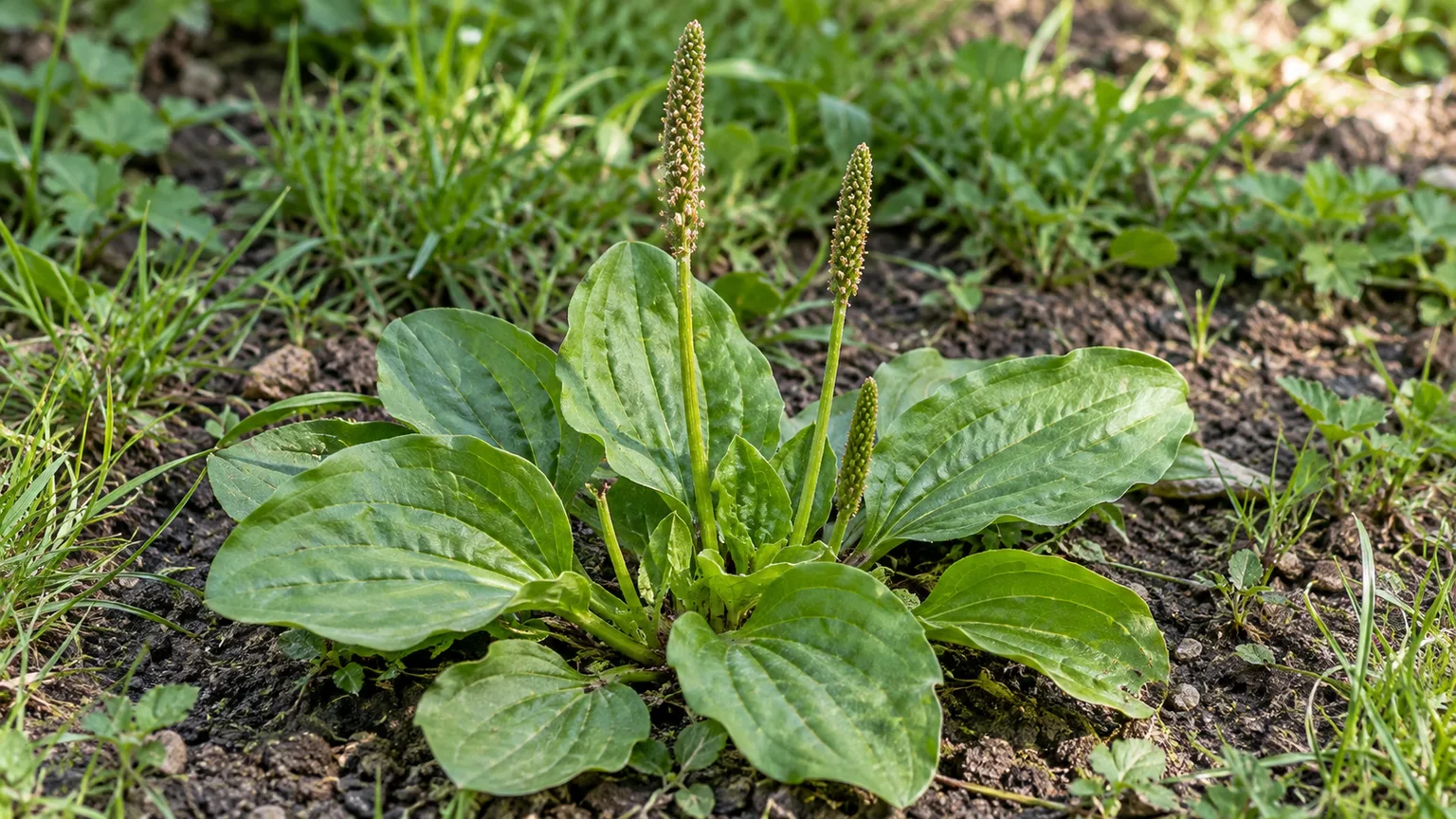
Plantain weed is a low-growing perennial in the genus Plantago, usually broadleaf plantain (Plantago major) in lawns and paths. It is unrelated to the banana-like plantain sold for cooking. The plant survives where turf is thin or soil is repeatedly walked on, but it can also be kept as a small, low-maintenance herb patch if you control its seed stalks.
The first decision is whether the plant is actually Plantago major and whether you want it in that location. Once identified, you can grow it with little input, harvest only from a clean and untreated site, or remove it by lifting the crown before it spreads. It does not need special fertilizer, constant watering, or a complicated propagation routine.
Confirm the plant before you grow or eat it
Broadleaf plantain grows as a flat or slightly raised rosette: its leaves emerge from a central crown at ground level rather than from an upright, branching stem. Mature leaves are usually oval to broadly lance-shaped, with several conspicuous veins running lengthwise from the base toward the tip. Those veins can feel cordlike when you run a finger along the underside, but leaf shape, veins, and flower stalks should be considered together.
In spring and summer, slender, leafless stalks rise from the center of the rosette and carry a narrow, greenish flower spike that turns brown as seeds mature. The spikes are easy to miss in a lawn until they stand above the mower line. NC State Extension describes P. major as a perennial that handles disturbed and compacted ground and resists repeated mowing because its leaves stay close to the soil. (NC State Extension Gardener Plant Toolbox)
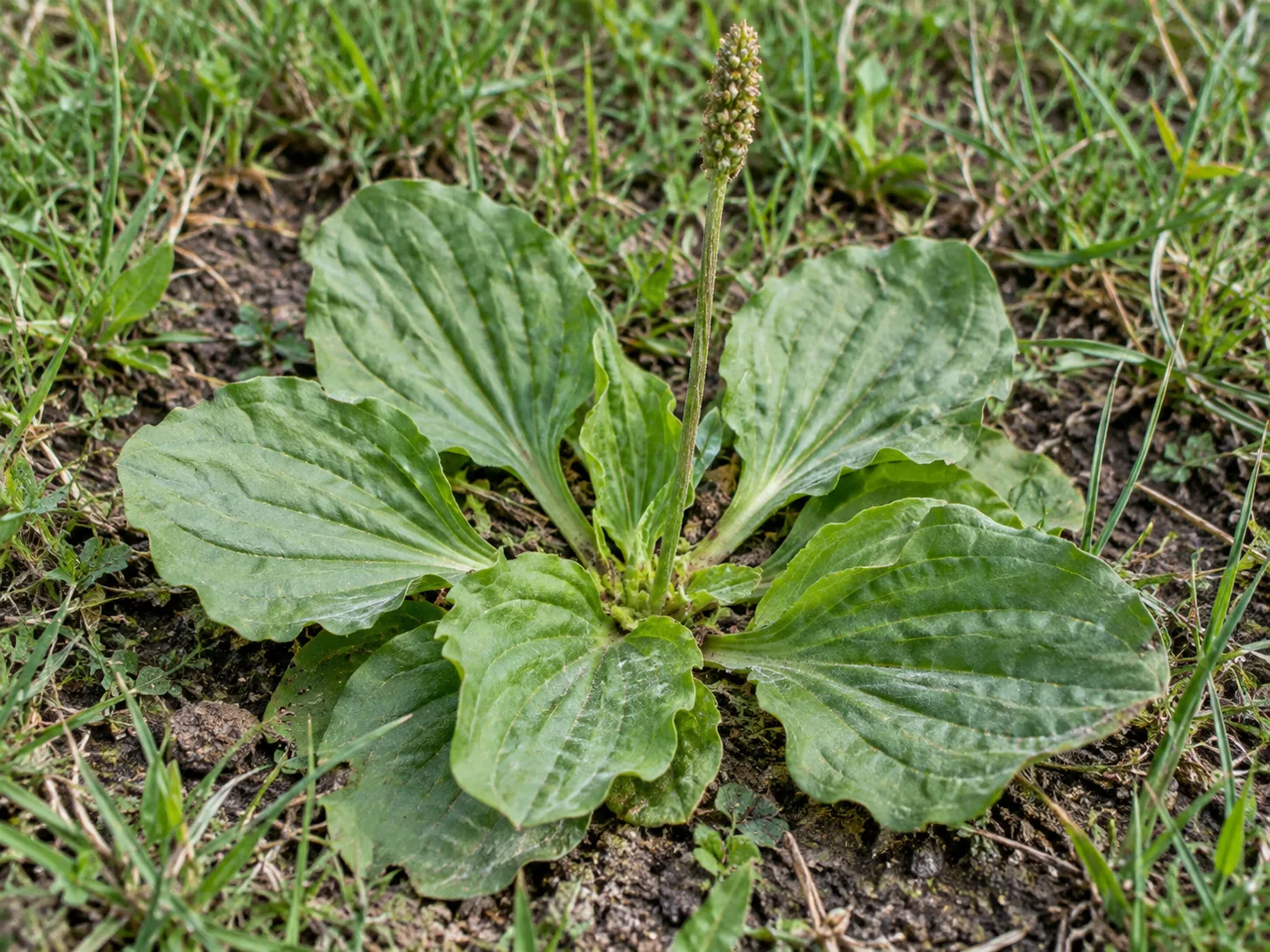
If the leaves do not match, do not use a common name alone to decide what you have. A field guide or local extension plant-identification service can help confirm an unfamiliar rosette before you cultivate it or put any part of it in food.
Broadleaf plantain and buckhorn plantain
Buckhorn plantain, also called narrowleaf plantain (Plantago lanceolata), is a close relative and a frequent lawn weed. It also forms a basal rosette and has prominent parallel veins, but its leaves are much narrower and more lance-shaped than the broad, oval leaves of P. major. Its flower heads are typically shorter and denser, while broadleaf plantain carries a longer, slender spike.
The difference matters because size and leaf texture change with mowing, shade, water, and age. A young broadleaf plantain can look narrower than a mature one, and a clipped buckhorn plantain may have short stalks. Purdue Turfgrass Science’s comparison is useful for checking the whole plant: leaf width and attachment, the shape of the flower spike, and the vein pattern together are more reliable than color alone. (Purdue Turfgrass Science: Buckhorn Plantain)
Other plants can also form ground-level leaf clusters, so do not treat “five veins” as a stand-alone test. Wait for a flower stalk if you are unsure, photograph the plant from above and from the side, and compare it with an authoritative regional key. Keep uncertain plants out of the kitchen until you have a positive identification.
Plantain weed is not banana plantain
The word “plantain” names two unrelated plants. Lawn plantain is Plantago, a small herb in the plantain family; the starchy cooking plantain is a banana relative in the genus Musa. Advice about harvesting, growing, or eating one does not transfer to the other.
Search results and seed packets can blur those names. Check the Latin name before buying seed: Plantago major means broadleaf plantain, while Musa names the tropical banana group. If a listing simply says “plantain,” look for a botanical name and a photograph of the mature plant rather than assuming it describes the lawn weed.
What plantain tells you—and what it does not
Plantain often occupies compacted paths, driveways, gates, play areas, and thin lawn patches because the rosette tolerates foot traffic and has less competition there. Its presence can be a clue to disturbance or weak turf, not proof that the soil has one particular pH, nutrient deficiency, or drainage problem. A single weed cannot replace a soil test or a close look at how the site is used.
Check the patch itself. If plantain clusters along a shortcut, reroute foot traffic or add a path; if it appears where the soil is hard and bare, compaction and poor turf density may be contributing. If the same plant grows in a healthy border beside other vegetation, it may simply be taking advantage of a small opening rather than signaling a yard-wide problem.
Broadleaf plantain tolerates full sun and partial shade and a range of soil textures. It generally needs no amendment to survive. A cultivated patch may produce larger, softer leaves in open, moderately moist soil, but improving the soil for the plantain is optional; do not add fertilizer or lime just because the weed appeared. Use a soil test to guide amendments for the grass or garden plants you actually want to support.
Decide whether to keep, cultivate, or remove it
There is no single right answer for every yard. Keep a few plants if you like their resilient greenery, want to observe pollinators or seed-eating birds, or intend to use the leaves as a carefully identified wild green. Remove them if the rosettes disrupt a uniform lawn, crowd small seedlings, enter a food bed where spray history is uncertain, or send more seed into areas you are trying to keep clear.
The useful compromise is containment. Choose one small patch away from paths, play areas, and frequently mown turf; mark it so it is not mistaken for an accidental lawn infestation. Pull or clip flower stalks before seeds mature if you want leaves but do not want the plant to colonize neighboring ground.
Avoid keeping a patch for a medicinal promise. Traditional use does not establish that a fresh leaf or homemade preparation treats an injury or illness. If you are interested in the plant as food, separate that decision from medical use and follow the identification and harvest cautions below.
Planting plantain in a controlled patch
Most gardeners do not need to plant broadleaf plantain: it commonly appears on its own wherever seeds meet exposed soil. If you want a deliberate patch, establish a boundary first. A large open bed is unnecessary; a pot with drainage or a small marked strip can make it easier to harvest leaves and catch flower stalks before seed dispersal.
Do not collect seed from a lawn that has been sprayed or fertilized with products whose ingredients and use history you do not know. Buy seed only when the packet clearly identifies Plantago major, or transplant a correctly identified volunteer from a clean area. This avoids mixing species and reduces the risk of bringing unwanted weeds into a food garden.
Start from clean seed
Prepare a small pot or patch of loosened soil, then press the seed onto the surface or cover it only very lightly. Tiny seed buried deeply is harder to monitor and may fail to emerge; label the container with the botanical name so it does not become an unidentified seedling later. Keep the surface evenly damp—not waterlogged—while seedlings establish, and protect the area from being disturbed or mown.
When several seedlings appear, thin or transplant them so each rosette has room to spread and you can reach the leaves and flower stalks. A handful of plants is usually enough for a household patch. If seedlings are appearing in places you did not choose, remove them while small rather than waiting for them to form dense rosettes.
Sowing into a contained area during a mild, reliably moist period is easier than trying to establish seedlings during heat or drought. Timing varies with climate, so use local seasonal conditions rather than a fixed month. Since plantain is hardy and self-sowing, there is no need to create a succession schedule or start many seeds indoors.
Transplant a volunteer without spreading its seed
If a volunteer is growing in a clean, convenient place, you can move it instead of starting seed. Choose a young plant before it has flowered, water the soil, and loosen the ground around the crown with a narrow trowel or fork. Lift the root mass intact when possible; the roots are fibrous, and breaking the crown can slow establishment or leave a plant that regrows where you did not want it.
Set the plant at the same depth in a pot or prepared patch, firm soil around the roots, and water it in. Keep the root zone lightly moist until new leaves show that it has settled, then let rainfall do most of the work. Do not transplant a plant from a roadside, treated lawn, or contaminated spot into a food garden; moving the plant does not remove residues from the old site.
If the only available plants have already formed mature brown spikes, skip the transplant. Disturbing them can shake seed loose. Cut and contain the stalks first, then choose a non-seeding volunteer or labeled seed from a reliable source.
Simple care for an established plantain patch
Once rooted, broadleaf plantain is a low-input perennial. Its ground-level crown survives mowing and grazing better than tall, soft foliage, so the main care task is not keeping it alive; it is deciding where it may set seed. Inspect the patch every week or two during active growth, especially after flowering stalks appear.
Leave healthy leaves in place when you are not harvesting them. The rosette needs foliage to replenish itself, and cutting every leaf at once can weaken the plant. Remove damaged leaves at the base, clear away litter that hides the crown, and keep the marked boundary visible so volunteers do not spread unnoticed into the rest of the yard.
Light and soil
Plantain tolerates full sun to partial shade. In a hot, dry site, some afternoon shade may keep leaves from becoming stressed; in a damp, shaded border, it may still grow, though the rosette can be more open. Use the site you have rather than chasing a precise exposure requirement.
The plant adapts to many soils and is particularly persistent in compacted ground. For a contained patch, loosen the soil enough for roots to establish and make sure water can drain rather than pooling around the crown. You do not need a rich raised bed or a carefully adjusted pH for an undemanding lawn herb.
If the goal is tender leaves, a little organic matter can make the soil easier to work and hold moisture more evenly, but adding amendments is a choice, not a plantain requirement. Keep compost clean and mature, and avoid importing soil or mulch contaminated with weed seed. Do not interpret plantain’s tolerance of poor or hard ground as a reason to leave a compacted lawn unrepaired if grass is your priority.
Water and fertilizer
Water new transplants and seedlings until their roots establish. After that, established plants usually manage with ordinary rainfall, except during a prolonged dry spell when leaves wilt or growth stalls. If you irrigate, water the soil at the base rather than giving the foliage frequent light sprinkles; let the top layer begin to dry between deeper waterings.
Routine fertilizer is unnecessary. Plantain grows in nutrient-poor and disturbed sites, and feeding it can create more foliage and flower stalks than a small patch needs. If it is growing among vegetables, fertilize those crops according to their needs without broadcasting fertilizer across the plantain.
When the patch performs poorly, inspect it before reaching for a product. A pot that dries rapidly, a container without drainage, severe competition from grass, repeated mowing below the crown, or a very shaded position may matter more than fertilizer. Correct the cause only if you want the plant to grow; poor growth can also be a reason to remove it and use the space for another herb.
Harvest leaves while keeping the patch contained
If you choose to eat broadleaf plantain, select young, tender leaves from a positively identified plant before the leaves become coarse and fibrous. Take a few outer leaves at a time with clean scissors or by pinching close to the base, and leave the central crown and several healthy leaves intact. Older leaves are tougher; cooking may soften them, but it cannot make an unidentified or contaminated plant safe.
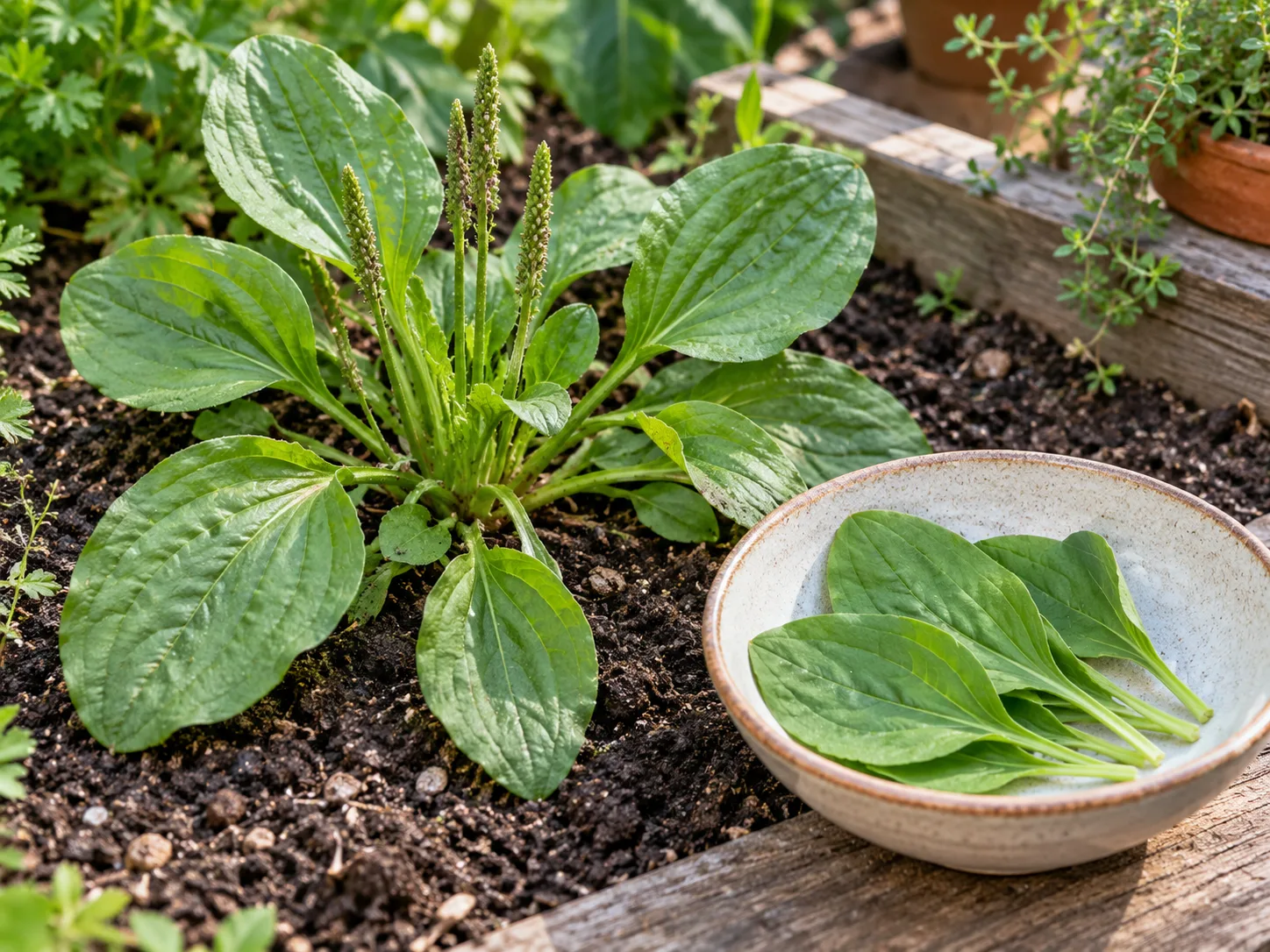
Harvest only from a site with a known history. Do not pick from lawns treated with herbicides, pesticides, or fertilizers unless the specific product label and application record clearly establish that the intended food use is allowed; when the history is uncertain, do not eat from that patch. Also avoid road verges, rail corridors, industrial runoff zones, pet-waste areas, and places where polluted dust or standing water may settle on leaves.
Common Sense Home’s practical field notes describe the familiar change from tender young rosettes to tougher mature leaves; that is useful as a texture observation, not evidence for a health claim. (Common Sense Home: Broadleaf Plantain) Tyrant Farms’ grow-and-forage notes likewise favor young leaves for texture, a culinary preference rather than a safety or medical recommendation. (Tyrant Farms’ plantain growing and harvesting notes) Wash harvest under clean running water, discard damaged material, and use ordinary produce hygiene. Anyone with a known sensitivity to plantain or related plants should avoid it; if you have a medical condition, take medication, are pregnant, or are considering a medicinal preparation, speak with a qualified clinician rather than relying on a garden article.
Do not promise that plantain leaves soothe stings, draw out splinters, disinfect wounds, or treat illness. Those claims go beyond growing and identifying the plant and should not replace first aid or professional medical care. For a food use, start with a small culinary portion only after certain identification and clean-site harvest; stop if any reaction occurs.
Propagate plantain—or stop it from spreading
Plantain propagates readily by seed, so seed collection is optional. If you want to start another contained patch, clip a mature spike into a paper bag after the seeds have formed, label the bag, and shake the dry seeds out over the prepared spot. Keep the new planting small and remove surplus seedlings while they are easy to distinguish.
If you do not want more plants, clip flower stalks before their capsules turn brown and brittle. Put mature stalks in a sealed yard-waste bag rather than shaking them over the compost pile or carrying them uncovered across the lawn. NC State Extension notes that a plant can produce a very large quantity of small seed; allowing even one patch to mature can undo a season of hand removal.
Cutting a spike after seed has already dropped does not remove seed from the soil. Expect new seedlings to appear later, particularly where ground is bare or disturbed. Check the patch after rain and pull small rosettes early; consistent prevention over several growing seasons is more realistic than expecting one cleanup to eliminate every seed already present.
Remove unwanted plantain from turf and beds
For a few plants, hand removal is the most direct approach. Work after rain or water the area first, when the soil is moist enough to loosen around the root rather than crumbling away from it. Slide a dandelion fork or narrow weeding tool under the crown, lift the whole rosette, and inspect the hole for remaining crown tissue.
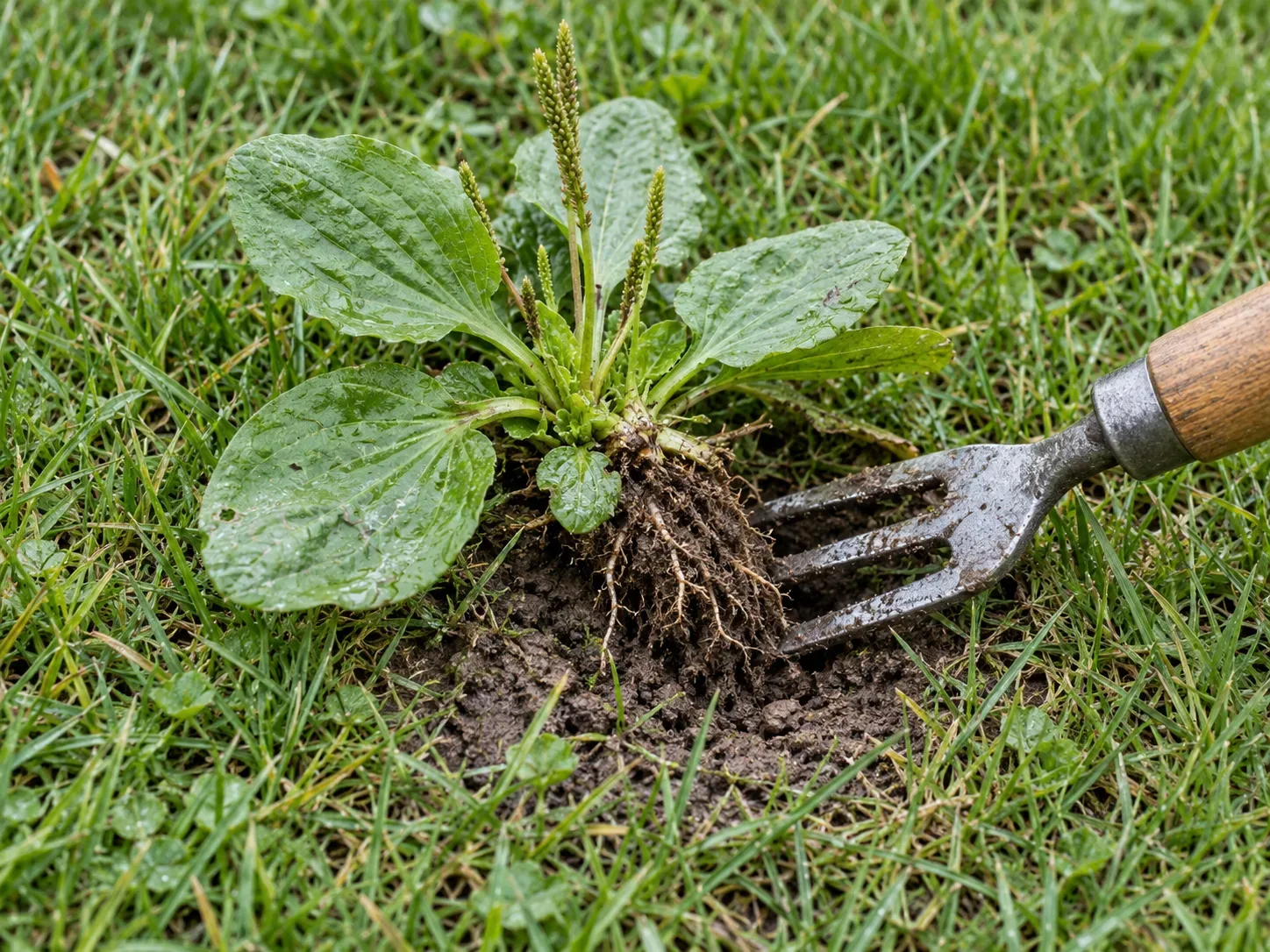
The leaves can be cut off and regrow if the crown is left behind, so pulling foliage alone is not a complete removal. Dispose of flowering plants carefully, especially if seeds are mature. Gardening Know How likewise recommends digging small populations and repeating the process as new plants emerge; its practical control advice also emphasizes that a healthy, established lawn gives plantain fewer open spaces to occupy. (Gardening Know How: Plantain Weed Treatment)
Lift the whole crown in moist soil
Start a few inches outside the leaf rosette and angle the tool toward the center, loosening soil beneath the crown. Lift slowly rather than yanking on the leaves, which can tear away while leaving the base in place. If a plant is large or the ground is dry and compacted, loosen it from more than one side or wait for rain; patience is usually faster than repeating the same failed pull.
Backfill the hole and press the surrounding turf or bed soil back into place. If the spot is in a lawn, seed it with a grass type suited to your region and light conditions so a bare opening does not invite another seedling. If it is in a mulched bed, replace disturbed mulch without piling it against nearby plant crowns.
Do not spray plants you intend to harvest, and do not improvise with salt, concentrated vinegar, or household cleaners. Those materials can injure nearby plants or soil and do not selectively remove the crown. If chemical control is being considered for a larger turf problem, check with local extension and use only a product whose current label names the target and the exact site; follow all label restrictions, protective measures, weather limits, and re-entry instructions.
Fix the conditions and prevent new seedlings
Digging removes visible plants; it does not fix a compacted path or fill a thin lawn. If plantain is concentrated where people repeatedly walk or park, protect the grass by redirecting traffic, adding stepping stones, or making a durable path. Where soil is compacted, aerate at a time that suits the grass species and follow with locally appropriate overseeding if the lawn is thin.
Maintain enough turf density to shade exposed soil, mow at the recommended height for the grass, and water deeply enough to support roots instead of keeping the surface constantly wet. These steps will not sterilize the soil or prevent every windblown seed, but they reduce the open, stressed patches where plantain is most likely to establish. Gardening Know How and Purdue Turfgrass Science both frame long-term management as a combination of direct removal and conditions that favor turf rather than a single magic treatment.
If plantain returns in the same spot, look for the pattern before repeating removal. A narrow line near a gate points toward traffic; a broad patch may reflect sparse turf or poor establishment; a new seedling along a garden edge may simply have blown in. The best fix should match the cause, not the plant’s name alone.
Edible use: identification, allergies, and contamination
Some sources describe young Plantago major leaves as edible, but the word “edible” is not permission to harvest an unknown lawn plant. Identify the species from more than one trait and, when uncertain, ask a knowledgeable local botanist or extension office. Never use the banana name, a plant app alone, or a photograph of a different Plantago species as confirmation.
Site quality is equally important. A correctly identified leaf can still carry chemical residue, animal waste, roadside dust, or other contamination. Avoid treated lawns and unknown spray histories, roadsides, industrial or drainage areas, and public land where collection may be restricted. Rinse only cleanly harvested leaves under running potable water; washing is not a way to remove herbicide residue or heavy metals from a bad site.
People can react differently to wild foods. Skip plantain if you have had a reaction to it, and use added caution if you have plant allergies or a history of food allergy. Do not use plantain as a substitute for a clinician’s advice or for proven first aid; the article’s cultivation guidance does not establish a medical dose, safe medicinal preparation, or treatment effect.
Common mistakes when growing plantain
The most common mistake is allowing seed stalks to mature while assuming a low plant cannot spread. The foliage stays close to the ground, but the flower stalks lift seed above it. If containment matters, check for spikes regularly and remove them while still green or just as flowers fade, before dry capsules release seed.
Another mistake is trying to fix the wrong problem. Fertilizing a lawn weed does not repair the compacted walkway it occupies, and treating a plant as a soil-pH indicator can lead to unnecessary amendments. Diagnose the site with observation and soil testing before changing conditions; if you want to cultivate plantain, keep the patch small and use moderate care instead of forcing rapid growth.
Finally, do not confuse a gardening decision with a food-safety or medical decision. A healthy-looking plant may have an unknown chemical history, and a traditional use is not proof of efficacy. Confirm the botanical identity, know the harvest site, and leave uncertain plants in place until you can identify them.
Conclusion
Broadleaf plantain is easy to care for because it is adapted to disturbed ground: give a correctly identified plant a small patch, ordinary rainfall after establishment, and no routine fertilizer. The real work is choosing where it belongs and managing the flower spikes before they spread seed.
If you want it, contain it and harvest only from a known, clean site after confident identification. If you do not, lift the crown while the soil is moist, restore turf or groundcover, and address the traffic or thin-soil conditions that keep creating an opening. That approach is more dependable than either treating every plant as a nuisance or allowing it to seed everywhere.



