How to Divide Perennials: Timing, Plants, and Steps
Find out when and how to divide perennials, from hostas and daylilies to peonies and iris, with timing rules, root-saving steps, and aftercare.
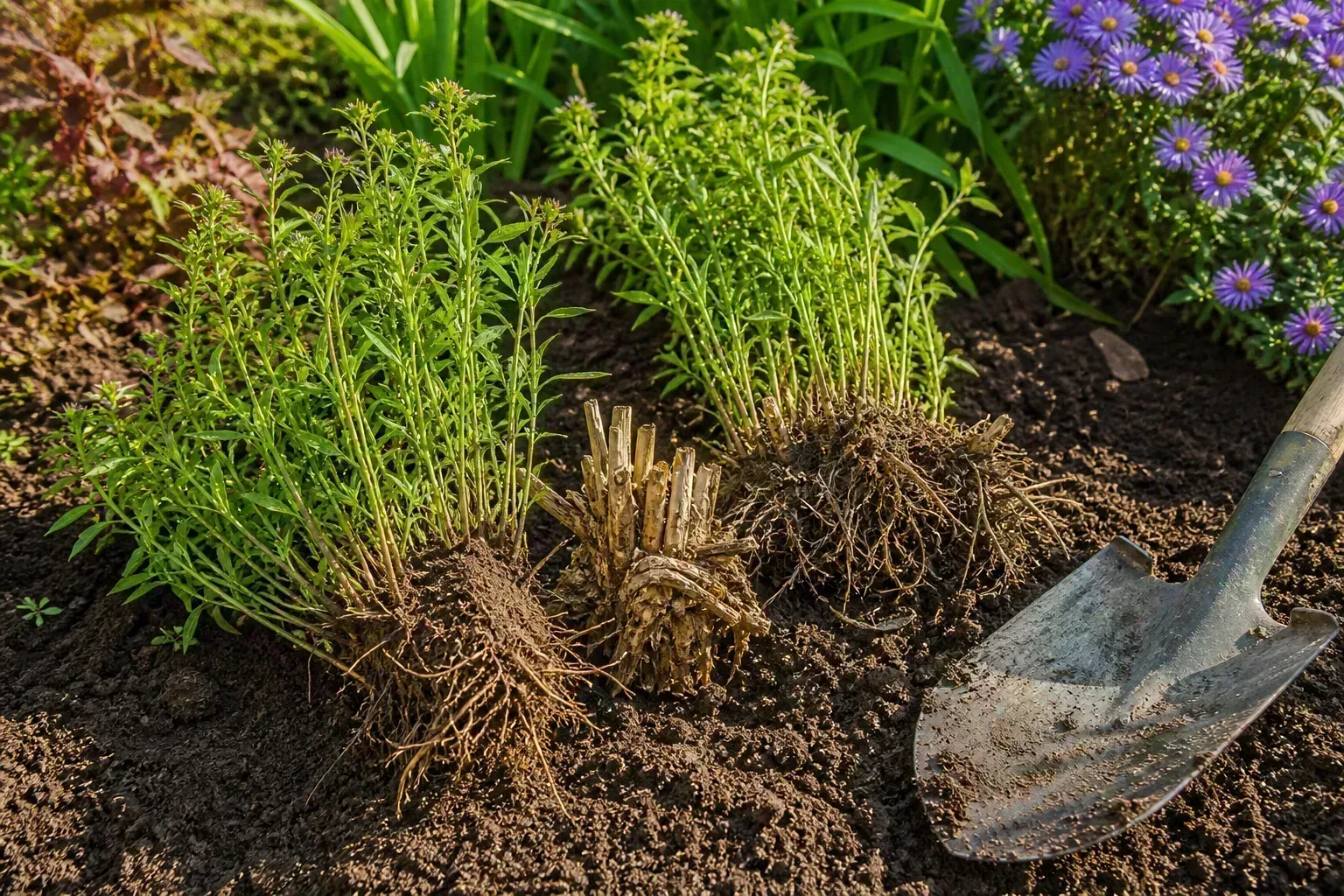
Division is not a punishment for an overgrown perennial. It is a controlled reset: you lift a mature clump, separate it into smaller pieces with viable roots and shoots, and replant those pieces so each has room to grow. Done at the right time, the process can relieve congestion, restore a tired center, and turn one established plant into several strong plants.
The important qualification is that not every perennial should be divided, and no perennial should be divided simply because a calendar says it is time. The plant’s growth habit, bloom season, root system, weather, and the condition of the planting site all matter. The guide below gives you a decision process, not a one-size-fits-all command to start digging.
What plant division actually does
A clump-forming perennial gradually produces more crowns, shoots, fans, or rhizomes in the same patch of soil. As the clump expands, its center can become congested while the outer edge keeps moving outward. Roots compete for water and nutrients, foliage becomes less open to light and air, and the plant may produce fewer or smaller flowers.
Division separates that crowded growth into manageable units. You can replant some pieces in the original spot, move others to a new bed, or temporarily pot them while you decide where they belong. The University of Minnesota Extension’s guide to dividing perennials describes the practice as a way to maintain healthy, vigorous plants and multiply them; that is a more useful way to think about division than simply “making free plants.”
Division can also let you remove a failing center from a ring-shaped clump. If the outside shoots are vigorous but the middle is woody, hollow, or dead, keep the healthy perimeter sections and discard the exhausted material. That does not guarantee more flowers—light, soil, moisture, pests, and cultivar age still control flowering—but it removes one source of competition and gives the retained crowns room to rebuild.
The signs a perennial is ready to split
Start with the plant, not the tool. A perennial is a reasonable division candidate when it is established, healthy enough to recover, and showing a clear benefit from having more space. Common signals include a dense clump that is crowding its neighbors, a bare or weak center, fewer flowers despite otherwise suitable care, stems that flop outward from the middle, or new growth appearing mostly around the perimeter.
Age alone is not a diagnosis. Some vigorous perennials need attention every two or three years, while a slow-growing clump may remain productive for five years or longer. The Garden Design guide to dividing perennials similarly recommends using reduced bloom, a thinning center, poor vigor, and root congestion as signals rather than blindly dividing everything on a fixed schedule.
Before you lift the plant, ask a more basic question: is the problem actually crowding? A hosta in deep, dry shade may be small because it lacks water. A phlox in a cramped, mildew-prone site may need more air circulation and sun, not just a smaller root ball. A perennial in a waterlogged bed can decline no matter how carefully you split it. Division is most useful when congestion is part of the cause, not when it is being used to avoid correcting the site.
The hollow-center test
Look at the crown from above. If new shoots form a healthy ring around a dead or noticeably weaker center, the plant is giving you a strong visual reason to divide. If growth is evenly distributed and the plant is flowering well, leave it alone unless you have a specific propagation or relocation goal.
You can also inspect the edge of the clump without lifting the whole plant. If young shoots are escaping into paths, smothering neighboring perennials, or forming an awkward dense mat, remove only a section with a sharp spade. Partial division is often less stressful than dismantling an entire mature plant, especially for a perennial that resents root disturbance.
When division helps—and when it adds stress
Division helps when a plant has enough stored energy and enough time in moderate conditions to replace disturbed roots. It adds stress when the plant is flowering heavily, the weather is hot and dry, the soil is frozen or saturated, or the pieces will sit exposed while you search for a new location. A plant that is technically dividable can still be a poor candidate on a bad day.
There is also a bloom trade-off. A newly divided plant may flower less the first season because it is investing in roots, and some slow-to-establish perennials may need more than one season to look mature again. Division is a long-term vigor decision, not a guarantee of immediate flowers.
The safest general rule is to divide when the plant is not actively flowering and when the next several weeks are likely to be mild. Spring and fall usually provide that combination, but the correct season depends on when the plant blooms and how long it needs before the next local extreme.
Choose the right season by bloom time
The Royal Horticultural Society’s advice on dividing perennials gives a useful framework: summer-flowering perennials can often be divided in spring or autumn, while many spring-flowering perennials, including irises, are best handled in summer after flowering when new roots are forming. Treat those as windows, not universal dates; species-level instructions and your local climate still win.
Spring division
Spring is a good choice for late-summer and fall bloomers such as asters, sedum, chrysanthemums, bee balm, and some ornamental grasses. Divide as new growth is emerging but before the plant has invested heavily in flower production. The warming soil helps new roots grow, and the plant has a long season to rebuild before winter.
Spring division also works well when fall is reliably wet in your garden. Dig only when the soil crumbles rather than smearing. A bed that is saturated can be damaged by foot traffic and can leave new roots short of oxygen, even if the air temperature is pleasant.
Watch the forecast after a spring division. A sudden heat wave can pull moisture from leaves faster than the reduced root system can replace it. A temporary afternoon shade cloth, a less exposed location, and consistent deep watering can help, but do not keep the bed constantly soggy in an attempt to prevent wilting.
Fall division
Fall is often ideal for spring- and early-summer bloomers such as hostas, daylilies, phlox, and many hardy ornamental perennials. The soil retains warmth after summer while cooler air reduces water loss from foliage. If the plant is hardy in your area, that combination gives roots a chance to settle before dormancy.
Do not reduce fall timing to “any time after Labor Day.” Aim for a mild window with enough time for roots to anchor before the ground freezes—often about four to six weeks in colder or exposed gardens, though local conditions can shorten or extend that buffer. Delay if the soil is waterlogged, the plant is stressed, or a hard freeze is imminent.
Spring-flowering bearded iris is a useful exception to the simple spring-versus-fall rule. It is commonly divided after flowering in summer, when the rhizomes are visible and the plant has time to establish before winter. Keep the leaves and rhizome orientation in mind; an iris division is not handled like a fibrous hosta crown.
Perennials that usually respond well
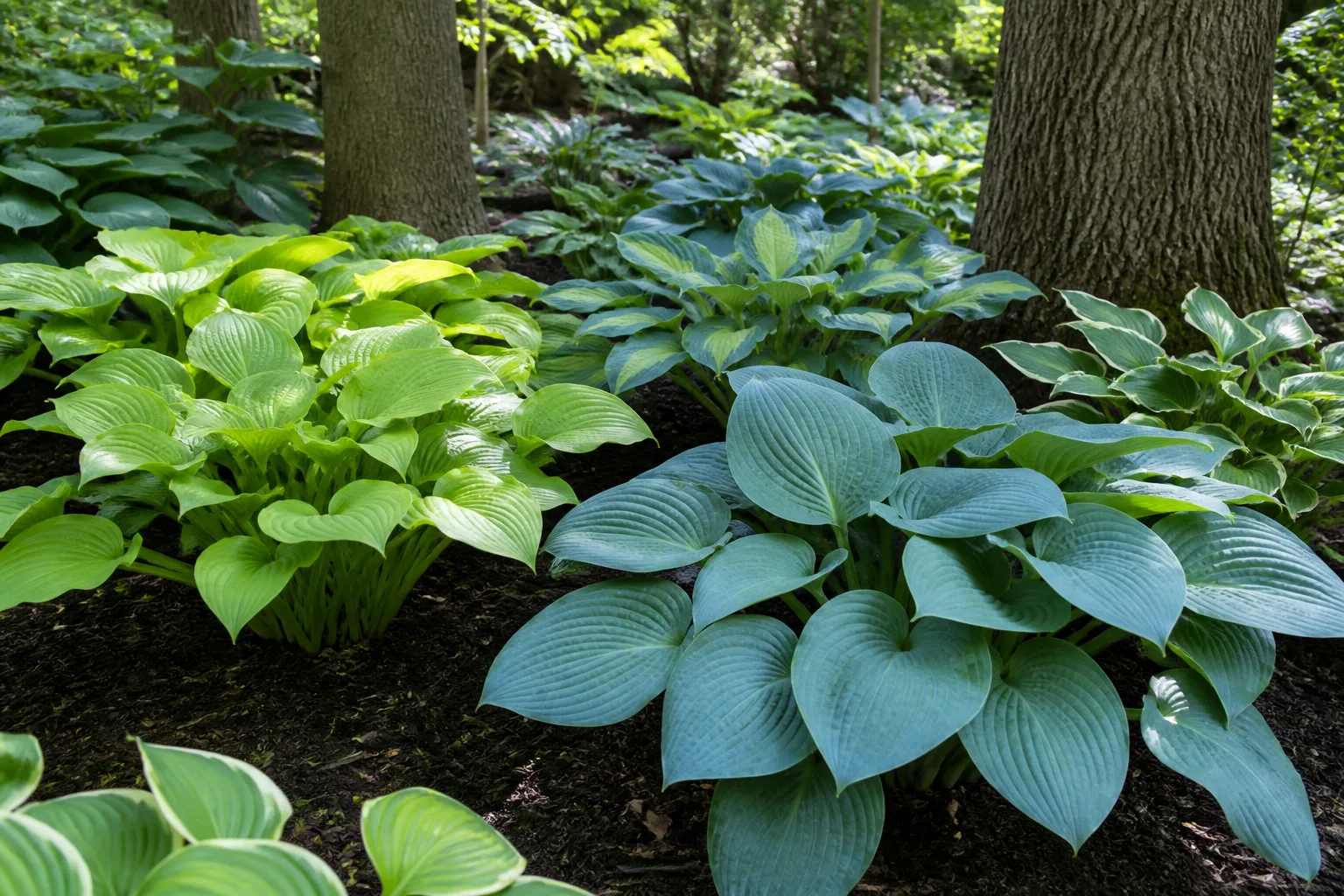
Good candidates generally form multiple crowns or stems from a central base. Hostas, daylilies, asters, phlox, sedum, yarrow, coreopsis, bee balm, many chrysanthemums, and several ornamental grasses are familiar examples. Some ground covers and spreading perennials can also be separated, but check whether their spread is desirable before multiplying them.
The plant list is only half the decision. The same common name can cover cultivars with different crowns, roots, or vigor, and a plant may be easy to divide but invasive or too aggressive for the bed. The RHS list of suitable clump-forming perennials includes grasses and many genera that gardeners commonly propagate by division, but it also notes that a few plants resent frequent disturbance.
Clumps, fans, rhizomes, and fibrous roots
The root structure tells you what “divide” means.
- Fibrous-rooted clumps such as many hostas, asters, and heucheras can sometimes be teased apart by hand once the soil is loosened. If the crown is tight, use a clean knife or two forks rather than shredding it with force.
- Dense crowns such as daylilies and some grasses may need two forks inserted back-to-back or a sharp spade through the crown. Preserve several healthy shoots and a substantial root section in each piece.
- Rhizomatous plants such as bearded iris have horizontal stems that carry buds and roots. Each piece needs a viable bud or fan plus roots, and the rhizome must be planted at the correct depth and orientation.
- Spreading mats can often be cut into outer sections. Keep the young, actively growing perimeter and do not assume the oldest central material is worth saving.
For many herbaceous clumps, three to five healthy shoots is a useful starting point, not a law. A small plant may make viable two-shoot divisions, while a large, vigorous crown may need more root mass to avoid becoming a weak transplant. Roots, buds, and the plant’s normal growth habit matter more than hitting an arbitrary count.
Perennials to leave alone or handle selectively
Do not assume that every plant with several stems is a division candidate. Perennials with one woody base, including lavender and Russian sage, are not split like herbaceous clumps. Plants with a strong taproot, such as butterfly weed and Baptisia, can be difficult to lift without serious damage. Clematis and some other deep-rooted perennials are also poor choices for casual division.
Peonies sit in the middle: they can be divided, but they are slow to recover and often do not need it. Divide a peony when there is a clear reason, such as severe overcrowding, relocation, or a need to repair a poorly sited plant—not simply because it has grown large. Each division needs healthy roots and viable eyes, and a division with too few eyes may take years to flower.
Bleeding heart and other sensitive plants may also respond poorly to disturbance. If you need to move one, consider taking a small outer section or relocating it during the species’ safest window instead of cutting the entire crown into many pieces. When in doubt, look for species-specific advice from an extension service, botanical garden, or the plant’s nursery.
Prepare the plant, bed, and tools
Preparation is what turns division from a frantic rescue into a short transplant. First choose the destinations. Clear weeds, loosen the bed, and make sure light, drainage, and mature spacing suit the plant. Dig the holes before lifting the parent so roots spend as little time exposed as possible.
Gather a garden fork or spade, a sharp knife for tough crowns, clean pruners, a tarp or shallow tub, water, labels, and mulch. Sanitize cutting tools between plants, especially if any foliage, crown, or root shows disease. Epic Gardening’s step-by-step division guide also recommends cleaning tools and preparing the soil before digging; that order reduces both root damage and the time divisions spend drying.
Water the plant deeply the day before if the soil is dry. The goal is moist soil that holds together around roots, not a saturated mud hole. Choose a cool, cloudy day if possible, and avoid starting just before a forecast of extreme heat, hard frost, or several days of drying wind.
Trim only what helps. Remove dead or diseased growth, and reduce a large leafy top by roughly one-third if the foliage will lose more water than the roots can supply. Do not automatically cut every perennial to the same height: evergreen foliage, iris fans, and species with special crown instructions need a more tailored approach.
How to divide a perennial without wrecking the roots
Work from the outside of the clump inward. Insert the fork or spade several inches away from the crown, loosen the soil, and lift with as much of the root system intact as the plant allows. Do not lever against the crown until the surrounding soil is loose; that is how strong roots become torn roots.
Set the lifted clump on a tarp in the shade. Shake or wash away only enough soil to see the crown and natural separation points. Keep the roots damp while you examine them, and never leave a bare division in direct sun while you dig a new hole.
Separate the easiest sections by hand first. If the clump resists, use a clean knife, sharp spade, or two back-to-back forks. Make decisive cuts rather than sawing repeatedly through the crown. Each retained piece should have a proportionate combination of healthy roots, shoots, buds, or fans; a leafy top attached to a nearly rootless sliver is not a strong division.
Match the cut to the root system
For a fibrous clump, tease the roots apart or cut the crown into sections that each contain active shoots. For a dense daylily or grass crown, leverage two forks apart and finish stubborn connections with a sharp blade. For an iris rhizome, keep a firm rhizome section with a fan and roots, and discard soft, rotten, or shriveled material.
If the middle of the plant is woody, hollow, or diseased, do not force it into a new planting hole. Compost healthy old material only if it is disease-free; bag and discard diseased tissue according to your local guidance. Clean the blade before moving to another plant.
The Gilmour guide to dividing perennials gives daylilies a practical benchmark of about three fans per division and recommends trimming the leaves when they are difficult to handle. That is useful for daylilies, but do not transfer the exact fan count to aster, peony, or iris without considering each plant’s structure.
Replant each division at the correct depth
Replant immediately whenever possible. Set the roots in a broad hole rather than bending them into a narrow slot, and keep the crown at the same depth it occupied before division unless species-specific guidance says otherwise. A crown planted too deep can stay wet and rot; one planted too high can dry out or heave during freeze-thaw cycles.
Spread roots naturally, backfill with the soil you removed, and firm it gently so there are no large air pockets. Water slowly until the soil is thoroughly settled. If the surface drops around the crown, add more soil and water again rather than leaving roots exposed.
Space divisions for their mature size, not the small gap they occupy on planting day. A little extra room is part of the reason you divided. Compost or another suitable soil improver can help a poor bed, but avoid creating a rich pocket that drains differently from the surrounding soil. Newly divided plants generally do not need a heavy fertilizer application; wait for active growth and use only what the plant and soil actually require.
First-month aftercare and troubleshooting
Water deeply after planting, then keep the root zone evenly moist while new roots form. Check the soil with a finger or trowel near—not directly against—the crown. Water when the surrounding soil is beginning to dry, but allow excess water to drain; a division with fewer roots is especially vulnerable to staying wet.
Apply a light mulch layer to moderate soil temperature and slow evaporation, keeping the mulch away from stems and the crown. In cold climates, fall divisions may need additional winter protection after the soil begins to cool, but a thick wet blanket pressed against the crown can create new problems.
Some wilting is normal after division. If the plant wilts during a hot afternoon but firms up overnight, reduce sun and check moisture before adding more water. If it stays limp, inspect four things in order: dry soil, standing water, buried or exposed crown, and root damage. Correct the cause rather than automatically feeding the plant.
If leaves yellow while the soil remains wet, improve drainage and inspect for mushy roots. If the crown is firm but growth is slow, give it time; root recovery can lag behind what you see above ground. If the division was made too small, it may survive but take longer to fill out. Remove dead foliage, keep healthy tissue, and wait for new growth before judging the result.
What division can and cannot fix
Division can reduce crowding, create better spacing, remove a declining center, and multiply a plant that already suits your garden. It can make watering and weeding easier because the clump is no longer swallowing its neighbors. It can also be a practical way to share a named cultivar without buying another plant.
Division cannot fix a plant that is in the wrong light, sits in compacted or waterlogged soil, suffers from chronic drought, or carries a disease that you spread from piece to piece. It cannot turn a woody-stemmed perennial into a clumping perennial, and it cannot guarantee flowers in the first season after a disruptive move.
That distinction is the most useful safeguard. If the plant is healthy but crowded, divide it. If it is weak and the site is wrong, correct the site first or move only a healthy section. If it is diseased, isolate the problem and sanitize tools. The right choice may be division, partial division, relocation, or leaving the plant undisturbed.
Conclusion
Dividing perennials is worth doing because it solves a specific garden problem: a healthy clump has more growth than its current space can support. The best results come from matching the season to bloom time, matching the tool and cut to the root system, and keeping each division’s roots damp from lift to replanting.
Start with a plant that is genuinely crowded, choose a cool window, prepare the new spaces first, and replant at the original depth. Give the divisions steady moisture, reasonable spacing, and time to rebuild. When you treat division as a careful transplant rather than a quick chop, one established perennial can become a healthier, more generous part of the garden for years.