Sphagnum Moss: What It Is and How to Use It in Gardens
Learn what sphagnum moss is, how it differs from peat moss, and how to prepare it for orchids, baskets, seed starting, and decorative garden projects.
The Quick Answer
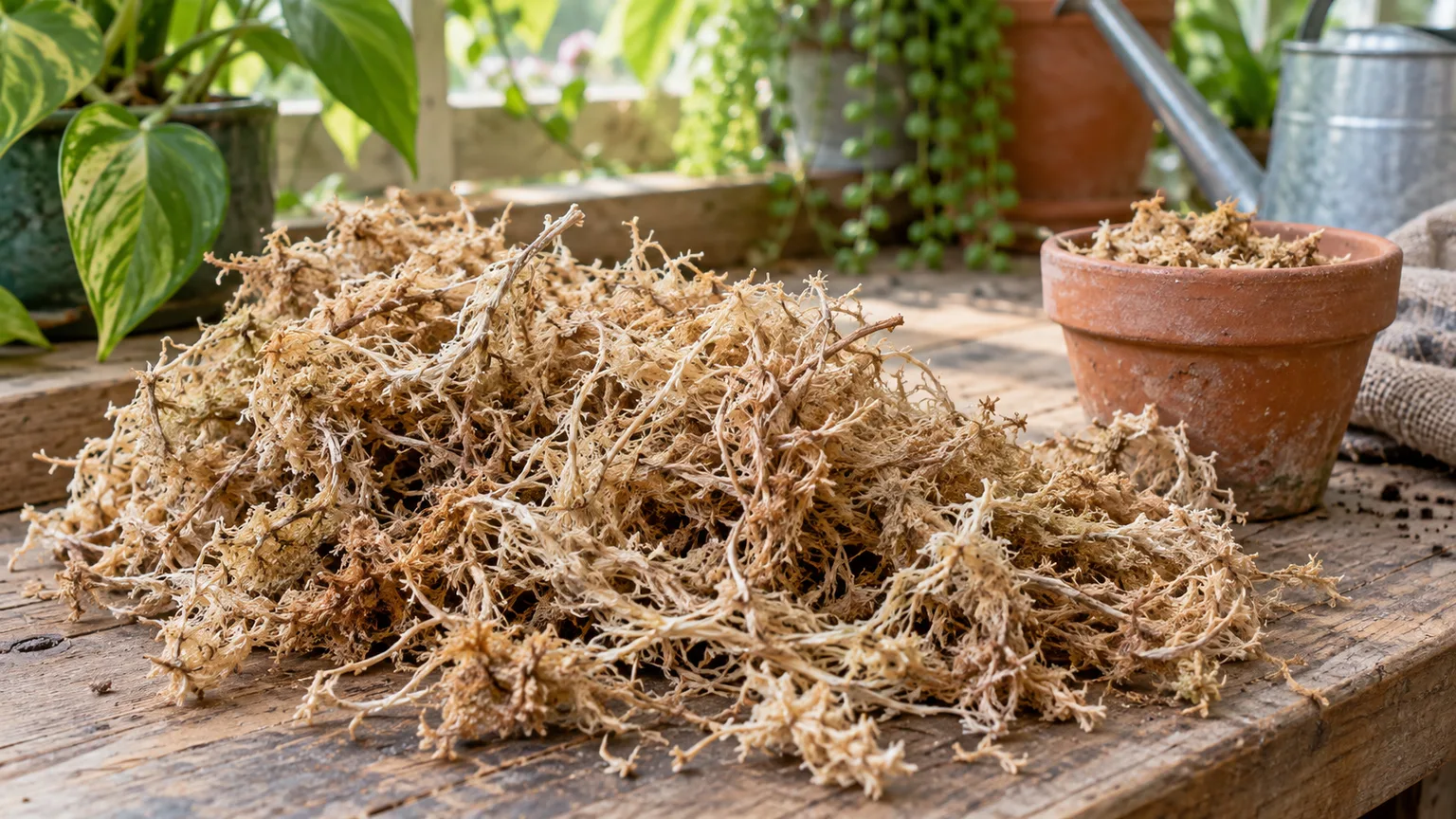
Sphagnum moss is a fibrous horticultural material made by harvesting the upper growth of sphagnum moss plants and drying it. Gardeners use it as a lightweight, moisture-retentive growing medium, a liner for hanging baskets, and a natural material in terrariums, wreaths, and other displays. It is not the same product as peat moss: sphagnum moss is sold as recognizable fibers, while peat moss is made from older, decomposed material accumulated in a bog.
Choose sphagnum when the job benefits from a loose, airy material that can hold a lot of water. It can be used on its own for some plants or combined with another medium, but it has little nutrition of its own. That makes it a poor default for every plant and a weak long-term choice for fast-growing plants unless their feeding needs are handled separately.
Before you use a bag, check what it contains and how it feels after wetting. Good fibers should loosen and become evenly damp; they should not be packed into a dense, dripping mass. Then match the amount to the job: root medium, basket liner, or decoration each calls for a different arrangement.
What Sphagnum Moss Is
Sphagnum is a genus of mosses that grow in wet places such as marshes, wetlands, and bogs. The bagged product sold for gardening is generally harvested from the newer upper growth and dried. Oregon State University Extension distinguishes the living sphagnum at the top of a bog from the more decomposed material in its lower layers that becomes peat (OSU Extension). Its long, visible strands and springy texture are clues that you are looking at fibrous sphagnum rather than the decomposed material sold as peat moss.
That distinction matters because the two materials behave differently in a container. Loose sphagnum fibers can be pulled apart and placed around roots or into a basket; peat is a fine, decomposed organic material more commonly blended into potting mixes. Neither name tells you exactly how a particular bag was processed, so use the package description and the material itself instead of treating every product labeled “moss” as interchangeable.
Sphagnum’s headline advantage is water retention. Dry strands take up water and hold it, while the open fibrous structure leaves air spaces when the material is not compressed. The useful balance depends on how loosely you pack it and how much you use. The same bag can create a breathable layer in one setup and a slow-drying, dense clump in another.
Living Sphagnum and Dried Horticultural Moss Are Different Things
A patch of living sphagnum in a wetland is a growing plant community. Bagged horticultural sphagnum is harvested and dried material. They share a name and origin, but dried moss should not be assumed to behave like a living moss garden or to revive simply because it becomes wet again.
Some dried material may contain small fragments of other plants, and its color can shift from greener tones toward brown as it ages. Neither a few plant fragments nor a brown color alone proves that the product has failed. What matters for a gardening task is whether the fibers remain intact, can be rewetted, and suit the job you plan to give them.
Sphagnum Moss vs. Peat Moss
The names are easy to confuse because both materials come from sphagnum-dominated bog environments and some packages use overlapping wording. A quick comparison helps: horticultural sphagnum is the recognizable dried fiber from newer growth; peat moss is accumulated, decomposed material from deeper layers of a bog, often mixed with other organic matter. One looks stringy and springy; the other is more broken down.
| Feature | Horticultural sphagnum moss | Peat moss |
|---|---|---|
| Material | Dried, recognizable moss fibers | Decomposed plant material accumulated in a bog |
| Texture | Long, fibrous, and airy when loose | Fine and more thoroughly broken down |
| Typical role | Used in smaller amounts as a medium, liner, or decorative material | Commonly blended into potting mixes or used as a soil amendment |
| Main practical question | Will the fibers hold moisture without being packed too tightly? | Does the mix need the properties of a decomposed, acidic amendment? |
Neither is a complete fertilizer or a universal substitute for potting mix. If you want a loose, visible fiber for roots, basket lining, or a display, sphagnum is the closer match. If you want an ingredient that is already decomposed and intended to be blended into a broader mix, peat moss is the different product to compare.
How to Read the Product Label
Look for wording that identifies long-fiber sphagnum moss or dried sphagnum, rather than relying on a front label that says only “moss.” Check whether the fibers are loose and intact, whether the product is blended with other ingredients, and whether it is sold as a growing medium, basket liner, or decorative material. Those details help you predict how much preparation it needs.
The phrase “sphagnum peat moss” can refer to the decomposed peat product, even though sphagnum appears in the name. Read the full description. If the contents look like fine, dark, crumbly material rather than long strands, handle it as a peat-based product and follow its directions instead of treating it like a bag of fibrous sphagnum.
What Sphagnum Moss Does Well and Where It Falls Short
Sphagnum is useful when you need a material that is lightweight, pliable, and able to hold moisture. Those traits make it practical for suspended baskets, for some orchid setups, and for small projects where loose fibers are easier to position than conventional potting mix. It can also fill visible gaps in a display without adding the weight of a heavy soil-filled container.
Its limits are just as important. Sphagnum is low in nutrients, so a plant that grows quickly cannot rely on the fibers alone as a complete food source. It also retains substantial moisture, which means you need to watch the actual drying pattern in your pot or basket. A plant that needs a medium to dry quickly may be a poor match for a thick layer of moss.
Think of sphagnum as a material with a particular job, not as “better soil.” It can hold water and make a light root environment, but it does not automatically supply the full set of conditions a plant needs. When the job calls for steady nutrition, a predictable potting structure, or quick drying, use a suitable mix and treat sphagnum as an optional ingredient only if its moisture-holding quality solves a specific problem.
Choose the Job Before Opening the Bag
Start with the outcome you want. For roots, decide whether the moss will be the whole medium or just part of one. For a hanging basket, it is a liner that supports the planting mix and gives the basket a natural finish. For a terrarium or wreath, it is a visible decorative fiber. Those are three different uses, so one soaking and packing method will not fit them all.
Use the following quick decision:
- Choose loose sphagnum as a growing medium when moisture retention and a light, fibrous structure are useful for the plant.
- Choose it as a liner when you need a pliable material that can sit inside a basket and let excess water escape.
- Choose it for decoration when the strands add texture or fill a visible gap.
- Choose a different or blended medium when the plant needs more nutrition or your setup must dry faster than a substantial amount of moss will allow.
The plant and container set the limits. Orchids, succulents, and seed starting are possible uses, but that does not make sphagnum the right choice for every orchid, every succulent, or every stage of a seedling’s growth. Start with a small amount when the fit is uncertain, observe how long it remains damp, and adjust before moving the same method to a larger or more valuable planting.
Use Sphagnum as a Soilless Growing Medium
Sphagnum can be used by itself for some plants or blended into another growing medium. Its fibers give roots something to sit among while holding moisture around them. That can be convenient for plants whose setup benefits from a light, airy material, but it also puts more responsibility on you to monitor water and nutrition.
For a small pot, loosen the strands before filling it. Place the plant at its normal depth, arrange the fibers around the roots without crushing them, and leave the surface open enough that you can see and touch the material. If you press the moss into a hard plug, you lose the airy structure that makes it useful and make it harder to judge how wet the center remains.
Do not judge moisture only by the surface color. The top layer can look dry while the material lower in the pot still feels damp. Check a pinch from a little below the surface, especially after the first watering, and use what you find to set the next check. There is no universal calendar interval: pot size, room conditions, amount of moss, and the plant’s own needs all change how quickly the setup dries.
Rehydrate and Prepare the Fibers
Dry long-fiber moss can be stiff and difficult to place evenly. Add water gradually in a clean container, separate clumps with your fingers or a tool, and give the fibers time to absorb moisture. The target for planting is evenly damp and pliable, not waterlogged or dripping.
Lift a handful and squeeze gently. If water streams out, let the excess drain and loosen the clump again; if the center is still crisp and dry, add a little more water and wait. This simple check is more useful than pouring in a fixed volume because bags and starting moisture levels vary. Once the strands bend without breaking apart into a packed wad, they are ready to position.
For a planter or liner, spread the moss in an even layer and keep it loose. For a small root zone, use only enough to surround or support the roots. If you are blending it with another medium, mix small handfuls at a time so you can see whether the result stays open and workable rather than becoming a solid mat.
Use It Alone or Blend It?
Use pure sphagnum only when the plant and the way you care for it suit a low-nutrient, moisture-retentive material. Plants with modest feeding needs may do well in it, while fast-growing young plants need more nutrition than moss alone provides. That is a useful boundary: germinating a seed and raising a rapidly growing seedling are not the same job.
Blending sphagnum into another medium gives you a way to add some moisture-holding fiber without making the entire root zone moss. There is no single ratio that suits every plant and container, so avoid treating a recipe as universal. Begin with a small proportion, water once, then check the mix after it has had time to drain. If it stays saturated longer than your plant’s setup can tolerate, reduce the moss or choose a different medium.
When the plant needs regular feeding, remember that wet fibers are not food. Use a nutrition plan appropriate to the plant and product, and avoid compensating for a poor medium choice by adding stronger fertilizer without guidance. The more moss you use as the entire growing environment, the more important it becomes to make a deliberate plan for both moisture and nutrition.
Use Sphagnum Around Orchid Roots
Orchids are a familiar use because loose sphagnum can sit around roots without adding much weight. It may be used as the main medium in some orchid setups or alongside another material, depending on the plant and the grower’s watering habits. The practical question is not simply “Do orchids like moss?” but whether your particular pot, root mass, and routine let the fibers stay appropriately moist and then dry at a pace you can manage.
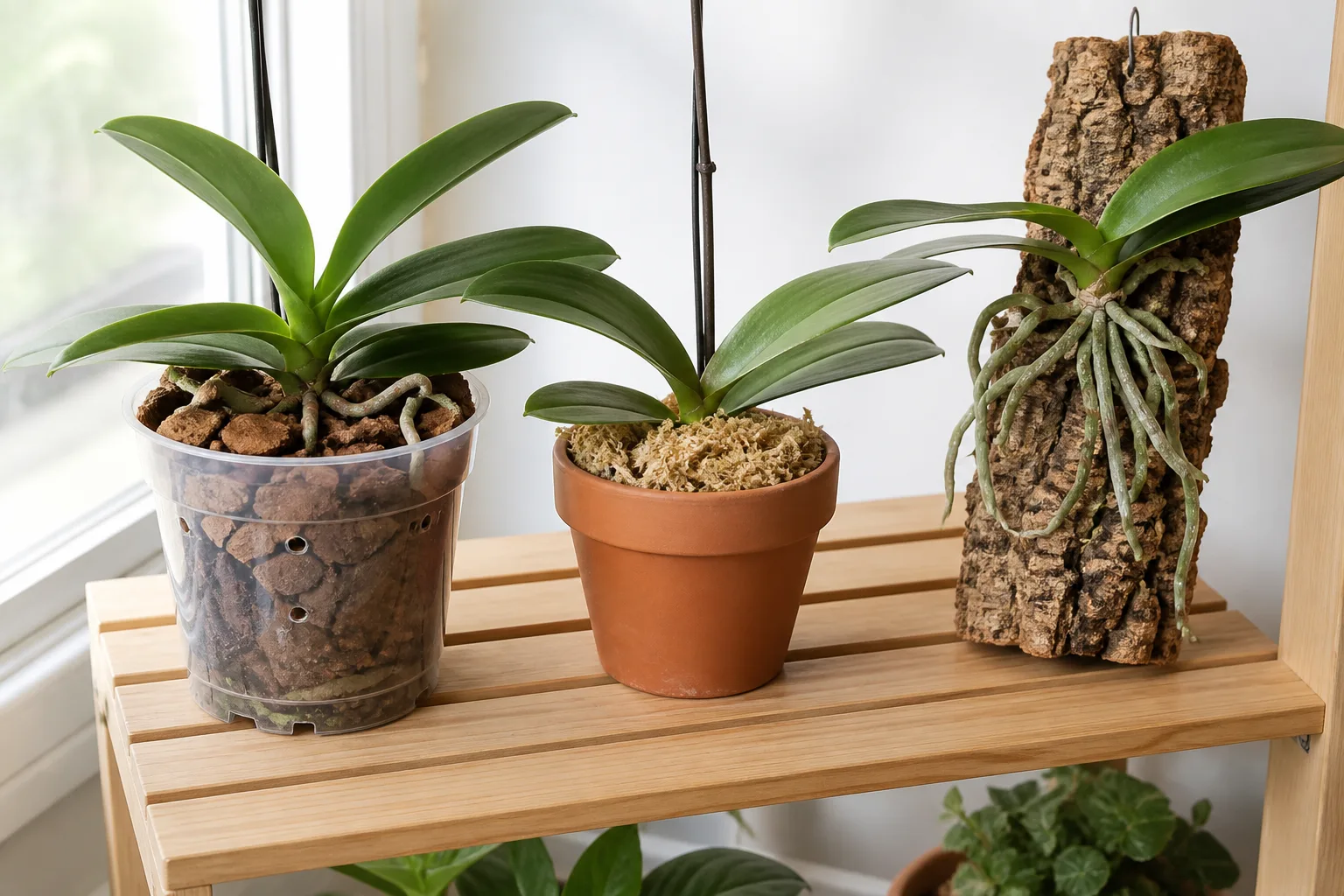
Before repotting, tease apart the dry strands and moisten them evenly. Set the orchid at the intended height, then tuck small amounts around the roots so they are supported without being compressed. Keep the crown and growing point clear. A loose arrangement is easier to inspect and adjust than a tight ball pressed into every gap.
After watering, observe the pot rather than copying a schedule made for bark or another medium. Sphagnum holds water differently from coarse, broken-up materials, so the time to the next watering can change. If the center remains wet long after the outside appears dry, use less moss, loosen the packing, or change the medium at the next appropriate repotting. The goal is a setup you can read, not a pot that looks full from the outside.
Use It for Seed Starting and Selected Succulents
Sphagnum is used for seed starting because its light fibers hold moisture. That makes it a possible choice for the germination stage, when a seed needs a consistently moist place to begin. Keep the setup easy to inspect and avoid saturating it; seeds need a suitable balance, and the moss’s capacity to hold water does not mean the container should stay flooded.
Plan the next step before sowing. Once seedlings are growing quickly, the nutrient-poor moss is not a complete long-term medium. Move them into a medium that supports their ongoing growth rather than leaving them indefinitely in pure sphagnum because the initial germination worked.
Sphagnum is also used with some succulents, but that category covers plants with different needs. A thick, moisture-retentive mass is not a sensible default for a plant that must dry promptly. If you are testing sphagnum with a succulent, use it selectively, keep the amount modest, and watch the root zone closely. A successful trial with one plant does not establish a recipe for the whole group.
Line a Hanging Basket
A sphagnum liner is light, flexible, and can help retain moisture while allowing excess water to move through the basket. It also gives an open wire basket a finished surface. These advantages are most useful when the basket itself has open sides and the growing mix needs something to hold it in place.
First moisten the strands until they bend easily, then press a thin, even layer against the inside of the basket. Build it gradually around the base and sides, overlapping fibers where needed so the liner has no obvious gaps. Keep the layer thick enough to hold the mix and plant, but do not pack it into a rigid shell. Place the planting mix and root ball inside the lined basket and check that the liner stays in place when the container is lifted.
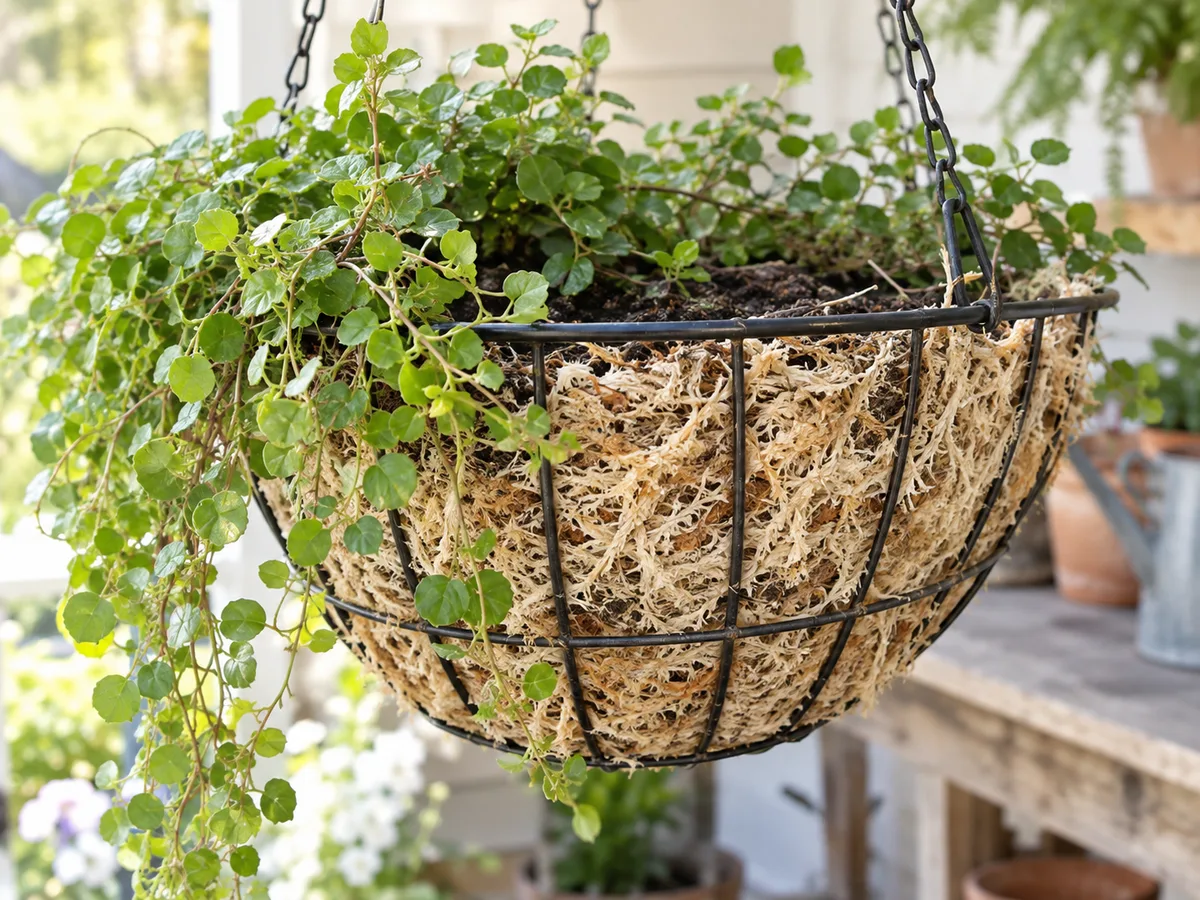
Expect a moss-lined basket to need observation after watering. The liner can hold moisture, but an exposed hanging container may also dry at a different pace from a pot on a shelf. Feel the growing medium inside the basket instead of assuming that a damp outer liner means the root ball is wet—or that a dry-looking surface means everything below it is dry. Adjust your next watering to what the planted basket actually feels like.
Use It in Terrariums, Wreaths, and Displays
For decoration, sphagnum works because the long fibers are easy to place and have a natural, soft texture. In a terrarium, a small amount can fill a visible gap around planting materials or give the display a more finished edge. In a wreath or frame-built arrangement, the fibers can be shaped around the structure and used where a leafy or spongy surface is wanted.
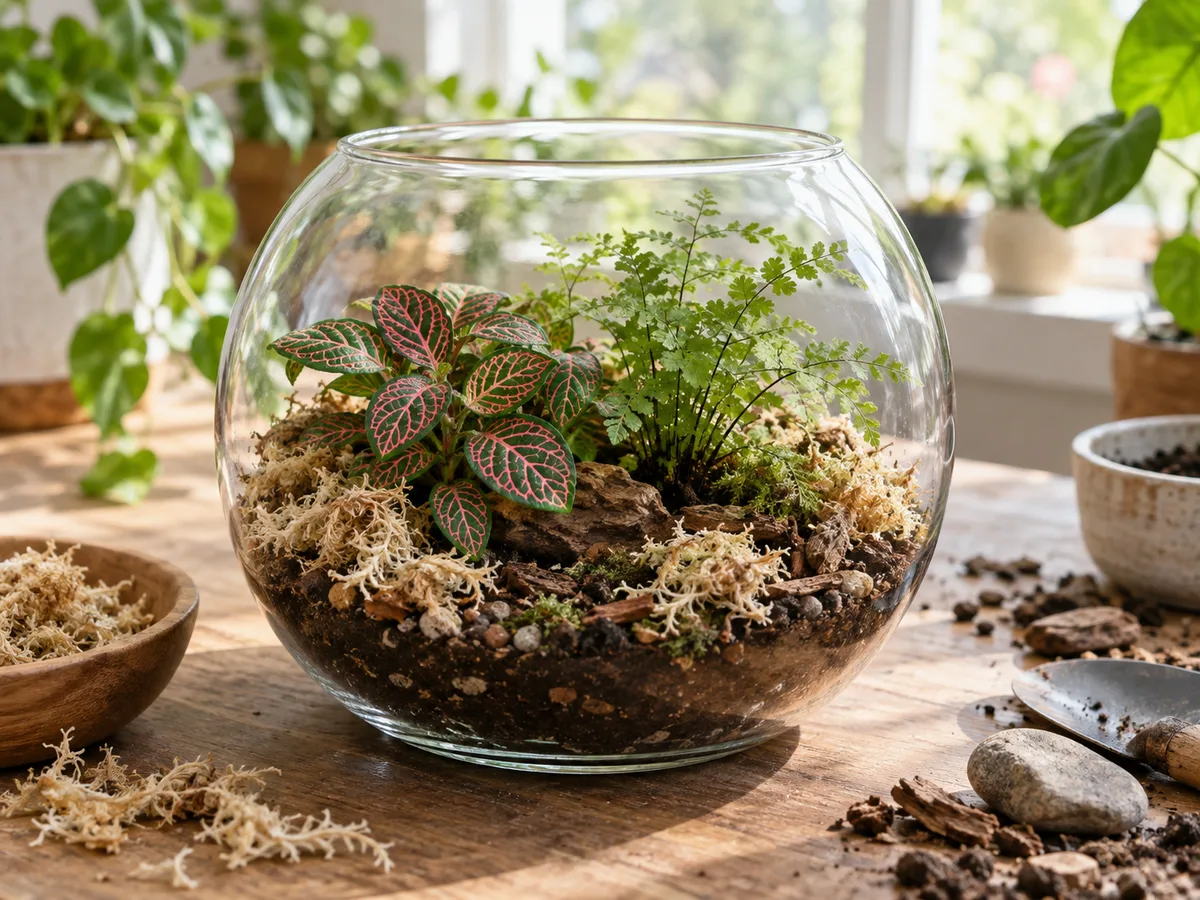
Keep decorative use distinct from root-medium use. A terrarium accent does not need to become a thick layer around every plant, and a wreath does not need the same moisture treatment as a potting medium. Add only enough to achieve the look or fill the space, then decide whether the display is meant to remain dry or be kept moist. If it is inside a planted container, keep the amount and placement easy to inspect so it does not hide the growing surface.
The material can also be used to finish a basket or container where the fibers remain visible. Choose strands that look consistent with the rest of the design, remove any loose pieces that distract from the arrangement, and avoid using a large clump just because the bag is open. A small amount placed deliberately usually looks cleaner and is easier to maintain than a thick, uneven layer.
Manage Moisture After Setup
Water retention is both the reason sphagnum is useful and the behavior you need to manage. Water the setup for the plant and container, then check the material below the surface before deciding when to water again. If the moss is still distinctly damp, wait and check later; if it is dry and the plant’s needs call for water, rewet evenly rather than letting the outer layer run while the center stays dry.
The first few waterings are a calibration period. Make a mental note of how the moss feels just after watering, how long it takes to change, and whether the plant remains stable. If the moss stays wet for longer than expected, look at how tightly it is packed and how much is in the container before changing the plant’s entire care routine. Loosening or reducing the material may be the simpler adjustment.
When sphagnum is used in a mix, follow the same principle: inspect the whole root zone, not just the top. In a basket, feel the planting mix rather than relying on the dangling fibers. In a decorative project, keep water away unless the particular display is meant to be maintained as a moist planting. One moisture rule cannot serve every use because the material plays a different role in each one.
Check Fiber Quality and Sourcing
Bagged sphagnum can vary in strand length, texture, moisture absorption, and appearance. If you can see the product before buying, look for recognizable fibers that are not ground into a fine mass. For a root medium or basket liner, long strands are easier to arrange and keep open than material that has already broken down into compact pieces.
Small fragments of grass, twigs, vines, or other dried plant matter can occur in the product. A brown color by itself also does not prove that the moss is unusable; dried material can fade from green toward brown with age. Judge the material by its texture, cleanliness, and intended job rather than color alone.
Avoid judging a product’s environmental impact from the word “sphagnum” alone. Peatlands store large amounts of carbon and take a long time to form, while the impact of harvesting varies with the material and site (FAO peatlands overview, OSU Extension). The Royal Horticultural Society notes that sustainably farmed sphagnum is being tested as one ingredient in some peat-free growing media, but that does not establish that every bag of moss is farmed or sustainably sourced (RHS on peat alternatives). If sourcing matters to you, look for a supplier that explains where the material comes from and how it is harvested; choose another suitable growing material if that information is not available.
Common Mistakes and How to Correct Them
The first mistake is confusing sphagnum moss with peat moss. Check whether the contents are visible long fibers or decomposed, fine material, then use the product for the job its form suits. If the label says “sphagnum peat moss,” do not assume it is the same as a bag of long-fiber sphagnum.
Another mistake is planting in dry, tangled clumps or soaking the material until it drips. Gradual wetting and gentle separation make it easier to distribute moisture and arrange the fibers. If the moss forms a dense plug, pull it apart and reset it more loosely before adding the plant.
Using pure sphagnum as a complete medium for a fast-growing plant is also a common mismatch. Moss holds water but supplies little nutrition. If growth is strong and the plant’s feeding needs are not being met, move it to a more complete medium or create a plant-appropriate feeding plan rather than assuming that more moss will solve the problem.
Finally, do not water by a fixed schedule borrowed from another material. A basket liner, a pot of pure moss, an orchid arrangement, and a decorative terrarium accent will not behave identically. Check the actual setup, make one adjustment at a time, and let the material’s condition guide the next step.
Conclusion
Sphagnum moss is a dried, fibrous material harvested from the newer growth of sphagnum moss plants. It is distinct from peat moss, which is accumulated and decomposed bog material, and its loose strands make it useful for selected growing setups, hanging-basket liners, and decorative projects.
Use it where its light texture and strong water retention solve a specific problem. Rehydrate it gradually, keep it loose, monitor moisture below the surface, and remember that it contributes little nutrition. When you choose the material for the job, read the label carefully, and pay attention to how the finished setup dries, sphagnum becomes a practical tool rather than a one-size-fits-all substitute for potting mix.