What Is Loam Soil? Composition, Benefits, and Tests
Loam soil is more than a 40/40/20 recipe. Learn how texture, structure, compost, soil tests, and plant needs determine what your garden really needs.
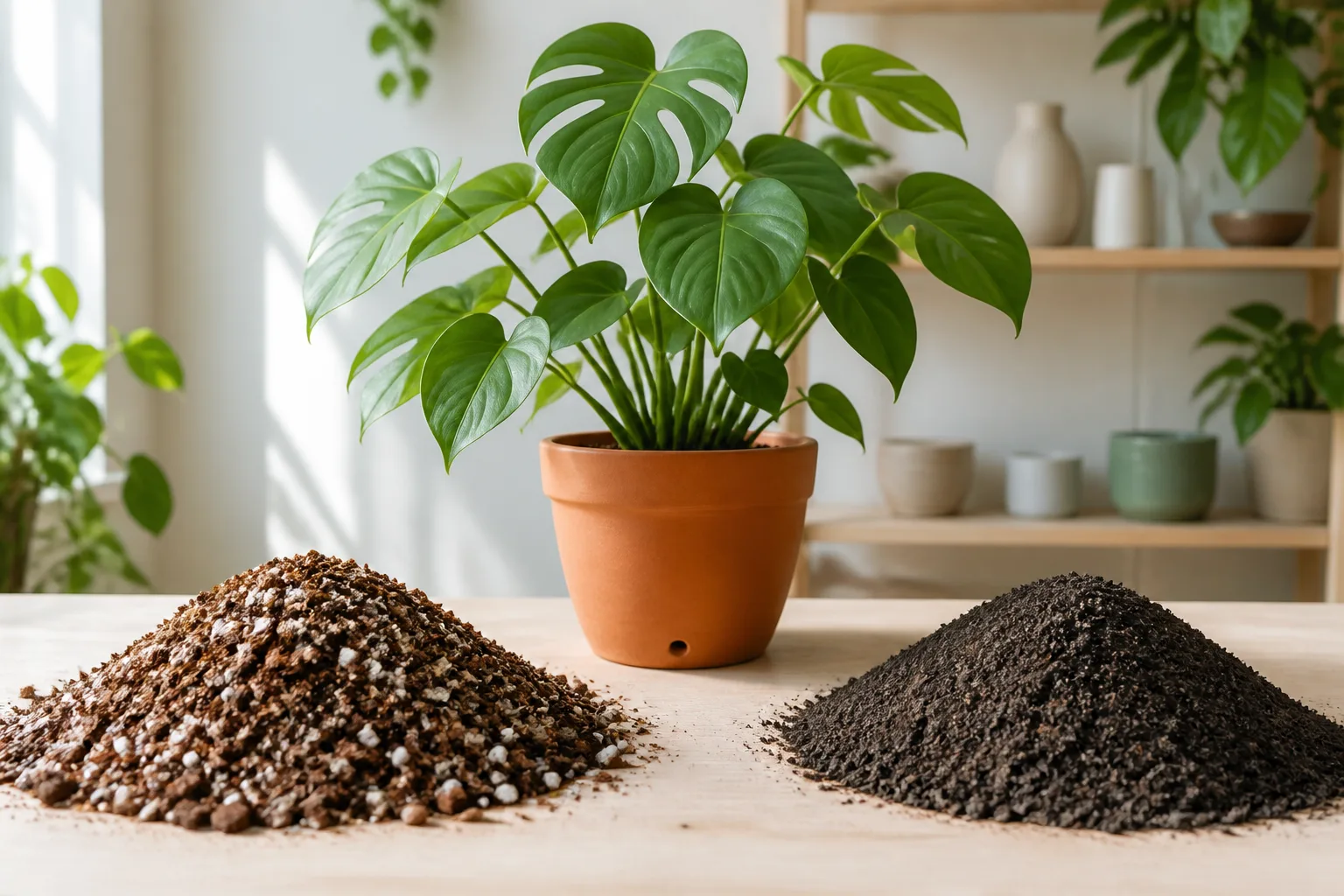
Loam is a soil texture made from a workable balance of sand, silt, and clay. That balance usually gives roots access to both water and air, but “loam” does not automatically mean fertile, neutral, well-drained, or rich in organic matter. Those are separate qualities that you need to check and manage.
The most useful way to think about loam is not as a magic recipe but as a starting texture. It often gives common garden plants a forgiving root zone, while the soil’s structure, organic matter, pH, drainage, and the plant you want to grow determine whether it is actually good for that site.
Loam soil, in one sentence
Loam soil contains sand-, silt-, and clay-sized mineral particles in proportions that create a medium-textured soil: it holds some water and nutrients without becoming as airless as heavy clay or as drought-prone as very sandy soil. The USDA texture system recognizes several loam classes, so there is no single percentage that every loam must match; the Colorado State University Extension explanation of soil texture shows how different sand, silt, and clay combinations receive different names.
That definition also explains why a bag labeled “loam” is not enough evidence by itself. A soil can have a loam texture but poor structure from compaction, little organic matter, an unsuitable pH, or excess salts. The texture tells you how the mineral particles are sized and balanced; it does not tell you the whole story of the growing site.
The three mineral ingredients in loam
Soil scientists classify texture by the relative size of mineral particles, not by how dark the soil looks or how much compost it contains. Sand is the largest of the three, clay is the smallest, and silt sits between them. Penn State Extension gives the useful size ranges: sand is about 0.05–2 millimeters, silt is 0.002–0.05 millimeters, and clay is smaller than 0.002 millimeters in diameter in the mineral fraction of soil. See the Penn State soil-quality guide for the particle-size and pore-space relationship.
| Mineral fraction | How it feels | What it tends to contribute |
|---|---|---|
| Sand | Gritty | Larger pores, faster drainage, and easier cultivation |
| Silt | Smooth or floury | Intermediate water storage and a soft, mellow feel |
| Clay | Sticky or plastic when wet | Small pores and strong water- and nutrient-holding capacity |
The fractions work together. Sand alone can let water run through before roots use it, clay alone can leave too little air-filled space after rain, and silt can compact if it is left bare or handled when wet. Loam is useful because the contrasting particle sizes create a more balanced pattern of pores.
What sand contributes
Sand grains are large enough to feel individually. They create relatively large spaces between particles, which helps water move and lets air return to the root zone after irrigation or rain. That is why sandy soil is usually easy to dig and warms quickly, but the same large pores can drain so fast that shallow-rooted plants need more frequent watering.
Adding more sand is not automatically an improvement. A small amount mixed into a clay-heavy bed can fill gaps between fine particles rather than create a useful sandy texture. The better question is whether the bed needs more organic matter, better surface drainage, a different plant, or a properly designed soil replacement.
What silt contributes
Silt particles are smaller than sand and feel smooth or floury when dry. They hold more water than sand and are easier to shape than clay, which helps create the soft, crumbly feel gardeners often associate with loam.
The drawback is that silt can seal, crust, or compact when bare soil is repeatedly rained on, walked on, or cultivated while wet. Organic matter and a living root system help maintain aggregates and pores, so a silty soil benefits from being covered and handled gently.
What clay contributes
Clay has enormous surface area relative to its particle size. Its tiny particles can hold water and positively charged nutrients, which is why clay soil is not simply “bad soil.” A clay-heavy bed may be fertile but still difficult to work because its small pores fill with water and its particles stick together.
Clay content changes behavior dramatically. Colorado State notes that a soil with around 20% clay can still behave as clayey because clay has such strong physical effects. That is one reason the exact 40/40/20 shorthand is misleading: a small shift in clay can matter more than the numbers suggest.
Loam is texture, not a promise of good soil
The distinction that prevents most loam mistakes is texture versus structure. Texture is the mineral particle mix; it is largely inherited from the site and is difficult to change across a whole bed. Structure is how those particles are arranged into aggregates and pores, and gardening practices can improve or damage it. Penn State Extension explains the difference in its soil-quality information, including why organic matter, biological activity, and traffic management influence structure even when texture stays the same.
Think of texture as the ingredients in a loaf and structure as the crumb. You can have the right ingredients in the wrong arrangement: a loam-textured soil that has been driven over while wet may be dense and oxygen-poor. Conversely, a sandy or clay-heavy soil can become much easier to grow in when organic matter, roots, and careful traffic management create more stable aggregates.
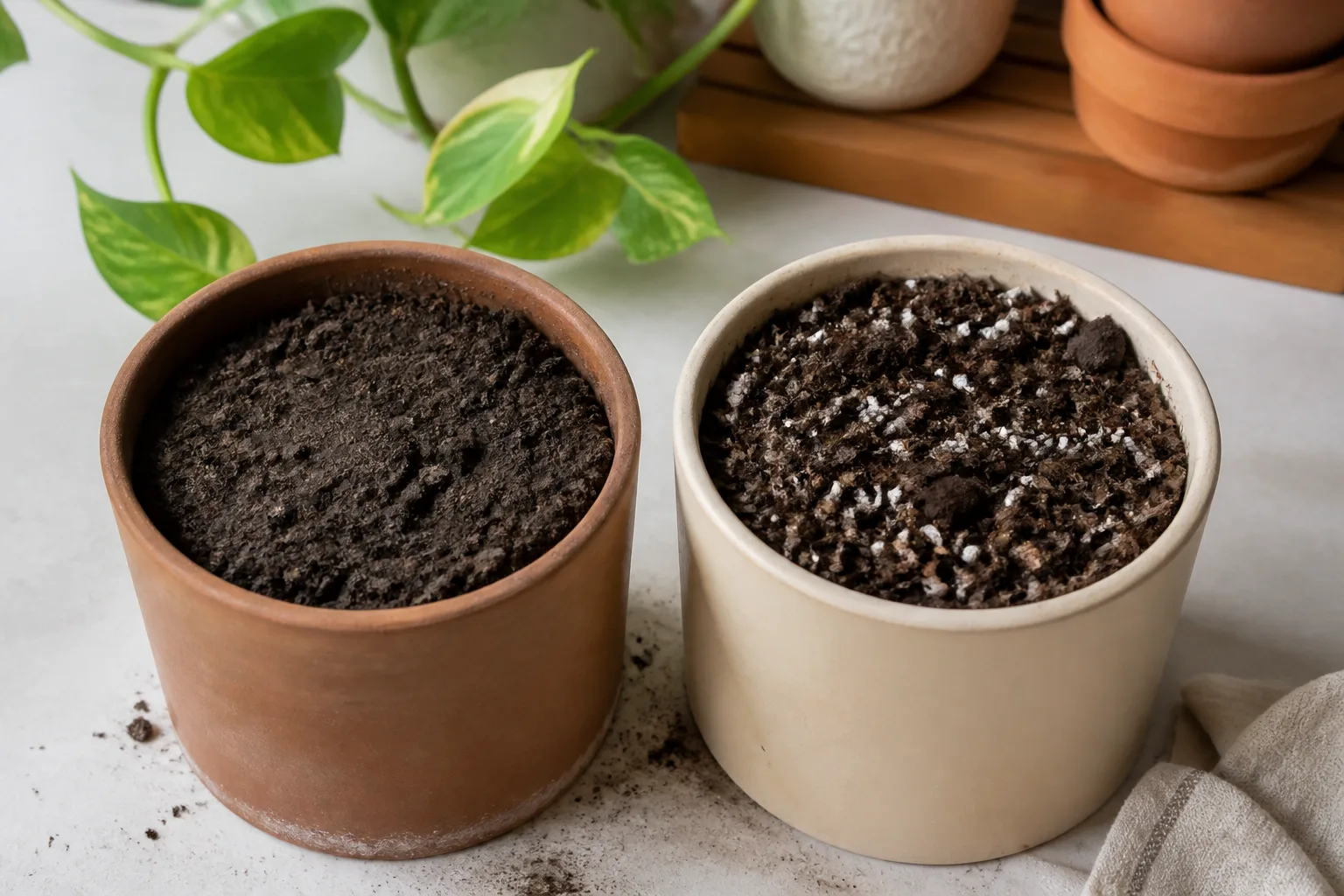
Organic matter is also not the same thing as loam. Finished compost, leaf mold, and well-rotted manure can improve structure, water-holding, and nutrient supply, but they do not turn the mineral fraction into a specific loam class. A bed can be loam-textured and low in organic matter, or clay-textured and rich in organic matter. The remedy depends on the problem you measure.
How to identify loam at home
A quick hand test can tell you whether your soil behaves like a coarse, medium, or fine texture. It cannot tell you every property that matters to a plant, and it is least reliable when the sample is bone-dry, saturated, full of roots, or taken from only one unusual spot.
The feel test
Take soil from several points in the same bed and remove stones, roots, mulch, and visible debris. Add water a few drops at a time and knead the sample until it feels like moist putty rather than mud. The Colorado State University Extension feel-test instructions use three clues: sand feels gritty, silt feels smooth, and clay feels sticky.
Then make a ball and gently squeeze it. Very sandy soil falls apart with little pressure. Medium-textured soils such as sandy loam and silt loam hold together but change shape easily. Clay-heavy soil resists breaking and feels plastic. A loamy sample commonly forms a soft ball that breaks or crumbles when you press it, rather than a hard ball that stays intact.
For a second check, press the moist ball between your thumb and forefinger to form a ribbon. A short ribbon that breaks quickly, combined with a slightly gritty but not loose feel, suggests a medium texture. A ribbon longer than two inches points toward fine, clayey behavior. Do not treat one borderline ribbon as a final diagnosis; soil texture classes overlap, and organic matter can change the feel.
The jar test
The jar test is useful when you want a rough visual estimate of the mineral fractions. It is a home experiment, not a laboratory texture analysis, because incomplete dispersion, organic material, and measurement error can distort the layers.
- Dry a representative sample, remove roots and stones, crush clods, and fill a straight-sided jar about one-quarter full with soil.
- Add water to roughly three-quarters full and a small amount of non-foaming detergent. Seal the jar and shake hard for 10–15 minutes so aggregates break apart.
- Set the jar somewhere level and undisturbed. Mark the sand depth after about one minute, the silt depth after about two hours, and the clay boundary when the water clears. Clay can take one to three days or longer to settle.
- Measure each layer, divide each thickness by the total settled mineral thickness, and enter the percentages into the USDA NRCS Soil Texture Calculator.
Sand settles first, followed by silt, with clay forming the upper mineral layer. Organic matter may float or remain near the surface, so do not count floating leaves or dark organic fragments as clay. Gardeners’ Supply demonstrates the same practical approach in its soil-texture guide, including why a jar may need to sit for several days.
Types of loam soil and what their names mean
Loam is a family of texture classes, not one uniform soil. The adjective in front of “loam” tells you which fraction has more influence on the way the soil behaves.
- Sandy loam has more sand. It usually drains and warms faster, but it may need more frequent irrigation and regular organic-matter additions.
- Silt loam has more silt. It can be easy to cultivate when managed well but is vulnerable to crusting and compaction when left bare or worked wet.
- Clay loam has more clay. It may hold nutrients and moisture well, yet it needs careful timing and traffic management so it does not become dense.
- Sandy clay loam and related classes contain enough clay to behave more heavily even though sand is also substantial.
The name is a management clue, not a verdict. A sandy loam in a hot, windy site may dry faster than a clay loam in a shaded bed. Rainfall, slope, depth, organic matter, compaction, and the plant’s root system all change what “good” means in practice.
Loam vs topsoil vs potting soil
These words describe different things, which is why they cause so much confusion at garden centers.
| Term | What it tells you | What it does not guarantee |
|---|---|---|
| Loam | A mineral texture class based on sand, silt, and clay | Fertility, pH, organic matter, or good structure |
| Topsoil | A surface soil layer or a product sold for outdoor filling and beds | That the material is loam, screened, fertile, or free of contaminants |
| Potting soil or potting mix | A container-growing medium, often based on peat, coir, bark, perlite, or similar ingredients | That it is suitable for every plant or will stay airy forever |
Topsoil is a location or product description; loam is a texture description. A load of topsoil may be sandy, silty, clayey, or loamy. Gardening Know How’s explanation of loam and topsoil makes this distinction clearly.
Potting mix is a separate category because containers have limited drainage height and no surrounding soil profile. A garden loam that performs beautifully in a bed can settle into a heavy, poorly aerated mass in a pot. For houseplants, use a container medium formulated for the plant instead of assuming that “loam” means “good potting soil.”
Can you buy loam soil?
You can buy soil marketed as loam, sandy loam, or garden-bed mix, but the word on the bag is not a substitute for a specification. For bulk soil or a large raised bed, ask the supplier for a recent laboratory analysis showing texture, organic matter, pH, soluble salts, and any screening or contamination information relevant to your site.
Look for a material that is moist but not sour-smelling, free of construction debris, and full of stable aggregates rather than a uniform, dusty powder. A dark color is not proof of fertility, and a loose texture at delivery does not guarantee that the soil will stay open after rain. If the supplier cannot explain where the soil came from or what the report measures, buy a smaller amount first and test it before filling an entire bed.
For a new bed over poor native soil, a tested soil-and-compost blend can be a practical shortcut. For an established bed, repeated additions of finished organic matter and reduced traffic are usually more realistic than trying to replace all of the mineral soil. The right approach depends on the scale of the problem, the plants, and your local soil report.
Why many garden plants perform well in loam
Roots need a changing mix of water and air, not permanent wetness. The larger pores influenced by sand help excess water move, while the smaller pores influenced by silt and clay hold some moisture and dissolved nutrients. In a well-structured loam, aggregates create large and small pore spaces instead of one solid block.
That balance gives common vegetables, annual flowers, perennials, shrubs, and many fruiting plants a forgiving root zone. It can make planting easier, support steady root expansion, and reduce the swing between a bed that dries immediately and one that stays saturated for days.
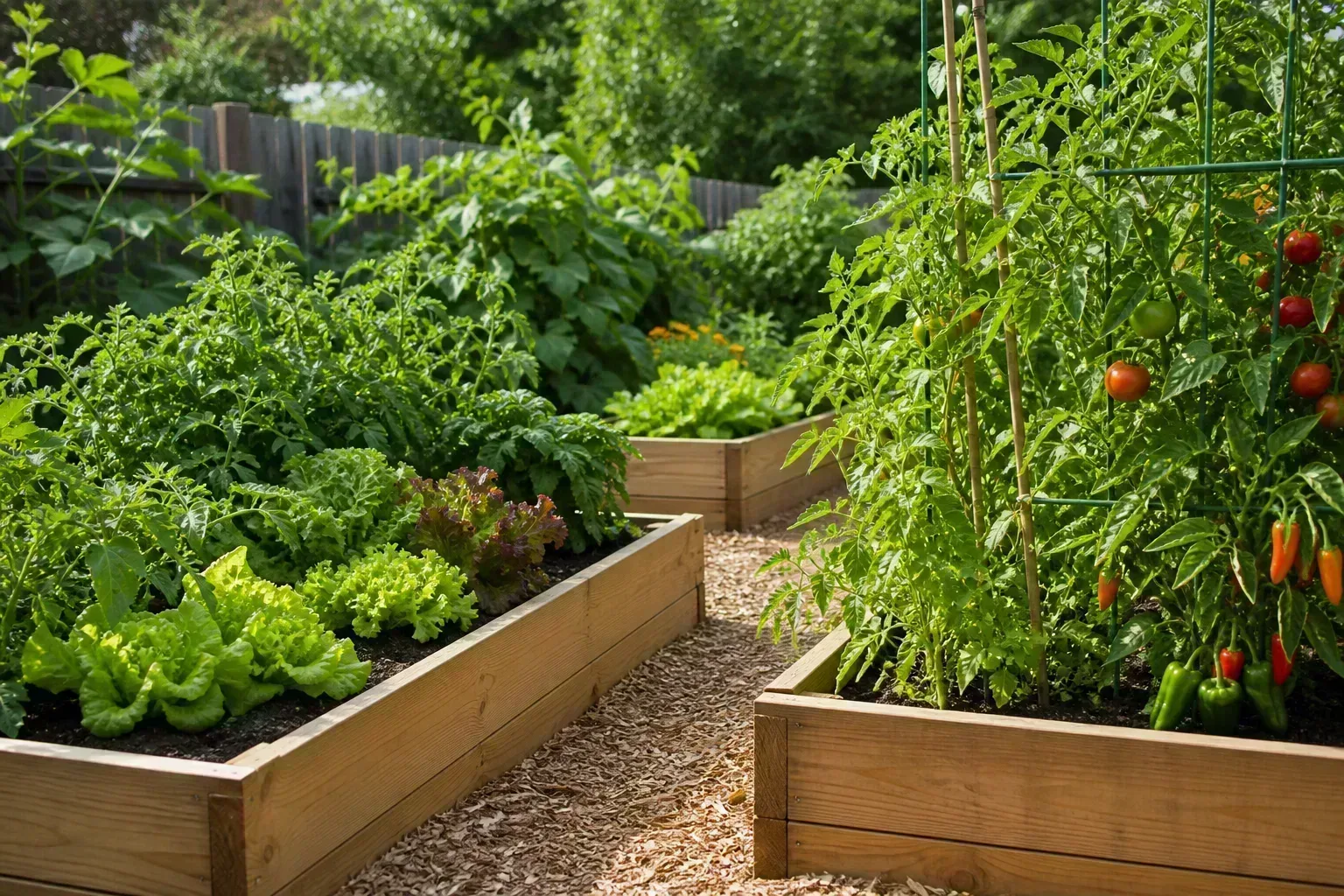
“Good for most plants” is still not the same as “right for every plant.” A plant adapted to dunes, rock gardens, bogs, or highly acidic soils may perform better when the soil is deliberately drier, sharper-draining, wetter, or more acidic than ordinary loam. Choose the plant and site together rather than forcing every bed toward the same texture.
How to improve sandy or clay-heavy soil
The practical goal is usually not to manufacture a textbook loam percentage. It is to create a root zone with stable aggregates, usable pore space, suitable moisture, and the pH and nutrients your plants need. Start with the problem you can observe or measure, then change one major variable at a time.
Add organic matter with a plan
Finished compost, well-rotted manure, leaf mold, and mature plant residues can improve structure in both sandy and clay-heavy soils. The Royal Horticultural Society’s organic-matter guide explains why these materials improve fertility, structure, and water-holding, while also warning that some fresh or woody materials should be composted or used as surface mulch before they are mixed into soil.
For an ordinary bed, use this sequence:
- Test or observe first. Check whether the bed is too fast-draining, too slow-draining, compacted, nutrient-poor, or simply planted with the wrong species.
- Choose mature material. Use finished compost or well-rotted organic matter when you need to plant soon. Fresh manure, uncomposted sawdust, and large amounts of fresh high-carbon residue can temporarily compete for nitrogen as they decompose.
- Apply evenly across the root zone. A two- to three-inch layer incorporated into roughly the top six to eight inches is a commonly used establishment approach for a bare bed, and the practical loam guidance from Family Handyman describes that sequence. Use less disruptive surface applications for an established border with existing roots.
- Maintain rather than chase perfection. Compost decomposes. Add modest amounts on a recurring schedule, keep soil covered with plants or an appropriate mulch, and avoid adding fertilizer or lime unless a soil test or plant requirement supports it.
Organic matter helps sandy soil hold water and nutrients, and it helps clay soil form larger, more stable aggregates. It will not remove every drainage problem: a high water table, compacted subsoil, shallow bed, or roof runoff may require grading, drainage design, raised planting, or plants adapted to wet conditions.
Avoid working wet soil
The worst time to “fix” clay or silt soil is when it sticks to your boots and tools. Digging or tilling wet soil smears particles together and destroys the pores you are trying to create. The RHS soil-cultivation guide recommends waiting for drier conditions and notes that only minimum cultivation is needed; over-cultivation can damage structure.
Use a simple readiness check: squeeze a handful of soil. If it forms a shiny, sticky ribbon or leaves a wet smear that will not crumble, wait. If it breaks into small aggregates with gentle pressure, you can work it more safely. Keep paths, boards, or stepping stones where you need to reach beds so repeated foot traffic does not undo the improvement.
Do not try to rescue clay by dumping a thin layer of sand over it or mixing a token amount into the planting hole. That can create a denser blend rather than a useful sandy soil. Organic matter, root growth, mulch, and less traffic are slower but more reliable ways to improve structure across a bed.
When to test your soil
Use a home feel or jar test to answer “What texture does this soil resemble?” Use a laboratory soil test to answer “What chemical or fertility constraints should guide my amendment?” One does not replace the other.
A standard soil test may report texture, organic matter, pH, soluble salts, and nutrients. It usually will not diagnose every cause of poor growth, such as overwatering, compaction, inadequate light, root disease, or poor plant selection. Colorado State University Extension’s soil-testing guidance also notes that nitrogen readings can change quickly and that recommendations need the crop or landscape context.
Test when you are establishing a new bed, adding a large amount of compost or manure, seeing unexplained poor growth, deciding whether lime is warranted, or managing a food garden where nutrient accumulation matters. Sample separate areas that receive different management, such as lawn, vegetable bed, and shrub border. For a small garden area, collect several subsamples at the laboratory’s recommended depth, mix them in a clean bucket, and submit a representative sample rather than one scoop from the most unusual spot.
Do not add lime because a plant-care label casually mentions it, and do not add a high-phosphorus fertilizer because a bag promises bigger blooms. Soil pH and nutrient recommendations depend on the crop, existing chemistry, and local conditions. A test is most useful when you give the laboratory an accurate description of what you plan to grow.
When loam is not the right target
Loam is a strong default for many garden plants, but it is not a universal finish line. Succulents, cacti, Mediterranean herbs, and alpine plants may need a faster-draining mineral mix. Bog and wetland plants may need consistently moist conditions. Some native plants are already adapted to the soil texture and chemistry of your site and can suffer if you repeatedly amend around them.
Containers are another exception. A garden loam can be too dense for a pot because the container does not provide the deep, connected pore system of the ground. Use a potting mix designed for the plant, and treat “loam-based” container products as a formulation to evaluate by ingredients and drainage—not as a reason to scoop outdoor soil into a pot.
The best soil is the soil that gives the intended plant the right moisture, oxygen, anchorage, pH, and nutrient availability in that specific place. Sometimes the most sustainable correction is to choose a plant adapted to the existing soil instead of importing large volumes of amendments.
Conclusion
Loam soil is a medium-textured blend of sand, silt, and clay that often gives garden roots a useful balance of drainage, water storage, and air. The familiar 40/40/20 ratio is only a rough shorthand, not a pass-fail formula, and loam texture alone does not guarantee fertility or healthy structure.
Start with a moist hand test, use a jar test or the USDA texture calculator if you need a closer estimate, and order a laboratory soil test when pH, nutrients, salts, or a major bed project are involved. Improve sandy or clay-heavy soil with finished organic matter, cover, roots, and careful traffic management—not a little sand tossed into clay. Once you match texture and structure to the plants you actually want to grow, “good soil” becomes a measurable goal instead of a vague promise.