How to Save Hyacinth Bulbs After Blooming This Year
Learn how to save hyacinth bulbs after blooming: remove spent flowers, keep leaves until yellow, choose whether to lift, and store bulbs for fall.
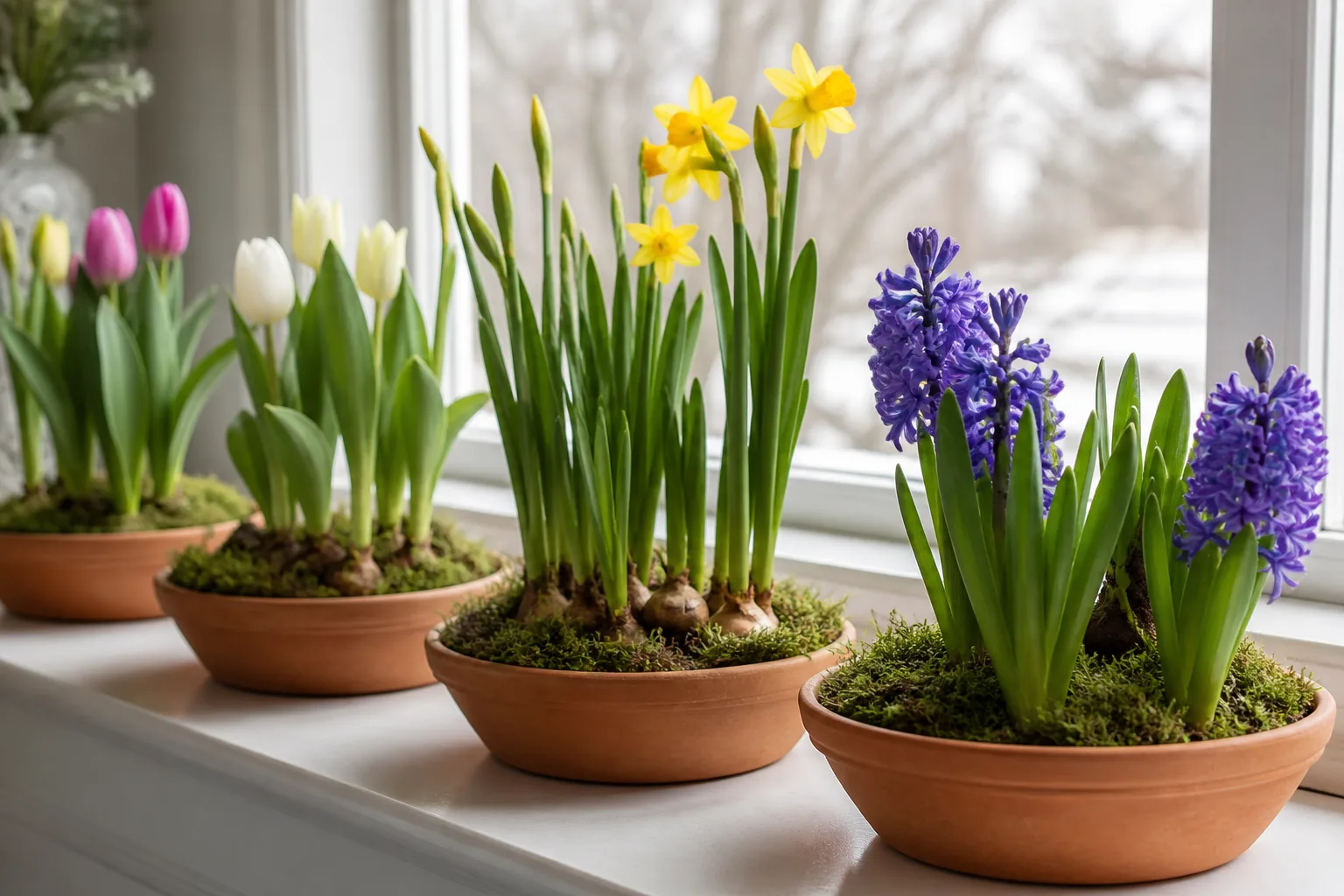
Yes, you can save many hyacinth bulbs after flowering—but the first job is to leave the green leaves alone. Remove the faded flower spike, keep the plant in light, and let its foliage turn yellow naturally. Only then decide whether the bulb can stay in the bed or should be lifted for summer storage.
This guide covers garden hyacinths, Hyacinthus orientalis (often called Dutch hyacinths), not grape hyacinths, which are Muscari. The two are different plants. A bulb planted in a well-drained bed may be simplest to leave in place; one in a persistently wet bed, an outdoor pot, or a region with mild winters may need a different plan.
The short answer
After the flowers fade, snip off the flower stalk so the plant does not spend energy forming seed. Keep every healthy green leaf attached, put the plant where it receives light, and water when the soil is drying rather than keeping it wet. The leaves are still feeding the bulb even though the display is over.
Wait until the foliage has yellowed and withered before cutting it at soil level. Then either leave the dormant bulb in well-drained ground or lift it, let its surface dry, and store it in a cool, dry, ventilated place until replanting time. Do not lift green, growing bulbs just because the flower spike has faded.
What the bulb is doing after flowering
A spring bulb is not finished when its flowers are. Once the bloom has passed, the plant continues growing for a while; its leaves capture light and replenish food reserves in the bulb. Those reserves support survival during dormancy and help the plant make its next season’s growth. Clemson Cooperative Extension describes spring bulbs as storing food after flowering before the tops die back and the bulbs become dormant.
That process explains the most important aftercare rule: the foliage must finish naturally before you cut it or lift the bulb. A bulb may look large and healthy, but removing its leaves while they are still green interrupts the recharge. The flower spike, by contrast, can go once the flowers fade; removing it avoids spending resources on seed without sacrificing the leaves that are still working.
Deadhead the flower, not the foliage
Use clean scissors or pruners to remove the spent flower stalk. Cut the stalk near its base, where it emerges from the leaves, while taking care not to cut or crush the foliage. If the flower spike has already dried, remove it when convenient; there is no need to rush at the first sign of fading petals.
Leave the leaves standing, even if their shape looks untidy in a formal border. You can plant later-emerging perennials nearby to soften the look, but avoid planting or digging so deeply that you damage the bulbs. Do not braid, tie, fold, or bundle the leaves to hide them: that reduces the leaf area exposed to light and works against the bulb’s recovery.
Water and feed only while leaves are working
Keep the soil lightly and evenly moist while the leaves remain green, allowing excess water to drain away. In a garden bed, rainfall may be enough; check the soil before adding water. In a container, feel the mix and water only when it is beginning to dry, then let the pot drain fully. Hyacinth bulbs can rot in persistently wet soil, so “keep the leaves active” does not mean keeping the roots soggy.
Feeding is optional and depends on how you grow the plant. BBC Gardeners’ World recommends a liquid feed for bulbs grown in pots after flowering, while Clemson’s broader bulb guidance emphasizes soil-test-based feeding and label directions for permanent plantings. A modest bulb or balanced fertilizer used according to its label can support a long-term planting, but fertilizer cannot replace healthy leaves or repair a rotting bulb. Do not pour concentrated fertilizer over the bulb or apply extra because you want a guaranteed rebloom.
Wait until foliage yellows before cutting
Let the leaves change color and wither on their own. Clemson Cooperative Extension advises leaving spring-bulb foliage for at least six weeks after flowering or until it turns brown; Rutgers Cooperative Extension likewise says to leave the leaves until they yellow and die back naturally because they replenish the bulb. Actual timing varies with bloom date, weather, and growing conditions, so treat the leaf’s condition as your signal rather than marking a date on the calendar.
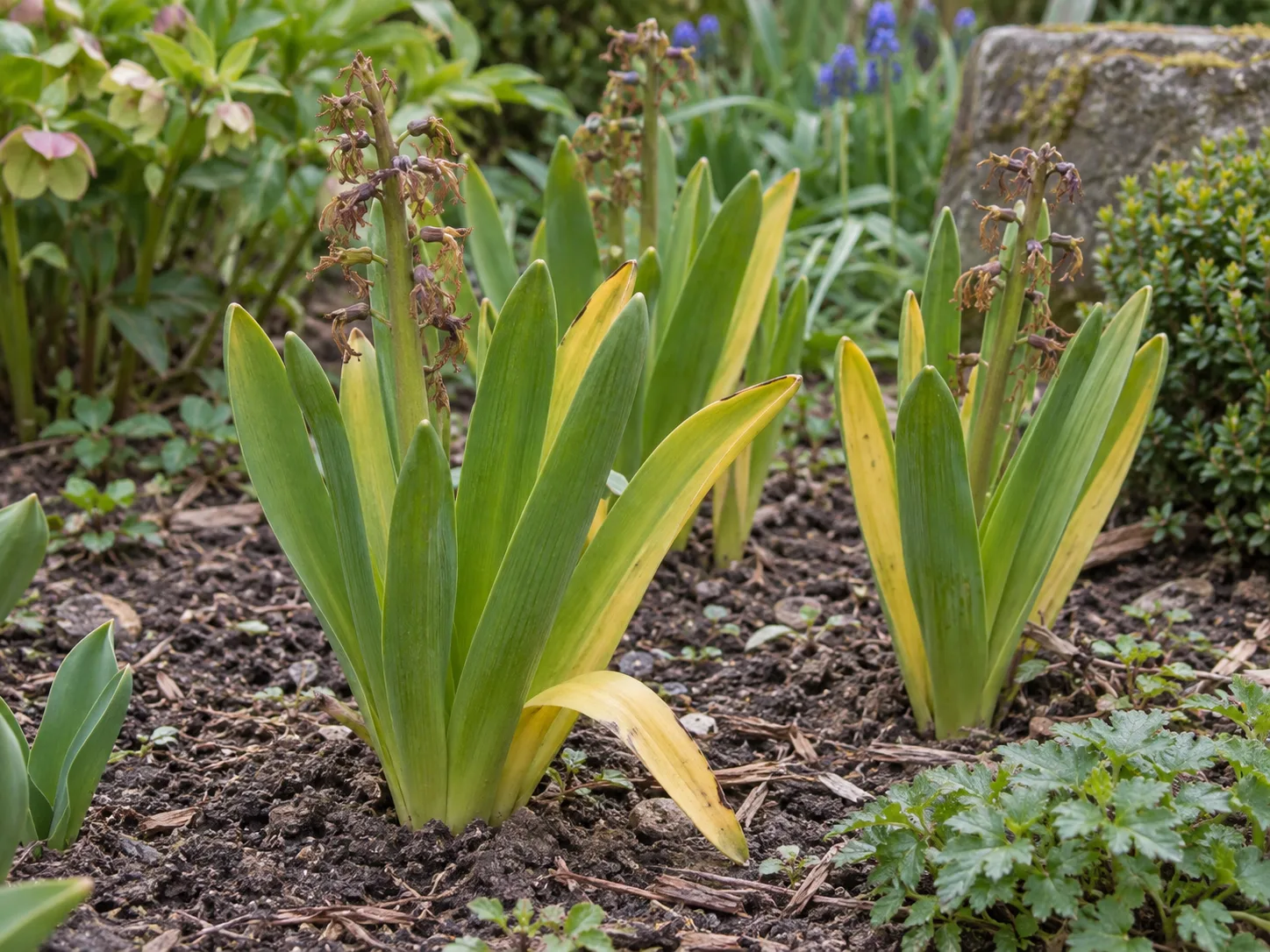
When most or all of the foliage is yellow to brown and no longer actively green, it can be cut at the soil line. If only the tips are yellow but the leaf bases remain green, give the plant more time. Avoid pulling leaves off while they are still attached firmly; dead foliage should release with little resistance. The bulb is ready for dormancy, not for prolonged exposure to heat or drying while still trying to feed itself.
Choose between leaving bulbs in place and lifting them
You do not have to dig up every hyacinth each year. Leaving bulbs undisturbed avoids the work and reduces the chance of nicking them with a spade. It is usually a reasonable choice when they are planted in a free-draining bed and your winter provides the cool period the bulbs need.
Lifting gives you more control over where bulbs spend the summer and lets you inspect, thin, or relocate them. It is useful when summer soil stays wet, the planting has become crowded, the bulbs are in a pot that remains damp, or your winter is too mild for reliable flowering without extra chilling. The trade-off is that stored bulbs can shrivel or mold if the storage place is too warm, too dry, or too humid. Pick the route that solves your actual problem; lifting is not automatically better.
Garden beds: when leaving bulbs makes sense
If the bed drains well and hyacinths return reliably in your climate, leave the bulbs in the ground after the leaves die back. Mark the area if it will disappear under summer plants, and avoid deep cultivation above it while the bulb is dormant. Normal seasonal weather will take care of the dormant phase.
Expect performance to vary. Clemson Extension notes that hyacinths can remain in the ground in parts of South Carolina, but flower size may decline as bulbs multiply; gardeners seeking larger flowers may lift them after the leaves wither and replant or replace them in fall. This is a regional observation, not a universal timetable. If your clump still flowers well and the soil stays healthy, there is no need to disturb it just because a calendar says to dig bulbs.
When wet summers, warm winters, or crowding change the plan
Consider lifting bulbs if the planting site stays wet after the spring growth ends. A dormant bulb in waterlogged soil is more vulnerable to rot, while a cool, airy summer storage spot can keep it out of that wet ground. Fixing the drainage may be better than lifting every year if the bed itself is the underlying problem.
Warm-winter locations present a different issue: the bulbs may not receive enough natural cold for dependable spring flowers. Clemson Extension’s regional guidance describes refrigeration for some coastal South Carolina plantings; this is a reminder that local climate matters, not a universal instruction to put every saved bulb in a refrigerator. Before adding artificial chilling, follow guidance for your region and cultivar. If you refrigerate bulbs, keep them ventilated and away from ripening fruit; ethylene from fruit can interfere with flowering.
Crowded clumps or progressively smaller flower spikes may be a reason to lift after dormancy, separate obvious offsets, and replant with more space. Do not divide while the leaves are green. Small offsets may need more than one growing cycle to reach flowering size, so keep them only if you are willing to wait; otherwise, retain the largest firm bulbs and replace the rest.
Lift bulbs only after foliage dies back
Wait until the leaves have turned yellow or brown and withered. Choose a dry day if possible. Insert a hand fork or trowel several inches away from the visible foliage and loosen the soil from the outside of the clump; hyacinth bulbs sit below the surface, and cutting into one can create an entry point for rot. Lift the loosened clump rather than pulling on the dead stems.
Brush away loose soil gently. Do not scrub the bulbs or remove their dry outer skin. If you cannot lift them immediately after the leaves die, leaving them in the ground for a short while in a well-drained bed is generally preferable to digging them early. Keep track of the bulb’s color or cultivar with a separate note rather than writing on the bulb or leaving a label that could be lost.
Cure and sort bulbs without overdrying them
Spread lifted bulbs in a single layer in a shaded, dry place with good air circulation. Let surface moisture evaporate and the outer skin dry before storage. The Royal Horticultural Society’s bulb guide recommends air-drying lifted bulbs for at least 24 hours to reduce fungal rot risk, then keeping healthy bulbs in paper bags or nets in a cool, dry place. The exact drying time can still vary with the bulb and conditions: it should feel dry on the outside, not wet from soil or washing.
Sort before putting bulbs away. Save bulbs that are firm and intact, with no soft spots or foul smell. Discard bulbs that are mushy, badly damaged, or extensively moldy instead of storing them beside healthy ones. Small offsets can be kept separately if you want to grow them on, but do not expect every small bulb to flower the following spring. Avoid leaving bulbs in direct sun while they dry; the goal is to remove surface dampness, not bake the living scales.
Store bulbs through summer without trapping moisture
Use a ventilated paper bag, mesh bag, or shallow open tray. Keep bulbs in a cool, dry, shaded place where air can circulate, and check them occasionally. The Philadelphia Horticultural Society’s bulb guidance calls for cool, dry, well-ventilated storage, while the Royal Horticultural Society recommends paper bags or nets for lifted bulbs. Avoid sealed plastic bags and lidded containers: trapped condensation encourages mold and rot.
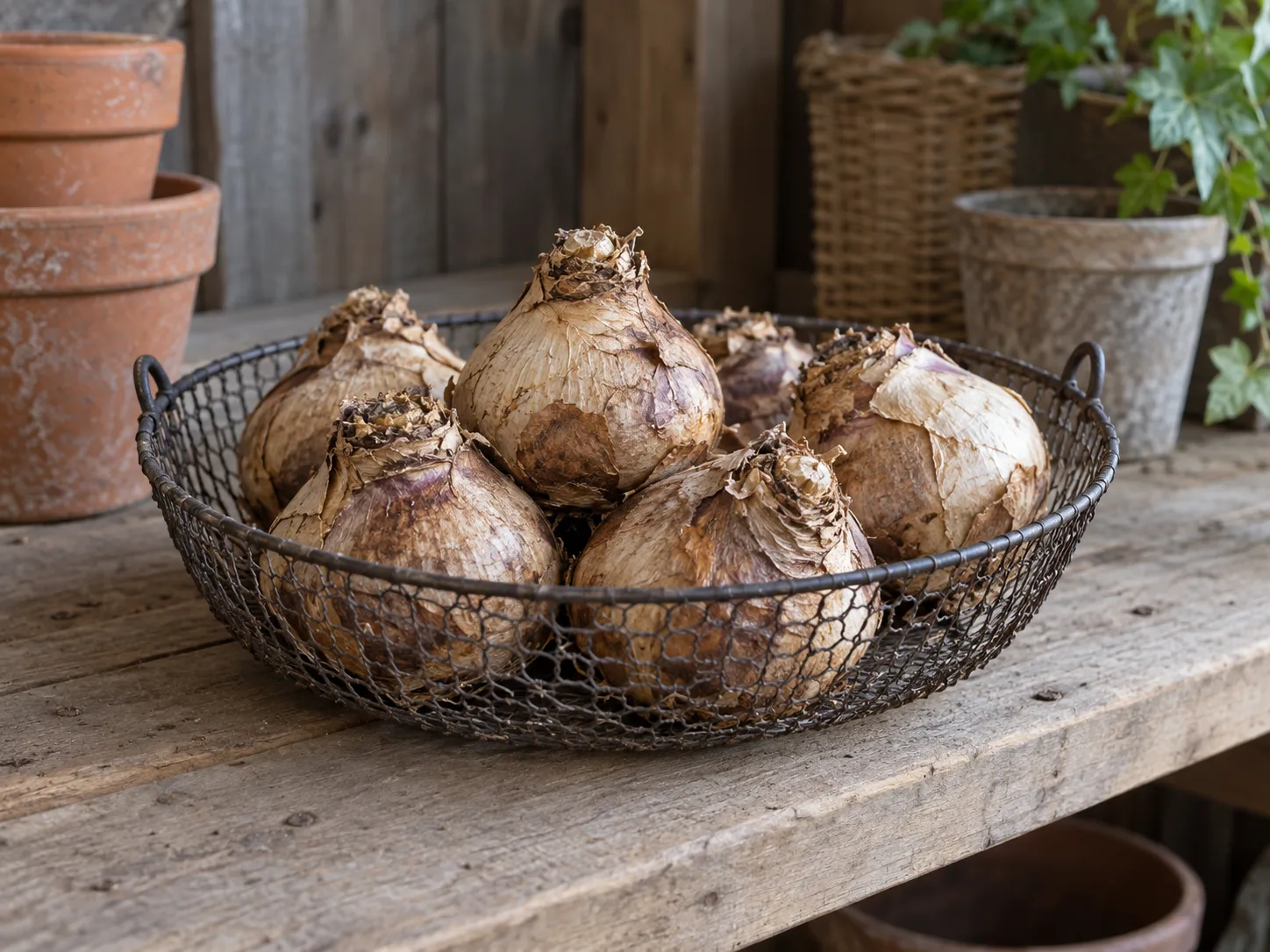
Storage must balance dampness and dehydration. A bulb that is wet or sweating in a closed bag needs more airflow; one that is becoming very light, wrinkled, or papery may be losing too much moisture. Move it to a more stable cool spot rather than wetting it. Keep stored bulbs away from ripening fruit, especially if bulbs are being chilled, and do not store them beside a furnace, sunny window, or hot shed roof.
Replant at a season that suits your climate
For bulbs that have been lifted, replant when the local fall planting window opens and the soil is workable, cool, and not waterlogged. Spring-flowering bulbs are generally planted in autumn; the Philadelphia Horticultural Society’s guidance includes hyacinths among bulbs planted in fall, and BBC Gardeners’ World also identifies autumn as the planting season for spring bulbs. Your local soil and winter pattern matter more than a fixed month copied from another climate.
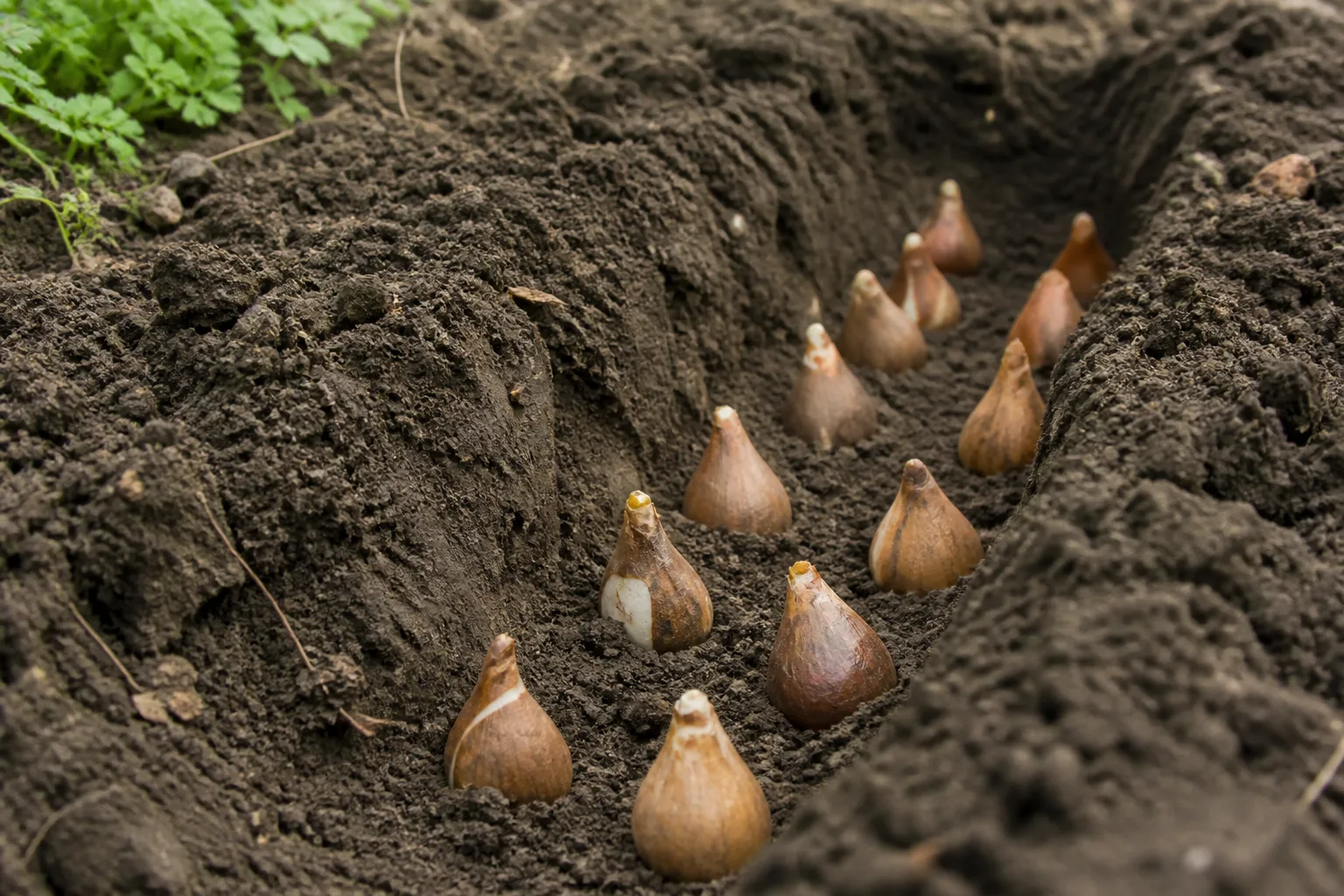
Set hyacinth bulbs with the pointed end upward and the broader root end down. Clemson Extension’s spring-bulb guidance places hyacinths about four to six inches deep and three to six inches apart; the exact depth should be adjusted to bulb size and local recommendations. Water after planting if the soil is dry, then make sure the site drains freely. If you have kept the bulbs in a pot, you can replant them into the bed or refresh the potting mix and use a container with drainage holes.
Potted hyacinths need a drainage plan
For a hyacinth growing in ordinary potting mix, keep the pot in a bright place after bloom and continue the same restrained watering while leaves remain green. A pot dries faster than a garden bed, but it can also stay saturated if it sits in a cachepot or saucer of water. Empty standing water and make sure the container has open drainage holes.
Once the leaves die back, either lift the bulbs and store them as described above or keep the pot in a cool, dry, protected place through summer. BBC Gardeners’ World suggests storing the pot somewhere cool over summer or digging the bulbs and replanting them in the garden. If your patio is exposed to repeated rain or intense heat, moving the dormant pot to a sheltered but ventilated location is more useful than leaving it in a wet corner. Resume watering when new growth appears, not while the bulb is dormant.
Forced hyacinths: set realistic expectations
A hyacinth forced indoors has been prompted to flower outside its natural season, often after a period of chilling. Treat its next bloom as uncertain, especially if it grew in a bulb vase or another water-only setup. A forced bulb has spent stored reserves on the display, and water-grown bulbs may not have had the same rooted, soil-based growing period as bulbs in a garden bed.
If the foliage is still green, keep it in bright light and let the leaves finish naturally; do not throw the bulb away while its leaves are still working. After it goes dormant, you can try planting a sound bulb outdoors in the appropriate fall window and allow it to experience a normal growing and resting cycle. It may produce leaves without a strong flower spike at first, or fail to return. Rutgers Cooperative Extension cautions that forced bulbs seldom rebloom outdoors, so this is a low-stakes recovery attempt, not a promise. If you need a dependable indoor display on a particular date, a fresh prepared bulb is more predictable than a previously forced one. BBC Gardeners’ World’s forcing guidance describes chilling as part of bringing spring bulbs into indoor flower; that is a distinct process from simply storing a dormant garden bulb over summer.
Mistakes that reduce the chance of another bloom
The most damaging shortcut is cutting green leaves as soon as flowers fade. A tidy bed is tempting, but removing the foliage early deprives the bulb of the time it needs to rebuild reserves. Hide the leaves with neighboring plants or tolerate the fading patch until the foliage has finished.
Other common mistakes are lifting too early, watering dormant bulbs heavily, keeping stored bulbs in sealed plastic, and planting them into soil that stays saturated. Avoid treating fertilizer as a rebloom switch, too. Bulb performance depends on healthy foliage, suitable seasonal conditions, drainage, and the plant’s own vigor; one feed cannot compensate for a bulb that is diseased, exhausted, or poorly adapted to the climate.
Decide which bulbs are worth saving
A firm, dry bulb with intact outer scales is a reasonable candidate to keep. A small bulb is not automatically dead, but it may take time to build to flowering size. If you have a large clump, prioritize the firmest full-size bulbs and set tiny offsets aside in a separate place where they will not be mistaken for guaranteed bloomers.
Do not save bulbs that are soft, leaking, badly cut, or foul-smelling. A little dry soil or a naturally papery outer skin is not a problem; persistent dampness, spreading mold, or a soft base is. If an entire bed has repeatedly produced weak, diseased growth, improving drainage or replacing the planting may be more sensible than keeping every bulb. The goal is a healthy next cycle, not saving a bulb at any cost.
A simple after-bloom timeline
- Flowers fade: Remove the spent flower spike; leave all green foliage.
- Leaves stay green: Keep the plant in light and water only when the soil is drying. Feed a container-grown bulb modestly if you choose, following the product label.
- Leaves yellow and wither: Cut foliage at ground level. In a well-drained bed, leave bulbs in place if they perform well; otherwise lift carefully.
- Bulbs are dormant: If lifted, let their surfaces dry, sort them, and store them in a cool, dry, ventilated place. Check them occasionally.
- Fall planting season: Replant stored bulbs in workable, well-drained soil, or return the stored pot outdoors when conditions suit your local climate.
Conclusion
Saving hyacinth bulbs starts with patience, not digging. Remove the faded flower, keep the leaves while they are green, and let them yellow naturally; that is the step that gives the bulb its best chance to return.
After the foliage dies back, leave bulbs in a healthy, well-drained bed if they are flowering reliably. Lift them when wet summer soil, a container, crowding, or a need to manage winter chilling makes storage useful. Keep saved bulbs dry, cool, and ventilated, and treat forced bulbs as a trial rather than a promise. The right route depends on your site, but the timing rule is simple: do not cut or store a still-green hyacinth.