How to Care for Succulents in Winter: Water, Light, Cold
Learn how to care for succulents in winter with a soil-first watering plan, brighter light, cold protection, pest checks, and spring transition tips.
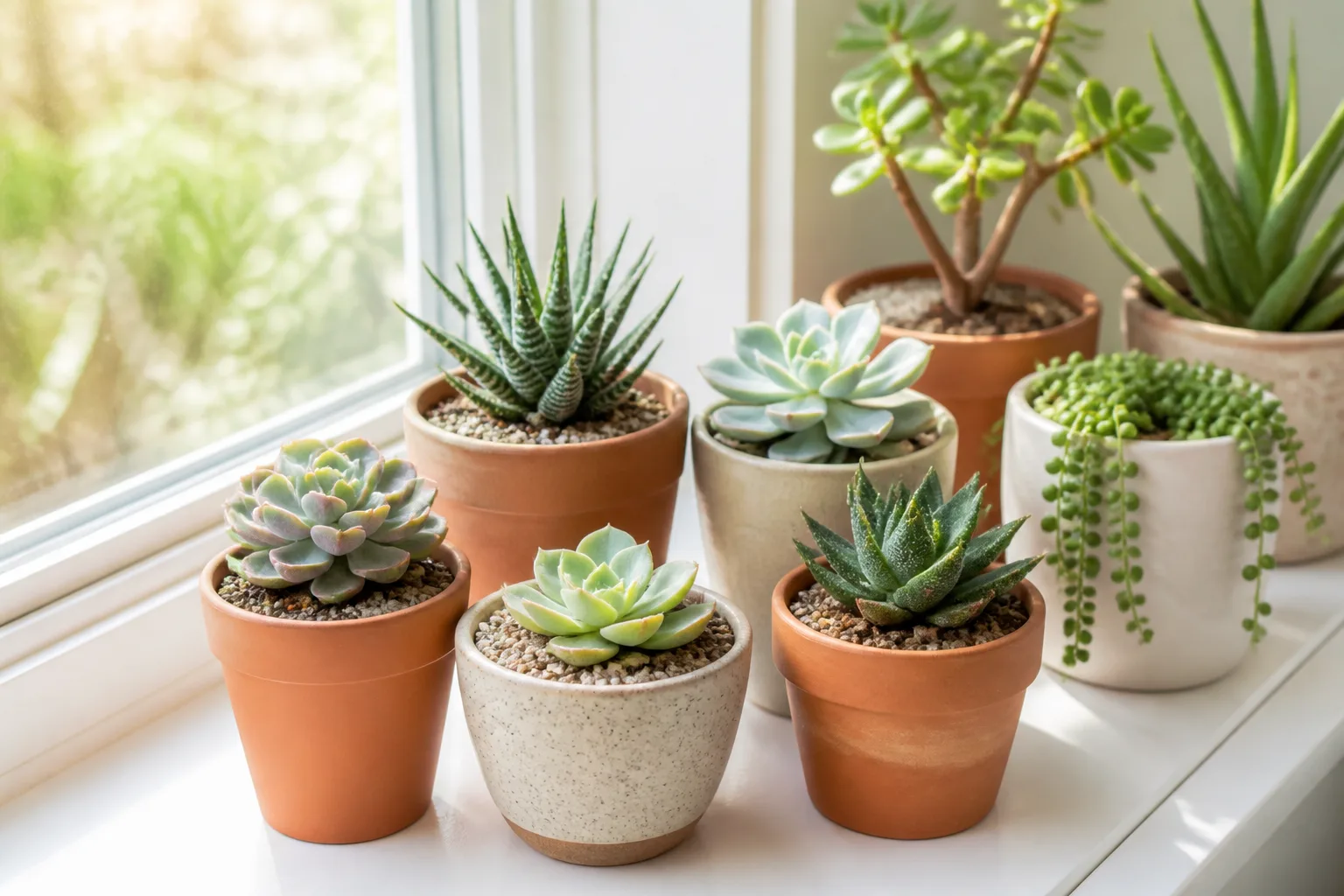
Winter succulent care is less about adding a special product and more about removing summer habits at the right time. Shorter days and cooler roots slow growth, so most desert succulents need more light, less frequent watering, no routine fertilizer, and protection from cold wet conditions.
The important word is most. “Succulent” describes a water-storing adaptation, not one universal schedule. An echeveria, aloe, jade plant, haworthia, sedum, Christmas cactus, and aeonium can respond very differently to winter. Start by identifying whether yours is tender or hardy, summer-dormant or winter-growing, and indoors or outside. Then adjust care around what the plant and its soil are actually doing.
Start with the winter rule: bright light, dry roots, protected tissue
Use this five-part rule as your winter baseline: maximize usable light, let the root zone dry appropriately, keep the plant away from freezing and sharp drafts, stop feeding while it is not growing, and keep air moving around dry foliage. This is a better starting point than a universal “water every two weeks” reminder because the same pot can dry in four days beside a heater or stay wet for a month in a cool, dim room.
The Royal Horticultural Society describes most indoor cacti and succulents as bright-light plants that benefit from a winter rest, with minimal watering and cooler nights for many types. Its guidance also calls out exceptions such as Christmas cactus, orchid cactus, and Rhipsalis, which are not managed like desert succulents. RHS guidance for houseplant cacti and succulents is a useful species-level check when the generic rule does not fit.
Decide whether your succulent should stay outside
Do not decide from the word “succulent” alone. Check the plant tag, species name, nursery information, or a reliable botanical reference before leaving a container outside. A plant that tolerates a light frost in a dry, sheltered rock garden may fail in a small pot exposed to wind and repeated winter rain because the roots freeze faster and the mix stays wetter.
Tender types to move indoors
Most common nursery succulents sold as houseplants should come inside before frost. Echeveria, aloe, jade, many kalanchoes, haworthias, gasterias, and tender aeoniums are safer indoors when nights become consistently cold, especially if the pot is small, the plant is newly purchased, or the forecast includes freezing rain. A practical move-in trigger is the first run of nights approaching the plant’s known minimum, not the first morning you find ice on the leaves.
Temperature numbers are only rough guardrails. A tender plant in a windy, wet pot can be damaged above freezing, while a known hardy sedum in very free-draining soil may handle a colder spell. If you cannot verify the cultivar’s tolerance, protect it as tender and move the container to a bright, sheltered location before the cold snap.
Hardy types that can overwinter outside
Some sedums, sempervivums, and certain Opuntia are genuinely cold-hardy, but hardiness does not mean “leave the pot in a puddle.” The RHS recommends warm, sheltered positions, very free-draining gritty compost, and protection from excess winter rain for hardy cacti and succulents. Its hardy-succulent growing guide also notes that container-grown plants can be moved under cover in cooler regions.
For an outdoor container, move the pot beside a wall or under an eave where it receives light but less rain. Make sure the drainage hole is open, keep the container off a cold, wet surface if possible, and use a breathable cover or shelter that still allows airflow. RHS winter-damage advice likewise emphasizes shelter, container insulation, and protection before frost. Container insulation protects roots; it does not make a tender species hardy.
Move outdoor succulents inside without importing pests
Bringing a pot indoors is a quarantine event, not just a change of address. Before the move, remove dead leaves and weeds from the soil surface, brush away debris, and inspect leaf joints, rosettes, pot rims, and undersides for cottony mealybugs, scale, fine webbing, or sticky residue. Check the drainage hole too; pests and old wet debris often hide beneath the pot.
Rinse or wipe the plant only when the foliage can dry quickly, and do not bring a visibly infested plant into a crowded plant room. Place arrivals away from your established houseplants for about two weeks while you inspect them repeatedly. If you find a pest, isolate the plant and use a treatment appropriate for that pest and plant; do not compensate for an infestation by keeping the plant constantly wet.
Repot only when the existing mix is sour, compacted, pest-filled, or staying wet far too long. Healthy roots do not need a disruptive winter repot just because the calendar changed. If a repot is necessary, use a container with a drainage hole, remove only damaged roots, and allow the fresh mix to dry according to the plant’s condition rather than watering immediately out of habit.
Give indoor succulents the brightest safe light
Winter light is weaker and arrives for fewer hours, so a window that was intense in July may be the best location in January. Put desert succulents close to the brightest unobstructed window you have, while keeping foliage from touching cold glass. South- and west-facing windows often provide more usable winter light in the Northern Hemisphere; east-facing light can be a gentler option for plants that scorch easily.
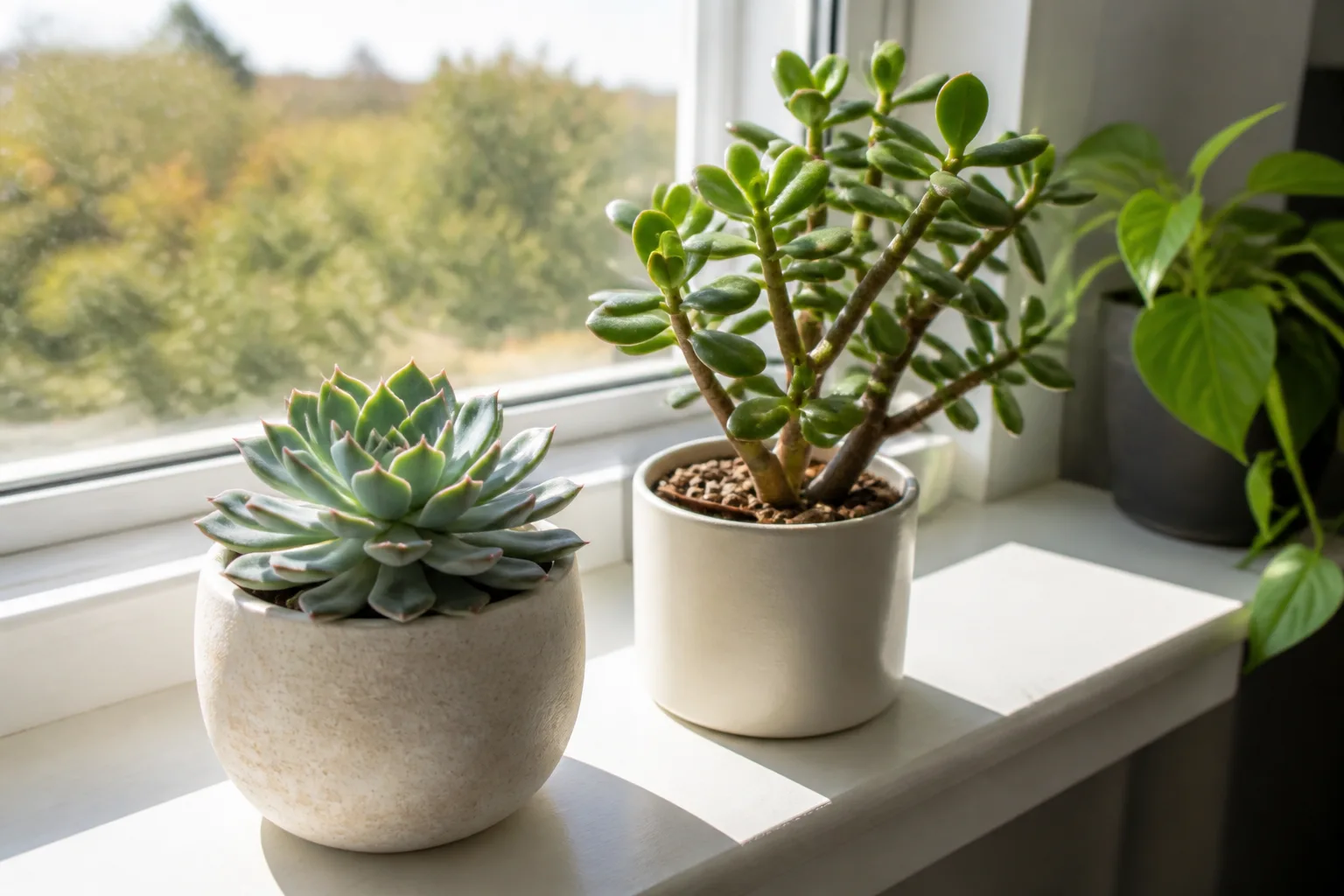
Rotate the pot occasionally so growth does not lean toward one side, and clean dust from smooth leaves with a soft cloth or brush. Watch new growth for evidence that the placement works: compact leaves and steady color are reassuring, while long gaps between leaves, a pronounced lean, or a flattened rosette indicate that the plant is not receiving enough light.
More sun is not automatically safer. A plant moved straight from a shaded store to bright winter glass can still scorch, especially when the glass magnifies afternoon rays. Increase direct exposure over several days, use a sheer curtain during the adjustment, and move the plant back if it develops sharply defined bleached or tan patches.
If the brightest window is still dim, use a grow light on a consistent schedule and follow the fixture’s distance instructions. A light that is too far away may not prevent stretching; one that is too close can heat or bleach leaves. Correct the light before increasing water, because a stretched succulent does not need a drink to fix a light problem.
Keep temperatures steady and drafts controlled
Most tender desert succulents prefer stable indoor conditions rather than a dramatic cycle between cold glass and hot forced air. Keep them away from radiators, heat vents, fireplaces, and doors that open frequently to the outside. The air above a heater can be very dry while the pot remains wet, which creates the misleading combination of shriveling leaves and waterlogged roots.
Many growers can keep ordinary indoor succulents comfortable in a normal living space, provided temperatures do not approach freezing and the plants are not pressed against a cold pane. For plants that benefit from a true winter rest, a cool, bright room can work, but do not lower temperature and continue summer watering. The RHS gives 8–10°C (46–50°F) nights as a rest condition for many indoor cacti and succulents; that is a species-and-setup choice, not a reason to chill every houseplant. Practical indoor guidance from Spike & Bloom also stresses avoiding both cold drafts and heat vents.
Winter-growing exceptions deserve separate treatment. Aeoniums may grow more actively in cool seasons, and Christmas cactus or Rhipsalis usually want more regular moisture and less harsh direct sun than desert rosette succulents. If the plant is making new leaves or flower buds in winter, use its active-growth signals rather than forcing a dry rest.
Water by root-zone dryness, not a calendar
Most winter losses come from watering a slow plant on a summer schedule. Cooler roots, shorter days, lower light, and reduced growth mean that a pot often stays wet longer. “Every two weeks” can therefore be too much for one succulent and too little for another; the reliable trigger is the condition of the mix and the plant’s tissue together.
Test moisture before you pour
Push a wooden skewer or chopstick deep into the root zone, then pull it out and inspect whether damp mix clings to it. You can also lift the pot before and after a thorough watering to learn its weight, or use a moisture meter as a comparison tool rather than an unquestioned verdict. Check more deeply than the dry surface, especially in a large decorative pot with a small nursery pot inside.
Dry soil plus firm, slightly wrinkled leaves usually points toward thirst. Damp soil plus soft, translucent, yellowing, or dropping leaves points toward excess moisture or root trouble. A wrinkled leaf by itself is not permission to water; soil condition comes first. If the mix is still damp, wait and investigate light, temperature, roots, and drainage instead.
Water thoroughly when the pot is ready
When the root zone has dried enough for that species and the plant is not facing freezing conditions, water the soil thoroughly until excess flows from the drainage hole. Let the pot drain completely, then empty the saucer or cachepot. Small sips that wet only the surface can leave the deeper mix dry while creating a damp collar around the stem.
For many indoor desert succulents, a winter interval of several weeks is plausible, but it is not a prescription. A bright, warm home may dry a small terracotta pot faster than a cool room with weak light. Outdoor hardy plants in cold, wet weather may need no supplemental water at all. Avoid watering a plant that is about to freeze or a pot that cannot drain.
Make winter potting decisions carefully
Winter is when a tolerable summer mix can become a liability. Use an airy, gritty succulent medium that drains freely, and make sure the pot has an unobstructed hole. A decorative container without drainage is safe only when the plant remains in a separate draining nursery pot that you remove for watering.
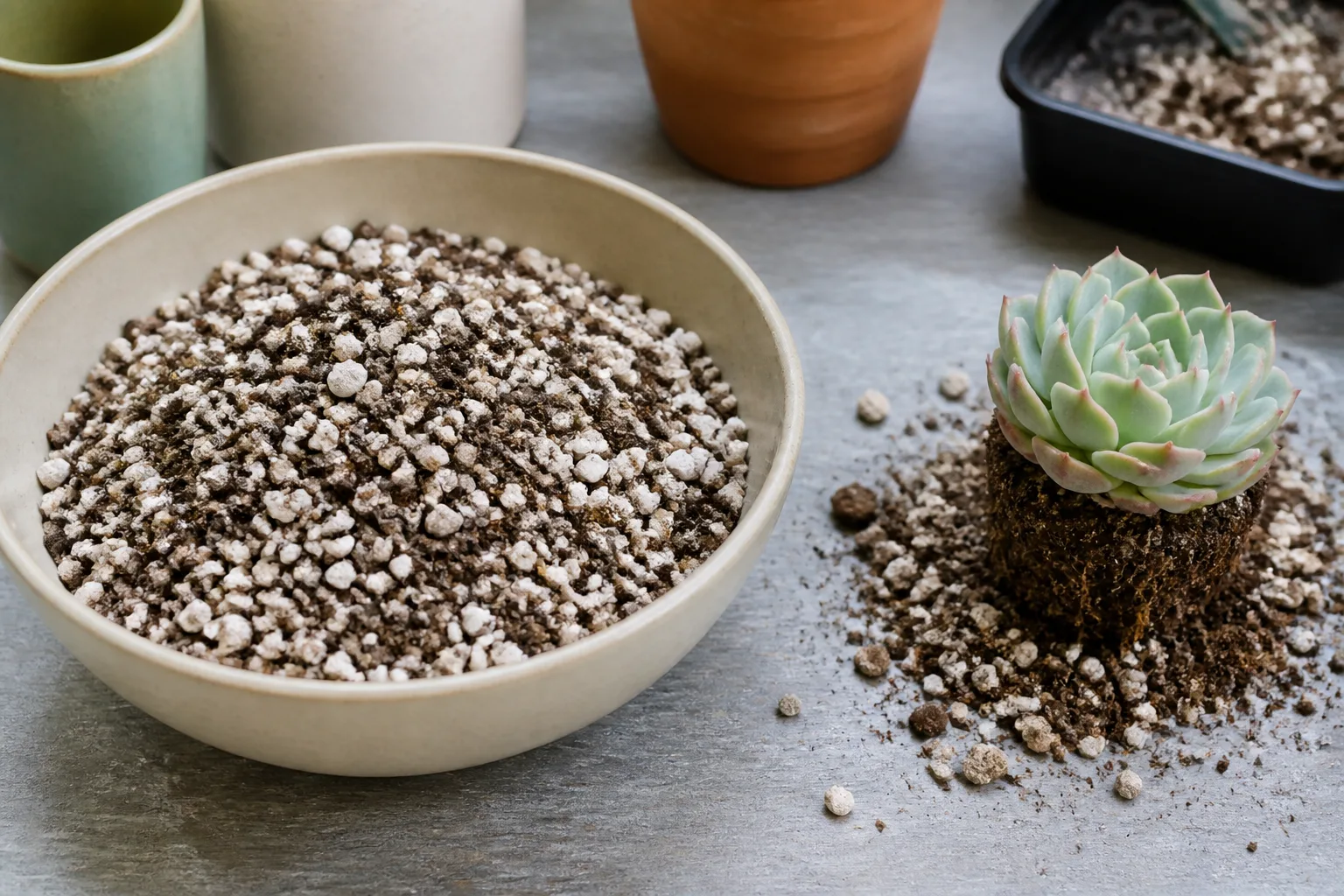
Do not solve slow dry-down by putting a tiny succulent in a much larger pot. Extra soil holds extra water around a small root system and can stay wet long after the surface looks dry. Terracotta can help a careful grower see faster dry-down, but it is not a substitute for appropriate soil, light, and watering technique.
The RHS advises against waterlogged compost and warns that an oversized pot can stay too wet and encourage rot. If you find a dense, peat-heavy mix that remains damp for weeks, plan a better pot and mix for the next safe repotting window rather than repeatedly adding small amounts of water to compensate.
Do not fertilize a succulent that is resting or barely growing. Roots cannot use much of the extra nutrition when light and growth are limited, and salts can accumulate in the mix. Feeding is more appropriate when the plant shows sustained new growth and has enough light to use it.
Repotting is also usually a spring job for indoor cacti and succulents. Make an exception for an immediate problem—root rot, a broken pot, severe pest contamination, or a mix that will not drain—but do not disturb healthy roots to “prepare” for winter. A plant with stable tissue, good drainage, and a suitable pot benefits more from a consistent location than from a fresh container it does not need.
Keep humidity modest and air moving
Most desert succulents do not need a pebble tray, misting routine, or humidifier. Their leaves already store water, and damp air combined with low light and slow dry-down can increase the risk of rot and pest problems. Keep a little space between pots, avoid overcrowding a windowsill, and provide gentle air movement without blasting the plant with a cold draft.
This does not mean every succulent wants desert-dry air. Christmas cactus, orchid cactus, and Rhipsalis are rainforest-associated succulents and have different moisture and light preferences. Manage the plant you have, not the label “succulent.” If a humidifier is needed for other plants in the room, place desert succulents away from the plume and monitor whether their soil is drying more slowly.
Clean debris and inspect for winter pests
Remove dead leaves that are trapped beneath a rosette or sitting on damp soil. Brush dust from spines and foliage with a soft brush, and wipe smooth leaves gently when conditions allow them to dry. This is simple maintenance, but it also makes early pest and rot symptoms easier to see.
Inspect weekly during the first month after moving plants indoors, then continue periodic checks. Mealybugs look like small cottony clusters, scale appears as fixed bumps or shells, and spider mites may leave fine webbing or a dull, stippled surface. Isolate a plant at the first sign of an infestation and treat according to the product label and the pest involved. Avoid broad, repeated spraying in a dim, stagnant room; improving light and airflow is part of making treatment work.
Diagnose common winter symptoms
Winter symptoms overlap, so start with three observations: Is the soil wet or dry? Is the tissue firm or soft? Is the growth compact or stretched? That quick triage is more useful than matching one leaf color to one cause.
Wrinkles, softness, and leaf drop need different responses
Wrinkled leaves with fully dry soil can mean the plant is using its stored water. Give a thorough drink only if the plant is in a safe temperature range and the pot drains, then wait for the next appropriate dry-down. If leaves remain wrinkled while the soil stays wet, suspect damaged roots rather than thirst; adding water can accelerate the decline.
Soft, translucent leaves, a collapsing base, black or brown tissue, a sour smell, or leaves dropping from a wet pot are warning signs of overwatering and possible rot. Stop watering, move the plant to brighter light with good airflow, and inspect the roots if the symptoms progress. A firm plant that has simply shed an old lower leaf is a different situation from a crown that feels soft.
Stretching and cold patches point to different stresses
Long, thin growth and wide leaf spacing are usually etiolation, meaning the plant is reaching for more light. Move the plant closer to a bright window or add a properly positioned grow light; watering more will not make stretched growth compact again. Prune or propagate later, when active growth and light make recovery more reliable.
Cold injury often appears as water-soaked, pale, gray, tan, or blackened patches after a freeze or contact with cold glass. Move the plant to a stable, protected location and do not immediately cut every discolored area if the tissue is still changing. Once the damage is clearly dry and dead, remove it with a clean blade. The RHS lists excessive cold, insufficient light, and overwatering as separate causes of disfigured or failing succulents, which is why the soil and exposure history matter together.
Rescue a succulent when root rot starts
If the plant is soft at the base or the soil stays wet far beyond a normal dry-down, unpot it rather than guessing. Gently remove the mix and inspect the roots and stem. Healthy tissue is firm; rotten tissue is soft, dark, slimy, or foul-smelling.
Cut away damaged roots or stem sections with a sanitized blade, keeping only tissue that is clearly firm. Let fresh cuts dry and callus in a warm, airy, shaded spot before placing the plant into fresh dry mix. Do not water immediately just because the plant has been repotted. A crown or stem that is soft throughout may not recover, but a firm top or clean cutting can sometimes be propagated after it has dried.
The rescue is not complete when the plant is in a new pot. Correct the condition that caused the rot: a dim window, oversized container, compact mix, blocked drainage hole, cold wet location, or repeated small sips of water. Otherwise, the same problem will return in the new soil.
Return to active care when spring growth begins
Resume summer-style care gradually, not on a date printed on the calendar. Look for steady new leaves, unfurling growth, fresh roots, flower development, or soil that begins drying noticeably faster in the same location. Those are signs that the plant is using more water and can make better use of nutrients.
When growth resumes, increase watering only as the mix requires, continue to let excess drain, and introduce fertilizer at a conservative rate appropriate for the plant. If you move a plant outdoors, acclimate it to stronger sun and greater wind over one to two weeks. A succulent that spent months behind glass can scorch when placed directly into midday sun, even if the outdoor location is ultimately ideal.
Conclusion
The best way to care for succulents in winter is to match care to cold tolerance, light, root-zone moisture, and actual growth. Move tender plants before frost, keep hardy plants sheltered and dry, give indoor plants the brightest safe window, water only after appropriate dry-down, and stop trying to solve winter problems with more water or fertilizer.
If something looks wrong, check the soil before the leaves tell you what to do. Dry soil and wrinkles call for a measured drink; wet soil and softness call for restraint and a root check; stretching calls for light; cold patches call for protection. That simple sequence carries most succulents safely to spring.