How to Grow and Care for Witch Hazel
Keep witch hazel healthy and flowering: choose a site, water through establishment, prune at the right time, and tell American from winter-blooming types.
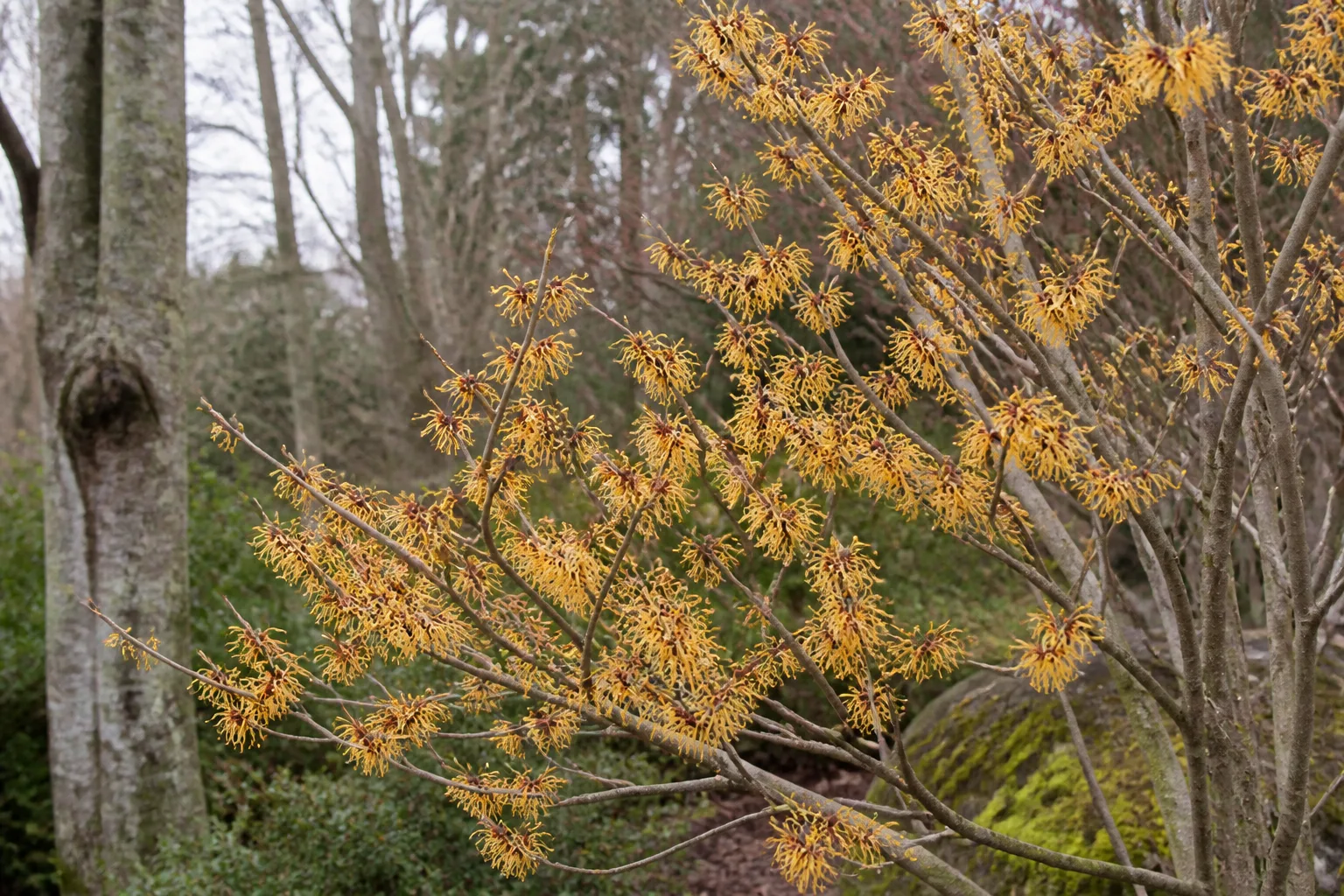
Witch hazel is a large, deciduous shrub or small tree with a rare garden advantage: fragrant, ribbon-petaled flowers open when many other woody plants are bare. The first care decision is to check the label. American witch hazel, Hamamelis virginiana, usually flowers in fall, while other species and hybrids are known for midwinter or late-winter color. That difference affects what you should expect from the plant and when to prune it.
Once established in a suitable site, witch hazel needs little routine attention. Give it room to reach its mature size, moisture-retentive soil that still drains, and enough light for good flowering. The main avoidable setbacks are letting a young plant dry out, leaving its roots in saturated soil, and cutting back healthy branches without considering where next season’s flowers form. NC State Extension describes American witch hazel as drought-intolerant, low-maintenance, and best-flowering in full sun.
Witch Hazel at a Glance
| Need | Practical target |
|---|---|
| Plant | American witch hazel, Hamamelis virginiana, unless the nursery label names another species or hybrid |
| Mature size | Often 15–30 feet tall and 15–20 feet wide; allow for a broad, multi-stemmed outline |
| Hardiness | Often listed around USDA zones 3–8 for American witch hazel; verify the species and local conditions |
| Light | Full sun for the strongest flowering; partial shade is acceptable, especially where afternoons are hot |
| Soil | Moist, humus-rich, and well-drained; slightly acidic to neutral is a useful target |
| Water | Keep a newly planted shrub evenly moist; water established plants during prolonged dry spells |
| Flowers | H. virginiana flowers in fall; other species and hybrids often flower later |
| Pruning | Usually unnecessary; remove dead or poorly placed growth after flowering |
| Space | Plant where the mature shrub can spread without repeated hard pruning |
The size and flowering window vary by species, cultivar, and growing conditions. The University of Connecticut Plant Database records American witch hazel commonly at 10–15 feet but notes that it can become much taller; NC State gives a 15–30-foot height range. Treat nursery dimensions as a planning estimate, not a promise that a young plant will stay compact. Published hardiness ratings also differ: UConn lists zone 4, possibly 3, while Gardenia’s species profile lists zones 3–8. Use that as a broad reference, then check local nursery or extension guidance for the plant you bought.
Identify the Witch Hazel You Have
“Witch hazel” names a group of Hamamelis shrubs, not just one plant. Before you choose a planting position or decide that a shrub is flowering late, look for the botanical name on its pot tag, receipt, or nursery record. The American species is H. virginiana; other common garden choices include vernal witch hazel (H. vernalis), Chinese witch hazel (H. mollis), and hybrids such as H. × intermedia.
This matters most for bloom timing. A gardener expecting February flowers may be disappointed by a healthy American witch hazel that finished blooming in November. Conversely, a late-winter hybrid should not be judged by the calendar of the native fall-flowering species. A plant’s label gives a better starting point than the common name alone.
American Witch Hazel: Fall Flowers
American witch hazel is native to eastern North America, where it grows along woodland margins and stream banks. Its yellow, fragrant flowers have four narrow, crinkled petals and typically open from October into December, though local weather can shift the display. The flowers may overlap with the shrub’s yellow fall foliage, and the plant can carry developing fruit while new flowers are present. NC State and the RHS plant profile describe the autumn flowering habit and the plant’s woodland-edge origins.
This species is a good choice when you want a native shrub with fall interest, a loose screen, or a naturalistic edge planting. It can grow into a substantial, open shrub, so use its eventual width when choosing a position rather than treating it like a small foundation plant. Its seed capsules mature over time and release dark seeds when they split; avoid placing a seedling where volunteer plants would be unwelcome.
Vernal and Hybrid Witch Hazels: Winter Flowers
Vernal, Chinese, and hybrid witch hazels are often selected for flowers in the colder part of winter or early spring. Their exact bloom season and color depend on the species and cultivar, so read the botanical label and look for a local nursery’s flowering description. Gardenia’s witch-hazel profiles compare H. virginiana with H. mollis, H. vernalis, and named hybrids; the Gardeners’ World pruning guide also identifies H. mollis ‘Goldcrest’ as a witch hazel.
The care principles overlap, but the calendar does not. A late-winter hybrid may need its pruning window shifted later than an autumn-flowering H. virginiana. If you cannot confirm the species, observe one full flowering cycle before making substantial cuts; a few months of patience can prevent the most common mistake of pruning off the next display.
Choose a Site That Stays Moist but Drains
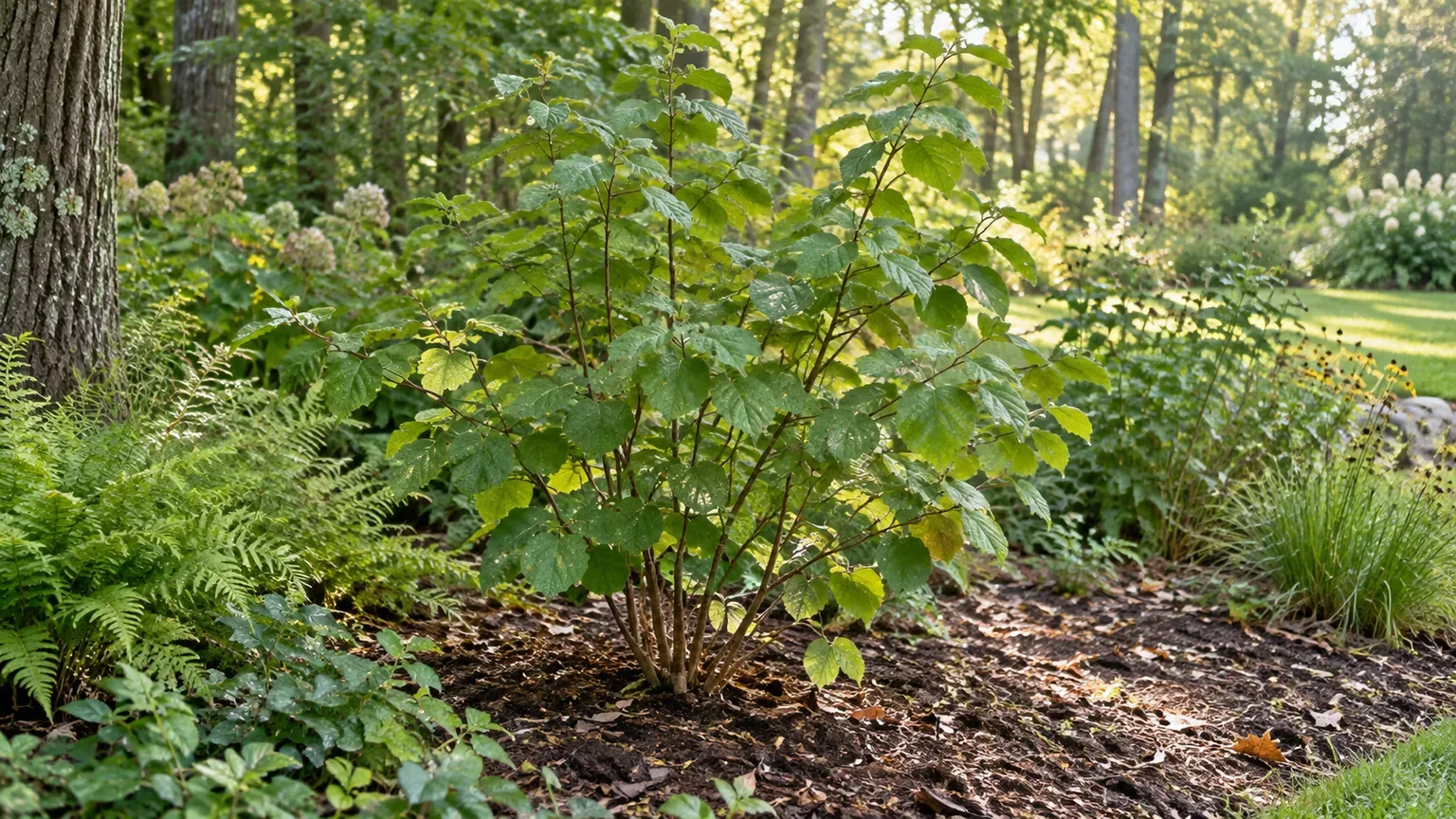
Witch hazel does best where its roots can explore a stable, cool soil profile without sitting in standing water. Think woodland edge rather than a permanently wet ditch: organic matter helps hold moisture, while drainage keeps air available to roots. Choose a permanent place early because a mature shrub is wide, multi-stemmed, and more difficult to move than its nursery-pot size suggests.
Leave room for the plant’s mature canopy and for the flowers to be seen. A location beside a path, a window, or a garden approach makes the late-season bloom easier to notice, but keep branches clear of walkways and allow space around nearby trees. NC State lists witch hazel for native, winter-interest, and pollinator gardens; the University of Minnesota’s UFOR Nursery and Lab likewise notes that it flowers best in full sun while tolerating a broad range of light.
Sun, Shade, and Exposure
For the most reliable flowering, choose a site with several hours of direct sun. Partial shade is still workable, and a little afternoon protection can help in a hot, exposed garden if the root zone tends to dry quickly. Deep shade is a poor choice when flowers are the main reason you are planting the shrub: the plant may survive, but it can become more open and offer a less impressive display.
Avoid a site exposed to persistent drying winds if you have a choice. Wind increases water loss from leaves and soil, and it can make winter bloom less visible or more weather-beaten. In a cooler climate, a sunnier position is usually preferable; in a hotter climate, prioritize dependable soil moisture and consider light afternoon shade rather than planting in deep shade.
Soil and Drainage
Aim for soil that holds moisture between waterings but drains after heavy rain. A loam with leaf mold or other well-rotted organic matter is a good fit. Witch hazel favors slightly acidic, humus-rich soil, but it can tolerate some clay when water does not remain around the roots. The RHS profile recommends moist but well-drained, humus-rich soil and notes that American witch hazel can grow in clay; NC State also lists clay tolerance alongside good drainage.
If the planting area stays puddled long after rain, fix the site or choose a raised, well-drained position before planting. Adding compost to the planting hole will not correct a high water table or compacted subsoil. In contrast, very sandy soil may drain so quickly that a new shrub needs more frequent checks and a wider mulch layer. A soil test is useful if the pH is very high or the shrub performs poorly, but avoid trying to force a precise pH number without testing the whole root zone.
Plant Witch Hazel Without Setting It Too Deep
Plant in fall or early spring when the ground is workable and temperatures are mild. Fall planting gives roots time to settle before summer heat, while early spring is useful where winters are severe or the ground stays frozen. Avoid planting into hot, dry weather unless you can maintain consistent watering through establishment.
Water the nursery pot before planting so the root ball is evenly moist. Dig a hole wider than the root ball but no deeper than the distance from its base to the root flare. Set the flare—the point where the first major roots meet the stem—at or just above finished soil level; a plant set too deep can remain stressed even if the soil and watering are otherwise right. Loosen circling roots gently when they are visible, backfill with the excavated soil, and water slowly to settle it around the roots.
Do not create a rich, sharply different pocket of potting mix inside ordinary garden soil. That can make the root zone dry at a different rate from its surroundings and does not solve poor drainage. Spread mulch over the root area after watering, leaving a clear gap around the stems. Then record the planting date and species label; those two details make later troubleshooting much easier.
Water and Mulch While Roots Establish
During the first growing season, check the root ball and surrounding soil instead of following a rigid calendar. Water slowly when the root zone begins to dry, especially during hot or windy stretches without rain. A brief sprinkle often wets only the surface; a slower soak encourages water to reach the new roots. After watering, check that the water actually penetrated the root ball rather than running down a gap between the potting mix and native soil.
As the shrub establishes, lengthen the time between waterings while continuing to check during drought. American witch hazel is not a shrub to leave dry for weeks simply because it is native. NC State describes it as drought-intolerant, and the University of Minnesota profile emphasizes moist, well-drained soil. A mature plant may use rainfall most of the year, but a long dry spell can still stress it and reduce the following season’s growth.
Apply a shallow, even layer of organic mulch over the root zone to slow evaporation and moderate soil temperature. Keep mulch several inches away from the stems; a wet mulch pile against bark encourages decay and hides suckers or damage. Refresh the layer as it breaks down rather than piling on thick layers year after year. If the soil remains soggy, stop adding water and address drainage instead of trying to correct the problem with more mulch.
Fertilize Only When Growth Calls for It
A healthy witch hazel in suitable soil usually does not need monthly feeding. Routine high-nitrogen fertilizer can push leafy growth without fixing shade, drought, or waterlogged roots—the problems more likely to limit flowering. Start with good soil preparation, a surface mulch, and reliable moisture rather than a fertilizer schedule.
If growth is unusually weak or leaves look pale across the whole shrub, first check moisture, light, root competition, and signs of injury. A soil test can show whether the soil is deficient or has an unsuitable pH. Correct a documented shortage at the recommended rate and timing; do not guess with repeated fertilizer applications. A thin top-dressing of finished compost can improve the surface soil over time, but keep it away from the stems and do not treat it as a substitute for drainage.
Prune Lightly and Protect Next Season’s Buds
Witch hazel usually needs little pruning beyond removing dead, damaged, crossing, or badly placed branches. Its natural multi-stem form is part of its appeal, so avoid shearing it into a tight ball. If you want a small-tree outline, select a few strong stems while the plant is young and remove lower competing shoots gradually rather than stripping a mature shrub all at once.
For a flowering shrub, prune after its flowers have finished. The exact month depends on the species: a fall-blooming American witch hazel can be pruned after its autumn display, while a later-blooming type should be pruned after its own flowers fade. NC State notes that flowers appear on old growth, so a hard cut made at the wrong time can remove the wood that would have carried flowers. Gardeners’ World’s witch-hazel advice is to shorten straggly shoots above a strong pair of buds and vary the cuts to preserve a natural shape.
Use clean, sharp hand pruners for small stems and a pruning saw for thicker branches. Cut back to a healthy side branch or just above a strong outward-facing bud; avoid leaving long stubs. If the shrub has outgrown its space, remove a limited number of the oldest stems at the base over more than one season. Repeated severe pruning is a sign that the site is too small for the plant, not a sustainable maintenance plan.
Propagate Witch Hazel
Seed is the straightforward home method if you have patience and a plant that produces viable seed. Layering is another option when a low branch can be bent to the soil and left attached while it roots. Softwood cuttings are often difficult, and named cultivars may not come true from seed; use a nursery-grown plant or a vegetative method when you need a particular flower color or habit. UConn lists seed propagation, difficult cuttings, and grafting for selected forms; the RHS profile describes sowing seed as soon as it is ripe or layering in autumn.
Grow from Seed
Witch hazel seed takes longer than most garden seed to germinate. The capsules mature over an extended period, then split and eject their dark seeds. Gather ripe capsules as they begin to turn woody but before they have opened, or collect freshly expelled seeds from a protected area. Label the species and date immediately; a seed tray without a label can be difficult to identify by the time seedlings appear.
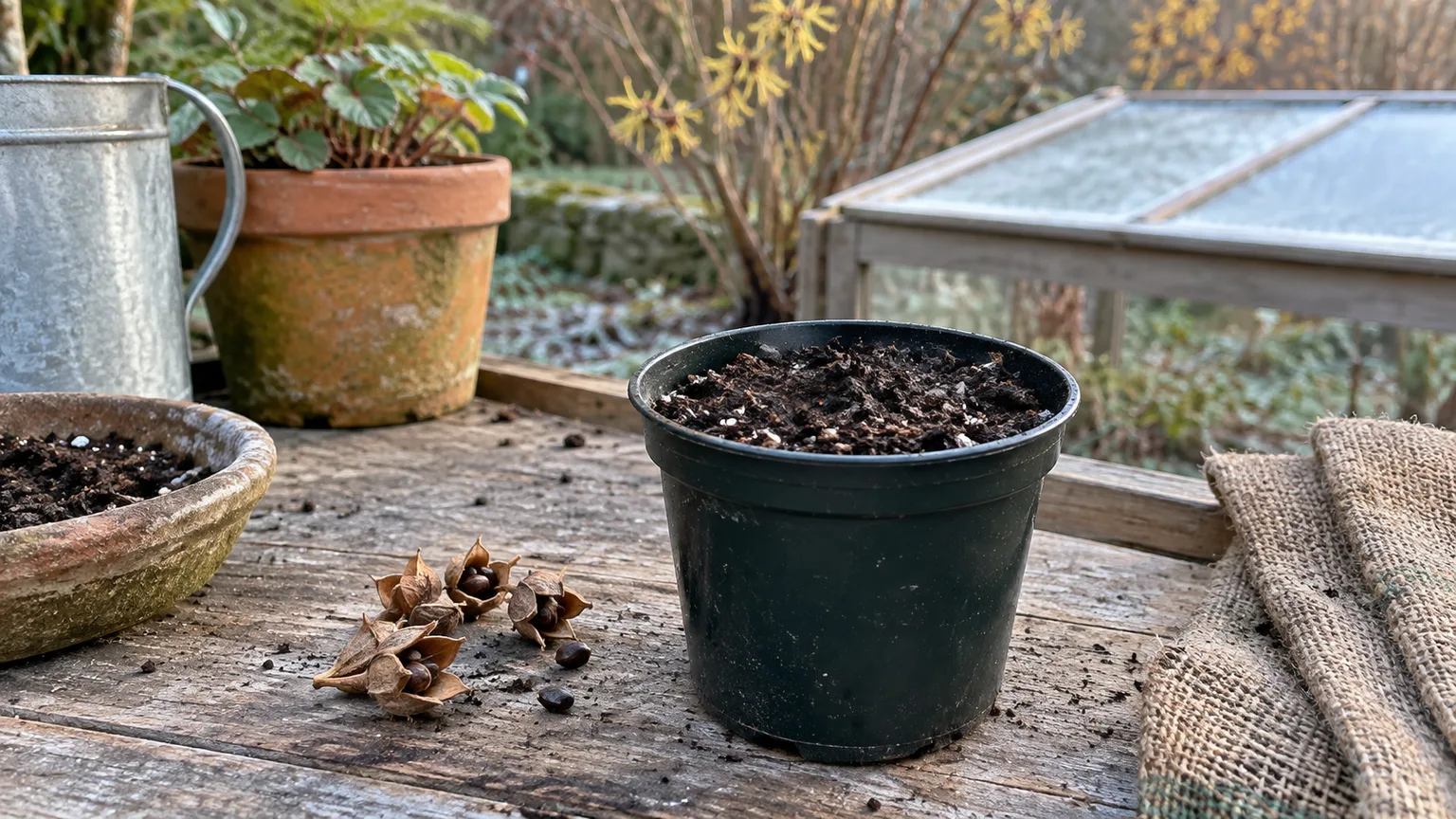
Sow fresh seed in a labeled pot or nursery bed and place it in a cold frame or a sheltered outdoor spot where the medium will remain lightly moist. Do not bury it in a warm room and expect quick results. The RHS notes that witch-hazel seeds may take two years to germinate, so keep the container through more than one season, protect it from drying out, and avoid mistaking the empty-looking pot for a failed batch. Once seedlings are large enough to handle, pot them individually and grow them on before planting into a permanent site.
Seed-grown plants can differ from their parent and may take several years to reach flowering size. This method is rewarding when you want to grow a native plant from fresh seed, but it is not the quickest route to a named cultivar or a flowering shrub. If you need a specific selection, buy a correctly labeled nursery plant instead.
Move a Rooted Sucker
Some witch hazels send up shoots near the base. A sucker can become a new plant if it has its own roots, but a shoot connected only to a shallow piece of stem may not establish. In early spring, loosen soil around the shoot and trace its connection before cutting. Preserve as many fine roots as possible and avoid digging through the parent’s main root zone.
Replant the rooted sucker promptly at the same depth, water it well, and keep its soil evenly moist while it recovers. If it wilts heavily or has very few roots, leave it attached for another season or choose a nursery plant. For a grafted cultivar, shoots emerging below the graft may belong to the rootstock and may not have the desired flowers; remove those rather than propagating them as the named cultivar. Keep any transplant small and protected from strong sun until new growth resumes.
Understand Flowering, Then Troubleshoot Missing Blooms
Start by confirming the species and its normal bloom season. H. virginiana generally flowers in fall, while H. vernalis, H. mollis, and many hybrids flower later. Climate and cultivar can move the display by several weeks, so compare the plant with the right species rather than with a generic winter-flowering calendar. The University of Connecticut’s species entry places American witch hazel’s bloom in October and November; the RHS notes flowers from mid- to late autumn.
If a mature shrub has not flowered, work through the likely causes in this order. First, check whether it is simply the wrong part of the year for that species. Next, look at the light: a plant in deep shade can grow leaves and stems while flowering weakly. Then consider summer drought, especially if leaves browned or growth stalled, and finally review pruning records. Cutting repeatedly before the flowering cycle can remove old wood and buds; stop pruning for a season and observe the next natural display.
Do not respond to a missing bloom by applying a large dose of fertilizer. More leaves do not guarantee more flowers, and excess feed will not correct shade, drought, or wrong expectations about flowering time. If the shrub is young, allow it to establish and build a branch framework before judging its full display. Keep notes on the species, bloom dates, water stress, and pruning; one season of records often reveals more than a quick change to several care factors at once.
Diagnose Brown Leaves, Galls, and Root Stress
Brown or scorched-looking leaves are symptoms, not a diagnosis. Begin with soil moisture. If the root zone is dry and the leaves are crisping from the edges, water thoroughly and then monitor the soil through the next dry spell. If the soil is persistently wet and leaves are yellowing, wilting, or dropping, stop routine watering and investigate drainage; saturated soil can injure roots even when the shrub appears thirsty above ground.
Look at the pattern before treating. A few damaged leaves after a hot, dry, or windy period point to a different problem from spots that spread across many leaves or dieback that advances down branches. Remove dead material with clean tools, improve airflow by taking out only congested or damaged stems, and avoid spraying a pesticide or fungicide before you know what you are treating. The RHS lists powdery mildew, coral spot, honey fungus, and Phytophthora root rot among possible diseases, while also describing witch hazel as generally pest-free.
Rounded or spiny growths on leaves may be galls caused by aphids or other small insects. They can look dramatic without being a sign that the entire shrub is failing. NC State lists witch-hazel gall aphids and other chewing insects among possible pests; inspect the plant’s overall vigor and whether damage is widespread before taking action. If only a limited number of leaves are affected, remove fallen debris and monitor the next flush rather than applying a broad treatment. For persistent dieback, expanding lesions, or a shrub declining despite corrected water conditions, send clear photos and a sample to a local extension service or qualified plant clinic.
Grow Witch Hazel in a Container Only Temporarily
Witch hazel can be held in a large container while young, but most species are not naturally compact patio shrubs. A plant that may reach 15–30 feet needs room for roots and a substantial crown; a pot restricts both and dries faster than garden soil. Container culture makes the most sense as a temporary stage before planting out, or for a verified compact selection that can be maintained in a sufficiently large, frost-resistant pot.
Use a container with open drainage holes and a stable, well-draining woody-plant mix. Keep the root ball evenly moist, checking more often in warm or windy weather, and never leave the pot standing in a full saucer. Protect the container from repeated freeze-thaw exposure in cold climates because roots in pots experience colder conditions than roots in the ground. When the plant begins drying very quickly, becomes top-heavy, or roots circle densely around the pot, move it into the landscape during a mild season rather than repeatedly shifting it into slightly larger containers.
Seasonal Care and Long-Term Expectations
In fall, check the soil moisture, refresh the mulch if needed, and enjoy the flowers of H. virginiana. Collect seed only if you are prepared to label and maintain it for a long germination period. In winter, leave healthy branches alone and protect a newly planted shrub from browsing if local deer or rabbits are damaging it; a simple barrier is often more dependable than repeatedly applying repellents.
In spring, prune only after the shrub has finished flowering and remove dead or damaged wood before shaping. As leaves expand, check whether the soil is drying faster than expected and replace compacted mulch with a loose, shallow layer. In summer, water during prolonged dry weather and avoid heavy pruning or late-season feeding that would push unnecessary new growth. Established plants need less attention than new ones, but “low maintenance” does not mean drought-proof.
American witch hazel also has ecological value beyond its flowers. NC State notes that its blooms are pollinated by noctuid moths and that the shrub supports the witch-hazel dagger moth; its fruit and seeds are used by wildlife. That makes a locally appropriate species useful in a native or woodland-edge planting, provided the garden has enough room for the shrub to mature. Keep the label with the plant so future gardeners know whether its flowers should arrive in fall or later in winter.
Conclusion
The best witch hazel care begins with the right plant in the right place. Confirm whether you have Hamamelis virginiana or a later-flowering species, give it room to reach its natural size, and plant it in soil that stays moist without remaining saturated. Full sun usually gives the strongest flower display, while partial shade is acceptable where the soil still holds moisture.
Water consistently while the shrub establishes, mulch without piling material against its stems, and skip routine fertilizer unless a soil test or clear growth problem gives you a reason to feed. Prune after flowering and keep cuts selective so you preserve the next cycle of old wood and buds. If you choose to grow from seed, expect a long wait; if you choose a container, plan for it to be a temporary home for a plant that wants to become a large shrub. Those few decisions do most of the work.