How and When to Harvest Zucchini for Best Flavor
Learn how and when to harvest zucchini using size, skin tenderness, and variety cues—plus the clean-cut method, storage tips, and fixes for giant fruit.
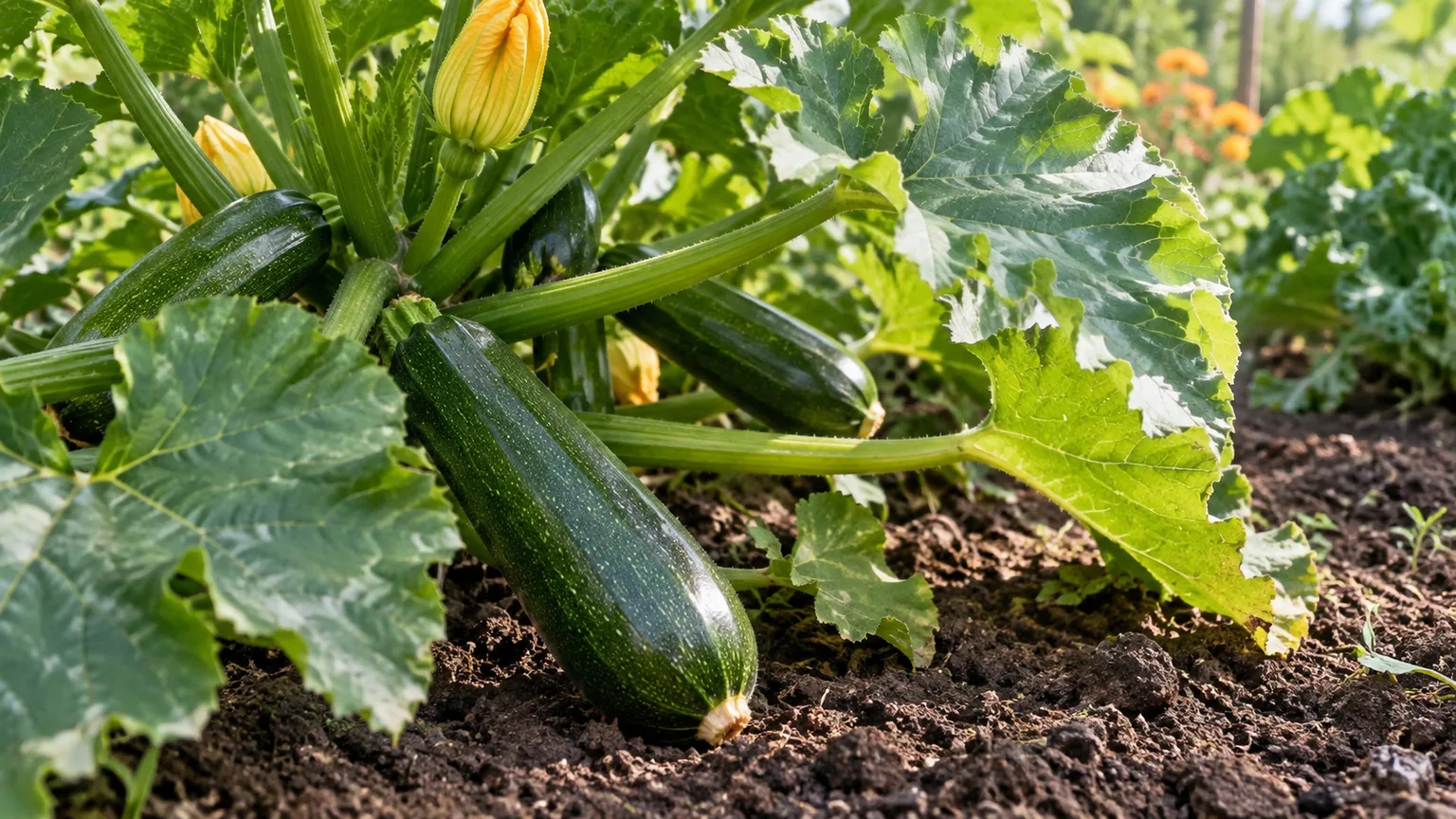
Zucchini is ready to pick while it is still an immature summer squash, not after it reaches its maximum possible size. For most elongated varieties, that means a firm fruit about 6 to 8 inches long and 1½ to 2 inches in diameter, with skin your fingernail can puncture easily. Smaller fruit is also excellent, especially if you want tender slices or whole baby zucchini.
The practical rule is simple: once a fruit looks usable, inspect it again tomorrow only if you specifically want it larger. In hot weather, zucchini can move from baby-sized to oversized surprisingly quickly. Regular picking gives you better texture, keeps seeds soft, and prevents a mature fruit from diverting the plant’s energy away from new flowers and fruit.
The short answer: pick zucchini young and check often
Unlike a tomato or pepper, zucchini does not need to change color to become edible. You are choosing the stage that gives the best balance of flesh, skin, seeds, and cooking ease. University extension recommendations commonly place elongated zucchini around 6–8 inches, but the best harvest size depends on the cultivar and the dish you have planned.
Think of 6–8 inches as a reliable starting range, not a pass/fail measurement. A pale yellow zucchini, a striped cultivar, and a round or scalloped summer squash may be ready at very different dimensions. The common thread is a tender rind, firm flesh, and seeds that have not become conspicuous and hard. The Royal Horticultural Society recommends harvesting courgettes even smaller—about 4–5 inches—when maximum tenderness is the goal.
Use size as a starting point, not the only test
Color is useful for identifying the variety and spotting damage, but it is a weak ripeness signal. A normal dark-green zucchini can be harvest-ready without looking different from one that is still growing. Instead, lift the fruit gently and examine the stem end, surface, and firmness. Iowa State University Extension likewise recommends judging summer squash by size and tender skin rather than waiting for a color change.
The fruit should feel heavy for its size, without soft or water-soaked patches. The skin should be smooth and easy to mark with a fingernail. If the rind resists your nail and feels hard, the zucchini has moved beyond the tender stage—even if it is still technically edible.
Choose harvest size by zucchini type
Variety descriptions are more useful than a universal ruler. Read the seed packet or plant label for the intended harvest stage, then use the texture tests below when the fruit’s appearance leaves you unsure. University of Maryland Extension lists different targets for elongated, yellow crookneck, and pattypan types.
| Type | Useful first target | What to look for |
|---|---|---|
| Elongated green or striped zucchini | 6–8 in. long, 1½–2 in. wide | Slim, glossy, tender skin; soft seeds |
| Yellow straightneck or crookneck | 4–7 in. long | Bright variety color, tender neck, no leathery rind |
| Pattypan or scalloped squash | 3–5 in. across | Small scallops, firm flesh, skin easy to puncture |
| Baby zucchini | 2–4 in. long | Entire fruit tender enough to cook whole |
Elongated green and striped zucchini
Green zucchini is often at its most versatile around 6–8 inches. At that point, it can be sliced, halved for grilling, spiralized, grated, or cooked whole if it is small enough. If you prefer very delicate texture, pick closer to 4–6 inches; if you need larger halves for stuffing, you can let a sound fruit go longer while accepting somewhat firmer seeds and flesh.
Do not let a supermarket image dictate your garden. Some cultivars are naturally short and thick, while others are long and slender. Compare several fruit from the same plant rather than judging one unusual specimen against a generic ideal.
Yellow, crookneck, and scalloped summer squash
Yellow squash is easiest to judge by its shape and skin rather than by length alone. Crookneck and straightneck types are usually tender when they are roughly 4–7 inches long, while scalloped pattypan types are often best around 3–5 inches across. Very small fruit can be excellent, but tiny fruit with a shriveled blossom may indicate pollination trouble rather than a harvest opportunity.
Round zucchini and other specialty types need their own benchmark. Pick one fruit at the size recommended for the cultivar, then cut it open after cooking; that first trial tells you more about the plant’s ideal harvest stage than a generic number can.
The signs that a zucchini is ready
Use three checks together: size, skin, and firmness. Size tells you whether the fruit is in the normal harvest window; skin tells you whether it is still immature; firmness tells you whether it is healthy enough to bring into the kitchen.
Tender skin and soft seeds
The skin of a young zucchini is thin but not fragile. It should have a fresh, unwrinkled surface and no collapsing areas. Inside, the flesh should be pale and moist, while the seeds are small, soft, and easy to eat. As the fruit matures, seeds enlarge, the center becomes more spongy, and the rind takes more effort to cut.
The thumbnail test
Press a clean thumbnail into the skin near the middle of the fruit. If you can puncture it with light pressure, the rind is probably tender enough for fresh eating. If your nail skids across a tough surface, harvest the fruit for a cooked use soon or expect to peel and seed it.
This test is especially helpful when a plant is producing pale, yellow, or ribbed fruit whose color does not clearly tell you anything. It is not a substitute for checking for rot: a soft spot, sour smell, leaking area, or fuzzy growth is a quality problem, not a sign of ideal ripeness.
How to harvest zucchini without hurting the plant
Zucchini stems are sturdy-looking but can split when a fruit is twisted, yanked, or pulled against a crowded leaf canopy. A clean cut leaves less torn tissue and gives you better control over the fruit and the plant.
Gather the right tools
Use a small sharp knife or clean bypass pruners. If the plant is prickly or your skin is sensitive, wear gloves and long sleeves; squash leaves and stems can carry irritating bristles. Keep a basket nearby so you do not drop fruit onto soil, and sanitize a blade if you have been cutting diseased tissue elsewhere in the garden.
Find hidden fruit before cutting
Look underneath broad leaves, around the crown, and behind stems. A zucchini that was invisible yesterday may already be too large today, particularly after a run of hot days and consistent water. Lift leaves by their stems instead of dragging them across the fruit, and avoid stepping into the plant’s root zone.
Before cutting, trace each fruit back to its own stem. This prevents an easy mistake: cutting a leaf stalk or breaking a neighboring baby fruit while trying to free the harvest. If a fruit is wedged under a leaf, move the leaf aside and cut from the fruit’s stalk rather than forcing it through the canopy.
Make one clean cut
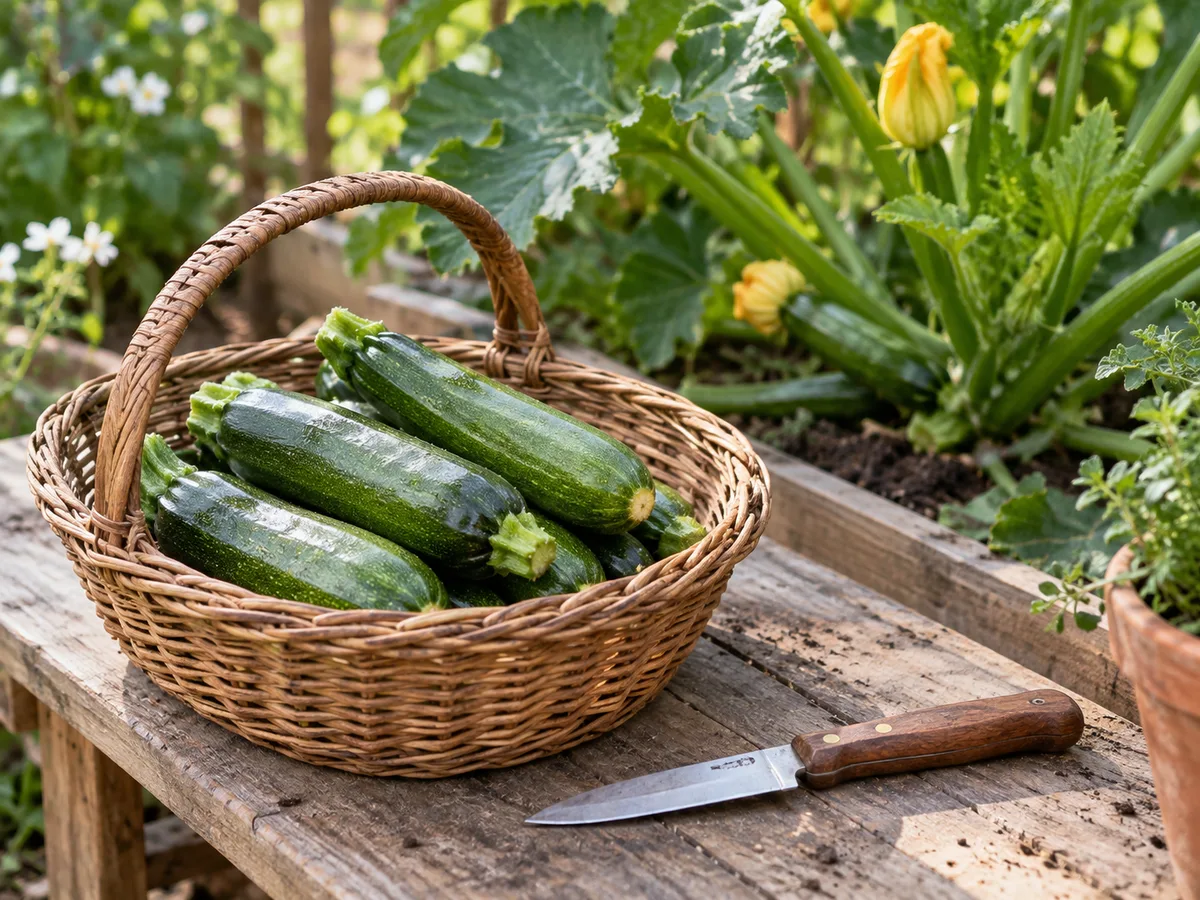
Support the zucchini with one hand and cut through the fruit stem with the other, leaving a short stem attached to the fruit. Do not slice into the crown or the main plant stem. Put the fruit in a basket rather than carrying it by its stem, which can tear and shorten storage life.
Cutting is the safest default, but a gentle twist can work on some small fruits when the stem is already naturally separating. Pulling hard is the problem. If the fruit does not release easily, stop and cut it.
When to harvest: morning, weather, and frequency
Harvest in the cool part of the morning when possible. The plant and fruit are less heat-stressed, and the zucchini has not spent the day losing moisture. If a storm is coming or a fruit is already at your target size, pick it rather than waiting for a perfect clock time.
Once plants begin producing, inspect them daily in warm weather. Every other day may be enough during cooler spells, but daily checks are easier than trying to predict growth. A quick routine—look under leaves, measure with your hand, test one rind, and cut what is ready—takes less time than dealing with a hidden club-sized zucchini later.
Zucchini blossoms, pollination, and tiny fruit that shrivels
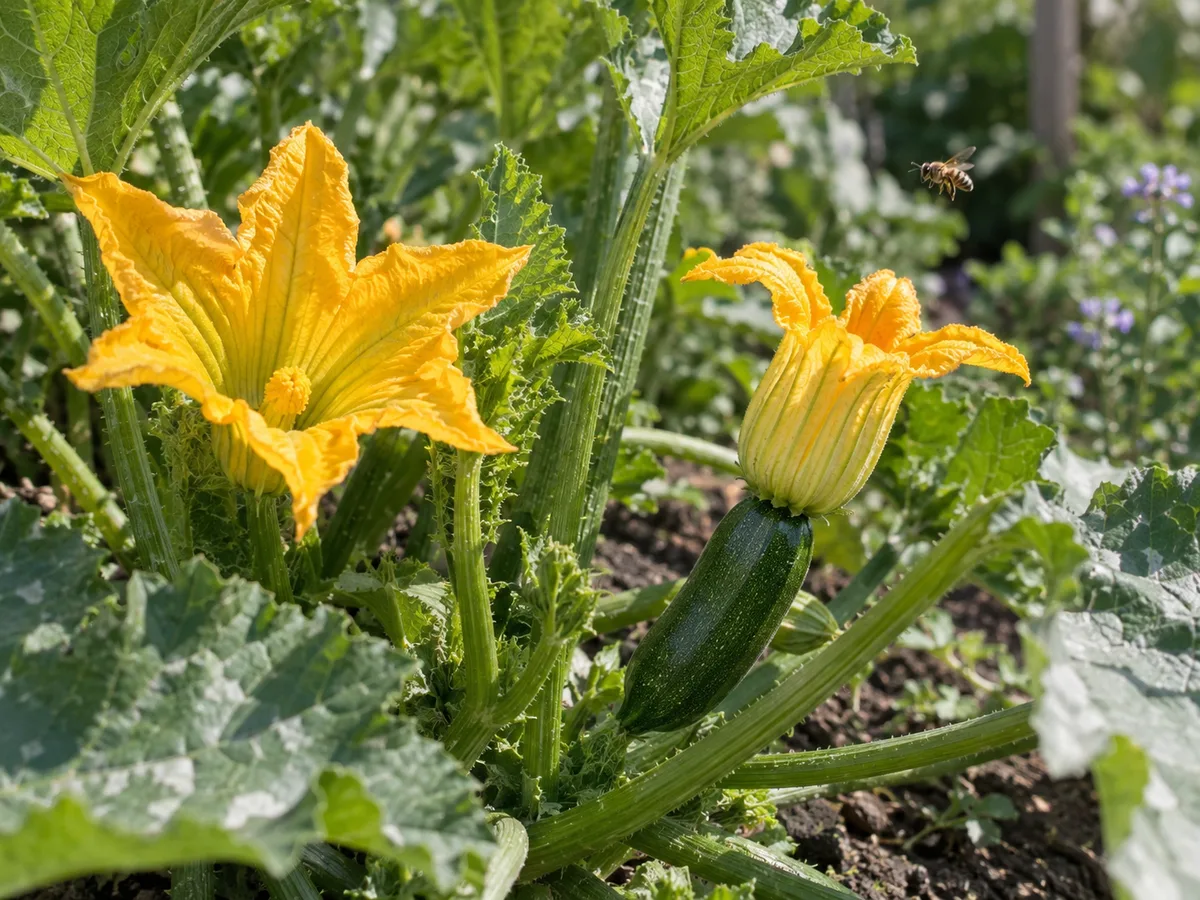
Zucchini makes separate male and female flowers on the same plant. A female flower has a small swelling at its base; if pollinated, that swelling develops into the zucchini. A male flower grows on a plain slender stem and provides pollen but no fruit.
Which flowers to pick
You can harvest blossoms while they are fresh and open or just before opening. University of Alaska Fairbanks Cooperative Extension advises harvesting only male blossoms when you want to preserve fruit production, while leaving some male flowers available for pollination. A useful compromise is to harvest only a portion of the males, especially when the plant has just started flowering.
Female flowers are edible too, but removing one also removes a potential zucchini. If you pick one, do so intentionally—for example, when you have more female flowers than the plant can support or when the flower is opening on a fruit you plan to harvest as a baby squash.
When hand pollination helps
Tiny zucchini that yellow, soften, or fall off before enlarging often reflect incomplete pollination, though cold, rain, heat, and plant stress can also interfere. University extension guidance recommends improving flower overlap and pollinator activity first: avoid insecticides when possible, grow flowers nearby, and keep the plant watered consistently.
If bees are scarce, hand-pollinate early in the morning while flowers are open. Touch a cotton swab or small artist’s brush to the pollen inside a male flower, then brush it onto the stigma inside a female flower. This is a backup technique, not a requirement for every garden, and it works best when both flower types are open on the same day.
What changes when zucchini gets oversized
An oversized zucchini is not automatically waste. It is simply no longer the same ingredient as a young zucchini. The skin may be tough, the central tissue watery, and the seeds large enough to remove, but the outer flesh can still be useful.
When to cook it anyway
Wash the fruit, trim both ends, and cut it lengthwise. Scrape out the soft seed core if it is large, then peel only if the skin is unpleasantly tough. Grate or cube the remaining flesh for fritters, soup, ratatouille, relish, or zucchini bread. Salt grated zucchini and squeeze it before baking when excess water would weaken the recipe.
If the fruit is merely large but firm and odor-free, cook it promptly. Its texture will not improve with more time on the counter. If you are saving seeds, remember that open-pollinated squash can cross with related varieties, so saved seed may not grow true to the parent.
When to compost it
Discard fruit that is leaking, foul-smelling, moldy, or extensively soft. Do not try to cut away a small area of advanced decay and treat the rest as pristine produce. A fruit with a dry scar or minor surface scrape is a different matter: trim the blemish and use the sound portion soon.
Storage after harvest
Zucchini is a short-storage crop. University of Maryland Extension gives a quality window of about 5–14 days under cool, humid conditions, but garden refrigerators are not all alike and texture declines before the fruit becomes unsafe. For best flavor, use freshly picked zucchini within several days.
Keep unwashed zucchini dry and refrigerate it in the warmer part of the refrigerator, ideally in a perforated bag or a loose produce drawer. Avoid placing it directly against the coldest rear wall. Summer squash can suffer chilling injury at temperatures below about 50°F, which may show up as pitting, dull skin, water-soaked areas, or faster decay after storage.
Do not seal damp fruit in an airtight container. Moisture trapped against the skin encourages breakdown, while a little ventilation reduces condensation. Wash just before cooking, unless you need to remove visible soil immediately; in that case, dry the fruit thoroughly.
Harvest habits that keep plants producing
Picking is part of plant care, but it cannot compensate for stressed roots or damaged foliage. Zucchini needs sun, steady moisture, fertile soil, and room for air movement. The goal is not maximum leaf removal; it is a healthy canopy that can keep making flowers and filling fruit.
Water, mulch, and leaf care
Water deeply when the soil begins to dry, aiming the stream at the soil rather than splashing the leaves. Mulch helps moderate moisture and keeps fruit cleaner, but leave a small gap around the crown so it does not stay constantly wet. Drought followed by heavy watering can produce uneven growth and stress-related quality problems.
Remove leaves only when they are dead, badly damaged, or clearly diseased, and use clean tools. A plant stripped too aggressively loses photosynthetic area; a dense plant with a few older leaves is usually better left intact. If powdery mildew is spreading, improve spacing and airflow while following locally appropriate disease guidance rather than cutting away half the plant at once.
Removing old or damaged fruit
Check for fruit hidden behind leaves and remove old fruit that has stopped developing normally. A misshapen zucchini caused by poor pollination will not straighten later, and a rotting fruit can attract pests and make harvesting around it harder. Cut it cleanly and inspect the plant for additional young fruit.
Succession planting—starting a new plant or row a few weeks after the first—can spread the harvest across the season. It is useful when an early plant succumbs to squash vine borers, mildew, or exhaustion, but local pest pressure and season length determine whether the extra planting is worthwhile.
Common harvesting mistakes and quick fixes
Mistake: waiting for a color change. Zucchini may be fully harvestable while it is still the exact color it had when it formed. Fix: learn the mature color of the cultivar and use rind tenderness as the deciding check.
Mistake: using length alone. A thick 6-inch fruit can be more mature than a slender 9-inch one. Fix: combine length, diameter, firmness, and the thumbnail test.
Mistake: twisting hard. This can tear the fruit stem or damage the crown. Fix: support the fruit and cut through its stem with a sharp, clean blade.
Mistake: harvesting every flower. Removing all the male flowers can leave too little pollen; removing female flowers reduces possible fruit. Fix: take only the blossoms you need and leave a mix on the plant.
Mistake: storing zucchini in the coldest spot. A very cold refrigerator can cause chilling injury. Fix: use the warmer produce area, keep the fruit dry, and plan meals within a few days.
Mistake: throwing away a giant zucchini automatically. Large fruit is a poor choice for delicate sautéing but can work grated or cooked after the seed core is removed. Fix: inspect for decay, then match the texture to a forgiving recipe.
A simple zucchini harvest routine
Use this five-minute routine whenever the plant is fruiting:
- Lift leaves carefully and find every fruit.
- Compare each fruit with the cultivar’s expected harvest size.
- Test the skin with a light thumbnail press and reject any soft, leaking, or moldy fruit.
- Cut the stem cleanly, leaving a short stem on the zucchini.
- Brush off dry soil, keep the fruit shaded, and refrigerate it without washing if you will use it later.
At the end, look for female flowers that need pollination and for damaged leaves or fruit that should be removed. This turns harvesting into a quick plant-health check instead of a separate chore.
Conclusion: pick for the meal you want
The best time to harvest zucchini is when the fruit is still young, firm, and tender—not when it has achieved the largest size the plant can produce. For many elongated varieties, start checking around 6–8 inches, then let the skin and your intended use make the final call.
Cut rather than yank, inspect plants every day in warm weather, leave enough blossoms for pollination, and store the harvest cool but not icy. Those small habits protect the plant, preserve the texture that makes zucchini pleasant to eat, and give you more control over the harvest instead of discovering it after the fruit has hidden under a leaf.