When Do Magnolia Trees Bloom? By Type
Magnolia bloom time ranges from late winter to summer. Compare common types, read local clues, and protect early flowers from a late freeze.
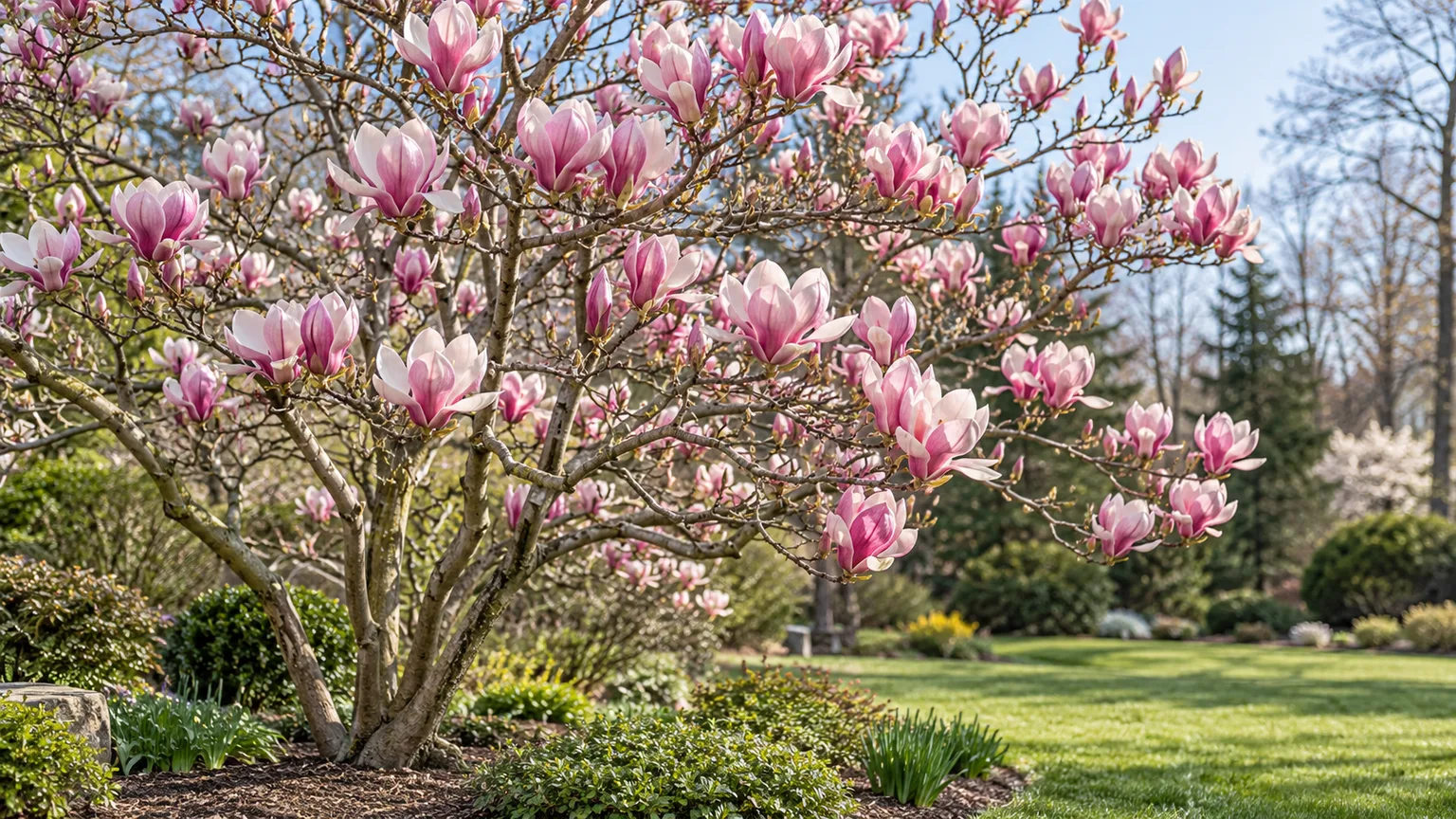
Magnolia trees do not share one flowering month. Depending on the species or cultivar, a magnolia can open its first flowers in late winter, put on its main display in spring, or keep producing scattered blooms into summer. The most useful starting point is the tree’s name: a star magnolia and a Southern magnolia can be flowering months apart even in the same garden.
For a quick estimate in much of the United States, deciduous magnolias such as star and saucer types tend to flower from late winter through spring, while evergreen Southern magnolias flower later, often from late spring into summer. Those are windows, not promises. Your region, the cultivar, and the weather pattern in the weeks before opening all matter.
The quick answer: magnolia bloom time depends on the type
If a magnolia is flowering on bare branches, it is probably a deciduous spring type. If it carries glossy green leaves through winter and produces isolated cream-colored flowers later, it may be an evergreen Southern magnolia. These visual cues do not identify every plant, but they explain why a single calendar date cannot describe the whole genus.
In the Northern Hemisphere, early deciduous species may begin in late winter in mild locations and move into early spring farther north. Saucer magnolias often follow in early or mid-spring, while later cultivars and summer-flowering species extend the season. The Royal Horticultural Society’s magnolia guide describes the broader pattern as spring or early-summer flowering for many kinds, with some evergreen types flowering in late summer. A genus-level guide gives a useful range; it cannot predict the week for one yard.
The calendar also differs between hemispheres. Southern Hemisphere gardeners usually see seasons shifted by about half a year, but local climate still determines when a specific plant opens. Use the tree’s identity and the pattern of local spring temperatures before translating a month printed on a nursery tag into an expectation.
When comparing dates, separate first bloom from peak bloom. One flower opening on a sheltered branch does not mean the whole canopy has reached its best display; similarly, a tree can still have new flowers after the most conspicuous flush is past. Keep both dates if you are recording a tree, because they help explain why a short calendar rarely matches every visit to the garden.
Magnolia bloom windows by type
“Magnolia” can refer to hundreds of species and many cultivated hybrids. These common examples provide a better starting calendar than the genus name alone. The dates below are broad Northern Hemisphere patterns; regional weather can shift them, and a named cultivar may differ from the species average.
Late winter to early spring: star and saucer magnolias
Star magnolia (Magnolia stellata) is among the first deciduous magnolias to flower. Its white, many-petaled blossoms usually appear before the leaves in late winter or early spring, which makes a warm spell followed by a freeze especially frustrating. North Carolina State Extension describes star magnolia as the earliest of the deciduous magnolias and notes that its open flowers are vulnerable to frost. The BBC Gardeners’ World profile likewise places its star-shaped blooms very early in spring.
Saucer magnolia (M. × soulangeana) also flowers before the leaves, but its window often stretches from late winter into mid-spring depending on where it grows. Its large, tulip-shaped flowers may look pink or purple from the outside and pale inside. North Carolina State Extension notes that late frosts can kill the flowers and that late-flowering cultivars can reduce, though not eliminate, the risk. This is why two neighbors’ saucer magnolias may bloom at different times: they may not be the same cultivar or have the same exposure.
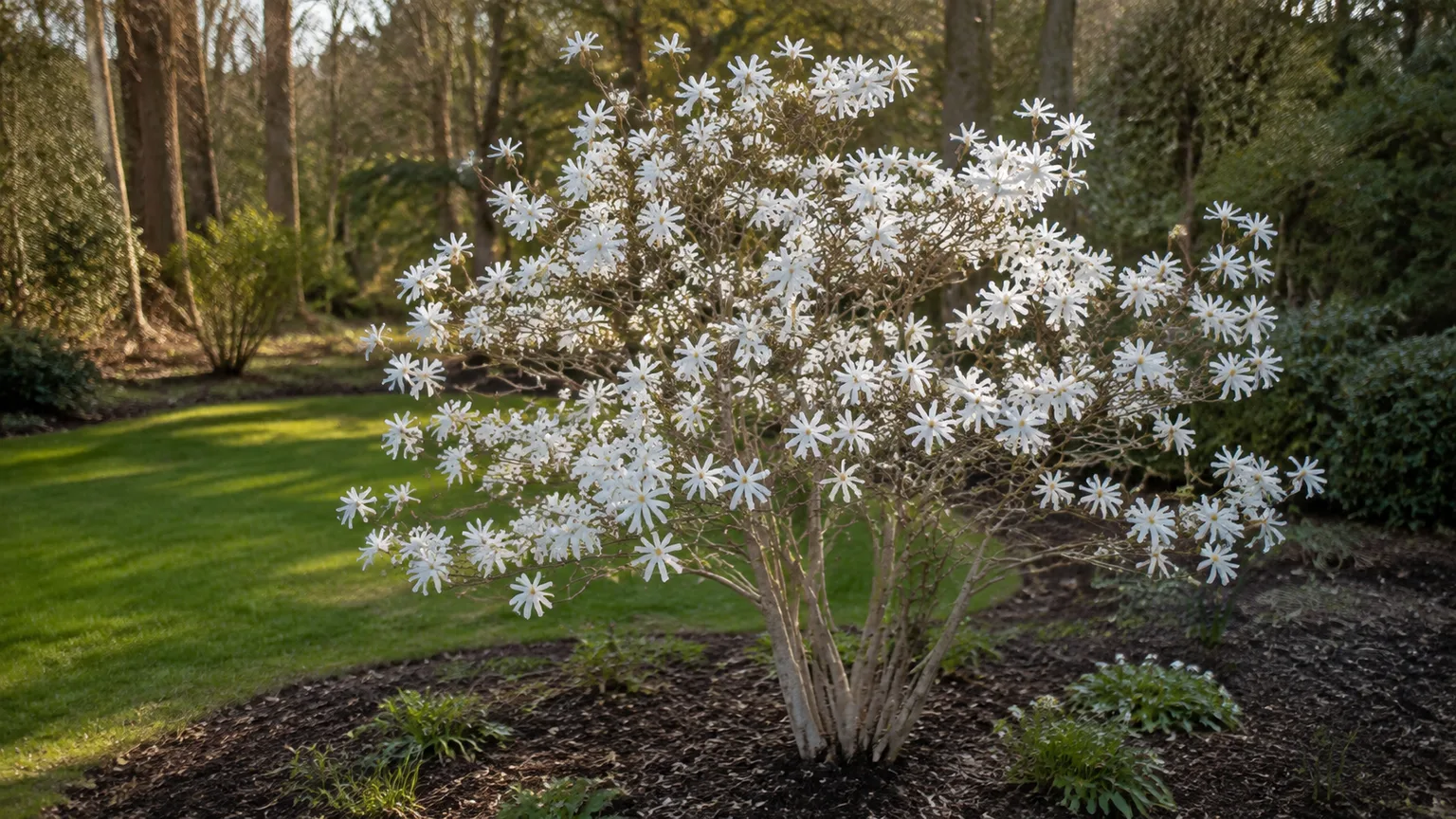
Mid- to late spring: lily, Loebner, and related hybrids
Lily magnolia (M. liliiflora) and hybrids such as Loebner magnolia (M. × loebneri) broaden the spring sequence. Their flowers may open later than the earliest star magnolias, but exact overlap depends on cultivar and climate. A mature specimen can therefore look as if it has a long flowering season even when each individual cultivar has one principal flush.
The practical point is not to memorize every hybrid’s date. If you are buying a plant for a dependable display, ask the nursery for the cultivar name and its typical local flowering time, then compare that with your site’s frost pattern. A tag that says only “magnolia” leaves out the detail that matters most for both timing and flower color. The RHS recommends considering flowering time and ultimate size when choosing a magnolia, because cultivar choice changes the experience as much as the species label does.
Late spring into summer: sweetbay and Southern magnolias
Sweetbay magnolia (M. virginiana) and Southern magnolia (M. grandiflora) flower later than the familiar bare-branch spring types. Sweetbay is often semi-evergreen or evergreen in warmer parts of its range, with small, fragrant flowers appearing after foliage has emerged. North Carolina State Extension notes that its flowering can continue sporadically during summer until the first frost. Its flowers open in the afternoon and close at night, often repeating that cycle for two or three days before they finish; a bloom that seems to disappear overnight may simply be following that short daily rhythm. That means the tree may offer a series of flowers rather than a single dramatic canopy-wide burst.
Southern magnolia makes a different kind of display: large, creamy flowers appear among glossy evergreen leaves, with a main late-spring period and additional scattered blooms in summer. North Carolina State Extension gives May to June as a typical flowering period in its profile, while the RHS describes flowering from late June into autumn in its British setting. Those descriptions are not necessarily contradictory; they reflect different regional conditions and the tree’s ability to flower intermittently. If your evergreen magnolia produces a few flowers at a time, that can be normal rather than evidence that its main bloom failed.
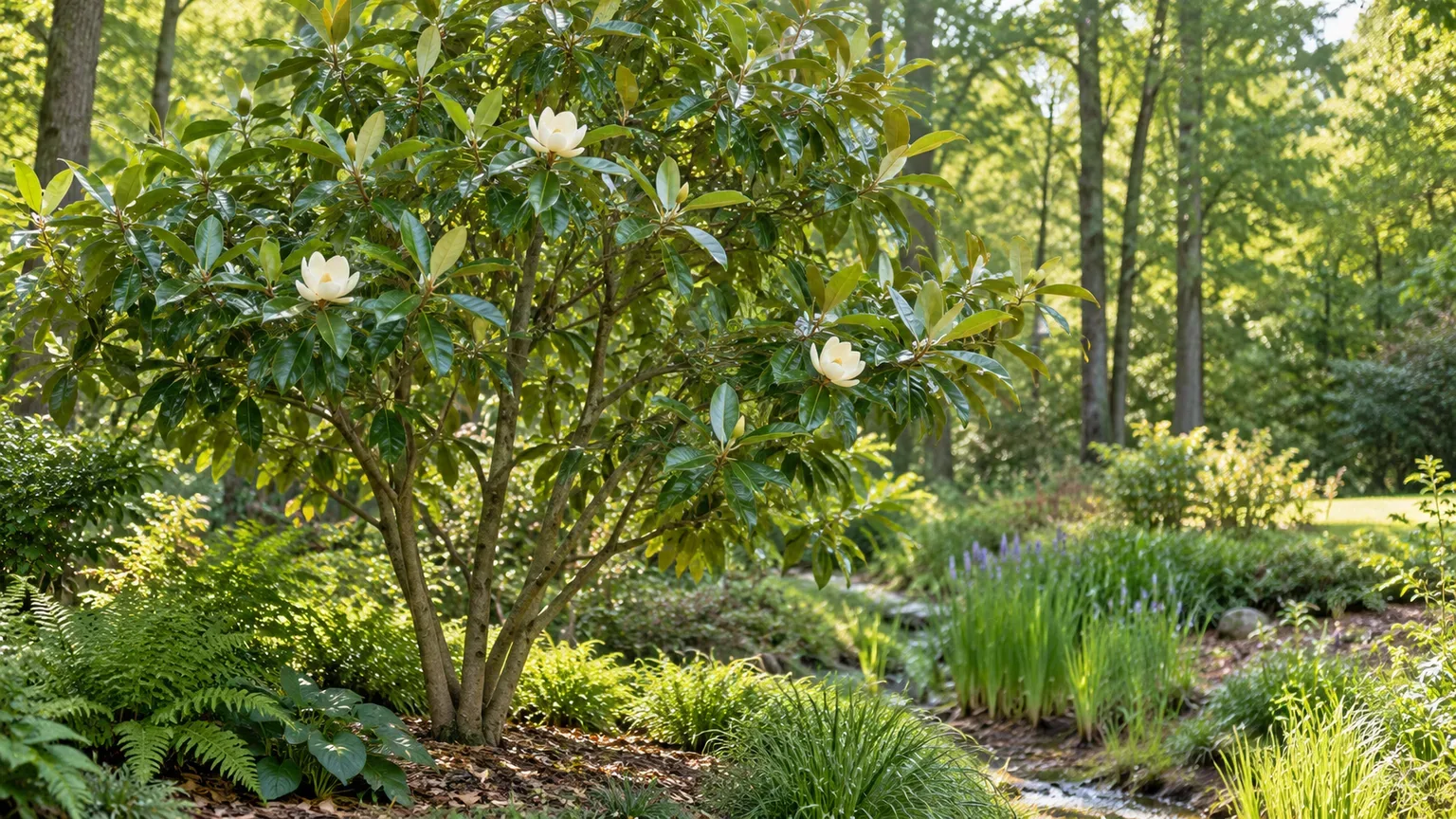
Why the same magnolia blooms earlier in one yard
Species gives you the broad window; local conditions set the date. A tree does not read a calendar. Flower buds respond to the seasonal conditions they experience, so bloom can advance or lag from year to year without signaling a care problem.
Local climate moves the calendar
The same cultivar can flower earlier in a warm coastal or southern site and later in a colder inland or northern garden. Urban heat, a sheltered courtyard, nearby pavement, and a south-facing wall can all create a warmer pocket than the surrounding area. A difference of a few weeks between nearby locations is plausible when their exposure and local temperatures differ.
Hardiness zones help estimate whether a plant can survive winter, but they are not a bloom-date forecast. They do not show whether a warm spell will arrive early, whether a late freeze will follow, or how quickly one particular slope or courtyard warms. A low-lying pocket can collect cold air while a sheltered wall warms quickly, so even two trees in one town may progress differently. The zone also does not account for whether a specimen faces a shaded north wall or a sunlit south exposure.
For a useful local record, note the first swollen buds, first open flowers, and last fresh flowers over several years. Record the cultivar if you know it, whether the tree is next to paving or a building, and whether the preceding winter and spring were unusually warm or cold. That record is more relevant than importing a date from another state or country, and after a few seasons it can help you distinguish a genuine change from ordinary variation.
Cultivar and exposure shift the date
Cultivars within a species may flower at different points in the season. Some saucer magnolia selections are known for later flowering, which can help avoid the most common late-freeze window. The trade-off is that “later” is not the same as frost-proof: an unusually cold event can still damage open flowers or advanced buds.
Exposure can create the same timing problem in a single yard. A tree planted against a sun-warmed wall may break dormancy ahead of a specimen in open shade, then be caught by a freeze. North Carolina State Extension specifically cautions against very warm southern exposures beside structures for saucer magnolias. Do not move a mature tree to solve a one-year timing mismatch; first check its cultivar, observe bud development, and consider whether the site is consistently accelerating growth.
Identify your tree before using a bloom calendar
Start with a plant label, nursery receipt, or landscape plan. If none is available, note whether the tree keeps leaves in winter, whether its flowers open on bare branches, and what the flowers look like. Star-shaped white flowers on a compact deciduous shrub point toward star magnolia; large goblet-shaped pink-and-white flowers on bare stems suggest saucer magnolia; leathery evergreen foliage with large cream flowers suggests Southern magnolia. A multi-stemmed shrub with smaller creamy blooms may be sweetbay, though location and cultivar can change its leaf retention.
Read the tag, then check leaves, flowers, and buds
Take a few photos over the season rather than identifying the tree from one flower alone. Photograph the whole shape, a mature leaf, the flower from the side, and a closed bud. Those details help distinguish species and cultivars, and they let a local extension office or knowledgeable nursery give a more useful answer than “it’s a magnolia.” If you are choosing a new tree, keep the original label: a cultivar name can resolve later questions about mature size, expected flowering period, and frost exposure.
Do not rely on USDA zone alone to infer the bloom date. Zone describes average annual extreme winter minimums, not spring heat accumulation or the timing of a late frost. A zone-compatible tree can survive winter and still lose that year’s flowers to a late spring freeze. For predicting a display, species plus cultivar plus local observations is the more practical combination.
On deciduous types, fuzzy, plump buds that sit on twigs through winter are often flower buds; they tend to be rounder than the narrower vegetative buds that will produce leaves. Avoid breaking buds to check them. Instead, photograph one from the side and look for change over a week or two: swelling and loosening outer scales suggest that flowering is progressing, while a bud that stays tight after the local flowering window may have been injured or may not be a flower bud at all.
How long does a magnolia bloom last?
There are two different durations to consider: the life of one flower and the period when the tree has flowers. An individual magnolia bloom is often short-lived, especially once it opens in warm, windy, or rainy weather. A whole tree may still look in flower for longer because buds open at different times across the canopy. That is why a spring-flowering magnolia may provide a multiweek viewing window without each blossom remaining pristine for weeks.
Weather can shorten or stretch the display. A warm spell may cause many buds to open close together, producing a strong but compressed flush. Cool weather can slow opening; rain, wind, or a hard freeze can damage flowers that are already exposed. Evergreen Southern and sweetbay magnolias may produce scattered flowers across a much longer part of the growing season, so their season is better described as intermittent than as one continuous peak.
If you want to catch peak bloom, check the tree every few days once the outer bud scales begin to loosen and color shows. A photo from the same viewpoint makes it easier to see whether buds are advancing. Do not wait for every bud to open: by then, the first flowers may already be aging or falling. Check buds at a consistent time of day and from the same side of the canopy. A simple sequence—tight bud, swelling bud, visible color, first open flower, then peak—keeps you from treating one early bloom as the entire season. It also gives you a baseline for deciding whether a cultivar is too early for an exposed site.
Why a magnolia tree may not bloom
Before changing fertilizer or pruning, work out whether the tree made flower buds at all. If buds were present and then turned brown after a freeze, the tree may have set flowers successfully but lost that year’s display. If there were few or no swollen flower buds, age, past pruning, site conditions, or plant establishment may be more relevant.
Frost-damaged flowers versus buds that never opened
Frost injury usually follows a cold event after buds have advanced. Open petals may turn brown, limp, or translucent, while the branch and later foliage remain healthy. A damaged bloom is disappointing, but it does not automatically mean the tree is dying. Fine Gardening’s practical account of a saucer magnolia describes flowers browning after a sudden freeze while the specimen itself remained sound; NC State Extension also flags frost as a risk to early-flowering magnolia flowers.
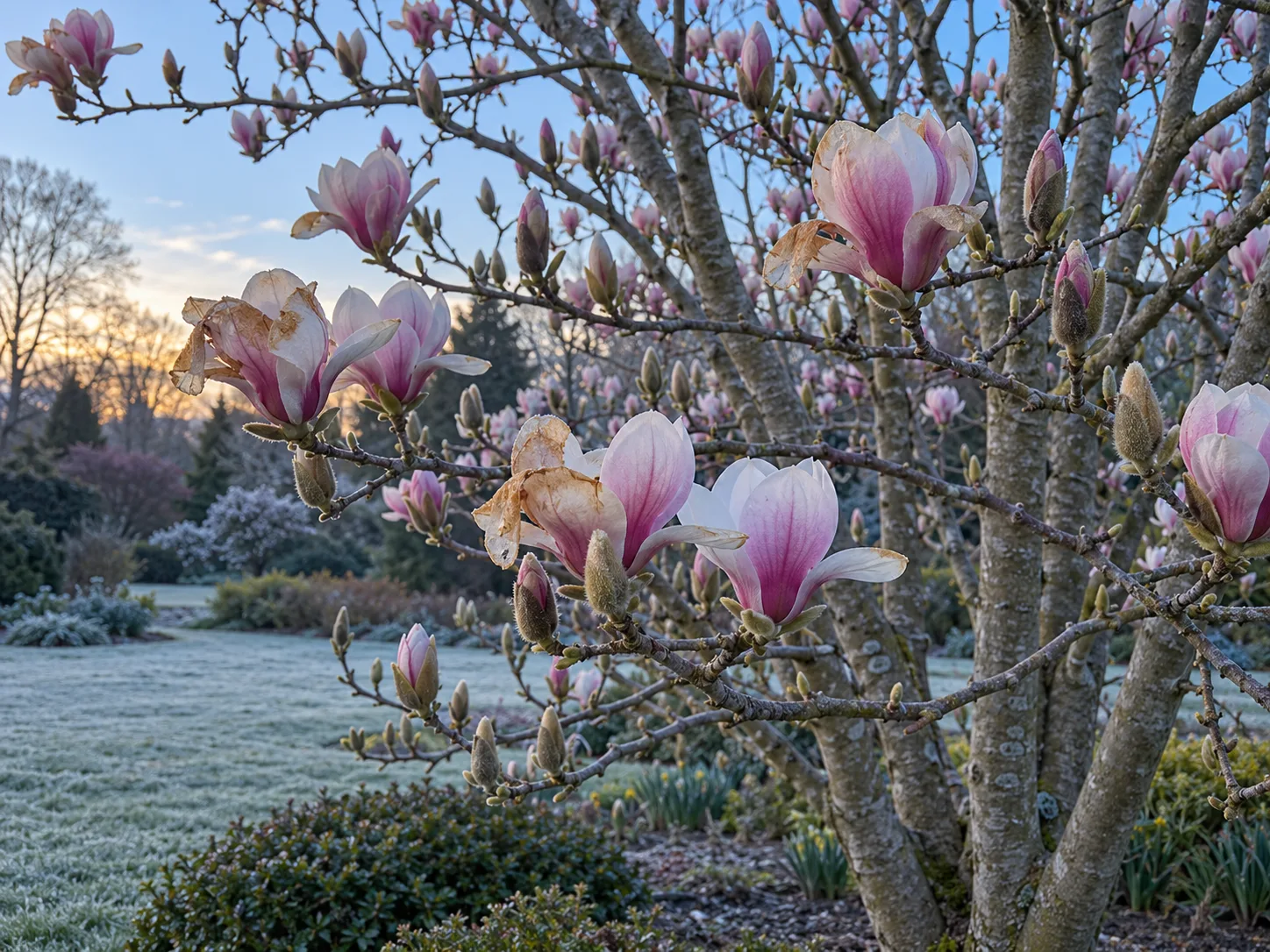
Do not prune healthy branches or fertilize heavily to “repair” a frost-hit display. Wait for normal leaf growth and inspect the branch itself. If buds never formed, review the prior season: newly planted magnolias can take time to settle, hard pruning can remove flower-bearing growth or delay recovery, and a poor site can suppress flowering. The RHS growing guide notes that newly planted trees may need several years to establish and that hard pruning can inhibit flowering.
Young trees, transplant stress, and missing flower buds
Some magnolias flower while still small; others take longer, and seed-grown plants may not match the timing of a named nursery cultivar. If your tree is young or recently transplanted, a season without flowers is not enough to diagnose a permanent problem. Check for steady shoot and leaf growth, adequate moisture during establishment, and a site that is neither waterlogged nor chronically dry.
Use a short diagnostic order rather than changing several things at once. First, confirm the tree is old enough for the expected type and not recovering from a move. Second, inspect the previous year’s growth and pruning history: a spring-flowering tree needs time to form and retain buds before they open. Third, assess light and water; a tree in deep shade or one repeatedly stressed by dry soil may grow leaves without a strong display. Finally, compare your observations with a nearby specimen of the same type, if possible. A neighbor’s tree is a useful clue only when it is the same species or cultivar and has a similar exposure.
If a mature tree has healthy leaves but little flowering for multiple seasons, check whether it receives enough light for its species, whether nearby structures have changed its exposure, and whether pruning has repeatedly removed the canopy. Avoid applying a high-nitrogen lawn fertilizer around the tree simply to force bloom; excess vegetative growth is not a reliable substitute for a suitable site or correctly timed buds. If the tree is declining as well as not flowering, diagnose the broader health problem rather than treating bloom absence alone.
How to protect the next flower display
Most of the useful decisions happen before buds open. Select a type suited to the climate, give it a site that does not repeatedly push it into premature growth, and avoid cuts that remove next season’s flowering wood. Mature magnolias are not easy to reshape after the fact, so initial placement matters.
Choose a sheltered site and steady establishment care
When planting, follow the cultivar’s mature size and light requirements. A sheltered spot with good drainage can reduce wind stress without putting early buds beside a heat-radiating wall. NC State Extension recommends protecting saucer magnolia from strong winds and late frost; the RHS likewise advises a sheltered site and notes that dry soil and exposed cold locations may reduce flowering.
Water consistently while a new tree establishes, then adjust to rainfall and soil rather than a fixed weekly schedule. Magnolia roots can be fleshy and sensitive to extremes; prolonged drought stresses the tree, while standing water can create a different problem. Mulch the root zone to moderate soil moisture and temperature, but keep the mulch away from the trunk. A healthy, settled tree is better positioned to flower, although no care routine can guarantee that an early bloom will escape a late freeze.
If frost is forecast while a small young magnolia is in bud, a breathable cover can sometimes shield it overnight if it can be placed without bending branches and removed after temperatures rise. That is practical for a compact specimen, not a realistic solution for a mature tree. Avoid wrapping a large canopy in plastic or tying heavy fabric over limbs. For established trees, site and cultivar selection are the dependable long-term safeguards; a one-night cover cannot change an early cultivar’s flowering habit.
Prune at the right time and avoid panic feeding
Magnolias generally need little routine pruning. If a branch is damaged or crossing, remove it with a clear purpose and use the timing recommended for that species and region. For spring-flowering trees, heavy dormant-season pruning can take away buds that formed earlier; the RHS notes that magnolias may recover slowly from hard pruning. Light structural work just after flowering is often easier to plan because you can see the canopy and avoid removing the display you are waiting for.
Fertilizer is not a bloom switch. First check the soil and the tree’s growth. If growth is healthy and leaves look normal, extra feeding may add little; if the tree is newly planted or growing in poor soil, follow local extension guidance and the product label rather than guessing a dose. The best long-term plan is a correct cultivar, a site that avoids repeatable stress, and restrained pruning—not trying to force flowers in the weeks before bloom.
Conclusion
Magnolia trees flower from late winter into summer, but the answer for your yard depends first on the species or cultivar. Star and saucer magnolias lead the deciduous spring display; sweetbay and Southern magnolias flower later, often with more scattered blooms. Climate, exposure, and a late freeze can move the date or shorten what you see.
To estimate your tree’s season, identify its type, watch bud development locally, and keep a simple record of first and last bloom. If flowers fail, check whether buds formed and whether frost damaged them before changing care. That sequence gives you a realistic calendar and a better chance of enjoying next year’s flowers.