When to Cut Back Hydrangeas Safely
Is it too late to cut back hydrangeas? Use this type-by-type guide to protect old-wood buds, prune new-wood varieties, and recover from a late cut.
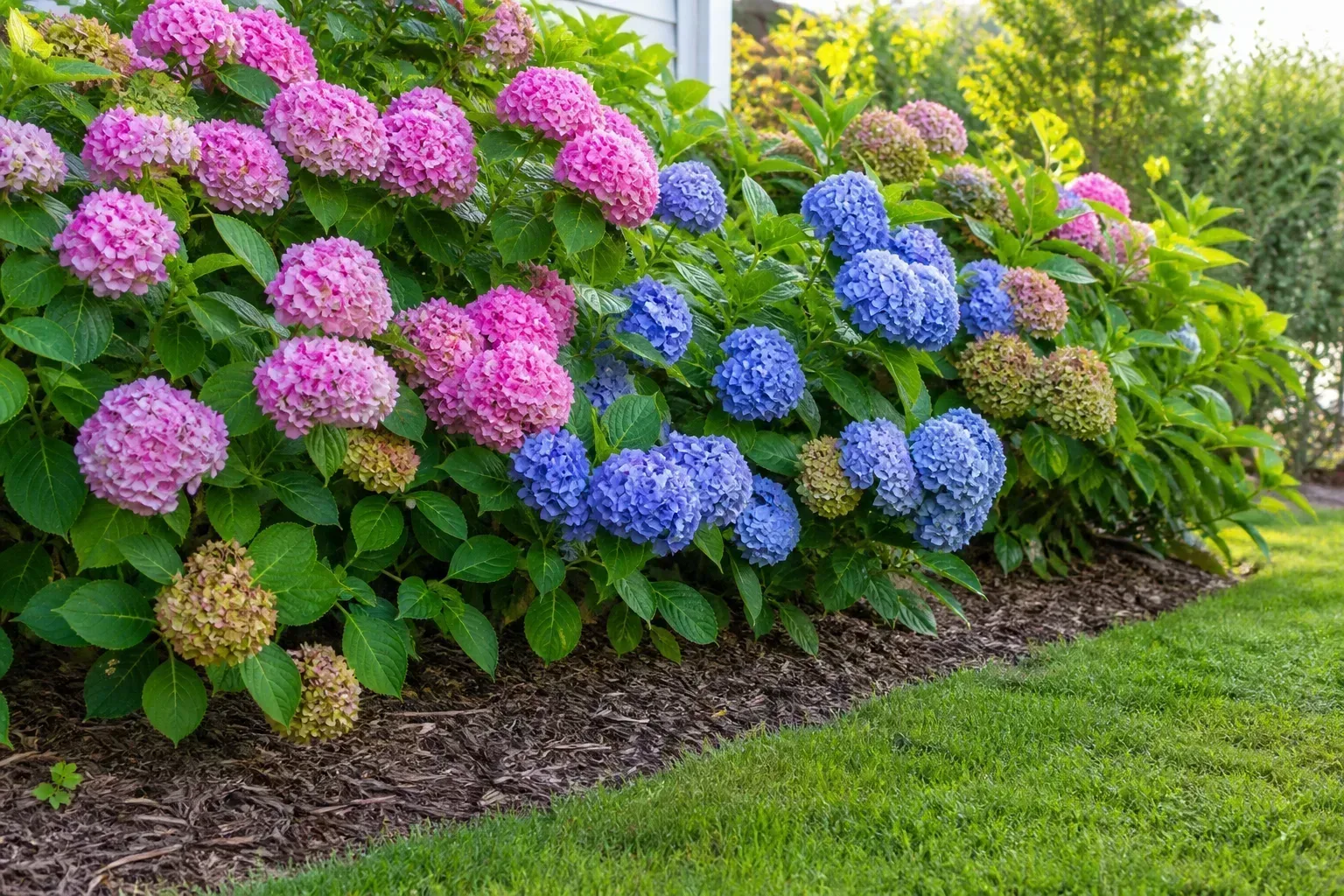
The Short Answer: It Depends on the Hydrangea You Have
If you are looking at a hydrangea with brown flower heads and wondering whether to cut it to the ground, pause before making the first cut. It is too late for a major shaping prune when the shrub has already formed the flower buds you want to keep, but the point in the calendar depends on whether those buds sit on old stems, new stems, or both.
For bigleaf, mountain, oakleaf, and climbing hydrangeas, the safest structural window is usually immediately after flowering, before late-summer buds develop. Once summer is ending, switch from shaping to preservation: remove only dead or broken wood, and leave live flowering stems alone unless the plant presents a genuine safety problem. The Royal Horticultural Society’s pruning guide likewise places most pruning in late winter or early spring for some types, but after flowering for climbers and with special care for old-wood shrubs.
Panicle and smooth hydrangeas are more forgiving because they flower on stems produced during the coming growing season. Their real shaping window is late winter to early spring, while the plant is dormant and before fresh shoots stretch out. Reblooming cultivars can flower on both old and new wood, but that wider flowering system is not permission to shear them in fall; a late cut can still remove the earliest flush.
When the type is unknown, the safest answer is simple: do less. Remove unmistakably dead or storm-damaged wood, leave healthy stems with buds, and identify the plant from its tag, flower shape, foliage, or growth pattern before attempting a hard cut.
Why “Old Wood” and “New Wood” Decide Your Timing
“Old wood” and “new wood” describe the age of the stems that carry flowers, not the age of the whole plant. That distinction tells you whether a cut removes a flower that is already waiting for next summer or merely changes the framework that will produce new shoots in spring.
Old-wood hydrangeas protect next year’s buds
Old-wood bloomers form many of their next season’s flower buds on stems that grew during the current season. Those buds may be small, tightly closed, and easy to overlook near the tips. By fall, winter, or early spring, they are already part of the plant’s flowering plan even though no flowers are visible.
The group includes most bigleaf hydrangeas (Hydrangea macrophylla), including mopheads and lacecaps; mountain hydrangeas (H. serrata); oakleaf hydrangeas (H. quercifolia); and climbing hydrangeas (H. anomala subsp. petiolaris). A hard cut after bud formation can leave the shrub healthy and leafed out but nearly flowerless the following year.
That is why a late cut is not always a plant-health emergency. It is more often a flower-loss decision. If a stem is alive, stable, and not obstructing a path, keeping it through winter may give you a better display than improving the shape immediately.
New-wood hydrangeas make buds after winter
New-wood bloomers produce flower-bearing shoots during the new growing season. Panicle hydrangeas (H. paniculata), including many peegee and ‘Limelight’ types, and smooth hydrangeas (H. arborescens), including ‘Annabelle’, belong here.
Because the flower buds form on fresh shoots, these shrubs can be pruned more firmly while dormant without cutting away the next summer’s entire crop. The RHS recommends cutting last year’s growth back to healthy buds in spring, with lower cuts creating a shorter framework and often larger flowerheads. That does not mean every new-wood hydrangea needs a ground-level haircut: a tall framework can produce more, somewhat smaller heads and may hold itself upright better.
The important late-season distinction is between deadheading and structural pruning. Removing a dried flower head is a small cosmetic cut. Shortening every live branch in late summer is a structural cut that can remove leaves the plant still needs for energy storage, encourage soft regrowth, or expose the shrub to heat and winter stress.
Rebloomers have a wider window, not a free pass
Reblooming hydrangeas are usually improved selections of bigleaf or mountain hydrangeas that can flower on old wood and produce another flush on new growth. Endless Summer-type plants are common examples, but the label is more reliable than the marketing name because cultivars differ.
That three-way split—old wood, new wood, and reblooming—is also the practical framework used by Epic Gardening’s hydrangea pruning guide, which emphasizes that there is no single season that fits every hydrangea.
Their ability to flower on new wood may rescue part of the season after winter damage or a light late cut. It does not preserve the old-wood buds you remove. If you cut a rebloomer heavily before the first flush, you may trade early flowers for later ones; if you cut it after the plant begins preparing for dormancy, you can lose both buds and useful leaf area.
Treat a rebloomer as an old-wood hydrangea until the plant label confirms otherwise. Deadhead lightly while you are still encouraging another flush, then stop structural pruning and keep only essential maintenance cuts once the season is winding down.
Identify Your Type Before You Make a Large Cut
The most accurate identification is the nursery label or cultivar name. If that is gone, use several clues together rather than trusting one flower color: color changes with soil conditions in some bigleaf hydrangeas, and a white flower does not automatically mean the plant is a smooth hydrangea.
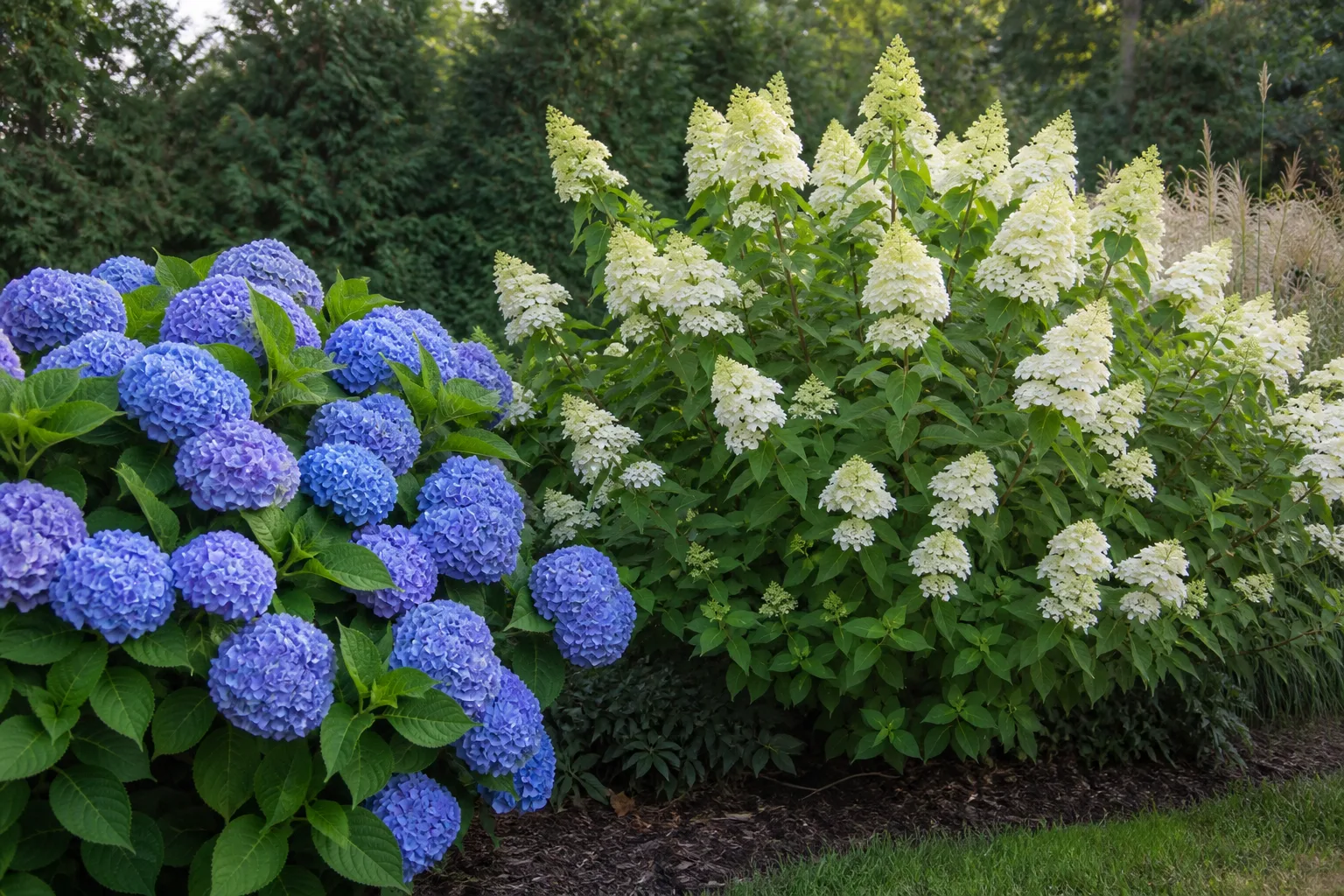
Use flowers, leaves, and labels as clues
Look first at the flower shape. Bigleaf mopheads have rounded balls of florets, while lacecaps have a flatter center surrounded by larger outer florets. Oakleaf hydrangeas have unmistakable oak-shaped leaves and elongated flower clusters. Panicle hydrangeas usually carry cone-shaped clusters that open white, cream, or green and often age toward pink or red. Smooth hydrangeas tend to make rounded heads on fast-growing, flexible stems.
Then inspect the foliage and the shrub’s seasonal pattern. Oak-shaped leaves point to H. quercifolia; glossy, broad leaves with blue, pink, or purple mopheads often point to bigleaf types; narrow, rougher leaves and cone-shaped heads suggest a panicle type. A climbing habit with aerial rootlets points to climbing hydrangea, which needs a different approach from a freestanding shrub.
Use last year’s behavior as a final clue. If the plant flowered on stems that overwintered and carried visible buds early in spring, treat it as old-wood. If it made a flush of long new shoots first and flowers appeared only later on those shoots, it is more likely new-wood. When the evidence conflicts, wait and make only the cuts that cannot cost flowers.
When Is It Too Late to Prune?
There is no universal “too late” date because climate, cultivar, and the goal of the cut all matter. A dead branch can be removed whenever you find it; a size-reduction cut has a much narrower window because it changes the plant’s flowering structure.
Old-wood types: late summer is the danger zone
For old-wood hydrangeas, the ideal time for shaping is soon after the current flowers fade. That gives the plant time to make replacement shoots and form the next set of buds. Once late summer arrives, especially in regions with a long growing season, assume that live stems may already be carrying next year’s flowers.
If you are past that window, do not panic and do not “clean up” every brown head by cutting deep into the branch. You can leave the dried flowers for winter interest and, in colder areas, for a little protection over tender buds. The RHS advises leaving mophead flowerheads until early spring, then cutting the stem back to the first strong healthy pair of buds.
The exception is a branch that is dead, broken, rubbing badly, diseased, or likely to fall. Remove that problem branch cleanly, even if the timing is not ideal. Losing one compromised stem is usually a smaller cost than letting it damage neighboring wood or spread a problem through the shrub.
New-wood types: late winter is the structural window
For panicle and smooth hydrangeas, late winter or early spring is the dependable time for size and shape work. The plant is dormant, winter damage is visible, and the coming flower-bearing shoots have not yet developed far enough to be removed accidentally.
If it is late summer or fall, a hard prune is rarely the best response to a plant that simply looks too large. Wait until dormancy unless a branch is broken or creating a hazard. A late cut can stimulate tender shoots just as temperatures are dropping and can leave the shrub with less foliage for the rest of the season.
This does not mean the date on a calendar overrides the plant. In a warm climate, “early spring” arrives earlier; in a cold climate, it may be safer to wait until the worst freezes have passed but before strong growth begins. Watch the buds and local weather, not just the month name.
What You Can Safely Remove Now
When you are outside with pruners in hand, classify each cut before you make it. Ask whether you are removing a hazard, a spent flower, or a living branch for shape. The first category is usually safe; the third is the one that costs future flowers when the timing is wrong.
Dead, broken, or clearly diseased wood
Dead wood has no living buds and may be brittle, hollow, gray, or easy to snap. To check a questionable stem, lightly scratch a small patch of outer bark with a clean fingernail or blade. Green tissue under the bark suggests live wood; brown, dry tissue suggests the stem is dead. Do not keep scratching down a healthy stem simply to prove it is alive.
Cut a dead branch back to its point of origin or to healthy wood, avoiding a long stub. For a broken branch, make a clean cut just beyond a strong side branch or healthy bud. If only the tip is damaged by frost, wait until live growth is obvious, then cut back to the first undamaged bud pair. The RHS uses this “first undamaged pair” approach for frost-damaged hydrangea shoots.
Disinfect pruners between shrubs when you are removing tissue that looks diseased. Do not compost suspicious material unless your local composting guidance supports it; bagging and disposing of it can reduce the chance of moving a problem to another plant. Avoid treating every brown leaf or faded bloom as disease—seasonal browning is common and does not justify a deep cut.
Spent blooms and deadheading
Deadheading removes a spent flowerhead; pruning changes the stem framework. On a new-wood hydrangea, you can often remove a faded head without affecting next year’s flowers, but there is still no need to shorten the entire branch in late summer. On an old-wood plant, make the smallest useful cut because buds may sit just below the flower.
Trace the flower stem downward until you reach the first strong pair of leaves or buds. Cut just above that pair with sharp bypass pruners, keeping the cut slightly angled so water does not sit on the wound. If the season is already late and the flowerhead is not causing a problem, leaving it in place is also a valid choice.
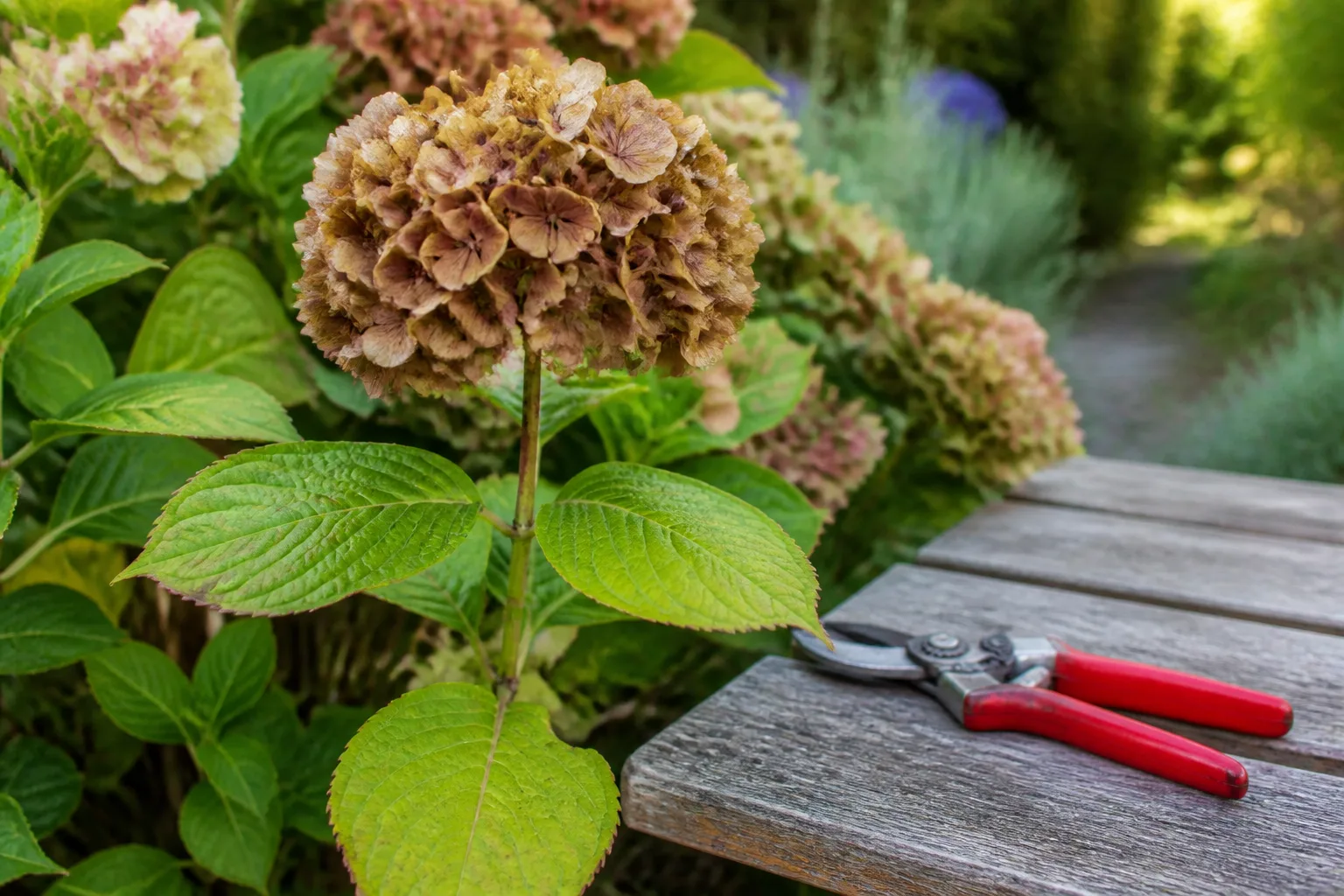
For old-wood shrubs, a practical rule from Here By Design is to keep late-season cuts short and shallow rather than harvesting long flowering stems after the plant has moved into bud-setting season. That is a useful reminder that the depth of the cut matters as much as the fact that you are deadheading.
Deadheading is optional for plant health. It can tidy the shrub and, on some rebloomers, encourage another flush when done early enough. It will not force a non-reblooming old-wood hydrangea to make a second crop, and it cannot restore flower buds that a previous cut already removed.
How to Prune Hydrangeas When the Window Is Open
Prune with a purpose: remove deadwood, improve structure, reduce size, or encourage a particular flowering habit. The best cut is often selective thinning rather than a uniform haircut. Step away from the shrub after every few cuts so you can see whether the remaining branches are balanced and open enough for light and air.
Bigleaf, mountain, and oakleaf hydrangeas
Prune bigleaf and mountain hydrangeas lightly after flowering. Remove spent flowering stems to a healthy bud pair, then take out one or two of the oldest stems at ground level if the shrub needs rejuvenation. The goal is a rolling replacement system, not a yearly reset: removing a few aging stems lets new canes take their place without sacrificing the whole display.
Oakleaf hydrangeas usually need even less pruning. Remove dead or damaged stems and shorten an overlong branch soon after flowering if it is outside the plant’s space. Preserve the woody framework that gives oakleaf hydrangeas their shape and fall presence; a hard cut can remove both flowers and the structure that makes the plant attractive after bloom.
For an overgrown old-wood shrub, renovation is possible, but it is a deliberate trade. The RHS notes that cutting all stems at the base can restore an overgrown plant, while the new stems will not flower until the following year. If preserving flowers matters, renovate over multiple seasons by removing roughly one-third of the oldest stems at a time rather than taking everything at once.
Panicle and smooth hydrangeas
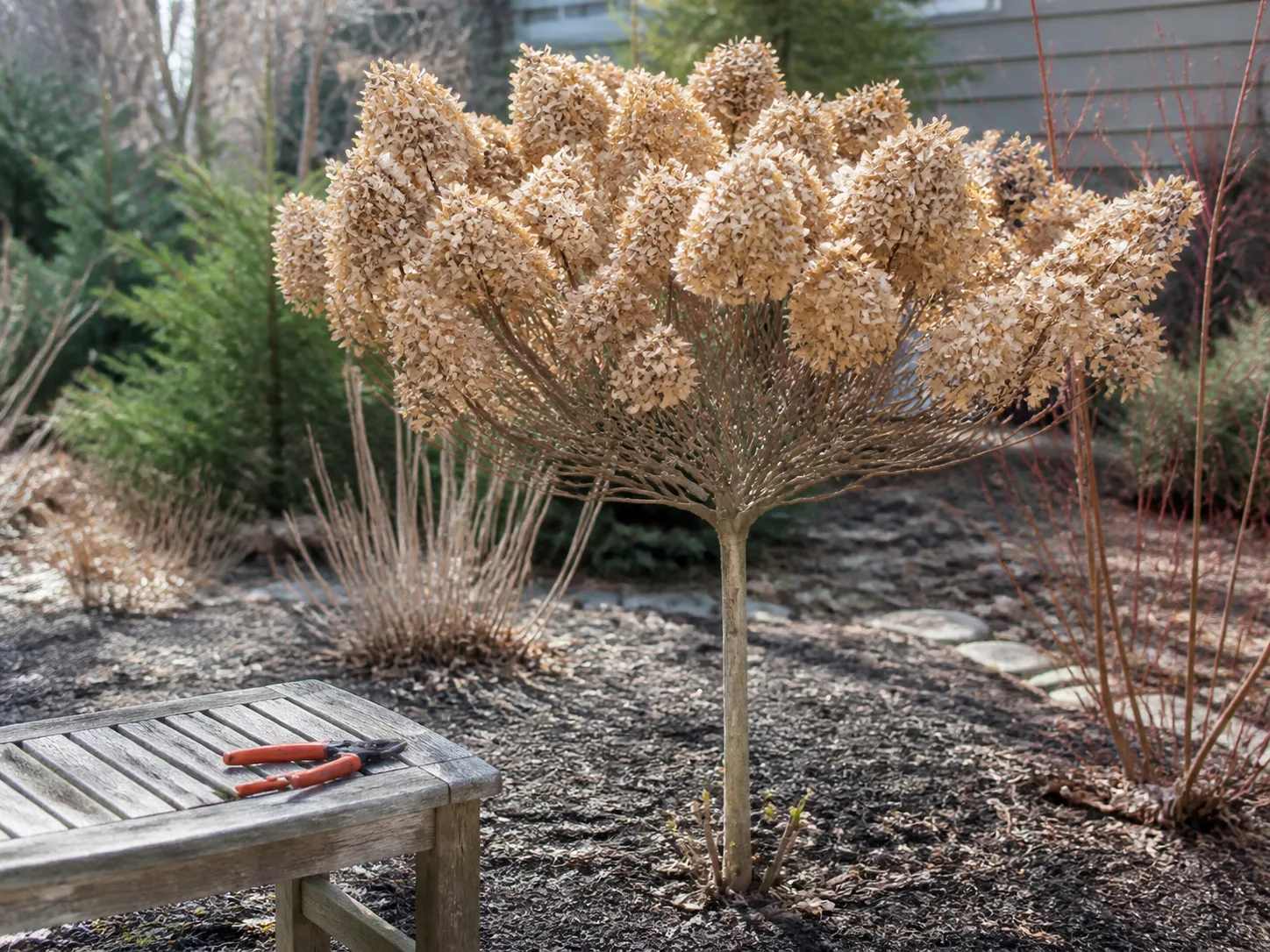
Start by removing dead, weak, crossing, or ground-trailing stems. Then decide whether you want a low framework, a taller shrub, or a tree-trained form. Cut last year’s stems back to a pair of strong buds, keeping enough sturdy branches to support the new season’s growth.
Lower cuts can produce larger flowerheads, but the weight of large heads can make stems flop, especially after rain. Leaving a taller framework may produce more moderate-sized flowers and better support. That is a design choice, not a test of whether you pruned correctly.
Hard pruning to about 10 inches or to a foot above the soil can be useful for a vigorous, neglected panicle or smooth hydrangea when done in the dormant season. The RHS describes low frameworks for these types, while also noting that pruning is not essential. On a mature plant that is merely a little untidy, reduce the oldest or most crowded stems instead of removing all living wood.
An Extension Master Gardener response to a mature peegee hydrangea with too many branches recommended reducing the growth conservatively rather than taking an unlimited amount at once; the exchange is recorded by Ask Extension. That one-third rule is a useful starting guardrail for size correction, not a law for every cultivar, climate, or renovation project.
Climbing and reblooming hydrangeas
Climbing hydrangeas flower toward the ends and upper portions of their shoots. Prune overlong or misplaced shoots immediately after flowering, but keep as much of the flowering top as practical. A severe cut can make the plant look tidy while removing the very wood that carries its best display.
For rebloomers, begin with the label and the plant’s current flowering pattern. Remove deadwood in spring, deadhead early if you want to encourage another flush, and avoid routine hard pruning. If size is the problem, thin a few old stems after flowering rather than shearing the entire shrub.
The RHS growing guide also separates mid-spring pruning for H. macrophylla and H. serrata from early-spring pruning for other shrubby hydrangeas. That distinction is a reminder that broad labels such as “hydrangea” are not precise enough for a large cut.
If You Already Pruned Too Late
First, identify what you cut and what remains. If you removed a few spent heads from a panicle or smooth hydrangea, the plant is probably fine. If you shortened live stems on a bigleaf, mountain, oakleaf, or climbing hydrangea after summer bud formation, expect fewer flowers next season on those particular stems; the plant may still grow normally.
Stop pruning now unless there is dead, broken, or hazardous wood. Do not try to “even things out” by cutting the remaining live stems to match. That second round turns a partial flower loss into a complete one and removes leaf area the shrub needs before dormancy.
Resist two common overcorrections after a mistake. Do not apply extra fertilizer to force the shrub to replace every lost branch, and do not move an established plant simply because one flowering season may be lighter. Hydrangeas recover through ordinary growth, not a rescue product. The useful intervention is to keep the root zone from swinging between drought and saturation, preserve the stems that still carry buds, and make a note of the cultivar and pruning date so next year’s cut is based on evidence rather than guesswork.
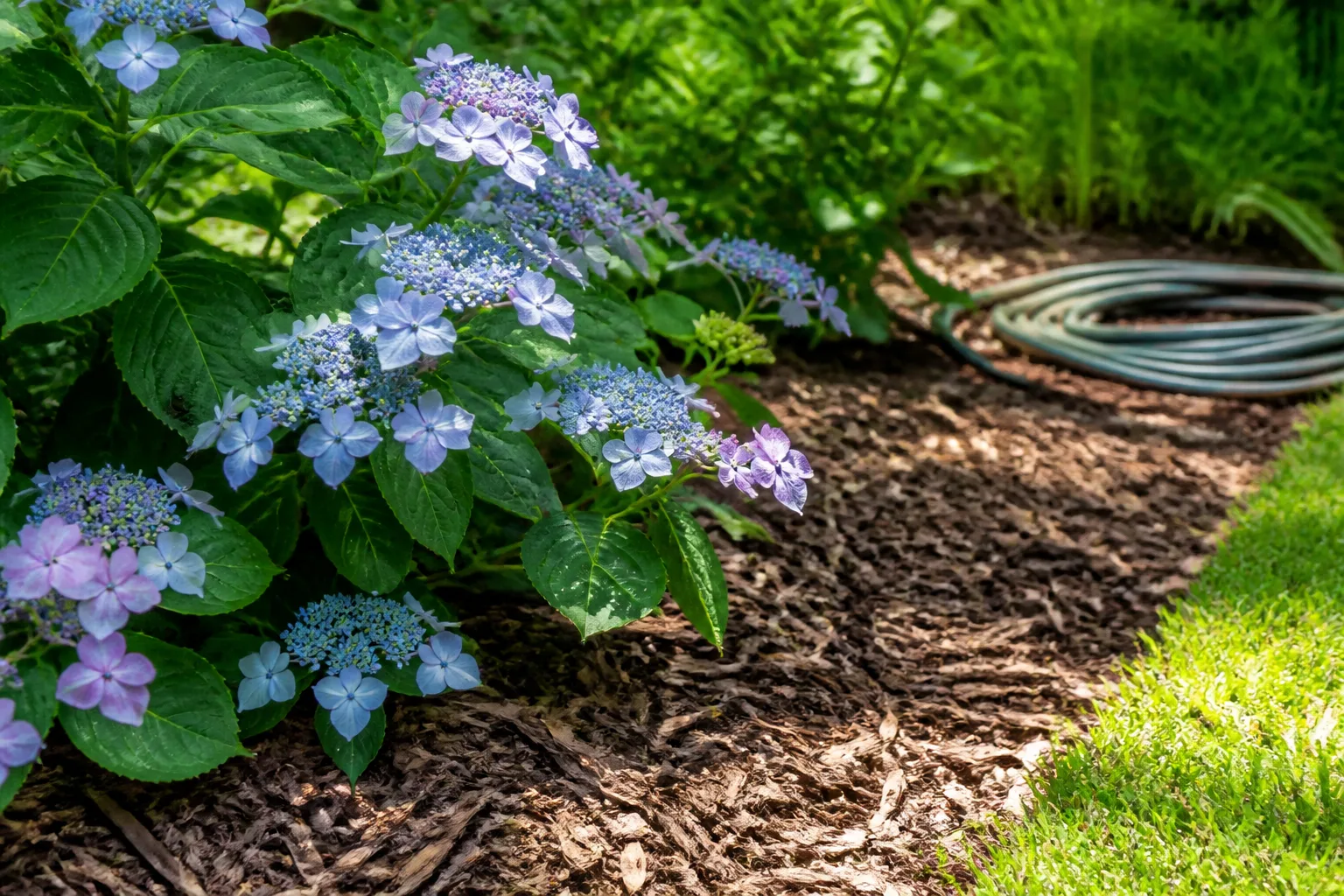
Give the plant steady care while it recovers. Water deeply during prolonged dry weather, refresh a loose mulch layer over the root zone without piling it against the stems, and avoid a late high-nitrogen fertilizer push. A healthy established hydrangea generally does not need fertilizer simply because it was pruned; forcing tender regrowth can make winter damage more likely.
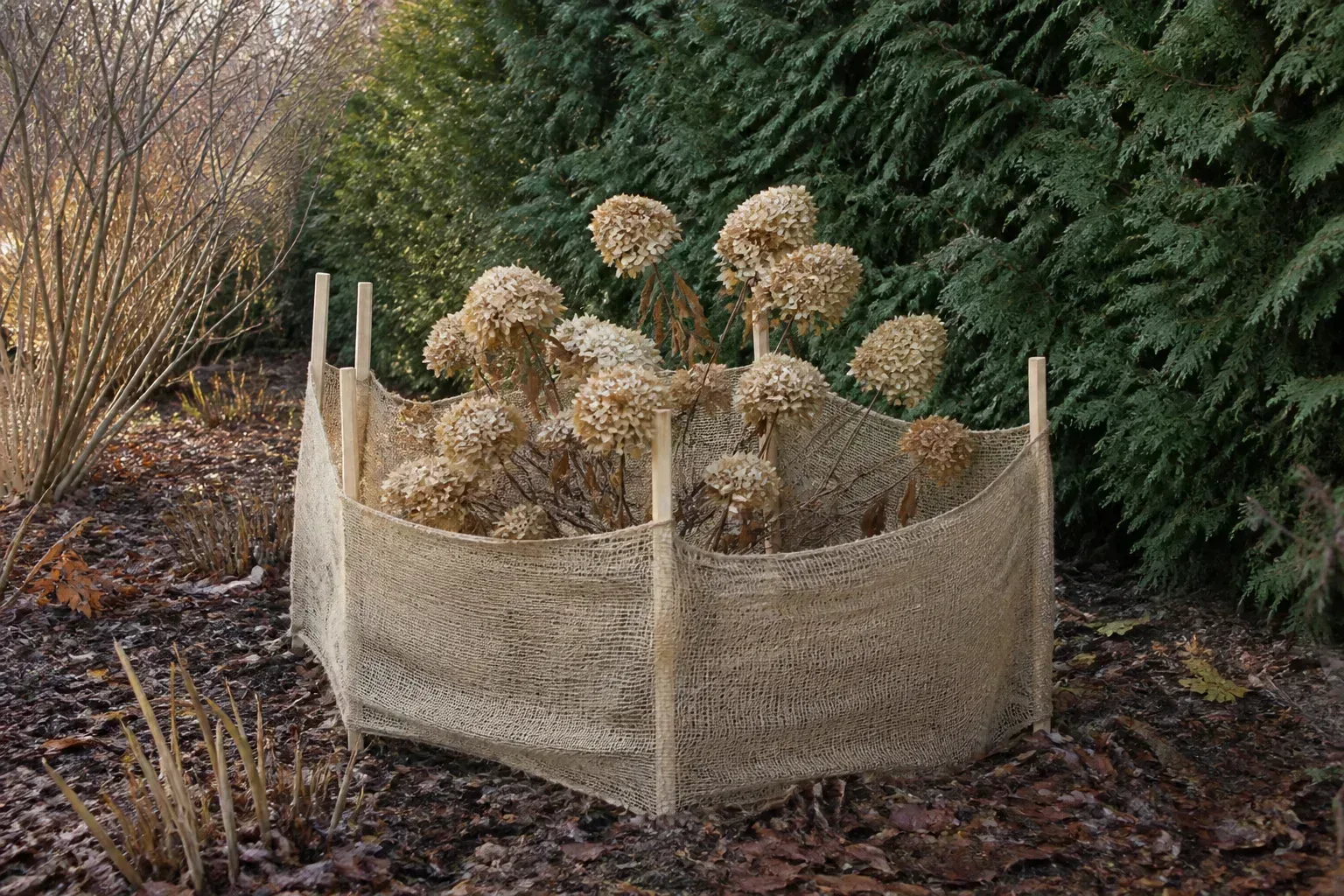
In cold or exposed sites, protect the conditions around the remaining buds rather than wrapping the plant tightly. A windbreak, a sheltered position, and a mulch layer can reduce drying and temperature swings. Potted hydrangeas can move to a sheltered cold location; the RHS growing guide notes that young buds are vulnerable to late frost and that containers benefit from protection.
Next spring, wait for live growth to reveal itself before making corrective cuts. Dead-looking tips may leaf out late, while a genuinely dead stem stays dry and fails to show buds. Remove only the damaged portion, then reassess the shrub after its next flowering cycle; a missed season is usually a timing lesson, not a permanent verdict on the plant.
Conclusion
The answer to “is it too late to cut back hydrangeas?” begins with the type, not the date. Old-wood hydrangeas should be shaped soon after flowering and left mostly alone once next year’s buds are forming; panicle and smooth hydrangeas can wait for a late-winter or early-spring structural prune; rebloomers need light, label-led maintenance because they flower on both old and new growth.
If you are uncertain, remove only dead or broken wood, deadhead with a short cut above a healthy bud pair, and postpone size reduction. A slightly untidy hydrangea can still flower beautifully; a perfectly rounded shrub with its live bud wood removed cannot.



