When to Plant Asparagus: Timing by Soil and Region
Wondering if it’s too early to plant asparagus? Learn when crowns can go in, what warmth tells you, and what to do if roots arrive before the bed is ready.
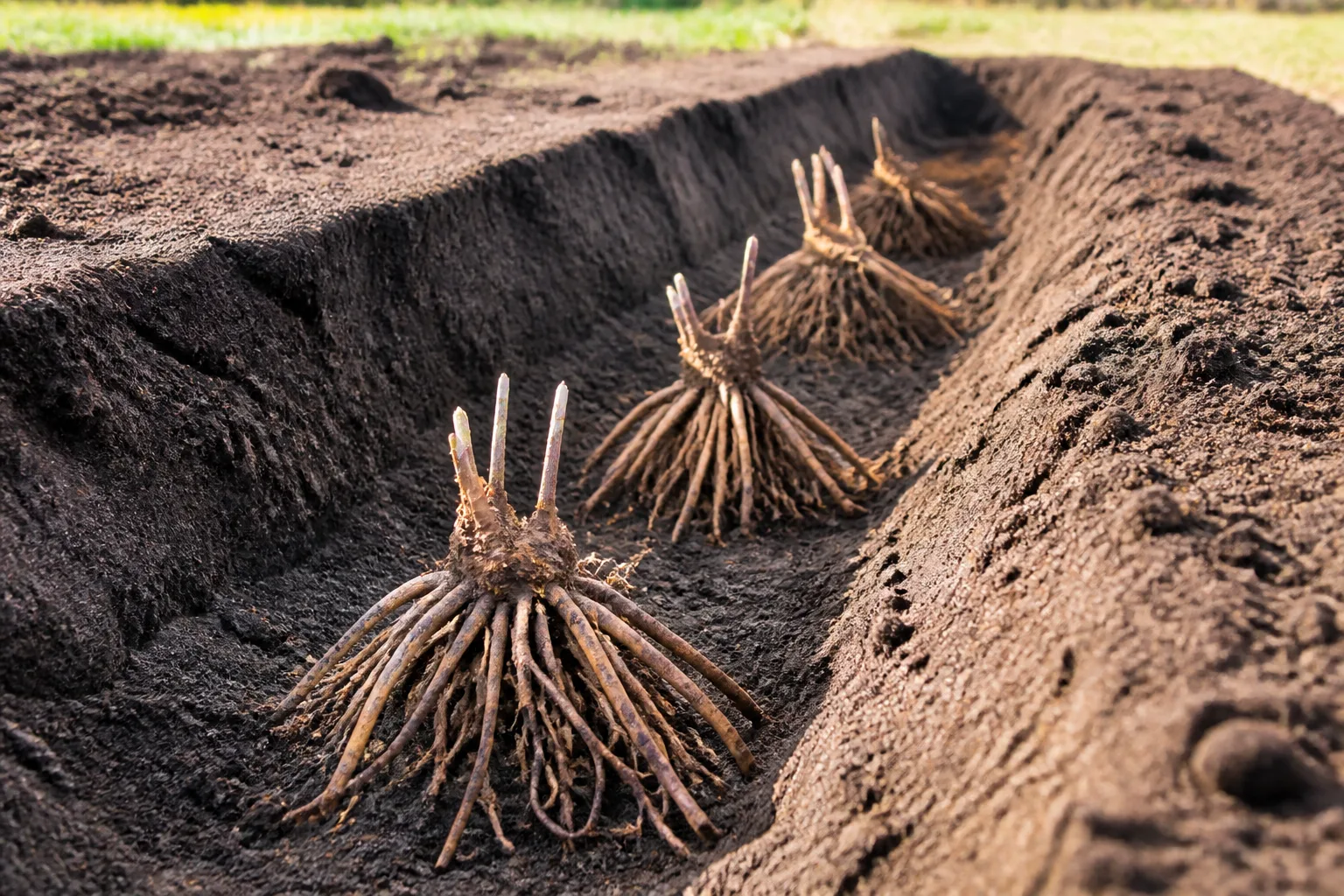
If you have dormant asparagus crowns and your garden soil has thawed, drained, and become easy to work, early spring is usually not too early. You do not need to wait for a universally agreed calendar date or for warm summer weather. The important exception is a bed that is frozen, sticky with water, or so cold and exposed that newly emerging spears would face repeated hard freezes without protection.
The often repeated 50°F soil figure needs context: it is commonly used as a cue for spear emergence, not as a universal minimum for putting dormant crowns in the ground. Region, soil condition, crown condition, and the short-term forecast matter more than a single number. Use the checks below to decide whether to plant today, hold the crowns, or wait for a better window.
The short answer: plant dormant crowns when soil is workable
For most home gardens in climates with a real winter, plant bare-root asparagus crowns in spring while they are dormant and as soon as the bed can be worked without smearing or compacting the soil. “Workable” means a spade enters the ground, the soil breaks into crumbs instead of glossy clods, and water is not pooling in the planting trench. The University of Missouri Integrated Pest Management guide recommends spring planting as early as the garden soil can be worked, then gives different calendar windows for southern, central, and northern Missouri.
That is a regional example, not a national March-or-April rule. A gardener whose soil drains quickly and thaws early may be ready weeks before someone in a colder, wetter site. If the crown is still dormant, the bed is prepared, and you can protect fresh shoots if a cold snap arrives, planting before the average last frost can be reasonable; if the earth is saturated or frozen, waiting is the better choice.
What “too early” actually means
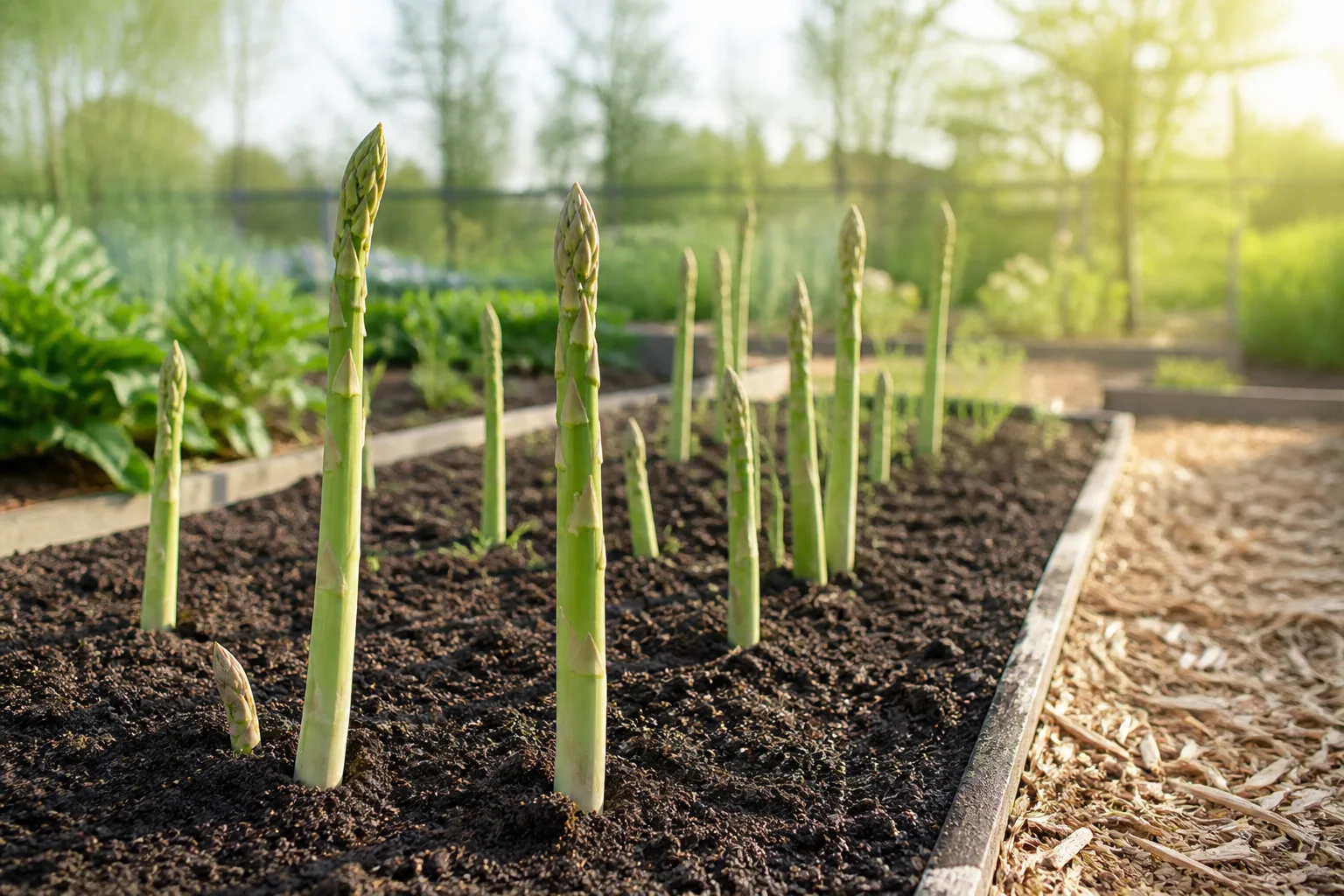
Gardeners often use “too early” to mean three different things: the calendar seems premature, the soil is still too cold or wet to work, or a freeze is forecast after spears begin to grow. Those are not the same risk. A dormant crown below the soil surface is in a different situation from a tender spear standing several inches above it, so the forecast that matters can change after planting.
For crowns, the immediate red flags are frozen ground, waterlogged soil, or a site that is not ready for a long-lived bed. Digging wet soil damages its structure, and planting into a trench that fills with water leaves the crown in conditions asparagus dislikes. For emerging spears, a late freeze can damage the top growth and cost you that flush; it does not automatically prove that the underground crown has died.
It can also be too early for your particular planting material. A dormant, firm bare-root crown can be planted into cool spring soil, while a potted plant already carrying soft green growth needs gentler handling and a forecast-aware transition outdoors. Check the label and the crown itself before applying advice written for another form of asparagus.
Treat 50°F as a clue, not a planting command
Soil temperature is useful, but it answers a different question from “Can I plant crowns now?” Harvest to Table’s asparagus planting guide describes spears beginning to emerge when soil warms to about 50°F. That makes the number a useful spring observation: the bed is waking up and new growth may soon appear. It is not a universal threshold that every gardener must wait for before setting dormant crowns.
Temperature readings also vary with depth, time of day, sun exposure, mulch, and whether the bed is raised. A quick surface reading at noon is not the same as a stable temperature near the crown. If you use a soil thermometer, take several readings at planting depth in the morning over more than one day; treat the trend as supporting evidence, not as a substitute for checking drainage and soil structure.
The Missouri guidance focuses on whether soil can be worked, while practical calendars may use last-frost dates or warming temperatures to describe their local season. Those approaches are compatible when their purpose is clear: establish a dormant crown in suitable soil, then watch the weather as shoots appear.
A field-side decision check
Before you dig, answer these questions in order. If the soil is frozen or saturated, stop there and wait; if it is workable, inspect the crown and forecast before deciding whether to plant immediately or hold it briefly.
| What you see | What it means | Best next move |
|---|---|---|
| Soil is frozen or the spade cannot enter | The bed is not ready | Keep the crown cool and follow the seller’s storage directions until thaw |
| Soil sticks to the spade in wet slabs or water stands in the trench | Drainage and structure are the immediate risks | Wait for drying; improve drainage or use a prepared raised bed |
| Soil crumbles, drains, and the crown is firm and dormant | Conditions are generally suitable for spring planting | Plant, water to settle the soil, and keep the bed labeled |
| A crown has soft green shoots and several hard freezes are forecast | The crown is already active and exposed growth is vulnerable | Plant only if the ground is ready, then use a breathable cover during cold nights |
| A perennial bed is shaded, weedy, or not yet prepared | The location may limit the crop for years | Prepare the permanent site first rather than rushing the crown into a temporary spot |
No row in this table replaces local extension advice, especially in places with unusual winter or summer conditions. It is a way to separate a genuine planting problem from anxiety about the date: workable soil and a dormant crown point toward planting; standing water, frozen ground, or a poor site point toward waiting.
Why asparagus planting calendars disagree
Published dates differ because “plant asparagus” can refer to crowns, seedlings, or established plants being moved, and because the same month describes very different weather across the country. One source may give a spring window for Missouri, another may describe late April in a colder zone, and a commercial production guide may schedule planting around field operations and the need to grow ferns before winter. A date without its location and planting method is incomplete advice.
The University of Missouri IPM article gives late March to early April for southern Missouri and early to mid-April farther north in that state, while Penn State Extension’s asparagus production guidance describes May planting in its commercial context. Homes & Gardens likewise notes later timing for colder U.S. zones. These examples show why it is safer to borrow a condition from a source than copy its month into a different climate.
“After the last frost” is also shorthand, not a switch that makes planting safe on one morning and unsafe the day before. Last-frost dates are averages; actual weather can depart from them, and the risk to a covered dormant crown is not identical to the risk to a tender spear. Use the average date to plan, then check the forecast and the bed itself when the crowns are in hand.
Choose timing for your climate
In colder northern gardens, the spring window may arrive late. Let the ground thaw and drain, and choose a locally adapted variety where winter survival and late spring freezes are concerns. The Homes & Gardens overview reports that some U.S. gardeners in the coldest zones wait until late April or May; that is a broad editorial range, so a nearby extension calendar should take priority for your county.
In regions with a moderate winter and a short spring, plant as soon as the bed is workable rather than waiting until the weather feels summery. Asparagus needs time to establish and grow its fern-like foliage during the season. A raised bed can warm and drain earlier than heavy ground, but that advantage varies with construction, exposure, and local rainfall; test the soil inside the bed rather than relying on the air temperature.
In mild-winter regions, local recommendations may place crowns in fall or winter, when the plants are dormant and summer heat has passed. Do not copy a fall schedule from a different hemisphere or climate without checking its intended region. If your winters are cold enough to freeze the ground deeply, spring is the simpler default; if your area has mild winters, ask a state extension office which varieties and season they recommend.
Seeds, crowns, and green transplants follow different schedules
Bare-root crowns are the usual shortcut for a home asparagus bed: they are established root systems sold dormant, so their planting window follows soil readiness. Keep buds facing up and spread the roots without snapping them unnecessarily. A crown can look unusual or inactive while dormant; firm roots and intact buds are more reassuring than the absence of green growth.
Seeds need a longer runway. You can start them indoors before the garden is ready, but they need time to germinate and grow into transplantable seedlings, and they take longer to reach a harvestable stage than crowns. If you are starting from seed, follow a seed-starting schedule for your region and harden seedlings off before planting them outside; do not treat a seedling with leaves as if it were a dormant crown.
Nursery pots may already contain green shoots. These can be planted when the soil and forecast are suitable, but the foliage is exposed immediately, so a cold snap matters more than it does for a dormant crown. Avoid burying an actively growing plant deeper than the nursery and local instructions recommend, and water it in gently so the root ball settles without being left soggy.
If crowns arrive before the bed is ready
An early shipment is not a reason to force a crown into frozen ground. First prepare the permanent bed if you can; if you cannot, keep the crowns in their original packaging and store them cool, following the nursery’s instructions. The Missouri IPM planting guide specifically advises refrigerating crowns that cannot be planted immediately. Do not leave them in a warm room, in direct sun, or somewhere they can freeze solid.
Check the package every few days rather than repeatedly opening and handling the roots. If they look dry, use the supplier’s directions before soaking; Garden Betty’s asparagus guide describes a brief soak for brittle crowns before planting, but warns against leaving them submerged for a long period. The goal is to keep viable roots in good condition until the soil is ready, not to stimulate growth in storage.
When the bed becomes workable, plant promptly and water enough to settle soil around the roots. If a crown has become mushy, badly damaged, or foul-smelling, contact the seller about replacement rather than planting it and expecting it to recover. A dormant crown may be brown and unshowy; rot is a different condition from dormancy.
Prepare the permanent bed before planting
Asparagus is a perennial crop, so spend more time choosing the site than choosing a convenient planting weekend. Pick a sunny location with room for rows and mature fern growth, away from the main paths where annual crops will be dug and replanted. The University of Missouri IPM guide notes that a productive planting can last many years and that wet, soggy soil is a poor fit.
Drainage matters more than rich-looking soil. If water remains after rain or the soil forms dense, sticky clods, improve the site before planting or build a raised bed with an outlet for excess water. Test the soil pH in advance; Missouri recommends about 6.5 to 7.0, while Penn State Extension gives a slightly broader 6.2 to 7.0 range. Use the result and local lab guidance to decide whether to amend rather than adding lime or fertilizer by guesswork.
Remove perennial weeds before crowns go in. Asparagus competes poorly with weeds, and its spreading root system makes deep cultivation after planting risky. Work in mature compost if the soil needs organic matter, but avoid filling the trench with fresh manure or a heavy fertilizer dose unless a soil test or local recommendation calls for it. The best time to fix drainage, pH, and weed pressure is before the bed becomes permanent.
Plant crowns with room for growth
Mark rows far enough apart that the mature ferns will not form a tangled, shaded wall. A common home-garden spacing is about 12 to 18 inches between crowns and 4 to 5 feet between rows: the University of Missouri IPM guide gives 12 to 18 inches and at least 5 feet, while Harvest to Table uses about 4 feet between trenches. Cultivar size and local instructions can shift those numbers. Lay out the bed before opening a trench; correcting crowded spacing later can mean disturbing roots.
Dig a trench using the depth recommended for your region and planting method. Instructions can look different because some sources describe the trench depth while others describe how much soil initially covers the crown. Missouri’s method starts with a 4- to 6-inch furrow and about 2 inches of soil over the crowns, then gradually fills the furrow as shoots grow. Harvest to Table describes a deeper trench in its planting directions; follow one coherent local method rather than combining the deepest trench from one guide with the final crown depth from another.
Set each crown on a low mound with roots fanned outward and buds facing up, then cover it with the initial layer of soil. Water gently to settle the soil around the roots. As shoots elongate, add soil in stages without burying their tips; this gradual backfill prevents the crown from being planted at an arbitrary depth all at once. Keep the row marked, because a dormant crown can be difficult to see before growth begins.
Protect new crowns and emerging spears from cold
Do not confuse a cold night with an automatic planting failure. A well-covered crown below the soil is buffered from brief air-temperature swings, but tender spears above the ground are exposed. If the forecast calls for a hard freeze after spears emerge, cover the row overnight with breathable frost cloth or another garden cover that does not press heavily on the shoots; remove or vent it when the temperature rises so the bed does not overheat.
The Homes & Gardens timing guide recommends planting after frequent frosts begin to pass, which is sensible when shoots are already active and you have no way to protect them. In a colder region where dormant crowns are normally planted early, local extension calendars may accept planting before the last average frost because the risk is managed differently. The choice is not “frost never happens” versus “plant regardless”; it is whether the root crown is dormant and protected, and whether you can shelter exposed growth.
Avoid piling a heavy, wet layer of mulch over tender spears. A light mulch can conserve moisture and suppress weeds after the ground has warmed, but leave enough room to see where shoots emerge. If the bed is already mulched for winter, pull it back gradually as spring growth approaches and keep a cover nearby for a late cold snap.
Already planted during a cold spell?
If you planted crowns and the temperature dropped, do not dig them up to inspect them. Disturbing roots is more likely to create a new problem than help. Check whether the soil is draining; if it is, leave the crown in place, keep the row lightly covered if another freeze is forecast, and watch for new shoots as the weather settles.
If visible spears were blackened or bent by frost, remove only tissue that has collapsed or become mushy after the damage is clear. A damaged spear will not become a straight harvestable spear again, but the crown may produce additional growth. Give the plant the rest of the season to fern rather than trying to make up for lost spears by cutting every new shoot.
If the trench is standing in water, address the drainage instead of adding more water or fertilizer. Where the site is chronically wet, wait until the bed can be improved; if crowns are already planted, a local extension office can help decide whether to leave them, lift them while dormant, or move the planting. There is no benefit to taking a second risk by transplanting during saturated conditions.
Is fall planting a good backup?
Spring is the straightforward choice for gardeners with cold winters, especially when the soil is workable before active shoot growth. Fall planting is not automatically wrong, but it depends on a mild enough local winter, a suitable variety, and enough time for roots to settle before the ground freezes. Homes & Gardens describes early-fall planting in a milder climate while the soil retains warmth; that should not be treated as a universal U.S. calendar.
Separate planting new dormant crowns from moving an established bed. A newly purchased crown has not yet built a large fern canopy that needs to return energy to the roots. An established plant, by contrast, should not be cut down while its foliage is still green and replenishing the crown. If you need to move mature asparagus, wait until it is dormant and follow local advice; expect to skip harvest while it re-establishes.
If you missed spring in a cold-winter area, it is usually better to ask a local extension office or reputable nursery whether fall crowns are appropriate than to plant just before a hard freeze. A late, rushed planting in a waterlogged or frozen bed is not rescued by the fact that asparagus is perennial. The calendar should still leave the roots a reasonable establishment window.
Is a container a good workaround?
A container can make asparagus possible where there is no garden bed, but it does not eliminate timing or root-space limits. The crop forms a lasting root system and sends up tall fern growth, so a small patio pot is a poor long-term home. If you choose a container, use a large, deep planter with drainage, keep it in full sun, and plan for protection because roots in a pot experience cold and drying more quickly than roots in the ground.
Choose the planting moment by the same soil test: the potting mix should be thawed, moist but not saturated, and easy to work. Container mix warms sooner in sun, which can also prompt earlier shoots and increase exposure to a late freeze. Do not move a heavy planter into a heated room to force growth; keep it in a sheltered outdoor location and cover new spears when needed.
For a household hoping for a dependable harvest over many years, a raised bed is generally a better compromise than a container. It offers a deeper root zone and steadier moisture while still improving drainage over heavy ground. If the only available container is shallow or must sit in a spot that freezes solid, grow another vegetable there and wait to establish asparagus in a more suitable permanent space.
How planting date changes the first harvest
Planting early does not mean harvesting early. The first job of a new crown is to establish roots and produce fern growth that replenishes its stored energy. The Washington State Department of Agriculture’s asparagus guide notes that it takes nearly three years after planting for asparagus to reach maturity for a full-season harvest. That is a useful expectation even though local harvest practices and varieties differ.
For a home bed, leave the first season’s spears to grow into ferns. In the second spring, some established crowns may tolerate a very short harvest, but the University of Missouri IPM recommendations emphasize limiting that early harvest and allow a longer season only as the planting matures. If crowns arrived stressed, were planted late, or produced weak growth, skip cutting and let the ferns rebuild the root system.
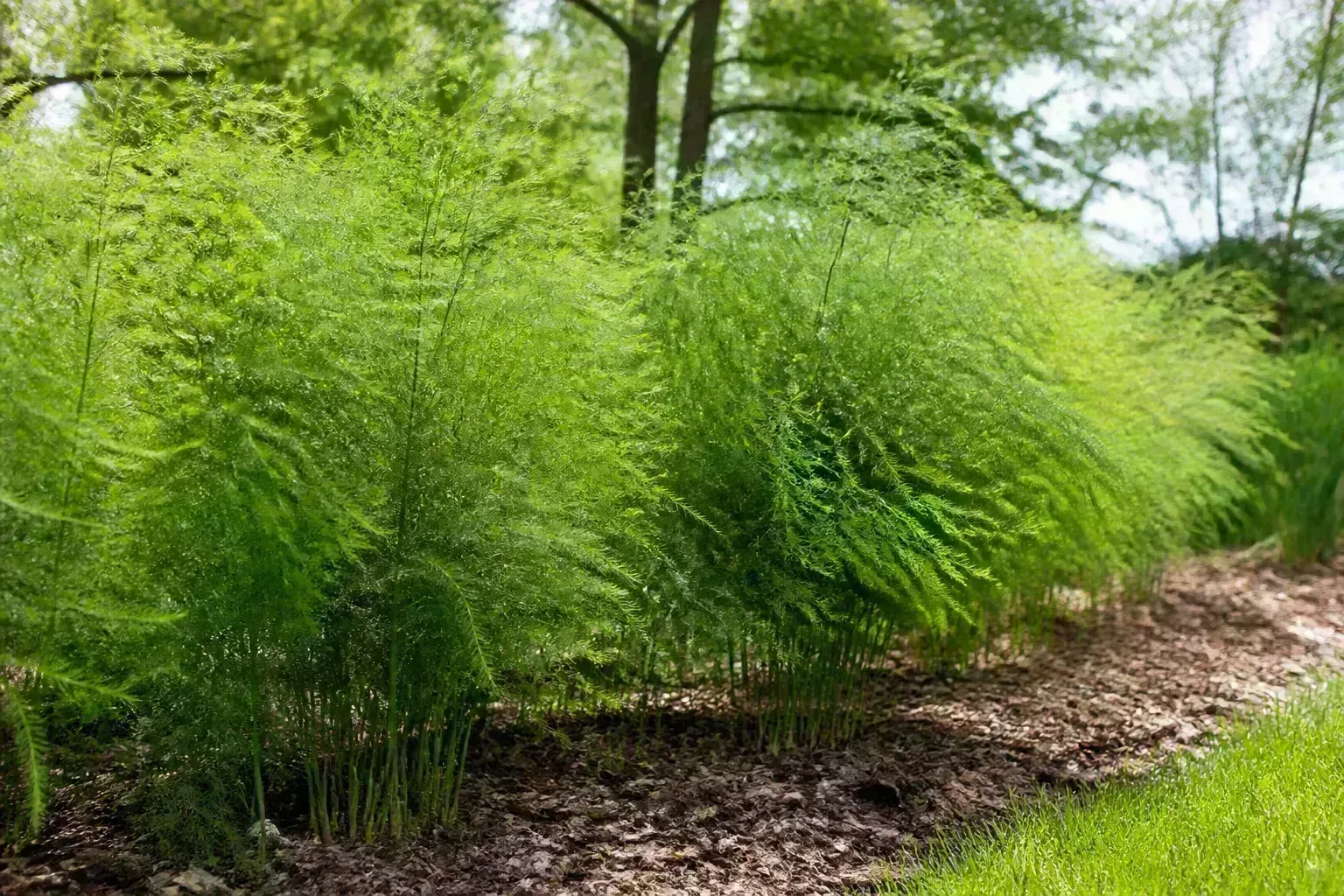
Once spears become thin or the harvest window ends, stop cutting and let the foliage stand through the growing season. Those fern-like stems are not wasted growth; they help supply the crown for the next spring. The planting date sets the start of establishment, but patient first- and second-year care determines whether the bed can support a useful harvest later.
Conclusion
Plant asparagus crowns when they are dormant and your bed has thawed, drained, and become workable. Treat 50°F as a clue that spears may be emerging, not as a rule that every crown must wait for; use your local frost pattern to decide how to protect new shoots. If the soil is frozen, saturated, or unprepared, keep the roots cool and wait for a better window.
For asparagus, the right planting day is the one that starts a permanent bed under sound conditions. Prepare the site first, plant crowns gently, and let the young plants grow ferns before you harvest. A little patience now is more valuable than gaining a few days on the calendar.