How to Prune Holly for Holiday Decor Without Harming Your Plant
Learn when to prune holly for holiday decor, how much to harvest, and where to cut so wreaths look full and your shrub stays healthy for next year's berries.
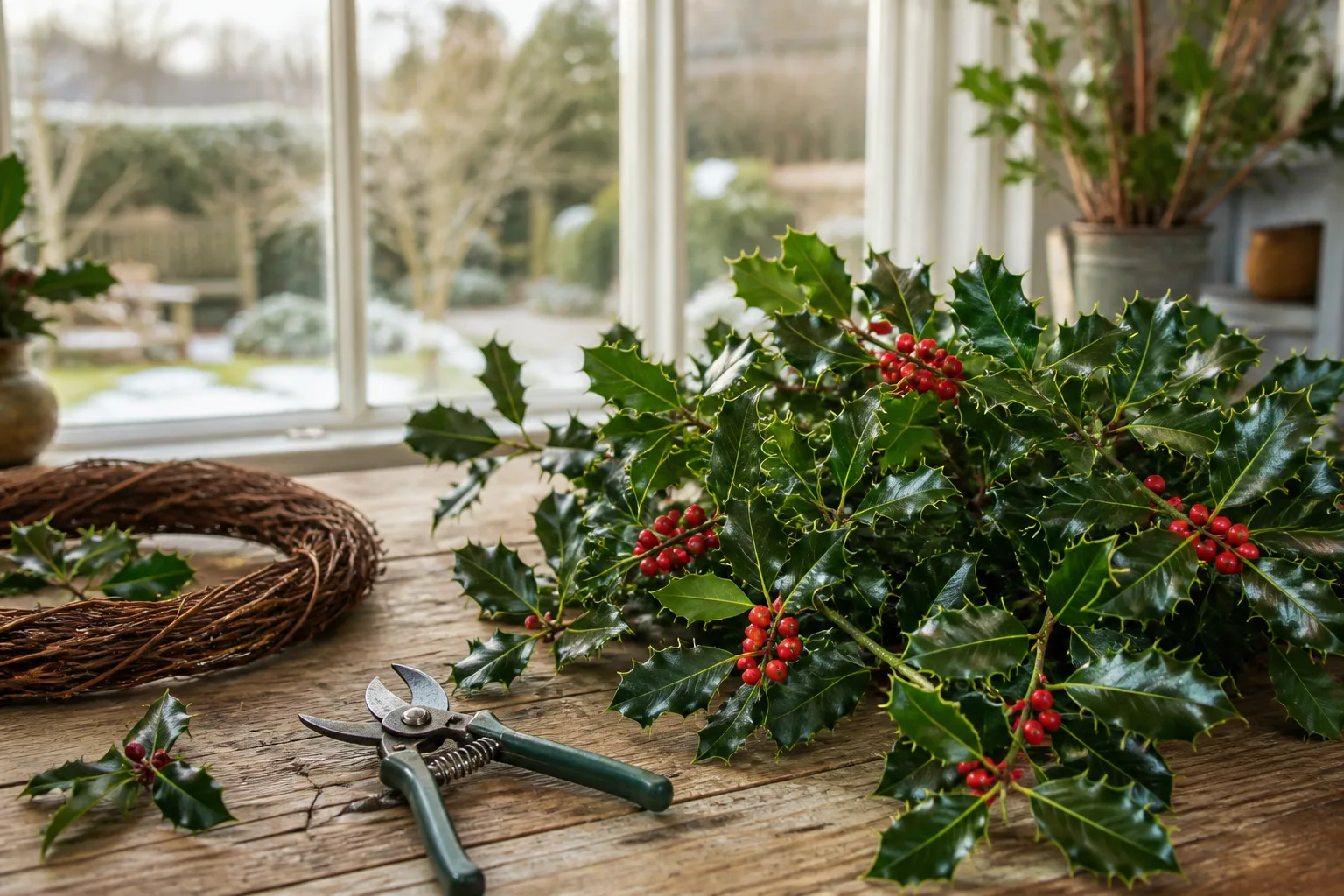
You do not need a florist to fill a mantel with glossy leaves and red berries. A few well-chosen cuts from a healthy backyard holly can power wreaths, garlands, and vase arrangements for the whole season. The catch is timing and restraint: holly is slow-growing, often dioecious, and unforgiving when you strip too much at once. Cut like you are borrowing from next year’s landscape, not clearing a hedge, and the plant will look better in spring than it did before you decorated.
The quick answer: when and how much to cut for holiday holly
Yes—you can harvest holly for holiday decor in December, but treat it as a light decorative prune, not a hard renovation. For evergreen hollies (American holly, blue holly, Japanese holly, yaupon), wait until consistent cold weather has arrived so you are not forcing tender new growth that could freeze. For deciduous winterberry (Ilex verticillata), early to mid-winter is ideal because it blooms on new wood and drops its leaves anyway—bare red branches are the whole point.
Across both types, follow three rules every time you reach for the pruners:
- Take only what you need for this year’s decor—never more than about one-third of stems and berries in a single season.
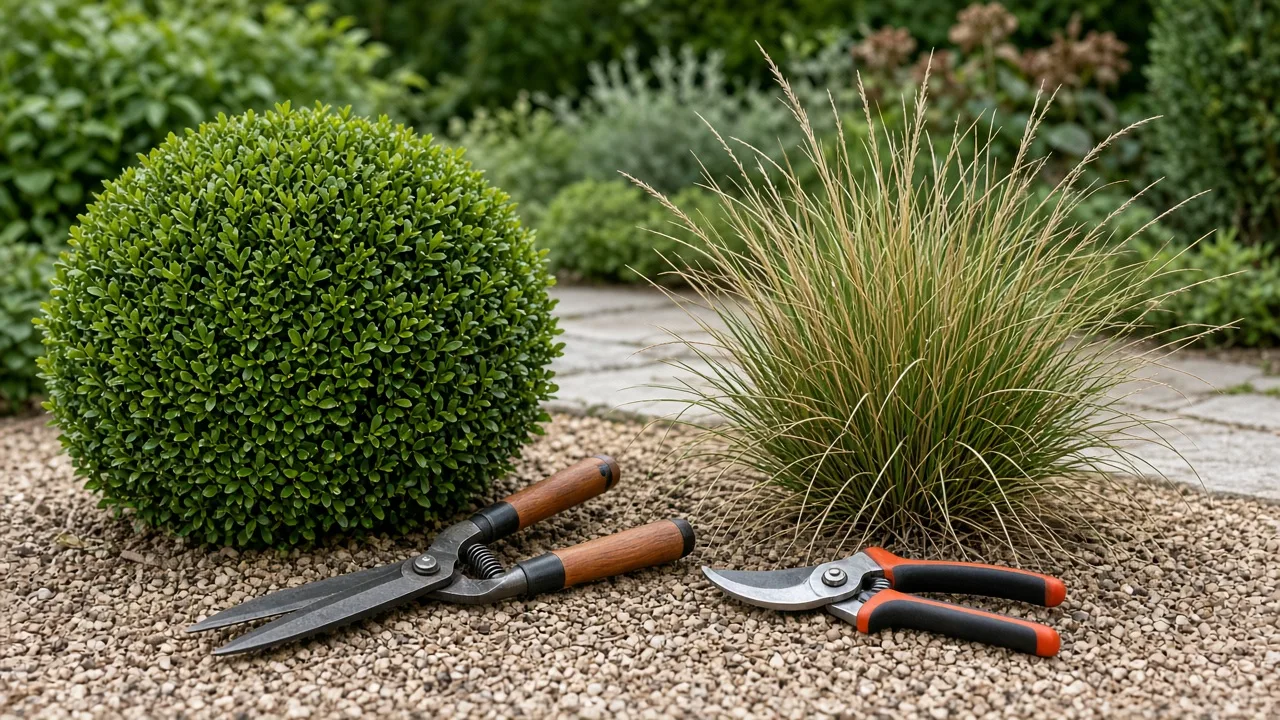
- Cut at a leaf node (or branch collar on larger wood) with sharp, sterilized bypass pruners or loppers.
- Work around the shrub so it stays balanced; remove crossing or damaged wood while you harvest, but do not turn one side into a hole.
Save heavy shaping and renewal cuts for late winter or early spring, after the holidays, when the plant is fully dormant and you can see structure clearly.
The one-third rule for decorative harvests
The one-third cap is not arbitrary. Holly grows slowly compared with ninebark or spirea, and berry crops depend on wood you leave behind. Removing more than a third of live stems in one pass weakens reserves, opens the canopy to winter burn, and can eliminate flower buds on evergreen types that bloom on old wood.
If you need more greenery than one shrub can spare, spread harvest across several plants or supplement with conifer boughs, birch twigs, and pinecones from the yard. NC State Extension emphasizes ethical December cutting: minimal and strategic, removing crossing or damaged branches while preserving the berry display birds rely on through lean winter months.
Know your holly before you cut
Not all hollies behave the same. The two groups that matter for holiday decorating are evergreen shrubs and trees that hold spiny or smooth leaves all year, and deciduous winterberry that drops leaves and shows off bare stems studded with fruit. Prune the wrong type at the wrong moment and you trade this year’s centerpiece for next year’s bare branches.
Evergreen hollies (American holly, blue holly, Japanese holly)
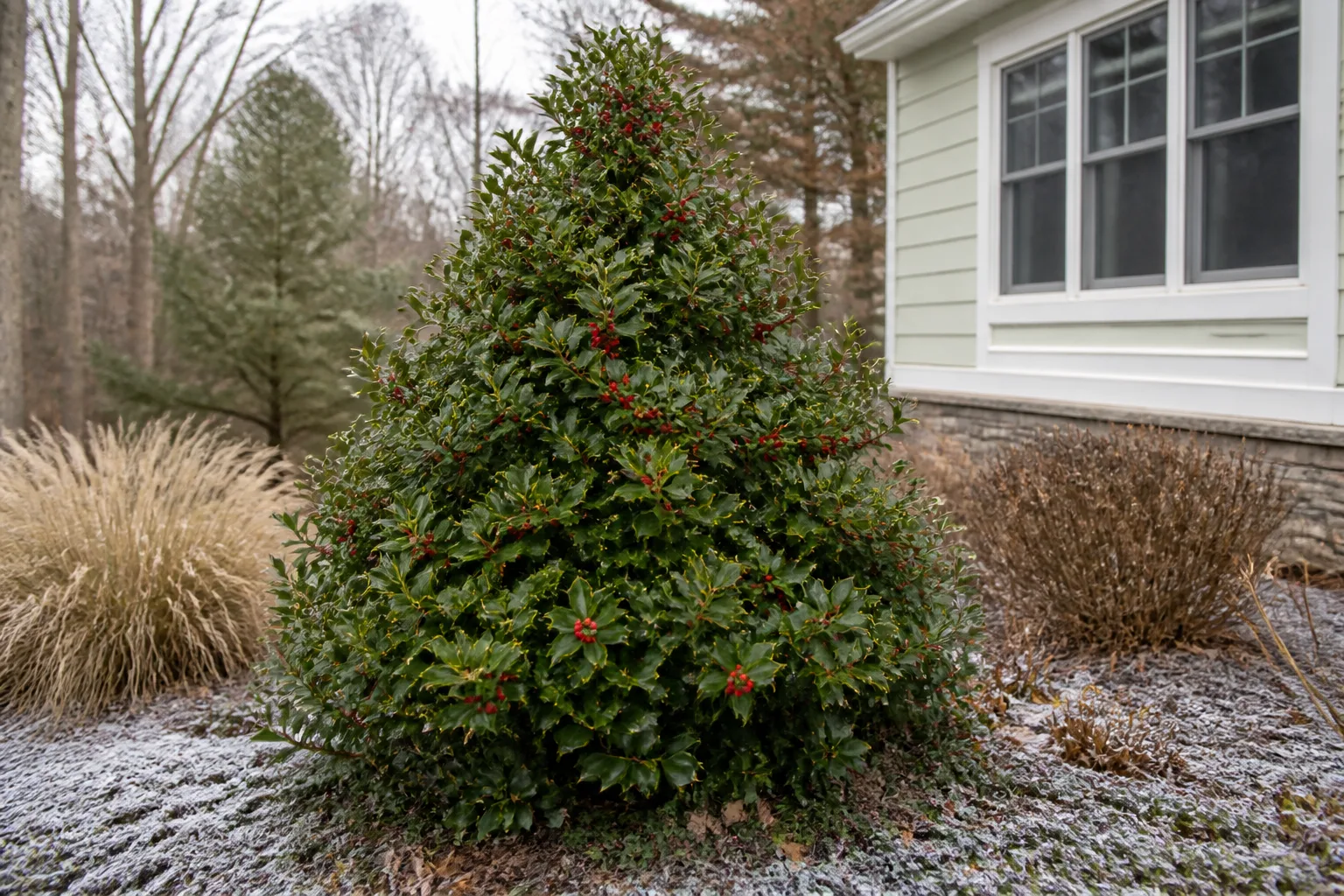
American holly (Ilex opaca) is the classic Christmas silhouette: pyramidal form, leathery spined leaves, bright red drupes on female plants. It grows slowly to a large tree in favorable sites—often 40 to 60 feet tall in the open—so backyard specimens reward light, thoughtful cuts over aggressive shearing. NC State’s plant profile notes branches are widely used in wreath-making and that both male and female plants must be present for fruit.
Blue holly hybrids (Ilex × meserveae) and Japanese holly (Ilex crenata) are common landscape evergreens with smaller leaves; Japanese types tolerate heavier shearing for hedges. Yaupon (Ilex vomitoria) is a tough coastal evergreen with fine texture and red berries on pollinated females. Evergreen hollies generally flower in spring on prior-year wood, so heavy winter pruning can reduce next season’s berry set even when December decorating is safe in moderation.
Deciduous hollies (winterberry)
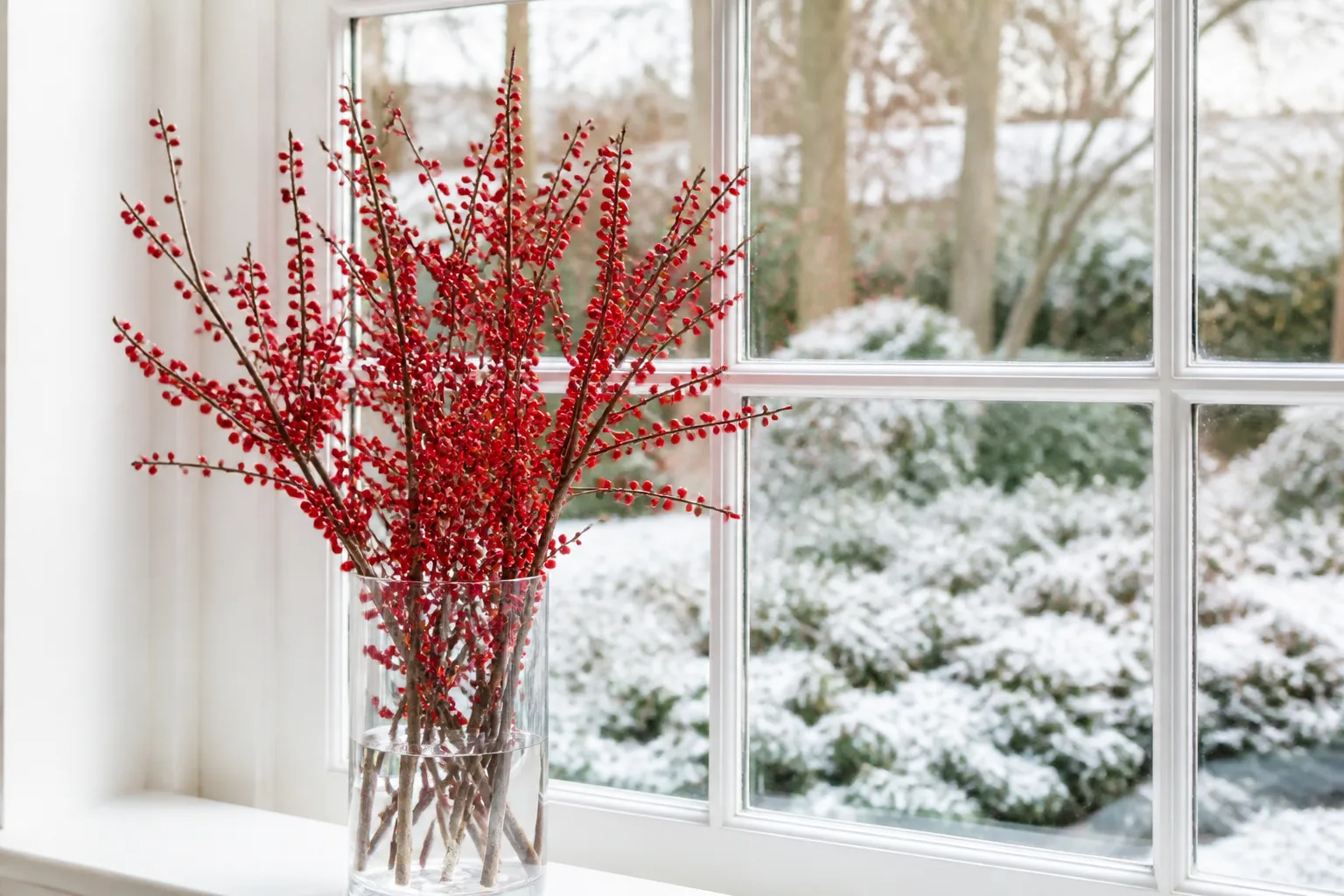
Winterberry (Ilex verticillata) is the vase-filler star: leaves turn yellow and fall, leaving persistent red, orange, or yellow berries on bare gray stems. The RHS plant profile classifies it in pruning group 1—light trimming—and notes berries persist into winter when female plants are pollinated. Winterberry blooms on new wood, so pruning in early winter removes little future flower potential compared with spring-blooming shrubs on old wood.
Why male pollinators matter for berry-laden branches
Nearly all landscape hollies are dioecious: male and female flowers on separate plants. One male can pollinate several females if sited within roughly 40 feet and blooming at the same time, as Garden Design’s holly guide explains. If your shrub never berries, you may have a male clone, a lonely female without a partner, or mismatched bloom times. Fix pollination before you blame pruning—otherwise every cut feels like it “removed the berries,” when the plant never set fruit to begin with.
Can you trim holly in December for wreaths and garlands?
December trimming for decor is standard practice and does not automatically harm healthy shrubs. Better Homes & Gardens notes you can snip glossy evergreen branches and berry stems in late fall and winter for arrangements without damaging the plant, provided you stay within light-harvest limits.
The distinction that saves beginners: decorative harvesting in December is not the same job as structural pruning in late winter. December is for gathering materials; February or March is for shaping, removing dead wood, and correcting size. Mixing the two—trying to downsize a overgrown holly while also stripping every berry branch for garlands—is how good plants get stressed.
Wait for cold weather on evergreens
Evergreens enter dormancy gradually. Cutting evergreens during a warm spell can stimulate new growth that hard freezes then kill, leaving browned tips all winter. Extension guidance summarized across arboretum and cooperative-extension sources recommends waiting until cold weather is established in your area before pruning evergreens for decoration. You want the plant fully quiet, not halfway awake.
In mild zones this may mean late November or December; in colder regions, mid-December through January is often safer than an early warm week in November. Watch the forecast: if a severe cold snap follows within days, postpone cosmetic cuts on marginally hardy cultivars.
Female plants with heavy berry loads are the most tempting—and the most vulnerable to looking stripped after harvest. Take fewer branches from each female and rotate which shrubs you use year to year so no single plant becomes the family decoration workhorse.
How to prune holly for decor without damaging the plant
Prune only healthy plants. Weak, drought-stressed, or recently transplanted hollies should not donate branches until they recover. If you must remove dead or diseased wood, do that first—then stop if the shrub looks thin.
Tools, gloves, and sterilization
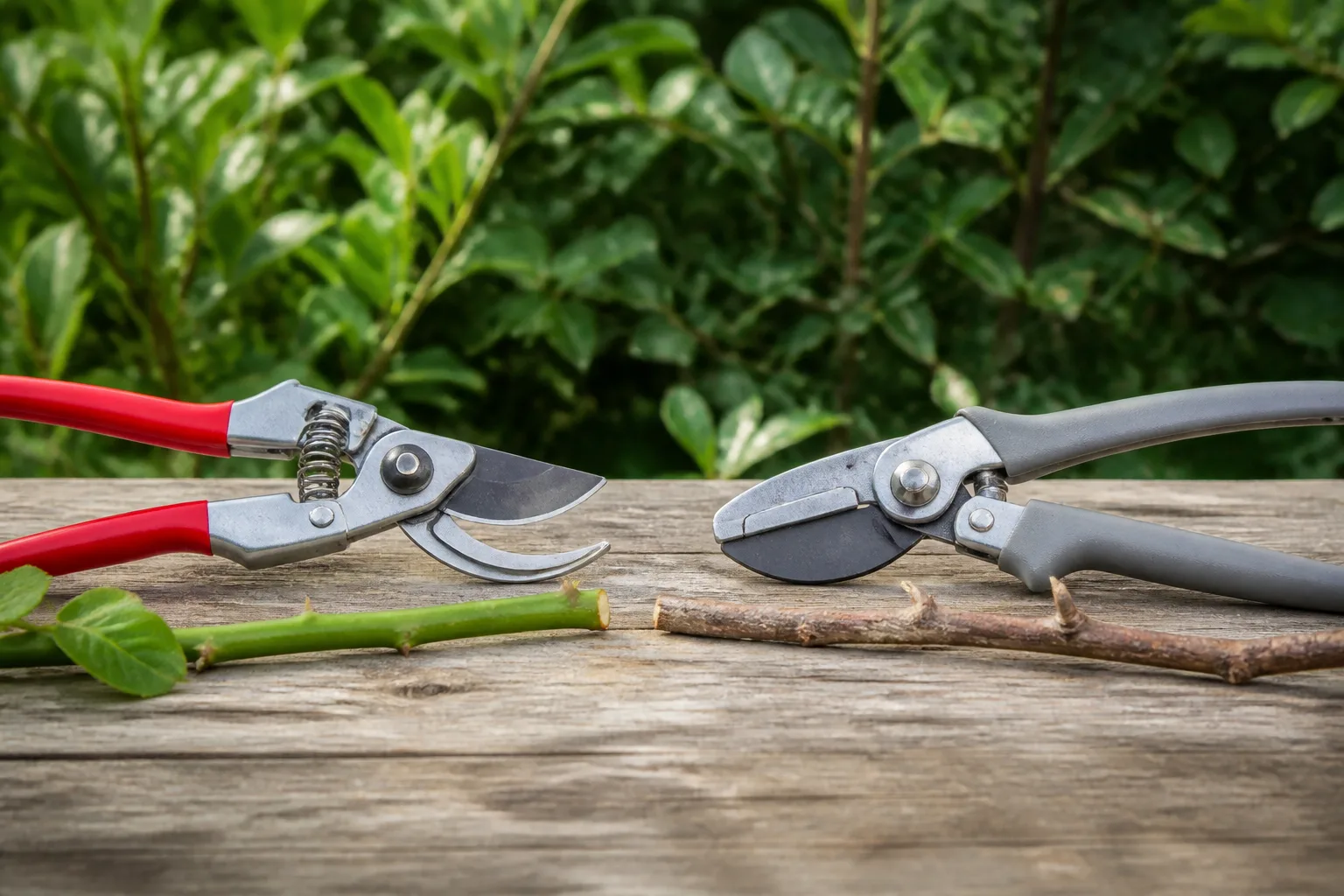
Holly earns its reputation as a prickly customer. Wear thick gloves or gauntlets, long sleeves, and eye protection when working spiny-leaved types. Use bypass pruners for stems up to about ½ inch diameter and loppers for larger wood—dull tools crush stems and invite disease.
Dip blades in 70% isopropyl alcohol or a 1:9 bleach solution between plants when disease is present. Clean cuts heal faster; torn bark does not.
Where to cut: leaf nodes, thinning cuts, and shaping as you go
For branch harvests, make thinning cuts: remove an entire stem back to its point of origin on a larger branch or trunk, or shorten to just above a leaf node where a side bud can take over. Avoid leaving stubs—they die back and look ragged.
On winterberry, cut whole berry-laden twigs at varying lengths for vases; on evergreen holly, take tip sections with several leaf clusters rather than stripping one side bare. Remove crossing, rubbing, dead, or damaged branches as you work—they belong on the compost pile, not in your wreath.
Work around the plant for even form
Harvest from all sides, stepping back often to check symmetry. Hollies look best when they keep a natural pyramidal or mounded outline. If you need long runners for garlands, take them from the interior or lower skirt where thinning improves airflow anyway.
Never top a mature American holly to “make it shorter” in December—that is a structural decision for late winter with a multi-year plan, not a holiday shortcut.
A six-step harvest sequence that protects the shrub
Working in a fixed order keeps you from over-cutting before you notice the imbalance:
- Walk the plant first without tools. Mark mentally which sides already look thin and which have surplus interior growth you can thin.
- Remove the three Ds—dead, diseased, and damaged wood—before you touch berry-laden show branches.
- Take interior thinning cuts for garland-length runners; save the most photogenic berry tips for vases and wreath focal points.
- Pause at one-third even if the bucket is not full. Close the pruners, step back ten feet, and reassess symmetry.
- Sterilize and stow tools before moving to the next holly; sap and fungal spores travel on blades.
- Water deeply if soil is not frozen and mulch is thin—pruning is mild stress, and moisture helps evergreens re-harden before the next cold snap.
If the shrub looks lopsided when you finish, resist the urge to “even it out” with more live wood the same day. Come back in late winter for corrective shaping when you are not also chasing a holiday deadline.
Signs you harvested too much—and how to help the plant recover
Over-harvested hollies show thin crowns, bare lower skirts, and few berries the following year. Evergreens may push weak, pale shoots in spring that brown after the next heat wave. If you crossed the line:
- Stop cutting live wood for the rest of the season.
- Mulch 2 to 4 inches (keeping mulch off the trunk flare) and water during dry spells in spring.
- Skip fertilizer until new growth looks normal—feeding a stressed shrub forces soft tissue it cannot support.
- Plan a light renewal over two or three late-winter sessions rather than one aggressive catch-up cut.
Recovery is slow because holly grows slowly by design. Patience now beats another heroic December harvest next year.
Species-by-species timing cheat sheet
| Holly type | Best window for holiday harvest | Best window for shaping / renewal | Berry notes |
|---|---|---|---|
| American holly (I. opaca) | December–January after cold settles | Late winter to early spring | Female needs nearby male; blooms on old wood—go easy |
| Blue holly (I. × meserveae) | December–January | Late winter to early spring | Same pollination rules; sheared plants bear fewer berries |
| Japanese holly (I. crenata) | December–January | Late winter; hedges may need summer touch-up | Often grown for foliage; berries less showy |
| Yaupon (I. vomitoria) | December–January | Late winter to early spring | Coastal tough; pollinated females berry well |
| Winterberry (I. verticillata) | Early to mid-winter (once leaves drop) | Late winter while dormant | Cut bare berry stems freely within one-third limit |
| Nellie R. Stevens (I. × Nellie R. Stevens) | December–January | Late winter to early spring | Heavy berry producer when pollinated |
When in doubt, identify your plant from tags, nursery records, or winter habit—spiny evergreen leaves versus bare berry canes—before you choose a row in the table.
Keep cut holly fresh indoors
Fresh evergreen holly lasts about one week without water in cool indoor air; stems in water or floral foam often stay vibrant two weeks or longer, per horticulture magazine testing cited in mainstream pruning guides. Treat cut holly like short-lived cut flowers—not like a houseplant—and you will get noticeably more display time from the same branches.
For vase arrangements: Recut stems underwater at a steep angle to maximize water uptake. Use lukewarm water with a floral preservative or a pinch of citrus soda (not diet) to acidify slightly. Change water every two to three days and strip any leaves that would sit below the waterline—they rot and breed bacteria.
For wreaths and garlands: Soak finished pieces overnight in a tub or mist heavily, then let them drain before hanging. Keep displays in cool rooms away from fireplaces, radiators, and south-facing glass that desiccates foliage in hours.
For mantel bundles: Stand stem ends in damp floral foam hidden in a container, or mist daily and run a cool-mist humidifier nearby during party weeks.
Mist cuttings lightly between these steps, keep them out of direct heat registers, and recut stem bases underwater if they wilt.
Safety reminders: Holly berries and leaves contain compounds that are mildly to moderately toxic if ingested—keep arrangements away from curious pets and children. Garden Design lists holly among common poisonous landscape plants; display for looks, not snacking.
If you supplement with conifer greens, avoid yew (Taxus) indoors or near candles—yew foliage is highly toxic. Do not place dry, resinous evergreen boughs near open flames.
December holly care while you harvest
Harvesting branches does not pause the rest of winter care. Hollies in the ground should be watered sparingly until soil freezes, then left alone except during unusual dry warm spells in mild climates. A 2- to 4-inch mulch ring (not piled against the trunk) protects roots from freeze-thaw cycles.
New plantings are more vulnerable to desiccating winds than established shrubs; loosely wrapped burlap wind screens on stakes can help first-year plants without smothering them. Remove wraps when weather moderates in spring.
Potted hollies expose roots to more extreme cold; move containers to an unheated garage or sheltered spot if your zone pushes the plant’s hardiness limit. Resume regular watering when spring growth begins.
Yard finds that spare your holly
The best holiday display often mixes materials so no single shrub gets scalped. Freely gather (from your own property):
- Pine, spruce, fir, and hemlock boughs for bulk greenery in wreaths and mantels
- Pinecones for bowls and ornament accents
- Birch twigs or bark for neutral texture
- Winterberry stems if you have them—often the showiest vase filler
Use caution with English ivy (Hedera helix): it weaves beautifully but is invasive in many regions—never compost seed-bearing vines, and prefer cutting from managed garden plants rather than wild woods.
Conclusion
Pruning holly for holiday decor is one of the few garden chores that pays you back in ribbon and candlelight—but only when you respect the plant’s pace. Identify whether you are cutting evergreen foliage or deciduous winterberry, wait for cold-settled dormancy on evergreens, harvest no more than one-third in a season, and cut cleanly at nodes with sharp tools and proper gloves. Take your structural shaping pass in late winter, leave berries for birds when you can, and fill gaps with conifer greens from the yard. Do that, and the same shrub that dressed your table this December will carry an even better crop of branches next year.