7 Places Water Bugs Hide in Your Home
Spot a water bug indoors? Identify the likely cockroach route, check seven hiding places, seal entry gaps, and track whether your fix is working.
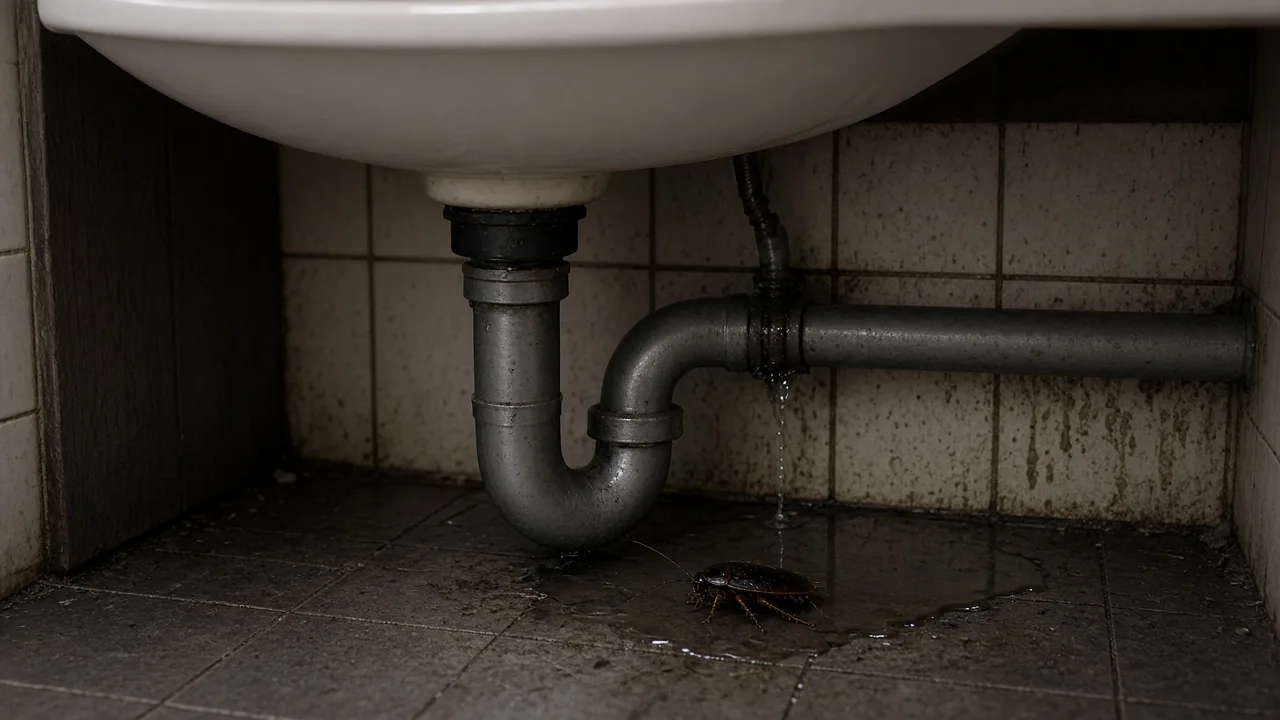
If a large, dark insect appears beside a sink, basement drain, garage door, or bathroom baseboard, the most useful question is not “What spray kills it?” It is which route gave it water, shelter, and a way into the room?
“Water bug” is a loose household name rather than a dependable insect identification. Indoors, it often describes a moisture-loving cockroach, but a true aquatic water bug can also wander or fly toward lights. The distinction matters: one outdoor visitor may need exclusion and monitoring, while repeated small roaches in a warm kitchen point toward an indoor-breeding problem.
The plan below starts with the seven places most likely to explain a sighting, then turns those observations into action. You will learn what to look for, what to leave alone, how to use sticky traps as evidence, and when a persistent source belongs to a plumber, building manager, or licensed pest professional.
The name “water bug” needs a reality check
The nickname usually points to the insect’s preferred conditions, not to one species. Large American, Oriental, or smokybrown cockroaches may use sewers, basements, crawlspaces, wet landscaping, or damp structural gaps, while German cockroaches are smaller, lighter, and more likely to stay near food, warmth, and water in a kitchen. University of Georgia Integrated Pest Management notes that American cockroaches favor dark, damp hideaways such as sewers and basements, while German cockroaches are primarily indoor pests associated with warm appliances and water sources. University of Georgia’s cockroach profiles are useful when a nickname is sending you toward the wrong treatment.
Do not diagnose from color alone. A dark, flattened, slow-moving roach beside a wet basement wall suggests a different route from a half-inch tan insect with two dark stripes behind its head appearing around a refrigerator. If the insect is unfamiliar, take a clear photo from above, preserve it in a sealed container if possible, and ask a local extension office or pest professional for identification before choosing a pesticide.
How to tell a stray visitor from a hidden population
One insect after heavy rain, a cold snap, or a door left open is not proof that a colony is living inside. The pattern changes when you find nymphs, egg cases, droppings, shed skins, repeated catches, or activity in more than one connected room. Daytime sightings also deserve more attention because cockroaches are normally nocturnal; daylight movement can mean the hiding places are crowded or disturbed.
A single large roach near an exterior threshold often sends you outdoors, toward a drain, or to a plumbing breach. Several small roaches around a kitchen sink, cabinet hinges, warm appliances, or food storage suggest an indoor harborage. Utah State University Extension lists warm, moist places near food preparation and storage, including sinks and appliances, as characteristic nesting areas for German cockroaches and recommends traps, HEPA vacuuming, food storage, leak repair, and routine trash removal as parts of an IPM response. Utah State University’s German cockroach notes explain why this distinction matters.
The seven hiding places to inspect first
Do not search every room at random. Follow the last sighting toward the nearest resource: water, food, stable warmth, or a narrow crack that gives the insect contact on both sides of its body. Inspect with a flashlight after dark, and avoid reaching blindly into an appliance, wall opening, or drain.
1. Under sinks and inside cabinet toe-kicks
The space under a kitchen or bathroom sink combines nearly everything a cockroach wants: plumbing penetrations, darkness, condensation, food residue, and a cabinet floor that may stay damp after a small leak. Pull out cleaning bottles and stored bags, then inspect the back corners, the joint where the cabinet meets the wall, the underside of the countertop, and the removable toe-kick at floor level.
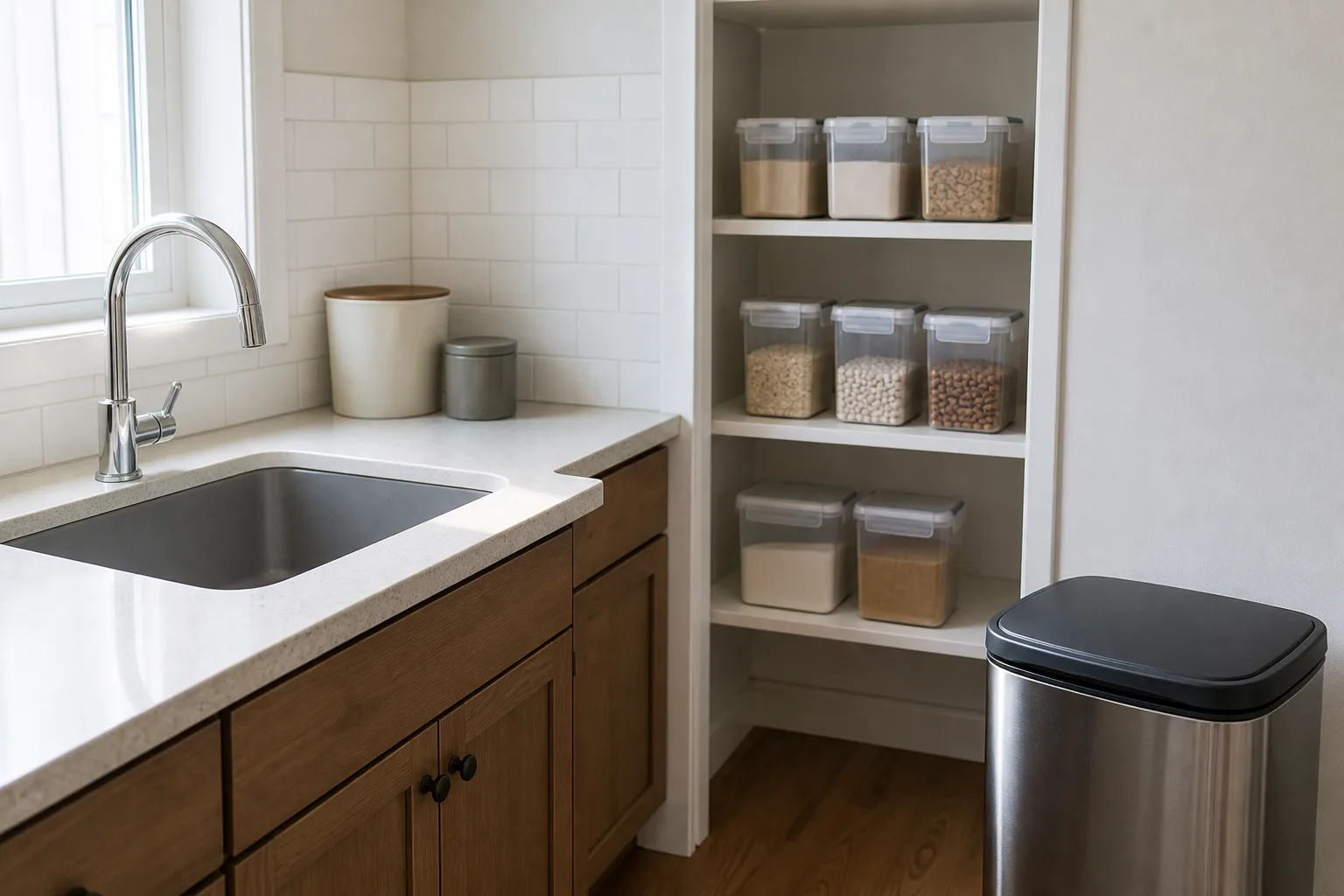
Look for swollen particleboard, a musty smell, dark specks, shed skins, or a gap around a pipe that is wider than it appears. Dry the area only after you have identified the leak, because a towel that keeps the cabinet looking clean does not remove the moisture source. Put a dated sticky monitor against the wall edge rather than in the middle of the cabinet, and note whether it catches anything overnight.
Seal the opening around a pipe only after a plumber or maintenance person confirms that the pipe can move safely and that the leak is repaired. Leave access to shutoff valves, avoid blocking required ventilation, and keep any bait or dust out of food-contact spaces.
2. Behind and beneath refrigerators and stoves
Appliance voids are warm, dark, and hard to clean, while the refrigerator supplies condensation and the stove supplies grease and crumbs. Check behind the refrigerator, under its front edge, beside the compressor area, under the stove, and inside the narrow gap between an appliance and the cabinet. A flashlight and a thin inspection mirror are safer than putting a hand into a moving appliance.
The clue here is a combination of heat, food residue, and traffic along the wall. Clean grease from reachable surfaces, vacuum crumbs and dust from the floor edge, and keep food in sealed containers so a correctly placed bait does not have to compete with an all-night buffet. Penn State Extension recommends sticky traps under stoves and refrigerators, along walls, and near likely sources of heat, water, or food because the catch pattern reveals the hot spot. Its cockroach IPM plan is a better model than spraying an entire kitchen.
Do not spray into motors, electrical components, or food-storage areas. If a dishwasher, refrigerator, or range must be moved, disconnect it according to the manufacturer’s instructions or let an appliance technician do the work.
3. Basement corners, floor drains, and sump areas
Basements provide the cool, damp shelter that large outdoor cockroaches often use. Check the wall-floor joint, behind stored items, around water heaters, near sump pits, beside floor drains, under stairs, and wherever condensation collects. Cardboard boxes resting directly on a concrete floor are especially useful hiding material because they create a dry, tight space inside a damp room.
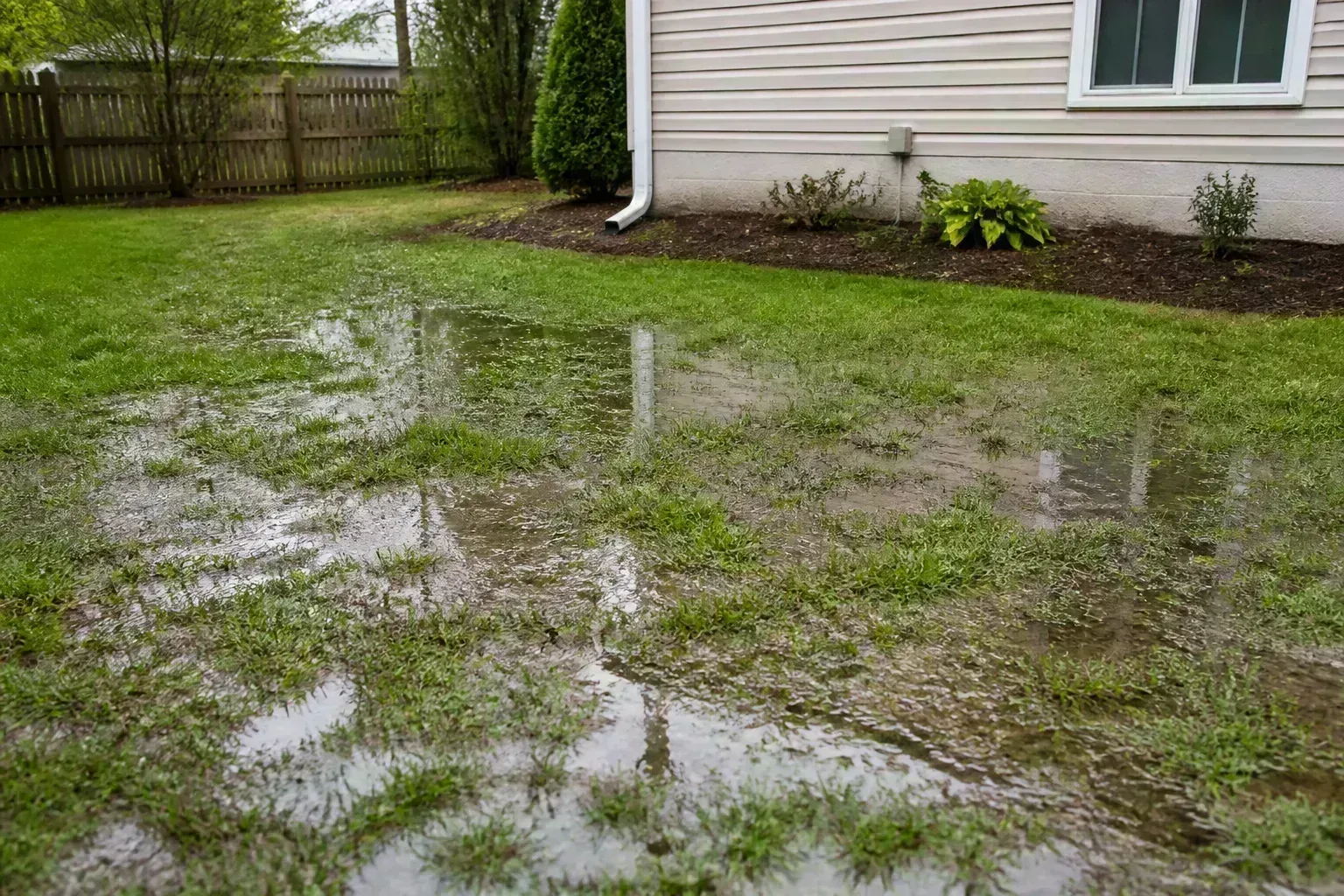
Look for a water trail rather than only a bug. A slow leak, a damp foundation edge, a drain with an evaporated trap, a dehumidifier that overflows, or a downspout that keeps the soil wet can explain why the area stays attractive. Elevate storage in sealed plastic bins, leave a small inspection gap around walls, and repair the moisture source before you decide that the basement needs pesticide.
A rarely used drain should not be treated as a cockroach nest by default. It may be an entry route, but plumbing defects, sewer breaches, and dry traps require a plumber or building professional. Run water into an infrequently used trap according to local plumbing guidance, keep a fitted drain cover in place where appropriate, and never pour pesticides or mixed cleaners into the drain.
4. Around bathroom drains, toilets, and pipe penetrations
Bathrooms supply water even in an otherwise clean home, and small openings around pipes can connect the room to a wall void, crawlspace, or sewer-side route. Inspect the underside of the sink, the gap where the toilet supply line enters the wall, the tub access panel, floor drains, loose escutcheons, and the baseboard behind the toilet.
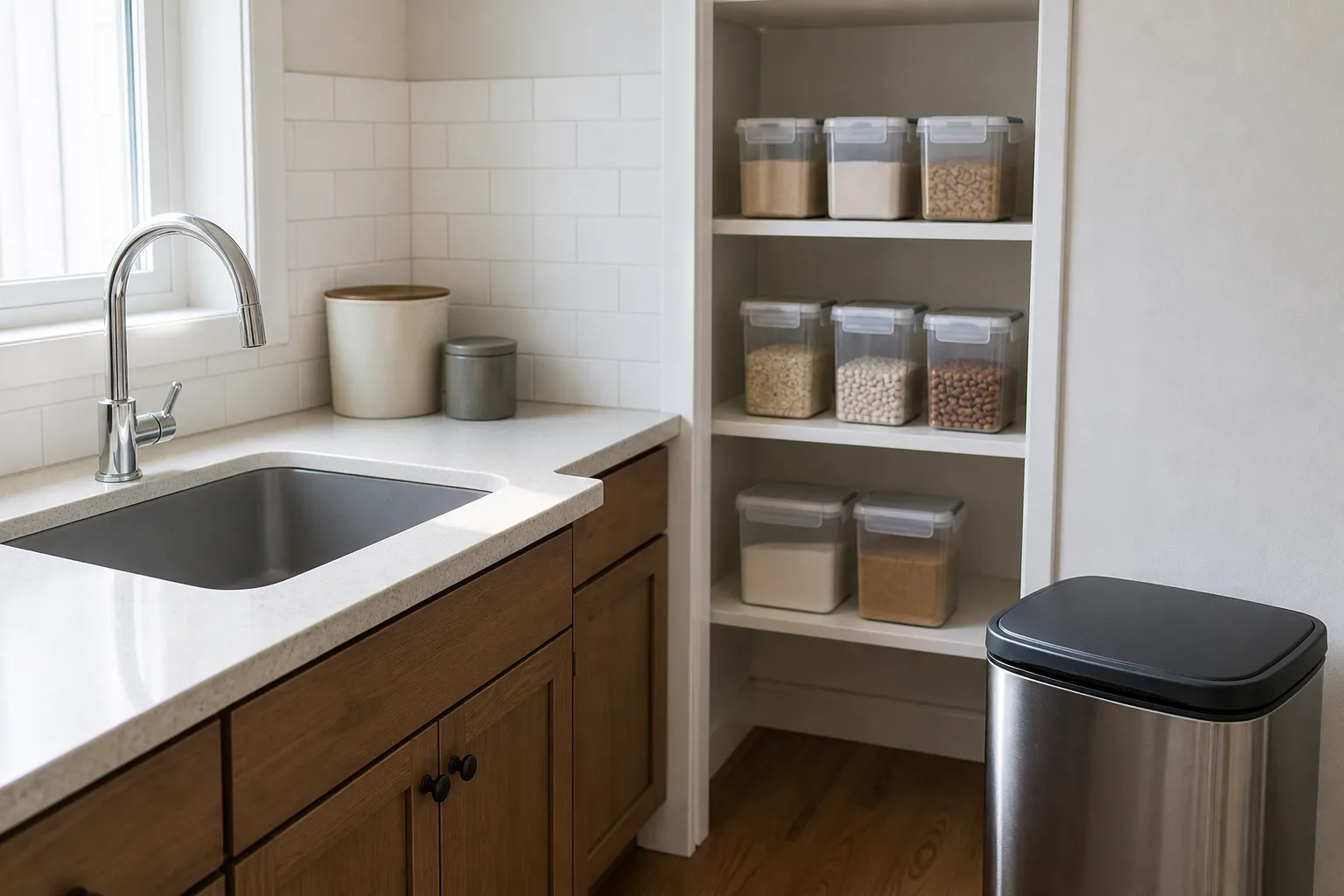
If you see a roach emerge from a drain, do not assume it lives inside the pipe. Drain debris can attract insects, and a plumbing breach or dry trap can create access, but pouring bleach, boiling water, or pesticide down the drain is a poor control plan. Bob Vila’s drain guidance, which consults certified entomologists and plumbing sources, warns that these substances can be ineffective, damage plumbing, create fumes, or move contamination toward waterways; its safer alternatives are covers, leak repair, clean dry surfaces, and sealing gaps around plumbing. Read the drain-specific guidance.
Keep the drain opening clean and use a properly fitted cover when the fixture allows one. If the same bathroom produces repeated catches, a plumber may need to check the trap, waste line, or a hidden leak, while a pest professional can inspect the connected harborages.
5. Wall voids, baseboards, and floor transitions
When insects disappear under a baseboard, behind a wall-mounted fixture, or into the gap between flooring and trim, the visible room may not be the real harborage. Cockroaches prefer narrow protected spaces with contact above and below their bodies, so loose trim, cracked grout, gaps around cable conduits, and unsealed pipe penetrations can function like hidden hallways.
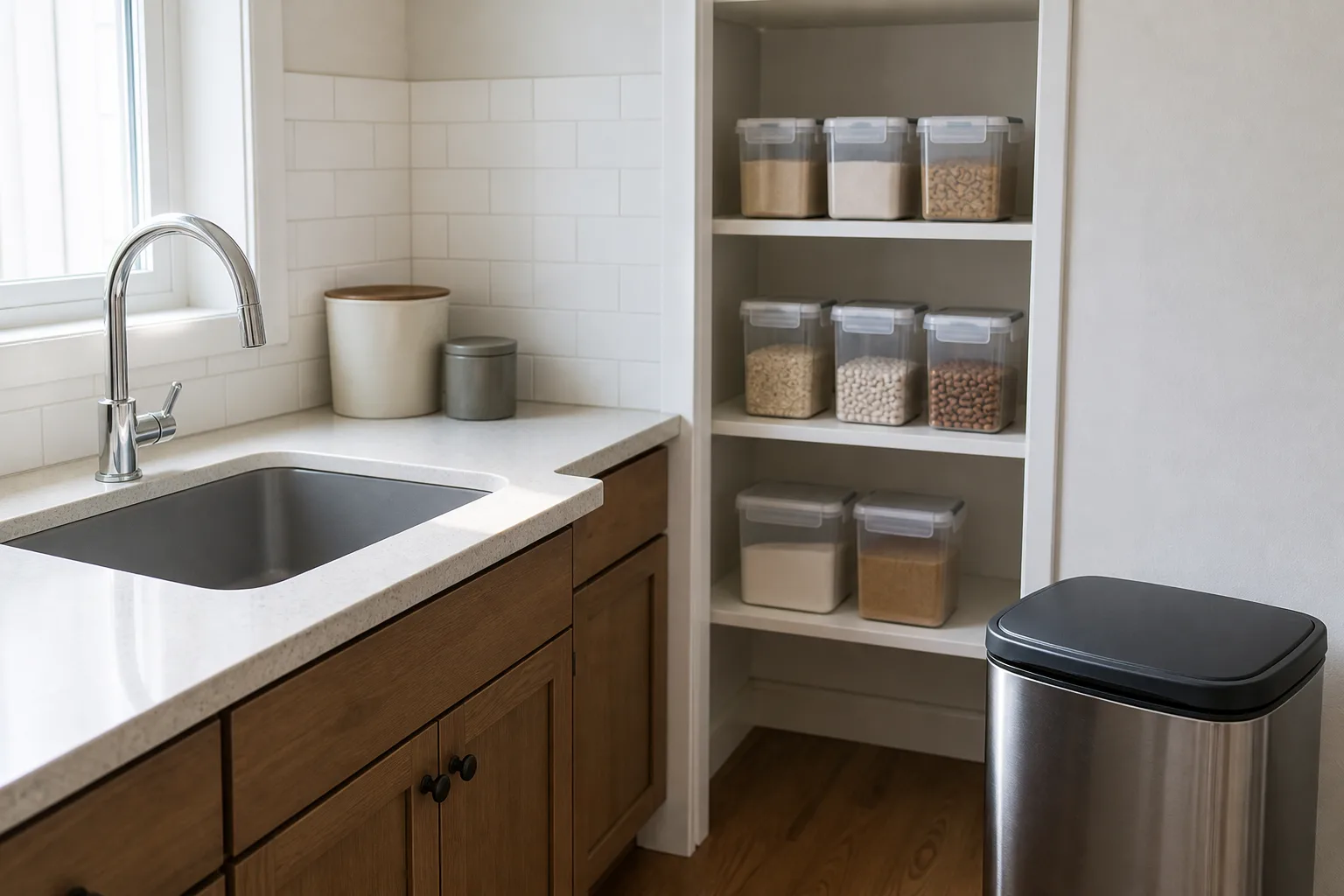
Inspect the wall behind plumbing, around electrical and utility boxes, inside cabinet backs, under loose flooring transitions, and along the route between a basement and a kitchen. Do not open a wall or remove an outlet cover while live electrical work is present. Mark the exact gap with removable tape, place a monitor nearby, and give the information to maintenance or a licensed professional.
A visible crack is worth sealing only after you know what it connects to. Use an appropriate caulk for a small stable joint, a fitted plate for a pipe penetration, and a door sweep or weather stripping for a moving threshold. Never pack pesticide dust into an inaccessible shared wall on your own; it can expose people in adjacent rooms or units without addressing the source.
6. Garages, utility rooms, and stored cardboard
Garages and utility rooms sit between outdoor habitat and living space, which makes them an easy staging area. Inspect behind bins, under shelving, around water softeners and laundry hookups, near the garage door, under sinks, around furnace or water-heater lines, and inside boxes that have been stored on the floor.
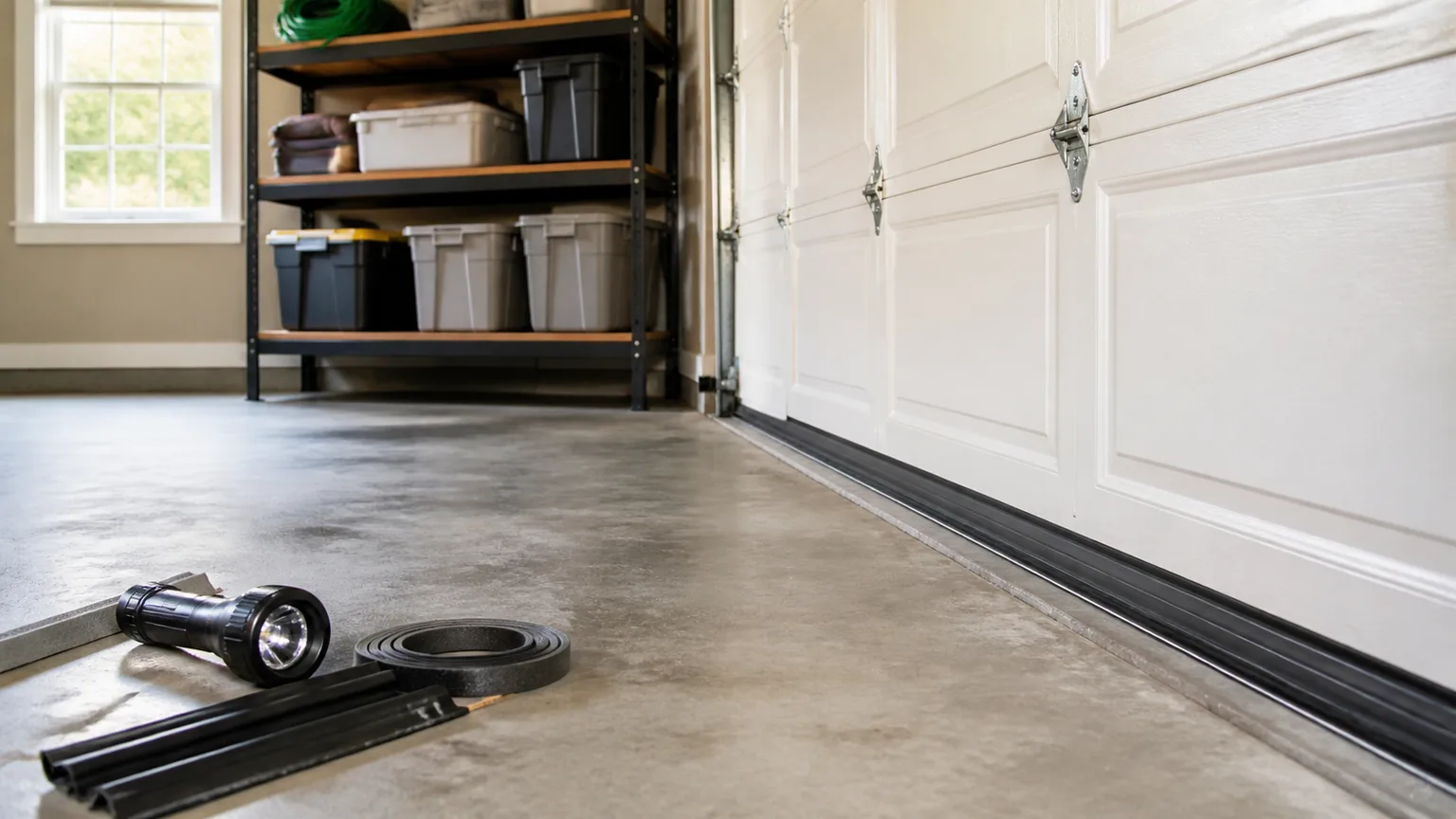
Cardboard is not just clutter. It offers a dark, textured shelter, can absorb moisture, and may arrive with insects or egg cases. Break down delivery boxes promptly, inspect packages before bringing them deeper into the home, and store long-term items in clean, lidded plastic containers raised off the floor. Remove rags, paper bags, unused potting materials, and damp garden supplies from the wall edge.
Use the room’s layout to choose monitoring points: one near the exterior door, one along the wall behind storage, and one near a water source. A catch at the door and no catches inside suggests exclusion; catches deep in the utility room suggest that the room itself is supporting the problem.
7. Exterior edges, mulch, leaf litter, and door thresholds
Many large “water bugs” are outdoor cockroaches looking for shelter, moisture, or a route inside. Inspect the foundation edge, door sweep, window screens, vents, crawlspace openings, downspouts, hose bibs, trash containers, firewood, leaf piles, dense groundcover, and mulch that stays wet against the wall.
You do not need to remove every leaf or replace a healthy garden with bare soil. The goal is a dry, inspectable buffer at the building edge: repair leaks, keep gutters and downspouts moving water away, raise firewood, empty standing containers, trim vegetation away from doors and vents, and move dense debris farther from the foundation. University of Georgia IPM guidance identifies leaf litter, mulch, groundcovers, shrubs, vines, and garden objects as potential outdoor harborages when they retain moisture beside a home. Review its proactive pest-management guidance.
Gardening Know How offers the same practical garden lesson: remove standing water, fix leaky hoses or faucets, keep compost managed, rake debris, store firewood off the ground, and cut back overgrown areas when outdoor roaches are entering the house. Its garden-roach control advice is most useful when treated as habitat reduction, not as permission to broadcast an unneeded insecticide across a planted bed.
Map the route before you treat the room
Treating the room where you saw a roach can miss the route that delivered it. Start at the last sighting and draw a simple path to the nearest water source, food source, exterior opening, drain, appliance, or wall penetration; then place monitors at the likely junctions.
Date and number each trap. Useful locations include behind the refrigerator, under the sink, beside the basement door, along the garage threshold, near a floor drain, and at the wall-floor joint. Put the adhesive edge against a wall or in a corner because cockroaches commonly travel along structural lines rather than crossing the center of an open room.
Check the monitors at the same time each day for several days, record the number and size of insects, and keep the traps in place while you make one change at a time. A trap with repeated catches identifies a high-activity zone; an empty trap does not prove the house is clear if it is wet, dusty, too exposed, or simply in the wrong place. Pests in the Home Extension recommends dating monitors, mapping their locations, replacing wet or dusty traps, and relocating consistently empty traps instead of drawing conclusions from a single blank board. Use its monitoring action plan.
Remove the survival triangle: food, water, shelter
Cleaning is not an accusation and it is not a complete treatment. Even a well-kept home can offer a dripping pipe, a pet bowl left overnight, a grease film under an appliance, or a stack of paper that gives a roach the three essentials: food, water, and shelter.
At night, wipe counters and the floor around appliances, wash dishes, dry the sink, empty food waste, and pick up pet food if that fits your animal-care routine. Store pantry goods, pet food, birdseed, and compostable scraps in pest-resistant containers; vacuum crumbs and debris along baseboards, under appliances, and inside cabinet corners, then seal and remove the vacuum contents promptly.
Fix leaks rather than wiping the same puddle every morning. Improve ventilation where condensation forms, empty dehumidifiers, correct gutter and downspout problems, and do not let irrigation spray the foundation. Remove damp cardboard, paper bags, stacked newspapers, fabric piles, and unused boxes from basements and utility rooms so the room becomes easier to inspect and less useful as shelter.
Sanitation also improves bait performance because there is less competing food. Penn State Extension groups food, water, shelter, and exclusion together because removing just one resource often leaves enough support for the population to persist. Its prevention checklist gives the sequence in practical household terms.
Seal the exact entry point without creating a plumbing problem
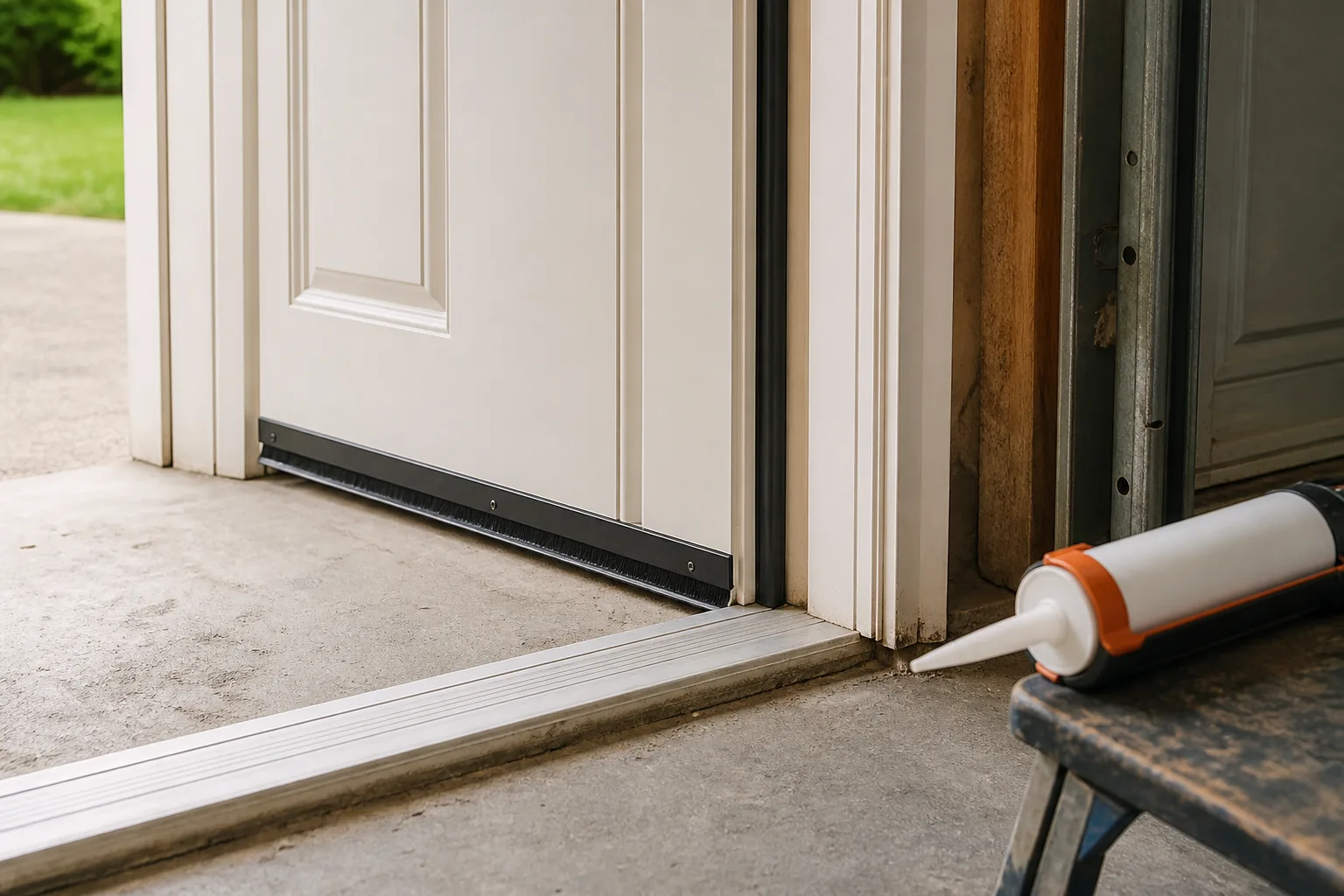
Once the trap map identifies the route, close that route instead of caulking every crack you can see. Check door sweeps, weather stripping, window screens, vent screens, pipe and cable penetrations, gaps around cabinet backs, holes beside baseboards, and the joint between a garage slab and the door threshold.
Seal small stable gaps with a suitable caulk; use a properly fitted escutcheon or plate where a pipe enters a wall; replace a damaged door sweep when the gap moves every time the door opens. If daylight is visible around a closed exterior door, weather stripping is usually more useful than a thicker bead of caulk. Keep required vents, drain openings, cleanouts, and appliance exhausts functional.
Do not seal over a wet wall, a leaking pipe, or a structural opening that needs inspection. A blocked access panel can turn a visible leak into hidden mold or make a future repair harder. If traps show activity coming through a sewer connection, crawlspace, or shared utility chase, have a plumber or building manager investigate; exclusion is only helpful when it does not hide the defect.
Use traps to measure whether the plan is working
Sticky traps are an evidence tool, not a complete solution for a confirmed infestation. Their value is that they show direction, timing, insect size, and whether activity is falling after you dry the area, remove clutter, seal a gap, or place a labeled bait.
Keep the first set of monitors in the same locations long enough to establish a baseline. After the repair, compare the new catch with the old catch rather than judging success by whether you happened to see a roach that night. A decline in catches across the high-activity stations is more meaningful than one empty board in a low-traffic corner.
Gardening Know How’s practical prevention guidance recommends catch traps early because the specimen can help identify what you are dealing with before you choose a treatment. Its advice on stopping cockroaches before they invade is especially useful for threshold, garage, and seasonal-invasion scenarios, although any pesticide decision still belongs to the product label and local rules.
If the traps keep catching nymphs, egg cases appear, or activity spreads to several rooms, escalate the inspection rather than adding more traps forever. Monitoring tells you where to focus; it does not remove a leaking pipe, a wall void, or a population in another apartment.
Choose baits carefully—and skip foggers
For a documented cockroach route, a labeled bait placed near the harborage or travel line is usually more informative and targeted than spraying a whole room. Tamper-resistant stations are easier to control around children and pets, while gel bait can fit into a permitted crack or void; both must be used exactly as the label directs and kept away from food-contact surfaces.
Place bait only after removing crumbs, grease, pet food, and standing water that compete with it. Use many small placements when the label calls for them rather than one large blob, and do not spray a repellent insecticide over or around bait because it can keep roaches from reaching the food matrix. University of Georgia guidance gives species-specific examples of gel and bait placement and notes that adult large roaches may not fit through small bait-station openings. Read the species and intervention notes.
Expect a bait program to take time. Penn State Extension notes that baits can take a week or more and that resistance or bait aversion may require a reassessment rather than endless reapplication; follow the label’s interval and never rotate products casually in a way that violates directions. Keep pesticides locked away, wear the protective equipment required on the label, and use a licensed professional for difficult voids or high-exposure settings.
Skip foggers and bug bombs as a default response. They do not reliably reach narrow harborages, can spread chemicals into places you cannot control, may repel survivors into another room or unit, and add exposure without telling you where the route is. The same caution applies to bleach, essential-oil mixtures, hairspray, and homemade drain recipes: a strong smell or a dead insect on contact is not the same as solving the source.
When one bug becomes a professional pest problem
Call a licensed pest professional when traps catch insects in several rooms, you find nymphs or egg cases, activity appears in daylight, the source seems to be inside a wall or sewer connection, or the catch does not decline after you correct leaks and entry gaps. Also call sooner if someone in the home has asthma, serious allergies, limited mobility, or a heightened risk of pesticide exposure.
Ask for an inspection that identifies the likely species, maps harborages and entry routes, explains which nonchemical changes are needed, and includes a follow-up measure such as trap catches. A sound plan should explain product placement, re-entry precautions, pet and child protection, and what will happen if the first treatment does not reduce activity.
Do not judge the plan by how many insects die on the first night. Judge it by whether the high-activity traps decline, the moisture or access defect is repaired, and no new evidence appears in connected areas. If activity persists, the likely explanations include a missed harborage, the wrong species assumption, a bait that the population avoids, an untreated neighboring unit, or an exterior source that continues to enter.
Apartment and shared-building fixes
In an apartment, duplex, or condo, the place you see the insect may be only one room on a larger route. Cockroaches can move around plumbing, utility chases, garbage areas, basements, and neighboring units, so treating one kitchen cannot solve a source that crosses a shared wall.
Tell management when and where the insects appear, which traps catch them, and whether you found leaks, gaps, nymphs, or egg cases. Request coordinated inspection of common areas, plumbing penetrations, door sweeps, garbage rooms, and adjacent units. Keep food sealed, reduce cardboard and clutter, allow access for inspection, and do not use a fogger or place loose dust into a shared wall.
The right division of labor is straightforward: the resident removes competing food and shelter, maintenance repairs moisture and openings, and the licensed pest professional identifies and treats the documented harborage. This coordination is why extension IPM guidance is more useful than a one-room spray recommendation; it addresses the building conditions that let the problem recur.
Conclusion
When you ask where water bugs hide in the house, start with the seven routes that combine moisture, food, shelter, and access: under sinks, behind appliances, in damp basements, around bathroom plumbing, inside wall and floor gaps, in garages and cardboard, and along the exterior foundation and threshold. Inspect after dark, map the catches, and look for the leak or opening that makes the location comfortable.
Then work in order: remove food, water, and clutter; repair moisture; seal the confirmed entry point; use sticky traps to measure progress; and choose a labeled bait only when the evidence supports it. One stray outdoor visitor may end with exclusion, while nymphs, egg cases, repeated catches, shared-wall activity, or a hidden plumbing route call for coordinated professional help.



