Amaryllis: The Holiday Plant That Blooms Again
Gift or grow an amaryllis with confidence: choose a healthy bulb, force a holiday bloom, avoid rot, and plan the post-bloom rest.
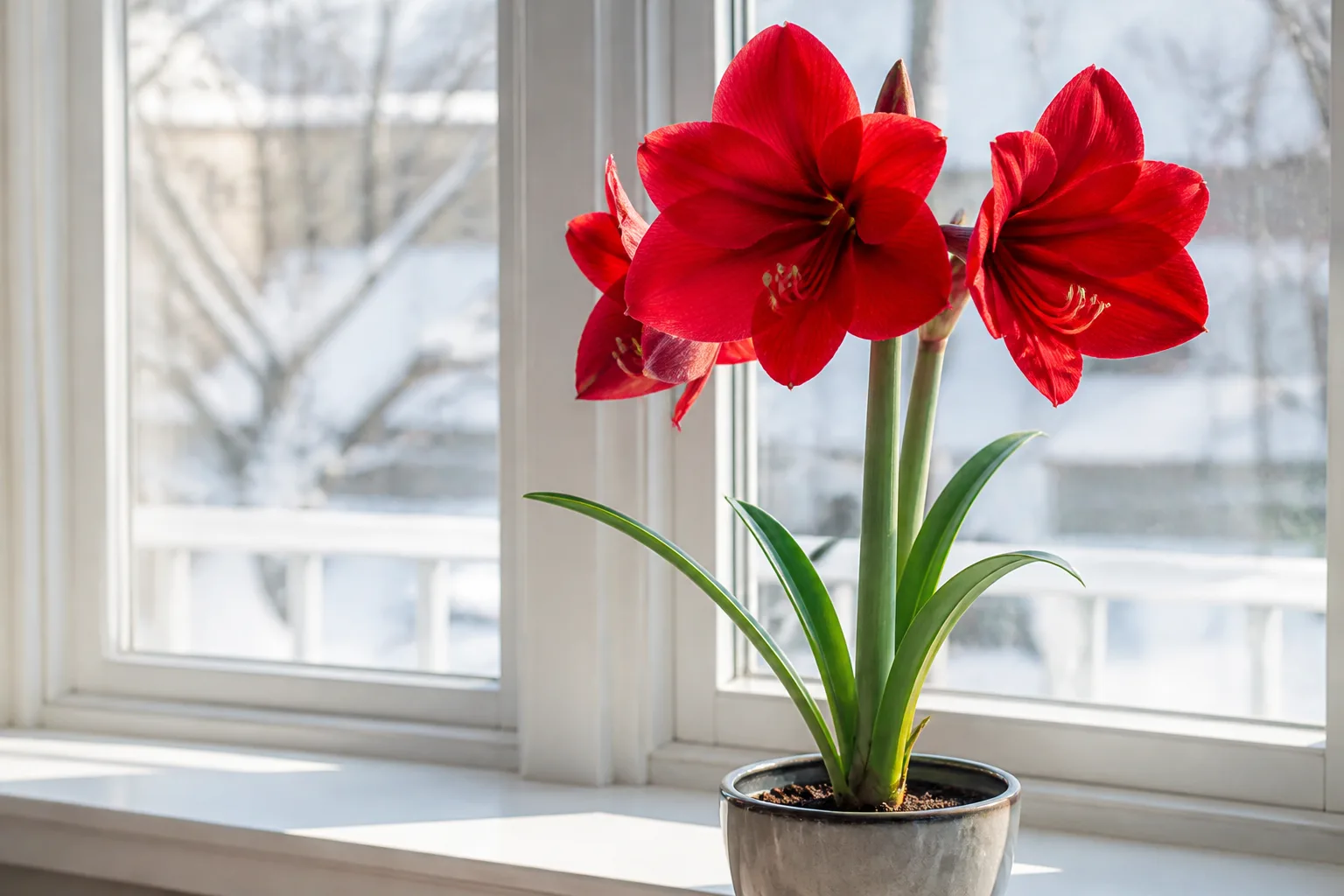
An amaryllis is a rare holiday gift that can be spectacular on day one and still worth keeping when the wrapping paper is gone. The familiar name usually refers to Hippeastrum, a bulb that sends up a tall flower stalk topped with large trumpet-shaped blooms. It looks festive without needing a full season of gardening knowledge, yet it can reward a recipient for years if the bulb is allowed to rebuild after flowering.
That long view is the real reason to choose it. A poinsettia is excellent at creating instant color, but an amaryllis offers a visible story: dormant bulb, dramatic bloom, leafy summer growth, a deliberate rest, and another flower stalk. The trade-off is that the bulb is not a set-it-and-forget-it decoration. It needs drainage, a little patience, and a calendar.
Why amaryllis make better long-term holiday plants than a seasonal display
The best holiday plant depends on the recipient, not on a universal winner. Amaryllis is the stronger choice for someone who enjoys a small ritual and wants a plant that can return; a poinsettia may be better for someone who wants a broad, leafy display with minimal post-holiday planning. The useful comparison is potential and purpose, not which plant is more beautiful.
Amaryllis also makes a flexible gift. A dormant bulb in a small pot feels like a promise, a bulb with a visible bud gives the recipient a little suspense, and an open plant provides immediate color. The NC State Extension plant profile describes cultivars in red, pink, white, orange, salmon, and bicolors, with two to six flowers commonly held on a stalk. That gives a shopper more room to match the gift to a person’s style than a single red holiday palette suggests.
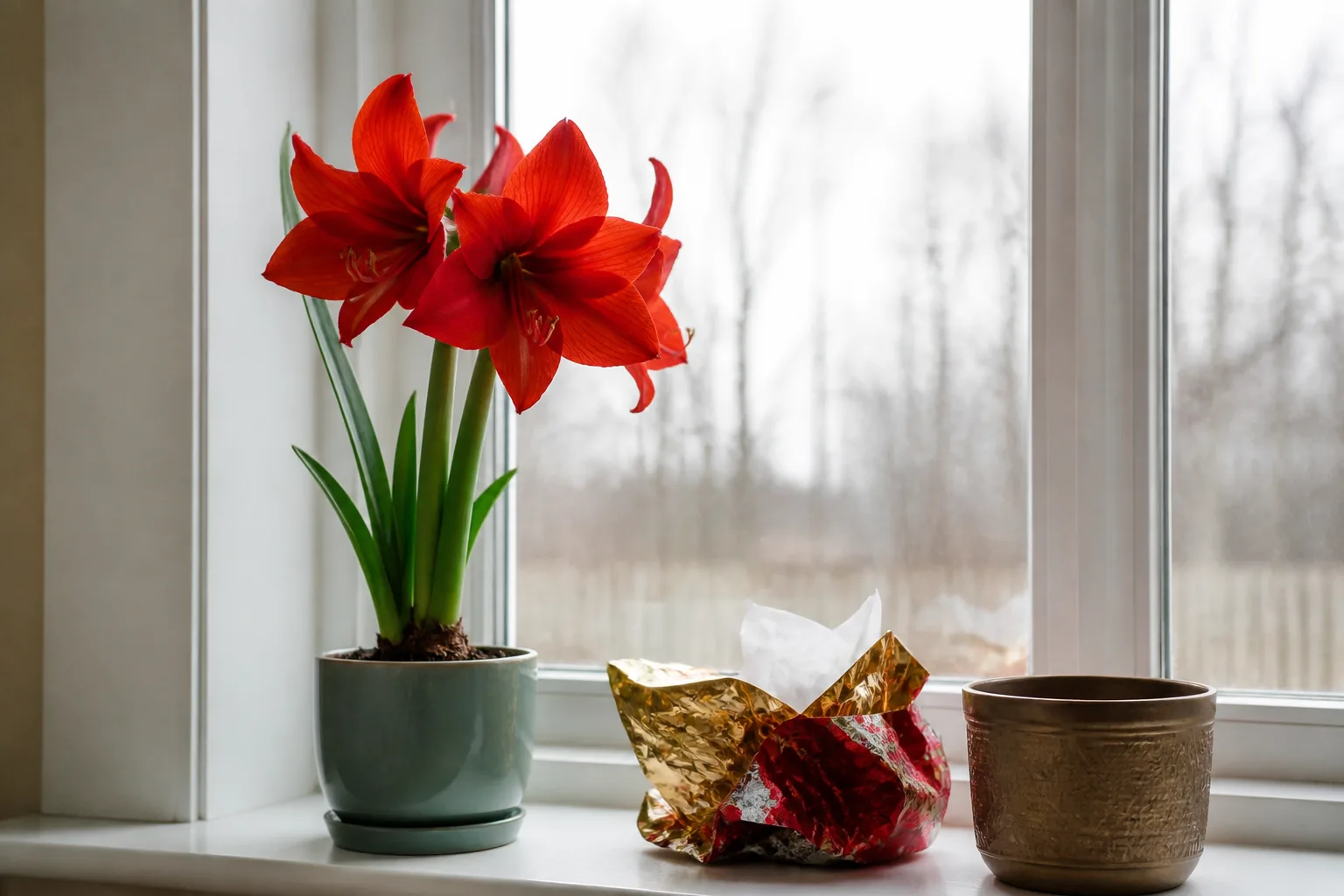
Choose a bulb, budded plant, or blooming plant based on timing
Buy an open plant when the flowers need to look finished on the day it is given. Choose a budded plant when you want the recipient to watch the display develop over the next several days. Choose a dormant bulb when the gift is about participation, but label it with a realistic bloom window instead of promising that it will open on December 25.
A bulb that is already packaged for forcing may have been treated, stored, or started before it reaches the shop. That is why two bulbs purchased on the same day can bloom weeks apart. A responsible gift note says “expect flowers in the coming weeks” and includes the basic care: bright light, light watering, and a pot with a drainage hole.
Know what “amaryllis” means before you buy
The common name creates a small taxonomic trap. The bulbs sold for indoor holiday displays are generally Hippeastrum hybrids, while the true genus Amaryllis is a smaller South African group. You do not need to memorize that distinction to grow the plant, but it helps explain why different labels sometimes give different bloom and outdoor advice.
For the holiday bulb in your hands, think “tropical or subtropical tender perennial.” NC State lists Hippeastrum as a bulbous perennial with 12- to 24-inch leaves and flower stems, large flowers, and sensitivity to temperatures below about 35°F. That profile explains both its indoor usefulness and its biggest outdoor limitation: a summer patio is helpful, but a freezing night is not a normal part of the care cycle.
Pick a bulb that can carry a full bloom
Start with the bulb rather than the decorative sleeve. Choose one that feels heavy for its size, has firm outer layers, and shows no soft spots, wet patches, foul smell, deep wounds, or spreading red-brown lesions. A larger, healthy bulb generally has more stored energy and a better chance of producing a strong scape, while a tiny or damaged bulb may need a season of leaf growth before it can flower well.
Do not reject every dry papery wrapper. Outer skins can look untidy while the bulb underneath remains firm and sound. The decision point is the tissue you can feel: firmness is encouraging; a collapsing neck or soft base is a reason to choose another bulb.
If you are choosing an already potted plant, inspect the base and soil surface. Avoid a pot wrapped in foil that has been allowed to sit in standing water, because decorative packaging often hides poor drainage. Look for an upright stalk or healthy bud, leaves that are not limp and yellowing from the base, and a container that can be lifted out of its cachepot for watering.
Pot it for stability, drainage, and an exposed shoulder
Amaryllis does not need a huge container. Use a heavy pot with a drainage hole that is only about 1 to 2 inches wider than the bulb. A close fit helps keep the tall stalk from tipping the pot and reduces the amount of wet mix around a bulb that is not yet using much water.
Use a well-drained indoor potting mix rather than garden soil. Set the bulb on the mix so the upper third to one-half remains above the surface; burying the entire bulb is a common route to rot. Firm the mix around the roots, water once until excess drains, and then place the pot in bright light.
That exposed shoulder is not a decorative quirk. The neck and upper bulb need air, while the roots need moisture lower in the pot. If the top of the bulb is repeatedly splashed or the mix stays saturated, move quickly: let the surface dry, verify the drainage hole is open, and do not add more water just because the stalk has not appeared yet.
Time the bloom with a simple holiday forcing calendar
For a dormant bulb that has not been pre-forced, count backward about eight to ten weeks from the week you want flowers. Planting in early October can work for a late-December display, but the exact date depends on the cultivar, bulb condition, temperature, and whether the bulb had already begun its internal growth cycle. Gardening Know How’s amaryllis guide uses the same practical principle: start the rest-to-growth sequence early enough that the bulb has time to wake, root, and extend its scape.
Once planted, keep the bulb warm and brightly lit, but do not keep it waterlogged while you wait. Water thoroughly at planting, then water again only when the surface begins to dry. As the scape rises, the plant will use water more quickly; that is the time to move from cautious sips to a complete watering that drains freely.
Use this simple planning sequence:
- Eight to ten weeks before the target display: pot the bulb and water once.
- While the bulb is waking: keep it warm, bright, and only lightly moist.
- When the stalk and buds extend: check the mix more often and rotate the pot only if the stalk is still flexible and you want even light.
- When flowers open: keep the display cool, bright, and away from hot drafts.
- After flowers fade: start the next year’s cycle by preserving the leaves rather than treating the plant as finished.
What to do if your bulb is already sprouting
A sprout is not a problem and is not a reason to bury the bulb deeper. Pot it at the normal depth, protect the emerging growth from a hard knock, and place it in bright light. If the root system is dry, water the mix thoroughly once; if the pot is already wet, wait rather than adding a second drink.
If a pre-sprouted bulb is purchased late in the season, it may flower before or after the holiday. Enjoy the display it gives you and adjust next year’s schedule after you learn how quickly that cultivar moves. Trying to hold back a rapidly growing stalk in a dark cupboard usually produces a weak, stretched plant rather than a more accurate calendar.
Keep the first display strong
The tall flower stalk can make an amaryllis look as if it needs elaborate care, but its active needs are straightforward. Give it bright light, moderate indoor temperatures, and enough water to keep the mix from becoming dusty without leaving the bulb in a swamp.
Light, temperature, and watering while it blooms
Place the plant near a bright window where it receives strong ambient light and some gentle direct sun. If the window becomes hot in the afternoon, filter the light or move the pot slightly back. Bright light helps the leaves remain useful after flowering, while moderate temperatures help the flowers last longer than they would beside a radiator or forced-air vent.
Water at the soil line when the surface feels dry. Let excess water run through the drainage hole, then empty the saucer or cachepot. Do not use a fixed “every Sunday” schedule: a small pot in a warm room may dry quickly, while a cool room or oversized pot may stay wet for much longer.
The hollow stalk may need a discreet stake if the flowers pull it sideways. Add support before the stalk flops, and keep the stake from scraping the bulb. A heavy pot is still the best first support because it solves the tipping problem without turning the plant into a bundle of ties.
Keep the bulb alive after flowers fade
When the flowers collapse, cut the spent flower stalk back near the bulb, but leave green leaves in place. The leaves are the bulb’s solar panels: they turn light, water, and nutrients into stored energy for the next flower stalk. Removing them immediately because the plant no longer looks festive is one of the easiest ways to get a disappointing next season.
Move the plant into its strongest available light and continue watering when the mix begins to dry. During spring and summer, the plant may look like a leafy, slightly unruly houseplant rather than a holiday centerpiece. That quiet phase is not wasted time; it is when the bulb is rebuilding.
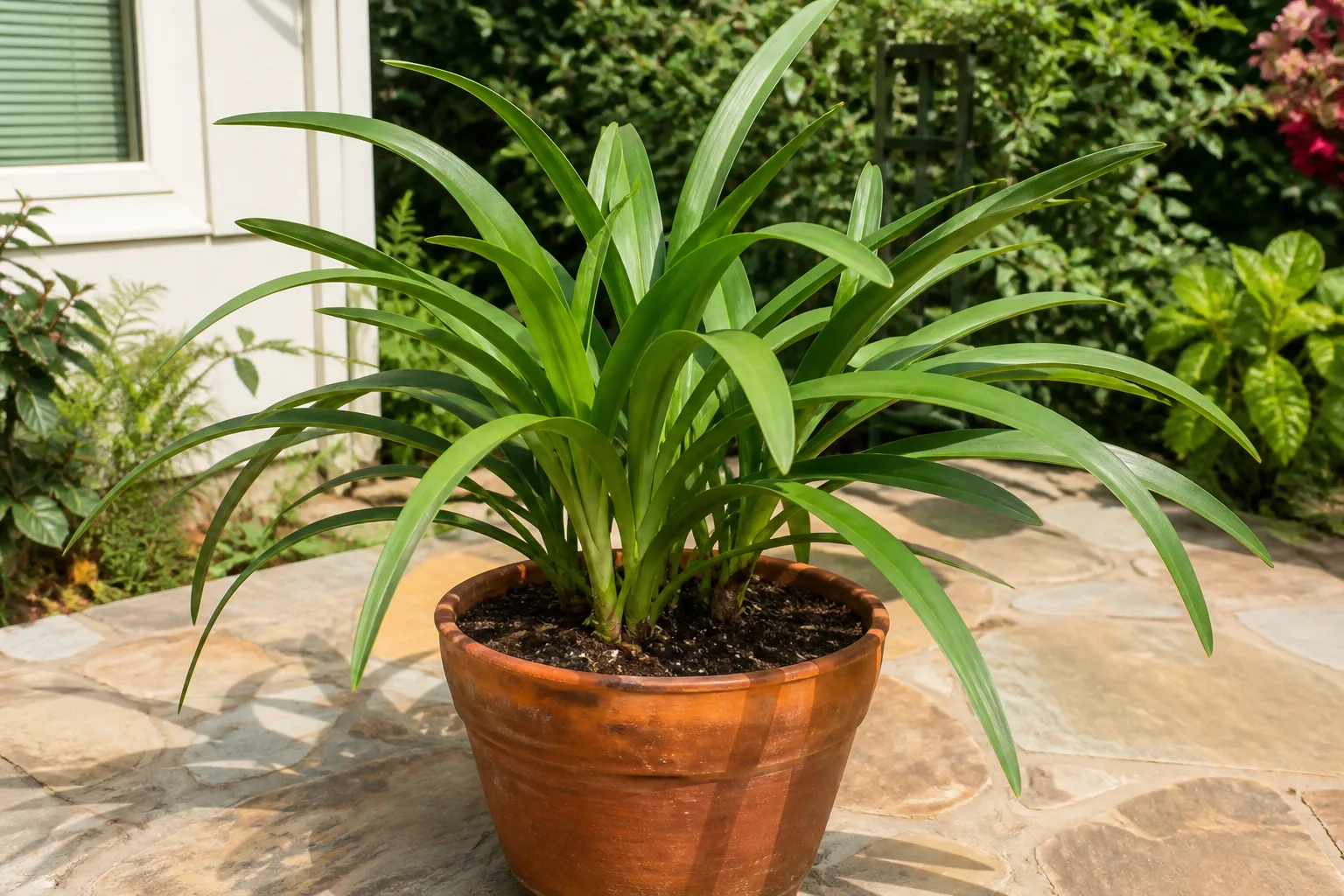
Feed the leaves instead of cutting them early
Once the plant is actively growing leaves, use a balanced houseplant fertilizer at the label rate or a diluted bulb fertilizer according to its directions. Feed only when the plant is growing and the mix is already slightly moist. There is no advantage to fertilizing a dry, leafless bulb heavily, and concentrated fertilizer around dormant roots can cause damage.
If a leaf yellows at the end of the growing cycle, wait for a pattern before cutting. One old leaf can be normal; multiple leaves yellowing while the soil remains wet can point to root or bulb stress. Healthy green leaves should stay until they naturally decline as the plant moves toward rest.
Reset the bulb for next year’s bloom
Reblooming is not a trick with ice cubes, fertilizer spikes, or a refrigerator. It is a sequence: let the bulb grow leaves, stop feeding and watering as it approaches dormancy, allow the foliage to die back, give the bulb a cool dry rest, then return it to warmth and light.
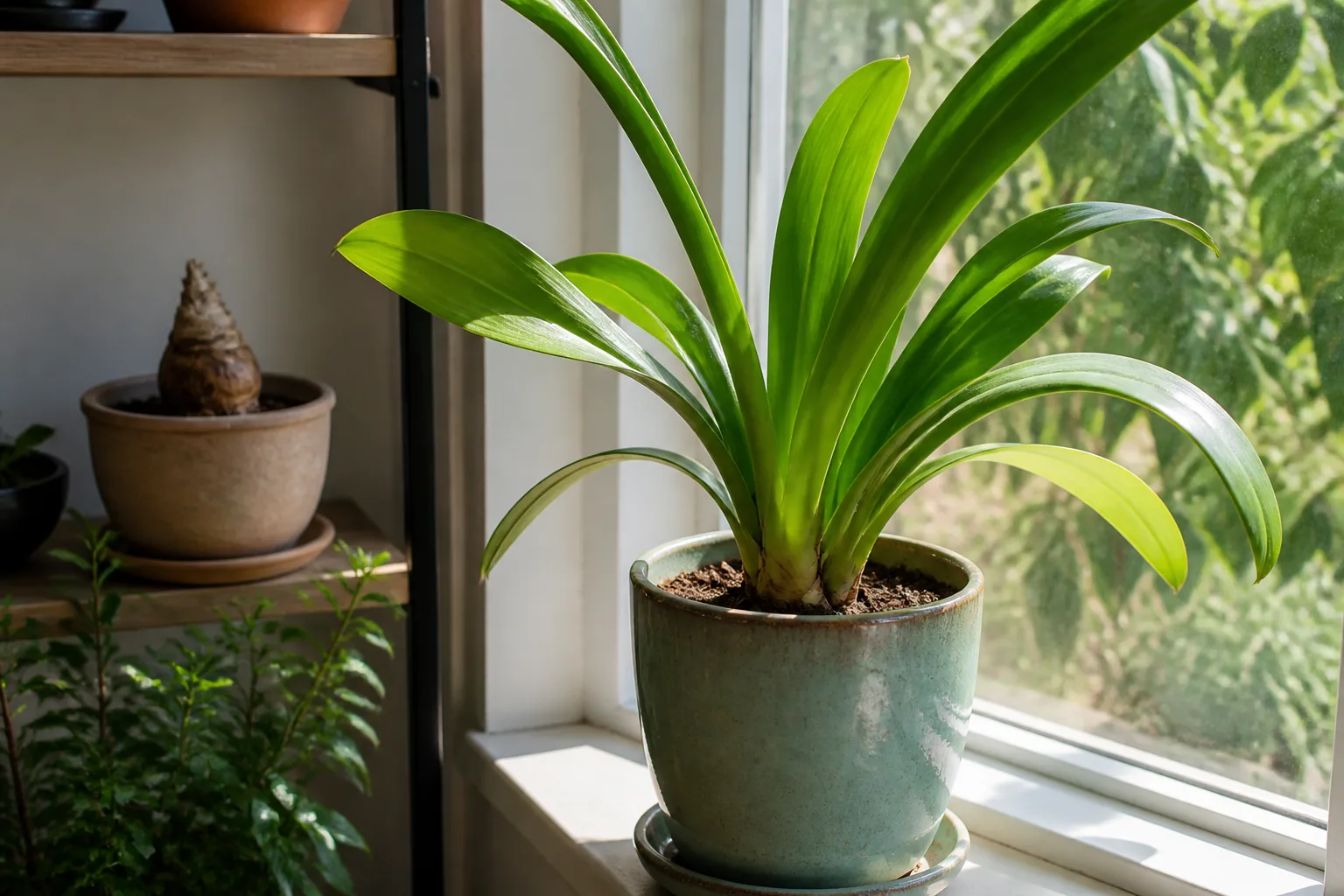
An eight-to-ten-week rest is the real rebloom trigger
When late summer or early fall arrives, stop watering and fertilizing. As the leaves yellow and wither, remove them cleanly. Then move the pot to a cool, dry, dim location around 50 to 55°F for about eight to ten weeks. NC State Extension describes this rest as a recovery period, followed by a restart in a warmer, well-lit location; it does not call for freezing the bulb.
After the rest, bring the pot to a warm bright window and water it once. Resume cautious watering as new growth appears. If you want Christmas flowers, begin the rest early enough to finish it before your target display; if the bulb starts later, accept a later bloom rather than repeatedly interrupting its cycle.
You can keep the bulb in its pot during dormancy or lift and store it in a dry, cool place. Keeping it potted is simpler for most houseplant growers because it reduces handling. Lifting can make sense when outdoor bulbs need protection or when the mix is old and should be replaced before the next growth cycle.
Outdoor summers work, but frost changes the plan
After frost danger has passed, move a potted amaryllis outdoors gradually. Start in bright shade for a few days, then increase its light exposure so the leaves do not scorch after the dimmer indoor winter. A sheltered patio or morning-sun spot works well; full outdoor sun can be appropriate once the plant has acclimated and the cultivar is growing strongly.
Bring it back inside before temperatures approach the plant’s cold limit, not after a frost warning has already arrived. NC State notes injury below about 35°F and reports that some plants can overwinter outdoors in warmer zones with mulch, but local winter wet and cold still matter. In a cool climate, treat outdoor time as summer recovery and keep the bulb indoors for its rest and winter display.
Outdoor growing can change the bloom season. A bulb that spends the year in a garden bed may flower in spring or early summer instead of at Christmas. That is not a failure; it is the plant responding to outdoor temperature and light rather than to a retail forcing schedule.
Common reasons amaryllis fails to rebloom
The bulb makes leaves but no flowers. The most common explanations are an immature or weakened bulb, insufficient light during the leaf-building season, early leaf removal, or a rest that was skipped or interrupted. Give the plant a full growing season, keep the leaves healthy, and start the dry rest only after the bulb has had time to rebuild.
The bulb turns soft or smells sour. Suspect excess moisture, poor drainage, or tissue damage. Stop watering, remove the bulb from the pot, inspect the base, and discard or trim only clearly rotten tissue with a clean blade; do not replant a bulb that remains soft throughout.
The stalk flops. A top-heavy flower display, weak light, or a light plastic pot can all contribute. Use a heavier container, give the plant stronger light, and add a support stake early rather than waiting for the stalk to crease.
The leaves yellow too soon. A single aging leaf is different from a whole plant fading while the soil is wet. Check the roots, drainage, light, and recent watering pattern before assuming the bulb needs more fertilizer. Keeping a plant wet because its leaves look tired is a common way to turn stress into rot.
Compare amaryllis with poinsettia honestly
Amaryllis wins on the long-term bulb story, but poinsettia wins on immediate leafy color and familiar holiday scale. A poinsettia’s red, pink, or white display comes mainly from colorful bracts around small flowers, while an amaryllis gives you large trumpet flowers on an upright stalk. The visual effect is completely different: one is a broad seasonal mass, the other is a sculptural bloom rising from a bulb.
Poinsettias can be kept and recolored, but the next holiday requires a carefully controlled long-dark period. NC State’s poinsettia profile notes that restoring colored bracts requires extended uninterrupted darkness beginning in early fall. Amaryllis also needs a schedule, but its rebloom plan is usually easier to explain: preserve leaves, provide a cool dry rest, then restart the bulb.
Choose amaryllis when the recipient likes a visible project, unusual flowers, or a plant that can become a yearly tradition. Choose poinsettia when broad bracts, classic red decor, and an already-finished display matter more than a bulb’s multi-season cycle. That honest distinction makes the gift better, because the care expectations match the person receiving it.
Protect pets and children from the bulb
Amaryllis is not a pet-safe plant. The ASPCA’s amaryllis listing classifies it as toxic to dogs, cats, and horses and identifies lycorine and other compounds as toxic principles. The bulb deserves particular caution, but chewed leaves or flowers can also be a problem.
Place the plant where pets and young children cannot reach the bulb, fallen leaves, or potting soil. If a pet may have eaten any part, do not wait for symptoms or try a home remedy; contact a veterinarian or an appropriate animal poison-control service promptly. A beautiful gift is not a good fit for a household that cannot provide safe placement, and a pet-safe alternative is the responsible choice.
Conclusion
Amaryllis is underrated as a holiday plant because its best feature appears after the holiday: the bulb can keep growing, rest on schedule, and return with another impressive bloom. Start with a firm bulb, use a snug pot with a drainage hole, leave the shoulder exposed, and give the first growth bright light without excess water.
After the flowers fade, keep the leaves. That single decision, followed by a cool, dry eight-to-ten-week rest, does more for next year’s display than any quick-fix product. Give the plant time, protect it from frost and pets, and an amaryllis can become a holiday tradition instead of a one-season decoration.