Why Is My Christmas Cactus Turning Purple? 5 Causes
Why is your Christmas cactus turning purple? Learn how to tell light, watering, roots, nutrients, and temperature stress apart—and fix the cause.
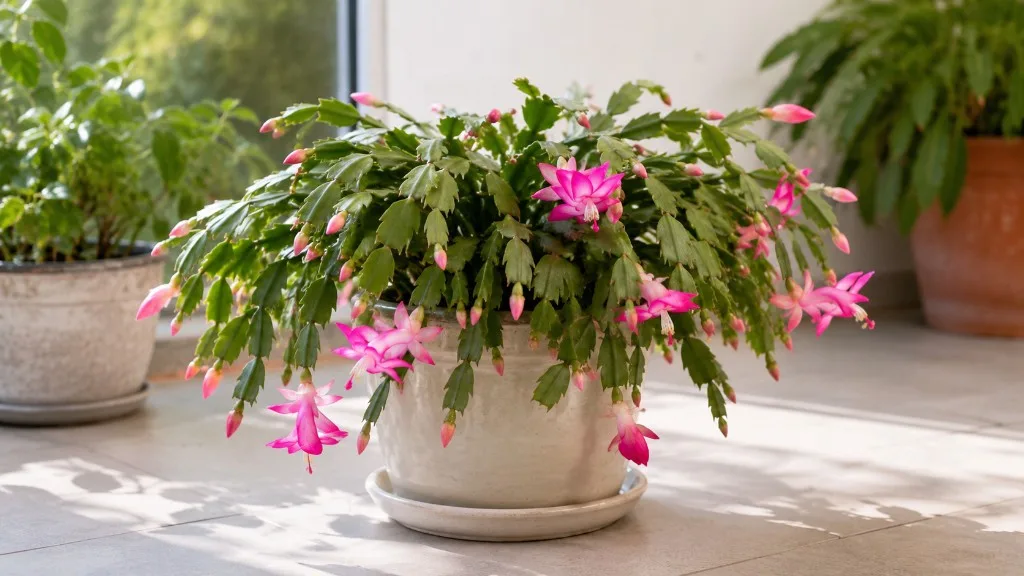
A Christmas cactus turning purple is usually asking for a closer look, not announcing that it is beyond saving. The segmented stems may shift from green to plum, red, or pink when the plant is under environmental stress, and several different problems can create the same color.
Start with the pattern rather than the fertilizer shelf. Color concentrated on the window-facing side points you toward light or heat; limp segments and wet soil point toward root trouble; a firm plant that recently moved outdoors may simply be reacting to a sudden change. The fastest fix comes from matching the visible clues to the right cause.
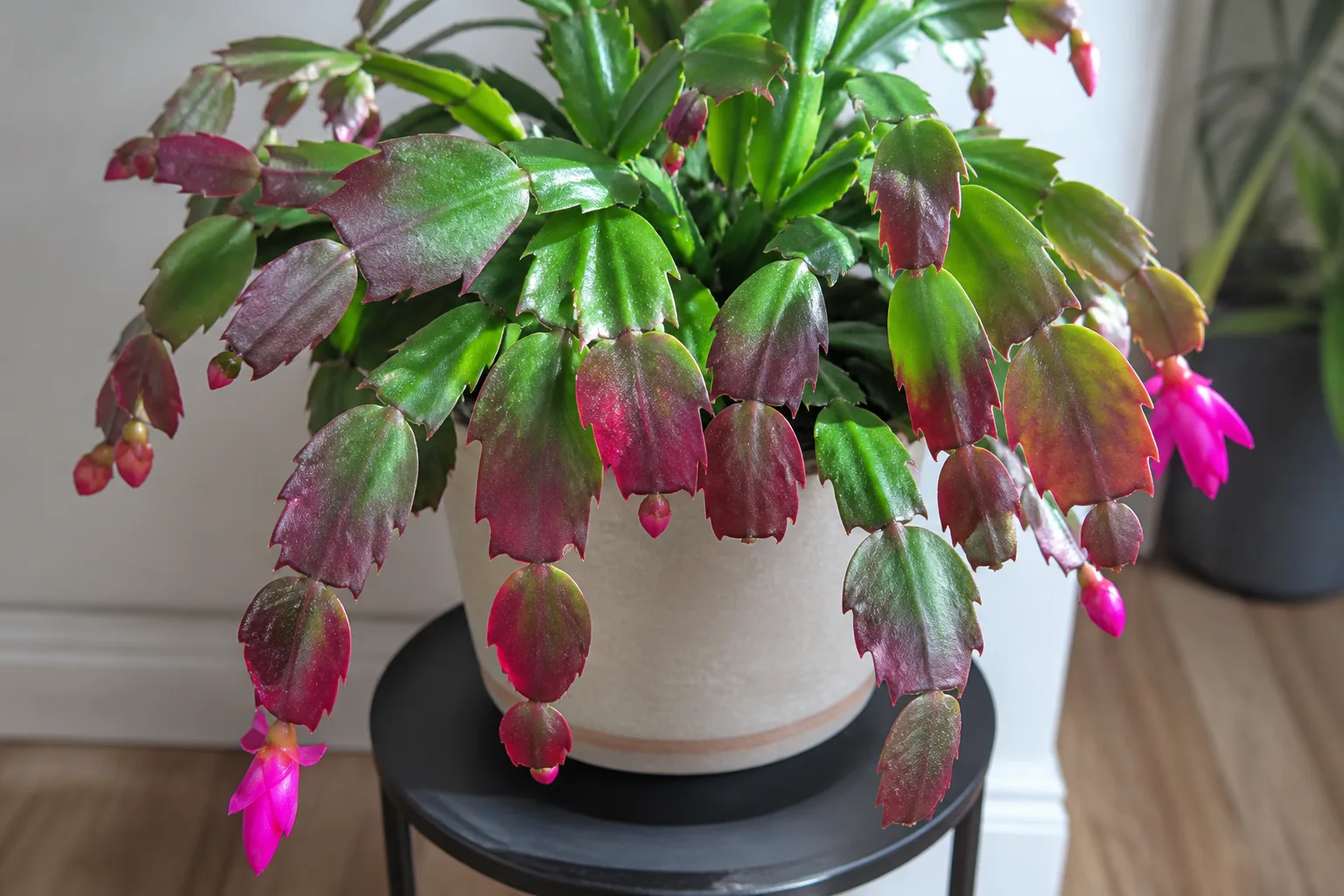
Quick answer: purple stems usually signal stress, not a disease by itself
Christmas cactus stems can accumulate red-purple anthocyanin pigments when light, temperature, water availability, or nutrient uptake changes. Those pigments can act as a protective response, especially when strong light or another stressor makes the plant’s normal growing conditions less comfortable. The color is useful information, but it does not identify the cause on its own.
Holiday cacti are rainforest epiphytes, not desert cacti. In nature they grow in tree crevices or on branches where water arrives regularly but drains quickly, with bright filtered light rather than baking midday sun. NC State Extension describes Schlumbergera as moisture-loving, bright-indirect-light plants that dislike direct sun and need well-drained mix; its plant profile is a useful baseline for interpreting the symptom.
The practical pattern is broader than “purple means phosphorus.” Ohio Tropics’ review of purple holiday-cactus stems connects the color to anthocyanin activity and overlapping stress from light, temperature, water uptake, and nutrient availability, which is why a quick environmental check is more reliable than guessing from color alone.
How to tell normal new growth from a plant-wide color change
Look at where the color starts and what the segments feel like. A few firm, small segments at the tips can be pinkish or purplish while they expand, especially after a flush of growth or a brighter season. If those tips are plump, producing new joints, and surrounded by healthy green older stems, watch the trend before making a major change.
A broader shift across older segments deserves a diagnosis. Treat the color as more urgent when it appears with wrinkling, limp growth, stalled new segments, yellowing, a sour pot odor, soft brown areas, sudden bud drop, or tissue that has gone translucent. Healthy purple tissue can remain firm; damaged tissue usually changes texture as well as color.
Do not prune every purple segment immediately. Removing firm tissue takes away photosynthetic surface and creates wounds while the plant is already stressed. Correct the environment first, then remove only tissue that is clearly scorched, mushy, diseased, or dead.
Know what you are looking at: Christmas cactus versus Thanksgiving cactus
Many plants sold as Christmas cactus are actually Thanksgiving cactus or hybrids, and the same care diagnosis applies to all of them. A true Christmas cactus, commonly associated with Schlumbergera × buckleyi, tends to have more rounded, scalloped segment edges and blooms later; Thanksgiving cactus, Schlumbergera truncata, has more pointed projections and often blooms earlier.
The naming matters here because a purple edge is easy to misread as a flower-color trait or a sign that you have the “wrong” plant. University of Missouri Extension explains that both are tropical, epiphytic cacti with similar cultural needs: organic, well-drained growing media, filtered light, and cool conditions for flower-bud formation. Use the plant’s texture and care history—not the retail label—to decide what to do.
Do this 10-minute triage before changing care
Take a quick photo, note the date, and write down what changed during the last two weeks. A moved pot, a heat wave, a missed watering, a new fertilizer, a cold window, or a recently purchased plant can be more informative than a generic symptom chart. Check one factor at a time so you can tell which correction helped.
Check light, heat, and recent moves
First, trace the light the plant receives from morning through late afternoon. Is it pressed against hot glass, under a powerful grow light, on a south- or west-facing sill with unfiltered summer sun, or outdoors where it was moved directly from shade into bright light? Purple or bronze color on the exposed side, especially with bleached or crispy patches, makes light stress the first suspect.
Then check for heat sources and drafts. A radiator, forced-air vent, fireplace, open exterior door, or cold pane can stress a plant even when the room’s thermostat looks comfortable. Measure the temperature where the pot sits, not just across the room.
Check soil moisture, drainage, and roots
Press a finger into the mix and lift the pot. Very dry, shrunken soil plus wrinkled segments suggests drought stress; heavy wet mix, a sour smell, fungus gnats, and a plant that stays wilted despite wet soil suggest damaged roots. Confirm that the pot has a drainage hole and that water is not trapped inside a decorative cachepot or saucer.
If the symptoms are severe or the mix has stayed wet for many days, slide the root ball out gently. Healthy roots are generally firm and pale or tan; dark, slimy, collapsing roots are a root-rot warning. Do not unpot a stable, budding plant simply because one segment is purple—root inspection is most useful when moisture clues and whole-plant decline point in that direction.
Cause 1: Too much direct light or heat
Direct sun is the most common explanation when purple appears on the side facing a window or on the newest outer segments after summer exposure. A rainforest epiphyte is adapted to dappled light under a canopy, not the concentrated heat and ultraviolet exposure that can build behind glass. Anthocyanins may increase as a protective response, but protection has limits: persistent exposure can progress to bleaching, tan patches, crisp margins, or permanent scorch.
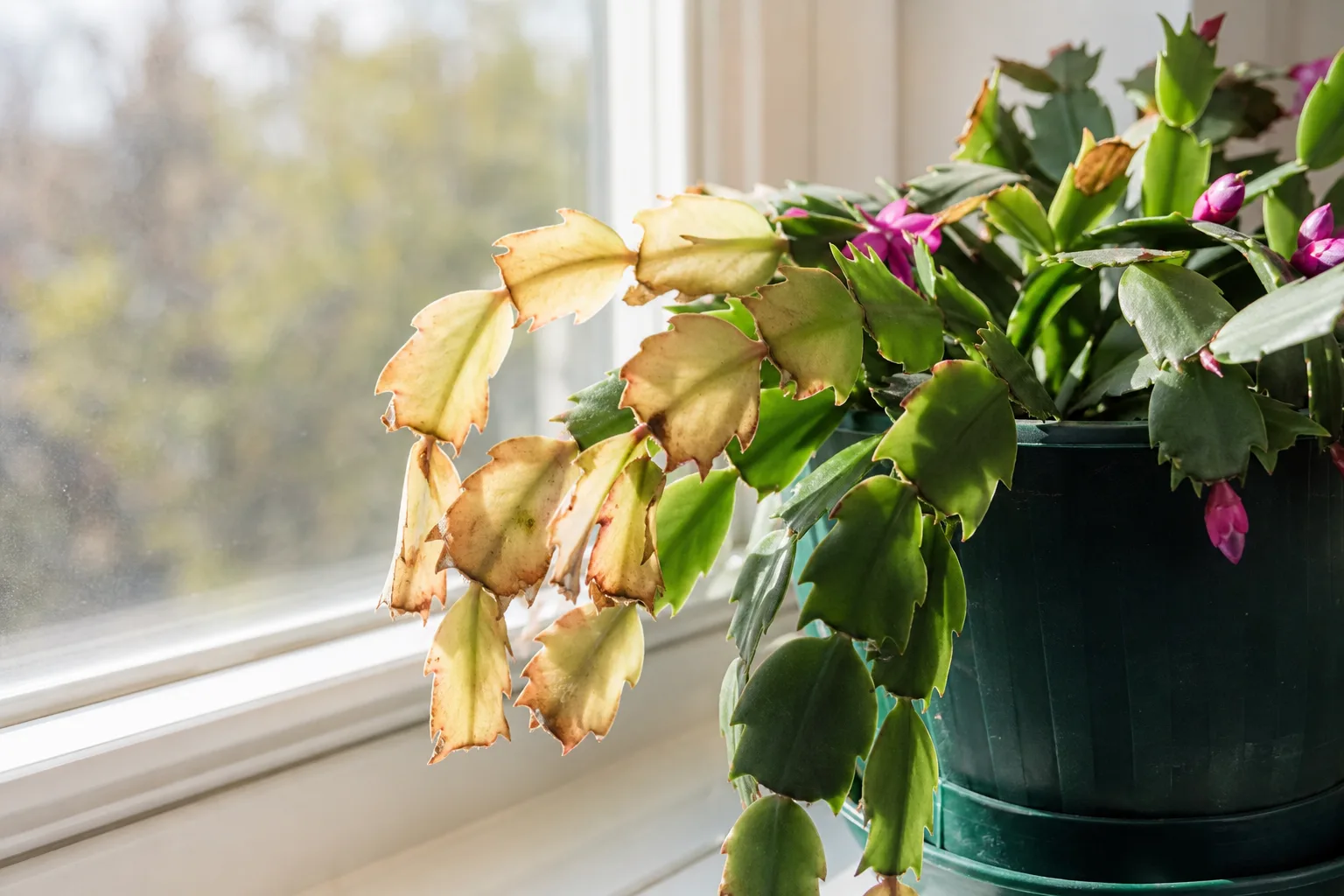
Fix the exposure without putting the plant in deep shade
Move the pot a little farther from the window, add a sheer curtain, or place it in bright filtered light. An east-facing window is often an easy indoor compromise; a bright west or south window can work when the strongest sun is filtered. If the plant has been outdoors, shift it into open shade or a screened porch rather than bringing it into a dark corner.
Make the change gradually when possible. A sudden move from direct sun to a dim room may stop scorch but can also reduce growth and flowering. The target is enough light to keep stems firm and support buds, without a hot beam striking the same segments for hours.
Leave damaged color in place while you watch the new growth. Scorched tissue will not turn green again, but later segments can emerge healthier. If the plant is otherwise firm and growing, the appearance may improve as new green joints replace the damaged ones.
Cause 2: Water stress, including root rot
Both too little water and too much water can produce purple or reddish stems because both can reduce the roots’ ability to supply water and nutrients. A Christmas cactus is a succulent, but it is a tropical succulent that appreciates regular moisture during active growth; it should not be treated like a desert cactus that must stay bone-dry.
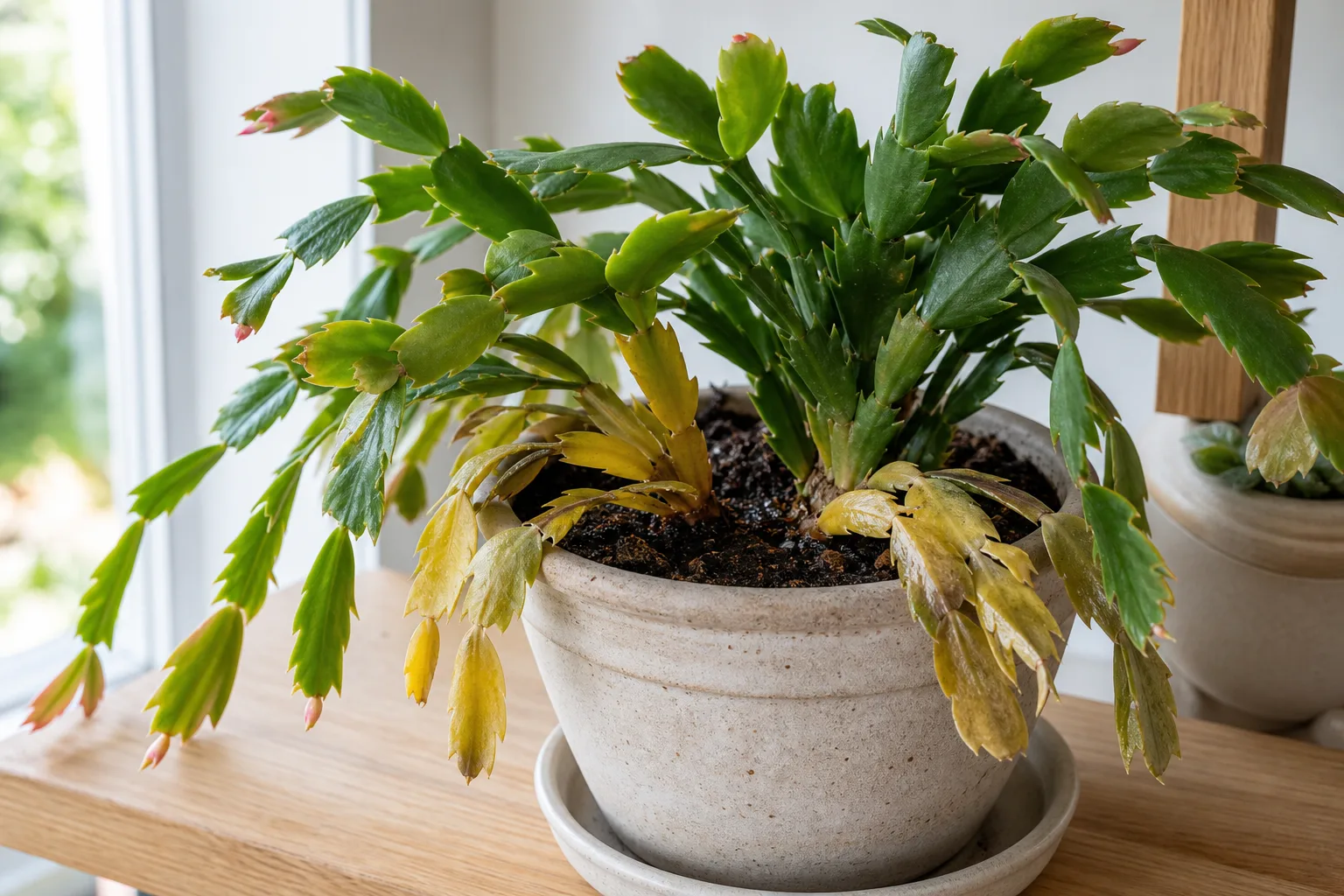
Tell dry-root stress from wet-root failure
Dry-root stress usually comes with light, wrinkled, floppy, or shriveling segments and a pot that feels unusually light. The mix may have pulled away from the pot edge or become so hydrophobic that water runs down the sides. Water thoroughly until excess drains, then return to a moisture-based schedule rather than giving repeated sips.
Wet-root failure looks different. The mix stays damp, roots smell sour or feel mushy, the base may soften, and the plant can remain limp even though you watered recently. NC State Extension lists overwatering as a cause of root rot and mushy stems, while the University of Missouri’s holiday-cactus guidance notes that a plant that stays wilted or shriveled despite adequate water may have root rot.
If the soil is dry and the stems are still firm, soak the mix evenly and let it drain. If the soil is saturated, stop watering, empty the saucer, improve airflow, and wait for the mix to dry partway. If the plant is declining or roots are rotten, cut away only collapsed roots with clean scissors, repot into fresh porous mix in a pot that is not oversized, and water sparingly while new roots form.
Avoid the two recovery mistakes that cause repeat damage: drowning a wilted plant because it looks thirsty, or withholding all water from a blooming plant because someone called it a cactus. During active growth, water when the mix has dried somewhat, then drain fully; during the autumn rest period, reduce frequency without allowing the plant to shrivel. The RHS growing guide makes the same distinction between moist-but-not-waterlogged growing conditions and the shorter, drier rest periods used to encourage flowering.
Cause 3: Nutrient shortage or pH lockout
Purple stems can accompany a shortage of phosphorus, magnesium, or nitrogen, but the color alone cannot tell you which nutrient is missing. A plant with exhausted mix, poor root contact, or an unsuitable pH may show “deficiency” symptoms even when fertilizer is present because damaged roots cannot take it up effectively.
Look for a pattern before feeding. Nutrient stress is more plausible when growth has slowed across the plant, the mix is old, the roots are crowded but not rotting, and the plant has not received a balanced houseplant fertilizer during its active growing season. It is less plausible when purple appeared immediately after a sunny move and the exposed side is the only part affected.
Gardening Know How’s troubleshooting guide likewise treats nutrients, root crowding, and light as separate possibilities rather than one guaranteed diagnosis. That distinction matters because feeding a plant whose roots are failing adds salts without restoring uptake.
Feed only after checking light, moisture, and roots. Use a complete, balanced houseplant fertilizer at the label’s diluted houseplant rate during spring and summer, and never fertilize a plant sitting in sour, waterlogged mix. University of Tennessee guidance recommends following the fertilizer label and warns that overfertilization can damage the holiday cactus’s fine root system.
Be cautious with Epsom salt. Magnesium sulfate is not a universal “purple leaf” cure, and adding it to a pot that already has adequate magnesium can increase soluble salts without fixing light, water, or root damage. If a soil test, a reliable diagnosis, or a consistent pattern supports magnesium deficiency, use a measured product as directed; otherwise, begin with balanced care and fresh, appropriately draining mix.
Check the potting mix’s history before you call the problem a deficiency. A plant that was recently repotted into fresh, lightly fertilized mix may not need more food, while a decade-old pot can have a collapsed structure and an imbalanced salt profile even if its surface looks normal. Water quality, repeated fertilizer doses, and a pot that dries unevenly can all alter what roots can access.
If the plant is valuable or the symptoms persist after light and moisture are corrected, a soil test is more useful than a nutrient cocktail. Test results can tell you whether phosphorus or magnesium is actually low and whether pH is making a nutrient unavailable. Without that evidence, the safest “feeding” decision is usually modest, complete fertilizer during active growth—not multiple supplements layered together.
Cause 4: Temperature swings and cold stress
A Christmas cactus likes a stable room, but it also needs a seasonal temperature signal to flower. That is why “cooler” is not automatically bad. Cool nights in the roughly 50s to low 60s Fahrenheit can help initiate buds, while prolonged cold, frost, hot glass, or abrupt swings between a heater and a cold window can stress stems and buds.
Move the plant away from exterior doors, drafty windows, heating vents, and fireplaces. During active growth, daytime temperatures around 70–80°F are comfortable; for bud formation, a cooler period is useful, but avoid letting the pot freeze or sit against a cold pane. The RHS recommends a distinct cooler spell around 55–59°F for flowering and keeping the plant warmer once buds are visible.
Temperature stress often overlaps with light stress. A sunny window can be cool overnight and hot in the afternoon, so changing the pot’s position may correct two causes at once. Do not move a plant repeatedly once buds are open or forming; stabilize the location and adjust only enough to remove the draft or heat source.
Cause 5: Crowded roots, old mix, or damaged roots
A Christmas cactus can flower while snug in its pot, so “rootbound” does not mean “repot immediately.” Repot when roots fill the container, water races through without wetting the mix, the potting medium has collapsed and stayed wet, or the plant has chronic poor growth despite reasonable light and watering. Roots emerging from the drainage hole are a clue, not a deadline.
When repotting is justified, wait until flowering has finished and the plant is entering active growth unless rot makes immediate action necessary. Choose a container only slightly larger, with a drainage hole, and use a porous, organic-rich mix that holds some moisture while releasing excess water. The University of Wisconsin notes that old peat-based media can lose structure and suffocate roots, while RHS recommends a modestly larger pot and a free-draining mix.
Inspect roots gently rather than teasing every root apart. Trim mushy or dead sections, keep healthy roots intact, and do not bury the stem segments. After repotting, give bright filtered light, avoid heavy fertilizer, and let the new mix dry somewhat before watering again.
When purple is not the main problem
Color change is a symptom, not proof of a fungal disease, pest, or nutrient disorder. If purple is accompanied by a sharply defined brown lesion at the soil line, rapidly collapsing tissue, gray growth on flowers, blackened roots, or spreading spots, isolate the plant and investigate beyond ordinary environmental stress.
Penn State Extension’s Christmas cactus disease table distinguishes basal stem rot, Botrytis blight, and root rots by symptoms such as brown tissue at the soil line, gray fungal growth, or plants that wilt and die. Those patterns call for sanitation and disease management—not extra fertilizer or more sun.
Also inspect the joints and pot rim for mealybugs, scale, and spider mites. NC State lists these as potential pests of Schlumbergera. A pest problem may coexist with purple stress, so wipe or isolate the plant and identify the insect before applying any treatment.
A four-week recovery plan
Once you have a leading cause, resist the urge to change everything. Use this sequence so the plant has a stable chance to show whether your diagnosis was right:
- Today: Move the pot out of harsh direct sun, heaters, and drafts. Empty standing water and record whether the mix is dry, evenly moist, or saturated.
- This week: Correct the watering method. Soak a genuinely dry plant thoroughly; let a saturated plant drain and dry partway. Inspect roots only when the plant’s condition justifies it.
- After seven to ten days: Check the newest segments. Firm new growth with less purple is a good response; continuing wilt, mushiness, or expanding lesions means you need a root or disease diagnosis rather than more waiting.
- Weeks two through four: If the plant is actively growing and roots are healthy, begin or resume a half-strength balanced fertilizer routine according to the label. Do not feed a recovering root-rot case or a plant in a dormant flowering phase.
Purple color already present may fade slowly or remain on tissue that was stressed but not killed. Judge recovery by firm segments, stable moisture, new growth, and the absence of spreading damage—not by expecting every old segment to return to emerald green.
Prevent purple stems and protect next season’s blooms
Build care around the plant’s habitat. Give it bright filtered light, a porous organic-rich mix, and a pot with a working drainage hole. Water thoroughly when the mix has dried somewhat, then drain the saucer; adjust the interval for pot size, season, light, and indoor humidity rather than using a fixed weekly calendar.
Keep a simple seasonal rhythm:
| Season or stage | Practical target | What to avoid |
|---|---|---|
| Spring and summer growth | Bright filtered light, regular moisture after partial dry-down, light feeding if roots are healthy | Full midday sun, fertilizer into wet soil, dry sips that leave dry pockets |
| Late summer and autumn bud setup | Gradually less water and cooler nights; keep the plant stable | Abrupt moves, hot nights, or total drought |
| Buds and flowers | Bright indirect light, regular but measured moisture, steady temperature | Repotting, cold drafts, heater blasts, and sudden changes |
| After flowering | A short rest, then fresh growth care as new segments appear | Treating a tropical epiphyte like a desert cactus |
If you move the plant outdoors for summer, acclimate it to the brighter location and keep it in shade or dappled light. Bring it back before cold nights, and quarantine any plant that has spent time outside before placing it beside your indoor collection.
Conclusion
The five most useful explanations for a Christmas cactus turning purple are too much direct light or heat, water stress, nutrient or pH trouble, temperature swings, and root crowding or damage. The order matters: inspect light and moisture first, look at roots when the symptoms support it, and only then consider fertilizer or repotting.
Correct the cause without overcorrecting. A firm plant may recover with a better window and steadier watering, while scorched, mushy, or diseased tissue needs removal or propagation. Give the plant stable filtered light, free-draining organic mix, measured moisture, and seasonal temperature cues, and new growth will tell you more than the purple color alone.