4 Easy Fixes If Your Christmas Tree Isn't Drinking Water
Fix a Christmas tree that stopped drinking with a fresh straight cut, a properly sized stand, plain water, and safer placement away from heat.
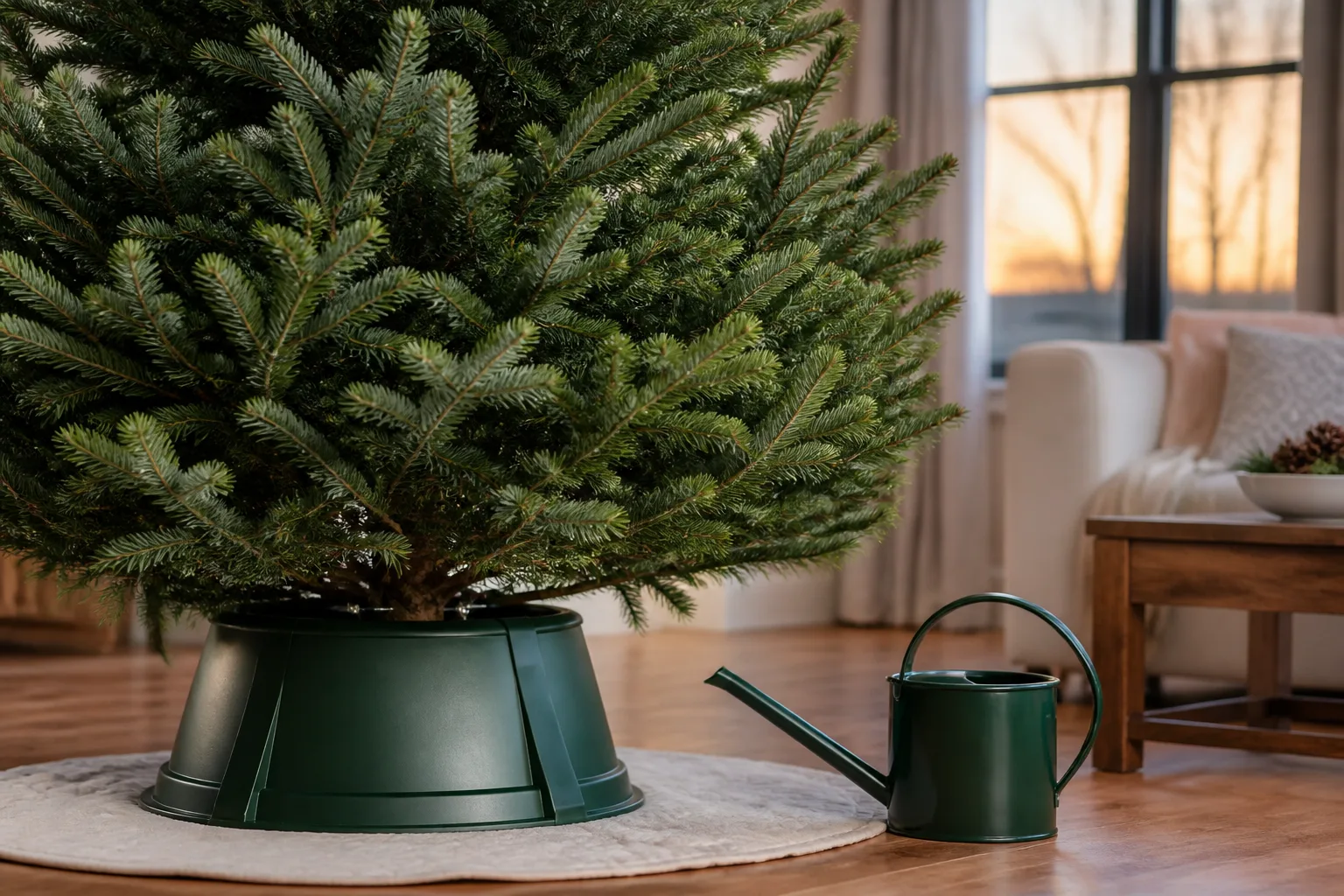
A fresh-cut Christmas tree can look as if it has stopped drinking for several different reasons. The trunk may have sealed over, the base may be sitting above the water line, the stand may be too small, or the room may be drying the tree faster than it can replace moisture. Sometimes the tree is simply using less water after its first thirsty days, which is normal.
Start with the least dramatic explanation: look at the water level and the tree itself. If the needles remain flexible, the branches bend instead of snapping, and green needles do not fall off when you touch a branch, a quiet reservoir does not automatically mean the tree is failing. If the foliage is brittle or the trunk is no longer submerged, act today.
Start with the right diagnosis: low uptake is not always a crisis
Water use is rarely perfectly steady. A tree brought home from a retail lot may drink heavily during its first days, then slow as the room, species, freshness, and moisture balance change. A choose-and-cut tree may also take up water less dramatically at first because it was cut more recently. The National Christmas Tree Association says the tree itself is a better dryness indicator than a single day’s change in the stand.
Check whether the trunk is actually touching water
Look down into the stand with a flashlight rather than judging by the amount of water you can see around the bowl. Many stands still contain water after the level has fallen below the cut surface. The base must stay submerged; a wet-looking reservoir cannot help if the trunk is perched just above it.
If you can safely reach the stand, mark the water level with a pencil on the outside or take a quick photo after refilling. Check again later the same day and the next morning. That gives you a real comparison without guessing from needle color, which can lag behind the tree’s internal moisture loss.
Healthy needles should feel pliable and stay attached when you brush a branch lightly. A few old interior needles may drop naturally, but widespread green-needle loss, faded color, wrinkled outer twigs, or branches that snap rather than flex indicate that the tree is drying. The National Christmas Tree Association’s freshness FAQ uses those signs to separate normal shedding from an excessively dry tree.
Do not wait for a completely brown tree before changing course. Watering protects freshness; it cannot reverse every late-stage sign of drying. If the tree still feels fresh, work through the four fixes below. If it is already brittle, skip rescue experiments and read the removal guidance later in this article.
Fix 1: Make a fresh, straight cut
The most reliable first repair is a new cut across the bottom of the trunk. After a cut tree sits for several hours, air and resin can reduce the exposed water-conducting tissue. Removing a thin disk opens a fresh surface so the stand can keep that tissue in contact with water.
How much to remove and how to make the cut
Ask the seller to make a fresh cut when you buy the tree, then make another cut at home if the tree has spent a long time out of water or the base has visibly dried. Remove about one-half inch of wood—enough to expose a clean surface, not a large section of trunk. The NCTA recommends cutting perpendicular to the trunk, so the new base is flat.
Get the tree into water promptly after cutting. If you need to delay setup, place the trunk in a clean bucket of water and keep the tree in a cool, sheltered location. Do not drag the cut end through dirt, bruise it against the floor, or leave it exposed while you rearrange furniture.
The cuts and trunk hacks to skip
Do not make a V-shaped or angled cut in the hope of creating more drinking surface. A flat cut is easier to keep covered, gives the tree a stable seat, and does not require an unusually deep reservoir. Once water falls below an angled surface, part of the exposed cut can dry even though the stand still looks partly full.
Also skip drilling a hole in the trunk. The NCTA says drilling does not improve uptake. Cutting grooves, splitting the base, or shaving the sides creates more ways for the tree to wobble or lose the outer wood that takes up water efficiently. A clean saw cut is both simpler and safer.
Fix 2: Match the stand to the trunk and keep the base submerged
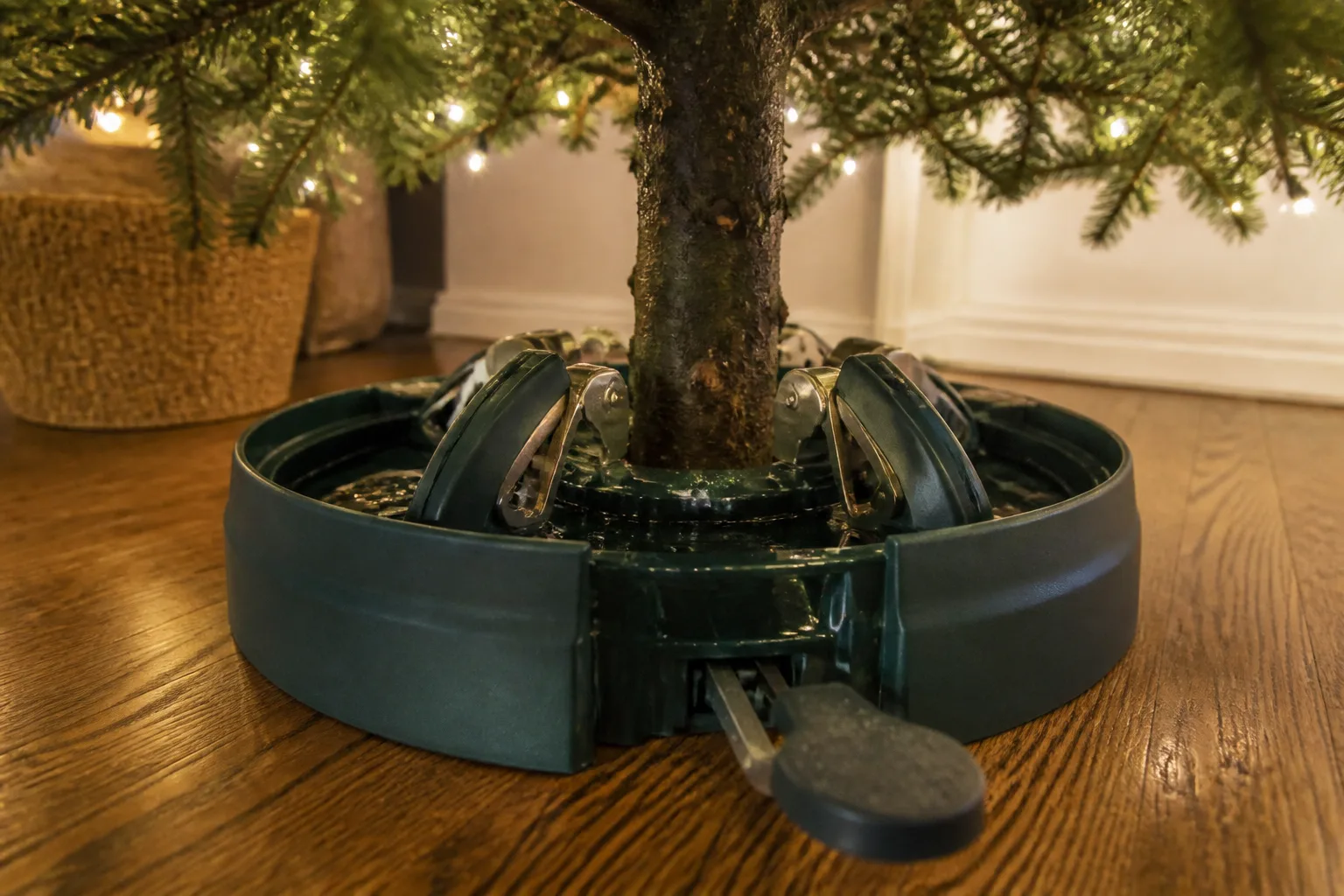
A tree cannot drink reliably from a stand that holds only a small cup of water. Choose a sturdy reservoir stand that fits the trunk and can hold enough water to cover the base between checks. The stand must also keep the tree upright; a leaning tree places extra strain on the trunk and can spill the reservoir.
Use stem diameter to plan reservoir capacity
Use the trunk’s diameter—not the tree’s height—as the planning measurement. The NCTA’s general rule is about one quart of reservoir capacity per inch of stem diameter. A four-inch trunk therefore calls for a stand that can hold at least one gallon with the tree in place. This is a capacity rule, not a promise that the tree will drink exactly four quarts every day. A Good Housekeeping care guide gives the same capacity rule and emphasizes daily checks.
Measure the trunk at the point where it will sit in the stand. Check the stand’s usable capacity after the tree is installed, because the trunk and hardware displace some volume. In the first few days, check twice daily if you can; later, a daily check may be enough if the level remains comfortably above the cut.
Never whittle the trunk to force a fit
If the trunk is too wide for the stand, use a larger stand. Do not carve away the sides until the base slips into the bowl. The outer wood contains some of the most efficient water-conducting tissue, so shaving it down can reduce uptake even when the cut face is wet. It can also produce a trunk that fits badly and makes the tree unstable.
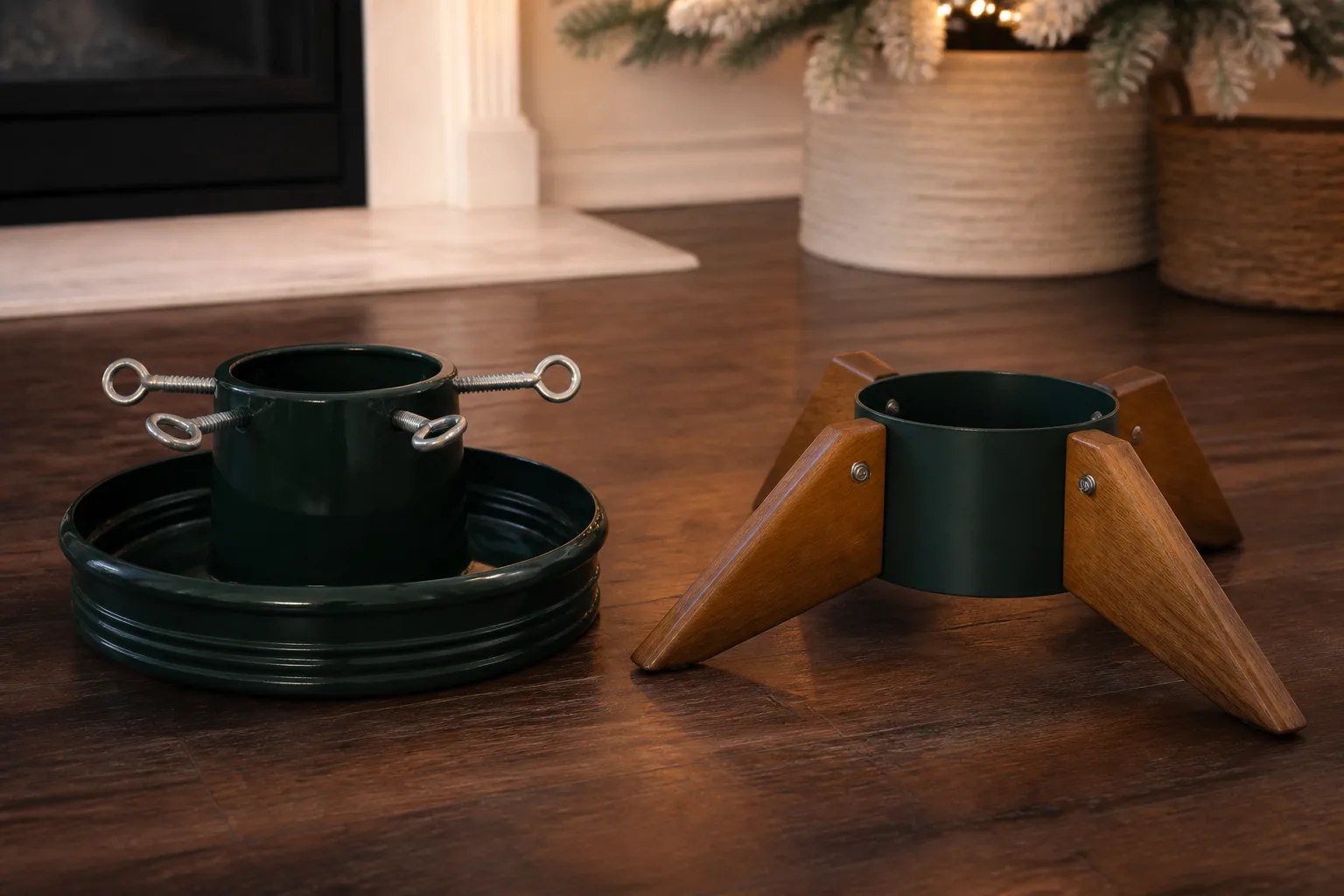
The same rule applies if the stand is too loose. Tighten the stand’s fasteners evenly and use a stand designed for that trunk range rather than packing the gap with random blocks. Stability is part of water care: a stand that tips, leaks, or lets the tree lift off the bottom can interrupt water contact without making the problem obvious.
Fix 3: Use plain water and refill before the level drops
Fill the stand with clean, plain tap water. You do not need sugar, aspirin, bleach, fertilizer, vinegar, soda, or a homemade preservative recipe. The NCTA’s guidance says plain water is best, and the Minnesota Christmas Tree Association likewise recommends fresh water without additives.
Why additives and home recipes are unnecessary
Additives sound useful because a cut tree is a plant, but the reservoir is not a vase that needs a floral preservative. The main goal is simple: keep a fresh cut submerged and reduce the rate at which the tree loses moisture. Extra ingredients can make the water smell, encourage microbial growth, or complicate cleanup without fixing an exposed trunk or undersized stand.
Water temperature is not a dependable rescue lever either. The NCTA says the temperature of the water used to fill the stand does not affect uptake. Use water that is convenient and safe to handle; spend your effort on the cut, the water line, the stand, and the room.
What to do if the stand ran dry
If the water level fell below the trunk, refill the stand immediately and check whether the base is still cleanly seated. Do not assume that a few inches of water remaining in the bowl means the tree was hydrated. If the exposed base has dried for a substantial period, a new flat cut is the more dependable reset, provided you can handle the tree safely.
Unplug lights and remove fragile decorations before moving a tall tree. Have another adult steady it, recut the base on a stable outdoor work surface, and return it to water promptly. If the tree is already brittle, shedding green needles, or difficult to move without breaking branches, do not keep repeating the process indoors; its condition may have moved beyond a useful rescue.
Fix 4: Lower the tree’s water demand
Water uptake is only half of the balance. A tree in a warm, bright, drafty spot can lose moisture faster than one in a cooler room, so the stand appears to “fail” even though the trunk is taking up some water. Move the tree before it becomes dry rather than trying to compensate with additives.
Move it away from heat, sun, and drying drafts
Keep a cut tree away from fireplaces, radiators, heat vents, space heaters, and strong direct sun through a south- or west-facing window. Hot air flowing across the branches increases drying, and a fireplace creates both radiant heat and a serious placement hazard. Choose the coolest practical location that still lets the tree stand securely.
Do not place the tree directly in front of a vent just because that is the only open wall. Redirect the airflow if your system allows it, or choose a smaller tree for a safer location. Lowering the room temperature modestly can slow drying, but do not chill the room to an uncomfortable or unsafe level just to save a tree.
Use low-heat lights and switch them off when unattended
Use lights that produce little heat, inspect cords and sockets before installation, and do not overload an electrical circuit. Turn the lights off when you leave home and when you go to bed. The NCTA and Minnesota Christmas Tree Association both pair freshness guidance with this basic electrical caution because a dry tree and faulty lighting are a poor combination.
The lights are not a substitute for water. Even a cool-running set cannot make a dry tree fresh again. Think of lighting and placement as ways to reduce moisture loss after the stand and trunk are working properly.
If it still seems not to drink, use this decision tree
Once you have corrected the cut, stand, water, and location, stop changing several variables at once. Refill the reservoir, make a note of the level, and inspect the tree over the next 12 to 24 hours. A small change in water use is less meaningful than whether the foliage is holding its condition.
Check needles, branches, and the base over the next 24 hours
Use this order:
- Base: Is the cut surface flat, clean, and continuously submerged?
- Stand: Does it fit the trunk, stay upright, and hold enough water for the stem diameter?
- Water: Is the reservoir filled with plain water, with no chance of the base lifting above the water line?
- Room: Is the tree away from direct heat, hot drafts, and intense sun?
- Foliage: Are the needles flexible and attached, with branches that bend rather than snap?
If the first four checks pass and the fifth still looks good, the tree may simply be in a normal lower-uptake period. Keep checking the stand daily. If the fifth check is worsening, do not interpret a newly recut base or a full bowl as proof that the tree is safe to keep inside.
Know when the tree is too dry to keep indoors
Remove the tree when it becomes very dry, brittle, or difficult to keep safely watered. Do not burn any part of a Christmas tree in a fireplace or wood stove; resin and rapid drying make that unsafe. Instead, contact your municipality or local tree farm about recycling, chipping, or a drop-off program.
If your tree is shedding only a few old interior needles but the exterior remains green and flexible, that is not the same as total failure. If whole branches are crisp, green needles fall with a light touch, or the tree has been left with a dry stand long enough to become brittle, removal is the responsible next step.
Cut tree versus potted tree: use the right care plan
These instructions are for a cut tree with a bare trunk in a water-holding stand. A potted or balled-and-burlapped tree still has roots and soil, so it does not drink through a sawn trunk. It needs its root ball kept slightly moist, a cool indoor stay, and a plan for returning outdoors or planting at the appropriate time.
The National Christmas Tree Association’s care guidance separates rooted trees from cut trees for that reason. A rooted tree can be damaged by both drying out and standing in flooded soil. If your “Christmas tree” is in a nursery pot, stop looking for a sealed trunk and check the root-ball moisture and species requirements instead. Potted-tree care also differs by species and climate, as practical guidance from Ideal Home explains.
Conclusion
When a Christmas tree is not drinking water, begin with the physical setup: make a fresh flat cut if the base has dried, use a stand sized for the trunk, keep the cut submerged, and use plain water. Then reduce the tree’s demand by moving it away from heat and direct sun, using low-heat lights, and checking the reservoir at least daily.
The important exception is a tree that is already drying out. Flexible needles and branches are encouraging; brittle foliage and widespread green-needle drop are warnings. A full stand cannot restore a tree that has become unsafe to keep indoors, so know when to stop troubleshooting and recycle it.