Late-Summer Indoor Spiders: Causes and Fixes
More spiders indoors in August and September? This guide explains the biology behind the surge and a practical plan to reduce sightings without bad spray habits.
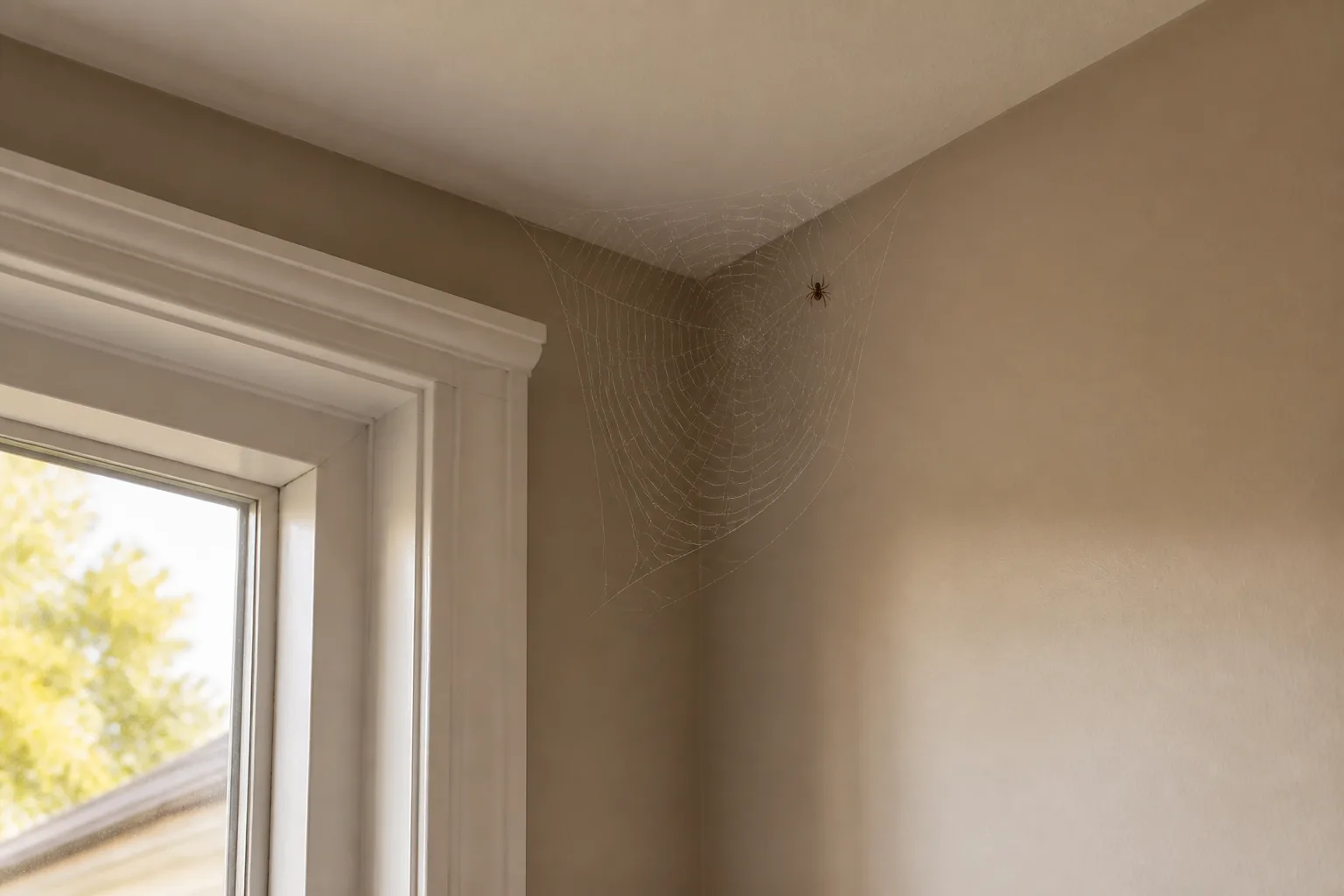
You walk into the laundry room, flip on the light, and there it is: a spider crossing the baseboard like it owns the place. If this keeps happening in late summer, you are not imagining a seasonal pattern. August through early October is when indoor spider sightings spike in much of the United States—and the surge usually has more to do with biology and visibility than with your home suddenly becoming spider-friendly overnight.
Most house spiders are harmless predators doing pest control for free. Still, nobody wants cobwebs in ceiling corners, wolf spiders in the garage, or a surprise guest in the shower. The goal here is not spider panic. It is understanding why the timing happens and running a short plan that reduces sightings without wasteful spraying or myths about nighttime biting campaigns.
The Quick Answer: Visibility, Not Always a New Invasion
Late-summer spider sightings usually increase because adult male spiders roam in search of mates, prey insects are abundant near homes, and spiders that were already indoors have reached sizes that are hard to miss. Some outdoor species also wander inside as nights cool or soil dries. A few webs in low-traffic rooms is normal. Daily webs in multiple living areas, repeated egg sacs, or venomous species in undisturbed zones are worth a closer look.
Your first useful moves are reduce insect prey, vacuum webs and wandering spiders, and seal entry gaps around doors, windows, and utility penetrations. Spraying random corners without fixing food or access rarely lasts.
Why Late Summer Brings More Indoor Spiders
Spiders do not organize a coordinated house invasion. They respond to food, shelter, moisture, and reproduction the same way they have for millions of years. Late summer stacks those triggers together.
Mating Season Sends Male Spiders Roaming
For many common species, mating season peaks from late summer into early fall. Female spiders often stay near webs or retreats. Males leave theirs and walk—sometimes across floors, up walls, and through door gaps—searching for partners. That roaming behavior is why people describe spiders “suddenly appearing” even when populations were present earlier at smaller life stages.
You may see more movement in bathrooms, kitchens, and hallways because males travel along edges and vertical surfaces. They are not hunting you. They are navigating geometry while following pheromone and vibration cues.
Spiders You Already Had Are Finally Adult-Sized
Another overlooked factor: spiders were already inside. Egg sacs hatched in spring or early summer. Spiderlings dispersed into wall voids, storage areas, and quiet corners. By late summer those individuals are adult-sized, building more obvious webs and moving farther from birth sites.
Colorado State University Extension notes that funnel web spiders are among the most common indoor spiders, particularly during late summer and early fall, and that spider numbers naturally vary season to season as dispersal and survival rates change (CSU Extension). The population did not teleport in through the mail slot. It matured where you were not looking.
Peak Insect Activity Creates a Food Chain Indoors
Spiders eat insects and other arthropods. Late summer still delivers flies, moths, crickets, ants, and cockroaches near structures, especially where outdoor lights draw flying insects at night. Spiders follow prey the way a cat follows mice—not out of malice, but because calories determine survival.
If your home has fruit flies near the kitchen, fungus gnats around overwatered houseplants, or crickets in the basement, spiders have reason to stay. Extension guidance consistently ties long-term spider reduction to prey management, not spidericide alone (CSU Extension). Fix the insect buffet and spider pressure often drops on its own.
Heavy rain or drought can push the same migration. Saturated soil or baked-dry mulch sends ground-dwellers toward foundations. Human structures offer moderated humidity near plumbing, sump pits, and floor drains—exactly where hunting spiders like wolf spiders may appear. Extended summer heat also expands and contracts building materials, opening door sweeps, window seals, and foundation joints just enough for arthropods to slip through as outdoor nights cool.
Accidental Invaders vs. Spiders That Live Indoors Year-Round
Not every spider on your carpet means the same thing. Splitting behavior into two groups clarifies your response.
Accidental outdoor invaders enter when weather shifts or when they wander near thresholds. They are often found near doors, low windows, or garage entries, may not build permanent indoor webs, and usually decline if prey and entry routes are fixed.
Resident indoor spiders live their entire life cycle inside structures—classic cobweb spiders in ceiling corners, cellar spiders in basements, sac spiders resting in wall-ceiling junctions by day. They indicate long-term prey availability and harborage, not a one-night wander.
If you only see large hunters near the patio door after a cold snap, think exclusion and weather sealing. If you find messy cobwebs in multiple ceiling corners every week, think prey reduction plus regular web removal in persistent zones. Same animal, different management emphasis.
Where Spiders Actually Hide in Your Home
Spiders want quiet, low-disturbance zones with access to food or mates. The usual list is boring because it is accurate:
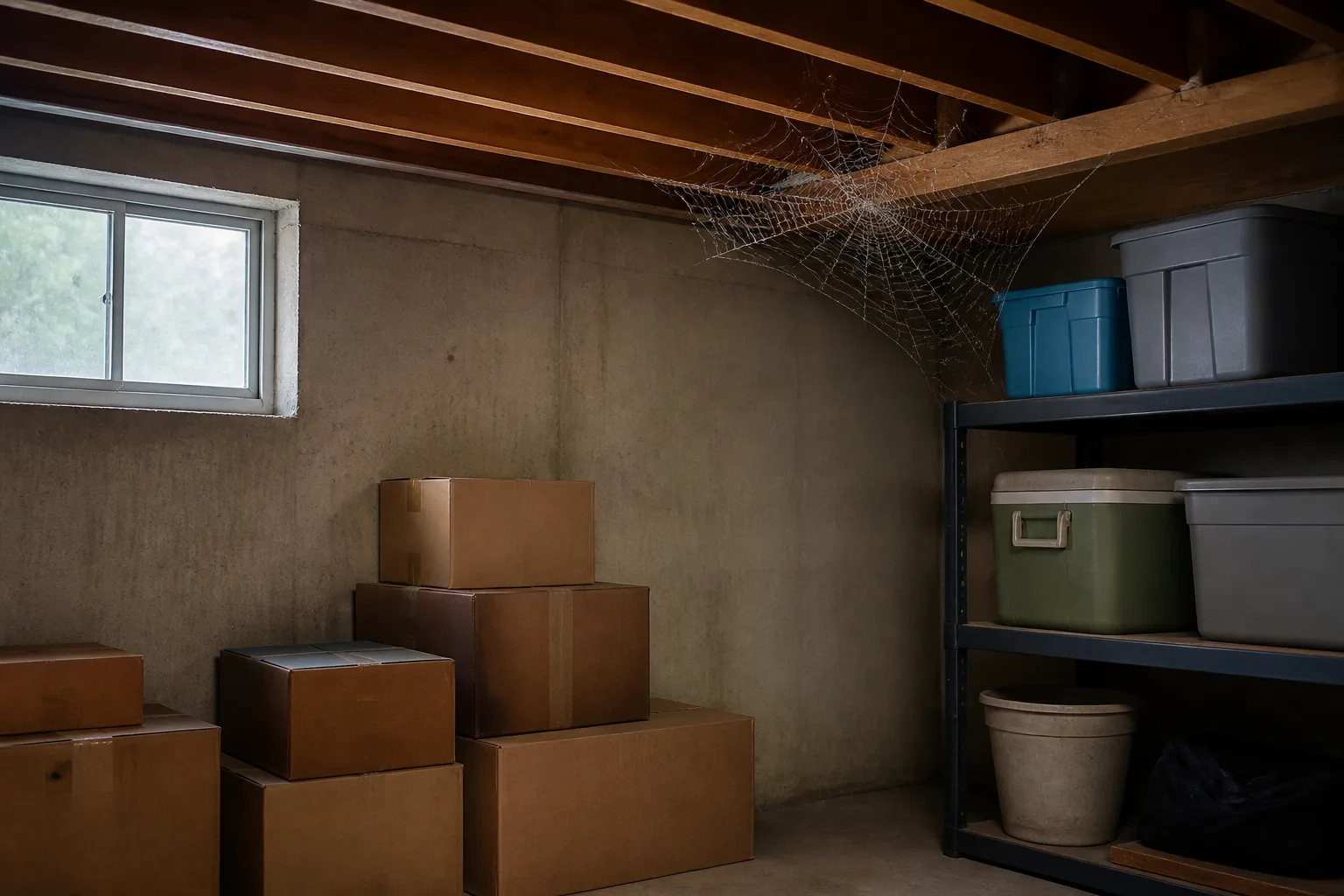
- Basements and crawl spaces — cool, humid, full of crickets and storage clutter
- Garages — threshold gaps, outdoor lighting nearby, boxes and potting supplies
- Attics and eaves — undisturbed web sites above living spaces
- Closets and laundry rooms — dim, infrequently disturbed vertical surfaces
- Behind furniture and under large appliances — stable microclimates and insect traffic
- Window sills and door frames — transition zones where outdoor and indoor insects travel
Webs in living rooms often mean light fixtures or exterior lights are pulling insects to glass, then spiders set traps where prey already flies. A web above the sofa is sometimes a lighting problem dressed as a spider problem.
Common Late-Summer Spiders You Are Likely Seeing
Identification does not require a microscope. You need silhouette, web type, and location to decide whether you are looking at a harmless roommate or something that deserves professional ID.
House Spiders, Cellar Spiders, and Funnel Weavers
Cobweb or house spiders (family Theridiidae) build irregular sticky webs in corners and under furniture. Most are harmless. Widow spiders belong to this family, but widows prefer undisturbed low zones like window wells and garage corners—not busy kitchen ceilings.
Cellar spiders (Pholcidae) have long legs and tangled webs in basements and crawl spaces. They bounce when disturbed. They are not “daddy longlegs” in the harvestman sense; they are true spiders and beneficial fly catchers.
Funnel weavers make sheet-like webs with a retreat hole. They are fast, common indoors in late summer, and frequently mistaken for brown recluses in regions where recluses are rare (CSU Extension). Funnel weavers have striped legs and multiple eye pairs; recluses have a violin marking and only three eye pairs.
Wolf Spiders and Sac Spiders
Wolf spiders hunt on foot—no capture web. They are often seen on floors and in garages, especially where crickets congregate. Females may carry egg sacs or tiny spiderlings on their backs. They are shy and rarely bite unless trapped against skin.
Sac spiders rest in daytime silken tubes in upper wall corners and roam at night. They are pale and commonly reported as bite sources, though most bites cause short-lived pain without serious symptoms (CSU Extension). Seeing one on a nightstand usually means check bedding clutter and reduce bedroom insect prey—not that the spider waited to ambush you.
Outdoor Orb Weavers Near Doors and Porches
Orb weavers—including large garden species and banded Argiope—build symmetrical webs on porches, shrubs, and exterior lighting zones in late summer. CSU Extension notes spectacular outdoor orb weavers are especially visible then (CSU Extension). They are generally harmless and excellent flying-insect control.
Indoor sightings near entry doors often mean a web on the exterior side or a male that wandered inside while roaming. Clearing exterior webs and adjusting lights reduces repeat appearances more than indoor fogging.
When a Few Spiders Is Normal—and When to Take It Seriously
Normal: occasional webs in basement or garage corners; one or two wandering males in autumn; outdoor orb weavers on porch railings; cellar spiders in utility rooms.
Take it seriously when:
- You remove webs daily in multiple living areas and they return immediately
- You find several egg sacs attached to furniture, stored goods, or wall junctions
- You have a persistent indoor insect problem you have not addressed
- You identify or strongly suspect black widows or brown recluses in undisturbed indoor zones
- Someone receives a bite with increasing pain, spreading wound, or systemic symptoms
Most spiders bite only when trapped against skin—inside a shoe left in the garage, under a pillow, or when a hand reaches blindly into storage. They do not seek humans as food. The “spiders bite you in your sleep” story collapses under basic biology: we are irrelevant to their diet.
How to Get Rid of Indoor Spiders Without Making the Problem Worse
Think integrated pest management: change habitat, remove prey, physically remove spiders, then use targeted products only if needed. The EPA defines IPM as combining knowledge of pest biology with the least-risk controls first (EPA IPM principles).
Remove the Prey First
Audit where insects enter and breed:
- Ripe produce, compost bowls, and sticky recycling attract fruit flies and gnats
- Overwatered houseplants and soggy saucers feed fungus gnats
- Pet food left out overnight draws ants and beetles
- Damp basements and sump areas harbor crickets and silverfish
- Exterior lights above doors pull moths and midges to glass and sills
Run a 48-hour kitchen reset if flies are present. Dry out houseplant soil on a schedule. Fix leaky downspouts that keep foundation zones moist. Spiders are the symptom layer; insects are often the root.
Vacuum Webs and Wandering Spiders Safely
For webs and visible spiders:
- Use a hose attachment to vacuum the web, spider, and egg sac together when possible.
- Dispose of the bag or empty the canister outside immediately so survivors do not crawl back out.
- Wipe the corner with a dry cloth to remove silk residue that attracts rebuilds.
Wear gloves when cleaning garage clutter or woodpiles where widows may hide. Do not bare-hand crush unknown species in undisturbed zones.
Sticky traps along baseboards can monitor crawling insects and spiders, especially in basements. They are diagnostic tools, not a whole-house solution.
Total-release foggers generally have little effect on spiders because spiders do not groom residues like ants do, and their bodies stay elevated off treated floors (CSU Extension). Blanket spraying living spaces adds chemical exposure for people and pets without fixing webs in corners foggers never reach. If you choose a residual product, use label-directed crack-and-crevice application in spider harborages—not broadcasting across carpets. Pair any chemical step with web removal and exclusion or benefits fade quickly.
A Prevention Plan That Works After Labor Day
Late summer is the right window to prevent the early-fall wanderers that show up when you start closing windows and storing garden gear indoors.
Seal Gaps Before Cool Weather Arrives
Walk the exterior with caulk and weatherstripping on a dry afternoon:
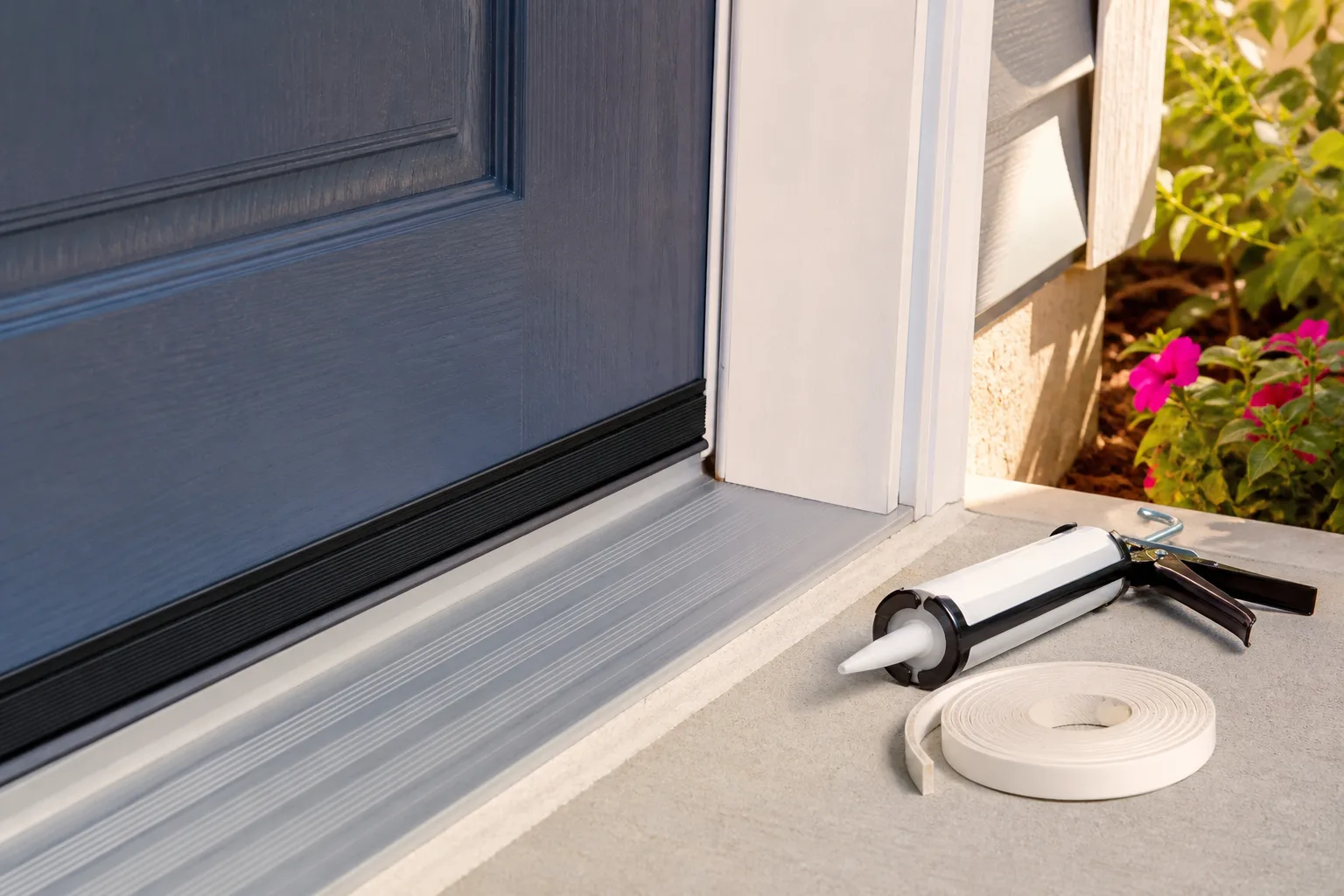
- Door sweeps and thresholds — a pencil-width gap is enough for arthropods
- Window screens and frame gaps — repair tears; foam backer rod fills larger cracks
- Utility penetrations — seal around AC lines, hose bibs, and cable entries
- Foundation and siding joints — focus on the first 24 inches above soil
- Garage door seals — replace brittle rubber that daylight shows through
Inside, seal pipe chases, attic hatches, and basement window wells. Spiders recolonize quickly after removal, so physical exclusion is the longest-lasting control lever (CSU Extension).
Insects cluster at bright white fixtures at night, and spiders build where insects fly. Swap unshielded porch bulbs for yellow or sodium vapor types that attract fewer flying insects, move lights away from doorways where possible, keep blinds closed at night if interior light spills through glass, and rinse exterior webs monthly with a hose jet on porch and eave zones. Dark-colored siding attracts fewer prey insects than bright white siding in some studies summarized by extension sources—a useful note if you are replacing exterior materials anyway, though you should not repaint the house solely for spiders.
Spiders, Houseplants, and Garden Debris
Gardeners get a double seasonal hit. Outdoor beds still produce insects and spiders on foliage, and late-summer cleanup moves pots, trellises, and harvest baskets through doors.
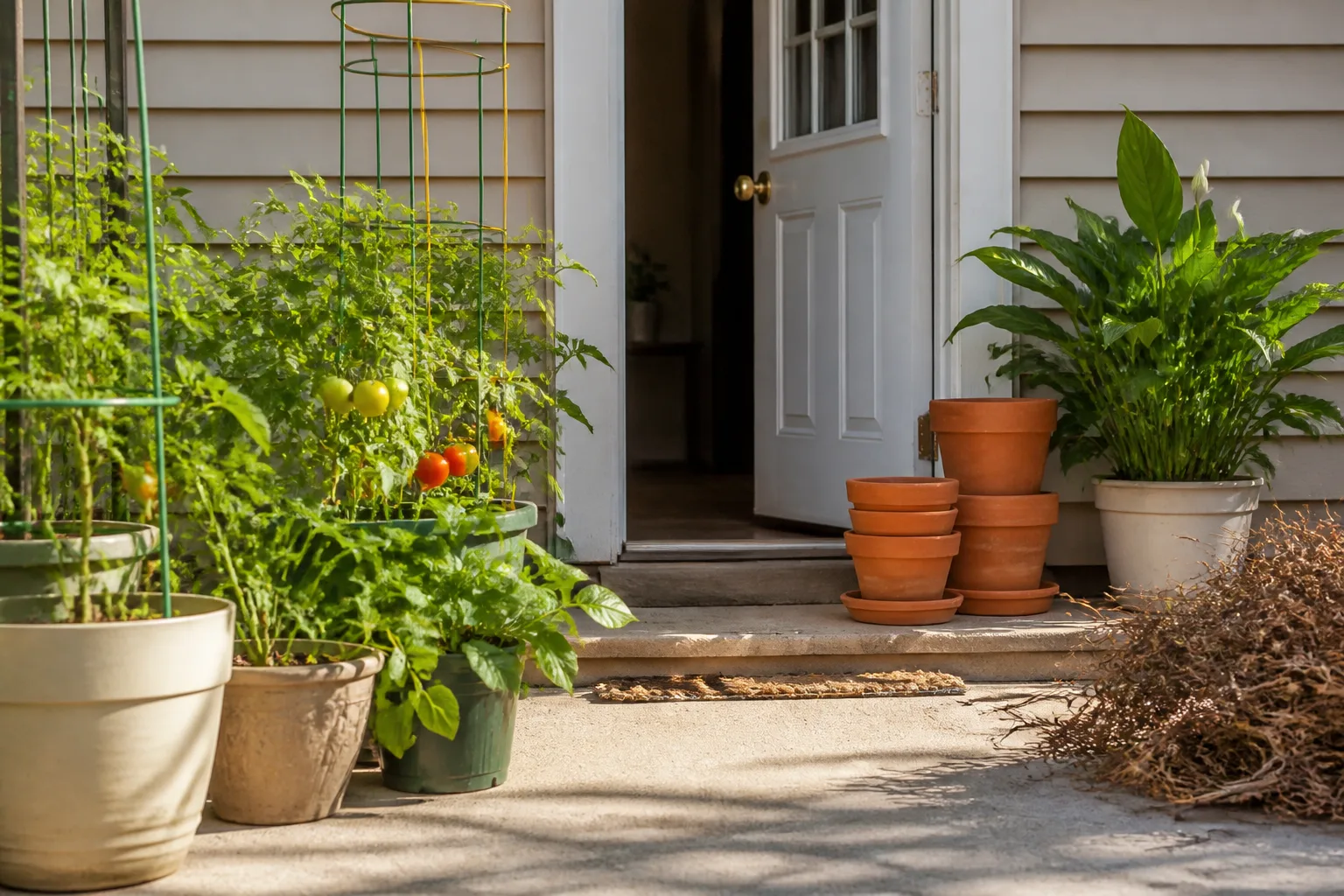
Before bringing plants indoors for fall:
- Inspect pot rims, saucers, and soil surface for webbing and egg sacs
- Quarantine new or outdoor plants for two to three weeks in a separate room
- Avoid letting overripe fallen fruit sit near patio containers—it draws flies, then spiders
Store firewood, tomato cages, and empty pots away from the foundation, not against siding. Wood piles and stacked pots are widow and recluse habitat in regions where those species occur. Shake out gloves and boots left in garden sheds before wearing them.
Beneficial spiders outdoors—jumping spiders on peppers, orb weavers in marigolds—are allies. The management goal indoors is boundary control, not eliminating spiders from the ecosystem.
Venomous Spiders: What to Know by Region
Black widows (genus Latrodectus) build messy webs near the ground in garages, window wells, crawl spaces, and unused burrows. Females are glossy black with red or orange hourglass markings on the underside. They are non-aggressive; bites usually happen when a spider is pressed against skin in stored goods or woodpiles. Seek medical care if a widow bite is suspected; identification helps treatment (CSU Extension).
Brown recluses (Loxosceles reclusa) are regionally limited—common in parts of the central and southern U.S., uncommon or absent in many northern and western states despite constant misidentification of funnel weavers and wolf spiders. Recluses have a violin marking, uniform abdomen, and three pairs of eyes. Bites are over-diagnosed in areas outside their range (CSU Extension).
If you are unsure, photograph the spider next to a coin for scale and contact your local cooperative extension office before self-treating with harsh chemicals. Effective medical decisions depend on correct ID, not panic from a fast-moving house spider.
For non-emergency bites, extension sources recommend cleaning the site, applying ice, and seeking medical attention if pain or swelling worsens or systemic symptoms appear (CSU Extension).
Conclusion
Late-summer spider sightings feel sudden because adult spiders roam, prey is abundant, and small gaps in the building shell matter more than you notice. Most indoor spiders are harmless predators reflecting an insect food web—not a cleanliness failure or a personal threat.
Run the plan in order: cut prey, vacuum webs and egg sacs, seal entries, adjust outdoor lighting, and inspect garden gear before it crosses the threshold. Reserve chemical tools for labeled, targeted use when habitat changes alone are not enough. If webs return daily across living spaces or you suspect a venomous species, escalate to professional identification.
You do not need a spider-free home to win. You need fewer surprises in the rooms you actually live in—and late summer is the best time to set that up before autumn wanderers arrive.