Pepper Plant Leaves Turning Yellow: 6 Causes
Pepper plant leaves turning yellow? Use leaf patterns, soil moisture, pests, nutrition, and temperature clues to find the cause and fix new growth.
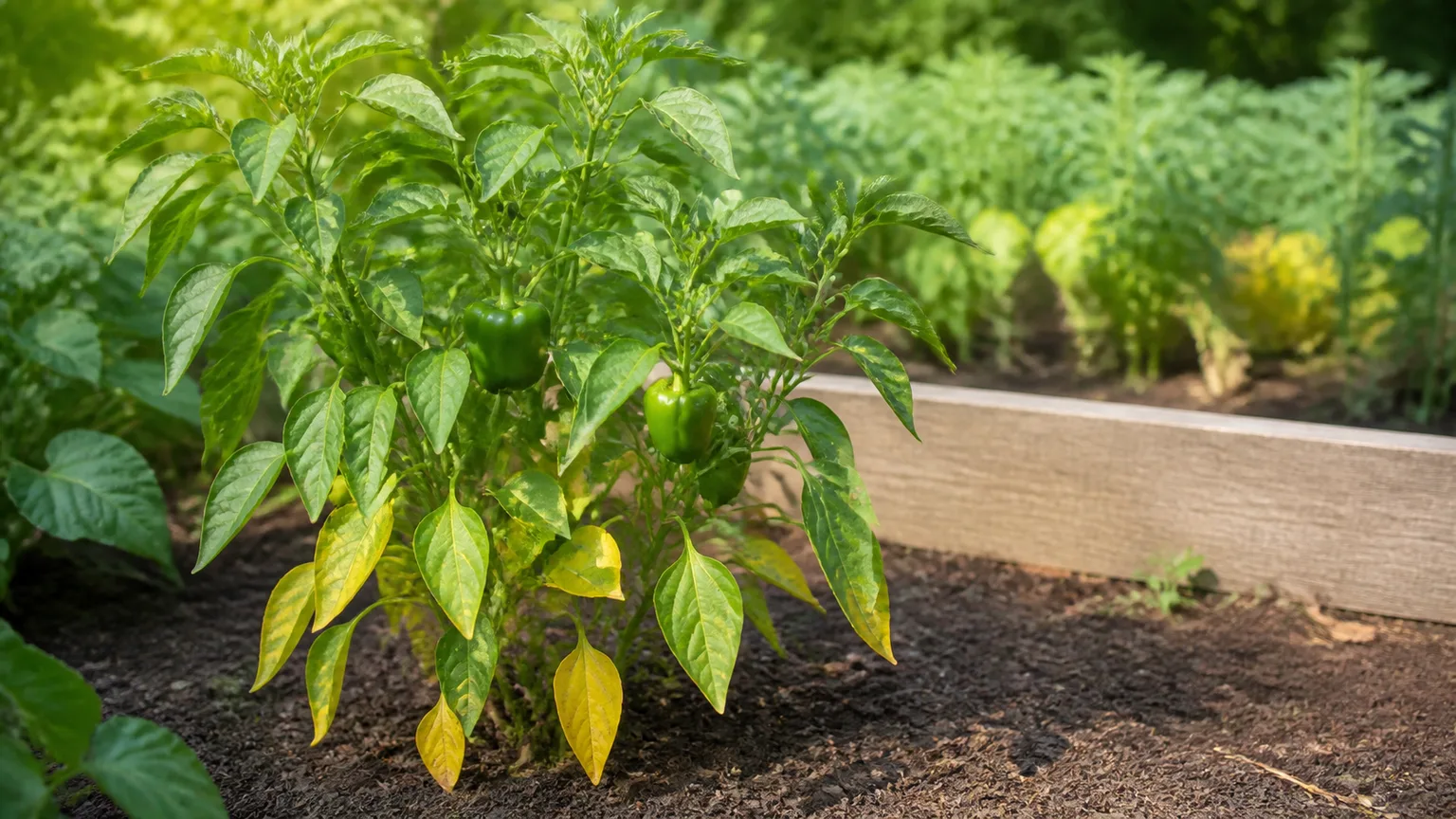
Yellow leaves on a pepper plant are a clue, not a diagnosis. The fastest way to narrow the problem is to read where the yellowing starts, how the leaf feels, what the soil is doing, and what changed just before the color change.
Start with the root zone before reaching for fertilizer. If the soil is wet and the plant is limp, inspect drainage and roots; if it is genuinely dry and the leaves are crisp or wilted, water deeply; if the leaves are yellow between green veins, think nutrient availability or root stress; and if you see stippling, webbing, or sticky residue, inspect for pests. This pattern-first approach matters because UC IPM notes that many apparent nutrient deficiencies come from poor drainage, unsuitable pH, inappropriate irrigation, or unhealthy roots rather than an empty fertilizer bag. (UC IPM nutrient deficiency guidance)
Start with the pattern, not fertilizer
Look at several leaves on the same plant and compare old foliage with the newest leaves. Uniform pale green that begins low on the plant points in a different direction than a yellow mosaic, a crisp edge, or a single wilted branch. Also check the underside of leaves and the stem near the soil line; a symptom that is visible in only one place is often more diagnostic than the shade of yellow itself.
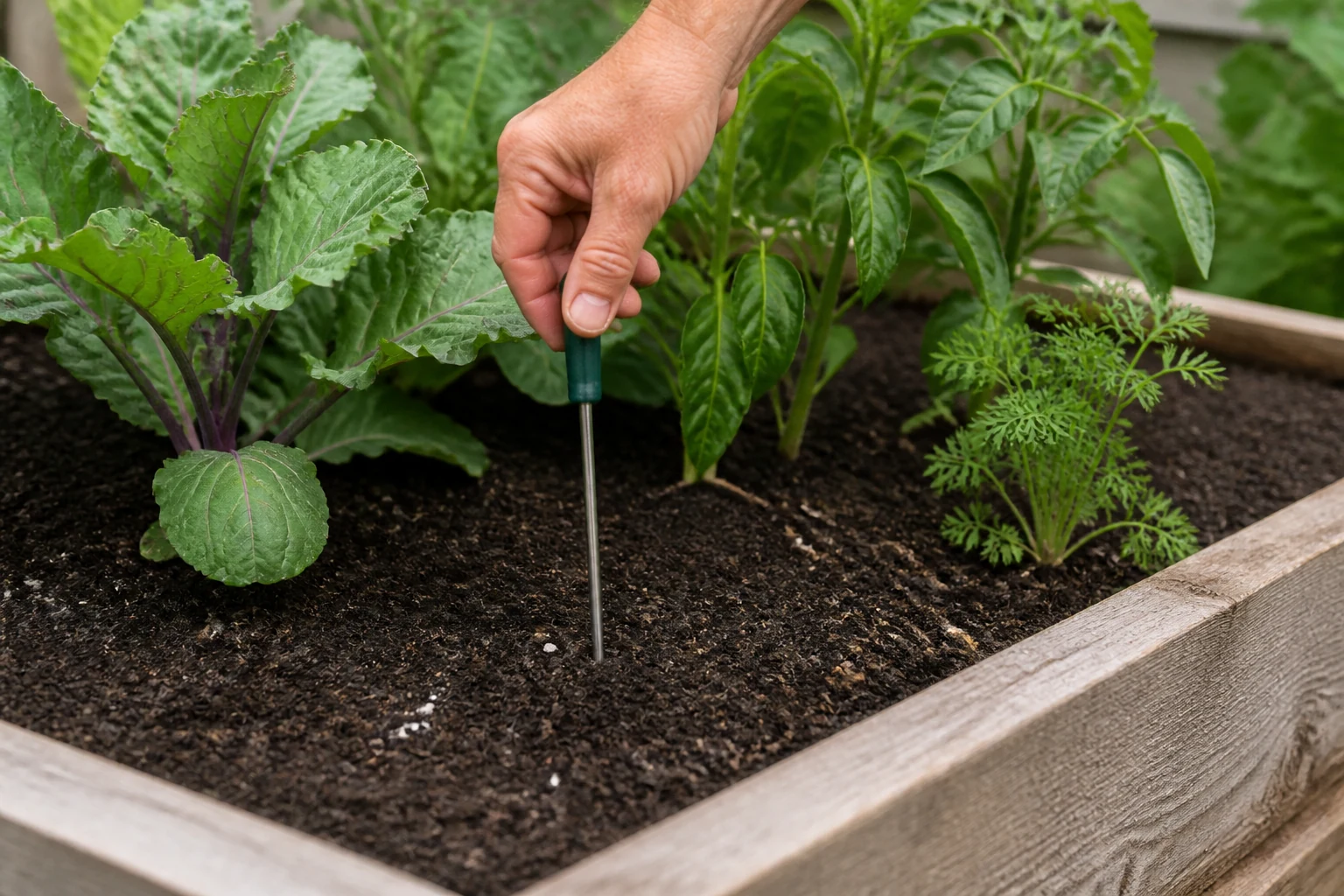
Then check the soil at root depth. In a container, lift the pot before watering and feel about an inch below the surface; in a bed, push a finger or trowel several inches into the root zone. A heavy, wet pot and a light, dry pot can both accompany limp leaves, so watering by the calendar is a poor diagnostic tool.
One aging lower leaf is less alarming than a wave of yellowing. A pepper may shed a leaf after transplanting, a long fruiting stretch, or a period of stress, but the change should be limited and the growing tip should continue to look healthy. If yellowing keeps moving upward or the newest leaves are affected, treat it as an active problem rather than normal turnover.
Color also varies by cultivar and by the light falling on the leaf. Compare several leaves in natural daylight and look for texture, spots, veins, insects, or a sharp boundary between healthy and damaged tissue. A camera can make green leaves look lime-colored, so use a photo for tracking the trend, not as the only evidence.
Six common causes at a glance
| What you see | Check first | Most likely direction | First move |
|---|---|---|---|
| Lower leaves fade evenly and growth is slow | Recent feeding and soil test | Nitrogen deficiency | Do not overfeed; test or use a label-directed balanced fertilizer if deficiency is plausible |
| Several leaves yellow while soil stays wet | Drainage, pot weight, roots | Overwatering or root stress | Stop routine watering and correct the root environment |
| Leaves are limp with dry, light soil | Root-zone moisture and heat | Underwatering or drought stress | Rehydrate the root zone slowly and protect it from excessive heat |
| Green veins stand out against yellow tissue | Leaf age, soil pH, roots | Nutrient lockout or a specific deficiency | Test soil and inspect roots before adding a supplement |
| Fine speckles, sticky film, webbing, or distorted new growth | Leaf undersides and stems | Aphids, mites, thrips, or whiteflies | Isolate or separate the plant and confirm the pest |
| Yellowing follows a cold night or sudden move | Overnight temperature and exposed tissue | Cold injury or temperature shock | Warm and shelter the plant; wait for new growth before heavy pruning |
If the plant yellows and wilts on one side, develops wedge-shaped lesions, shows water-soaked spots, or collapses rapidly, skip the six routine fixes and read the disease section below. Those signs can indicate a soilborne or vascular disease, not simply a watering mistake.
1. Overwatering and poor drainage
Peppers like consistent moisture while they are actively growing, but their roots also need air. Soil that stays saturated for too long leaves roots short of oxygen, slows nutrient uptake, and can start a cycle of yellowing, drooping, and root decay. This is especially common in containers without enough drainage, oversized pots, dense garden soil, or beds that collect runoff.
Overwatered peppers often have a heavy pot or wet soil several inches down. Leaves may feel soft rather than papery, lower foliage may yellow first, and the plant can wilt even though the mix is damp. A sour smell, blackened roots, or a stem base that is becoming soft raises the urgency.
How to fix wet roots
Stop automatic watering and confirm that water can leave the container or bed. Empty saucers, move a container out of repeated rain, clear blocked drainage holes, and do not add gravel to the bottom of a pot as a substitute for an open drainage path. If the root zone is only temporarily wet and the plant is still firm, allow it to dry to a sensible level before watering again.
When a container plant continues to decline in wet mix, slide it out and inspect the roots. Firm, pale roots are a good sign; roots that are brown, mushy, or foul-smelling need damaged tissue removed with a clean tool before repotting in fresh, free-draining mix. Do not repot a healthy plant because of one yellow lower leaf, and do not fertilize waterlogged roots while they are struggling to function.
For in-ground plants, improve the site rather than trying to rescue every leaf. A raised bed, a better-drained planting position, or a carefully adjusted watering line can help; if the stem base is soft or several plants in the same wet area are collapsing, ask a local extension office about root and soilborne diseases.
2. Underwatering and heat stress
Underwatering usually produces a lighter pot or dry soil, limp leaves, curling, and sometimes crispy margins. The problem is amplified by hot weather, strong wind, black containers, shallow roots, fruit load, and a pepper growing in a small pot. Container peppers may need water much more often than bed-grown plants in hot weather, but that does not make daily watering a universal rule.
GrowVeg recommends judging container moisture by pot weight and by feeling about an inch down, while also noting that the interval changes with weather, potting mix, and growth stage. Its pepper guidance also links steady watering during dry weather with less stress around flowering and fruiting. (GrowVeg pepper watering guidance)
How to fix drought stress
Water at the soil line slowly enough that the root zone can absorb it. In a container, continue until water drains from the holes, wait a few minutes if the mix is bone dry, then water again and empty the saucer. In the ground, soak the area around the roots rather than applying a quick splash to the stem or foliage.
Once the plant has recovered, add a layer of organic mulch to slow evaporation, keeping it a few inches away from the stem. Check moisture before each watering and adjust for weather instead of copying last week’s interval. Do not compensate for a missed watering by keeping the soil saturated for days; the goal is a moist, oxygenated root zone.
3. Nitrogen deficiency
Nitrogen deficiency commonly begins with older, lower leaves because nitrogen can be moved from older tissue to newer growth. The plant may look generally pale, grow slowly, and produce thin stems or small leaves rather than showing only one isolated yellow patch. West Virginia University Extension describes this lower-leaf yellowing pattern alongside poor growth and a light-green overall color. (WVU Extension nutrient deficiency guide)
Before feeding, ask why nitrogen might be unavailable. A pepper in an old container mix, a bed that has been cropped heavily, or a plant growing in low-organic-matter soil may genuinely need nutrients, but waterlogged roots, compacted soil, or an unsuitable pH can create a similar appearance. Yellow leaves that stay yellow after a feeding are not evidence that the plant needs more fertilizer.
If a soil test or the growing history supports nitrogen deficiency, use a balanced vegetable fertilizer or a product labeled for peppers at the stated rate. Apply it to hydrated soil and do not stack fish emulsion, granular fertilizer, compost tea, and a second liquid feed in the same week. Excess nitrogen can produce soft, lush growth that is more attractive to aphids, and it does not repair roots that are already damaged.
Fully yellow leaves generally will not return to green. Judge a nitrogen correction by the color and size of new growth over the next few weeks, not by the oldest leaf on the plant.
4. pH or another nutrient lockout
A pepper can have nutrients in the soil and still show deficiency symptoms if roots cannot take them up. UC IPM lists pH, poor aeration, bad drainage, inappropriate irrigation, root injury, root pathogens, and restricted soil volume as causes of symptoms that look like mineral deficiency. (UC IPM nutrient deficiency guidance)
The pattern can help you form a hypothesis. Yellow tissue between green veins on older leaves can fit magnesium trouble, while young leaves that turn yellow but keep green veins point more toward iron availability; potassium problems can include yellowing, browning, or scorching at older leaf margins. West Virginia University Extension emphasizes that the same nutrient may be unavailable because of moisture, pH, or competition from another element, so a visual guess is not a soil diagnosis. (WVU Extension nutrient deficiency guide)
Read the yellow pattern before adding a supplement
Test the soil when the problem affects several plants, returns in the same bed, or does not match a simple watering event. In containers, check the roots and the age of the mix as well as pH; fertilizer salts and a collapsed potting mix can both restrict uptake. A laboratory soil test is more useful than applying a handful of Epsom salt, lime, or a micronutrient blend because the wrong amendment can increase salinity or push another nutrient out of balance.
The University of Georgia Extension also warns against confusing a water-uptake problem with a simple calcium shortage in pepper fruit disorders: calcium movement depends on water flow and plant function, not merely on adding calcium to the soil. That same principle is useful here—fix the root environment and confirm the need before chasing a single mineral. (UGA Extension bell-pepper defects guide)
5. Sap-sucking pests
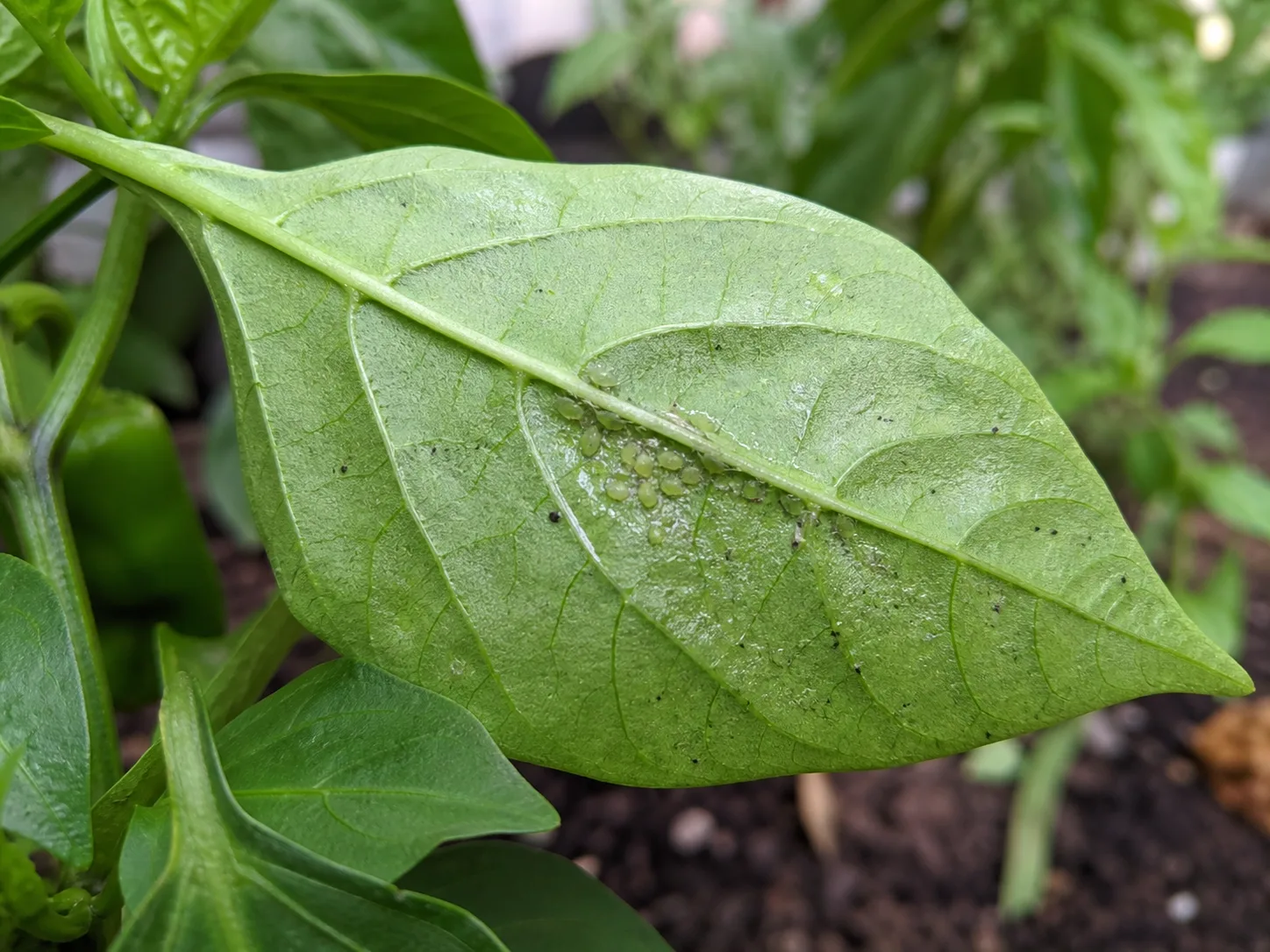
Aphids, spider mites, thrips, whiteflies, leafhoppers, and other sap-feeding insects can weaken pepper foliage enough to cause yellowing, wilting, distortion, or leaf drop. The visual clue is usually not a smooth, plant-wide fade; look for fine stippling, silvery scarring, curled new leaves, sticky honeydew, shed skins, webbing, or clusters on stems and leaf undersides.
Minnesota Extension’s pepper diagnostic guide lists aphids as a cause of yellowing and wilting when populations are high. GrowVeg identifies fine webbing under leaves as a spider-mite clue and recommends checking these hidden surfaces, especially in hot, dry conditions. (University of Minnesota pepper diagnostic guide; GrowVeg pepper pest guidance)
How to manage a confirmed infestation
Inspect the whole plant and nearby peppers before treating. If the population is small, a firm spray of water aimed at the undersides and stems can dislodge aphids; repeat the inspection because one rinse rarely reaches every insect or egg. Gardening Know How recommends making pest checks part of the watering routine and starting with water before moving to a labeled soap or horticultural oil when needed. (Gardening Know How aphid guidance)
Use only a product labeled for the pest, pepper, and edible crop, and follow its mixing, application, and harvest directions exactly. Test a small area first, avoid spraying during extreme heat or when pollinators are actively foraging, and do not coat every plant with neem or soap simply because one leaf is yellow. Preserving lady beetles, lacewings, parasitic wasps, and other beneficial insects is often part of the long-term solution; broad-spectrum spraying can remove those helpers along with the pests.
6. Cold exposure and temperature shock
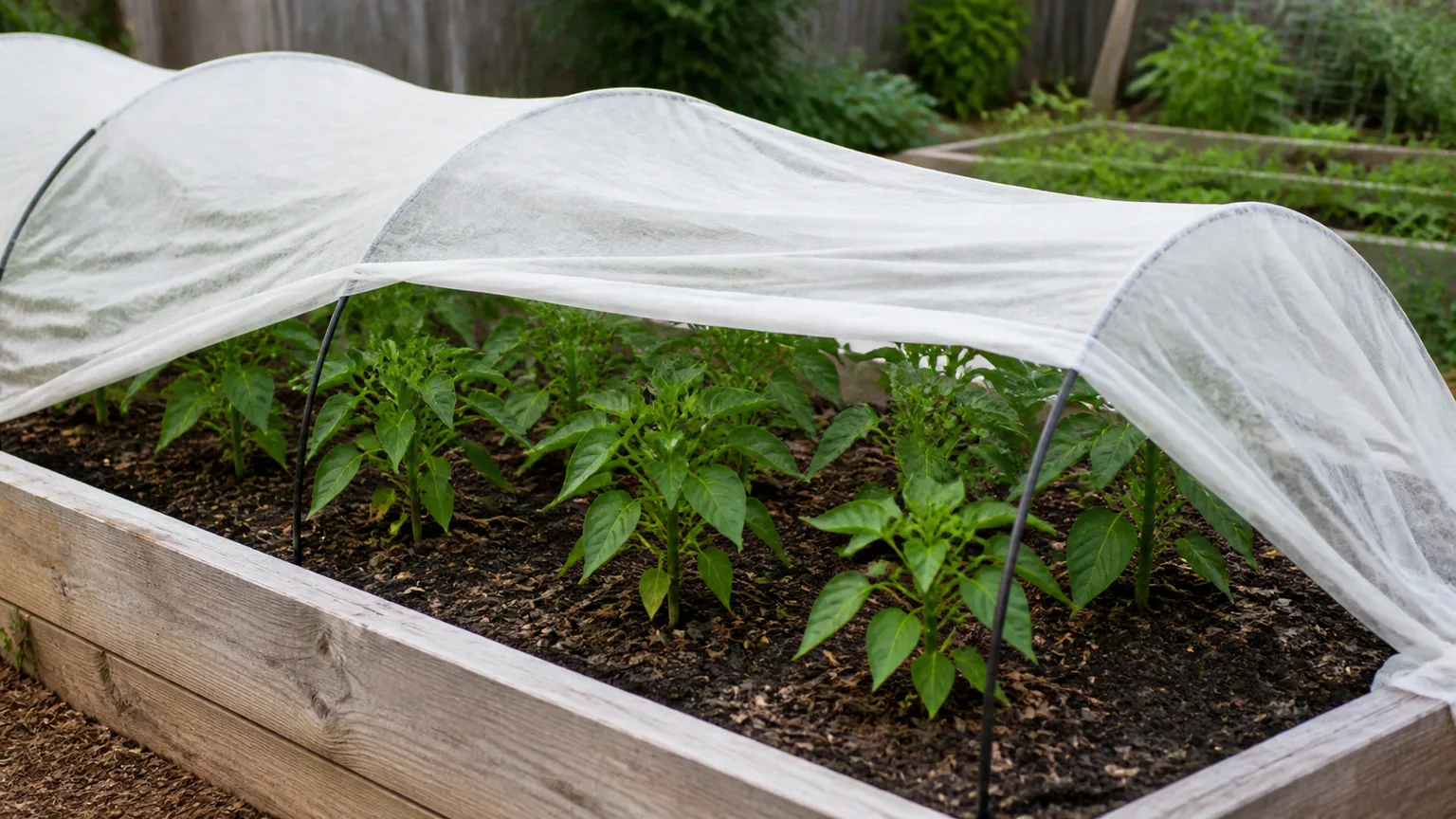
Peppers are warm-season plants, so a cold night, late frost, chilly wind, or sudden move from a protected space to open air can damage foliage. Yellowing may appear alongside limp leaves, slowed growth, water-soaked-looking patches, bronzing, or tissue that later turns brown. A plant that changed color shortly after a cold event deserves shelter and time before it receives a heavy fertilizer dose.
University of Minnesota Extension advises waiting to transplant peppers until nighttime lows are above 50°F, and GrowVeg notes that peppers need warmth and sunshine for strong growth. (University of Minnesota pepper-growing guide; GrowVeg pepper growing guide)
Cover outdoor plants with a breathable row cover before a cold night, keeping the material from resting heavily on the foliage. Move container peppers to a sheltered position, protect dark pots from rapid chilling, and restore bright warmth gradually. Leave damaged leaves in place until you can see which tissue is still living; premature pruning can remove partially functional foliage and expose fruit to sunscald.
Yellowing that points to disease, not care
Some pepper diseases begin with yellowing, so a correct watering routine does not rule them out. Minnesota’s diagnostic guide describes Verticillium wilt as yellowing and wilting that may affect one side, with wedge-shaped leaf lesions and tan veins in a cut stem; it also lists Phytophthora blight with rapid wilt, water-soaked leaf or fruit spots, and dark stem lesions. (University of Minnesota pepper diagnostic guide)
UC IPM reports that Verticillium wilt can yellow and droop leaves on a few branches or the entire plant, with inward-rolled edges, stunting, and brown vascular tissue in the lower stem. It distinguishes the disease from Phytophthora root rot by the extensive browning and rotting found in affected roots. (UC IPM Verticillium wilt guidance)
Treat these signs as a request for diagnosis, not a cue to add fertilizer or water. Remove badly collapsed plants from the growing area, clean tools between plants, avoid spreading wet soil, and contact a local extension service before replanting the same bed if a soilborne disease is plausible. Do not compost a plant you suspect carries a persistent pathogen unless your local guidance says that system reaches the needed temperatures and is appropriate for diseased material.
Should you remove yellow pepper leaves?
Keep a leaf that is still mostly green unless it is clearly diseased, infested, or physically blocking necessary inspection. Green foliage is still producing energy for roots, flowers, and fruit, and removing too much at once can slow recovery. A yellow leaf will not be restored by pruning, but it may still contribute while the plant is stabilizing.
When a leaf is fully yellow, brown, papery, or spreading a confirmed disease, cut the petiole close to the main stem with clean pruners. Remove diseased debris from the bed rather than leaving it against the plant, and disinfect tools before moving to another pepper. Keep enough healthy canopy to shade developing fruit; UGA Extension notes that a larger canopy helps reduce sunscald on exposed peppers. (UGA Extension bell-pepper defects guide)
A seven-day recovery plan
Today: Photograph the whole plant and one affected leaf, count how many leaves are changing color, and record whether the yellowing is on old or new growth. Check soil moisture several inches down, lift a container, inspect leaf undersides, and look at the stem base before making one correction.
Days two through four: Correct the clearest cause only. Let saturated soil drain or inspect roots, rehydrate genuinely dry soil, move a cold-stressed container to shelter, or begin a confirmed pest workflow. Hold fertilizer if roots are wet, the plant was recently cold-damaged, or the pattern has not been identified.
Days five through seven: Check whether the soil is drying at a reasonable pace, whether the newest leaves are holding their color, and whether yellowing has stopped spreading. Old damaged tissue may continue to fade after the cause is corrected; the useful signals are firmer stems, stable moisture, fewer new symptoms, and healthy new growth.
Avoid changing light, water, soil, fertilizer, pesticide, and pot size all at once unless the plant is in immediate danger from rotten roots or a severe infestation. One measured correction gives you a better chance of learning what the plant needed and prevents a stressed root system from receiving several new shocks.
Prevent the next flush of yellow leaves
Give peppers the conditions that reduce competing explanations: at least six hours of direct sun, warm soil, free drainage, and consistent moisture that is adjusted for weather and container size. GrowVeg recommends a sunny position, organic matter in the soil, and a free-draining mix for containers; its container guidance also notes that pots dry rapidly in hot weather and should be judged by weight rather than a fixed schedule. (GrowVeg pepper growing guide; GrowVeg container pepper guide)
Mulch the soil surface without burying the stem, keep irrigation at the root zone, and check the plant whenever you water. Feed according to the label and the crop’s growth stage, but use a soil test when yellowing repeats or affects a whole bed. Inspect leaf undersides weekly during active growth, especially after bringing plants out of a greenhouse or patio shelter, and protect plants from cold nights instead of waiting for the leaves to tell you the weather was too harsh.
If a bed has a confirmed soilborne disease, rotate thoughtfully and get local advice before planting another susceptible crop there. If the plant is in a container, start the next season with a clean pot, fresh mix, open drainage holes, and a size that fits the root ball rather than a large reservoir of unused wet soil.
Conclusion
When pepper plant leaves turn yellow, begin with the root zone and the pattern. Wet soil with a heavy pot points toward overwatering; dry soil with crisp wilt points toward drought; lower-leaf paling suggests nitrogen; green veins suggest a nutrient-availability problem; stippling or webbing suggests pests; and a recent cold night suggests temperature injury.
Make the smallest correction that fits the evidence, then give the plant several days to show whether the decline has slowed. Fully yellow leaves usually will not turn green again, but stable moisture, firm stems, and clean new growth are the signs that your pepper plant is recovering.