Do Pennies Keep Grubs Away From Your Garden?
Do pennies keep grubs away? Learn why the copper-penny trick is unsupported, how to confirm grubs, and which low-toxicity controls are worth trying.

If you have found pale, curled larvae under a struggling plant or a soft patch of lawn, scattering pennies over the soil is an appealingly simple idea. The claim usually goes like this: copper from the pennies creates a shock, smell, or chemical barrier that sends grubs away before they eat more roots.
The practical answer is no—pennies are not a proven way to repel or kill grubs. Modern U.S. pennies are copper-plated zinc rather than solid copper, and there is no reliable garden evidence that placing them on soil changes grub behavior. A few coins are unlikely to transform your soil, but they are also unlikely to solve the problem.
The useful question is not whether you can try a harmless-looking trick. It is whether you have a damaging grub infestation, which beetle is involved, and whether a targeted biological or labeled treatment is justified. That distinction keeps you from wasting time, overwatering stressed grass, or adding unnecessary metal to a planting bed.
The short answer: pennies are not grub control
There are two separate claims hiding inside the penny remedy: that copper repels grubs, and that contact with a penny kills them. Neither claim has a dependable role in integrated pest management. The penny may look like a convenient source of copper, but appearance is not the same as a measured dose, a known mechanism, or a treatment tested against the grub species in your soil.
The U.S. Mint’s penny specifications describe the modern coin as copper-plated zinc. That does not make every penny dangerous to a garden, but it does make the folk explanation about placing chunks of solid copper around plant roots misleading. Even if copper were involved, a coin on the surface would not deliver a controlled concentration through the soil profile where a grub is feeding.
Think of pennies as a curiosity, not a control. If you already placed a few on top of mulch, remove them if they are in the way of planting or mowing, but do not expect a visible change in the grub population. Spend your next ten minutes on an inspection instead.
Confirm that grubs—not another problem—are damaging the garden
“Grub” describes the larval stage of many beetles, not one single pest. Some larvae help break down organic matter, some feed on roots, and some are simply present in soil without reaching a level that warrants intervention. Finding one pale larva while turning compost is not the same as finding a concentrated population beneath dead turf.
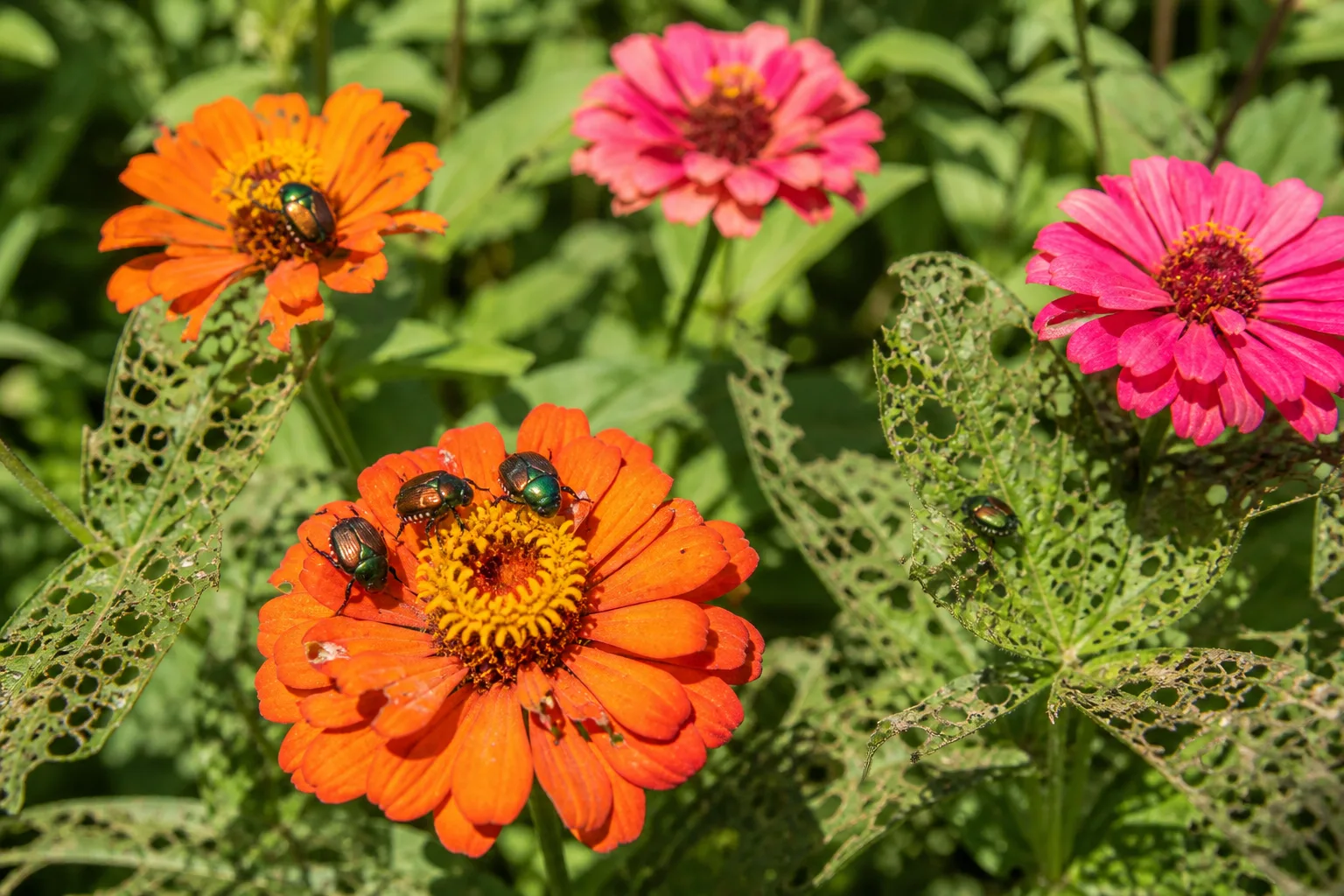
In lawns, the most familiar damaging white grubs are larvae of scarab beetles such as Japanese beetles, masked chafers, and May or June beetles. In vegetable beds and containers, root damage can also come from root weevils, caterpillars, wireworms, disease, or drought that has nothing to do with grubs. Treat the observed damage and the setting as a pair.
What a true white grub looks like
A typical white grub has a soft, dirty-white or cream-colored body, a brown head, and a curled C shape when exposed in soil or beneath turf. Many species have three pairs of legs near the head, although green June beetle larvae can look different. Species-level identification may require looking at the hair and spine pattern on the underside of the last abdominal segment, called the raster; a hand lens helps.
Penn State Extension’s white-grub guide emphasizes that white grubs vary by species, age, and life cycle. That matters because a product or biological control that targets one grub may do little to another, and because the best treatment window is usually tied to the young, actively feeding stage rather than the month printed on a generic garden calendar.
Why the penny trick sounds plausible but falls apart
Copper is a real micronutrient, and copper-based products have real uses in horticulture. That legitimate fact often gets stretched into the claim that any copper object will repel a soil pest. But the effect of copper depends on its chemical form, concentration, contact, soil reaction, moisture, and the organism involved—not simply on whether a shiny coin is nearby.
Copper also is not a universal insect barrier. A copper strip may discourage some slugs through a surface-contact effect under specific conditions, but that does not translate to a buried beetle larva feeding several inches below turf. Grubs are not exposed to the penny in the same way, and the proposed “tiny electric shock” explanation is not a treatment protocol a gardener can measure or reproduce.
The soil-health concern is the mirror image of the same mistake. A handful of modern pennies is unlikely to change a garden’s copper level, but adding coins is not a useful way to feed plants, correct a deficiency, or manage pests. Excess copper can interfere with roots and soil organisms, so copper belongs in a soil-test-and-label conversation, not in a scatter-it-and-hope routine.
Inspect the soil before choosing a treatment
The fastest way to improve your decision is to replace a visual guess with a small sample. Brown grass, loose sod, or birds pecking at a lawn can point toward grubs, but they can also reflect drought, irrigation problems, root disease, compaction, thatch, or other insects. Pennies cannot fix a misdiagnosis, and neither can a “natural” product bought without checking the pest.
Dig a small, repeatable inspection window
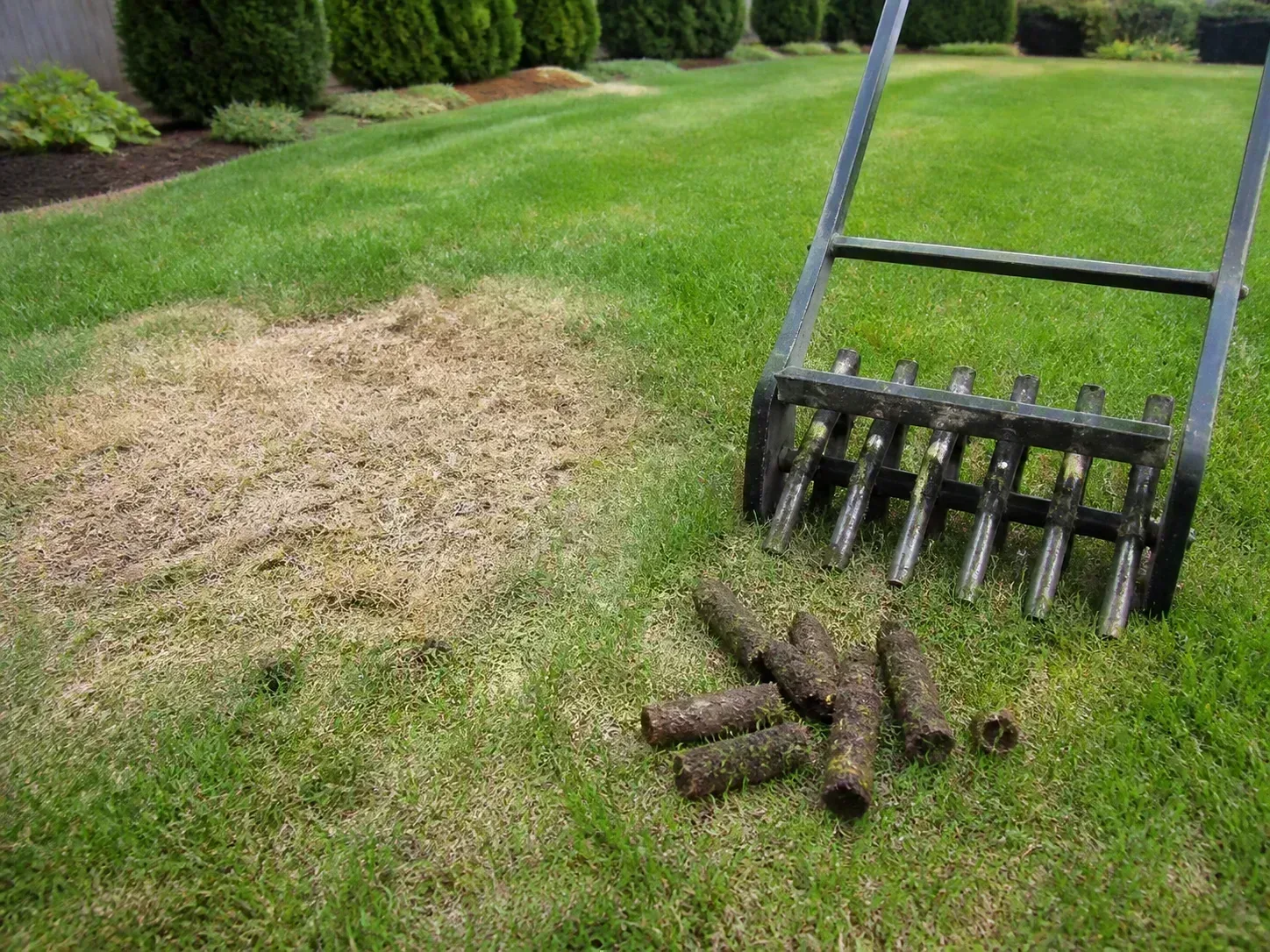
Start at the boundary between damaged and healthy growth, where the contrast is easiest to read. In a lawn, use a spade to lift roughly one square foot of turf and soil to a depth of about two to four inches, then inspect the roots, thatch, and soil before replacing the section and watering it back in. Take more than one sample if the first spot is empty.
For a garden bed, inspect around—not directly through—the plant’s main crown or stem. Look for chewed roots, hollowed root zones, wilt that does not match the moisture level, and larvae concentrated where roots are present. In a container, slide the root ball out carefully rather than dumping the entire pot onto a hard surface; the damage may be from a different soil pest entirely.
Penn State Extension notes that five to ten grubs per square foot is often used as a rough curative-treatment reference for lawns, but it also warns that no single number fits every species or situation. Treat that range as a prompt to weigh turf loss, grub identity, plant value, and local advice—not as a universal permission slip to broadcast an insecticide.
Read the damage pattern and season
Root-feeding grubs can make turf feel spongy because the roots no longer hold the sod firmly. Heavy damage may let you roll the grass back like carpet, and skunks, crows, or other animals may tear at the surface looking for larvae. Those signs become more meaningful when a soil sample confirms grubs; moles alone are not proof because they also eat earthworms and other soil invertebrates.
Season helps because scarab beetles move through predictable stages, but local weather shifts the calendar. Young larvae are generally closer to the surface and more vulnerable than large, overwintering grubs. NC State Extension’s white-grub guidance explains that control timing depends on the species and that active feeding near the surface is the key condition for curative treatment.
Use a simple grub-control decision tree
Once you have a sample, sort the problem into one of four lanes:
- No grubs, little damage: stop treating. Correct watering, mowing, drainage, disease, or compaction instead.
- A few grubs, healthy turf, no spreading damage: monitor the area and improve root vigor. A living lawn can tolerate some larvae, and unnecessary treatment can do more harm than the insects.
- Confirmed grubs with active root damage: identify the likely beetle group, check the season and soil moisture, then compare beneficial nematodes, a narrow biological product, or a labeled curative option.
- Severe or recurring damage: map the area, save a specimen or clear photograph, and contact a local Cooperative Extension office or qualified lawn professional. Repeated blanket treatment without identification is expensive and often poorly timed.
This decision tree is deliberately less exciting than a penny trick because it prevents the most common failure: treating the wrong thing. It also keeps a small, localized problem from becoming a whole-yard pesticide application.
Beneficial nematodes can work, but only when the conditions fit
Beneficial nematodes are microscopic roundworms used as living biological control agents. Certain species enter susceptible insect larvae and release bacteria that kill the host, but the word “nematode” is not enough to guarantee control. Different nematodes target different pests, and the grub must be present at a susceptible stage where the organism can reach it.
Colorado State University Extension lists Heterorhabditis species among the biological controls that can work against Japanese beetle grubs. Penn State also describes research results against white grubs as inconsistent and notes that Heterorhabditis often performs better than Steinernema for this particular target. That is a reason to match the product to the labeled pest, not a reason to dismiss every nematode treatment.
Time and apply nematodes like living organisms
Nematodes are most likely to disappoint when they are treated like a dry fertilizer. They are sensitive to heat, ultraviolet light, poor storage, and dry soil, and they have a limited shelf life. Plantura’s practical nematode guide recommends identifying the pest first, applying at the right larval stage, avoiding bright sun, and keeping treated soil moist without waterlogging it.
The details on your product label control the final procedure, but the general sequence is straightforward: pre-moisten the soil, mix and apply the living organisms evenly, water them into the root zone immediately, and keep the soil appropriately moist afterward. A cool, cloudy day or evening is usually more forgiving than a bright, hot afternoon. Do not store a shipment in a hot shed and assume the contents are still viable.
Do not pair nematodes casually with an insecticide. Penn State warns that some pesticides can harm these living organisms, so check compatibility, expiration, storage, application volume, and the required irrigation before combining treatments. If the label does not name the grub or the use site, choose another option or ask for help.
Milky spore is narrow, slow, and not universal
Milky spore is a formulation of Paenibacillus popilliae intended primarily for Japanese beetle grubs. It is not a general-purpose powder for every white grub, and it will not remove adult Japanese beetles already feeding on roses, grapes, beans, or other plants. Adult beetles can fly in from surrounding properties, so reducing larvae in one patch of lawn does not necessarily remove the aboveground problem.
The timeline is another important limitation. Colorado State University Extension’s Japanese beetle guidance describes milky spore as a chronic, potentially slow biological control rather than an instant reduction. Ask Extension’s discussion of milky spore also summarizes university research finding that performance can be minimal in some northern regions.
If you are considering it, confirm that Japanese beetle grubs are actually present, check whether the product is appropriate for your region, and follow the current label. Do not use milky spore as a substitute for sampling, and do not judge it by whether tomorrow’s adult beetles disappear. The better expectation is a long-term, location-dependent suppression tool with uncertain payoff—not a rescue treatment for a lawn that is already collapsing.
Make the lawn and soil more tolerant of root feeding
Healthy soil care can reduce the visible impact of grub feeding, but it is important to describe the benefit honestly. Aeration, appropriate irrigation, a suitable mowing height, and good fertility help grass build and maintain roots; they do not create a force field that keeps beetle larvae out.
Avoid shallow, frequent watering that trains roots to stay near the surface, but do not intentionally drought-stress a valuable lawn during extreme heat. Newly hatched Japanese beetle larvae and eggs can be sensitive to drying, yet a dry lawn may simply turn brown and become harder to recover. Once roots are already damaged, the lawn may need enough moisture to regrow without remaining saturated.
Mow at the upper end of the recommended height for your grass type rather than scalping it. Colorado State Extension explains that taller turf generally has a larger root mass and can better tolerate root injury. Core aeration can help compacted soil exchange air and water, but time it for the grass’s active growth period and do not use it as a stand-alone grub treatment.
Compost top-dressing and organic fertilizer can improve soil structure and nutrition when a soil test or site assessment supports them. They should not be marketed as a direct grub repellent. Adding rich organic material, compost tea, or extra water simply because grubs are present can create a lush, wet environment without addressing the larvae underneath.
Birds and wildlife are clues and allies, not a complete treatment
Crows, robins, starlings, skunks, and other animals may expose or eat grubs. Seeing them repeatedly work one patch is worth recording, and it can help you choose where to sample first. It still does not identify the insect, tell you how many are present, or guarantee that the wildlife will reduce the population below a damaging level.

If you want to support insect-eating birds, provide clean water, maintain a little habitat diversity, and avoid contaminating a feeding area with pesticide residues. A birdbath is a long-term habitat choice, not a fast grub treatment. Scattering seed over an infested lawn may attract birds, but it can also create mess, rodents, and a false sense that the underlying root problem is being controlled.
Wildlife damage is also a trade-off. Skunks and crows can tear up more turf while searching than the original grubs damaged, and moles may be hunting earthworms. Use animals as an observation signal, then confirm the soil before deciding what the lawn needs.
What to do about pesticides and other home remedies
When a confirmed infestation is severe, a labeled pesticide may be reasonable, especially for a high-value lawn where the damage is spreading. The product category, application timing, irrigation requirement, and legal use depend on the grub species, local regulations, site, and label. Preventive products are often timed before egg hatch and work best when there is a history of damage; curative products are generally aimed at small, actively feeding grubs near the surface.
Do not guess at rates from an old article, a neighbor’s schedule, or a product intended for commercial turf. Read the current label, keep children and pets away as directed, avoid drift and runoff, and take special care around blooming plants and pollinators. Penn State Extension’s lawn-grub guidance stresses that treatment timing varies with location, weather, soil conditions, and the species present.
Other common remedies deserve the same skepticism as pennies. Vinegar, dish soap, bleach, gasoline, concentrated essential oils, and unlabelled household chemicals can injure roots, contaminate soil, harm beneficial organisms, or create a safety hazard without reaching the grubs. “Natural” describes an origin, not a guarantee of effectiveness or safety.
Protect garden plants while you solve the soil problem
If the damage is in a vegetable bed or ornamental border, do not automatically apply a lawn grub product. Lawns, food gardens, nursery beds, and containers can have different pests, different label permissions, and different risks. A product that is legal for turf may be inappropriate around edible crops or flowering plants.
Inspect the plant’s roots and the surrounding soil, then save a grub in a sealed container or take sharp photographs from above and below. Note the plant, the soil moisture, the date, the location, and whether the damage is limited to one bed. Those details make a local identification request far more useful than saying that “something is eating the roots.”
For a single plant, removing the larva by hand while repotting or replanting may be enough if the root system remains healthy. For repeated damage, improve drainage, remove badly infested soil where appropriate, rotate susceptible annuals, and use a species-specific plan. Do not add pennies as a micronutrient treatment, and do not bury metal around roots hoping it will create a lasting barrier.
A seven-day plan for deciding what to do next
Use this sequence when you are unsure whether the problem merits treatment:
- Day 1: map the symptoms. Mark dead, thinning, wilted, and healthy areas. Check irrigation coverage, recent weather, mowing height, and compaction before blaming grubs.
- Day 2: sample the soil. Lift small sections at the damaged edge and inspect the root zone. Count larvae, photograph them, and replace the turf or soil carefully.
- Day 3: narrow the identification. Compare the larvae with an extension guide, ask your county or regional extension office, or use a qualified diagnostic service. Record whether the site is lawn, raised bed, or container.
- Day 4: choose the least disruptive effective lane. Monitor a light infestation, correct cultural stress, or select a biological or labeled treatment only if the pest and use site match.
- Days 5–7: follow the treatment conditions. If using nematodes, keep the soil within the product’s moisture and temperature requirements. If using a labeled product, follow its irrigation, re-entry, and pollinator precautions exactly.
At the end of the week, reassess the roots and the spread of damage rather than searching for a dramatic pile of dead larvae. Turf recovery takes time, and a separate adult-beetle problem may continue even after the root-feeding stage has been addressed.
Conclusion: skip the pennies and treat the evidence
Pennies do not reliably keep grubs away from garden soil, and their copper-plated construction does not provide a controlled pest treatment. A few coins are unlikely to change a healthy bed, but they are still a distraction from the step that matters: confirm what is feeding on the roots and whether the population is actually causing meaningful damage.
Start with a spade, a small soil sample, and a clear photograph. If grubs are confirmed, match the response to the beetle, life stage, setting, and season. Beneficial nematodes can be useful under the right conditions, milky spore is limited to Japanese beetle grubs and may be slow or unreliable, wildlife is better used as a clue than a cure, and pesticides should be a labeled, timed decision—not a reflex. That approach protects plants, soil, pollinators, and your weekend from a remedy that only looks easy.