Why You Shouldn't Mow Wet Grass
Mowing wet grass can damage the mower and lawn. Find out when dew is dry enough, what to do after rain, and how to avoid clumps, ruts, and scalping.
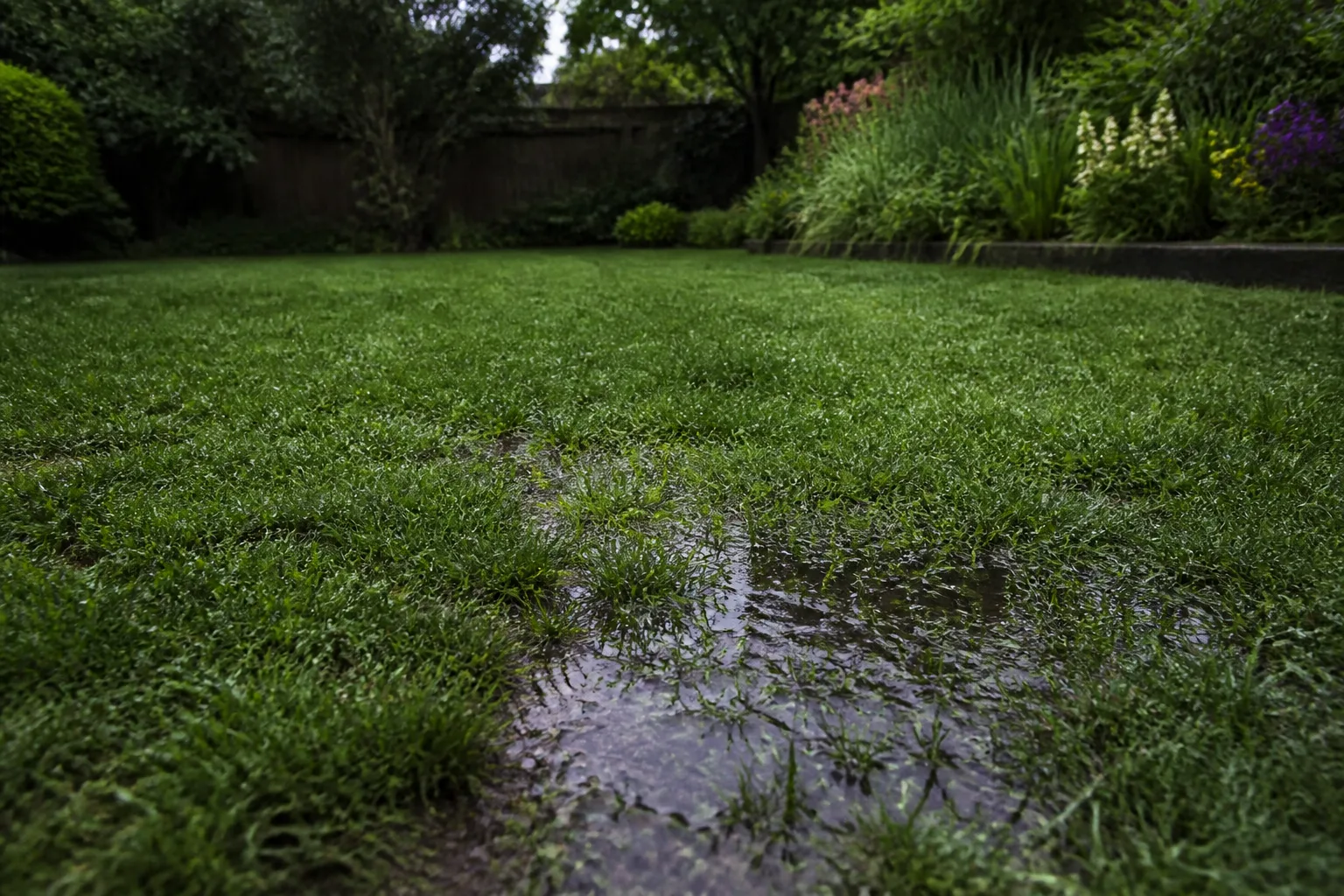
The best answer to “Can you mow wet grass?” is usually no. Wait until the blades are dry, the top layer of soil can support the mower without footprints or wheel marks, and you have enough daylight left for the lawn to recover before the next long period of moisture.
That rule protects more than the appearance of the cut. Wet foliage bends instead of standing upright, wet clippings stick together inside the deck, and soft soil can deform under mower wheels. The result can be a clogged machine, torn-looking turf, heavy clumps, ruts, and an unnecessarily risky job.
There is one important exception: if waiting would let an already overgrown lawn become so tall that you would have to remove far more than one-third of its height, a careful high-deck cut may be less harmful than a delayed scalp. That is a rescue tactic, not a reason to treat wet mowing as routine.
The short answer: wait for the surface to dry
Morning is not automatically the best time to mow. It is often the coolest part of the day, but it is also when dew is still coating the leaves. The useful target is mid-morning after the dew has evaporated, or late afternoon while the grass is dry and there is still time for the cut ends to dry before night.
If rain has just passed, do not count from the last raindrop and assume the same waiting period will work every time. Sun, wind, shade, soil type, grass density, humidity, and the next forecast all change the drying rate. Use the lawn itself as the clock.
Purdue Turfgrass Science makes the practical distinction clearly: dry mowing is preferred, but when wet mowing is unavoidable because grass is getting excessively tall, the safer compromise is a sharp blade, the highest sensible deck setting, and a discharge method that keeps wet material from packing under the deck (Purdue Turfgrass Science). For an ordinary weekly cut, though, waiting is the better choice.
What morning dew changes under the mower
Dew is a thin film of water on leaves. It is not the same as a lawn saturated by several inches of rain, but it is enough to change how the mower cuts, carries, and releases grass. A light-looking shimmer can still make a dense patch behave like a wet mat once thousands of blades pass through the deck.
Why wet blades cut poorly
A rotary mower works best when grass blades are upright and the blade can slice them cleanly. Moisture weighs the leaves down and makes them more likely to fold away from the blade. Instead of a clean cut at a consistent height, some blades are missed, some are bent and cut higher on a second pass, and others are torn at the tip.
Torn or frayed tips dry to a pale, ragged finish. That does not mean every wet cut will start a disease outbreak, and it does not mean a clean cut makes turf immune to disease. It means the plant has experienced more injury at a time when leaf surfaces and the canopy may stay damp longer. That combination is a poor starting point, especially in dense turf with limited airflow.
The same principle explains why a dull blade makes a wet day worse. A sharp blade has a better chance of slicing through a damp leaf; a dull one batters and shreds it. Colorado State University Extension advises regular blade checks and notes that a dull blade can shred and fray leaves, leaving a brown, unattractive lawn (Colorado State University Extension).
How clumps turn into a lawn problem
Dry clippings are light enough to fall through the canopy in a thin layer. Wet clippings stick to themselves and to the mower, so they leave the discharge chute in ropes or piles. Those piles block light and airflow at the soil surface and can smother the living grass underneath if they remain thick and wet.
Look closely at the difference between a thin, scattered layer and a mat. A few short clippings that disappear into the turf are not a problem; a continuous windrow that you can lift as a damp blanket needs to be spread, removed, or collected. The risk is not that every clipping creates thatch—extension guidance specifically says ordinary clippings do not cause thatch—but that an excessive, matted layer can shade and suffocate turf.
Mower risks: clogging, load, and hidden corrosion
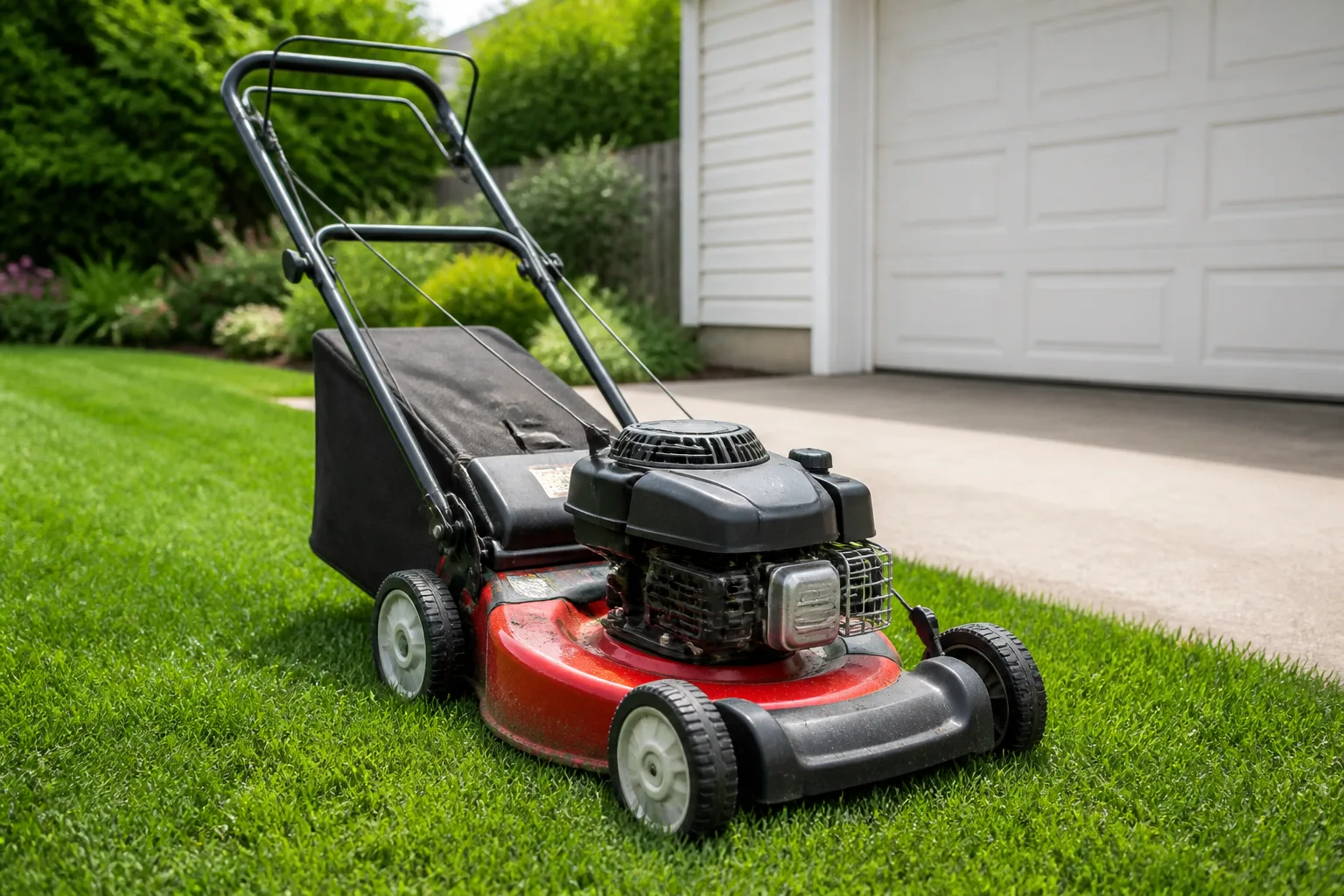
The mower deck depends on airflow to lift grass, cut it, and move it toward the discharge opening or bag. Wet material reduces that airflow by sticking to the underside and forming a compact layer around the blade. As the layer grows, the blade has less room to move and the engine has to work harder.
You may notice the symptoms before you see the buildup: the engine note drops, the mower leaves a narrow trail of uncut grass, the bag fills poorly, or the discharge chute plugs repeatedly. Continuing to push through those signs can overwork the engine, belt, spindle, or blade assembly. A battery mower may shut down its overload protection; that does not make the wet cut harmless—it means the machine is telling you to stop.
The deck is also harder to clean when the clippings dry in place. A damp layer can trap grit and hold moisture against painted or bare metal surfaces. Over time, that encourages corrosion and leaves less clearance for the next cut. Do not turn cleaning into a second injury: stop the engine, remove the ignition key or disconnect the battery where applicable, wait for all movement to stop, and follow the operator’s manual before tilting or reaching near the blade.
Lawn and soil risks: tearing, ruts, and compaction
Wet foliage is only half the issue. Rain can leave the soil surface soft enough that mower tires and wheels press grooves into it, especially on clay, compacted ground, shaded areas, and places where water naturally collects. A rut can remain visible long after the top of the lawn looks dry again.
Compaction squeezes air-filled pore spaces out of the upper soil. That makes it harder for water and roots to move through the profile and can leave the same traffic lanes more vulnerable to puddling, shallow roots, and thinning turf. A heavy riding mower is more likely to mark soft ground than a lightweight walk-behind, but a small mower can still leave ruts when the soil is saturated or the operator repeatedly turns in one place.
Virginia Cooperative Extension advises keeping mowers and other traffic off drought-stressed turf, while its broader lawn guidance also connects proper mowing height with stronger roots and better stress tolerance (Virginia Cooperative Extension). The practical lesson after rain is similar: the surface may look green and ready while the soil beneath still cannot carry traffic without damage.
When wet mowing is a safety issue
Wet grass reduces traction under your shoes and under the mower wheels. On a flat lawn, that can mean a slip while pushing or turning. On a slope, the mower can slide sideways or travel faster than you can control. A riding mower adds rollover and loss-of-control hazards, especially near a ditch, retaining wall, pond, or drainage swale.
Treat standing water as a hard stop. Do not try to “skim” a puddled area to finish the job, and never use your foot, hand, or a tool to clear a clogged deck while the blade could still move. Do not mow during rain or when lightning is in the area. A corded electric mower brings an additional electrical hazard around water; a battery mower removes the cord but not the traction, blade, or clogging risks.
Noise is part of timing, too. Very early mowing can disturb neighbors, and local ordinances may set quiet hours. Check your local rules, then choose a dry window that gives both the lawn and the neighborhood a reasonable break.
Use a five-minute dry-enough test
You do not need a moisture meter for a useful go/no-go decision. Walk the lawn in the areas you plan to cut and check the conditions that matter to the mower, the turf, and your footing.
- Check your shoes. If the grass soaks your shoes or leaves visible droplets on the uppers, wait. A little coolness is not the same as dry, but wet shoes are a reliable warning that the canopy still carries surface moisture.
- Look at the blades. In a shaded corner, bend a small handful of grass and inspect the lower leaves. Shining water, dark wet blades, or a canopy that springs back slowly means the lawn is not ready.
- Watch your footprints. Walk a representative route, including the lowest and shadiest spots. If blades stay flattened or your heel leaves a dark impression, the soil is still too soft for repeated mower traffic.
- Test a turn area. Push the mower with the engine off over a short section. If the wheels sink, smear soil, or leave a visible track, stop. Turning is where soft ground often receives the most concentrated damage.
- Check the forecast and the clock. After a late-day cut, the turf needs a drying window. If rain is due soon or darkness is close, waiting for the next suitable day is safer than forcing a marginal cut.
The test is deliberately conservative because a lawn can vary within a few yards. A sunny, breezy ridge may be ready while the strip beside a fence is still wet. Mow the ready areas only if you can leave the wet section without creating an awkward, overgrown boundary; otherwise, wait for the whole job to reach the same condition.
Best mowing windows after dew or rain
The clock is a helpful shortcut, not a guarantee. In many yards, mid-morning is the first good window after dew has dried and before peak heat. Late afternoon can work when the grass is dry and you finish early enough for the cut canopy to dry before overnight humidity.
| Conditions | Better choice | Why |
|---|---|---|
| Dew-covered early morning grass | Wait until the surface is dry, often mid-morning | Reduces clumping, tearing, and slippery footing |
| Rain ends in the morning | Test the lowest and shadiest sections before mowing | Surface water may disappear before the root zone firms up |
| Hot, dry afternoon | Use late afternoon only while the turf is actively growing and not heat-stressed | Avoids the wet canopy without making the fresh cut endure peak heat |
| Rain is forecast again soon | Delay if the lawn can safely wait | A short drying window may not justify traffic and cleanup |
| Drought-dormant or heat-stressed turf | Mow only if growth and local guidance support it; raise the deck | Dormant grass has less capacity to recover from a cut |
Gardening Know How likewise recommends letting the morning wetness clear, avoiding a rigid schedule, and using the grass height rather than the calendar to decide when to mow (Gardening Know How). A practical timing guide from LawnStarter puts a typical dry mid-morning window around 8 to 10 a.m. and a second window around 4 to 6 p.m., while warning against using those hours as a substitute for checking actual moisture (LawnStarter).
Cool-season versus warm-season timing
Grass type changes the growth calendar more than it changes the wet-grass rule. Cool-season grasses such as tall fescue, Kentucky bluegrass, perennial ryegrass, and fine fescue commonly grow strongly during cooler spring and fall weather. Those seasons may also bring frequent rain and longer dew, so the best mowing day is the dry day that keeps up with growth without forcing the machine onto soft soil.
Warm-season grasses such as bermudagrass and St. Augustinegrass grow most actively in warm weather and may slow or go dormant in cool periods. During summer heat, avoid turning a dry lawn into a stress test at the hottest part of the day. During dormancy, avoid mowing simply because the calendar says it is mowing day; cut only when there is enough active growth and local recommendations support it.
If the grass is overdue and still wet
First ask whether the lawn is truly too tall to wait. A day or two of delay is usually easier to repair than ruts, clumps, or a stressed scalp. If the weather pattern will keep the lawn wet for several days and growth is racing upward, plan a controlled rescue cut rather than a normal mowing pass.
A lower-risk compromise for a walk-behind mower
The goal is to remove less material, keep the deck clear, and limit traffic. Wait for the driest window you can find, sharpen the blade, raise the deck to the highest setting that still gives a useful cut, and remove the mulching plug in favor of side discharge if the mower allows it. Discharge onto an already cut area rather than into standing grass, and make gentle, straight passes with wide turns.
Do not try to restore an overgrown lawn to its usual height in one wet pass. Colorado State University Extension’s one-third rule is the safer guardrail: if the grass is far above the desired height, raise the deck and return for another cut after the lawn and soil have recovered. If wet clippings still form ropes or the engine begins to labor, stop and bag or remove the material rather than forcing the deck through it.
Riding mowers deserve a stricter threshold. Their mass, wider tires, and turning forces can mark soil that a push mower would barely touch. Leave slopes, saturated low spots, and areas around water for a dry, firm day; if a property cannot be mowed safely, a lawn-care professional with the right equipment is a better solution than taking a rollover risk.
Set up the mower for a clean, low-stress cut
Dry conditions cannot rescue a mower set too low or a blade that has been battered on stones. The best mowing time is only one part of a system that keeps the lawn dense and reduces the temptation to make a damaging catch-up cut.
Height and the one-third rule
The one-third rule means removing no more than one-third of the grass height in a single mowing. If your target height is 3 inches, mow when the lawn reaches about 4.5 inches, not when it has already reached 6 inches. If the lawn has outgrown that window, raise the deck for the first pass and lower it gradually on a later dry day.
Exact height depends on grass species, local climate, shade, irrigation, and how much wear the lawn receives. Colorado State University gives 2 to 3 inches for several cool-season lawn grasses and identifies 2.5 to 3 inches as a preferred range for Colorado species, while Gardening Know How notes that cool-season lawns are commonly maintained taller than warm-season lawns. Treat these as starting points, not a universal setting for every turf blend.
Mowing too low exposes soil, weakens drought and heat tolerance, and leaves less leaf area to support recovery. A slightly taller, consistently mowed lawn often handles a missed week better than a lawn repeatedly cut very short.
Blade, deck, and discharge setup
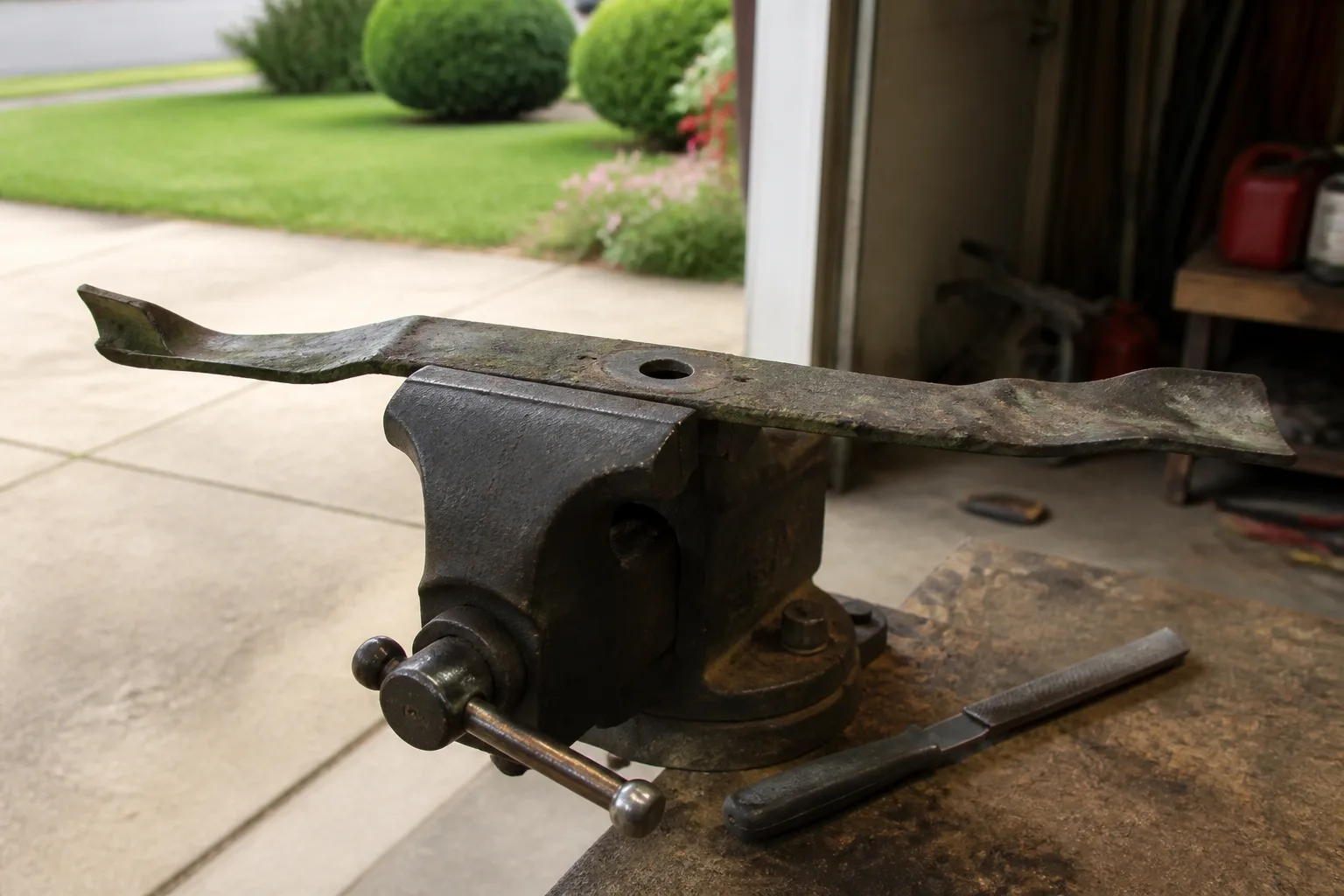
Inspect the blade for a rolled edge, deep nicks, cracks, or a visibly dull cutting surface. Sharpening frequency depends on use and what the mower hits, but a seasonal calendar is less useful than the cut: if the tips look frayed or the mower requires repeated passes, service the blade. Disconnect the spark-plug wire or battery and follow the manufacturer’s removal instructions before working under the deck.
Keep the deck free of old buildup and make sure the discharge chute, catcher, and mulching components are assembled correctly. On a normal dry cut, mulching can return short clippings to the lawn. When grass is damp or unusually tall, side discharge or bagging may move material more reliably and reduce the chance of a wet mat forming under the deck.
Change direction between mowing sessions so the grass is not pressed into the same tracks every time. Overlap passes enough to avoid uncut strips, but do not make repeated tight turns on soft ground. The combination of a sharp blade, sensible height, clear deck, and varied pattern is easier on both the turf and the machine.
What to do with clippings
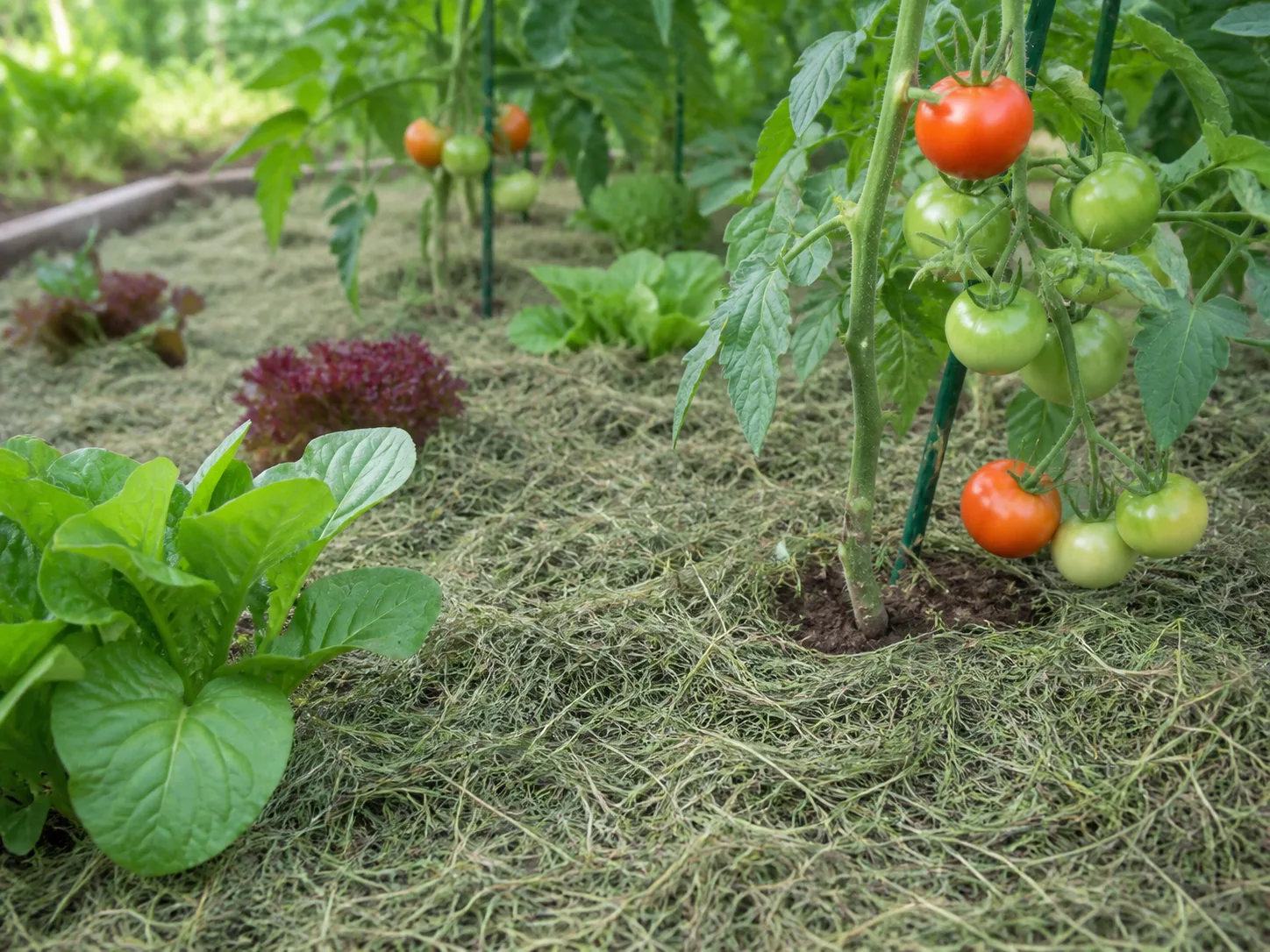
Short, scattered clippings can stay on a healthy lawn and return nutrients as they decompose. This works when you have followed the one-third rule and the clippings are spread thinly enough to fall between the blades. Do not treat a wet windrow the same way.
If clumps land on the lawn, spread them with a rake once the surface is firm enough to walk on without making more tracks. Bag material that remains in thick mats, especially after a rescue cut, and compost it only if the grass has not been treated with a product whose label prohibits using the clippings elsewhere. Purdue recommends bagging in the worst wet-mowing cases, while extension guidance supports leaving ordinary clippings when the cut is moderate and the distribution is even.
Do not hose a heavy mat into a storm drain or onto a neighboring property. Clippings can wash into waterways, collect at curb inlets, and create a second cleanup problem. Keep removed material on your property for composting, mulch, or ordinary green-waste disposal according to local rules.
If you already mowed wet grass
You probably do not need to replace the mower or reseed the entire lawn. The useful response is to stop the chain of problems before the next mowing.
- Finish safely. Shut the mower off on a level surface, remove the key or battery, disconnect the spark-plug lead on a gas mower as directed by the manual, and wait for the blade to stop completely.
- Remove visible clumps. Once the lawn is firm enough to walk on, rake or lift heavy piles so the grass underneath can receive air and light. Do not drag a heavy rake across saturated soil.
- Inspect the cut. Look for torn tips, missed strips, wheel ruts, and areas where clippings have formed a continuous mat. Mark the worst areas mentally so you can change height or timing next time.
- Clean the mower correctly. Scrape or brush buildup only with the machine secured according to its manual. Avoid spraying electrical components, air filters, and hot engine parts with water. Dry the deck and let the machine air out before storing it.
- Delay the next stress. Do not mow again immediately to make the finish look even. Let the turf stand back up, let the soil firm, and return with a sharp blade at a height that removes no more than one-third.
If the lawn develops persistent thin areas, a spreading discolored patch, or repeated ruts, look beyond the single mowing event. Drainage, compacted soil, irrigation, shade, grass selection, and mowing height may be the underlying issue. Virginia Cooperative Extension notes that overwatering can contribute to excess growth and fungal disease pressure, while proper height and sharp blades improve the lawn’s ability to handle stress.
Conclusion
The safest answer to why you should not mow wet grass is practical rather than absolute: wet leaves cut poorly, wet clippings clog and mat, and soft soil cannot always carry mower traffic without ruts. Dew-covered turf and rain-saturated ground deserve the same first step—wait, then check the blades, shoes, footprints, and wheel tracks before starting.
When you cannot wait because the lawn is becoming dangerously overgrown, raise the deck, sharpen the blade, use side discharge, limit turns, stay off slopes and standing water, and stop at the first sign of clogging or loss of traction. Most mowing problems disappear when the schedule follows the lawn’s condition instead of the clock: mow dry, remove no more than one-third, and leave the turf time to recover.