Should You Use Vinegar to Kill Weeds?
Does vinegar kill weeds? Learn when 5% vinegar works, why strong acetic acid is risky, and which weed-control method fits lawns, beds, patios, and cracks.
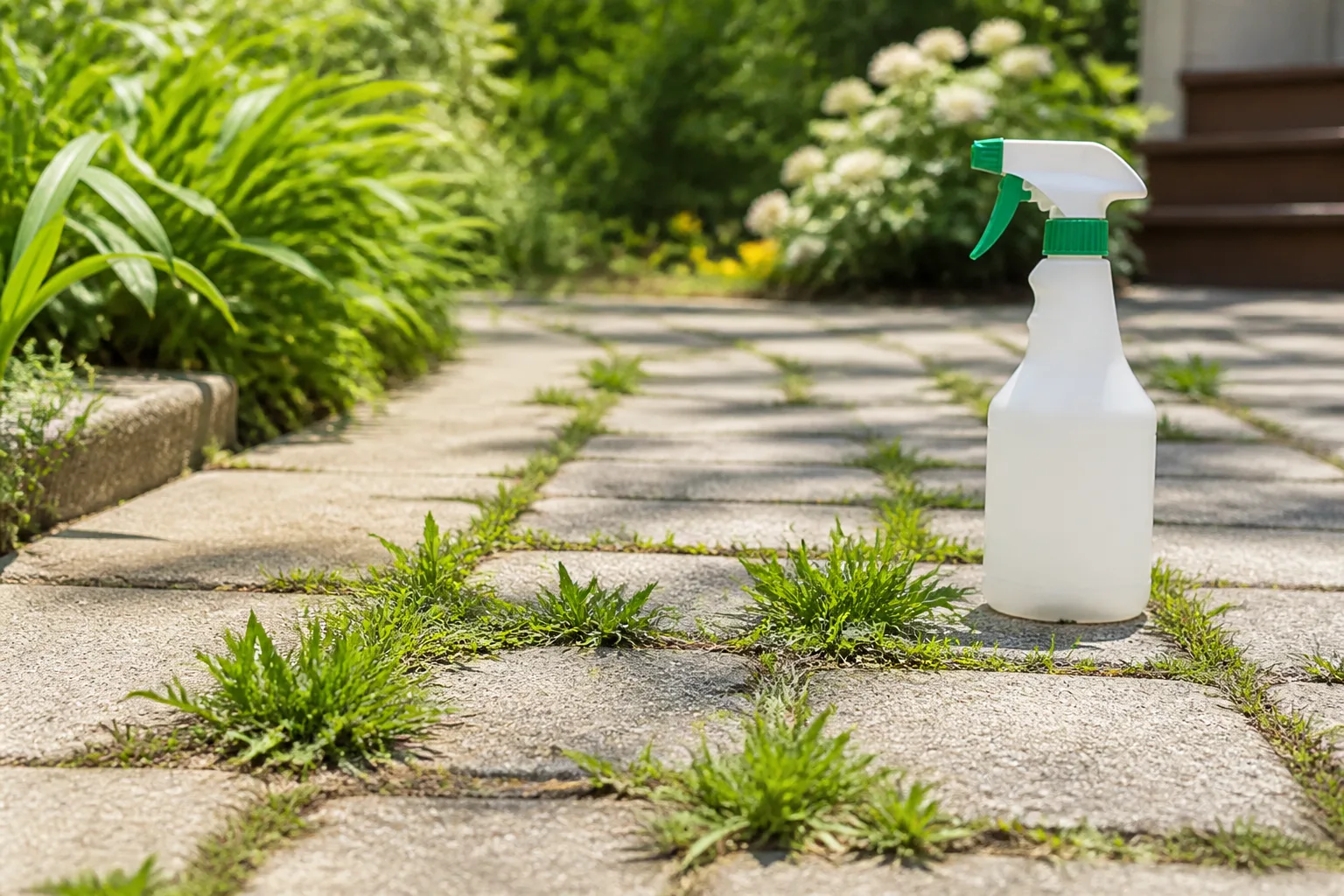
If you are looking at a bottle of vinegar and a patch of weeds, the honest answer is sometimes. Vinegar can burn down small, exposed weeds quickly, especially in a sunny crack in a driveway or patio. It is a poor choice for a lawn, a crowded flower bed, or a mature dandelion you expect to disappear for good.
The reason is simple: vinegar is not a gentle, selective plant treatment. Its active ingredient, acetic acid, is a nonselective contact herbicide. It damages the green tissue it touches, but it does not travel through the plant to kill roots. The best choice therefore depends on four things: what you want to protect, where the weed is growing, how old the weed is, and whether you want quick top-kill or lasting control.
The Short Answer: Yes, but Only for the Right Job
Use vinegar only when the target is isolated, the surrounding surface can tolerate a brown patch, and you are comfortable checking the area again for regrowth. That usually means a few young weeds in a sidewalk joint, driveway crack, gravel path, or other hardscape where no wanted plant is sharing the treatment zone.
Do not reach for it as a general garden spray. Vinegar cannot tell a dandelion from turf, a weed from a marigold, or an unwanted seedling from a vegetable you just planted. Even a small amount of drift can mark leaves, and a stronger product can injure skin and eyes as well as plants.
For a fast decision, ask yourself:
| Question | If the answer is yes | Better call |
|---|---|---|
| Is the weed isolated in a crack or gravel edge? | A precise contact treatment may fit. | Vinegar can be reasonable. |
| Is it in healthy lawn grass? | The grass will be contacted too. | Pull, spot-dig, or use a turf-labeled option. |
| Is it mixed with flowers or vegetables? | Spray drift can damage crops. | Hand weed, hoe, mulch, or shielded removal. |
| Is it a mature dandelion, bindweed, thistle, or other perennial? | The root may survive a foliage burn. | Remove the crown and root, repeat mechanical control, or use a product labeled for that setting. |
| Is the product 20% or stronger? | Treat it as a corrosive pesticide, not pantry vinegar. | Read the label and use the required protective equipment. |
That decision rule is more useful than asking whether vinegar is “natural.” Natural describes where an ingredient comes from; it does not tell you whether a product is selective, effective on roots, or safe to splash in your eyes.
What Vinegar Does to Weeds
Acetic acid breaks open plant cells at the point of contact. The affected leaf or stem loses moisture, tissue collapses, and the weed can look wilted or brown within hours under favorable conditions. The effect is called desiccation or burn-down.
The National Pesticide Information Center explains that acetic acid must touch foliage to work, does not move throughout the plant, and breaks down rapidly in the environment. That combination explains both the satisfying quick result and the frustrating comeback: a leaf can be dead while the root is still fully alive. See the NPIC explanation of vinegar and acetic acid for the distinction between household vinegar and registered herbicide products.
Contact Herbicide vs. Root Killer
Think of vinegar as a haircut for a plant, not a root excavation. If you coat the leaves of a young annual weed and kill its growing point, it may not have enough stored energy to recover. If you scorch the top of an established perennial, its taproot, crown, rhizome, or underground runners can simply send up another shoot.
This is why a flowering dandelion often appears “dead” after spraying and then returns from the center of the rosette. Bindweed, Canada thistle, nutsedge, and many grasses can be even more stubborn because the part you see is supported by a larger underground system. Repeatedly burning top growth may reduce seed production and weaken a plant over time, but it is not the same as removing the root.
The Montana State University Extension weed guide describes acetic acid as a contact, nonselective treatment and notes that perennial weeds are unlikely to be controlled because they can resprout from roots. That is the fact to keep in front of you when a label or social post implies that one spray permanently solves every weed problem.
Why Young Weeds Are Easier to Kill
Small weeds are vulnerable for two practical reasons. They have less leaf area and less stored energy, so it is easier to wet all of the green tissue and growing point with a precise application. Their roots are also less developed, which leaves less underground reserve available for recovery.
The ideal target is a small, actively growing weed with only a few true leaves and no desirable plant close enough to catch the spray. Broadleaf seedlings often hold a liquid spray better than narrow, upright grass blades, although species and leaf shape still matter. A mature plant with waxy, hairy, drooping, or shielded foliage is a harder target because coverage is less complete.
Purdue’s consumer horticulture guidance summarizes USDA research showing that 5% and 10% acetic acid could kill some weeds when treated shortly after emergence, while older plants needed higher concentrations. The same guidance cautions that perennial roots survived and that unintended injury is likely. Read the Purdue vinegar research summary for the growth-stage context behind those results.
Household vs. Horticultural Vinegar
The percentage printed on the container matters more than the word “vinegar.” Household vinegar generally contains about 4% to 6% acetic acid, while horticultural vinegar typically refers to a much stronger product, often 20% or more. They are not interchangeable from a safety or application standpoint.
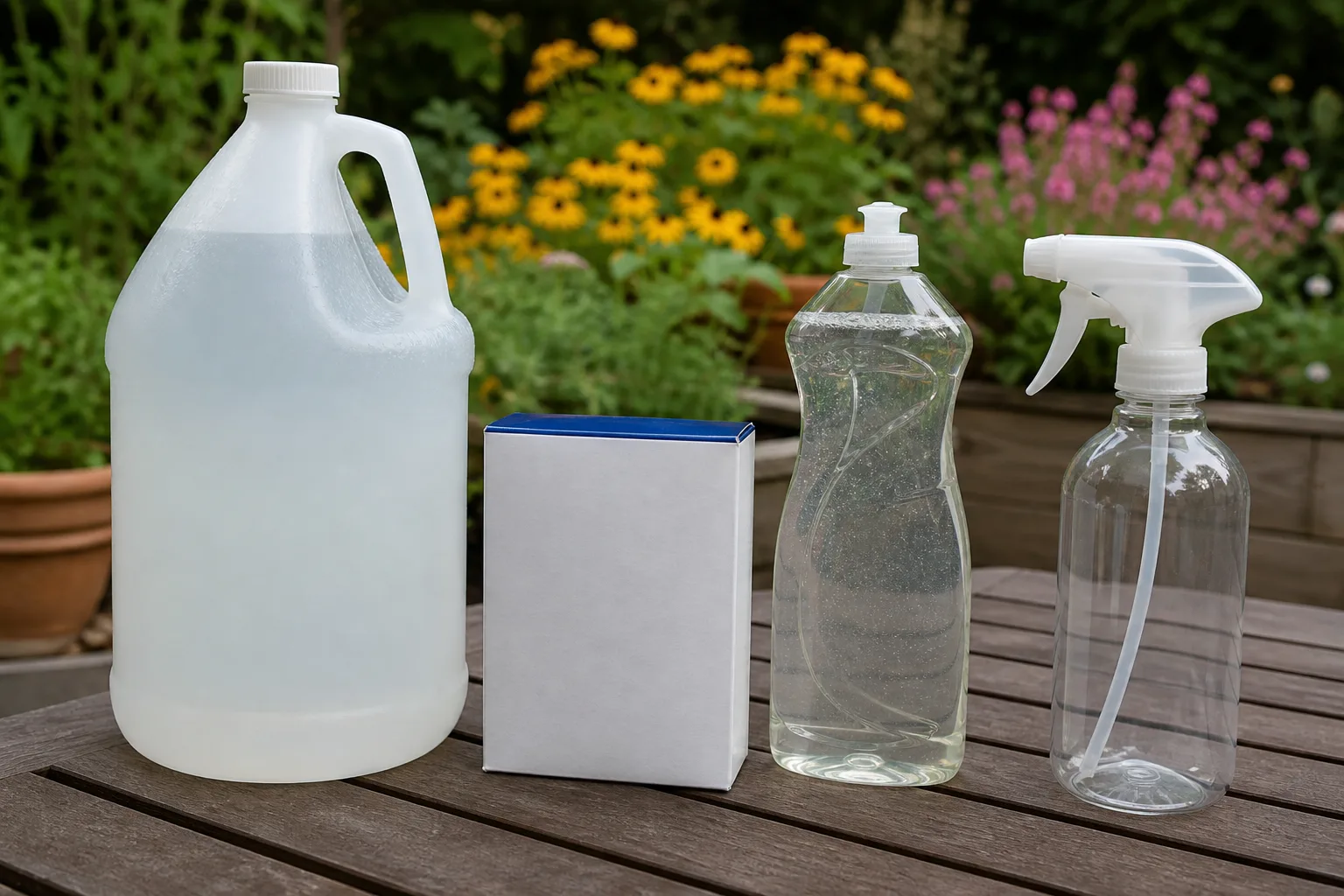
| Product type | What it may do | Main limitation | Handling mindset |
|---|---|---|---|
| Household vinegar, about 4–6% | Burn young, exposed weeds in favorable conditions | Unreliable on mature weeds and deep roots | Still acidic; keep off wanted plants and out of eyes |
| Horticultural vinegar, commonly 20% or higher | Stronger, faster foliage burn on susceptible weeds | Nonselective, can still leave roots alive, and may be corrosive | Follow the pesticide label and required PPE exactly |
Do not buy a concentrated product simply because a higher number sounds more effective. Higher concentration increases plant injury and human-exposure risk; it does not turn vinegar into a selective lawn treatment or guarantee permanent control. The National Pesticide Information Center notes that high-strength acetic-acid herbicides can permanently damage the cornea, burn skin, and irritate the lungs, and that registered products should carry an EPA registration number, signal word, directions, and first-aid information in the United States.
If a container says “cleaning vinegar,” “industrial vinegar,” or “concentrate” but does not provide directions for use as an herbicide, do not improvise a pesticide application from internet ratios. A product’s intended use, label, concentration, application site, and protective equipment all matter. Local pesticide rules can also differ, so consult your state or provincial extension service if the label is unclear.
Where Vinegar Makes Sense
Vinegar is most defensible where the surface is the boundary. A weed emerging alone from a paver joint is a much easier decision than a weed growing six inches from a tomato plant. On hardscape, your goal is usually to clear a visible surface, not preserve a living soil ecosystem for the next crop.
Good candidates include:
- A few young weeds in sidewalk or patio cracks.
- Seedlings scattered through gravel where hand pulling every plant is impractical.
- A narrow hardscape edge where you can use a low-drift stream and shield the garden side.
- A flush of small annual weeds that you want to stop before they flower and shed more seed.
Even here, vinegar is not a maintenance plan by itself. Soil and windblown debris will keep collecting in the joint, and a persistent root may return. If the crack is important, remove the dead material after the foliage has collapsed and repair or refill the joint so there is less room for the next seedling.
A Useful Exception: Before You Seed or Plant
If you are preparing an empty, nonplanted strip, a contact treatment can be one part of a site-cleanup sequence. First identify what is growing, remove large or rooted weeds mechanically, let new seedlings emerge if the site is still bare, and then choose the least-risky control for the surface. Do not spray an active garden bed just because you plan to plant it later.
Purdue weed scientist Stephen Meyers recommends preventing weeds from entering through contaminated seed, compost, and mulch, and using spacing and carbon-based mulches to shade bare soil. That prevention mindset often beats repeated spraying: fewer weed seedlings means fewer decisions about what product can safely reach them.
Where Vinegar Is the Wrong Tool
The wrong place is anywhere the spray cannot be kept entirely on the unwanted plant. That includes most lawns, mixed flower beds, vegetable rows, newly seeded areas, and the root zones of shallow-rooted ornamentals. A windless day reduces drift but does not make a nonselective spray selective.
Vinegar is also the wrong tool when your real problem is a large, persistent plant. If the weed already has flowers, a thick crown, a taproot, or runners, you need a plan for the part below ground. A brown top can make the bed look tidier for a week while leaving the original problem untouched.
Lawns and Mixed Flower Beds
Do not spot-spray vinegar on a dandelion in turf unless you are willing to remove a circle of grass too. The acid affects any green tissue it contacts. You may replace one weed with a brown patch that later becomes an even better place for new weeds to germinate.
In a flower or vegetable bed, hand pulling and shallow hoeing usually give you more control because your eyes can distinguish the crop from the weed. If a bed is too crowded to weed comfortably, the better fix may be mulch, closer plant spacing, drip irrigation that keeps pathways dry, or a redesigned border—not a stronger spray.
Deep-Rooted Perennial Weeds
For a perennial, decide whether the goal is top-kill today or root control over time. Vinegar can help with the first goal in an isolated hardscape location, but it rarely completes the second in one application. Digging out the crown and as much root as practical, repeatedly removing new shoots before they replenish the root, or selecting a labeled treatment for the specific site will usually be more honest about the work involved.
Do not use repeated vinegar applications as a substitute for identifying an invasive or regulated weed. Some plants spread through fragments or underground structures, and disturbing them incorrectly can make the patch larger. If you cannot identify the weed, photograph it and ask a local extension office or plant clinic before choosing a control method.
How to Apply Vinegar Precisely
If vinegar fits the location and target, precision matters more than making a large batch. Your aim is to wet the weed’s foliage without creating runoff, drift, or a treated halo around it.
Check the Label and the Site
Read the entire product label before opening the sprayer. Confirm that the product is intended for the surface you plan to treat, that the target weed or use site is allowed, and that you understand the signal word, personal protective equipment, first aid, re-entry instructions, and environmental precautions.
The NPIC’s product guidance puts this plainly: the label is the law, and risk depends on both the ingredient’s toxicity and your exposure. A bottle marketed as natural or organic is not automatically harmless. If you are using ordinary kitchen vinegar, do not assume that a recipe found online gives it an approved herbicide use in your location.
Use a clean, clearly labeled sprayer dedicated to this job. Never pour leftover solution into an unlabeled container or a watering can that someone might later use on plants. Keep children, pets, and anyone not wearing the required protection away from the area.
Choose a Dry, Calm Weather Window
Choose a warm, dry period when the weed is actively growing and rain is unlikely to wash the spray away. Bright sunlight and heat generally speed the visible burn-down, while wet foliage, cool temperatures, and rain reduce contact and make results less predictable.
Wind is a hard stop when wanted plants are nearby. Do not try to “spray carefully” through a breeze; droplets can travel farther than your target, and a stronger acid product can also expose your skin and eyes. Check the label for weather restrictions and the time people and pets must stay out.
Protect Nearby Plants and Yourself
Work from the upwind side with the nozzle close to the weed. A piece of cardboard or a rigid shield can block a small amount of drift near a hardscape edge, but it is not permission to spray into a dense planting. For one or two weeds beside a prized plant, pulling is usually safer than trying to engineer a perfect spray.
Cover your legs and arms, wear shoes and socks, and use the gloves and eye protection required by the label. With horticultural vinegar, “garden gloves and sunglasses” may not be adequate. The A Way to Garden interview with Montana State weed diagnostician Noelle Orloff explains why high-strength acetic acid deserves the same label-reading discipline as any other pesticide: a natural origin does not remove acute eye and skin hazards.
Apply enough to coat the target foliage evenly, not so much that liquid runs across the pavement or into soil. Then leave it alone for the label’s required period. Do not judge success only by the first brown leaves; inspect again after several days and remove or dig out what survived.
What Not to Add to a Vinegar Spray
The internet is full of recipes that combine vinegar with salt, dish soap, citrus juice, bleach, or other household cleaners. More ingredients do not automatically mean a better or safer herbicide.
Skip salt anywhere you may want plants to grow. Salt can move with water, injure roots, and make a future planting spot harder to restore. It may have a narrow use on a completely barren hardscape, but runoff can reach beds, lawns, storm drains, or neighboring soil. The simplest safe rule is to leave it out.
Do not assume dish soap is a harmless upgrade. A surfactant can help a spray spread across a waxy leaf, and some labeled products include specific adjuvant instructions. Ordinary dish detergent is not automatically appropriate for plants, soil, or the sprayer. Use only what the product label permits, in the stated amount.
Never mix vinegar with bleach, ammonia, hydrogen peroxide, or an unknown cleaner. Household chemicals can react, create irritating vapors, or change the exposure risk. Keep the treatment single-purpose and use a dedicated, rinsed sprayer rather than trying to make a “stronger” kitchen formula.
Vinegar vs. Pulling, Mulch, Boiling Water, and Herbicides
There is no prize for choosing the most dramatic method. Choose the one that meets your objective with the least collateral damage and the fewest repeat applications.
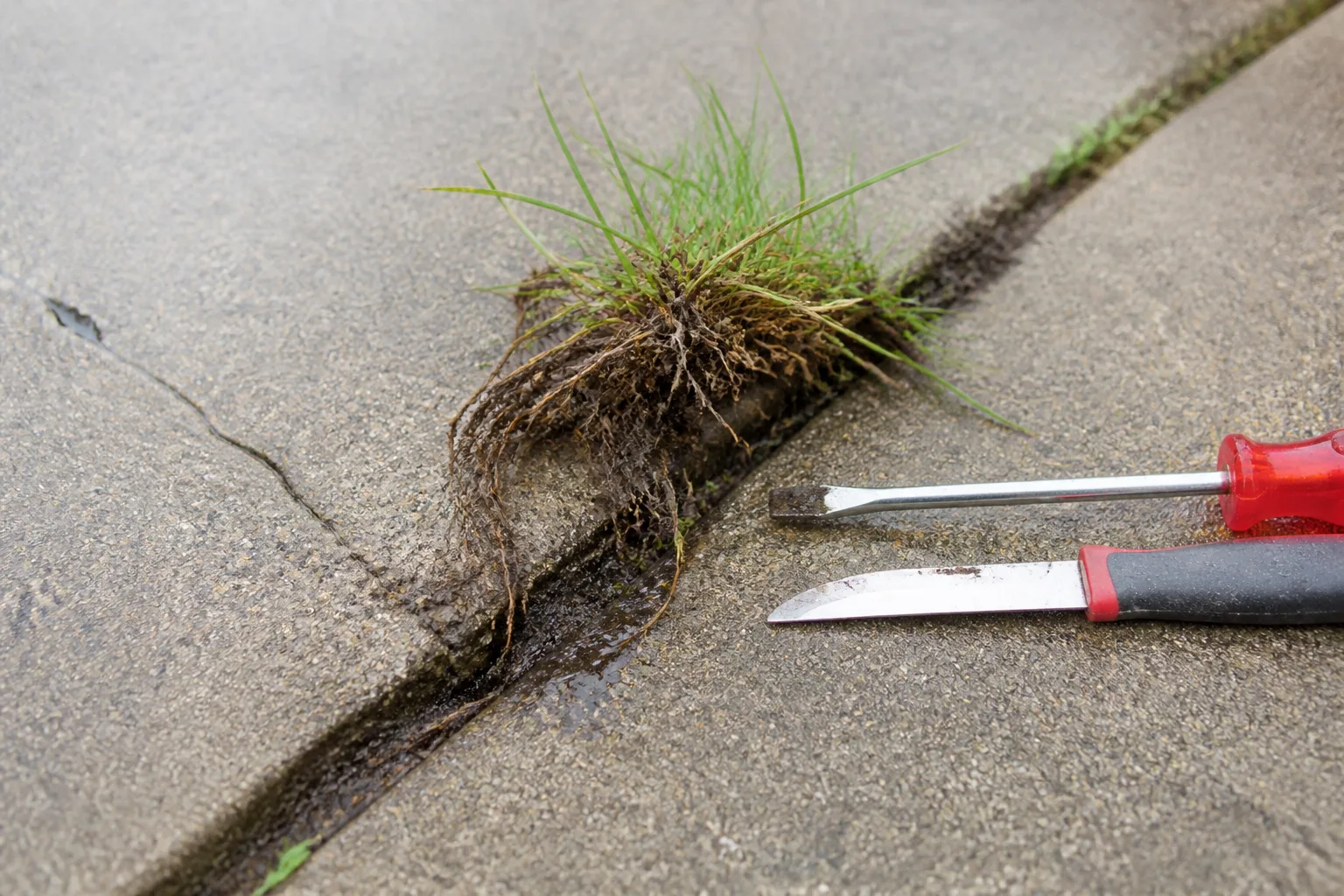
| Method | Best fit | Main advantage | Main limitation |
|---|---|---|---|
| Hand pulling or a crack weeder | Isolated weeds, beds, and lawns | Removes the plant and often the root without spray drift | Slow for a large, dense patch; wet soil and the right tool help |
| Hoeing or shallow cultivation | Rows and open beds with small seedlings | Cuts many seedlings quickly and leaves wanted plants untouched when used carefully | Does not remove deep roots and can disturb soil if done aggressively |
| Mulch and groundcover | Bare soil around established plants | Prevents light from reaching many new seedlings and reduces repeat work | Must be applied and maintained; does not solve an existing perennial crown alone |
| Boiling water | Isolated hardscape cracks with no nearby plants | Simple contact heat treatment with no spray drift | Burn risk, limited reach, and the soil or plant below may recover |
| Household vinegar | Small, young weeds on isolated hardscape | Quick foliage burn and easy availability | Nonselective, unreliable on mature weeds, and not a root killer |
| Labeled herbicide | A defined weed and site where other tools are impractical | Product directions can match the target, site, and timing | Requires label compliance, exposure precautions, and thoughtful selection |
Fine Gardening’s practical experiment found visible results from boiling water, 5% vinegar, and 20% vinegar on tough grasses, but also warned that control would not usually reach 100% because some plants could regrow from roots. That is a useful reality check: a method can work visibly and still fail as a permanent solution. See the Fine Gardening weed-control experiment for the comparison.
For a dozen weeds in a narrow path, a long-handled crack tool may be faster than mixing and protecting the area. For hundreds of tiny weeds in gravel, carefully directed contact treatment may save time. For a perennial in a lawn, a digging knife or a site-labeled turf product is more sensible than sacrificing a patch of grass with vinegar.
If Vinegar Hits a Plant You Want to Keep
Act according to what contacted the plant. If a small amount of diluted household vinegar lands on leaves, rinse the foliage with plenty of clean water as soon as practical, especially before it dries. Move a container plant out of the spray zone and rinse the leaves and pot surface without turning the incident into a prolonged soaking of already wet soil.
If concentrated horticultural vinegar contacts skin or eyes, stop work and follow the product label’s first-aid instructions. Eye exposure is urgent because high-strength acetic acid can cause permanent corneal damage. Do not rely on baking soda, lime, or another household ingredient as an improvised “neutralizer” for a plant or a person; those additions can create a second problem and do not replace medical or poison-control guidance.
After foliage exposure, expect damaged leaves to show yellowing, browning, or collapse over the next day or two. Do not prune every marked leaf immediately if the plant is otherwise stable; wait until the damage is clear, then remove tissue that is fully dead with clean tools. A rinse can limit fresh contact, but it cannot restore tissue that has already been burned.
If there was a soil spill, runoff into a container, or exposure to a concentrated product, consult the label and your local extension or poison-control resource rather than guessing at the remedy. One small, well-rinsed exposure is different from repeatedly drenching a root zone. Either way, do not turn vinegar into a soil amendment or keep spraying the same bed in the hope that the soil will become “weed-proof.”
A Long-Term Weed Plan That Needs Less Spraying
The easiest weed to manage is the one you do not allow to flower, seed, or establish a large root system. Walk the garden once or twice a week during the fastest growth period and remove seedlings while they are small. That short routine is less exhausting than waiting until every weed is mature and then looking for a stronger product.
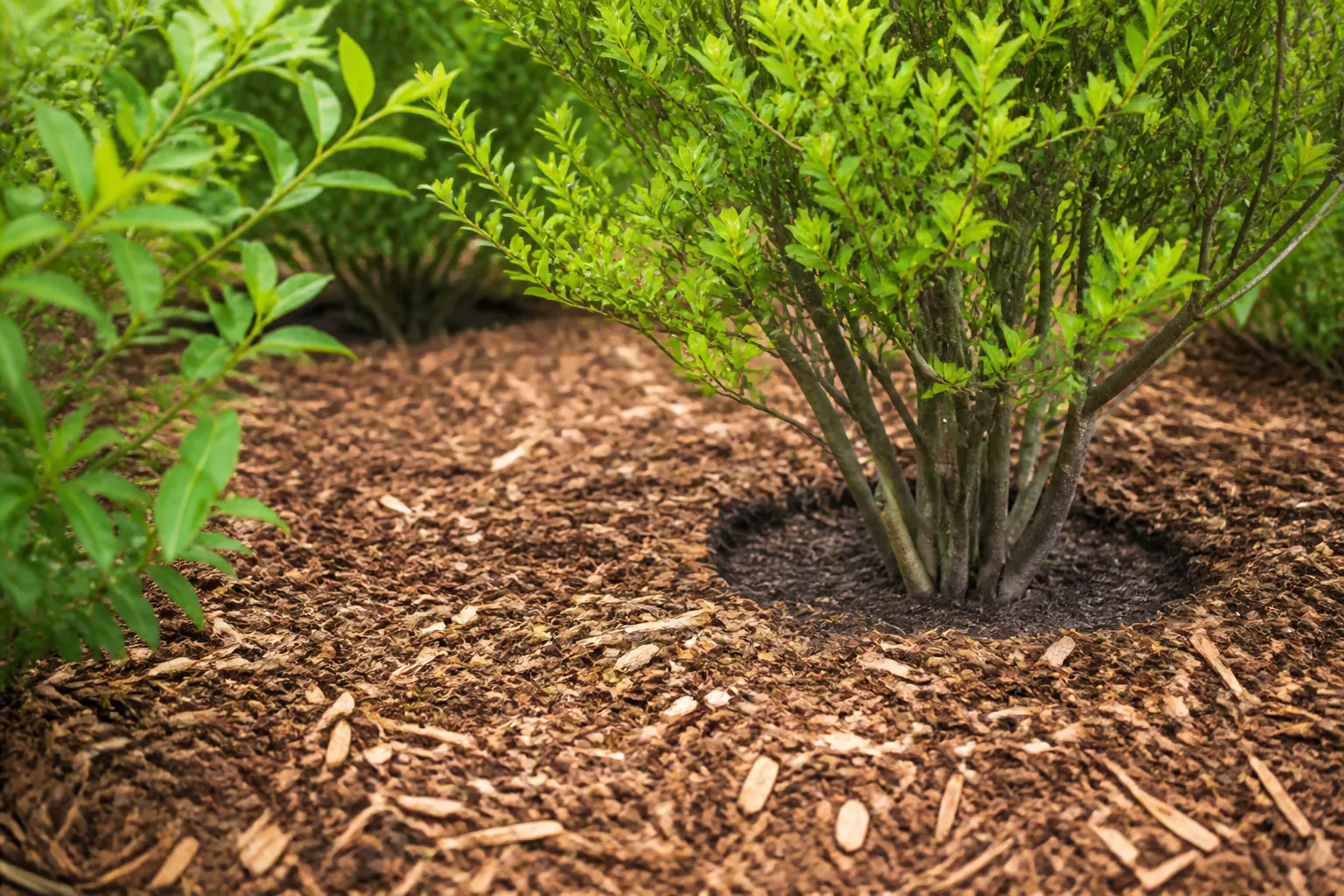
Build the plan around the site:
- Identify the target. Note whether it is an annual, a taprooted perennial, a grass, a sedge, a vine, or a plant that spreads by runners or rhizomes.
- Choose the least disruptive first move. Pull or dig isolated weeds; hoe a bed of seedlings; use mulch or dense planting to shade bare soil; reserve contact sprays for isolated hardscape situations.
- Remove the cause of repeat emergence. Repair open paver joints, keep compost and mulch as weed-free as possible, and avoid leaving disturbed bare soil uncovered.
- Prevent seed production. If a weed has already flowered or gone to seed, bag or remove it according to local guidance instead of dropping it beside the bed.
- Recheck the site. New seedlings are a fresh, small problem. Treating them early is safer and more effective than escalating the strength of a spray later.
This is integrated weed management in plain language: combine observation, prevention, mechanical removal, and carefully selected products when needed. Purdue’s weed-control guidance emphasizes early intervention, removing roots where possible, clean inputs, spacing, and mulches. Those steps make vinegar less important because they reduce the number of weeds that reach the stage where a quick burn-down seems tempting.
Conclusion
Vinegar can kill weeds, but it works best as a targeted contact treatment for small, exposed weeds, not as a universal garden cure. Household vinegar may burn young annual weeds; horticultural vinegar is stronger and more hazardous, but neither should be sprayed across lawns, mixed beds, or the foliage of plants you want to keep.
Use the location and the root system to choose your method. Pull or dig isolated weeds, mulch and repair bare surfaces to prevent new ones, use boiling water only where heat cannot harm people or plants, and follow a product label exactly when a labeled herbicide is genuinely needed. If you treat vinegar as a precise tool instead of a harmless shortcut, you can solve the right weed problem without creating a larger plant, soil, or safety problem.