When to Start Seeds Indoors: Crop Timing Made Clear
Learn when to start seeds indoors by working backward from transplant weather. Compare crop timing, avoid overgrown seedlings, and build a calendar that fits your garden.
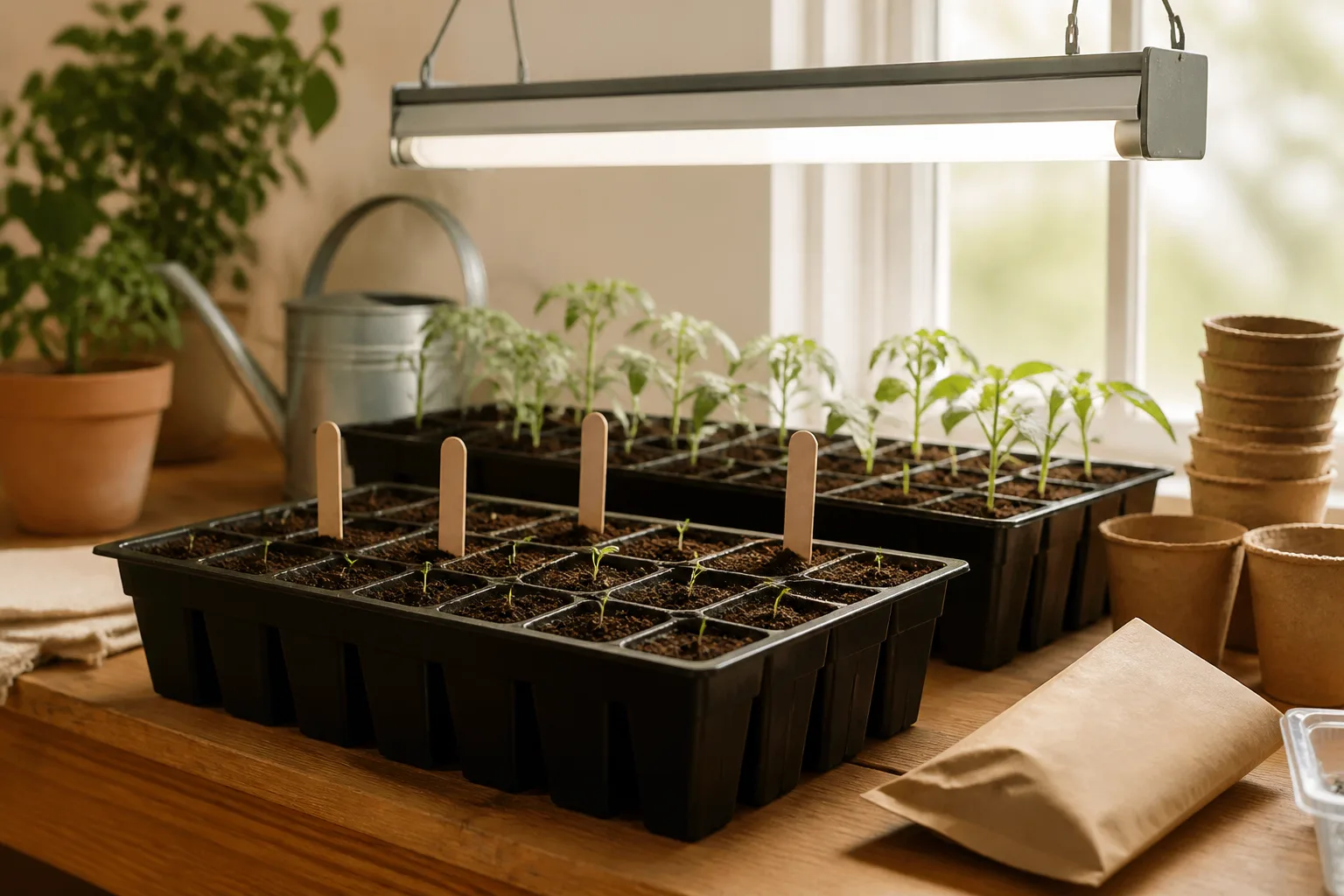
The first warm day can make spring feel close, and a tray of newly sown seeds gives that feeling somewhere to go. But sowing weeks ahead of the right window can leave you with seedlings that are too large for their cells, stretched toward weak winter light, or ready to move outdoors while frost and cold soil still make that move risky.
The useful question is not “How early can I get these seeds to sprout?” It is “How old will these plants be when my garden can actually receive them?” Seed starting works best when the indoor growing period leads to a healthy transplant at the crop’s outdoor planting window—not when every packet gets planted on the same exciting weekend.
The short answer: plan backward from the garden
For most crops, start seeds indoors only as early as the packet or a local extension schedule recommends for your expected outdoor planting date. That date depends on more than the average last frost: cool-season crops may be planted while nights are still chilly, while tomatoes, peppers, and other tender crops need both frost-safe weather and sufficiently warm soil.
Starting early is not automatically harmful. The trouble comes when seedlings spend too long indoors without the light, root space, airflow, and eventual outdoor conditions needed to keep them sturdy. Colorado State University Extension advises against starting too soon because plants can become crowded and spindly before it is safe to plant them outside. The rest of the article turns that warning into a calendar you can use.
Why early starts can turn into weak transplants
An indoor tray gives a seed warmth and protection, but it is a temporary nursery, not a miniature garden. Once a seedling has used the space and resources in its cell, giving it more calendar time indoors does not necessarily make it a better transplant. It can instead add maintenance and stress at exactly the stage when a plant needs steady growth.
Roots and leaves outgrow the indoor setup
Small cells dry faster than garden soil, and their limited mix holds only a modest supply of water and nutrients. A young plant that fills its cell may need more frequent watering and an eventual move into a larger pot. If roots begin circling the bottom or form a dense mat, the seedling is signaling that its current container has become restrictive.
Potting up can buy time, but it is not a free extension of the season. It takes more pots, mix, shelf space, and attention; the plant may pause while it adjusts; and the new container still has to be managed until outdoor conditions are suitable. A seedling that is repeatedly moved because it was sown too soon may reach the garden older and more stressed than one started closer to the planting window.
Overgrown foliage also creates a practical problem. Dense trays shade one another, hold moisture around leaves, and make it harder to water evenly or spot disease early. Not every crowded seedling will fail, but a crowded tray is less forgiving than a compact group with enough room and airflow.
Winter light and warm rooms stretch seedlings
Legginess is not caused by the calendar alone. It usually reflects a mismatch between the light reaching a seedling and the warmth encouraging it to grow. A heated room can keep plants actively growing while a dim window supplies too little light for compact stems. The result is often a tall, thin plant leaning toward the brightest opening.
Colorado State Extension notes that early indoor starts can become spindly when crowding and insufficient light combine. More time under inadequate light gives that weakness longer to develop. Once a stem has stretched, improving the light can support stronger new growth, but it cannot shorten the elongated section that is already there.
A grow light helps with one part of the problem: light. It does not make frozen soil workable, eliminate frost, or turn a slow-growing seedling into a transplant-ready plant overnight. Epic Gardening’s seed-starting guidance discusses supplemental lighting as a way to manage indoor growth; use that control to grow sturdier seedlings on schedule, not as a reason to sow every crop months early.
The plants reach maturity before the weather does
The most frustrating outcome is a healthy-looking seedling with nowhere safe to go. A tender crop may be approaching its ideal transplant size while nights remain too cold or the garden bed is still chilly and wet. Leaving it inside can mean more root restriction and more watering; moving it out too early can expose it to conditions it cannot tolerate.
Plants also do not all respond to extra time in the same way. Some can be potted up and held for a while. Others become less convenient to transplant as stems lengthen, roots tangle, or flowers begin forming in a small container. Savvy Gardening’s practical timing guide describes how quickly different vegetables grow and why overmature seedlings can be harder to manage than younger, well-timed ones.
What a transplant-ready seedling looks like
A good transplant is not simply the largest one in the tray. Look for a compact stem that supports the foliage, healthy leaves without widespread yellowing or spotting, and roots that hold the growing mix together without forming a tight, circling mass. The plant should be large enough for its crop, but not so old that it is tangled, flowering prematurely, or demanding a rescue pot before outdoor planting is possible.
There is no single leaf count that fits every species. A tomato, a lettuce, and a zinnia have different growth habits and planting windows. Use the crop-specific guidance on the packet or from your local extension service, and compare the seedling with that expected stage rather than with a neighbor’s unusually large plant.
Before transplanting, check the conditions the seedling will actually meet: forecast lows, soil warmth, wind exposure, and whether the bed is workable. A frost-tolerant crop may be ready while the average last-frost date is still ahead; a heat-loving crop may need to wait after that date. Readiness is the match between a plant and its destination, not a birthday on the calendar.
How to calculate a seed-starting date
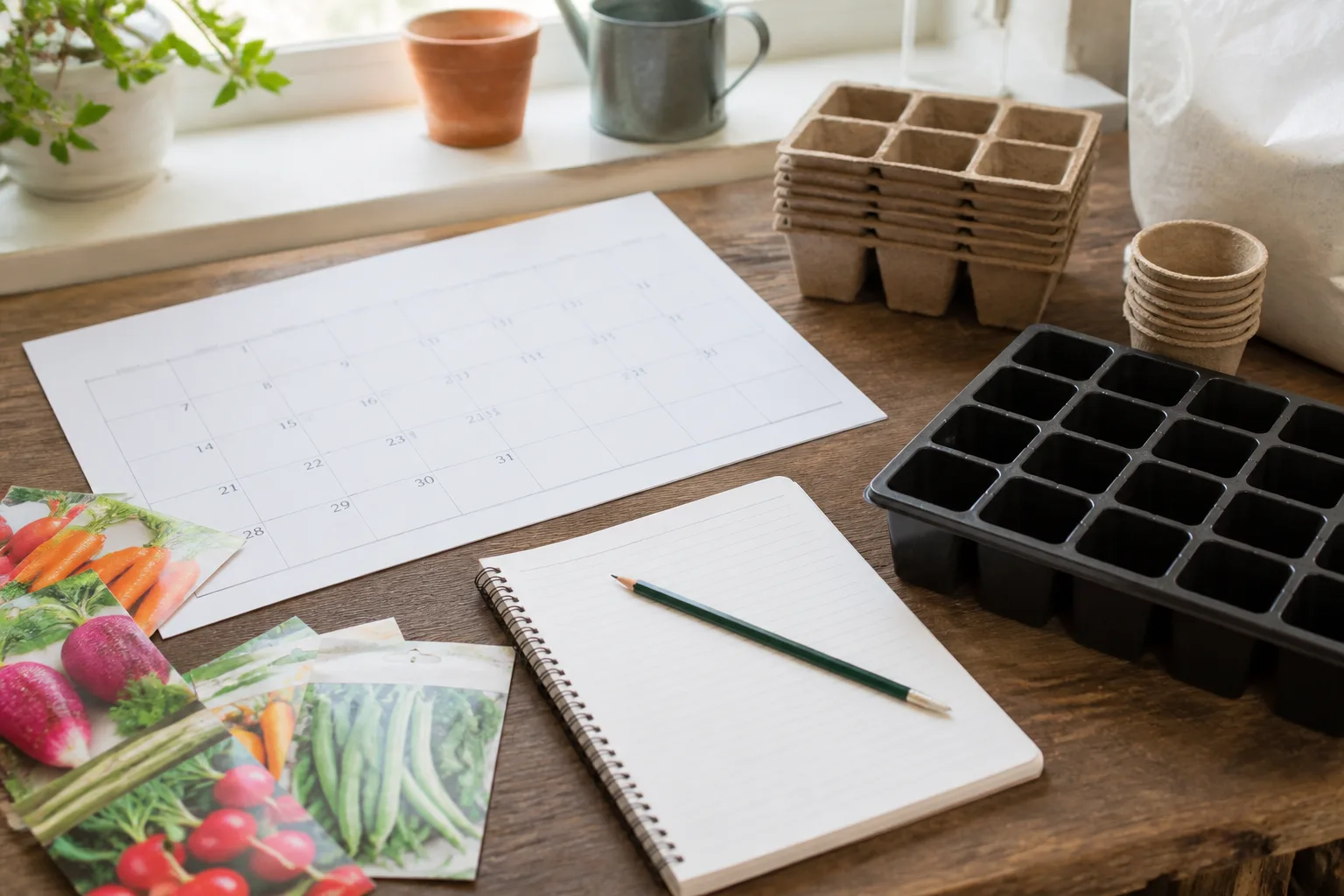
Seed calendars become much easier when you treat transplanting as the target and count backward. Penn State Extension describes planning from a planting date and accounting for the different development periods of different seeds; this is more reliable than sowing every variety together.
Choose the outdoor planting window first
Start with your local average last-frost or frost-free date, but treat it as a planning estimate, not a guarantee. A frost date summarizes past weather; it does not promise that freezing temperatures cannot return. Elevation, nearby buildings, slope, and low spots can also make a yard warmer or colder than a regional chart suggests.
Then identify the crop’s actual planting conditions. Cool-season vegetables such as cabbage and broccoli can tolerate cooler weather than tomatoes or peppers, and some are planted before the average last frost when the soil and forecast are suitable. Warm-season crops generally wait until frost risk has passed and the soil has warmed. Penn State Extension separates cool-season and warm-season vegetables for this reason: a calendar date that suits one group can be too early for another.
Hardiness zones help describe how cold a location gets in winter, but they do not tell you the exact week your spring garden will be frost-free. Use a local extension planting calendar or a nearby weather station’s frost-date estimate as a starting point, then adjust for the crop and your garden’s conditions.
Read the packet’s timing reference carefully
Packets and planting calendars may express timing as “weeks before the last frost,” “weeks before transplanting,” or “direct sow after the soil warms.” These are not interchangeable instructions. If one chart counts from the frost date and another counts from the outdoor transplant date, combining both offsets without noticing can move your sowing date too early.
Write down four pieces of information for each crop: the expected outdoor planting date, whether it is transplanted or direct-sown, the recommended indoor lead time, and any soil-temperature or frost restriction. Follow the packet for the variety you bought when it gives specific directions, then compare it with a local extension calendar. If recommendations differ, check whether they assume different climates or use different reference dates.
Colorado State Extension gives a broad four-to-eight-week indoor starting range for many annuals, while crop-specific recommendations narrow that window. That range is a starting point—not permission to start every vegetable eight weeks early. The important limit is whether the seedling can remain compact and healthy until its own planting date.
Schedule hardening off as part of the move
Hardening off is the gradual transition from sheltered indoor conditions to outdoor sun, wind, and temperature changes. Put it on the calendar before the transplant date, rather than treating it as a last-minute errand. Colorado State Extension recommends gradually exposing indoor-grown plants to outdoor conditions for about a week before planting out; local guidance may recommend a longer acclimation period for particular crops or weather.
Do not count the hardening period twice. If your source says “start six weeks before transplanting,” those six weeks are already referenced to the transplant date; hardening happens near the end of that window. If directions say “six weeks before the last frost,” follow that stated reference and separately identify when the crop can safely go outdoors.
Typical indoor timing by crop group
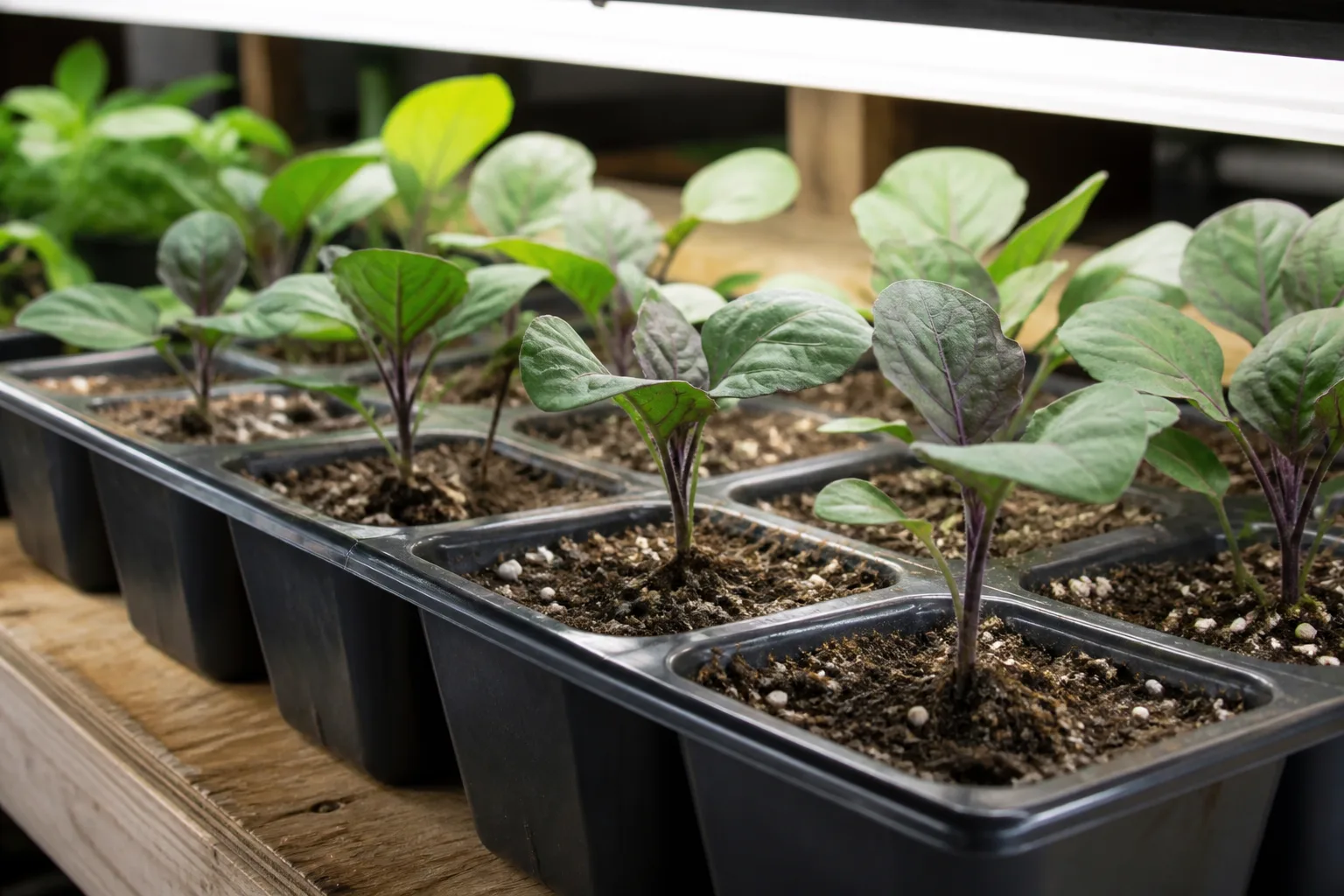
The ranges below are general planning cues drawn from extension and horticulture guidance, not a universal calendar. Seed variety, regional weather, cell size, light, and whether timing is counted from last frost or transplanting can all change the result. Use them to see why crops should not all be started together, then confirm the specific packet directions and local planting window.
| Crop group | Common indoor lead time | Why starting much earlier can backfire |
|---|---|---|
| Tomatoes | About 5–8 weeks | They need a frost-safe, warm outdoor window; extra indoor weeks can mean potting up and root crowding. |
| Peppers and eggplant | About 8–10 weeks | They often need a longer start than fast crops, but still need light and enough container space for the full wait. |
| Broccoli, cabbage, and similar cool-season crops | About 4–6 weeks | Their outdoor window may arrive before tender crops; starting them on the tomato schedule can make them overmature. |
| Cucumbers, squash, and melons | Often 2–4 weeks, or direct sow | They grow quickly and may resent root disturbance; a long indoor stay can create unwieldy vines. |
| Carrots, radishes, peas, and beans | Usually direct-sown | Many are quick to germinate or are awkward to transplant; sow when outdoor soil and weather suit the crop. |
Savvy Gardening’s crop-by-crop guide gives examples such as a short indoor period for cucumbers and squash, a longer one for peppers, and direct sowing for many root crops and legumes. Treat any such chart as a regional starting point, not a substitute for the variety’s packet. A short-season gardener may benefit from starting a long-season crop indoors; a gardener with a long warm season may have less reason to push the date.
The table also shows why “six to eight weeks before the last frost” is not a universal seed-starting rule. It can be a useful reference for some crops, but a cucumber started that early may outgrow its cell while a slow pepper still has a reason for a longer indoor period. Crop speed and safe outdoor timing both matter.
Which seeds are usually better direct-sown?
Indoor starting is most useful when a crop needs a longer growing season, a protected start, or a variety you cannot find as a transplant. It is less useful when a plant germinates quickly in warm garden soil or dislikes having its roots disturbed. Penn State Extension notes that many annuals can be sown directly outdoors, while Savvy Gardening identifies root vegetables and fast-growing crops such as beans and peas as common direct-sowing choices.
Carrots and radishes are classic examples because they form edible roots; transplanting can bend or disturb the developing root. Beans and peas are commonly sown where they will grow once soil conditions are right, which avoids maintaining seedlings indoors and then transplanting them. Corn, cucumber, and squash can also be direct-sown in suitable warm conditions, although some gardeners start them briefly indoors to gain time or protect young plants.
“Direct sow” does not mean “sow as soon as you feel hopeful.” Cold, waterlogged soil can delay emergence or damage seeds, and a frost-sensitive crop may still need warmer weather. Check the packet for soil temperature, planting depth, and outdoor timing. Starting a crop indoors just because you have empty cells can create work without giving the plant a useful advantage.
When an early indoor start makes sense
An earlier start can be reasonable when the plant genuinely needs a long runway and you have the setup to support it. Gardeners in short-season regions may need to start certain slow-growing crops indoors so they can mature before fall cold returns. Some flowers and perennials also have specific germination requirements or slow development that justify a longer lead time.
The necessary setup matters. You need enough strong light, an appropriate temperature after germination, containers that will not become restrictive too soon, and space to pot up if required. If you know you will have to keep seedlings indoors for several extra weeks, plan the larger containers and shelf area before sowing. “I can keep them alive somehow” is not the same as having a workable holding plan.
There are also forms of early sowing that are not the same as starting tender seedlings in a warm room. Cold stratification is a deliberate cold-and-moist treatment used by some species to break dormancy. Winter sowing places suitable seeds outdoors in protected containers so they experience seasonal conditions. These methods follow the biology of the plant; they are not blanket reasons to start tomatoes, squash, or other heat-loving crops indoors months before planting.
Microgreens and shoots are another option if you want something growing now. They are harvested young and do not need to wait for a garden transplant date. That makes them a better outlet for winter gardening energy than starting a tray of full-size vegetables before you can house them.
If you already started seeds too early
Do not assume the tray is lost, and do not move tender plants outside simply to clear shelf space. First estimate how far the seedlings are from their safe outdoor date, then look at their growth stage and root condition. A seedling that is only a little ahead and still compact may simply need steady care; one that is already tangled, pale, or leaning needs intervention and a realistic backup plan.
Triage the seedlings before changing conditions
Check one cell from each crop. Slide the root ball out gently if the mix is moist enough to hold together. Roots at the cell edge are normal; a thick circling mat or roots emerging through drainage holes suggest that more space may be needed. Also look at the stem: a sturdy, self-supporting stem is easier to hold than one that has stretched and fallen over.
Separate crops by their outdoor timing. Do not manage a tray of lettuce as if it were a tray of tomatoes. If the cool-season plants can be hardened and planted soon under suitable conditions, prioritize them. Keep tender crops protected until their weather window arrives, even if that means leaving them indoors longer.
If the seedlings are too weak or badly entangled to make a reliable transplant, sowing a replacement batch at the proper time may be more efficient than trying to save every plant. Keep the strongest individuals and treat the rest as a learning cost, not a reason to risk the whole bed. For crops that can be direct-sown, a later outdoor sowing may catch up faster than keeping an oversized indoor plant.
Hold healthy plants without forcing more growth
Give emerged seedlings strong light promptly and keep it consistent. Remove humidity covers after germination unless the crop instructions say otherwise; a covered, warm tray can hold too much heat and moisture. Utah State University Extension describes how germination depends on crop-specific conditions such as temperature and moisture, and advises checking seed packets rather than assuming every species responds the same way.
If roots have filled the cell, pot the seedling into a modestly larger container rather than a huge pot that stays wet for a long time. Keep the root ball intact, water thoroughly, and let excess drain. The goal is to give roots room—not to bury a weak stem deeply or repeatedly disturb the plant.
Avoid trying to “pause” seedlings by starving or chilling them. Withholding water, leaving them in cold conditions, or keeping them in darkness can add stress without restoring the ideal growth stage. Keep temperatures appropriate for the crop, provide air movement without a harsh draft, and water when the mix needs it rather than on a fixed daily schedule. If light, room, or time is inadequate for holding the crop, plan a second sowing instead of pretending the first tray is on schedule.
Make hardening off the final step, not a shortcut
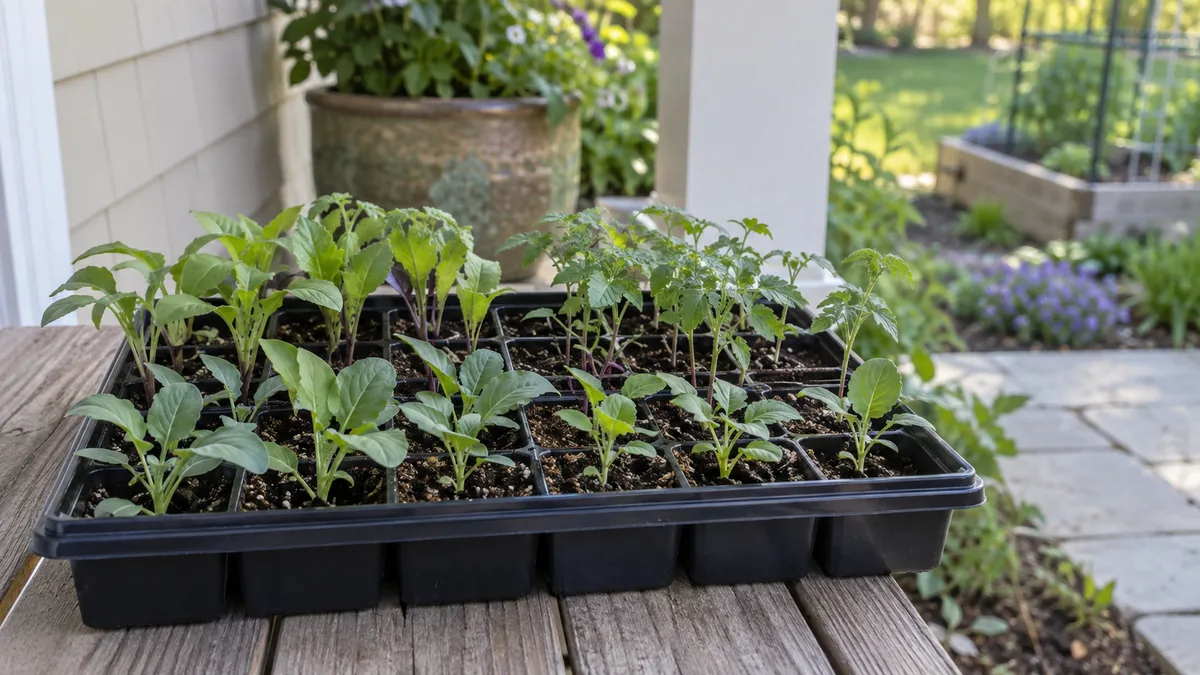
Indoor leaves develop under gentler conditions than the garden provides. A seedling moved straight into bright sun and wind can wilt, scorch, or stall even when the temperature is technically safe. Gradual exposure helps it adjust before transplanting; it does not make a frost-tender plant frost-proof.
Start with a sheltered, shaded outdoor spot for a short period, then increase the time outside and the amount of sun over several days. Protect the tray from drying wind and bring tender seedlings in if temperatures threaten the crop. The exact progression depends on the weather and plant, so pause or repeat a step if the leaves show stress instead of pushing through a rigid schedule.
Do not begin hardening simply because the seedlings look large. The outdoor forecast and crop’s tolerance still determine whether the move is appropriate. For a cool-season plant, a carefully chosen early planting window may work; for a tomato or pepper, a week of outdoor exposure cannot compensate for a cold night or cold soil.
Conclusion
The right seed-starting date is the one that produces a sturdy plant when your garden is ready for it. Choose the outdoor window first, account for the crop’s frost and soil needs, follow the packet’s timing reference, and give seedlings only as much indoor time as your light and containers can support.
Starting early can help when a slow crop and a short season call for it. Starting every crop early usually creates avoidable work: leggy stems, tight roots, crowded trays, and seedlings waiting on weather they cannot control. A simple crop-by-crop calendar—and the patience to follow it—will usually beat an extra month on the windowsill.