12 Winter Landscaping Ideas for Color and Structure
Use these winter landscaping ideas to choose hardy plants, add bark and berry color, dress containers, light paths, and plan around snow and your climate.
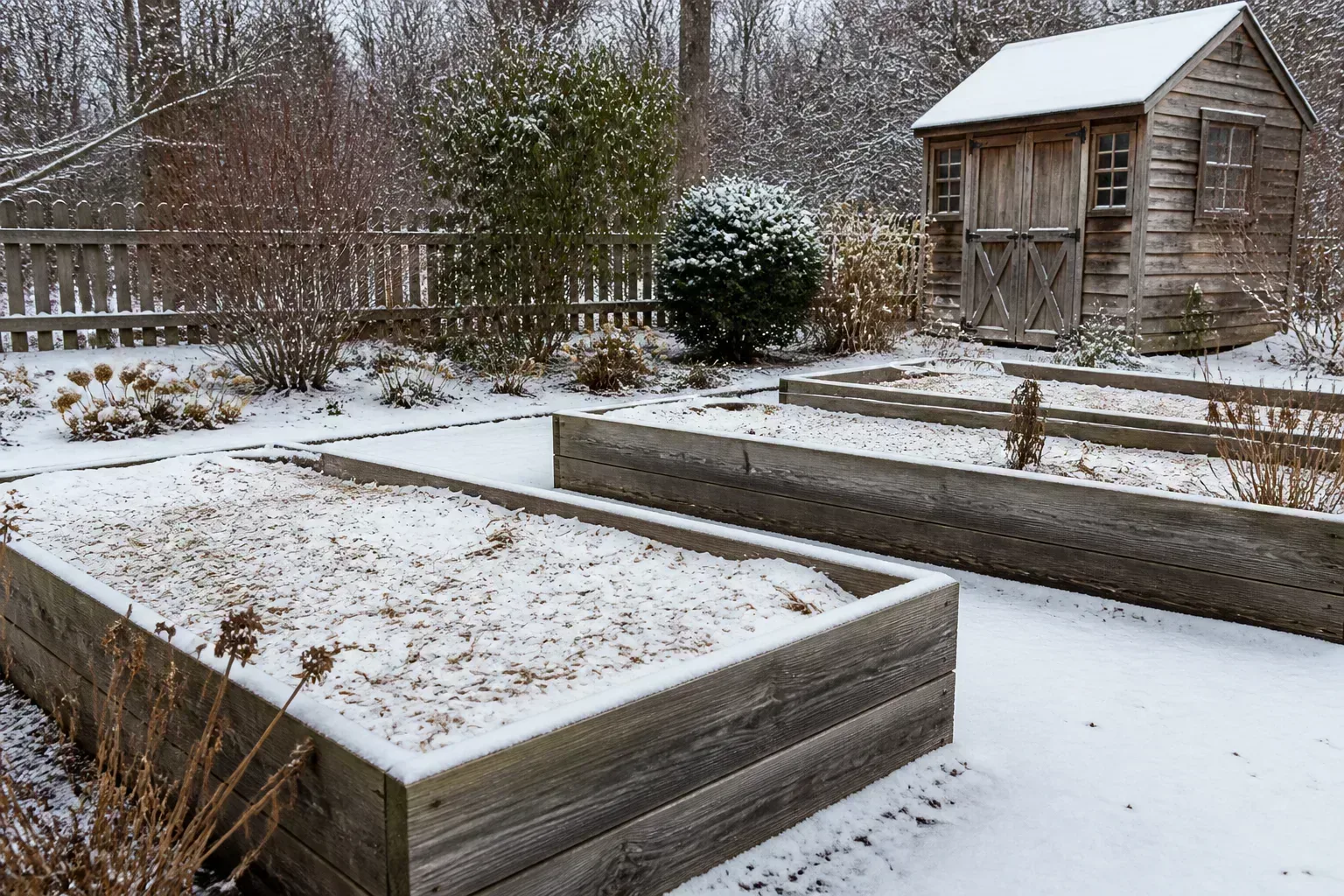
A winter yard looks intentional when it has more than one thing to notice. Evergreen shape gives the eye a steady anchor; stems, berries, seedheads, and occasional flowers add seasonal color; paths and lighting make the space usable after dark or a snowfall. You do not need to rebuild the garden. A small number of well-placed features, chosen for your conditions, usually work harder than a dozen unrelated decorations.
Start with the view you see most often: a kitchen window, front walk, or the route from the car to the door. Note where snow piles up, where salt spray reaches, and which beds disappear behind a fence or house corner. That quick audit keeps winter landscaping focused on the places that matter and helps you avoid planting a shrub where a plow will bury it.
Plan for the winter your yard actually has
“Winter” can mean persistent snow and frozen ground, repeated freeze-thaw cycles, rainy cold weather, or a mild stretch interrupted by a hard freeze. The USDA hardiness zone is a useful first filter for perennial survival, but it does not tell you whether a bed is wind-scoured, waterlogged, shaded by a house, or exposed to reflected afternoon sun. Compare a plant’s published hardiness with the actual site, and lean on local extension recommendations when the choice is close.
Then decide what you want to improve first. If the yard looks empty, prioritize evergreen mass and woody silhouettes. If it looks flat, add bark, berries, and upright grasses; if the entrance feels bleak, a container and a warm, well-aimed light may be enough. Design around the coldest months you actually experience, not a photograph of a landscape that depends on a climate your yard does not have.
| Winter condition | Give priority to | Watch for |
|---|---|---|
| Long, snowy cold | Hardy evergreen forms, colorful stems, visible bed markers, and a clear plow route | Snow loads, salt splash, and plants hidden behind snow piles |
| Mild winter with occasional freezes | A stable evergreen frame, seasonal pots, and locally hardy flowers | Early growth triggered by warm spells, then damaged by a late freeze |
| Wet, freeze-thaw weather | Free-draining containers and paths, raised focal features, and plants matched to wet or dry soil | Pooled water that freezes on walks or around container roots |
| Exposed, windy site | Wind-tolerant species, compact groupings, and a sheltered entry display | Winter burn on broadleaf evergreens and drying soil during mild spells |
These are design starting points, not guarantees: a shaded pocket or a wind tunnel beside a house can behave differently from the rest of the property. If you are unsure what a bed does in winter, take a photograph after rain, after the first hard freeze, and after a snow event before choosing plants or moving hardscape. That quick record helps separate a plant problem from a poor location.
Build a frame that lasts all winter
The first three ideas create the permanent structure of a winter garden. They also pay off beyond winter, so choose plants by mature size, light, soil, and maintenance needs instead of buying a specimen only because it looks colorful at the nursery.
1. Layer evergreens for reliable structure
Evergreens hold the composition together when deciduous plants lose their leaves. Use one taller conifer or broadleaf evergreen as a backdrop, then repeat smaller shrubs or low spreading forms in front; a loose grouping tends to look more natural and gives the bed depth from the street and from inside the house. Different shapes—columnar, mounded, and ground-hugging—create more interest than a single clipped hedge.
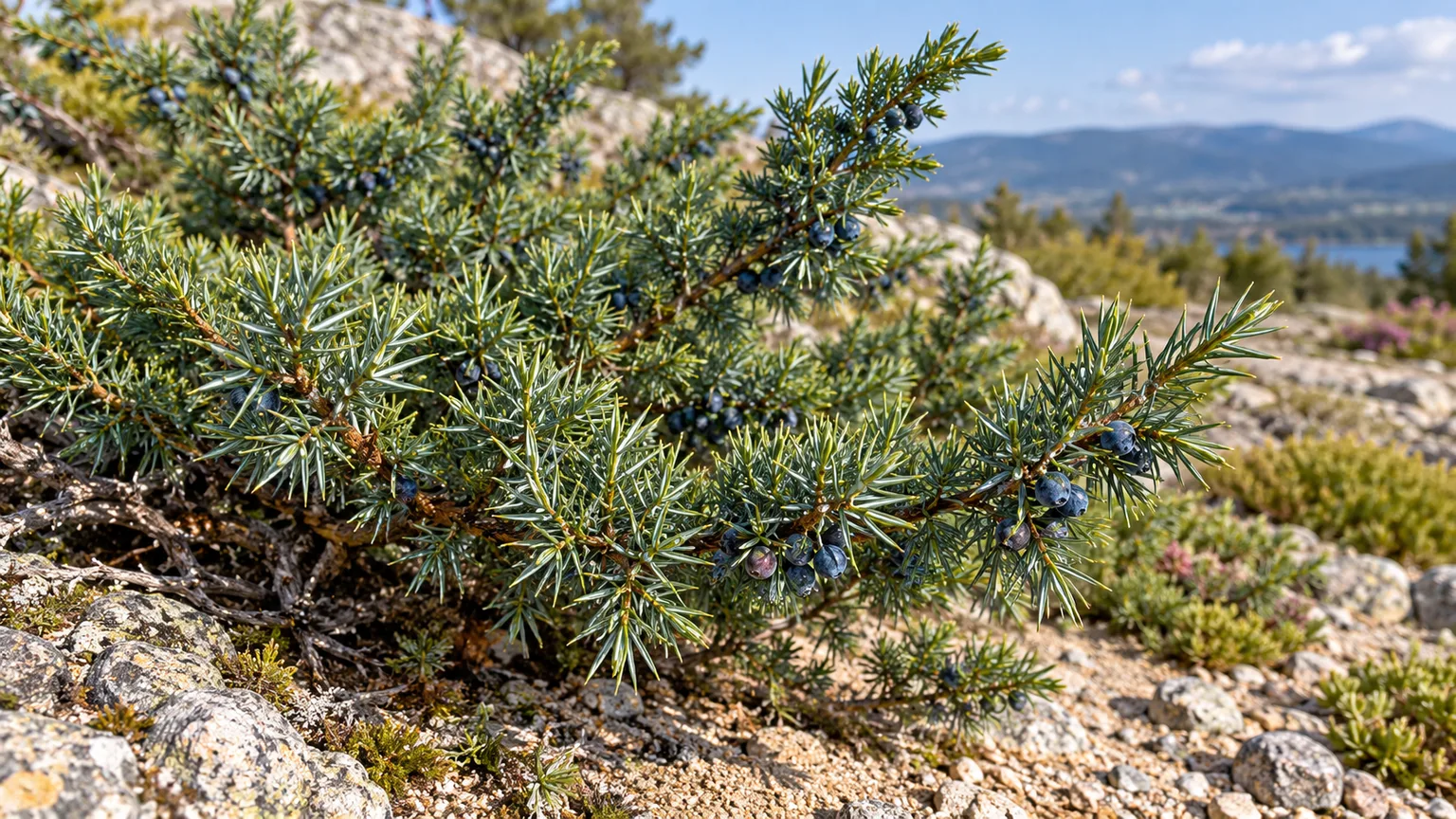
Choose species and cultivars for the site, not just the color on the tag. A juniper that likes sun and drainage may struggle in a damp, shaded corner, while a broadleaf evergreen can be vulnerable to winter sun and wind in a colder exposure. The extension guidance on choosing evergreens is a useful reminder to match an evergreen to the growing conditions and landscape role. Check mature height and spread, too: a compact plant near a walkway is easier to maintain than a fast-growing screen that soon needs hard pruning.
2. Use bark and colorful stems as focal points
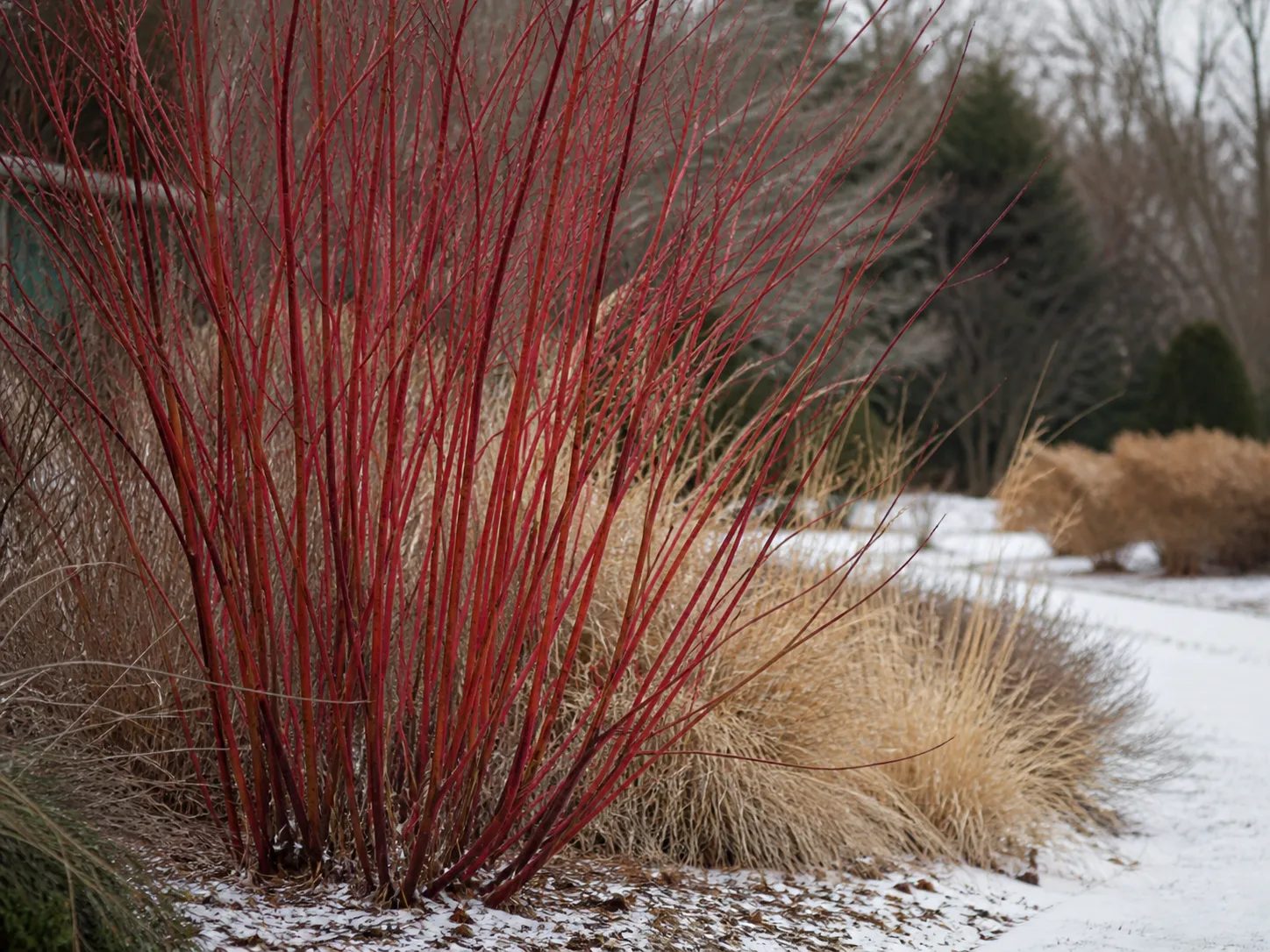
Leafless shrubs can be the most vivid plants in a winter bed. Red-osier dogwood, yellow-twig dogwood, and some birches show colored or peeling bark; the contrast is clearest against snow, a dark fence, or evergreen foliage. A single clump of red stems can give a small yard a focal point without demanding a large flowering display.
Place these shrubs where their color catches low winter light and can be seen from a window or path. Many dogwoods also look good in leaf, but the brightest new stems often come from younger growth, so check the mature size and pruning needs of the cultivar before planting. These winter-interest design examples and plant combinations for a winter garden show how colored stems gain impact when paired with evergreen shapes rather than scattered through an entire bed.
3. Put berrying shrubs where you can see them
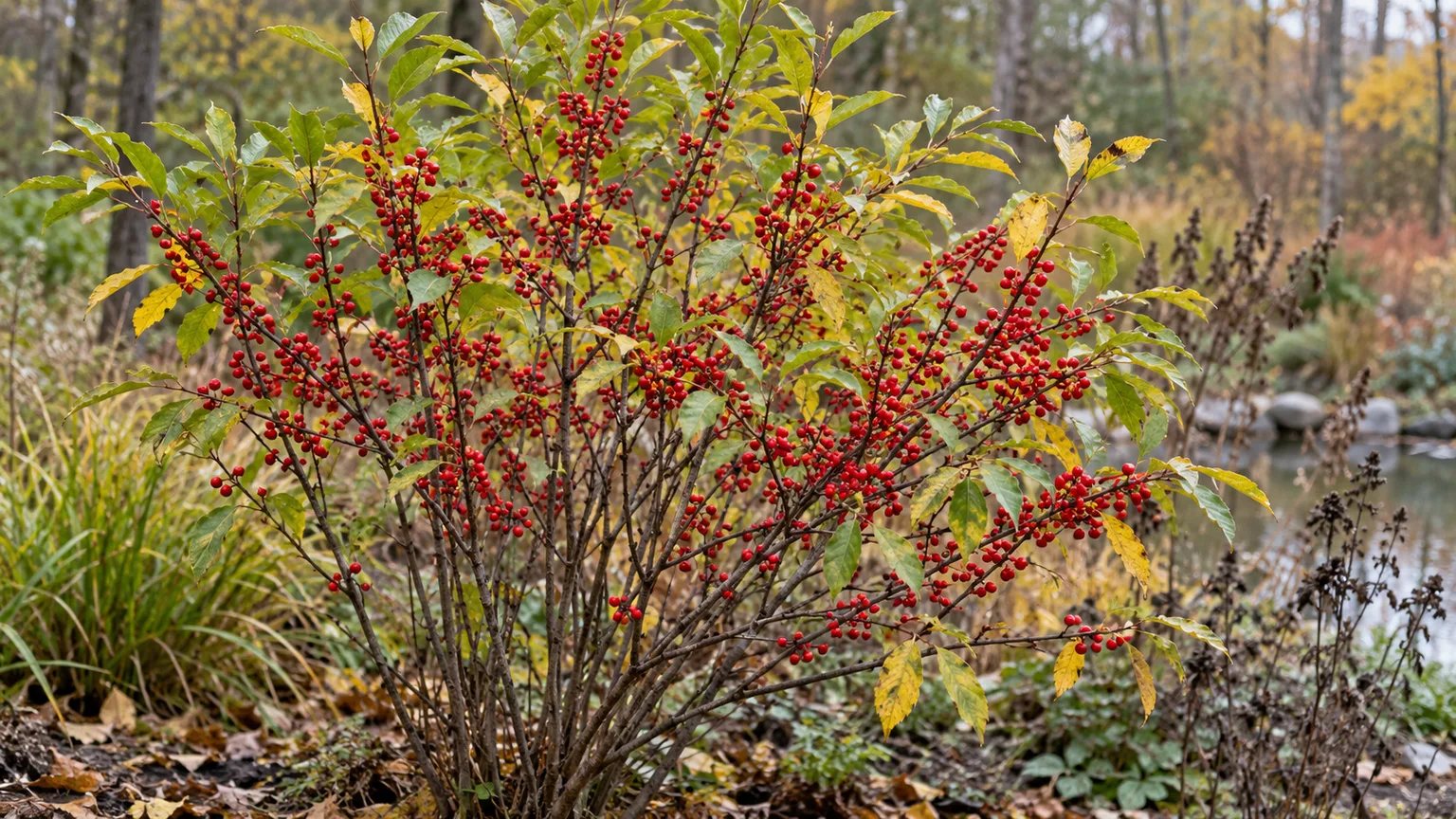
Persistent fruit adds bright dots of color to a bare branch and can provide food for wildlife. Winterberry holly is a deciduous native shrub in eastern North America; its berries stand out precisely because the leaves drop. It suits a moist, acidic site with good drainage better than a hot, dry strip beside pavement, and the North Carolina State Extension Plant Toolbox notes that dry soil can reduce fruit set.
There is a detail that a plant label can make easy to miss: winterberry is dioecious, so a female plant needs a compatible male pollinizer with overlapping bloom time to produce fruit. For example, NC State lists ‘Jim Dandy’ and ‘Southern Gentleman’ as male pollinizers for particular cultivars; check the pairing for the cultivar you buy rather than assuming any male plant will work. The winterberry plant profile gives those requirements, and regional extension guidance on winterberry notes its value in grouped landscape and wildlife plantings. Plant berries where you can enjoy them, but expect birds to eat some as winter progresses; fruit persistence is not guaranteed. Keep unfamiliar berries out of children’s and pets’ mouths, and never treat an ornamental shrub as a food plant without confirming its identity.
Add color and movement at ground level
A winter bed should not rely on flowers alone. Grasses and seedheads keep vertical lines and texture in place after frost, while early bloomers can add a smaller, closer detail in regions where they are reliably hardy.
4. Leave ornamental grasses standing when they are sound
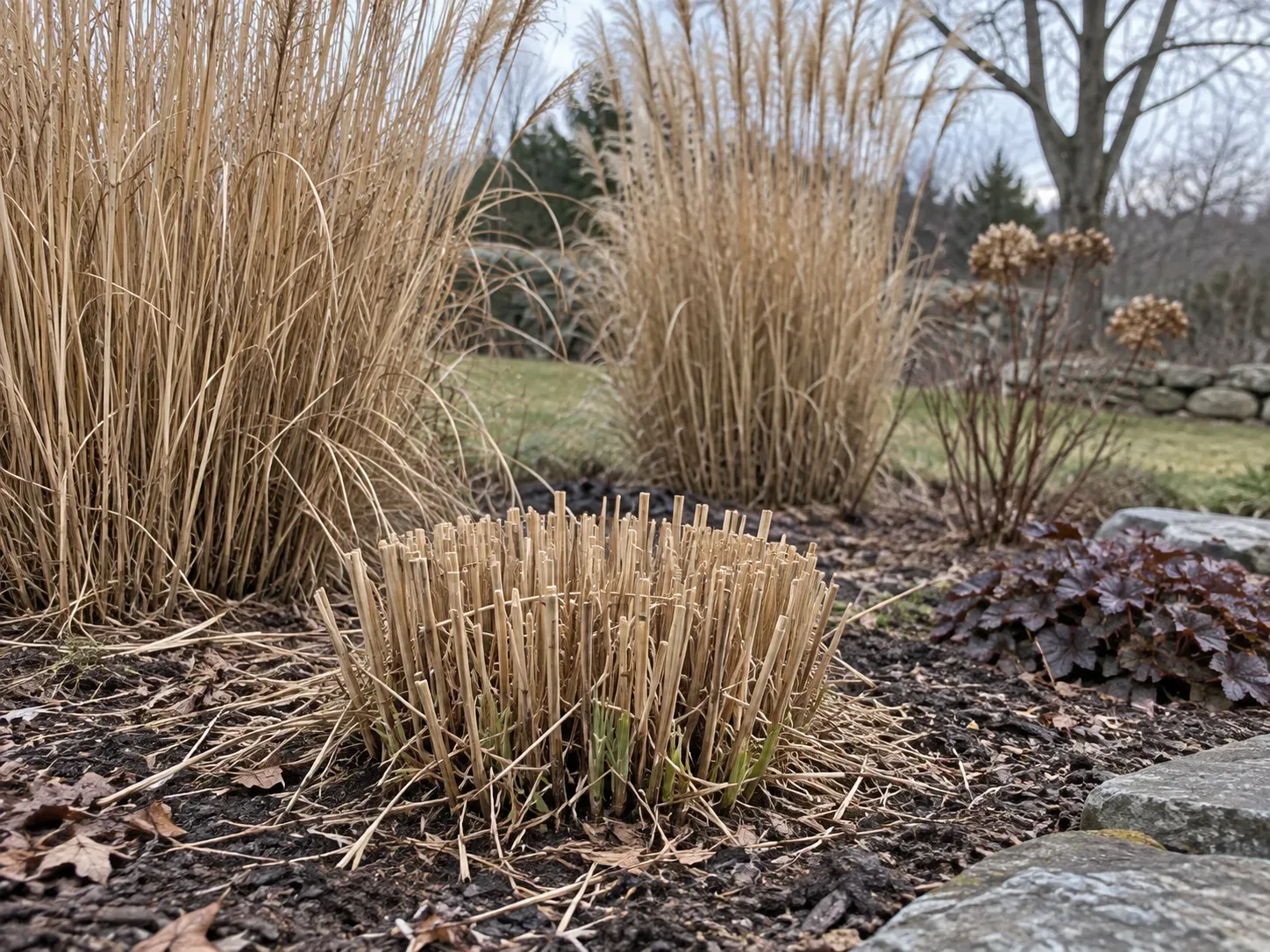
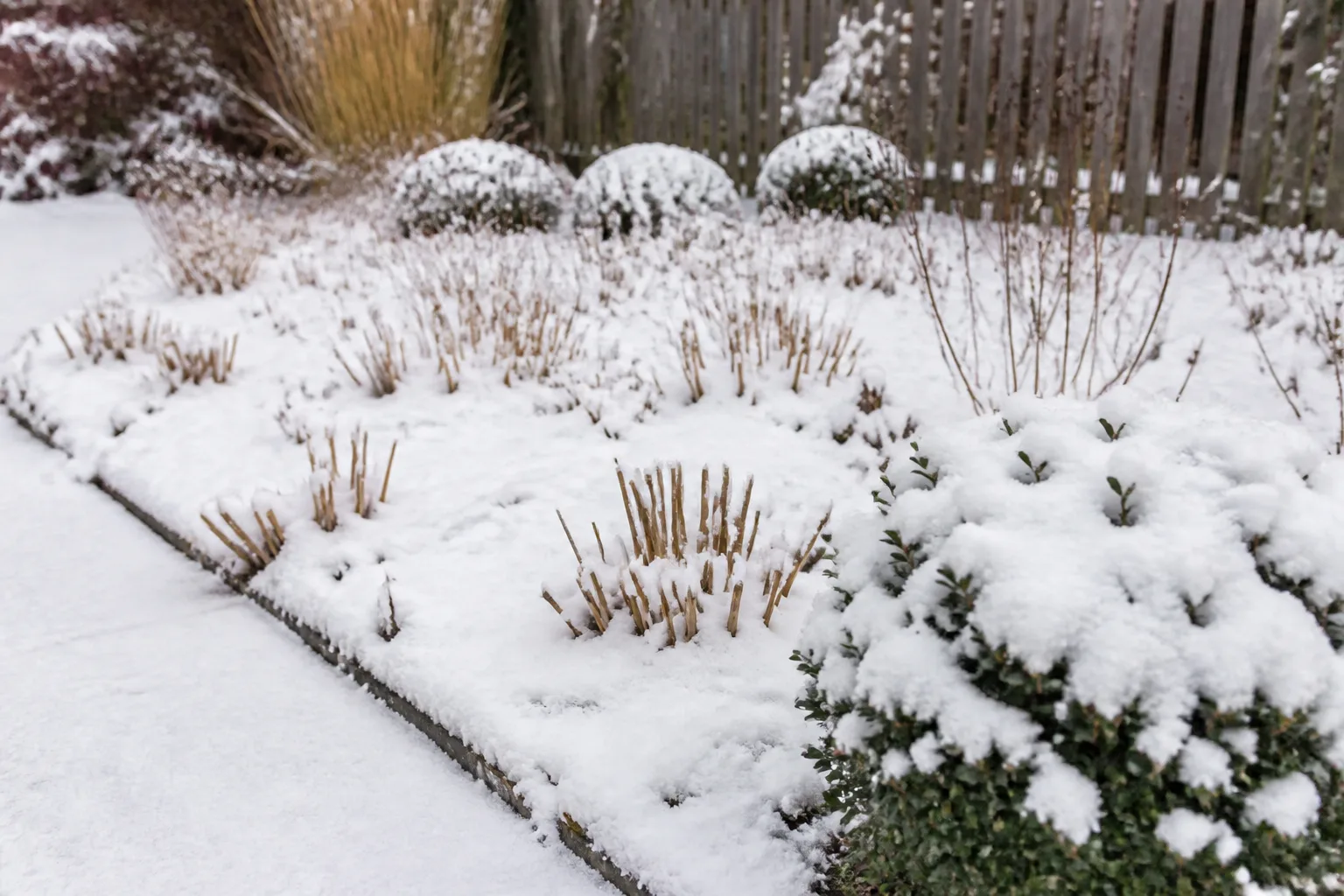
Ornamental grasses catch snow, move in the wind, and shift from green to straw, bronze, or russet as the season changes. A compact clump of feather reed grass beside an evergreen or a lower sedge along a path can keep a border from becoming a flat brown strip. A winter-garden planting guide shows how grasses can contrast with berries and evergreen foliage; choose a species that suits your region and the scale of the bed.
Do not cut every grass back in fall simply because the growing season has ended. Leave upright clumps through winter when they remain attractive and stable, then cut them before new growth starts if that is appropriate for the species. If wet snow splays the stems, the plant blocks a walkway, or the foliage becomes a matted nuisance, remove it sooner. Avoid confusing ornamental grasses with invasive or spreading species: check local status and mature width before planting.
5. Keep selected perennial seedheads in the composition
Sturdy perennial heads can look sculptural against snow and add fine detail when frost outlines them. Sedum, coneflower, black-eyed Susan, and native grasses are common examples, but the best candidates are the ones that stay upright in your garden and are not diseased or flopping across the path. Leave a few deliberate patches rather than every spent stalk; the result feels composed while still retaining winter texture.
This choice can also support wildlife, although the payoff depends on the species and the local birds. A seedhead is not a substitute for a habitat plan, and a dense tangle is not always useful near a doorway or snow route. This winter landscape overview recommends preserving attractive seedheads for winter interest. In spring, cut back only after you have checked for new growth and nesting activity, and compost healthy material rather than leaving a wet, diseased mat over the crown.
6. Choose winter flowers by region and bloom window
Flowers can contribute to a winter landscape, but “winter-blooming” does not mean a plant flowers reliably through every freeze. Hellebores often bloom in late winter or early spring in suitable climates, witch hazels can flower during mild spells, and camellias suit some milder regions. Snowdrops and winter aconite may emerge early where the species and site are adapted. In colder climates, late-winter flowers may be a more realistic goal than color in January.
Check the plant’s hardiness, bloom timing, and exposure before buying it. A sheltered courtyard may be several degrees warmer than an exposed front lawn, while a warm south-facing wall can encourage early growth that is then vulnerable to a sudden freeze. Plant flowers where their low blooms remain visible—near a walk, beneath deciduous shrubs, or in a raised container—and treat the bloom as a seasonal bonus rather than the yard’s only winter color. These winter-flower candidates are a starting point, but local extension references are better for confirming what survives in your area.
Make the spaces near doors feel finished
A close-up view can make a bigger difference than another shrub at the back of the property. Containers, window boxes, and hardscape sit near the places you use, so they are useful choices when the yard is small or the planting beds are already full.
7. Build a winter container around a hardy centerpiece
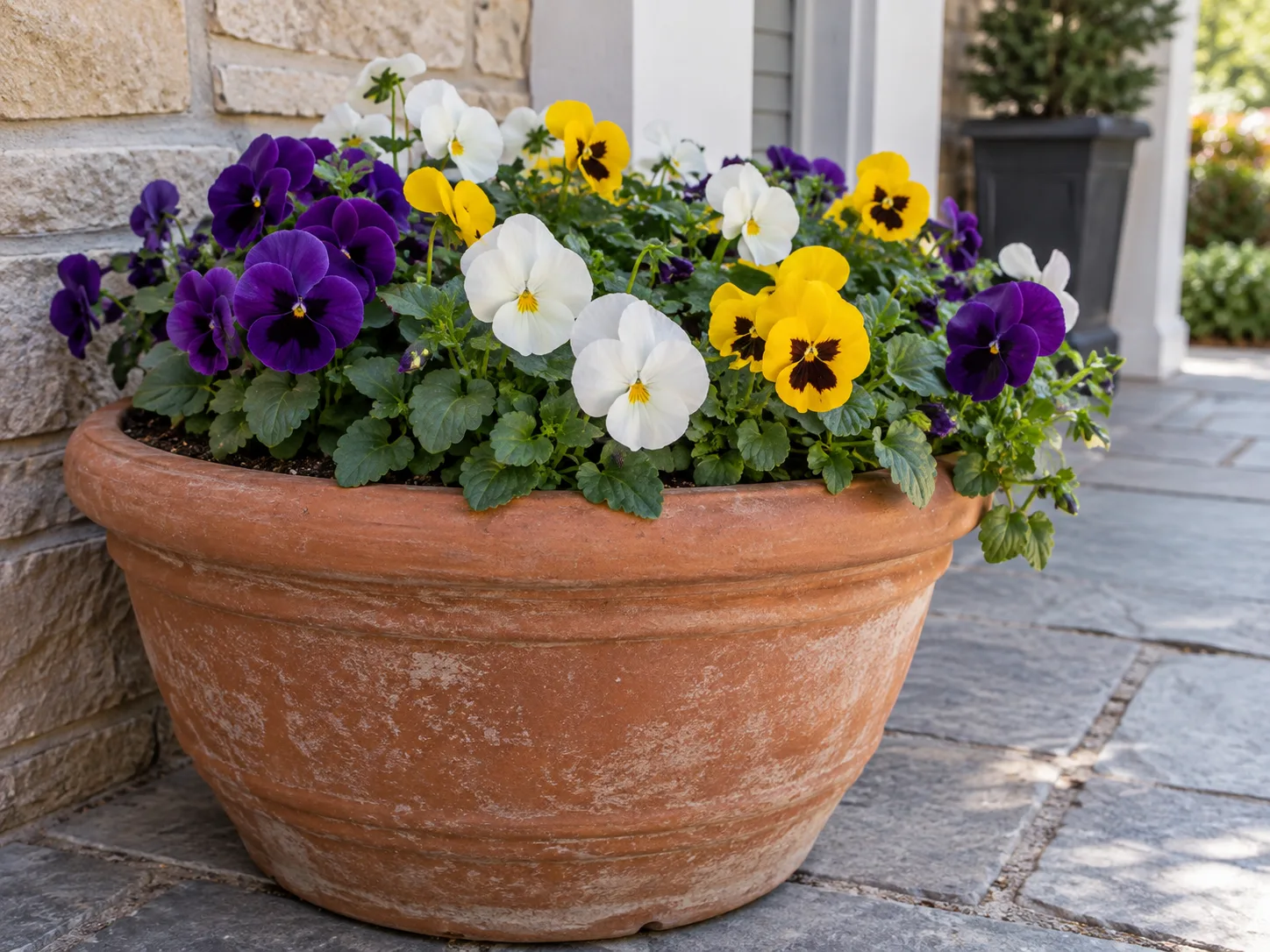
A winter pot works best when it has one clear focal point and supporting texture. Use a hardy small evergreen, a compact grass, or a seasonal combination that suits the container’s exposure; evergreen boughs, seedpods, and cut branches can fill a pot when you do not want live plants. Repeat a small palette—green, brown, and one accent color—so the arrangement reads from across the porch rather than as a bundle of unrelated stems.
Container roots are more exposed than roots planted in the ground, and a sunny or windy porch can dry the pot even when the air is cold. Start with a container made for outdoor use, a drainage hole that stays open, and plants suited to your local conditions. Group pots against a sheltered wall, insulate or move fragile containers when severe weather is expected, and check the soil during dry spells when it is thawed enough to absorb water. Winter container guidance also recommends watering live plants during dry periods; do not water frozen potting mix or leave water trapped in a saucer where it can freeze around the base.
8. Treat a window box as a close-up winter garden
A window box is an easy way to bring winter color into the view from a kitchen or living room. Build it with evergreen cuttings in different needle textures, twigs, cones, and a few stems with berries; a live, hardy centerpiece works when the box has enough soil volume and drainage. Place the tallest material toward the back, add medium branches at the sides, and leave the front low enough to keep the window view open.
Use cut boughs as seasonal material, not as a promise of live growth. They will eventually dry out, and wind can loosen them, so anchor stems into damp floral foam or another stable insert and check them after storms. If using electric lights, select outdoor-rated products and keep connections protected according to their instructions; battery-operated lights can avoid a cord crossing a walkway. Window boxes should add detail without blocking a window, covering a drain, or putting loose branches where they can fall onto a path.
9. Let paths and hardscape do useful design work
A garden bench, trellis, low wall, stone path, or a well-shaped raised bed can provide winter interest even when plants are dormant. Place a bench where the view includes a focal evergreen or colorful stems; position a trellis where it gives the bed a vertical line instead of creating a blank screen. Hardscape is often easiest to evaluate in winter because bare branches reveal gaps, awkward routes, and places where water collects.
Treat a path as infrastructure first: it should lead to the door, gate, or storage area without forcing you across icy lawn or through a planting bed. Select a surface and edge that suit drainage and snow removal, then avoid narrow curves that a shovel or small plow cannot clear. Artificial turf is a different decision from adding seasonal greenery; it replaces a living surface and should be evaluated for drainage, base preparation, heat, maintenance, and end-of-life handling before installation. If you add a fire pit, make it optional and site-specific: the U.S. Fire Administration’s outdoor fire guidance advises keeping outdoor fire pits at least 10 feet from a home or anything that can burn, and local rules may be stricter.
Make the yard usable after the first storm
Winter design is not finished if lights are buried, mulch washes away, or snow blocks the front door. These last three ideas protect the visible planting and make seasonal maintenance easier.
10. Light the route and the focal points
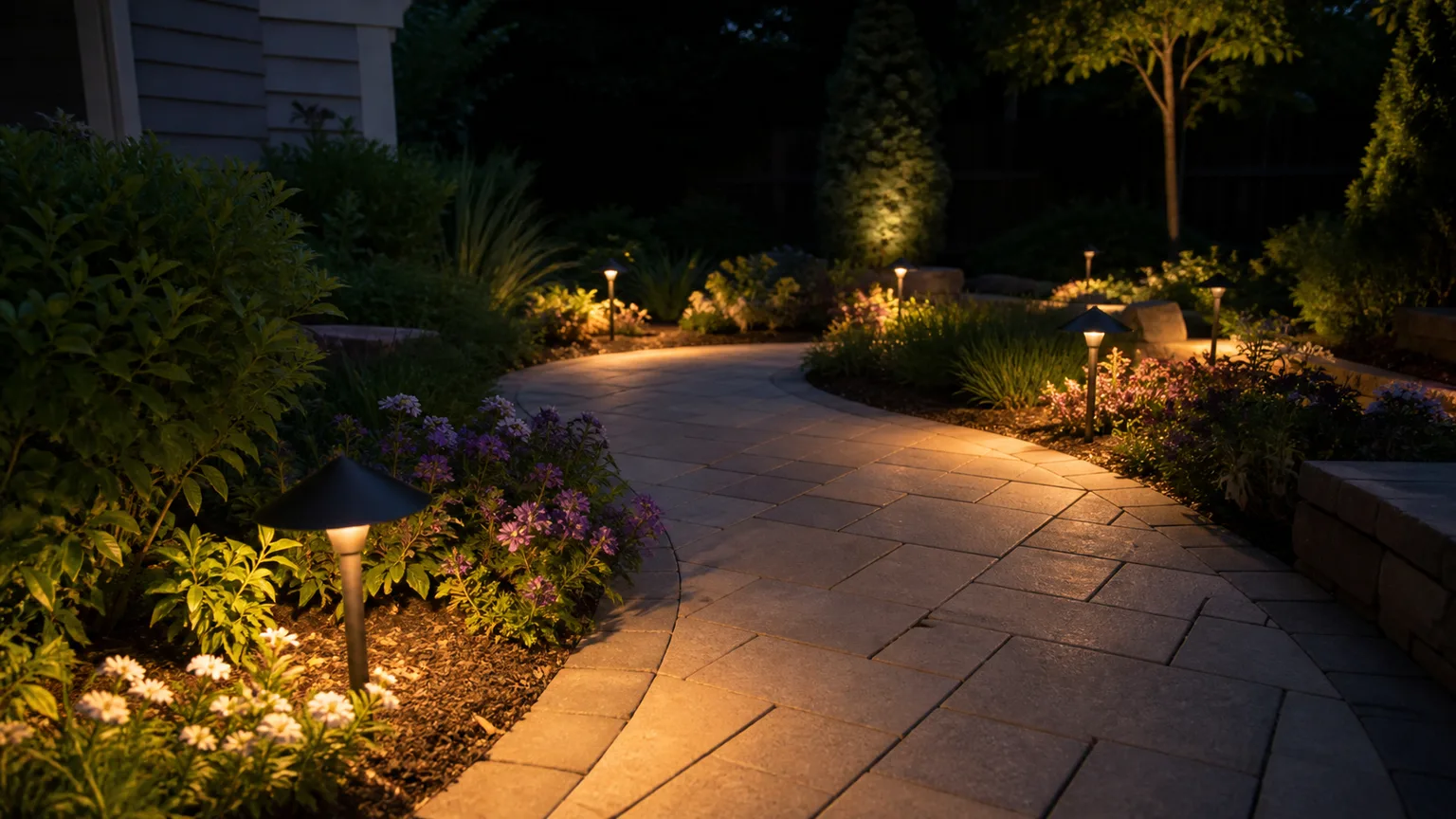
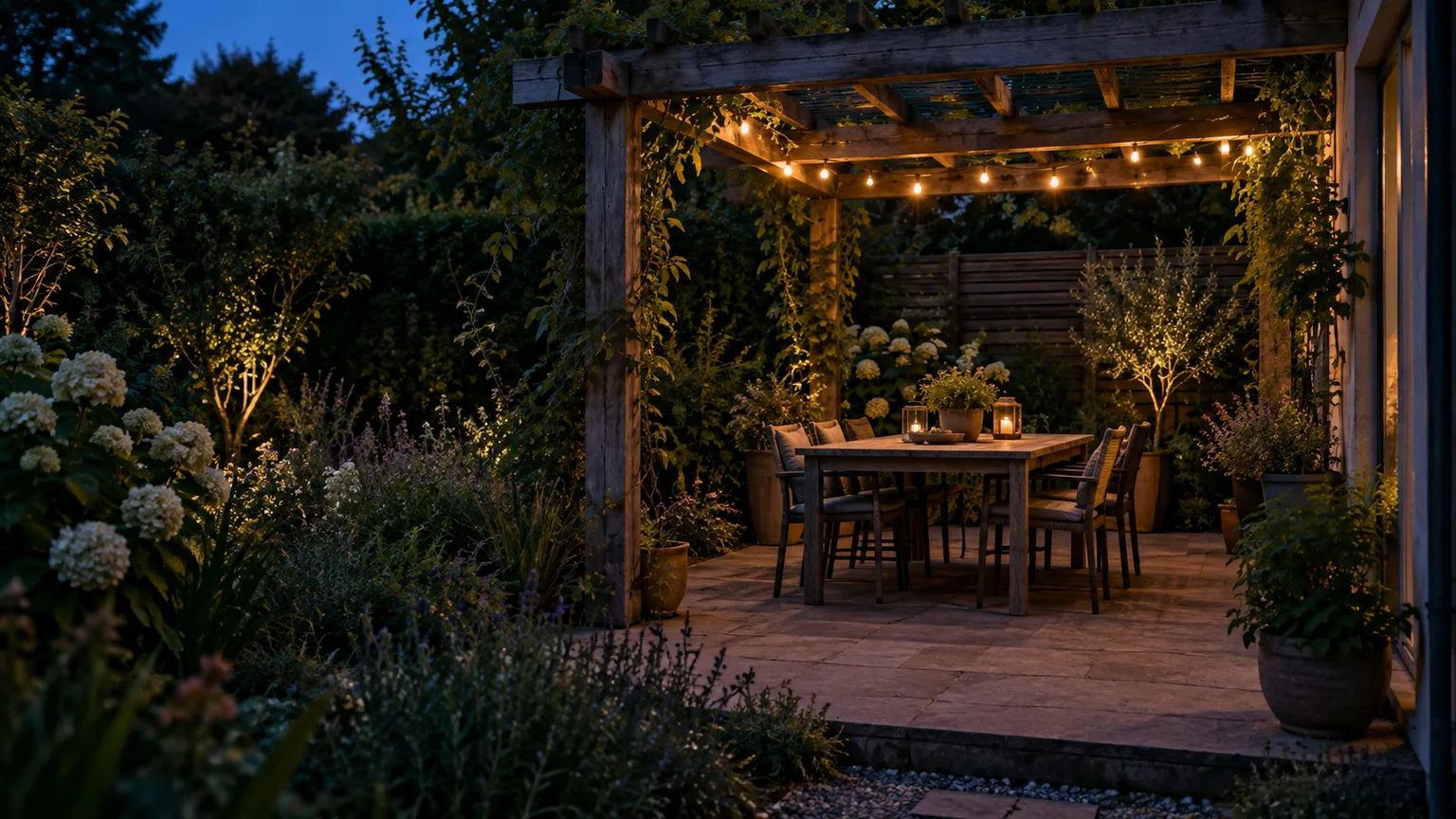
Winter evenings arrive early, so lighting can reveal both the way home and the shape of the garden. Start with a low-glare fixture at a step, gate, or turn; then use a restrained uplight or downlight to pick out an evergreen, sculptural trunk, or wall. The goal is to make the route legible and give the yard a focal point, not to illuminate every branch as if it were a holiday display.
Aim fixtures away from bedroom windows and neighbors’ property, and use a timer or smart control so lights do not run all night by default. Snow can cover low fixtures, so keep them out of the main shovel line and place any path markers where they remain visible after a plow pass. Choose equipment rated for outdoor exposure, keep cords out of travel routes, and follow manufacturer installation requirements. A few well-placed points of light usually read better than a continuous row of bright fixtures.
11. Mulch root zones without burying trunks
A tidy mulch layer helps define winter beds and moderates soil temperature, but more mulch is not automatically better. Spread it over the root zone in a consistent layer, keep it away from trunks and shrub stems, and do not bury the crown of a perennial. Piled mulch can hold moisture against bark and hide the root flare; a wide, shallow layer is more useful than a cone packed against the plant.
Use a material that fits the bed: shredded leaves or bark can soften a naturalistic planting, while stone is a better fit for a dry, designed bed where it will not migrate onto a path. Colored mulch changes appearance but does not solve a bad layout, and dark ground cover will not make a bed interesting if the plants have no winter structure. The design should still read from a distance: repeat the mulch edge cleanly, leave room for snow and runoff, and keep the main sightline anchored by a shrub, tree, or hardscape feature.
12. Reserve snow storage and protect access
Before the first storm, decide where shoveled and plowed snow will go. Mark the edge of a low bed or new planting with visible stakes, keep the main snow pile away from young shrubs and narrow evergreens, and make sure meltwater has a route that does not pond beside a foundation or freeze across the walk. A design that ignores the plow route can damage a plant every winter even if the species itself is hardy.
Keep salt splash in mind near streets and driveways. If your municipality uses deicing products, favor a salt-tolerant planting strip where exposure is unavoidable, protect sensitive plants from direct spray, and do not stack contaminated snow over beds. Move a container out of the shovel line before weather arrives; after snow, brush heavy snow from small branches gently only when necessary rather than pulling or shaking frozen limbs. This planning takes minutes in fall and can save a season of repair work.
Conclusion
The strongest winter landscaping ideas solve a specific problem in a specific part of the yard. A layered evergreen bed gives an empty view structure; dogwood stems and berrying shrubs add color; grasses and seedheads preserve texture; a container, light, or path makes the entrance feel cared for. Choose each feature for your climate, soil, exposure, and maintenance habits, and the garden will feel considered even when most plants are dormant.
If you are starting with a small budget, make three changes first: improve the view from the room you use most, add one durable focal plant or hardscape element, and plan where snow will be stored. Then add seasonal color only where you can see it. That sequence makes winter landscaping more manageable and keeps the yard useful long after the holiday lights come down.