25 Winter-Friendly Plants for Outdoor Containers
Choose winter container plants by light, climate, and display, then protect exposed roots with useful guidance on pot size, drainage, watering, and shelter.
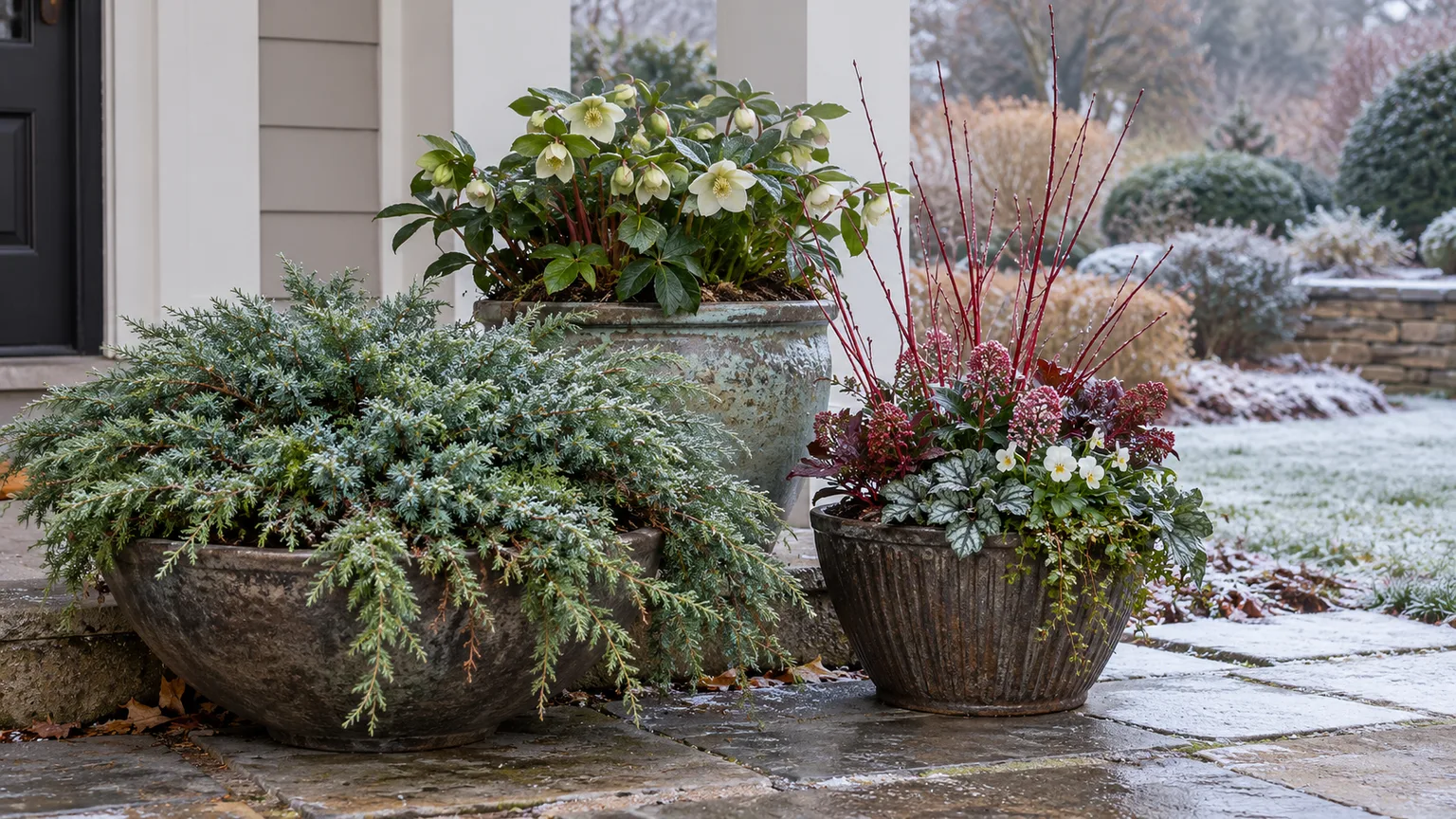
A winter pot can be green, fragrant, berry-bright, or full of flowers—but the phrase “winter-hardy” needs a container-sized asterisk. A shrub that survives cold in a garden bed may lose roots in a pot because soil surrounds a root ball in the ground while an above-ground container is exposed to cold air on every side. Your best choices are plants matched to your local winter, a container large and durable enough for the job, and a plan to shelter anything that is only borderline hardy.
The 25 choices below do different jobs. Some are dependable evergreen anchors; some bloom during a mild winter or appear as the season turns; a few are better for a sheltered porch or for gardeners who can move the pot. Use the labels in each entry as a starting point, not a promise that every cultivar can sit outside through every freeze.
Start with the winter reality of a pot
Plant tags usually describe a plant’s performance in the ground, where the earth buffers roots from rapid temperature changes. A pot has less soil mass and can cool quickly, especially on a windy balcony, a concrete landing, or an exposed deck. Rutgers NJAES explains that roots of container-grown plants are a separate cold-hardiness concern from stems and foliage; its container-nursery research even recorded root injury in tested boxwood and Japanese holly at growing-medium temperatures warmer than many gardeners expect from the plants’ in-ground reputation. Those trials are not a home-garden guarantee, but they show why leaf hardiness alone is not a safe winter forecast. Rutgers NJAES’s cold-weather management guide details the difference.
A useful conservative screen is to choose plants rated at least one USDA zone colder than your location for an above-ground pot, then add protection if the site is exposed or the container is small. University of Nevada, Reno Extension also recommends checking the plant’s rating, the local microclimate, and the pot material; grouping pots near a sheltered wall reduces exposure. The USDA zone is an average, not the coldest temperature your yard can ever see, so a plant’s cultivar and your actual winter pattern still matter. UNR Extension’s container overwintering advice is a useful second check.
Best first decision: Are you choosing a pot that must stay outdoors unattended, or can you move it during a cold snap? If you can move it, you have a much larger menu; if it must remain outside, favor genuinely cold-tolerant selections, use a large frost-resistant pot, and plan root insulation before winter arrives.
Evergreen shrubs that keep outdoor containers structured
Evergreens are the backbone of a winter planter because their form remains visible after flowers and deciduous leaves disappear. Woody plants can outgrow small pots, though, so “compact” should describe the named cultivar’s mature size—not merely the nursery specimen you see today.
Spreading and compact evergreens
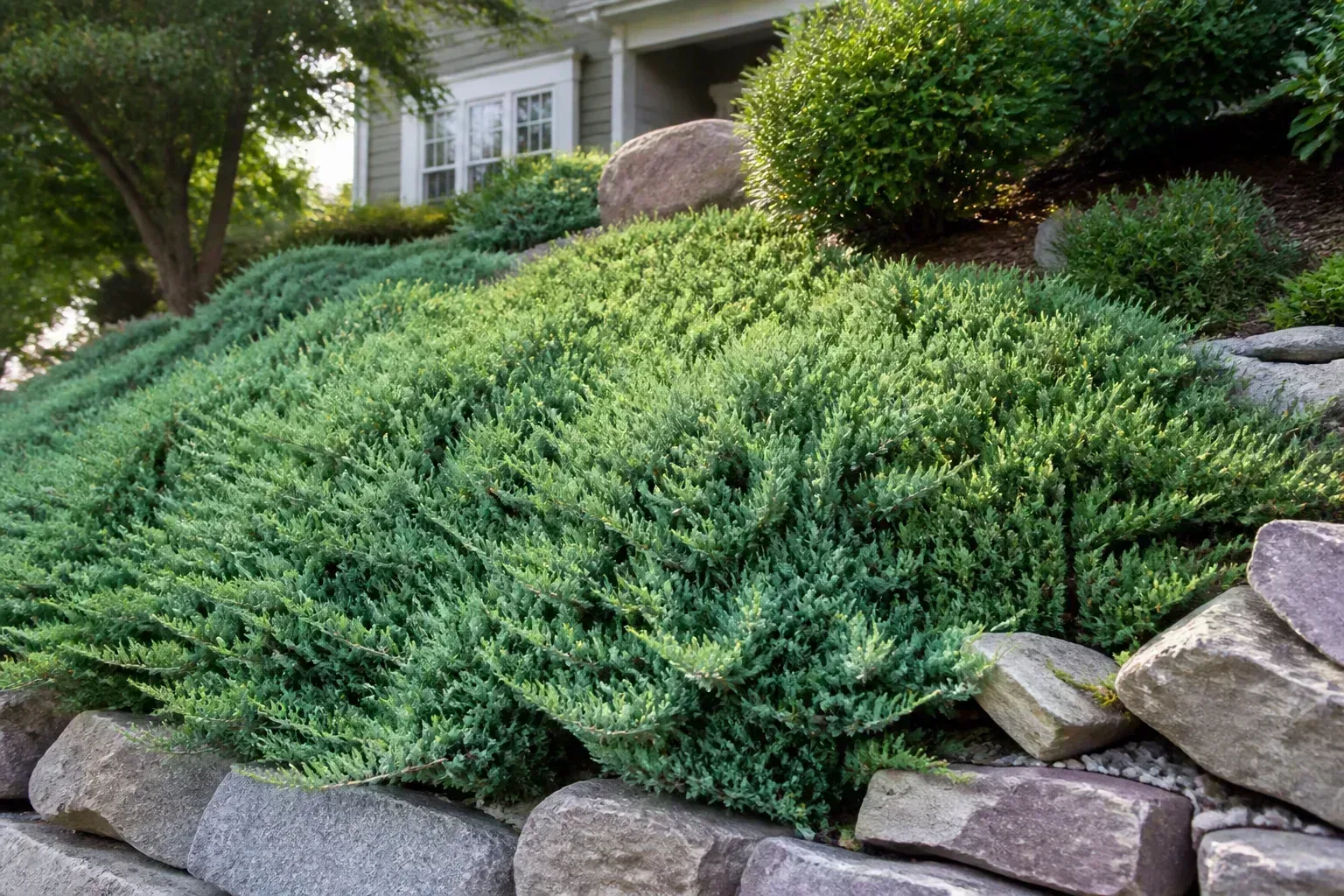
1. Creeping juniper (Juniperus horizontalis) is a strong choice for a wide bowl or trough where a low evergreen can spill over the edge. Rutgers’ published container-root data list creeping juniper among the woody plants tested, but the study’s values should not be read as a blanket outdoor guarantee for every cultivar; choose a dwarf form, give it sharp drainage and winter sun, and keep it out of a spot that stays waterlogged. A long, low container suits its spreading habit better than a narrow upright pot.
2. Japanese plum yew (Cephalotaxus harringtonia) has soft-looking evergreen needles and tolerates more shade than many conifers. It can become a substantial shrub, so reserve it for a deep, heavy planter and check the named form’s mature width before buying. In a cold region, a move to a protected, unheated space or insulation around a large pot may be needed; this is a slow, long-term container rather than an instant tabletop accent.
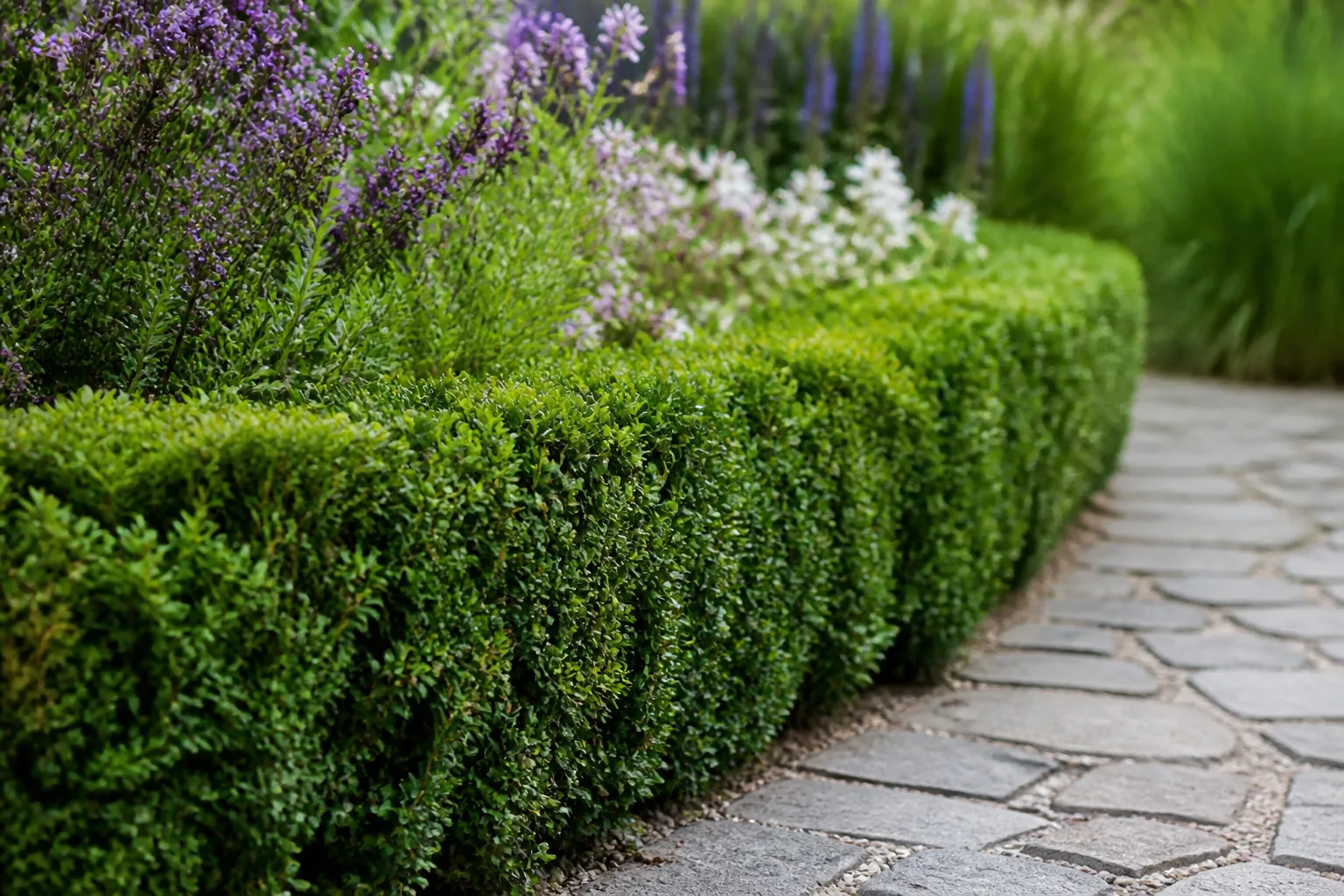
3. Boxwood (Buxus spp.) brings dense, small-leaved structure to an entry or a formal container. Rutgers’ research makes an important distinction here: the roots of tested container-grown boxwood were injured at a warmer growing-medium temperature than the plant’s above-ground hardiness might suggest. A locally recommended cold-tolerant cultivar, generous soil volume, shelter from drying wind, and an insulated pot matter more than a clipped shape; avoid letting the root ball alternate between saturated and bone-dry.
Broadleaf evergreens and winter berries
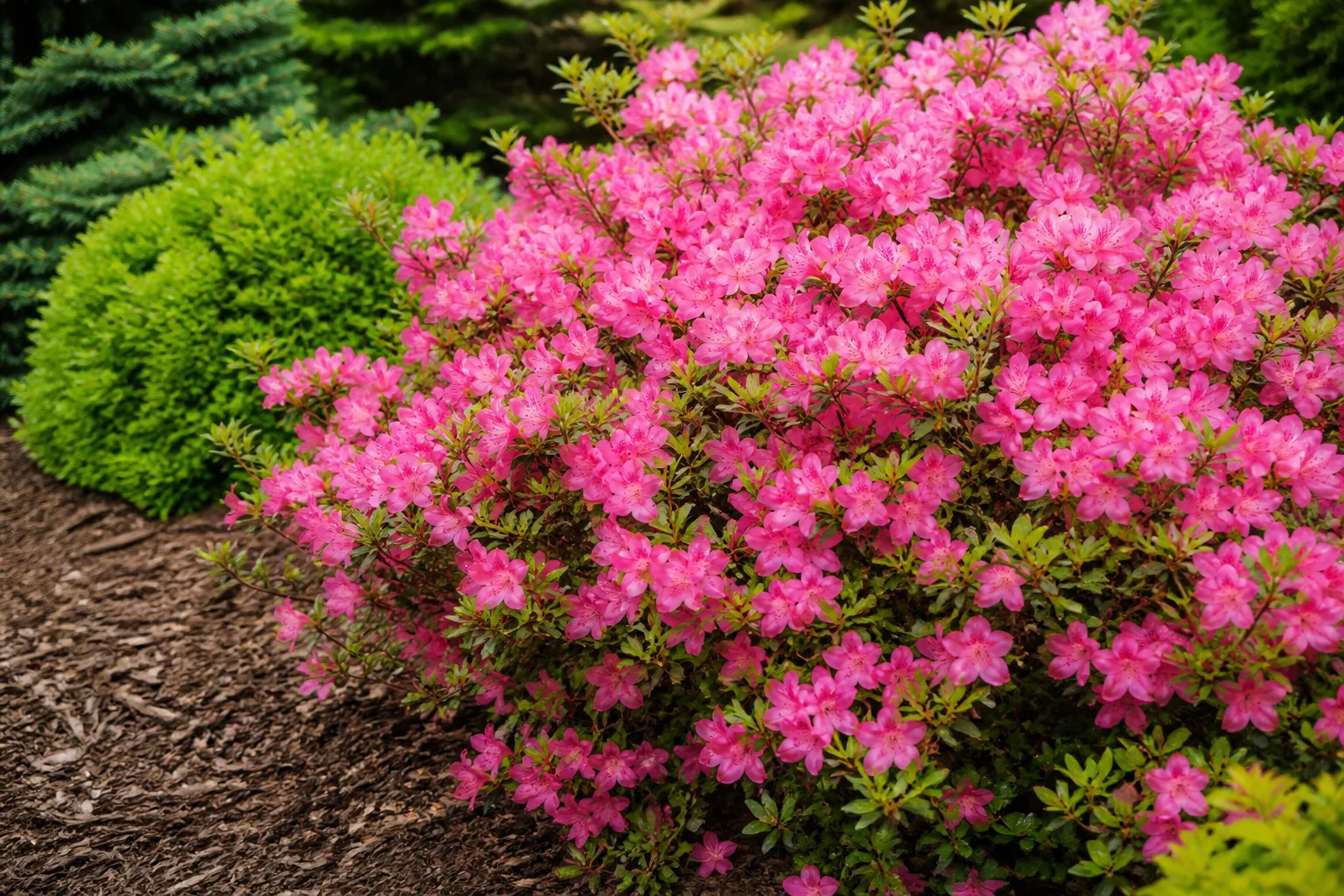
4. Evergreen azalea can keep some foliage through winter, but “evergreen” does not mean every leaf stays green in every climate. Choose a compact azalea specifically rated for your region, use an acidic, well-drained mix, and give it morning sun or bright shade rather than an exposed winter-wind tunnel. In colder areas, an azalea may drop more leaves or need the pot moved to an unheated shelter; the cultivar label should guide that choice.
5. Japanese holly (Ilex crenata) provides small, rounded leaves without the sharp points associated with many hollies. Its use in containers is not risk-free: Rutgers’ cold-weather data include root injury in tested Japanese holly in pots, so a sunny, wind-sheltered spot and a thick-walled container improve the odds. Select a compact cultivar and don’t expect a small nursery plant to stay miniature without eventual pruning or repotting.
6. Mahonia adds architectural evergreen leaves and, depending on the species, clusters of yellow flowers in winter or early spring. Larger, spiny Oregon grape types need room and can be uncomfortable beside a narrow walkway; compact selections such as Mahonia eurybracteata ‘Soft Caress’ suit a substantial patio pot better, though they still need shelter in climates colder than the cultivar’s rating. Give it drainage and light shade if your winter sun is harsh.
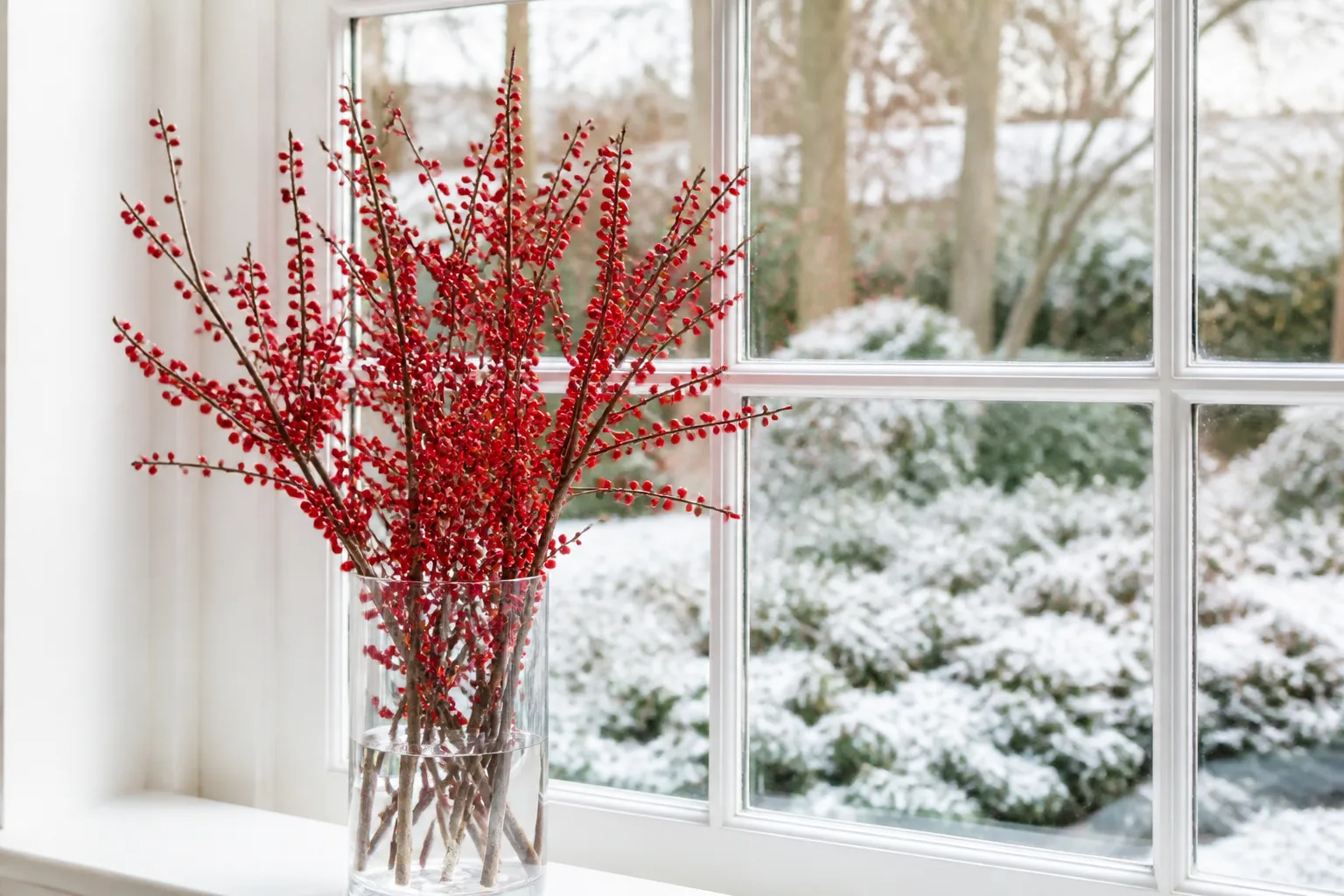
7. Winterberry holly (Ilex verticillata) is deciduous, so its display comes from berries on bare stems rather than evergreen foliage. A female plant needs a compatible male nearby to set fruit, and the mature shrub wants a larger container than most annuals; if you cannot provide room and a pollinator, choose another berrying plant. Keep the mix moist but not waterlogged, and check whether a particular cultivar is suitable for your local winter before leaving it above ground.
Aromatic herbs and foliage that hold their shape
Leaf texture can carry a winter planter when blossoms are between flushes. This group spans plants that can stay outdoors in the right climate and plants that should be treated as movable or indoor pots; the two strategies are not interchangeable.
Herbs and bold leaves for sheltered sites
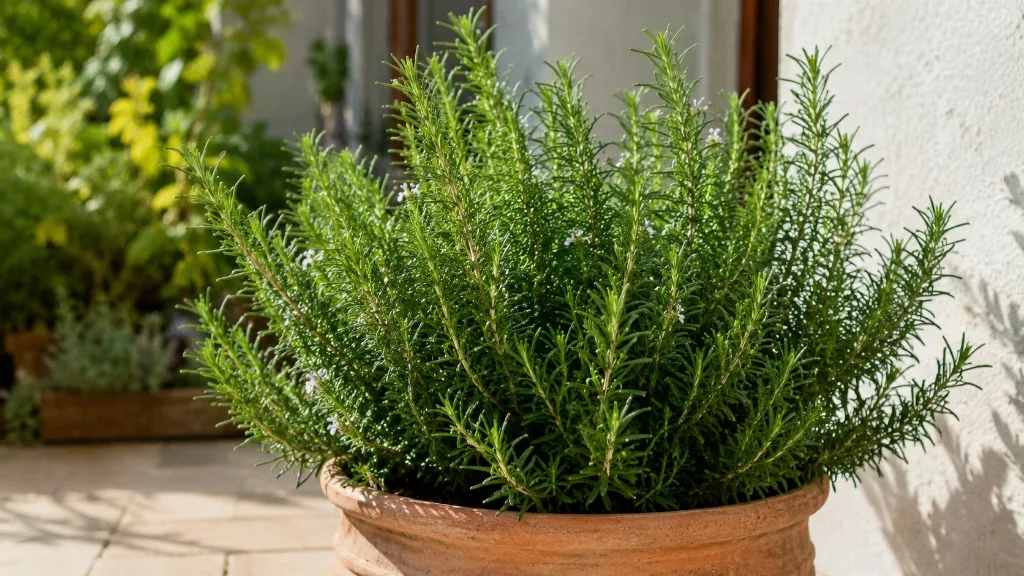
8. Rosemary (Salvia rosmarinus) gives you evergreen needles, fragrance, and leaves for cooking. A cold-tolerant cultivar such as ‘Arp’ is a better bet than an unnamed tender rosemary, but the root ball still needs more protection in a pot than in the ground. In colder regions, place the container against a sheltered wall, insulate it, or move it to a bright, cool location before severe freezes rather than letting a wet root ball freeze repeatedly.
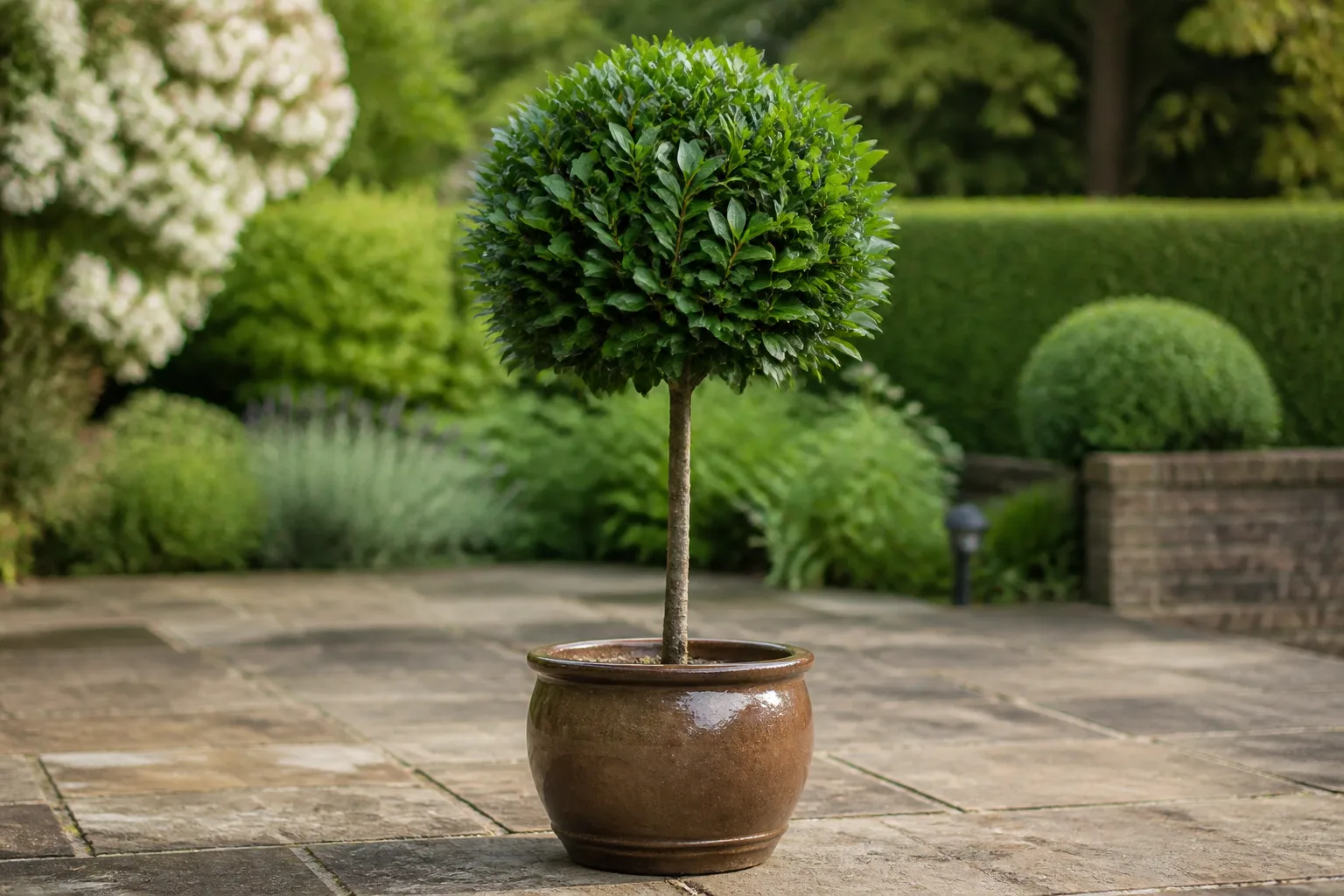
9. Bay laurel (Laurus nobilis) is a slow-growing edible evergreen that is naturally convenient in a pot because you can move it. It is a mild-winter choice, not a universal outdoor winter plant: bring it into a bright, cool room or protected frost-free space before hard freezes, and reduce watering as growth slows. If the only indoor location is very dark and warm, a protected unheated garage or cool sunroom may be less stressful than a hot room, provided the plant does not freeze.
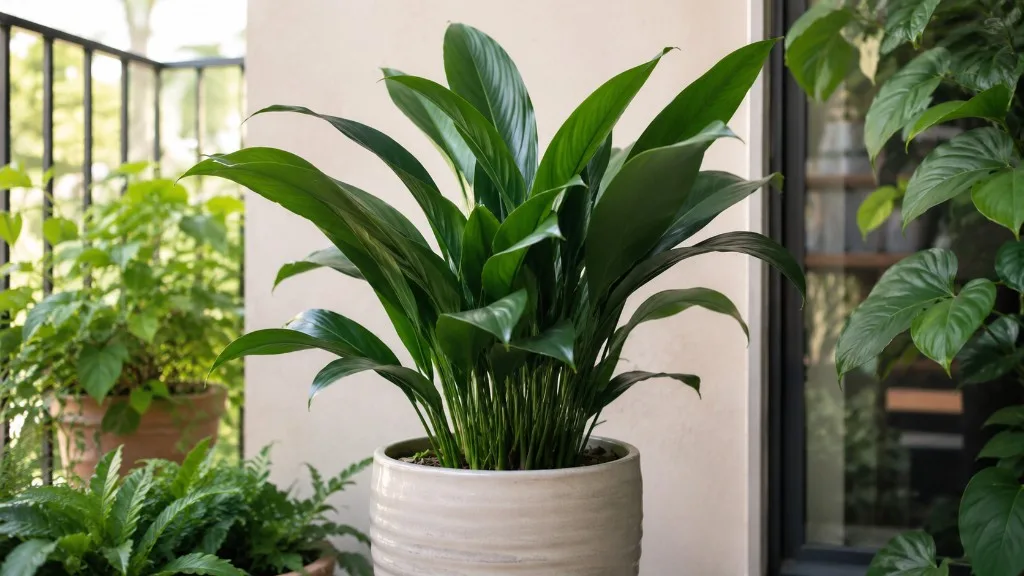
10. Cast iron plant (Aspidistra elatior) is included for gardeners in mild-winter areas or those willing to bring the pot indoors. Its tough, strap-shaped leaves tolerate shade, but it is a houseplant in many climates and should be moved before freezing weather. Treat it as a durable foliage accent on a sheltered, frost-free porch, not as a plant that can take a New England winter because its name sounds indestructible.
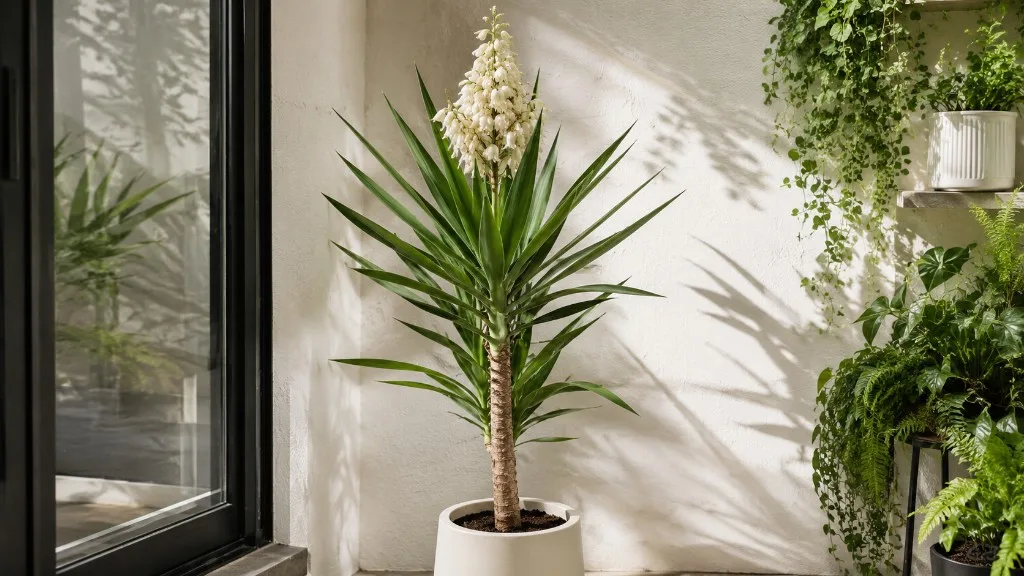
11. Banana yucca (Yucca baccata) is a better fit for a sunny, dry site than a damp winter porch. Its stiff evergreen leaves and sculptural form look good in a heavy pot, but wet mix around the roots is a bigger risk than a brief cold spell for many yuccas. Use a gritty, fast-draining mix, keep the crown clear of trapped water, and confirm that the particular species or cultivar suits your climate before leaving it exposed.
Ferns, rosettes, and colorful perennial foliage
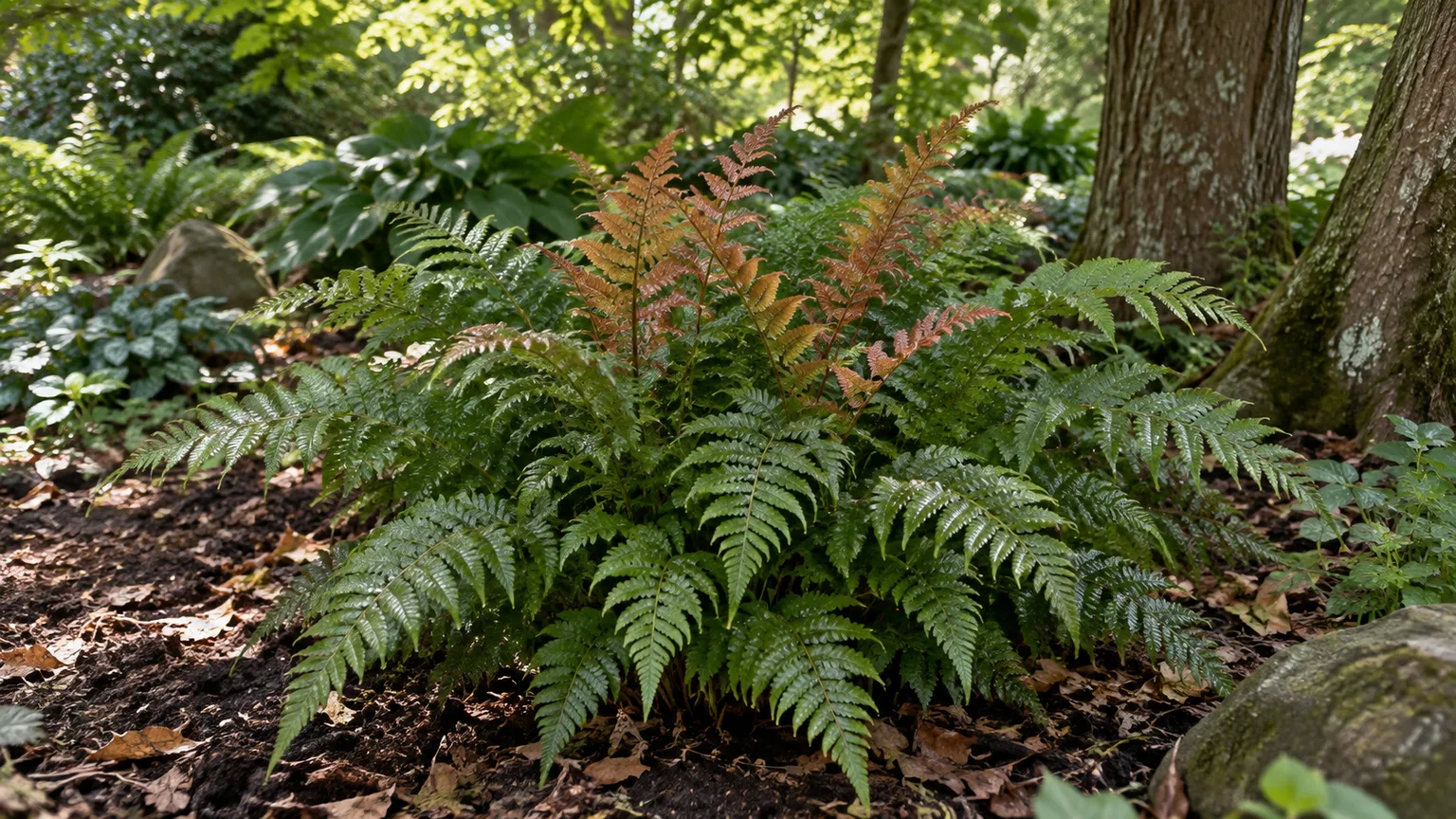
12. Autumn fern (Dryopteris erythrosora) earns its place for coppery new growth and semi-evergreen fronds in a sheltered, shaded planter. It does not offer the same look in every winter: hard cold can brown fronds, and a windy, dry pot is a poor site for a woodland fern. Use an evenly moist, free-draining mix, protect the container from harsh wind, and judge the plant by spring regrowth rather than expecting every frond to look untouched in February.
13. Hen-and-chicks (Sempervivum spp.) are low rosettes that store water and tolerate cold when their roots are not sitting wet. Choose a shallow, broad pot with drainage and a gritty mix; a saturated clay bowl can be a worse winter problem than cold itself. Their rosettes come in green, bronze, red, and purple tones, so they work as a close-up accent rather than a tall centerpiece.
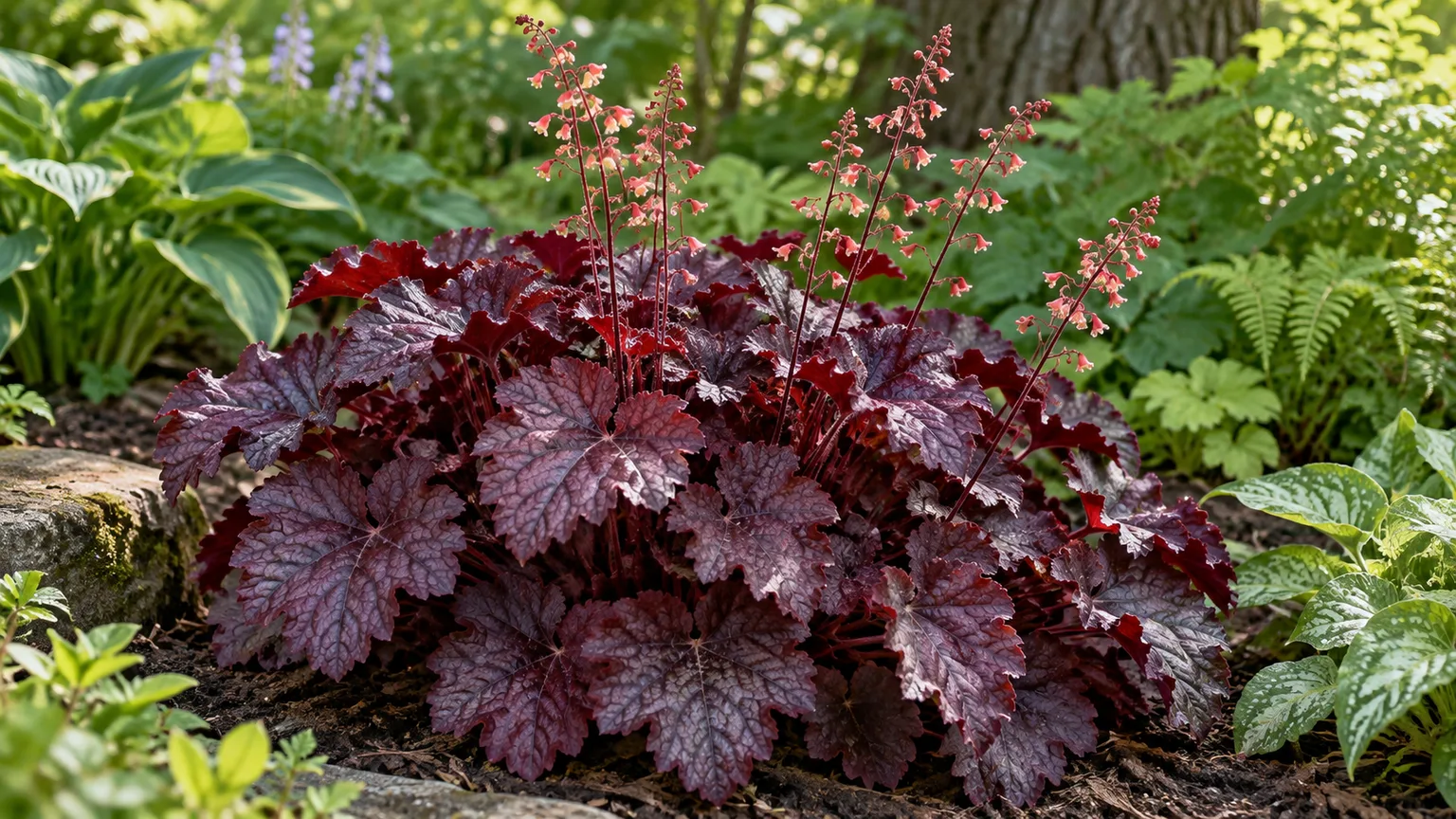
14. Coral bells (Heuchera spp.) contribute colored leaves in a range of greens, purples, silvers, and warm tones. Many cultivars are evergreen or semi-evergreen in milder areas, but repeated hard freeze and thaw can heave shallow roots in a container. Plant in a broad pot with drainage, mulch lightly without burying the crown, and choose a locally hardy cultivar; clipped leaf edges in spring are a reason to inspect root exposure, not automatically to fertilize.
15. Cushion spurge (Euphorbia polychroma) is a mounding perennial with chartreuse spring flowers and foliage that may color before dormancy. It is not a reliable all-winter green centerpiece, so choose it for its compact outline and spring return rather than a guaranteed January display. A pot with excellent drainage suits it better than a container that stays cold and wet; let the plant’s natural seasonality be part of the design.
Winter and early-spring flowers for pots
Flower timing depends on species, cultivar, local weather, and exposure. A “winter bloomer” may pause during a severe freeze and resume when a mild spell arrives; build the planting around foliage and form as well as flowers so the pot still looks intentional between blooms.
Woody plants with flowers or fruit
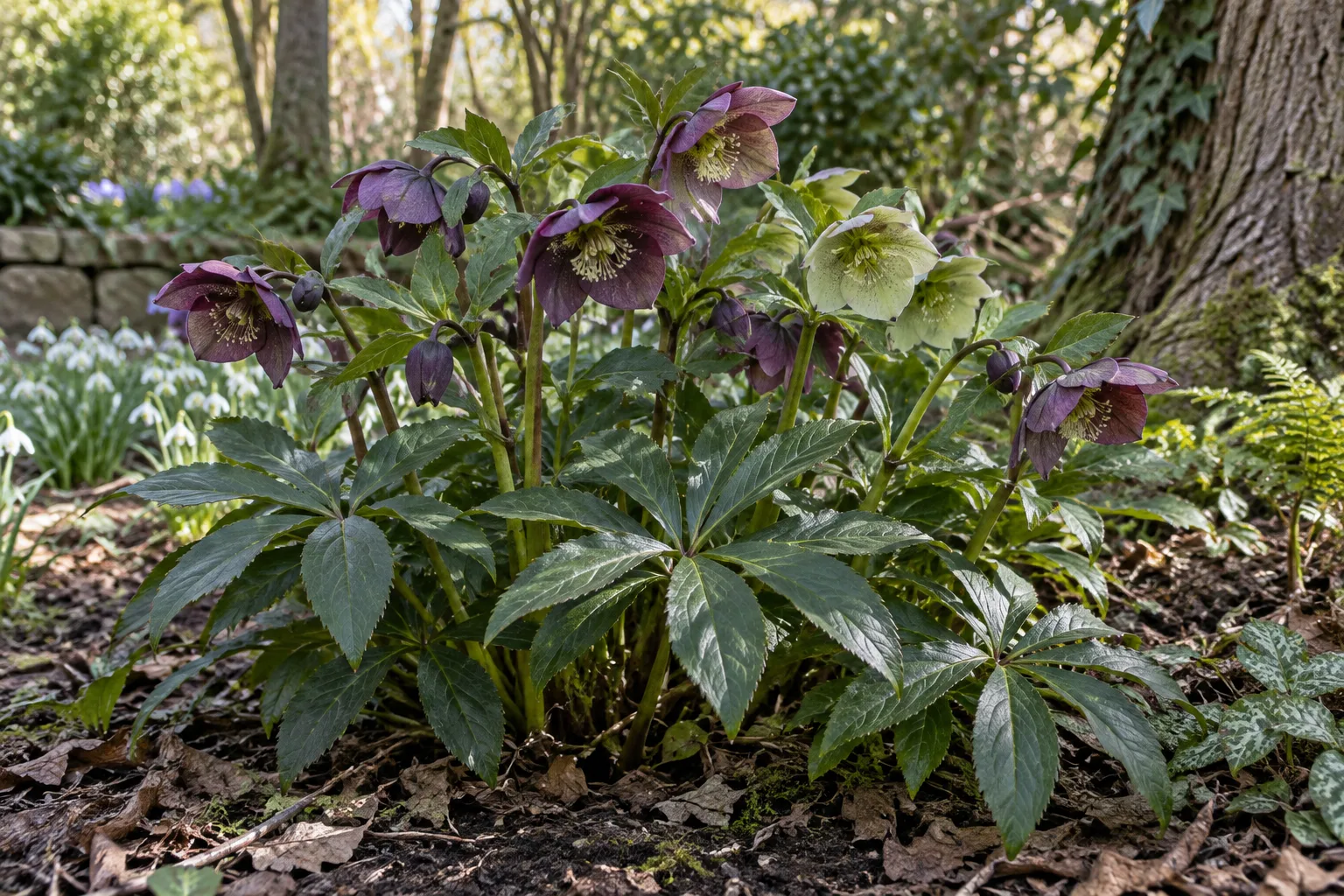
16. Hellebore (Helleborus spp.) is one of the most dependable choices for late-winter or early-spring flowers, with evergreen leaves on many types. Use a deep pot because established crowns dislike frequent disturbance, and site it in bright shade or gentle morning sun. A cold snap can flatten flowers temporarily; avoid cutting off healthy foliage simply because it looks tired before you can see whether new growth is coming.
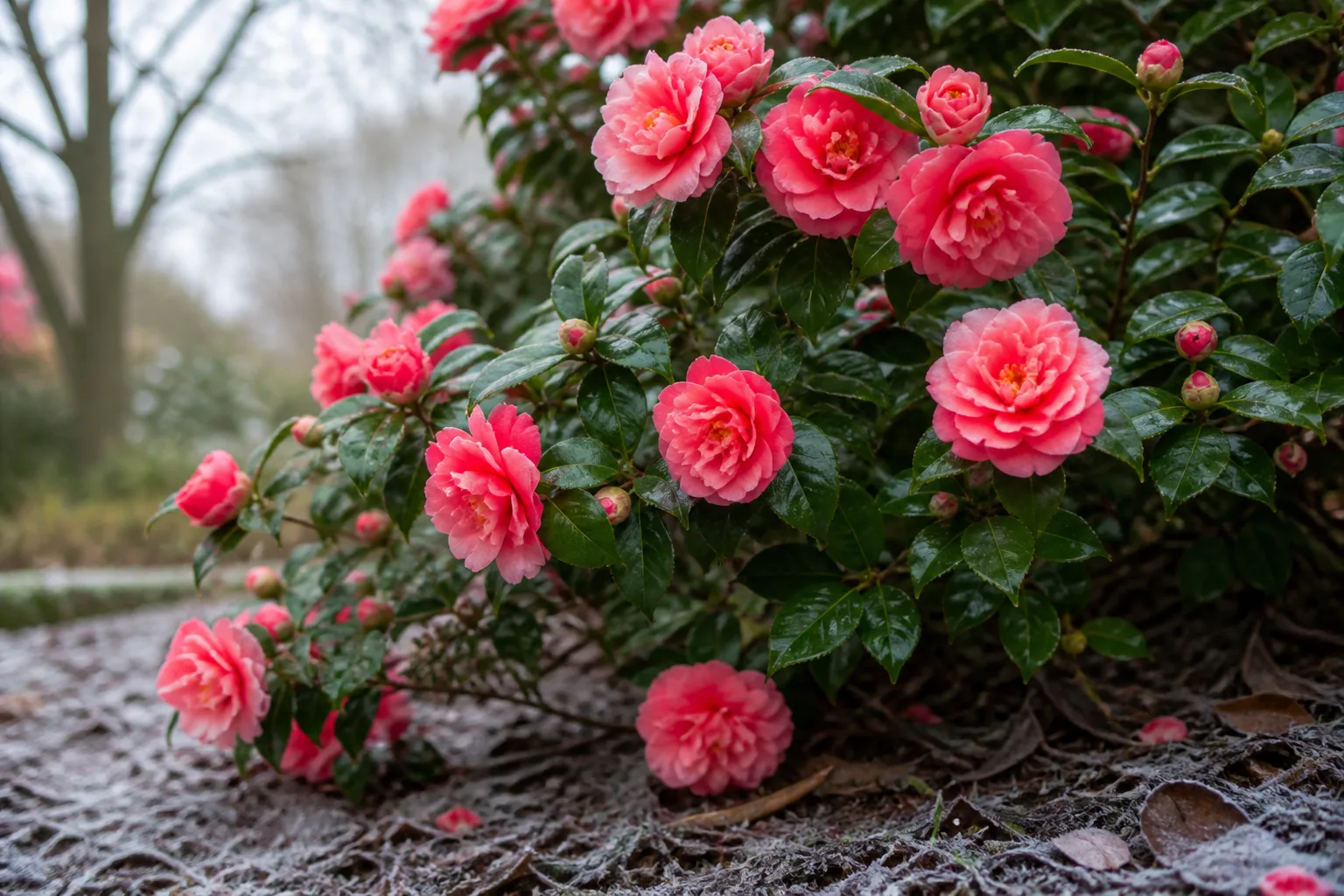
17. Camellia brings glossy leaves and flowers, but species and cultivar determine whether the flowering season and cold tolerance fit your area. A compact Camellia sasanqua cultivar can flower from fall into winter in a mild region, while many C. japonica cultivars flower later; buds may be damaged by hard freezes. Give it acidic, well-drained mix and a sheltered position, and do not treat “camellia” as a single hardiness rating.
18. Winter jasmine (Jasminum nudiflorum) bears small yellow flowers on green arching stems in late winter or early spring. It can spread or trail, so use a wide container and let the stems drape rather than forcing it into a narrow upright shape. It suits a sheltered, sunny site; a cold-region pot may need insulation, and pruning after its bloom keeps you from cutting away the next flower display.
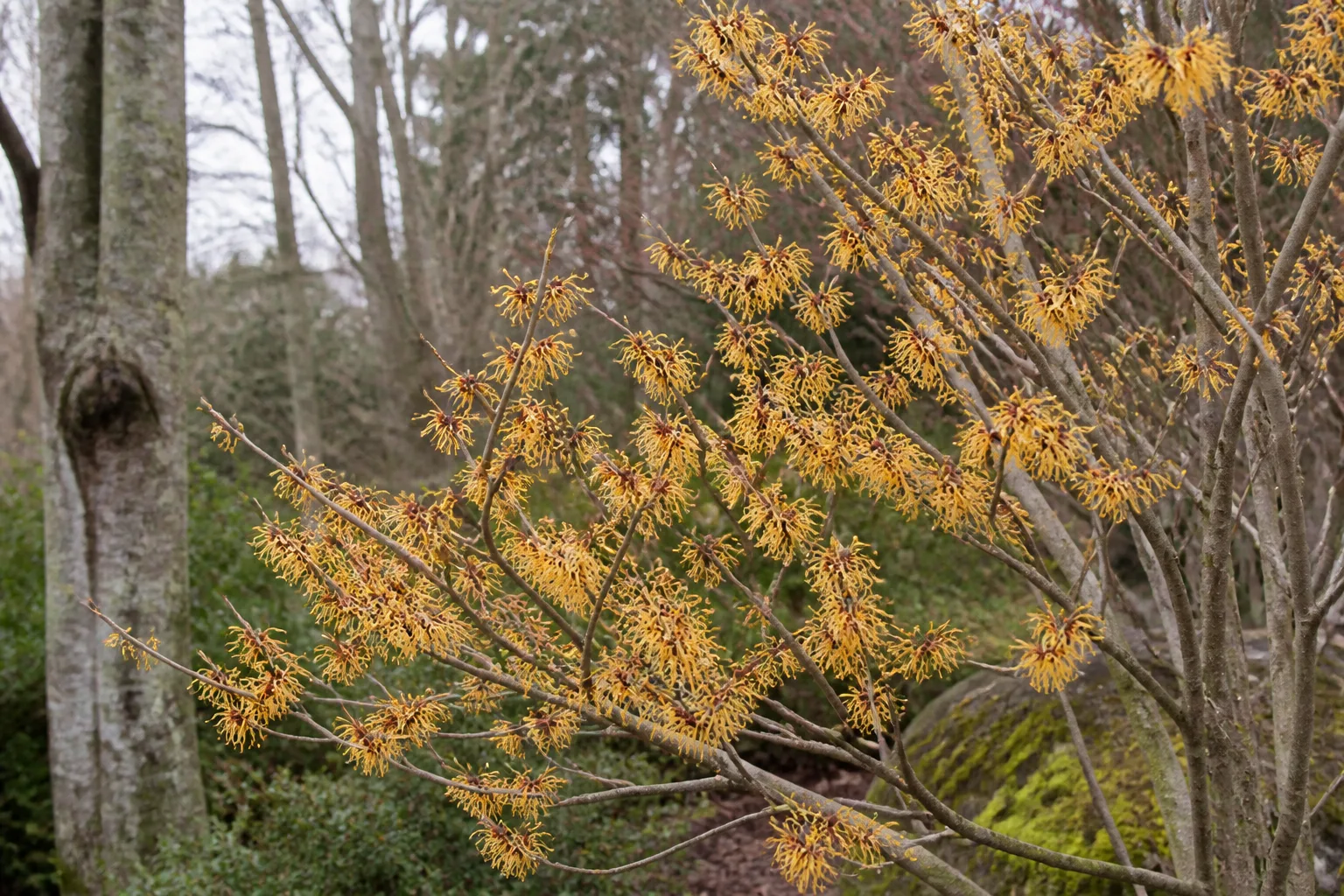
19. Witch hazel (Hamamelis spp.) offers fragrant, spidery flowers on bare branches, but it is a large shrub whose long-term home is usually the ground. For a pot, choose a genuinely compact cultivar and a deep, sturdy planter, or use a container as a temporary display while the plant is young. Species and hybrids bloom at different times, so look at the botanical name and local flowering record rather than trusting the common name alone.
Low flowers and bulbs for seasonal color
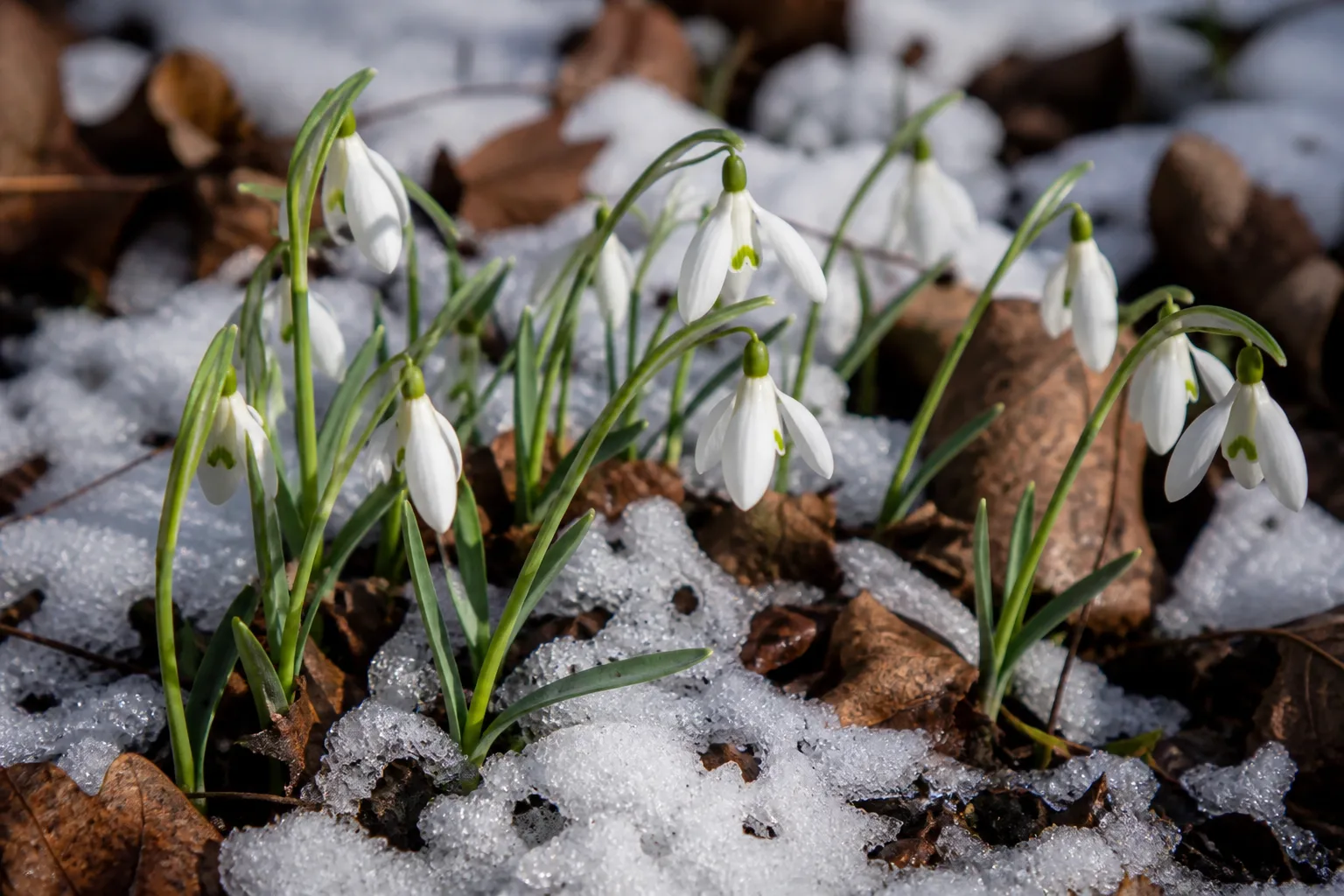
20. Snowdrops (Galanthus spp.) are small bulbs that can flower as winter eases, often before surrounding perennials leaf out. Plant bulbs in fall in a deep, draining container and keep the mix lightly moist; a pot left bone-dry or repeatedly waterlogged can undermine the display. Their flowers are modest, so plant a generous group rather than scattering one or two bulbs across a large planter.
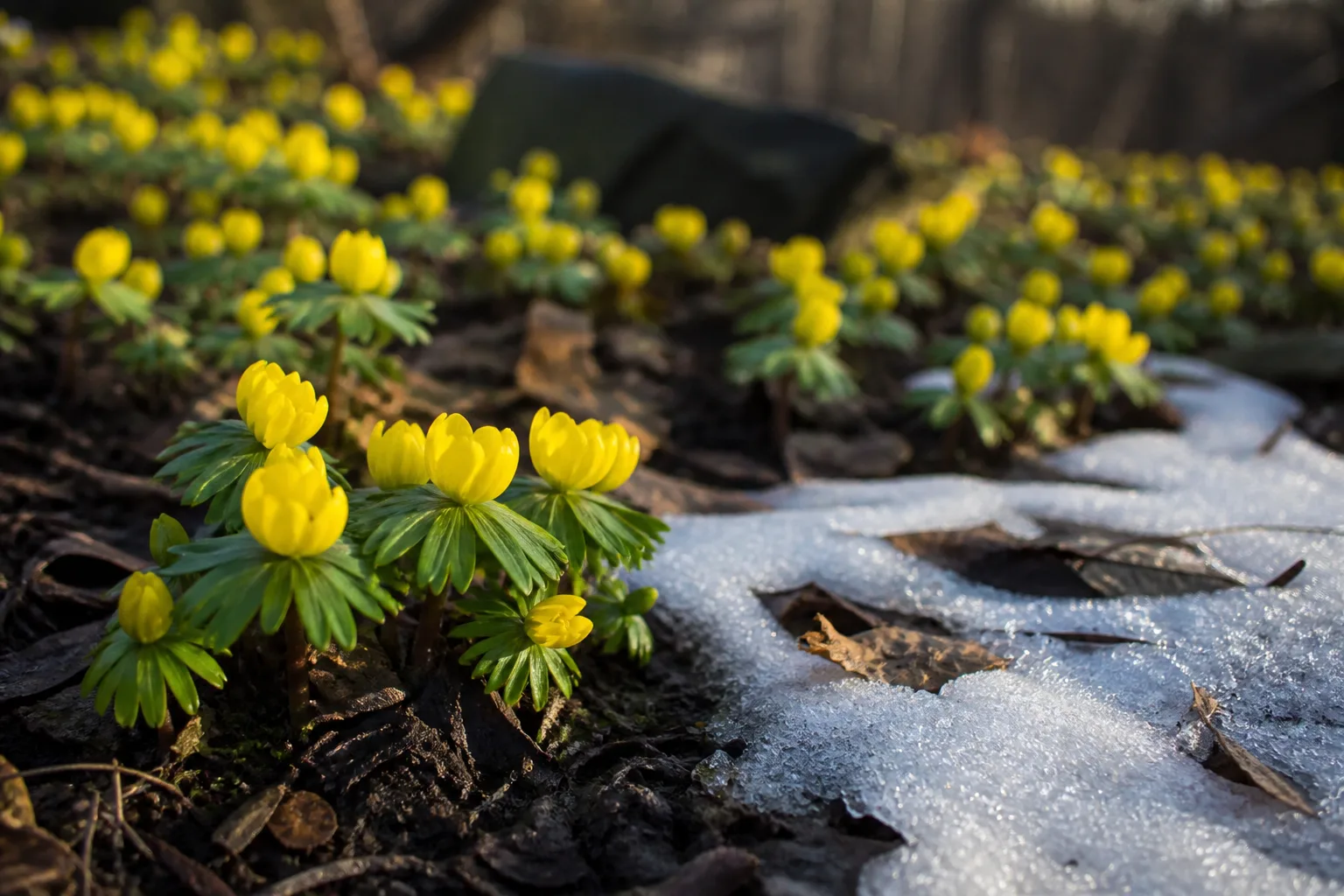
21. Winter aconite (Eranthis hyemalis) offers low yellow blooms in late winter or very early spring. Plant the small tubers in fall in a wide pot where they can naturalize; a single tuber is easy to miss, while a group reads clearly at the rim of a container. Keep the container cool and protected from repeated deep freeze, and do not mistake dormant foliage after bloom for a failed planting.
22. Hardy cyclamen (Cyclamen coum) is different from the florist cyclamen often sold for indoor holiday color. C. coum is a garden perennial that can bloom from winter into early spring in a suitable climate; florist cyclamen are generally not hardy enough to leave outside through freezing weather. Use humus-rich but well-drained mix and a cool, partly shaded site, and check the species on the label before buying.
23. Violas bring low, cheerful flowers through cool weather, especially in mild winters and between hard freezes. They are excellent seasonal fillers for a pot that also has a longer-lived evergreen anchor, but their blooming can slow during the coldest stretch and restart when days warm. Plant them where they receive winter sun, remove spent flowers when practical, and regard replacement in spring as a normal design choice rather than a failure.
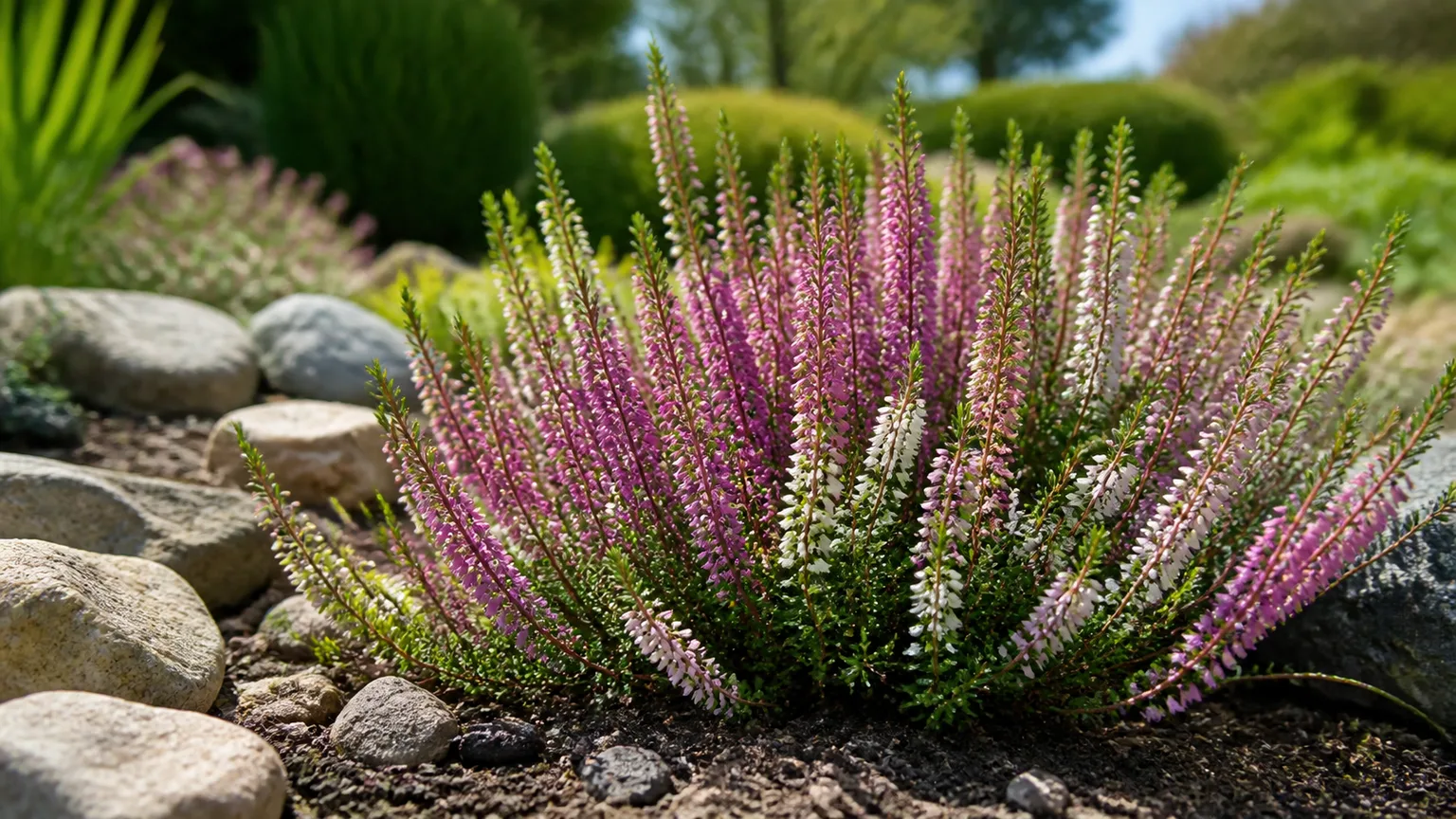
24. Winter heath (Erica carnea) forms a low evergreen mat with pink, purple, or white flowers during the cold season. Choose true winter heath rather than assuming every plant sold as “heather” has the same soil needs; summer heathers often require acidic conditions, while E. carnea tolerates a broader soil range. Use a wide container, provide sun, and keep the roots moist but never stagnant.
Plants chosen for winter stems and spring return
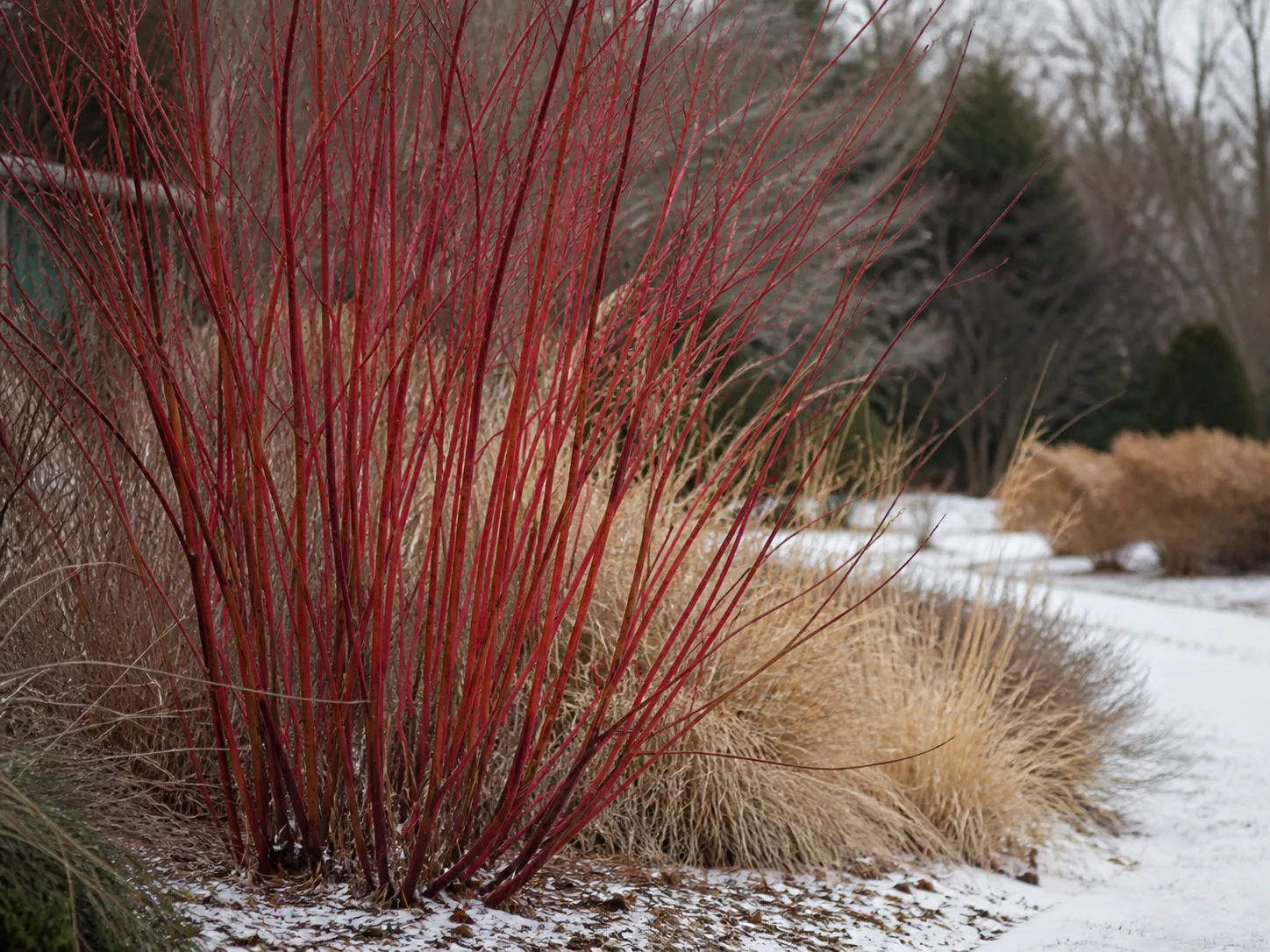
A winter container can also be designed around what remains after leaves fall. Red-twig dogwood has bright young stems, while cushion spurge is mainly a compact returning perennial; these are different visual jobs, so use one as the focal point and let an evergreen or low bulb planting fill the gap.
25. Red-twig dogwood (Cornus sericea) is a vigorous deciduous shrub with red stems that become visible after leaf drop. It can overwhelm a small porch pot, so choose a compact cultivar such as ‘Arctic Fire’ and a very large, heavy planter, or treat it as a young shrub that will eventually move into the ground. The brightest color comes from younger stems; remove a portion of the oldest stems after winter if the shrub becomes crowded, rather than repeatedly shearing every branch tip.
Match the pot to the cold on your site
Screen hardiness, then account for exposed roots
First check the exact species and cultivar, not just a common name. The USDA zone on a tag is an in-ground starting point; wind, winter sun, late fall growth, drainage, and container material change the result. If a plant is rated only slightly colder than your location, plan to protect it or move it rather than relying on its label as a guarantee.
Also decide what “winter-friendly” means to you. An evergreen shrub needs to keep leaves through winter, a bulb needs only to survive until it flowers, and a tender herb may simply need to make it to spring in a bright, cool room. The guidance from Melinda Myers on overwintering container planters is practical here: container roots need protection, and a plant that is one zone hardier than your region may still need a sheltered spot or insulation.
Choose a container that drains and survives freeze-thaw
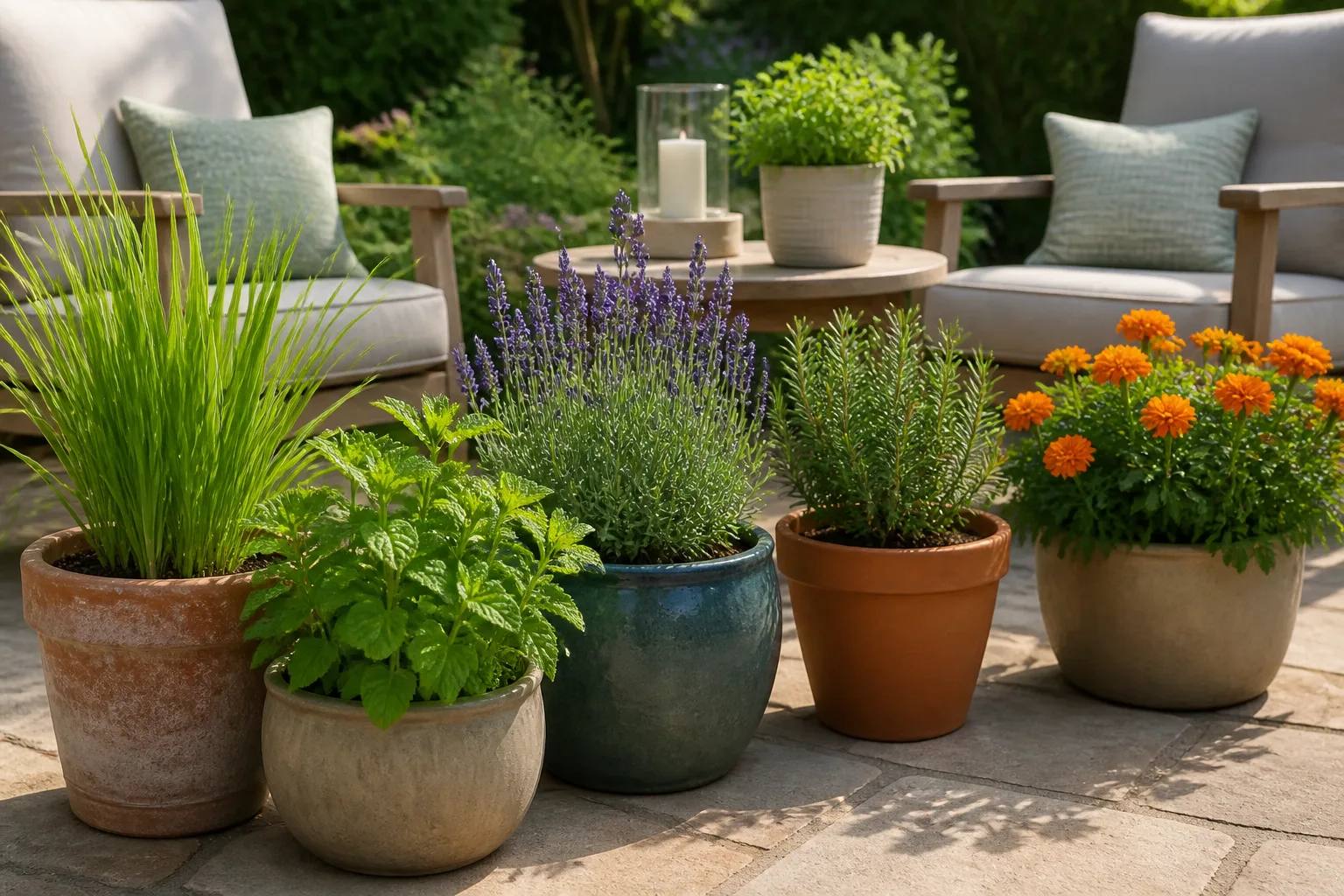
Use a pot with open drainage holes and enough soil volume to buffer temperature swings. A larger pot is generally more forgiving than a small decorative one, but a huge planter is not automatically better if its mix stays waterlogged. Set the container on feet or a slatted surface so water can leave instead of freezing beneath it.
Choose a frost-resistant glazed pot, resin, fiberglass, wood, or another material rated for outdoor winter use. Unglazed terracotta and some ceramics can absorb moisture and crack as that water freezes and expands; delicate or expensive containers are safer emptied or moved under cover. Plastic and metal often resist cracking but do little by themselves to insulate the root ball.
Place and insulate pots before the hard freeze
Move movable containers close to a house wall, out of a wind tunnel, and away from the spot where roof runoff repeatedly pours into the pot. If you keep several outside, cluster them together; grouping reduces exposure at the sides, while a sheltered corner can break the wind. Do not choose a permanently dark location for sun-loving junipers, rosemary, or violas just because it is protected—shelter and adequate light both matter.
Wrap the pot, not the foliage, with breathable insulating material or nest it inside a larger box and fill the gap with dry leaves or straw. In regions with severe winters, heeling a pot into garden soil or moving a dormant plant to an unheated garage can be more reliable than wrapping a thin-walled planter. Keep covers loose and breathable, and remove them during mild weather so the plant does not heat up or remain damp for days.
Garden writer and horticultural expert Melinda Myers describes grouping and sheltering above-ground pots, surrounding them with insulating materials, and watering when the mix is thawed and dry. For a seasonal display, The English Garden’s container-flower advice also favors placing a pot where winter flowers can be seen close up; the best sheltered location is often the one you pass every day.
Water through winter without keeping roots wet
Evergreens do not stop losing moisture when the calendar turns cold, but frozen roots cannot replace water freely. Check the mix during a thaw by feeling below its dry surface; if it is dry and unfrozen, water enough to moisten the root ball and let excess drain. Do not water a frozen pot, and do not follow a fixed weekly schedule that ignores rain, wind, and the pot’s location.
A roofed porch may receive no rain, while an exposed pot can stay wet for days after a storm. Watch both sides of the problem: winter desiccation browns evergreen foliage when roots cannot supply moisture, while persistently saturated mix deprives roots of air and can damage crowns. Let the drainage holes do their job and keep saucers empty.
Avoid late-season high-nitrogen feeding or hard pruning that encourages tender new growth just before cold weather. Rutgers NJAES notes that late growth and winter temperature swings can interfere with cold acclimation in container-grown plants. Let plants slow down naturally, then resume normal feeding only when active growth returns.
Avoid the winter container mistakes that cost plants
- Do not equate zone ratings with pot ratings. The zone screens a plant’s in-ground performance; the exposed root ball may need a colder-rated plant, insulation, or a protected winter location.
- Do not buy by flower color alone. Confirm the botanical name and cultivar, particularly for azaleas, camellias, rosemary, mahonia, and cyclamen.
- Do not use a pot without drainage. Winter rain and thawing snow can keep the root zone saturated even when the plant is dormant.
- Do not leave tender plants outside because they are sold in the garden section. Cast iron plant, bay laurel, and many rosemary and camellia cultivars belong in mild-winter sites or need to move before a hard freeze.
- Do not wrap wet foliage tightly in plastic. Use breathable protection around the container, and keep airflow around evergreen leaves.
- Do not let compact shrubs stay in a nursery pot indefinitely. A woody plant may look small above the soil while its roots have filled the pot; check drainage and root congestion before winter rather than repotting into a much larger water-holding container at the last minute.
For a simple cold-weather display, combine one evergreen anchor with one low seasonal bloomer and one plant whose shape holds up after flowers pause. Planet Natural’s recent fall-container examples use foliage and plant roles to keep a composition legible after the first frost; that approach works here too, provided the plants share light and moisture needs. Planet Natural’s fall-container guide offers useful design context, while the climate and root-risk checks above determine which of those components can actually stay outside.
Conclusion
The best winter container plants are the ones that match both the look you want and the winter your pot will experience. Creeping juniper, compact evergreens, hellebores, winter heath, violas, and fall-planted bulbs cover several useful displays, while rosemary, bay laurel, camellias, cast iron plants, and larger shrubs need more attention to cultivar, shelter, or seasonal relocation.
Before you plant, check the botanical name, confirm the light and mature size, and choose a drained, frost-resistant container. Then decide how you will protect the root ball: a sheltered grouping may be enough in a mild winter, while severe cold calls for insulation, heeling in, or a move to an unheated protected space. That short plan is what turns a winter pot from a hopeful purchase into a planting with a realistic chance to look good—and return—in spring.